
| REPORT ATTRIBUTE | DETAILS |
|---|---|
| Historical Period | 2020-2023 |
| Base Year | 2024 |
| Forecast Period | 2025-2032 |
| Latin America Platelet Rich Plasma (PRP) Market Size 2024 | USD 34.23 million i |
| Latin America Platelet Rich Plasma (PRP) Market, CAGR | 11.43% |
| Latin America Platelet Rich Plasma (PRP) Market Size 2032 | USD 81.32 million |
Market Overview:
The Latin America Platelet Rich Plasma (PRP) Market is projected to grow from USD 34.23 million in 2024 to an estimated USD 81.32 million by 2032, with a compound annual growth rate (CAGR) of 11.43% from 2024 to 2032.
The growth of the Latin America Platelet-Rich Plasma (PRP) market is primarily driven by the increasing prevalence of musculoskeletal disorders, sports injuries, and chronic conditions that require effective regenerative treatments. The rising demand for non-invasive solutions, such as PRP therapies, is fueled by their effectiveness in accelerating healing and promoting tissue regeneration, particularly in orthopedics and sports medicine. These therapies offer a promising alternative to traditional surgical interventions, reducing recovery time and complications. Additionally, the growing popularity of aesthetic procedures, including hair restoration and skin rejuvenation, has contributed to the expansion of PRP applications in the cosmetic sector. Technological advancements in PRP preparation and administration techniques have further improved the safety, accessibility, and efficacy of these treatments, driving their wider acceptance among both patients and healthcare providers.
Regionally, the Latin American PRP market demonstrates varied dynamics. Mexico is expected to lead the market, with significant growth projected due to its rising healthcare adoption and demand for regenerative treatments. The country’s expanding medical tourism industry is also contributing to the increased demand for PRP therapies. Brazil, as the largest market in the region, continues to dominate with its extensive healthcare infrastructure and growing acceptance of PRP therapies. Its robust healthcare policies and increasing investments in medical technology further fuel the market’s growth. Meanwhile, Argentina is experiencing steady growth, driven by an increasing focus on non-invasive medical procedures and a rising number of skilled practitioners. The market in other Latin American countries is also expanding as healthcare access improves and awareness about regenerative treatments increases, positioning the region for continued growth in the PRP market over the coming years.
Market Insights:
- The Latin America Platelet Rich Plasma (PRP) Market is projected to grow from USD 34.23 million in 2024 to USD 81.32 million by 2032, with a CAGR of 11.43%.
- The global Platelet Rich Plasma (PRP) market is projected to grow from USD 729.75 million in 2024 to USD 1,895.64 million by 2032, at a CAGR of 12.67% during the forecast period.
- The increasing prevalence of musculoskeletal disorders, sports injuries, and chronic conditions is driving demand for PRP therapies, particularly in orthopedics and sports medicine.
- Non-invasive aesthetic procedures, including facial rejuvenation and hair restoration, are contributing significantly to the market’s expansion, with rising demand across Latin America.
- Advancements in PRP preparation and administration techniques are improving treatment outcomes, boosting both accessibility and efficiency.
- Growing awareness of regenerative medicine and expanding healthcare infrastructure in Latin America is accelerating the adoption of PRP therapies.
- Mexico is expected to lead the market due to its rising healthcare adoption, medical tourism, and expanding demand for regenerative treatments.
- Brazil continues to dominate with its strong healthcare system and increasing acceptance of PRP therapies across medical and cosmetic sectors.
- Challenges such as high treatment costs and limited accessibility in certain areas are hindering broader adoption of PRP treatments in the region.
- The lack of standardized regulatory frameworks across the region creates uncertainty in PRP applications, affecting consistency and safety.
- Argentina and other Latin American countries are witnessing steady growth in PRP demand as healthcare access improves and awareness of regenerative treatments increases.
Report scope
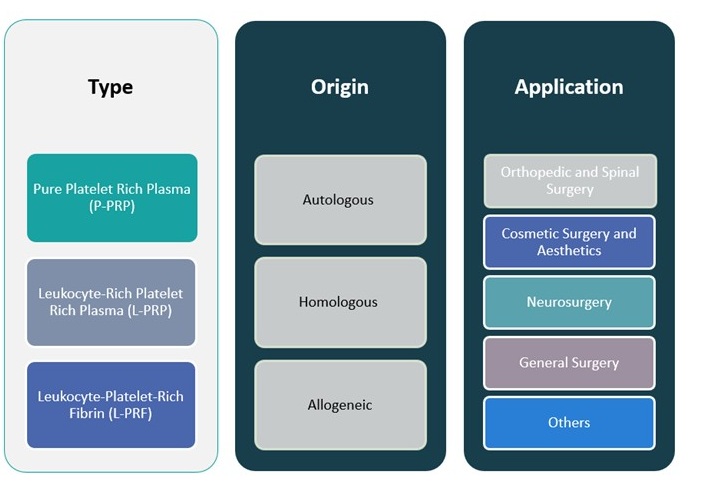
This report segments the Latin America Platelet Rich Plasma (PRP) Market as follow
Market Drivers:
Increasing Incidence of Musculoskeletal Disorders and Sports Injuries
The rising prevalence of musculoskeletal disorders and sports-related injuries is a significant driver of the Latin America Platelet Rich Plasma (PRP) Market. These conditions are increasingly common among the aging population and athletes, contributing to higher demand for effective and non-invasive treatment options. PRP therapies, known for their regenerative properties, offer a promising solution for conditions like osteoarthritis, tendonitis, and ligament sprains. It is particularly sought after for its ability to accelerate healing, reduce recovery times, and provide an alternative to invasive surgical procedures. The growing awareness of PRP’s potential benefits has expanded its usage in orthopedics, where patients are increasingly turning to this therapy for faster recovery. Healthcare providers across the region are adopting PRP due to its ability to deliver positive outcomes without the risks associated with traditional treatments.
Surge in Demand for Aesthetic and Cosmetic Procedures
The increasing popularity of non-invasive aesthetic treatments is fueling the growth of the Latin America Platelet Rich Plasma (PRP) Market. PRP is widely used for procedures such as facial rejuvenation and hair restoration, where it has gained significant traction due to its effectiveness and minimal downtime. As consumers seek safer, less invasive alternatives to traditional cosmetic surgery, PRP therapies offer a viable option for individuals looking for rejuvenated skin and improved hair growth. The rise in disposable income and changing beauty standards in the region has further driven the demand for aesthetic procedures. PRP’s ability to provide natural-looking results without the risks of chemical treatments or surgery has made it a popular choice among patients and healthcare professionals alike.
Advancements in Medical Technology and Techniques
Technological innovations in PRP preparation and administration techniques have greatly enhanced the safety and efficacy of the therapy, contributing to the growth of the Latin America Platelet Rich Plasma (PRP) Market. New advancements have made the PRP extraction process more efficient, with improved yields and higher concentrations of platelets, leading to better clinical outcomes. Modern PRP devices and kits are making the process more accessible, cost-effective, and patient-friendly, allowing for broader adoption in medical practices across the region. These improvements have increased the popularity of PRP treatments as healthcare providers are more confident in its results. The continuous development of these technologies supports the ongoing expansion of the market.
- For instance, Zimmer Biomet, a medical device company, reported that their latest PRP preparation systems can increase platelet concentration by up to 6 times baseline levels, resulting in improved clinical outcomes for patients.
Growing Healthcare Awareness and Infrastructure Improvements
The expansion of healthcare infrastructure and increased awareness of regenerative medicine in Latin America play a crucial role in driving the PRP market’s growth. As more medical professionals and patients recognize the benefits of PRP treatments, there has been a shift towards adopting this innovative therapy. In addition, the growing number of specialized clinics and training centers is ensuring that healthcare professionals are equipped with the skills necessary to administer PRP therapies. The improvement of healthcare access and the increasing number of skilled practitioners across the region have made PRP treatments more widely available. As patients seek advanced and effective solutions for various medical and aesthetic concerns, PRP continues to grow in demand.
- For example, according to a 2024 update from the Latin American Society of Regenerative Medicine, the number of clinics offering PRP therapy in Brazil and Mexico has doubled over the past three years.
Market Trends:
Growing Popularity of Non-Invasive Treatments in Aesthetic Medicine
The Latin America Platelet Rich Plasma (PRP) Market is witnessing a notable trend towards non-invasive aesthetic treatments, which is contributing to its rapid expansion. PRP has become a popular choice for patients seeking facial rejuvenation, hair restoration, and skin treatments due to its effectiveness and minimal recovery time. This trend is driven by consumer preference for safer, less invasive procedures that offer natural results compared to traditional surgical options. With growing awareness of the benefits of PRP, more patients are opting for treatments like PRP facials and hair loss treatments, which have proven to deliver long-lasting improvements. The aesthetic industry’s increasing focus on regenerative and non-surgical solutions is expected to sustain this trend in the coming years.
- For instance, in Argentina, PRP has become a cutting-edge nonsurgical facial rejuvenation technique, especially at institutions like Hospital Italiano de Buenos Aires, where treatments are personalized by measuring baseline PRP composition for each patient as standard practice.
Rise in Medical Tourism for Regenerative Therapies
Medical tourism has emerged as a significant trend within the Latin America Platelet Rich Plasma (PRP) Market, driven by the region's growing reputation for offering high-quality, cost-effective treatments. Countries like Mexico, Brazil, and Costa Rica are becoming popular destinations for patients seeking regenerative therapies, including PRP treatments. The cost-effectiveness of PRP compared to traditional surgical interventions, coupled with the increasing quality of healthcare services in the region, makes Latin America an attractive option for international patients. As global healthcare costs rise, more patients are traveling to the region to access PRP therapies, further boosting market growth. This trend is expected to strengthen as the region continues to improve its healthcare infrastructure and services.
Integration of PRP with Other Regenerative Medicine Treatments
A growing trend in the Latin America Platelet Rich Plasma (PRP) Market is the integration of PRP therapy with other regenerative medicine treatments. Combining PRP with stem cell therapy, hyaluronic acid injections, and other advanced treatments enhances the overall effectiveness and outcome for patients. This trend is particularly notable in orthopedics and sports medicine, where PRP is used alongside stem cells to accelerate recovery and promote tissue regeneration. The combination of PRP with these therapies is seen as a way to optimize treatment results, making it an attractive option for patients and healthcare providers. The increasing collaboration between regenerative medicine professionals is expected to continue pushing PRP treatments to new heights.
- For example, at Hospital Italiano de Buenos Aires, ongoing research focuses on optimizing PRP protocols and combining PRP with other regenerative modalities to improve treatment efficacy for conditions like osteoarthritis, soft tissue injuries, and muscle tears.
Rising Investment in PRP Technology and Research
The Latin America Platelet Rich Plasma (PRP) Market is witnessing increased investment in PRP technology and research, which is contributing to improved treatment standards and patient outcomes. Research into the optimization of PRP therapies, including the development of more effective PRP preparation devices and kits, is advancing rapidly. These innovations are making PRP treatments more accessible, efficient, and affordable for healthcare providers and patients alike. With technological advancements and ongoing clinical research, PRP therapies are being refined to address a broader range of medical and aesthetic conditions. The growing investment in these technologies by both private and public entities is expected to fuel market growth and improve the overall standard of care in the region.
Market Challenges Analysis:
High Treatment Costs and Accessibility Issues
One of the primary challenges in the Latin America Platelet Rich Plasma (PRP) Market is the relatively high cost of PRP treatments, which may limit access for a significant portion of the population. Although PRP is less expensive than many surgical alternatives, it remains a costly option, especially in countries with limited healthcare coverage for such therapies. The cost of PRP devices, along with specialized training for healthcare professionals, adds to the financial burden, which may discourage clinics and patients from adopting the treatment. This economic barrier impacts market expansion, as access to PRP therapies is restricted to more affluent individuals or those in specific urban areas. The need for cost-reduction strategies in both treatment administration and healthcare delivery is critical to increasing accessibility in the region.
- For instance, the mean cost of a PRP injection was $707, with a wide range from $175 to $4,973 depending on the clinic and region.
Regulatory and Standardization Challenges
Another challenge facing the Latin America Platelet Rich Plasma (PRP) Market is the lack of standardized regulatory frameworks across the region. While PRP is widely accepted in certain countries, varying levels of regulation and oversight create uncertainty in its application and safety. Some countries have unclear guidelines regarding the use of PRP, leading to inconsistencies in the quality and results of treatments. This lack of standardization also impacts the training of healthcare providers, as practices may vary significantly between regions. Strengthening regulatory oversight and establishing uniform standards would enhance the credibility of PRP therapies and boost patient confidence, addressing one of the key barriers to broader adoption in the market.
Market Opportunities:
The Latin America Platelet Rich Plasma (PRP) Market presents significant opportunities through the expanding use of PRP in regenerative medicine. The therapy’s ability to promote tissue regeneration and accelerate healing is attracting attention in various fields such as orthopedics, dermatology, and dentistry. There is growing interest in its use for treating chronic conditions, sports injuries, and musculoskeletal disorders, which are prevalent in the region. The application of PRP in combination with other regenerative therapies, such as stem cell treatments, further enhances its potential. As healthcare providers increasingly recognize its benefits, the demand for PRP in regenerative medicine is poised to increase, opening new avenues for market growth.
Medical tourism presents another promising opportunity for the Latin America Platelet Rich Plasma (PRP) Market. Countries like Mexico and Brazil are already popular destinations for patients seeking cost-effective, high-quality healthcare, including PRP treatments. The increasing trend of international patients traveling to Latin America for regenerative and aesthetic therapies is expected to continue, fueled by competitive pricing and high-quality care. As the region strengthens its healthcare infrastructure and professional training, it will attract even more patients, driving demand for PRP therapies and further expanding the market.
Market Segmentation Analysis:
The Latin America Platelet Rich Plasma (PRP) Market is segmented by type, origin, and application, each contributing to the overall growth of the market.
By Type, the market is divided into Pure Platelet Rich Plasma (P-PRP), Leukocyte-Rich Platelet Rich Plasma (L-PRP), and Leukocyte-Platelet-Rich Fibrin (L-PRF). Among these, P-PRP is widely used in orthopedics and aesthetics due to its high platelet concentration and effectiveness in tissue regeneration. L-PRP is often preferred for inflammatory conditions, while L-PRF, which includes fibrin, is gaining popularity in various surgical applications for its clot-forming abilities that enhance wound healing.
By Origin, the market includes Autologous, Homologous, and Allogeneic PRP. Autologous PRP, derived from the patient’s own blood, dominates the market due to its reduced risk of adverse reactions and higher safety profile. Homologous and Allogeneic PRP are less commonly used but are emerging in clinical practices, particularly in patients who cannot undergo autologous PRP procedures.
By Application, the market is segmented into Orthopedic and Spinal Surgery, Cosmetic Surgery and Aesthetics, Neurosurgery, General Surgery, and others. Orthopedic and aesthetic applications currently lead the market, driven by the rising demand for non-invasive treatments for musculoskeletal injuries and cosmetic enhancements. Cosmetic surgery, in particular, is experiencing significant growth as more individuals opt for PRP for hair restoration and skin rejuvenation.
Segmentation:
By Type:
- Pure Platelet Rich Plasma (P-PRP)
- Leukocyte-Rich Platelet Rich Plasma (L-PRP)
- Leukocyte-Platelet-Rich Fibrin (L-PRF)
By Origin:
- Autologous
- Homologous
- Allogeneic
By Application:
- Orthopedic and Spinal Surgery
- Cosmetic Surgery and Aesthetics
- Neurosurgery
- General Surgery
- Others
Regional Analysis:
The Latin America Platelet Rich Plasma (PRP) Market is dominated by key countries such as Brazil, Mexico, and Argentina, each contributing significantly to the market's overall growth. Brazil holds the largest market share in the region, accounting for approximately 40% of the market. The country's large healthcare infrastructure and growing interest in aesthetic procedures such as hair restoration and facial rejuvenation fuel the demand for PRP therapies. Brazil’s robust healthcare system and increased focus on non-invasive treatments further support the market’s expansion. As healthcare providers adopt advanced technologies, the demand for PRP in both medical and cosmetic applications is expected to rise steadily.
Mexico, with a market share of around 30%, follows Brazil in terms of market size and growth potential. The country’s growing medical tourism industry plays a vital role in boosting the demand for PRP treatments. International patients are increasingly choosing Mexico for regenerative and aesthetic therapies due to its competitive pricing and high-quality care. This trend is anticipated to continue as Mexico’s healthcare infrastructure improves and the country solidifies its position as a leading destination for affordable, high-quality medical treatments. PRP applications in orthopedics and cosmetic procedures are expected to remain strong growth drivers in the coming years.
Argentina holds a smaller market share of around 12%, but it is experiencing steady growth in PRP adoption. The increasing popularity of non-invasive aesthetic treatments, including PRP for skin rejuvenation and hair restoration, is driving demand in the country. As the healthcare sector continues to develop, more patients are opting for PRP therapies, and healthcare professionals are increasingly adopting these treatments to address musculoskeletal disorders and other medical conditions. Other Latin American countries, including Chile and Colombia, are also contributing to the regional market growth, with improving healthcare systems and rising awareness of regenerative therapies. These countries are expected to exhibit higher growth rates over the forecast period.
Key Player Analysis:
- Manson PRP
- Alinbiotech
- Kaizen
- Manson
- Fotromed
Competitive Analysis:
The Latin America Platelet Rich Plasma (PRP) Market is highly competitive, with several key players striving to capture market share across various regions. Leading companies in the market include Zimmer Biomet, Stryker Corporation, and Arthrex, which dominate the orthopedic and spinal surgery segments. These players have a strong presence due to their established product portfolios and extensive distribution networks across Latin America. Smaller companies and local manufacturers are also gaining traction by offering cost-effective solutions and focusing on niche applications such as aesthetic treatments. Technological advancements in PRP preparation devices and kits are further intensifying competition, as companies invest in developing more efficient and user-friendly products. To maintain a competitive edge, industry players are also focusing on expanding their geographic reach, particularly in emerging markets like Mexico and Brazil, where demand for PRP therapies is growing. Strategic partnerships and acquisitions are also common as companies aim to strengthen their position in the market.
Recent Developments:
- In April 2025, Arthrex, Inc. launched the ACP Max™ Platelet-Rich Plasma System, which builds on previous PRP devices by enabling a larger blood draw and higher platelet concentration through its unique double-syringe, double-spin design. This system is designed to efficiently concentrate platelets and growth factors for point-of-care use, marking a significant advancement in Arthrex’s PRP product offerings.
- In January 2024, Arthrex showcased the use of its ACP Max system, which is designed for creating highly concentrated platelet-rich plasma (PRP) with low neutrophil content. This demonstration highlighted Arthrex’s commitment to advancing PRP technology for improved patient outcomes in regenerative medicine and orthopedic applications
- In October 2024, Terumo Blood and Cell Technologies (Terumo BCT) entered a 10-year partnership with the Sanquin Blood Supply Foundation in the Netherlands to automate the country’s blood processing facilities using the Reveos™ Automated Blood Processing System. This agreement aims to enhance efficiency and increase the production of essential blood products, including platelets and plasma, by reducing manual steps and streamlining operations.
Market Concentration & Characteristics:
The Latin America Platelet Rich Plasma (PRP) Market exhibits moderate concentration, with several large multinational companies holding significant market shares. These companies, including Zimmer Biomet, Stryker Corporation, and Arthrex, dominate the market through established product portfolios, robust distribution networks, and strong brand recognition. However, the market also includes a growing number of local and regional players that offer cost-effective alternatives and focus on specialized PRP applications, particularly in the cosmetic and aesthetic segments. The market is characterized by a mix of high competition among large corporations and emerging opportunities for smaller players that can innovate or cater to specific regional needs. The continued development of PRP technology and increased adoption in both medical and cosmetic fields contribute to the dynamic nature of the market, creating avenues for new entrants and expanding competition.
Report Coverage:
The research report offers an in-depth analysis based on type, origin, and application. It details leading market players, providing an overview of their business, product offerings, investments, revenue streams, and key applications. Additionally, the report includes insights into the competitive environment, SWOT analysis, current market trends, as well as the primary drivers and constraints. Furthermore, it discusses various factors that have driven market expansion in recent years. The report also explores market dynamics, regulatory scenarios, and technological advancements that are shaping the industry. It assesses the impact of external factors and global economic changes on market growth. Lastly, it provides strategic recommendations for new entrants and established companies to navigate the complexities of the market.
Future Outlook:
- The Latin America Platelet Rich Plasma (PRP) Market is expected to grow significantly due to the rising demand for non-invasive treatments in aesthetics and orthopedics.
- Increased awareness of regenerative medicine and PRP’s benefits will drive its adoption across various medical sectors.
- Technological advancements in PRP preparation devices will improve treatment efficiency and expand market accessibility.
- The medical tourism sector in Mexico and Brazil will continue to attract international patients seeking cost-effective PRP treatments.
- Rising disposable incomes and a focus on wellness will enhance the demand for aesthetic PRP procedures.
- More healthcare professionals will adopt PRP treatments as training programs and technology become more widely available.
- Regulatory improvements in the region will foster a safer environment for PRP therapies, boosting patient confidence.
- Partnerships between global and local players will increase the availability of PRP products across the region.
- The rise of chronic conditions and sports injuries will support sustained demand for orthopedic PRP applications.
- Latin America’s expanding healthcare infrastructure will make PRP treatments more accessible to a broader population.

Request a Free Sample
Fill in your details and we'll send you a free sample report.
- Sample data tables & charts
- Research methodology
Market Dynamics
Increasing Incidence of Musculoskeletal Disorders and Sports Injuries
The rising prevalence of musculoskeletal disorders and sports-related injuries among both the aging population and athletes is driving demand for PRP therapies, which offer effective, non-invasive treatment options that accelerate healing and reduce recovery times.
Surge in Demand for Aesthetic and Cosmetic Procedures
Growing interest in non-invasive aesthetic treatments, such as facial rejuvenation and hair restoration, is fueling PRP market growth as patients seek safer alternatives to traditional cosmetic surgery with minimal downtime and natural-looking results.
Advancements in PRP Technology and Techniques
Technological innovations in PRP preparation and administration have improved the safety, efficacy, and accessibility of treatments, encouraging broader adoption by healthcare providers and expanding the range of clinical applications.
Expansion of Healthcare Infrastructure and Medical Tourism
Improvements in healthcare infrastructure and the rise of medical tourism, particularly in countries like Mexico and Brazil, are making PRP therapies more accessible to both local and international patients seeking high-quality, cost-effective regenerative treatments.
Growing Awareness and Training in Regenerative Medicine
Increased awareness of the benefits of regenerative medicine and the proliferation of specialized clinics and training programs are equipping more healthcare professionals to offer PRP therapies, thus expanding the market’s reach and acceptance.
Need a Custom Version of This Report?
Tailor the scope, geography, or segments to your exact requirements.
- Custom geography or segment scope
- Direct access to our analyst team
Frequently Asked Questions
What is the current size of the Latin America Platelet Rich Plasma (PRP) Market?
What factors are driving the growth of the Latin America Platelet Rich Plasma (PRP) Market?
What are the key segments within the Latin America Platelet Rich Plasma (PRP) Market?
Who are the major players in the Latin America Platelet Rich Plasma (PRP) Market?
Table of Content
Chapter 1 Market Segmentation
- 1.1 Segmentation Framework
- 1.1.1 Product and Service Classification
- 1.1.2 Application and End-Use Classification
- 1.1.3 Technology and Solution Classification
- 1.1.4 Customer and Distribution Channel Classification
- 1.1.5 Geographic Segmentation
- 1.1.6 Market Segment Definitions and Boundaries
- 1.2 By Type
- 1.2.1 Pure Platelet Rich Plasma (P-PRP)
- 1.2.2 Leukocyte-Rich Platelet Rich Plasma (L-PRP)
- 1.2.3 Leukocyte-Platelet-Rich Fibrin (L-PRF)
- 1.3 By Origin
- 1.3.1 Autologous
- 1.3.2 Homologous
- 1.3.3 Allogeneic
- 1.4 By Country
- 1.4.1 Brazil
- 1.4.2 Mexico
- 1.4.3 Argentina
- 1.4.4 Chile
- 1.4.5 Colombia
- 1.4.6 Rest of Latin America
- 1.5 By Application
- 1.5.1 Orthopedic and Spinal Surgery
- 1.5.2 Cosmetic Surgery and Aesthetics
- 1.5.3 Neurosurgery
- 1.5.4 General Surgery
- 1.5.5 Others
Chapter 2 Introduction
- 2.1 Report Objectives and Scope
- 2.2 Product Definition and Industry Terminology
- 2.3 Market Inclusions and Exclusions
- 2.4 Research Process
- 2.4.1 Primary Research and Expert Interviews
- 2.4.2 Secondary Research and Source Review
- 2.4.3 Top-Down and Bottom-Up Estimation
- 2.4.4 Data Triangulation and Verification
- 2.5 Market Size Measurement Basis
- 2.5.1 2024: USD 34.23 million → 2032: USD 81.32 million
- 2.6 Historical and Forecast Reference Periods
- 2.6.1 Base Year: 2024
- 2.6.2 Forecast Period: 2024-2032
- 2.7 Research Assumptions and Limitations
Chapter 3 Executive Summary
- 3.1 Market Snapshot and Key Findings
- 3.2 Base-Year Market Size, 2024
- 3.3 Forecast Market Size, 2032
- 3.4 Revenue and Volume Growth Outlook
- 3.5 Key Demand and Supply Indicators
- 3.6 Leading Market Segments
- 3.7 Fastest-Growing Market Opportunities
- 3.8 Regional Performance Highlights
- 3.9 Technology and Industry Transformation
- 3.10 Competitive Landscape Summary
- 3.11 Analyst View and Strategic Implications
Chapter 4 Latin America Platelet Rich Plasma (PRP) Market Trends and Developments
- 4.1 Historical Industry Development
- 4.2 Recent Market Trends and Developments
- 4.3 Demand and Customer Behavior Trends
- 4.4 Technology and Product Innovation
- 4.5 Artificial Intelligence, Automation and Digitalization
- 4.6 Local Manufacturing and Supply Chain Realignment
- 4.7 Industry Partnerships, Mergers and Acquisitions
- 4.8 Sustainability and Circular Economy Developments
- 4.9 Government and Private Sector Investment Trends
- 4.10 Emerging Business Models and Commercialization
- 4.11 Industry Developments and Announcements
Chapter 5 Latin America Platelet Rich Plasma (PRP) Market Production, Supply and Demand Analysis
- 5.1 Demand Trend and Consumption Analysis
- 5.2 Demand Forecast, 2024-2032
- 5.3 Production and Output Trend
- 5.4 Production and Output Forecast, 2024-2032
- 5.5 Installed Capacity and Capacity Utilization
- 5.6 Company-Wise Production Plants and Statistics
- 5.6.1 Installed Production Capacity
- 5.6.2 Actual Production
- 5.6.3 Planned Capacity and Expansion Targets
- 5.7 Supply Chain Structure and Procurement Trends
- 5.8 Supply-Demand Gap and Bottlenecks
- 5.9 Import Dependence and Sourcing Structure
- 5.10 Contract Manufacturing and Outsourcing
- 5.11 Regional Supply and Demand Concentration
Chapter 6 Latin America Platelet Rich Plasma (PRP) Market Pricing Analysis
- 6.1 Pricing Structure and Measurement
- 6.2 Historical Pricing Trends
- 6.3 Pricing Outlook, 2024-2032
- 6.4 Average Selling Price and Unit Economics
- 6.5 Pricing by Product and Market Segment
- 6.6 Geographic Pricing Differences
- 6.7 Key Input, Energy, Labor and Logistics Costs
- 6.8 Contract Pricing and Purchasing Models
- 6.9 Pricing Sensitivity and Competitive Positioning
- 6.10 Price, Margin and Profitability Implications
Chapter 7 Latin America Platelet Rich Plasma (PRP) Market Dynamics
- 7.1 Market Growth Drivers
- 7.1.1 Demand-Side Drivers
- 7.1.2 Technology and Innovation Drivers
- 7.1.3 Infrastructure and Investment Drivers
- 7.1.4 Regulatory and Policy Drivers
- 7.2 Market Restraints
- 7.2.1 Cost and Affordability Constraints
- 7.2.2 Technology and Adoption Barriers
- 7.2.3 Supply Chain and Operational Constraints
- 7.3 Market Challenges
- 7.3.1 Competitive Pressure and Margin Erosion
- 7.3.2 Skills, Infrastructure and Implementation Gaps
- 7.4 Emerging Market Opportunities
- 7.5 Market Dynamics Impact and Time-Horizon Assessment
Chapter 8 Latin America Platelet Rich Plasma (PRP) Value Chain Analysis
- 8.1 Industry Value Chain Overview
- 8.2 Upstream Suppliers and Critical Inputs
- 8.3 Technology and Component Providers
- 8.4 Manufacturing or Service Delivery
- 8.5 Distribution, Channel Partners and Integrators
- 8.6 Downstream Applications and End Users
- 8.7 Value Addition and Profit Pools
- 8.8 Vertical Integration and Outsourcing
- 8.9 Supplier Concentration and Risk
- 8.10 Supply Chain Localization and Resilience
Chapter 9 Latin America Platelet Rich Plasma (PRP) Market Regulations and Policies
- 9.1 Relevant Laws, Standards and Compliance Frameworks
- 9.2 Product, Service, Safety and Quality Requirements
- 9.3 Government Policies, Incentives and Subsidies
- 9.4 Imports, Exports and Trade Barriers
- 9.5 Public Procurement and Local Content Requirements
- 9.6 Environmental and Sustainability Compliance
- 9.7 Upcoming Policy Changes and Market Implications
Chapter 10 Latin America Platelet Rich Plasma (PRP) Market Hotspots and Opportunities
- 10.1 Market Opportunity Mapping and Growth Hotspots
- 10.2 High-Growth Applications and Customer Groups
- 10.3 Underserved Markets and White-Space Opportunities
- 10.4 Emerging Technology and Product Opportunities
- 10.5 New Capacity and Investment Hotspots
- 10.6 Market Entry and Expansion Opportunities
- 10.7 Distribution and Partnership Opportunities
- 10.8 Near-Term and Long-Term Commercial Potential
- 10.9 Opportunity Attractiveness and Execution Risks
Chapter 11 Latin America Platelet Rich Plasma (PRP) Market Outlook, 2024-2032
- 11.1 Market Size and Analysis
- 11.1.1 Revenue (Market Measurement: 2024: USD 34.23 million → 2032: USD 81.32 million)
- 11.1.2 Market Volume and Quantity Sold
- 11.1.3 Historical Market Size
- 11.1.4 Base-Year Market Size, 2024
- 11.2 Market Forecast, 2024-2032
- 11.2.1 Revenue Forecast to 2032
- 11.2.2 Volume Forecast to 2032
- 11.2.3 CAGR and Year-on-Year Growth
- 11.2.4 Incremental Revenue Opportunity
- 11.3 Forecast Assumptions and Scenario Analysis
- 11.3.1 Base-Case Forecast
- 11.3.2 Optimistic and Conservative Scenarios
- 11.3.3 Technology, Pricing and Policy Sensitivities
- 11.4 Market Attractiveness and Growth Outlook
Chapter 12 Latin America Platelet Rich Plasma (PRP) Market Segmentation and Outlook
- 12.1 Segmentation Summary and Market Shares, 2024
- 12.2 Largest and Fastest-Growing Segments
- 12.3 By Type - Market Size and Forecast, 2024-2032
- 12.3.1 Segment Definition and Scope
- 12.3.2 Historical Market Size
- 12.3.3 Revenue Forecast, 2024-2032
- 12.3.4 Volume Forecast, 2024-2032
- 12.3.5 Base-Year Market Share, 2024
- 12.3.6 Segment CAGR and Growth Drivers
- 12.3.7 Subsegment Market Size and Forecast
- 12.3.7.1 Pure Platelet Rich Plasma (P-PRP)
- 12.3.7.2 Leukocyte-Rich Platelet Rich Plasma (L-PRP)
- 12.3.7.3 Leukocyte-Platelet-Rich Fibrin (L-PRF)
- 12.3.8 Subsegment Pricing and Adoption Trends
- 12.3.9 Leading Suppliers and Competition
- 12.3.10 Regional Demand and Opportunities
- 12.4 By Origin - Market Size and Forecast, 2024-2032
- 12.4.1 Segment Definition and Scope
- 12.4.2 Historical Market Size
- 12.4.3 Revenue Forecast, 2024-2032
- 12.4.4 Volume Forecast, 2024-2032
- 12.4.5 Base-Year Market Share, 2024
- 12.4.6 Segment CAGR and Growth Drivers
- 12.4.7 Subsegment Market Size and Forecast
- 12.4.7.1 Autologous
- 12.4.7.2 Homologous
- 12.4.7.3 Allogeneic
- 12.4.8 Subsegment Pricing and Adoption Trends
- 12.4.9 Leading Suppliers and Competition
- 12.4.10 Regional Demand and Opportunities
- 12.5 By Country - Market Size and Forecast, 2024-2032
- 12.5.1 Segment Definition and Scope
- 12.5.2 Historical Market Size
- 12.5.3 Revenue Forecast, 2024-2032
- 12.5.4 Volume Forecast, 2024-2032
- 12.5.5 Base-Year Market Share, 2024
- 12.5.6 Segment CAGR and Growth Drivers
- 12.5.7 Subsegment Market Size and Forecast
- 12.5.7.1 Brazil
- 12.5.7.2 Mexico
- 12.5.7.3 Argentina
- 12.5.7.4 Chile
- 12.5.7.5 Colombia
- 12.5.7.6 Rest of Latin America
- 12.5.8 Subsegment Pricing and Adoption Trends
- 12.5.9 Leading Suppliers and Competition
- 12.5.10 Regional Demand and Opportunities
- 12.6 By Application - Market Size and Forecast, 2024-2032
- 12.6.1 Segment Definition and Scope
- 12.6.2 Historical Market Size
- 12.6.3 Revenue Forecast, 2024-2032
- 12.6.4 Volume Forecast, 2024-2032
- 12.6.5 Base-Year Market Share, 2024
- 12.6.6 Segment CAGR and Growth Drivers
- 12.6.7 Subsegment Market Size and Forecast
- 12.6.7.1 Orthopedic and Spinal Surgery
- 12.6.7.2 Cosmetic Surgery and Aesthetics
- 12.6.7.3 Neurosurgery
- 12.6.7.4 General Surgery
- 12.6.7.5 Others
- 12.6.8 Subsegment Pricing and Adoption Trends
- 12.6.9 Leading Suppliers and Competition
- 12.6.10 Regional Demand and Opportunities
- 12.7 Segment Growth Comparison
- 12.8 Segment Attractiveness and Priority Matrix
Chapter 13 Latin America Platelet Rich Plasma (PRP) End-Use and Application Market Outlook
- 13.1 End-Use Industry and Customer Demand Structure
- 13.2 Leading Applications and Customer Groups
- 13.3 End-Use Market Size, Share and Forecast
- 13.4 Major End-Use Industry Deep Dives
- 13.4.1 Customer Requirements and Use Cases
- 13.4.2 Demand and Replacement Cycles
- 13.4.3 Technical and Regulatory Considerations
- 13.4.4 Purchasing and Procurement Models
- 13.4.5 Leading Vendors and Distribution Channels
- 13.4.6 Forecast and Commercial Opportunities
- 13.5 Emerging Applications and Cross-Segment Demand
- 13.6 End-Use Industry Investment Priorities
Chapter 14 Latin America Platelet Rich Plasma (PRP) Geographic Market Outlook, 2024-2032
- 14.1 Regional Market Size and Country-Level Shares, 2024
- 14.2 Country Market Size Comparison, 2024
- 14.3 Country Market Forecasts, 2024-2032
- 14.4 Subregional Industrial and Demand Clusters
- 14.5 Intra-Regional Pricing and Cost Differences
- 14.6 Cross-Border Trade and Supply Networks
- 14.7 Regional Supply and Demand Balances
- 14.8 Country Opportunity Comparison and Prioritization
Note: Every listed country is covered on the structure shown under the first country.
Chapter 15 Latin America Platelet Rich Plasma (PRP) Technology, Innovation and Sustainability Outlook
- 15.1 Technology Landscape and Maturity
- 15.2 Product, Process and Service Innovation
- 15.3 AI, Automation and Digital Tools in the Industry
- 15.4 Technology Adoption and Performance Benchmarking
- 15.5 Innovation Pipeline and R&D Investment
- 15.6 Patent and Intellectual Property Trends
- 15.7 Energy Efficiency and Resource Management
- 15.8 Sustainability, Recycling and Circularity
- 15.9 Technology Roadmap, 2024-2032
- 15.10 Risks of Obsolescence and Technology Substitution
Chapter 16 Latin America Platelet Rich Plasma (PRP) Market Key Strategic Imperatives
- 16.1 Growth and Market Entry Priorities
- 16.2 High-Return Products and Segments
- 16.3 Pricing, Profitability and Cost Optimization
- 16.4 Technology Investment and Product Differentiation
- 16.5 Supply Chain Localization and Resilience
- 16.6 Distribution and Customer Acquisition
- 16.7 Partnership, Acquisition and Capacity Strategy
- 16.8 Regional Expansion Priorities
- 16.9 Short-, Medium- and Long-Term Actions
Chapter 17 Competition Outlook
- 17.1 Industry Competition Characteristics
- 17.2 Market Structure and Concentration
- 17.3 Market Share and Competitive Positioning, 2024
- 17.4 Company-Wise Revenue and Product Benchmarking
- 17.5 Production and Service Capacity Benchmarking
- 17.6 Technology, Pricing and Differentiation
- 17.7 Regional Footprint and Distribution Strength
- 17.8 Mergers, Acquisitions and Strategic Alliances
- 17.9 New Entrants and Competitive Threats
- 17.10 Porter's Five Forces and Industry Attractiveness
- 17.11 Competitive Outlook, 2024-2032
Chapter 18 Company Profiles
- 18.1 Company Coverage and Selection Criteria
- 18.2 Zimmer Biomet
- 18.2.1 Business Description
- 18.2.2 Company Ownership and Geographic Presence
- 18.2.3 Product and Service Portfolio
- 18.2.4 Manufacturing and Operating Footprint
- 18.2.5 Production Capacity and Expansion Plans
- 18.2.6 Financial Performance and Investment
- 18.2.7 Market Share and Competitive Position
- 18.2.8 Technology and Innovation Capabilities
- 18.2.9 Strategic Alliances or Partnerships
- 18.2.10 Recent Developments
- 18.2.11 Growth Strategy and Outlook
- 18.3 Stryker Corporation
- 18.4 Arthrex
- 18.5 Terumo Blood and Cell Technologies
- 18.6 Manson PRP
- 18.7 Alinbiotech
- 18.8 Kaizen
- 18.9 Fotromed
- 18.10 EmCyte Corporation
- 18.11 Regen Lab
- 18.12 Other Relevant Market Participants
Note: Every listed company is profiled on the structure shown under the first company. The company list is preliminary and may change based on research findings, market developments, data availability and client requirements.
Chapter 19 Disclaimer
- 19.1 Research and Forecast Disclaimer
- 19.2 Data Source and Estimation Limitations
Note: The depth of individual sections depends on data availability for this market. Volume, capacity, trade and other unit-based metrics are included where applicable.

