
Market Overview
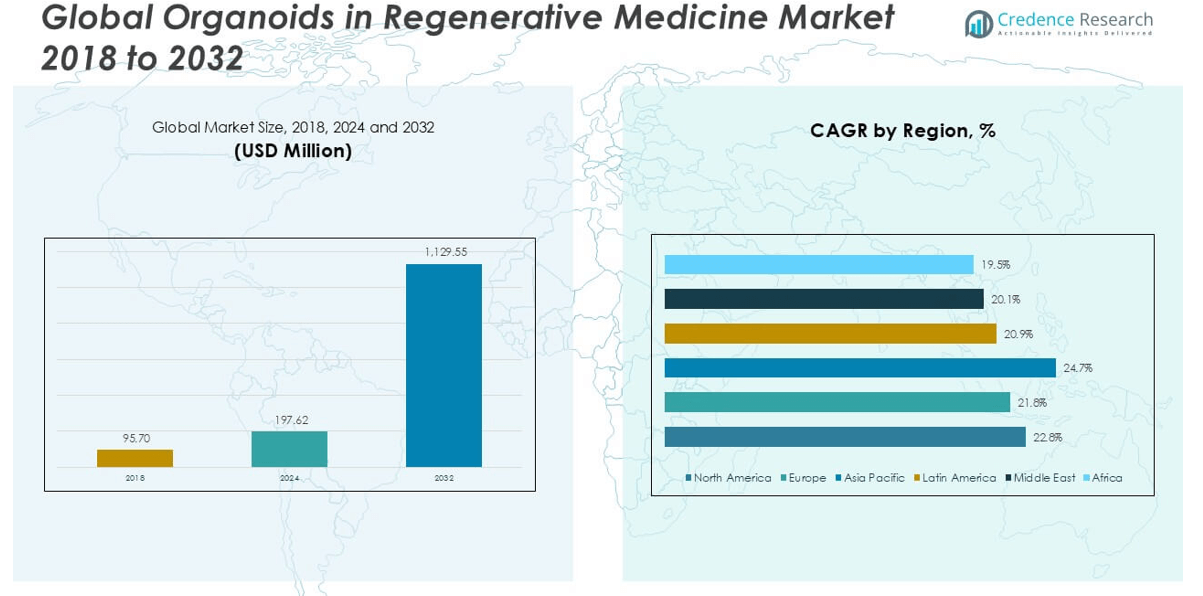
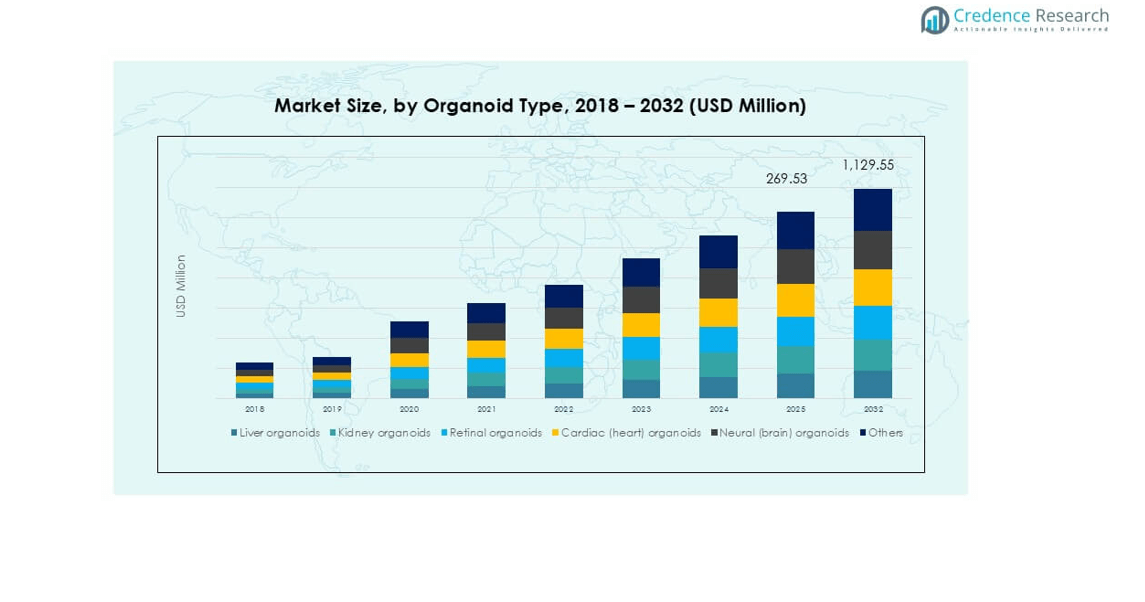
The Organoids in Regenerative Medicine market size was valued at USD 95.70 million in 2018 and increased to USD 197.62 million in 2024. It is anticipated to reach USD 1,129.55 million by 2032, growing at a CAGR of 22.72% during the forecast period.
| REPORT ATTRIBUTE | DETAILS |
|---|---|
| Historical Period | 2020-2023 |
| Base Year | 2024 |
| Forecast Period | 2025-2032 |
| Organoids in Regenerative Medicine Market Size 2024 | USD 197.62 million |
| Organoids in Regenerative Medicine Market, CAGR | 22.27% |
| Organoids in Regenerative Medicine Market Size 2032 | USD 1,129.55 million |
The organoids in regenerative medicine market is led by key players such as Thermo Fisher Scientific, Corning Incorporated, STEMCELL Technologies, HUB Organoids, Emulate, Inc., InSphero, and Danaher Corporation. These companies drive innovation through advanced organoid culture systems, strategic partnerships, and investments in personalized medicine and drug discovery platforms. North America holds the dominant regional position, accounting for 43.7% of the global market share in 2024, supported by a strong biotechnology infrastructure, high R&D spending, and early adoption of cutting-edge regenerative technologies. Europe and Asia Pacific follow, with growing investments and research collaborations further expanding their market footprints.
Market Insights
- The Organoids in Regenerative Medicine market was valued at USD 197.62 million in 2024 and is projected to reach USD 1,129.55 million by 2032, growing at a CAGR of 22.72% during the forecast period.
- Increasing demand for personalized medicine, advanced drug screening models, and rising prevalence of chronic diseases are driving market growth.
- Key trends include the adoption of patient-derived organoids in precision medicine and integration of AI in high-throughput screening for drug discovery.
- Major players such as Thermo Fisher Scientific, HUB Organoids, and STEMCELL Technologies are focusing on strategic collaborations and expanding organoid product portfolios; neural organoids hold the largest segment share due to rising neurological research.
- North America leads with 43.7% market share in 2024, followed by Europe at 26.9% and Asia Pacific at 20.3%; however, lack of standardization and high production costs remain key restraints for broader adoption.
Market Segmentation Analysis:
By Type
In the organoids in regenerative medicine market, neural (brain) organoids emerged as the dominant sub-segment, accounting for the largest market share in 2024. This growth is driven by the rising prevalence of neurodegenerative disorders and increasing research into brain development and neurological diseases. Neural organoids offer complex, three-dimensional brain-like structures, enabling more accurate disease modeling and drug testing. Additionally, advancements in stem cell technology and neurogenetics continue to fuel demand. Liver and kidney organoids are also gaining traction due to their applications in toxicity screening and transplant research, contributing to segmental diversification.
- For instance, researchers at the Wyss Institute and Harvard Medical School developed cerebral organoids with over 100,000 neurons showing synchronized network activity in under 8 weeks, enabling advanced neurological research.
By Application
Drug discovery and personalized medicine represents the largest application segment, holding a significant share of the organoids in regenerative medicine market. The ability of organoids to mimic human tissue responses makes them ideal for high-throughput drug screening, reducing dependence on animal models. Personalized medicine benefits from patient-derived organoids that enable tailored therapeutic strategies and prediction of treatment outcomes. Moreover, regenerative therapies and tissue engineering are rapidly expanding due to the increasing focus on organ regeneration and wound healing. Rising demand for functional genomics and mechanistic studies also supports growth across the application spectrum.
- For instance, Genentech used colorectal cancer organoids derived from 100 patients to test therapeutic responses, enabling identification of responder profiles with validated genetic markers.
By End User Industry
Among end users, pharmaceutical and biotech companies dominate the market with the highest revenue contribution. These organizations leverage organoid technology extensively for preclinical testing, drug development, and toxicity assessments. The need for predictive human-like models and increasing R&D investments drive segmental growth. Academic and research institutes follow closely, utilizing organoids for developmental biology and disease research. Hospitals and clinical laboratories are also adopting organoid applications in precision diagnostics and therapeutic screening. Overall, the increasing collaboration between commercial enterprises and research institutions accelerates the adoption of organoid platforms across all user segments.
Market Overview
Advancements in Stem Cell and 3D Bioprinting Technologies
Rapid progress in stem cell research and 3D bioprinting technologies significantly accelerates the development of organoids for regenerative medicine. These innovations enhance the accuracy, scalability, and structural complexity of organoids, making them more physiologically relevant for human tissues. The ability to generate patient-specific organoids supports applications in personalized therapies, transplantation research, and drug screening. As bioprinting becomes more precise and accessible, it enables reproducible fabrication of organoids, thereby expanding their commercial viability and clinical utility across pharmaceutical and biomedical sectors.
- For instance, CELLINK’s BIO X bioprinter has been adopted by over 1,000 labs globally to print multi-cellular organoid structures with sub-100 µm resolution, supporting reproducible tissue architecture.
Rising Prevalence of Chronic and Degenerative Diseases
The growing global burden of chronic conditions such as liver cirrhosis, kidney failure, cardiovascular diseases, and neurodegenerative disorders fuels demand for regenerative medical solutions. Organoids offer a promising avenue for developing disease-specific models and potential cell-based therapies. With the limitations of traditional treatments and organ transplantation-such as donor shortages and rejection risks-organoids provide scalable and immunocompatible alternatives. This increasing disease prevalence, particularly in aging populations, drives research investment and commercial interest in organoid-based regenerative approaches.
- For instance, Cincinnati Children’s Hospital successfully grew kidney organoids with more than 20 distinct cell types that simulated nephron functions, supporting therapeutic exploration for chronic kidney disease.
Increased Funding and Collaborative Research Initiatives
Growing public and private sector investments in organoid research are a major catalyst for market growth. Governments, academic institutions, and pharmaceutical companies are actively collaborating to develop advanced organoid platforms for various applications in regenerative medicine. High-profile grants, strategic partnerships, and multi-institutional consortia support infrastructure development and translational research. These funding initiatives enable the establishment of organoid biobanks, standardized protocols, and faster clinical validation, thereby facilitating the integration of organoids into mainstream biomedical research and healthcare practices.
Key Trends & Opportunities
Expansion into Personalized and Precision Medicine
Organoids are increasingly being adopted for personalized medicine, particularly in oncology and rare genetic disorders. Patient-derived organoids enable tailored therapeutic testing, helping clinicians predict drug efficacy and reduce trial-and-error in treatments. This trend presents a significant opportunity for pharmaceutical companies to develop more targeted therapies while minimizing adverse reactions. Additionally, precision medicine initiatives by healthcare providers and governments align with the capabilities of organoid technologies, encouraging wider adoption and integration into clinical workflows.
- For instance, Hubrecht Organoid Technology (HUB) built a biobank of over 100 patient-derived organoids for cystic fibrosis to screen responses to CFTR modulators, helping match treatments to individual patients.
Integration of Artificial Intelligence and High-Throughput Screening
The integration of AI and machine learning with organoid research enhances image analysis, pattern recognition, and data interpretation from complex organoid models. When combined with high-throughput screening techniques, AI enables faster identification of potential drug candidates and cellular responses. This convergence of technologies reduces time-to-market and improves R&D efficiency. It also opens avenues for automation and scalability in organoid-based platforms, creating opportunities for companies to commercialize organoid testing systems for pharmaceutical and diagnostic applications.
Key Challenges
High Cost and Technical Complexity
Despite their promise, organoid development remains expensive and technically demanding. The cost of culture media, stem cells, bioreactors, and skilled labor can be prohibitive, particularly for small- to mid-sized labs and companies. Additionally, producing organoids with consistent size, maturity, and function remains a challenge due to variability in protocols and cell sources. These limitations hinder large-scale adoption and restrict access to organoid technologies in resource-constrained settings, slowing down their integration into routine medical and research applications.
- For instance, a complete organoid culture kit from STEMCELL Technologies can cost over USD 3,000 per 24-well plate, with variation in output requiring repeat setups for reliable results.
Lack of Standardization and Regulatory Frameworks
The absence of standardized protocols and clear regulatory guidelines for organoid generation, characterization, and clinical use poses a significant hurdle. Variability in production techniques can lead to inconsistencies in results, affecting reliability and reproducibility. Regulatory bodies are still evaluating how to classify and approve organoid-based therapies, delaying their path to market. This regulatory ambiguity limits commercial investments and clinical adoption, underlining the need for global harmonization and best practice frameworks to support industry growth.
Ethical and Logistical Concerns in Biobanking and Usage
As the use of patient-derived organoids becomes more widespread, ethical and logistical concerns around informed consent, data privacy, and biobanking practices have intensified. Questions regarding ownership, long-term storage, and usage rights of organoid samples pose legal challenges for institutions and companies. Moreover, ensuring equitable access to biobanking facilities and addressing disparities in representation across populations remains a concern. Addressing these ethical and logistical barriers is crucial for sustaining public trust and supporting the ethical advancement of organoid-based medicine.
Regional Analysis
North America
North America dominated the organoids in regenerative medicine market in 2024, accounting for the largest regional market share of approximately 43.7%, with a market value rising from USD 42.23 million in 2018 to USD 86.30 million in 2024. The region is projected to reach USD 494.63 million by 2032, growing at a CAGR of 22.8%. This strong growth is driven by robust research infrastructure, substantial investments in biotechnology, and the presence of leading pharmaceutical companies. Favorable government support and a high prevalence of chronic diseases continue to propel the adoption of organoid technologies for drug development and personalized medicine.
- For instance, the National Institutes of Health (NIH) funded over 120 projects involving organoid-based models under the Human Biomolecular Atlas Program (HuBMAP), enabling tissue-level mapping for regenerative research.
Europe
Europe held the second-largest share in the organoids in regenerative medicine market in 2024, with a market size of USD 52.99 million, rising from USD 26.64 million in 2018 and anticipated to reach USD 284.77 million by 2032. The region contributed approximately 26.9% of the global market share in 2024, expanding at a CAGR of 21.8%. Growth is driven by increased funding for stem cell research, a well-established academic and research environment, and rising demand for advanced regenerative therapies. Regulatory support for clinical applications and expanding clinical trials across countries like Germany, the UK, and France further support market expansion.
- For instance, France's INSERM and the University of Cambridge collaborated on liver organoid generation using over 25 patient samples to study metabolic liver disorders under the Horizon 2020 program
Asia Pacific
Asia Pacific is the fastest-growing regional market for organoids in regenerative medicine, expanding at a CAGR of 24.7%. The market grew from USD 17.83 million in 2018 to USD 40.01 million in 2024, with expectations to reach USD 259.93 million by 2032, accounting for around 20.3% of the global market share in 2024. Factors contributing to this rapid growth include increased government funding, the growing presence of biotech startups, and rising awareness of precision medicine. China, Japan, and South Korea are leading contributors due to their emphasis on biomedical research and growing investment in 3D cell culture technologies.
Latin America
Latin America represented a smaller but steadily expanding share of the organoids in regenerative medicine market, holding approximately 4.9% of the market share in 2024. The market increased from USD 4.70 million in 2018 to USD 9.59 million in 2024 and is projected to reach USD 48.77 million by 2032, at a CAGR of 20.9%. Growth in this region is fueled by increased participation in international research collaborations, improving healthcare infrastructure, and growing interest in regenerative therapies. Brazil and Mexico are key markets due to their expanding biotech sectors and growing investments in personalized and cell-based medicine.
Middle East
The Middle East accounted for about 2.6% of the global organoids in regenerative medicine market in 2024, with market revenue increasing from USD 2.70 million in 2018 to USD 5.10 million in 2024. The market is forecast to reach USD 24.65 million by 2032, growing at a CAGR of 20.1%. Although still in the early stages, the region is witnessing gradual adoption of advanced biomedical technologies, supported by government healthcare initiatives and expanding partnerships with global research institutions. The UAE and Saudi Arabia are leading efforts to integrate regenerative medicine into healthcare innovation strategies.
Africa
Africa held the smallest regional share in 2024, contributing around 1.8% of the global market, with market size growing from USD 1.60 million in 2018 to USD 3.63 million in 2024. The region is projected to reach USD 16.81 million by 2032, at a CAGR of 19.5%. Market growth is hindered by limited infrastructure and investment; however, there is increasing interest in biotechnology, particularly in South Africa and Nigeria. International research partnerships and pilot projects in regenerative medicine are beginning to shape a foundation for future growth, gradually enhancing awareness and capacity for organoid-based technologies across the continent.
Market Segmentations:
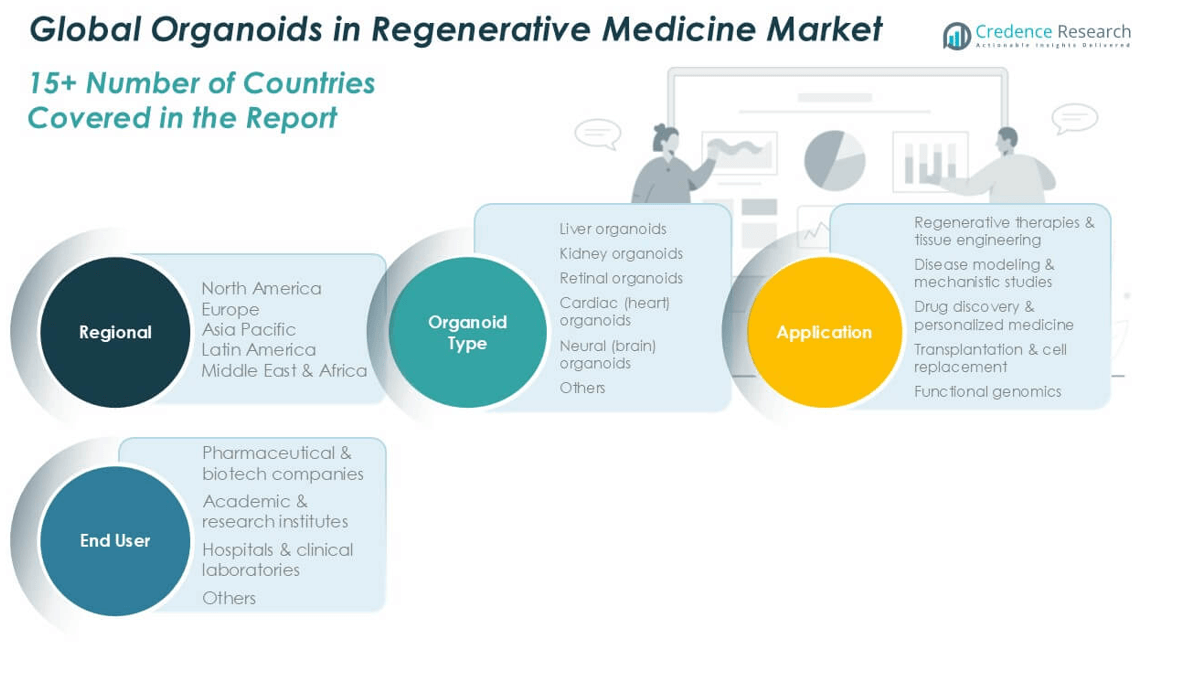
By Type
- Liver organoids
- Kidney organoids
- Retinal organoids
- Cardiac (heart) organoids
- Neural (brain) organoids
- Others
By Application
- Regenerative therapies & tissue engineering
- Disease modeling & mechanistic studies
- Drug discovery & personalized medicine
- Transplantation & cell replacement
- Functional genomics
By End User Industry
- Pharmaceutical & biotech companies
- Academic & research institutes
- Hospitals & clinical laboratories
- Others
By Geography
- North America
- U.S.
- Canada
- Mexico
- Europe
- Germany
- France
- U.K.
- Italy
- Spain
- Rest of Europe
- Asia Pacific
- China
- Japan
- India
- South Korea
- South-east Asia
- Rest of Asia Pacific
- Latin America
- Brazil
- Argentina
- Rest of Latin America
- Middle East & Africa
- GCC Countries
- South Africa
- Rest of the Middle East and Africa
Competitive Landscape
The competitive landscape of the organoids in regenerative medicine market is characterized by a mix of established biotechnology firms, innovative startups, and major life sciences corporations striving to strengthen their position through strategic collaborations, product innovation, and technological advancements. Key players such as Thermo Fisher Scientific, Corning Incorporated, and Danaher Corporation leverage their global infrastructure and extensive R&D capabilities to develop advanced organoid platforms and 3D cell culture solutions. Companies like HUB Organoids, Emulate, Inc., and InSphero focus on specialized organoid models tailored for drug discovery, disease modeling, and precision medicine. STEMCELL Technologies contributes significantly with proprietary organoid culture kits and reagents. Strategic moves such as mergers, acquisitions, licensing agreements, and expansion into emerging markets are common among these firms. Additionally, increased funding from both public and private sectors fosters innovation and accelerates commercialization. As the market matures, competition is expected to intensify, with a growing emphasis on scalability, reproducibility, and clinical translation of organoid-based solutions.
- For instance, Emulate, Inc. developed a Liver-Chip technology that demonstrated 87% sensitivity in predicting drug-induced liver injury across 27 compounds, offering a validated alternative to animal models.
Key Player Analysis
- HUB Organoids
- Thermo Fisher Scientific
- Corning Incorporated
- STEMCELL Technologies
- Emulate, Inc.
- InSphero
- Danaher Corporation
Recent Developments
- In 2025, Corning remains a key player in supporting organoid and spheroid research, providing extracellular matrix and 3D cell culture products that facilitate advancements in regenerative medicine and disease modeling. These products are crucial for enabling high-throughput and reproducible organoid cultures, which are essential for both basic research and drug discovery.
- In March 2025, STEMCELL Technologies is a key player in the organoid research field, providing specialized media and reagents for culturing neural, intestinal, and other organoids. Their offerings are designed to support both academic and clinical research, with a focus on translational and regenerative medicine applications.
- In 2025, InSphero continues to be a significant player in the organoids and spheroids market, focusing on reliable 3D models for disease and toxicity research, particularly for predicting drug responses. While primarily focused on drug discovery, their technology also supports regenerative medicine. The market for organoids and spheroids is experiencing substantial growth, with InSphero's offerings contributing to advancements in various research areas.
- In June 2024, DefiniGEN and Atelerix have successfully shipped in vitro liver models from the UK to a top-tier pharma customer in the US, combining DefiniGEN's iPSC hepatocytes with Atelerix's hydrogel preservation technology to maintain sample stability and function during long-distance transport.
- In May 2024, Crown Bioscience and the Shanghai Model Organisms Center (SMOC) are expanding their existing partnership to provide immuno-oncology platforms and services from Crown Bioscience facilities to worldwide.
Market Concentration & Characteristics
The Organoids in Regenerative Medicine Market shows a moderately concentrated structure, with a few dominant players holding significant market share and influencing overall innovation. Companies such as Thermo Fisher Scientific, Corning Incorporated, and STEMCELL Technologies maintain competitive advantages through extensive product portfolios, global distribution networks, and strong research collaborations. It features high entry barriers due to the complexity of organoid development, need for specialized expertise, and regulatory challenges. The market exhibits characteristics of rapid innovation, with ongoing focus on personalized medicine, disease modeling, and drug screening applications. Strategic alliances, licensing deals, and investments in biobanking infrastructure support growth and consolidation efforts. Demand remains concentrated in North America and Europe, while Asia Pacific is gaining momentum through government funding and biotech expansion. Despite growing interest, challenges such as protocol standardization, high cost of organoid culture systems, and limited scalability restrict broader adoption across emerging markets. The market continues to evolve, shaped by scientific progress and translational research outcomes.
Report Coverage
The research report offers an in-depth analysis based on Type, Application, End User Industry and Geography. It details leading market players, providing an overview of their business, product offerings, investments, revenue streams, and key applications. Additionally, the report includes insights into the competitive environment, SWOT analysis, current market trends, as well as the primary drivers and constraints. Furthermore, it discusses various factors that have driven market expansion in recent years. The report also explores market dynamics, regulatory scenarios, and technological advancements that are shaping the industry. It assesses the impact of external factors and global economic changes on market growth. Lastly, it provides strategic recommendations for new entrants and established companies to navigate the complexities of the market.
Future Outlook
- The market will witness increased integration of organoids in personalized medicine for patient-specific drug testing.
- Advancements in stem cell technology will enhance the scalability and complexity of organoid models.
- Pharmaceutical companies will expand investments in organoid-based drug discovery platforms.
- Neural and liver organoids will continue to dominate due to their relevance in neurological and hepatic disease studies.
- Regulatory frameworks will gradually evolve to support clinical applications of organoid therapies.
- Asia Pacific will emerge as a key growth region driven by expanding biotech infrastructure and government funding.
- Automation and artificial intelligence will improve the efficiency and reproducibility of organoid research.
- The demand for functional genomics and disease modeling applications will accelerate academic collaborations.
- Biobanking of patient-derived organoids will become more standardized and accessible to research institutions.
- Strategic mergers and acquisitions will shape the competitive landscape and drive innovation in the market.

Request a Free Sample
Fill in your details and we'll send you a free sample report.
- Sample data tables & charts
- Research methodology
Market Dynamics
Advancements in Stem Cell and 3D Bioprinting Technologies
Rapid progress in stem cell research and 3D bioprinting has enabled the creation of more physiologically relevant and scalable organoid models, supporting their use in regenerative medicine and expanding commercial and clinical applications.
Expansion of Personalized and Precision Medicine
The ability to generate patient-derived organoids allows for tailored drug testing and therapy selection, driving adoption in personalized medicine and enabling pharmaceutical companies to develop more targeted and effective treatments.
Rising Prevalence of Chronic and Degenerative Diseases
Increasing rates of conditions such as neurodegenerative disorders, liver cirrhosis, and kidney failure are fueling demand for organoid-based disease models and regenerative therapies, as traditional treatments and organ transplants face limitations.
Increased Funding and Collaborative Research Initiatives
Growing investments from governments, academic institutions, and the private sector are accelerating organoid research, supporting infrastructure development, and fostering multi-institutional collaborations that drive innovation and market growth.
Integration of Artificial Intelligence and High-Throughput Screening
The adoption of AI and automation in organoid research enhances data analysis and enables high-throughput drug screening, improving R&D efficiency and accelerating the identification of new therapeutic candidates.
Need a Custom Version of This Report?
Tailor the scope, geography, or segments to your exact requirements.
- Custom geography or segment scope
- Direct access to our analyst team
Frequently Asked Questions
What is the current size of the Organoids in Regenerative Medicine Market?
What are the key segments within the Organoids in Regenerative Medicine Market?
Which segment is leading the Organoids in Regenerative Medicine Market share?
What are the market drivers in the Organoids in Regenerative Medicine Market?
Table of Content
Chapter 1 Market Segmentation
- 1.1 Segmentation Framework
- 1.1.1 Product and Service Classification
- 1.1.2 Application and End-Use Classification
- 1.1.3 Technology and Solution Classification
- 1.1.4 Customer and Distribution Channel Classification
- 1.1.5 Geographic Segmentation
- 1.1.6 Market Segment Definitions and Boundaries
- 1.2 By Type
- 1.2.1 Neural (brain) organoids
- 1.2.2 Liver organoids
- 1.2.3 Kidney organoids
- 1.2.4 Retinal organoids
- 1.2.5 Cardiac (heart) organoids
- 1.2.6 Others
- 1.3 By Application
- 1.3.1 Drug discovery & personalized medicine
- 1.3.2 Regenerative therapies & tissue engineering
- 1.3.3 Disease modeling & mechanistic studies
- 1.3.4 Transplantation & cell replacement
- 1.3.5 Functional genomics
- 1.4 By End User Industry
- 1.4.1 Pharmaceutical & biotech companies
- 1.4.2 Academic & research institutes
- 1.4.3 Hospitals & clinical laboratories
- 1.4.4 Others
Chapter 2 Introduction
- 2.1 Report Objectives and Scope
- 2.2 Product Definition and Industry Terminology
- 2.3 Market Inclusions and Exclusions
- 2.4 Research Process
- 2.4.1 Primary Research and Expert Interviews
- 2.4.2 Secondary Research and Source Review
- 2.4.3 Top-Down and Bottom-Up Estimation
- 2.4.4 Data Triangulation and Verification
- 2.5 Market Size Measurement Basis
- 2.5.1 2024: USD 197.62 million → 2032: USD 1,129.55 million
- 2.6 Historical and Forecast Reference Periods
- 2.6.1 Base Year: 2024
- 2.6.2 Forecast Period: 2024-2032
- 2.7 Research Assumptions and Limitations
Chapter 3 Executive Summary
- 3.1 Market Snapshot and Key Findings
- 3.2 Base-Year Market Size, 2024
- 3.3 Forecast Market Size, 2032
- 3.4 Revenue and Volume Growth Outlook
- 3.5 Key Demand and Supply Indicators
- 3.6 Leading Market Segments
- 3.7 Fastest-Growing Market Opportunities
- 3.8 Regional Performance Highlights
- 3.9 Technology and Industry Transformation
- 3.10 Competitive Landscape Summary
- 3.11 Analyst View and Strategic Implications
Chapter 4 Global Organoids in Regenerative Medicine Market Trends and Developments
- 4.1 Historical Industry Development
- 4.2 Recent Market Trends and Developments
- 4.3 Demand and Customer Behavior Trends
- 4.4 Technology and Product Innovation
- 4.5 Artificial Intelligence, Automation and Digitalization
- 4.6 Local Manufacturing and Supply Chain Realignment
- 4.7 Industry Partnerships, Mergers and Acquisitions
- 4.8 Sustainability and Circular Economy Developments
- 4.9 Government and Private Sector Investment Trends
- 4.10 Emerging Business Models and Commercialization
- 4.11 Industry Developments and Announcements
Chapter 5 Global Organoids in Regenerative Medicine Market Production, Supply and Demand Analysis
- 5.1 Demand Trend and Consumption Analysis
- 5.2 Demand Forecast, 2024-2032
- 5.3 Production and Output Trend
- 5.4 Production and Output Forecast, 2024-2032
- 5.5 Installed Capacity and Capacity Utilization
- 5.6 Company-Wise Production Plants and Statistics
- 5.6.1 Installed Production Capacity
- 5.6.2 Actual Production
- 5.6.3 Planned Capacity and Expansion Targets
- 5.7 Supply Chain Structure and Procurement Trends
- 5.8 Supply-Demand Gap and Bottlenecks
- 5.9 Import Dependence and Sourcing Structure
- 5.10 Contract Manufacturing and Outsourcing
- 5.11 Regional Supply and Demand Concentration
Chapter 6 Global Organoids in Regenerative Medicine Market Pricing Analysis
- 6.1 Pricing Structure and Measurement
- 6.2 Historical Pricing Trends
- 6.3 Pricing Outlook, 2024-2032
- 6.4 Average Selling Price and Unit Economics
- 6.5 Pricing by Product and Market Segment
- 6.6 Geographic Pricing Differences
- 6.7 Key Input, Energy, Labor and Logistics Costs
- 6.8 Contract Pricing and Purchasing Models
- 6.9 Pricing Sensitivity and Competitive Positioning
- 6.10 Price, Margin and Profitability Implications
Chapter 7 Global Organoids in Regenerative Medicine Market Dynamics
- 7.1 Market Growth Drivers
- 7.1.1 Demand-Side Drivers
- 7.1.2 Technology and Innovation Drivers
- 7.1.3 Infrastructure and Investment Drivers
- 7.1.4 Regulatory and Policy Drivers
- 7.2 Market Restraints
- 7.2.1 Cost and Affordability Constraints
- 7.2.2 Technology and Adoption Barriers
- 7.2.3 Supply Chain and Operational Constraints
- 7.3 Market Challenges
- 7.3.1 Competitive Pressure and Margin Erosion
- 7.3.2 Skills, Infrastructure and Implementation Gaps
- 7.4 Emerging Market Opportunities
- 7.5 Market Dynamics Impact and Time-Horizon Assessment
Chapter 8 Global Organoids in Regenerative Medicine Value Chain Analysis
- 8.1 Industry Value Chain Overview
- 8.2 Upstream Suppliers and Critical Inputs
- 8.3 Technology and Component Providers
- 8.4 Manufacturing or Service Delivery
- 8.5 Distribution, Channel Partners and Integrators
- 8.6 Downstream Applications and End Users
- 8.7 Value Addition and Profit Pools
- 8.8 Vertical Integration and Outsourcing
- 8.9 Supplier Concentration and Risk
- 8.10 Supply Chain Localization and Resilience
Chapter 9 Global Organoids in Regenerative Medicine Market Regulations and Policies
- 9.1 Relevant Laws, Standards and Compliance Frameworks
- 9.2 Product, Service, Safety and Quality Requirements
- 9.3 Government Policies, Incentives and Subsidies
- 9.4 Imports, Exports and Trade Barriers
- 9.5 Public Procurement and Local Content Requirements
- 9.6 Environmental and Sustainability Compliance
- 9.7 Upcoming Policy Changes and Market Implications
Chapter 10 Global Organoids in Regenerative Medicine Market Hotspots and Opportunities
- 10.1 Market Opportunity Mapping and Growth Hotspots
- 10.2 High-Growth Applications and Customer Groups
- 10.3 Underserved Markets and White-Space Opportunities
- 10.4 Emerging Technology and Product Opportunities
- 10.5 New Capacity and Investment Hotspots
- 10.6 Market Entry and Expansion Opportunities
- 10.7 Distribution and Partnership Opportunities
- 10.8 Near-Term and Long-Term Commercial Potential
- 10.9 Opportunity Attractiveness and Execution Risks
Chapter 11 Global Organoids in Regenerative Medicine Market Outlook, 2024-2032
- 11.1 Market Size and Analysis
- 11.1.1 Revenue (Market Measurement: 2024: USD 197.62 million → 2032: USD 1,129.55 million)
- 11.1.2 Market Volume and Quantity Sold
- 11.1.3 Historical Market Size
- 11.1.4 Base-Year Market Size, 2024
- 11.2 Market Forecast, 2024-2032
- 11.2.1 Revenue Forecast to 2032
- 11.2.2 Volume Forecast to 2032
- 11.2.3 CAGR and Year-on-Year Growth
- 11.2.4 Incremental Revenue Opportunity
- 11.3 Forecast Assumptions and Scenario Analysis
- 11.3.1 Base-Case Forecast
- 11.3.2 Optimistic and Conservative Scenarios
- 11.3.3 Technology, Pricing and Policy Sensitivities
- 11.4 Market Attractiveness and Growth Outlook
Chapter 12 Global Organoids in Regenerative Medicine Market Segmentation and Outlook
- 12.1 Segmentation Summary and Market Shares, 2024
- 12.2 Largest and Fastest-Growing Segments
- 12.3 By Type - Market Size and Forecast, 2024-2032
- 12.3.1 Segment Definition and Scope
- 12.3.2 Historical Market Size
- 12.3.3 Revenue Forecast, 2024-2032
- 12.3.4 Volume Forecast, 2024-2032
- 12.3.5 Base-Year Market Share, 2024
- 12.3.6 Segment CAGR and Growth Drivers
- 12.3.7 Subsegment Market Size and Forecast
- 12.3.7.1 Neural (brain) organoids
- 12.3.7.2 Liver organoids
- 12.3.7.3 Kidney organoids
- 12.3.7.4 Retinal organoids
- 12.3.7.5 Cardiac (heart) organoids
- 12.3.7.6 Others
- 12.3.8 Subsegment Pricing and Adoption Trends
- 12.3.9 Leading Suppliers and Competition
- 12.3.10 Regional Demand and Opportunities
- 12.4 By Application - Market Size and Forecast, 2024-2032
- 12.4.1 Segment Definition and Scope
- 12.4.2 Historical Market Size
- 12.4.3 Revenue Forecast, 2024-2032
- 12.4.4 Volume Forecast, 2024-2032
- 12.4.5 Base-Year Market Share, 2024
- 12.4.6 Segment CAGR and Growth Drivers
- 12.4.7 Subsegment Market Size and Forecast
- 12.4.7.1 Drug discovery & personalized medicine
- 12.4.7.2 Regenerative therapies & tissue engineering
- 12.4.7.3 Disease modeling & mechanistic studies
- 12.4.7.4 Transplantation & cell replacement
- 12.4.7.5 Functional genomics
- 12.4.8 Subsegment Pricing and Adoption Trends
- 12.4.9 Leading Suppliers and Competition
- 12.4.10 Regional Demand and Opportunities
- 12.5 By End User Industry - Market Size and Forecast, 2024-2032
- 12.5.1 Segment Definition and Scope
- 12.5.2 Historical Market Size
- 12.5.3 Revenue Forecast, 2024-2032
- 12.5.4 Volume Forecast, 2024-2032
- 12.5.5 Base-Year Market Share, 2024
- 12.5.6 Segment CAGR and Growth Drivers
- 12.5.7 Subsegment Market Size and Forecast
- 12.5.7.1 Pharmaceutical & biotech companies
- 12.5.7.2 Academic & research institutes
- 12.5.7.3 Hospitals & clinical laboratories
- 12.5.7.4 Others
- 12.5.8 Subsegment Pricing and Adoption Trends
- 12.5.9 Leading Suppliers and Competition
- 12.5.10 Regional Demand and Opportunities
- 12.6 Segment Growth Comparison
- 12.7 Segment Attractiveness and Priority Matrix
Chapter 13 Global Organoids in Regenerative Medicine End-Use and Application Market Outlook
- 13.1 End-Use Industry and Customer Demand Structure
- 13.2 Leading Applications and Customer Groups
- 13.3 End-Use Market Size, Share and Forecast
- 13.4 Major End-Use Industry Deep Dives
- 13.4.1 Customer Requirements and Use Cases
- 13.4.2 Demand and Replacement Cycles
- 13.4.3 Technical and Regulatory Considerations
- 13.4.4 Purchasing and Procurement Models
- 13.4.5 Leading Vendors and Distribution Channels
- 13.4.6 Forecast and Commercial Opportunities
- 13.5 Emerging Applications and Cross-Segment Demand
- 13.6 End-Use Industry Investment Priorities
Chapter 14 Global Organoids in Regenerative Medicine Geographic Market Outlook, 2024-2032
- 14.1 Regional Market Size and Share, 2024
- 14.2 Regional Market Forecast, 2024-2032
- 14.3 Regional Pricing, Production and Demand Differences
- 14.4 North America
- 14.4.1 United States
- 14.4.2 Canada
- 14.4.3 Mexico
- 14.5 Europe
- 14.5.1 Germany
- 14.5.2 France
- 14.5.3 Italy
- 14.5.4 United Kingdom
- 14.5.5 Spain
- 14.5.6 Poland
- 14.5.7 Russia
- 14.5.8 Netherlands
- 14.5.9 Belgium
- 14.5.10 Sweden
- 14.5.11 Denmark
- 14.5.12 Norway
- 14.5.13 Rest of Europe
- 14.6 Asia Pacific
- 14.6.1 China
- 14.6.2 India
- 14.6.3 Japan
- 14.6.4 South Korea
- 14.6.5 Thailand
- 14.6.6 Indonesia
- 14.6.7 Vietnam
- 14.6.8 Malaysia
- 14.6.9 Australia
- 14.6.10 Rest of Asia Pacific
- 14.7 Latin America
- 14.7.1 Brazil
- 14.7.2 Argentina
- 14.7.3 Colombia
- 14.7.4 Chile
- 14.7.5 Rest of Latin America
- 14.8 Middle East
- 14.8.1 Saudi Arabia
- 14.8.2 United Arab Emirates
- 14.8.3 Turkey
- 14.8.4 Israel
- 14.8.5 Iran
- 14.8.6 Rest of the Middle East
- 14.9 Africa
- 14.9.1 South Africa
- 14.9.2 Egypt
- 14.9.3 Nigeria
- 14.9.4 Morocco
- 14.9.5 Rest of Africa
- 14.10 Regional Investment, Policy and Supply Chain Differences
- 14.11 Regional Competitive Landscape
- 14.12 Geographic Growth Hotspots
Chapter 15 Global Organoids in Regenerative Medicine Technology, Innovation and Sustainability Outlook
- 15.1 Technology Landscape and Maturity
- 15.2 Product, Process and Service Innovation
- 15.3 AI, Automation and Digital Tools in the Industry
- 15.4 Technology Adoption and Performance Benchmarking
- 15.5 Innovation Pipeline and R&D Investment
- 15.6 Patent and Intellectual Property Trends
- 15.7 Energy Efficiency and Resource Management
- 15.8 Sustainability, Recycling and Circularity
- 15.9 Technology Roadmap, 2024-2032
- 15.10 Risks of Obsolescence and Technology Substitution
Chapter 16 Global Organoids in Regenerative Medicine Market Key Strategic Imperatives
- 16.1 Growth and Market Entry Priorities
- 16.2 High-Return Products and Segments
- 16.3 Pricing, Profitability and Cost Optimization
- 16.4 Technology Investment and Product Differentiation
- 16.5 Supply Chain Localization and Resilience
- 16.6 Distribution and Customer Acquisition
- 16.7 Partnership, Acquisition and Capacity Strategy
- 16.8 Regional Expansion Priorities
- 16.9 Short-, Medium- and Long-Term Actions
Chapter 17 Competition Outlook
- 17.1 Industry Competition Characteristics
- 17.2 Market Structure and Concentration
- 17.3 Market Share and Competitive Positioning, 2024
- 17.4 Company-Wise Revenue and Product Benchmarking
- 17.5 Production and Service Capacity Benchmarking
- 17.6 Technology, Pricing and Differentiation
- 17.7 Regional Footprint and Distribution Strength
- 17.8 Mergers, Acquisitions and Strategic Alliances
- 17.9 New Entrants and Competitive Threats
- 17.10 Porter's Five Forces and Industry Attractiveness
- 17.11 Competitive Outlook, 2024-2032
Chapter 18 Company Profiles
- 18.1 Company Coverage and Selection Criteria
- 18.2 Thermo Fisher Scientific
- 18.2.1 Business Description
- 18.2.2 Company Ownership and Geographic Presence
- 18.2.3 Product and Service Portfolio
- 18.2.4 Manufacturing and Operating Footprint
- 18.2.5 Production Capacity and Expansion Plans
- 18.2.6 Financial Performance and Investment
- 18.2.7 Market Share and Competitive Position
- 18.2.8 Technology and Innovation Capabilities
- 18.2.9 Strategic Alliances or Partnerships
- 18.2.10 Recent Developments
- 18.2.11 Growth Strategy and Outlook
- 18.3 Corning Incorporated
- 18.4 STEMCELL Technologies
- 18.5 HUB Organoids
- 18.6 Emulate, Inc.
- 18.7 InSphero
- 18.8 Danaher Corporation
- 18.9 DefiniGEN
- 18.10 Crown Bioscience
- 18.11 Atelerix
- 18.12 Other Relevant Market Participants
Note: Every listed company is profiled on the structure shown under the first company. The company list is preliminary and may change based on research findings, market developments, data availability and client requirements.
Chapter 19 Disclaimer
- 19.1 Research and Forecast Disclaimer
- 19.2 Data Source and Estimation Limitations
Note: The depth of individual sections depends on data availability for this market. Volume, capacity, trade and other unit-based metrics are included where applicable.

