| REPORT ATTRIBUTE | DETAILS |
|---|---|
| Historical Period | 2020-2023 |
| Base Year | 2024 |
| Forecast Period | 2025-2032 |
| Canada Cheese Market Size 2024 | USD 3,281.09 million |
| Canada Cheese Market, CAGR | 4.53% |
| Canada Cheese Market Size 2032 | USD 4,677.80 million |
Market Overview
Canada Cheese market size was valued at USD 3,281.09 million in 2024 and is anticipated to reach USD 4,677.80 million by 2032, at a CAGR of 4.53% during the forecast period (2024-2032).
The Canada Cheese Market is driven by increasing consumer demand for a variety of cheese products, fueled by growing interest in premium and artisanal cheeses. The trend toward healthier eating habits has also enhanced the appeal of cheese, particularly varieties that offer higher nutritional value, such as those rich in protein and calcium. Additionally, the rise in snacking culture and the popularity of cheese-based snacks, including cheese sticks and spreads, is boosting market growth. Innovations in cheese production, such as reduced-fat and lactose-free options, are catering to a broader consumer base. The expanding foodservice industry, along with the increased consumption of cheese in fast food chains and restaurants, further supports market demand. Consumers’ preference for convenience and ready-to-eat options, along with the growing trend of culinary exploration, is propelling the demand for diverse cheese offerings in Canada. This combination of factors contributes to the market’s positive growth trajectory.
The Canada Cheese Market is influenced by regional preferences, with significant consumption concentrated in provinces like Ontario and Quebec, where cheese demand is driven by large populations and diverse culinary traditions. Ontario leads with a high demand for various cheese types, including cheddar and processed cheese, while Quebec is known for its strong preference for artisanal and locally made cheeses. Western Canada, particularly British Columbia, shows growing interest in premium and plant-based cheese products, reflecting health-conscious consumer trends. Key players in the Canadian cheese market include both international and local companies, such as Arla Foods, Saputo Inc., Sargento Foods, Dairy Farmers of America, and Tillamook Creamery. These companies play a pivotal role in shaping the market by offering a wide range of cheese products catering to varying consumer preferences. As the market continues to evolve, innovation in product offerings, such as healthier and plant-based options, remains a key competitive factor.
Market Insights
- The Canada Cheese Market was valued at USD 3,281.09 million in 2024 and is projected to reach USD 4,677.80 million by 2032, growing at a CAGR of 4.53% during the forecast period (2024-2032).
- The global cheese market was valued at USD 97,440.00 million in 2024 and is projected to reach USD 1,46,171.12 million by 2032, growing at a CAGR of 5.20% during the forecast period.
- The demand for premium and artisanal cheeses is driving market growth, with consumers seeking unique, high-quality products.
- Rising health consciousness is encouraging the consumption of low-fat, lactose-free, and plant-based cheese options.
- Plant-based cheese alternatives are becoming increasingly popular, driven by the growing number of vegan and lactose-intolerant consumers.
- The growing snacking culture and preference for convenient cheese products are contributing to market expansion.
- Key players in the Canadian cheese market include Arla Foods, Saputo Inc., and Sargento Foods, who dominate the market through innovation and quality offerings.
- Regional preferences vary, with Ontario and Quebec leading demand, while Western Canada and British Columbia are witnessing rising interest in plant-based and premium cheeses.
Report scope
This reports segments are Canada Cheese Market as Follows;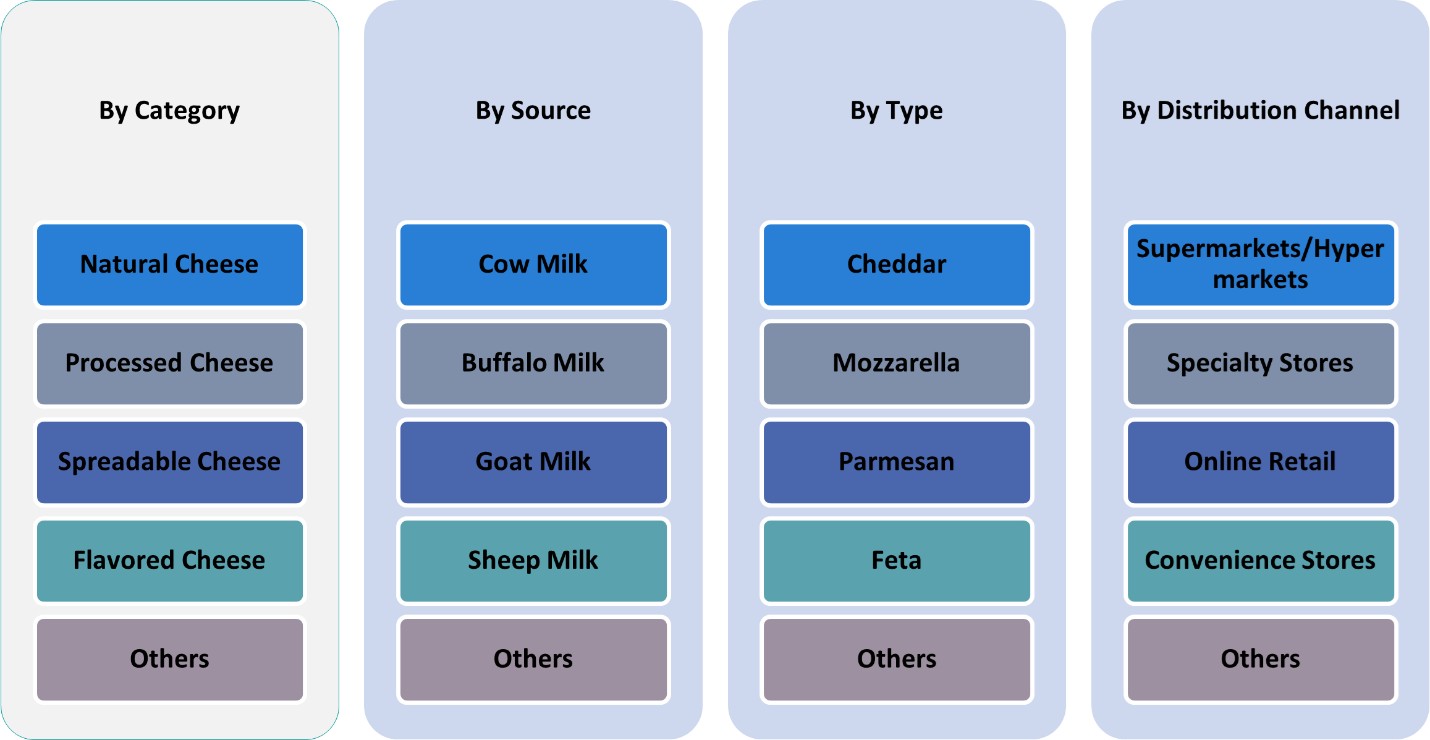
Market Drivers
Growing Demand for Diverse Cheese Varieties
One of the primary drivers of the Canada Cheese Market is the increasing consumer demand for a wide range of cheese varieties. Canadians are becoming more adventurous in their culinary preferences, seeking out premium, gourmet, and artisanal cheeses. For instance, a report by the Canadian Dairy Commission highlights that specialty cheeses like aged cheddar and blue cheese have seen a notable increase in consumption, particularly among urban consumers exploring gourmet options. This trend has led to a significant rise in the consumption of specialty cheeses, such as aged, blue, and flavored varieties. The evolving palate of consumers is driving cheese manufacturers to expand their product offerings, introducing new and unique options to cater to these demands. As consumers continue to explore different cheese types, this has stimulated growth in the market, particularly in premium and niche cheese segments.
Health-Conscious Consumer Behavior
The growing awareness of the health benefits associated with cheese is another key driver of market growth. Cheese is recognized as a good source of essential nutrients such as protein, calcium, and vitamins, which are vital for bone health and overall well-being. For instance, a survey conducted by Health Canada revealed that a significant portion of consumers are actively seeking low-fat and lactose-free cheese options to align with their dietary preferences. As more consumers prioritize balanced and nutritious diets, they are incorporating cheese into their meals, both for its nutritional value and as a versatile food ingredient. Additionally, the development of healthier cheese options, such as low-fat, reduced-sodium, and lactose-free varieties, is catering to the demands of health-conscious individuals. This trend is further amplified by the increasing popularity of cheese as a protein-rich snack, making it a preferred choice among health-conscious consumers.
Rise in Snacking Culture
Another significant factor contributing to the growth of the Canada Cheese Market is the rise in snacking culture. Cheese-based snacks, including cheese sticks, cubes, and spreads, have gained considerable traction among Canadian consumers. These snacks offer convenience and portability, making them ideal for on-the-go consumption. With busy lifestyles becoming more common, consumers are opting for quick, healthy, and satisfying snack options, and cheese fits this demand perfectly. Moreover, the popularity of cheese in ready-to-eat snack packs, which combine cheese with other complementary ingredients like nuts and fruits, has further boosted the consumption of cheese. As the snacking trend continues to grow, cheese remains a key player in the category, driving market expansion.
Expanding Foodservice Sector
The growing foodservice sector, including fast food chains, restaurants, and catering services, plays a crucial role in the increasing demand for cheese in Canada. Cheese is an essential ingredient in many popular dishes such as pizzas, sandwiches, burgers, and pasta, which are staples in the Canadian foodservice industry. With the rise in dining out and takeaway orders, especially in urban areas, the demand for cheese in the foodservice sector has seen a significant increase. Additionally, the trend toward healthier and more diverse menu options in restaurants, such as plant-based or dairy-free cheese alternatives, is creating new opportunities for cheese manufacturers. As the foodservice industry continues to expand, cheese remains a key component in both traditional and innovative menu items, further fueling market growth.
Market Trends
Convenience and On-the-Go Cheese Products
The demand for convenient, ready-to-eat cheese products is another key trend shaping the Canada Cheese Market. With busy lifestyles becoming increasingly common, consumers are looking for quick, easy, and portable food options. For instance, Armstrong Cheese has introduced individually wrapped cheese sticks and snack packs that combine cheese with nuts or dried fruits, catering to on-the-go consumers seeking nutritious and satisfying snacks. These products offer both convenience and nutrition, making them ideal for on-the-go consumption. The rise of snackable cheese products has not only changed consumer behavior but also led manufacturers to innovate with packaging and portion sizes to meet the needs of busy, health-conscious individuals. This trend is particularly prominent among young professionals and families, contributing significantly to market growth.
Emergence of Plant-Based Cheese Alternatives
Another emerging trend in the Canadian cheese market is the growing demand for plant-based cheese alternatives. As the number of vegan, vegetarian, and lactose-intolerant consumers rises, plant-based cheese made from nuts, soy, and other plant-derived ingredients has gained significant traction. For instance, Protein Industries Canada has supported projects aimed at developing plant-based cheese alternatives using locally grown crops like oats and legumes, which are now gaining shelf space in major grocery chains. These products cater to individuals who avoid dairy products for ethical, environmental, or health reasons. The variety and quality of plant-based cheeses have improved in recent years, offering similar textures and flavors to traditional cheese. This trend is driving the expansion of the plant-based segment within the Canadian cheese market, encouraging both established dairy brands and new entrants to invest in plant-based cheese production to meet consumer demand.
Shift Towards Artisanal and Premium Cheeses
A notable trend in the Canada Cheese Market is the increasing preference for artisanal and premium cheese varieties. Canadian consumers are becoming more discerning, seeking unique and high-quality cheese products that offer distinctive flavors and textures. Artisanal cheeses, often made using traditional methods and locally sourced ingredients, are gaining popularity among consumers looking for authenticity and gourmet experiences. This trend is particularly strong in urban centers where consumers are willing to pay a premium for niche, small-batch cheeses. As a result, artisanal cheese producers are expanding their offerings, and major manufacturers are introducing more premium lines to cater to this growing demand, influencing market dynamics in favor of higher-end products.
Health-Conscious Innovations in Cheese Products
The growing focus on health and wellness has prompted innovation in cheese production. Consumers are increasingly looking for cheese options that align with their health-conscious lifestyles. As a response, manufacturers are developing a wide range of healthier alternatives, such as low-fat, reduced-sodium, and lactose-free cheeses. Additionally, the rise of plant-based diets has led to the creation of dairy-free cheese options made from alternative ingredients like nuts, soy, and coconut. These innovations are attracting a broader consumer base, particularly among individuals with dietary restrictions or those pursuing healthier eating habits. The trend toward health-conscious cheese options is reshaping the market and expanding its reach.
Market Challenges Analysis
Rising Dairy Prices and Supply Chain Disruptions
A notable trend in the Canada Cheese Market is the increasing preference for artisanal and premium cheese varieties. Canadian consumers are becoming more discerning, seeking unique and high-quality cheese products that offer distinctive flavors and textures. For instance, a report by the Canadian Dairy Commission highlights that artisanal cheese producers in regions like Quebec and British Columbia have experienced a surge in demand for locally crafted cheeses, such as Oka and Pacific Pepper Spire, reflecting a growing appreciation for traditional methods and regional flavors. This trend is particularly strong in urban centers where consumers are willing to pay a premium for niche, small-batch cheeses. As a result, artisanal cheese producers are expanding their offerings, and major manufacturers are introducing more premium lines to cater to this growing demand, influencing market dynamics in favor of higher-end products.
Competition from Plant-Based and Alternative Dairy Products
Another significant challenge in the Canadian cheese market is the increasing competition from plant-based and alternative dairy products. With the growing demand for vegan and lactose-free options, plant-based cheese alternatives have seen substantial growth in recent years. These products appeal to a wide range of consumers, including those with dietary restrictions, ethical concerns, or environmental motivations. As a result, traditional dairy-based cheese faces intense competition from these alternatives, which offer similar textures and flavors while catering to health-conscious and ethically-minded consumers. The rising popularity of plant-based cheeses is posing a challenge to traditional cheese manufacturers, forcing them to adapt and innovate in order to maintain their market position. The need to develop dairy-free options or improve the sustainability of production processes adds an additional layer of complexity to the market dynamics.
Market Opportunities
The Canada Cheese Market presents significant opportunities for growth, particularly with the increasing consumer demand for premium, artisanal, and locally sourced products. As Canadian consumers continue to seek high-quality, unique cheese varieties, producers have the chance to capitalize on this trend by offering specialty cheeses that reflect regional flavors and artisanal techniques. Additionally, the growing trend of food experimentation and culinary exploration opens doors for introducing new, exotic cheese flavors and blends. Manufacturers can leverage this opportunity to differentiate themselves through innovation, catering to consumers who value authenticity and unique food experiences. By expanding their product portfolios and focusing on premium offerings, cheese producers can tap into the growing demand for specialty and gourmet cheeses, which is expected to remain strong in the coming years.
Furthermore, the increasing shift toward health-conscious eating presents a significant opportunity for growth in the Canada Cheese Market. Consumers are increasingly focused on the nutritional value of their food choices, and cheese products that offer added health benefits, such as high-protein, low-fat, or lactose-free options, are gaining traction. Manufacturers can explore opportunities to innovate and create healthier cheese alternatives that cater to specific dietary needs. Additionally, the rise in plant-based diets offers a new avenue for dairy companies to expand their product lines with plant-based cheese alternatives. With the growing awareness of sustainability and ethical consumerism, offering plant-based options made from nuts, soy, or other plant-based ingredients presents a key opportunity to attract a new demographic of health-conscious and environmentally aware consumers. This growing demand for both healthier and plant-based cheese products provides an avenue for producers to diversify their offerings and expand their consumer base.
Market Segmentation Analysis:
By Category:
The Canada Cheese Market is segmented by category, with cheddar cheese being the dominant product in terms of consumption. Cheddar’s widespread popularity is driven by its versatility and broad use in various food applications, from sandwiches to snacks and cooking ingredients. Processed cheese is another significant segment, favored for its convenience, long shelf life, and consistent quality. This category is particularly popular in the foodservice industry, where bulk use of standardized cheese is common. Spreadable cheese has also seen a rise in popularity, driven by increasing demand for easy-to-use and snackable cheese products. This segment appeals to consumers looking for convenience and healthier snacking options. Flavored cheese is gaining traction due to consumers’ desire for more variety and unique flavors, with varieties such as herb-infused, spicy, and smoked cheeses becoming increasingly popular. The "Others" segment includes specialty cheeses like blue cheese and goat cheese, catering to niche markets seeking more distinct, gourmet offerings.
By Source:
The source of milk used in cheese production also plays a crucial role in shaping the Canadian cheese market. Cow milk is by far the most commonly used source for cheese production, primarily due to its availability, cost-effectiveness, and versatility in creating various cheese types, including cheddar, mozzarella, and processed cheeses. Buffalo milk, while less common, is gaining attention for its rich, creamy texture, making it a preferred choice for premium and specialty cheeses, such as mozzarella. Goat milk cheese is also growing in popularity due to its unique flavor profile and nutritional benefits, particularly among consumers who are lactose intolerant or seeking alternative dairy options. Sheep milk, though a smaller segment, is sought after for its rich, tangy taste and is commonly used in Mediterranean and specialty cheeses like pecorino and manchego. The "Others" segment includes plant-based cheese alternatives, catering to the rising demand for vegan and lactose-free options in the Canadian market.
Segments:
Based on Category:
- Cheddar
- Processed Cheese
- Spreadable Cheese
- Flavored Cheese
- Others
Based on Source:
- Cow Milk
- Buffalo Milk
- Goat Milk
- Sheep Milk
- Others
Based on Type:
- Cheddar
- Mozzarella
- Parmesan
- Feta
- Others
Based on Distribution Channel:
- Supermarkets/Hypermarkets
- Specialty Stores
- Online Retail
- Convenience Stores
- Others
Based on the Geography:
- Ontario
- Quebec
- Western Canada
- British Columbia
- Atlantic Canada
Regional Analysis
Ontario
Ontario holds the largest market share in the Canada Cheese Market, accounting for approximately 38% of the total market. This is due to the region's high population density, which drives substantial consumer demand for cheese across various categories, including cheddar, processed, and spreadable cheeses. Ontario is also home to many of the country’s largest foodservice providers and retail chains, further boosting cheese consumption. The region’s diverse demographic and a growing trend of premium and artisanal cheese consumption contribute to Ontario's dominant position in the market. The strong presence of local dairy producers and cheese manufacturers further supports the region's position, ensuring a steady supply of cheese products to meet the high demand.
Quebec
Quebec follows closely behind with a market share of approximately 27%. Known for its unique cheese culture, Quebec has a long history of cheese production, with many local varieties such as poutine cheese, blue cheese, and brie being popular among consumers. The province’s preference for both traditional and artisanal cheeses is a key driver for its market share, as local consumers increasingly prioritize high-quality, locally made products. Quebec's well-developed dairy industry, along with a strong demand from both retail and foodservice sectors, contributes significantly to its position in the Canada Cheese Market. Additionally, the region has seen growth in the consumption of specialty and flavored cheeses.
Western Canada
Western Canada, which includes provinces such as Alberta and Saskatchewan, holds a market share of around 18%. The region's cheese consumption is steadily increasing, driven by a growing population and a rise in foodservice demand. Western Canada benefits from an established dairy farming industry, which helps maintain a steady supply of milk for cheese production. The demand for cheese in Western Canada is largely driven by younger, health-conscious consumers who are keen on exploring a variety of cheese types, including low-fat and lactose-free options. The growing popularity of cheese-based snacks and convenient products is also contributing to the market expansion in this region.
British Columbia
British Columbia, with a market share of approximately 12%, has a smaller but rapidly growing cheese market. The province’s market is driven by a preference for both premium cheeses and plant-based alternatives, reflecting the region's health-conscious and environmentally aware consumer base. The rising popularity of artisanal and organic cheeses, as well as the increasing number of specialty cheese producers, is fueling growth in British Columbia. Additionally, the province’s emphasis on sustainability and ethical sourcing is influencing cheese production trends. While British Columbia's cheese market is smaller compared to other regions, it is experiencing steady growth, particularly in the premium and plant-based cheese segments.
Atlantic Canada
Atlantic Canada holds the smallest market share, contributing around 5% to the overall Canada Cheese Market. Despite its smaller size, the region has a growing demand for high-quality, locally sourced cheese products, with an increasing preference for specialty cheeses. The dairy industry in Atlantic Canada is relatively small, but local producers are gaining recognition for their unique offerings. While cheese consumption is lower compared to other regions, there is potential for growth driven by tourism, regional demand for artisanal products, and the expansion of retail and foodservice options. As consumer preferences evolve, the cheese market in Atlantic Canada is expected to grow gradually over the coming years.
Key Player Analysis
- Arla Foods
- Saputo Inc.
- Sargento Foods Inc.
- Dairy Farmers of America
- Tillamook Creamery
- Schreiber Foods
- Organic Valley
- Leprino Foods
- Bel Brands USA
- Borden Dairy
Competitive Analysis
The Canada Cheese Market is highly competitive, with several leading players dominating the industry through diverse product offerings and innovation. Key players such as Arla Foods, Saputo Inc., Sargento Foods, Dairy Farmers of America, Tillamook Creamery, Schreiber Foods, Organic Valley, Leprino Foods, Bel Brands USA, and Borden Dairy play a pivotal role in shaping market dynamics. These companies focus on providing a wide range of cheese products, from traditional varieties like cheddar and mozzarella to premium and artisanal options. They also cater to evolving consumer preferences by introducing healthier alternatives, including lactose-free and reduced-fat cheeses, as well as plant-based options. The Canada Cheese Market is characterized by intense competition, with major companies continuously innovating to meet evolving consumer preferences. Players in the market focus on diversifying their product portfolios to include traditional cheeses like cheddar, mozzarella, and processed varieties, as well as premium and artisanal options that cater to the growing demand for high-quality, unique products. Health-conscious consumers are driving the market towards lactose-free, low-fat, and plant-based alternatives, encouraging manufacturers to develop new offerings that align with these trends. Additionally, companies are capitalizing on the rising snacking culture by introducing convenient, on-the-go cheese products such as cheese sticks, spreads, and pre-packaged portions. The competition is further fueled by the increasing popularity of regional and local cheeses, with smaller producers focusing on authentic, locally sourced products to capture niche markets. The focus on sustainability, ethical sourcing, and cleaner labels is another key factor influencing competitive strategies. As the market continues to expand, companies are looking to differentiate themselves through innovation, premium offerings, and by tapping into the growing demand for healthier and more sustainable cheese options.
Recent Developments
- In March 2025, Arla Foods Ingredients partnered with Valley Queen in South Dakota to increase production of Nutrilac® ProteinBoost, a high-protein whey concentrate, to meet growing demand in North America.
- In March 2025, Sargento introduced three innovations-Natural American Cheese, Seasoned Shredded Cheese in collaboration with McCormick, and Shareables snack trays in partnership with Mondelez International.
- In March 2025, Saputo USA debuted its spicy mozzarella cheese at the International Pizza Expo, combining traditional mozzarella with habanero jack for a zesty twist.
- In February 2025, Kraft Heinz emphasized innovation across three platforms-taste elevation, easy-ready meals, and snacking. This includes new product launches like Lunchables Spicy Nachos and value-sized Kraft Mac & Cheese to cater to shifting consumer preferences.
- In November 2024, Lactalis highlighted emerging trends such as premiumization, hot eating cheeses like Président Extra Creamy Brie, and sustainability-focused products like Seriously Spreadable Black Pepper cheese.
Market Concentration & Characteristics
The Canada Cheese Market exhibits a moderate level of market concentration, with a few dominant players holding a significant share while smaller regional producers cater to niche segments. Large companies lead the market through extensive distribution networks, strong brand recognition, and product diversification, offering a wide range of cheese types, including cheddar, mozzarella, processed, and premium varieties. However, the market also sees a rising number of smaller, local producers who focus on artisanal and specialty cheeses, appealing to consumers seeking unique, high-quality products. The market is characterized by increasing innovation, particularly in the development of healthier options like low-fat, lactose-free, and plant-based cheeses. Consumers are becoming more health-conscious and are driving demand for products with clean labels and sustainable sourcing. The shift toward convenience, such as ready-to-eat and snackable cheese options, also influences market dynamics, with companies continuously adapting to changing consumer preferences
Report Coverage
The research report offers an in-depth analysis based on Category, Source, Type, Distribution Channel and Geography. It details leading market players, providing an overview of their business, product offerings, investments, revenue streams, and key applications. Additionally, the report includes insights into the competitive environment, SWOT analysis, current market trends, as well as the primary drivers and constraints. Furthermore, it discusses various factors that have driven market expansion in recent years. The report also explores market dynamics, regulatory scenarios, and technological advancements that are shaping the industry. It assesses the impact of external factors and global economic changes on market growth. Lastly, it provides strategic recommendations for new entrants and established companies to navigate the complexities of the market.
Future Outlook
- The Canada Cheese Market is expected to continue its steady growth, driven by increasing consumer demand for premium and artisanal cheeses.
- Health-conscious eating trends will drive the demand for low-fat, lactose-free, and plant-based cheese alternatives.
- The shift towards convenient snacking options, such as cheese sticks and pre-packaged cheese, will shape product innovation.
- Regional cheese varieties and local sourcing will become more prominent as consumers seek authentic and sustainable products.
- The growing popularity of plant-based and vegan diets will encourage companies to expand their range of dairy-free cheese options.
- As sustainability becomes a key concern, cheese manufacturers will increasingly focus on ethical sourcing and eco-friendly packaging.
- Advances in cheese production technology will lead to improvements in taste, texture, and nutritional value.
- The rise of e-commerce and direct-to-consumer channels will provide new opportunities for cheese brands to reach a wider audience.
- The Canadian cheese market will see continued consolidation, with larger players acquiring smaller regional producers to expand their portfolios.
- Export opportunities will grow, especially in markets that are showing increased demand for high-quality Canadian cheeses.

Request a Free Sample
Fill in your details and we'll send you a free sample report.
- Sample data tables & charts
- Research methodology
Market Dynamics
Growing Demand for Diverse Cheese Varieties
Canadian consumers are increasingly seeking a wider range of cheese types, including premium, gourmet, and artisanal options, which is prompting manufacturers to expand their product portfolios and cater to evolving tastes.
Health-Conscious Consumer Behavior
Rising awareness of the nutritional benefits of cheese, such as high protein and calcium content, is driving demand for low-fat, reduced-sodium, and lactose-free cheese products, appealing to health-focused consumers.
Rise in Snacking Culture
Busy lifestyles and the popularity of convenient, on-the-go foods have led to increased consumption of cheese-based snacks like sticks, cubes, and spreads, supporting market growth.
Expanding Foodservice Sector
The growth of fast food chains, restaurants, and catering services in Canada is boosting demand for cheese as a key ingredient in popular menu items, further fueling market expansion.
Emergence of Plant-Based Cheese Alternatives
The increasing number of vegan, vegetarian, and lactose-intolerant consumers is driving innovation and growth in plant-based cheese alternatives, broadening the market’s appeal and consumer base.
Need a Custom Version of This Report?
Tailor the scope, geography, or segments to your exact requirements.
- Custom geography or segment scope
- Direct access to our analyst team
Frequently Asked Questions
What is the current size of the Canada Cheese Market?
What factors are driving the growth of the Canada Cheese Market?
What are the key segments within the Canada Cheese Market?
Who are the major players in the Canada Cheese Market?
Table of Content
Chapter 1 Market Segmentation
- 1.1 Segmentation Framework
- 1.1.1 Product and Service Classification
- 1.1.2 Application and End-Use Classification
- 1.1.3 Technology and Solution Classification
- 1.1.4 Customer and Distribution Channel Classification
- 1.1.5 Geographic Segmentation
- 1.1.6 Market Segment Definitions and Boundaries
- 1.2 By Type
- 1.2.1 Cheddar
- 1.2.2 Mozzarella
- 1.2.3 Parmesan
- 1.2.4 Feta
- 1.2.5 Others
- 1.3 By Source
- 1.3.1 Cow Milk
- 1.3.2 Buffalo Milk
- 1.3.3 Goat Milk
- 1.3.4 Sheep Milk
- 1.3.5 Others
- 1.4 By Category
- 1.4.1 Cheddar
- 1.4.2 Processed Cheese
- 1.4.3 Spreadable Cheese
- 1.4.4 Flavored Cheese
- 1.4.5 Others
Chapter 2 Introduction
- 2.1 Report Objectives and Scope
- 2.2 Product Definition and Industry Terminology
- 2.3 Market Inclusions and Exclusions
- 2.4 Research Process
- 2.4.1 Primary Research and Expert Interviews
- 2.4.2 Secondary Research and Source Review
- 2.4.3 Top-Down and Bottom-Up Estimation
- 2.4.4 Data Triangulation and Verification
- 2.5 Market Size Measurement Basis
- 2.5.1 2024: USD 3,281.09 million → 2032: USD 4,677.80 million
- 2.6 Historical and Forecast Reference Periods
- 2.6.1 Base Year: 2024
- 2.6.2 Forecast Period: 2024-2032
- 2.7 Research Assumptions and Limitations
Chapter 3 Executive Summary
- 3.1 Market Snapshot and Key Findings
- 3.2 Base-Year Market Size, 2024
- 3.3 Forecast Market Size, 2032
- 3.4 Revenue and Volume Growth Outlook
- 3.5 Key Demand and Supply Indicators
- 3.6 Leading Market Segments
- 3.7 Fastest-Growing Market Opportunities
- 3.8 Regional Performance Highlights
- 3.9 Technology and Industry Transformation
- 3.10 Competitive Landscape Summary
- 3.11 Analyst View and Strategic Implications
Chapter 4 Canada Cheese Market Trends and Developments
- 4.1 Historical Industry Development
- 4.2 Recent Market Trends and Developments
- 4.3 Demand and Customer Behavior Trends
- 4.4 Technology and Product Innovation
- 4.5 Artificial Intelligence, Automation and Digitalization
- 4.6 Local Manufacturing and Supply Chain Realignment
- 4.7 Industry Partnerships, Mergers and Acquisitions
- 4.8 Sustainability and Circular Economy Developments
- 4.9 Government and Private Sector Investment Trends
- 4.10 Emerging Business Models and Commercialization
- 4.11 Industry Developments and Announcements
Chapter 5 Canada Cheese Market Production, Supply and Demand Analysis
- 5.1 Demand Trend and Consumption Analysis
- 5.2 Demand Forecast, 2024-2032
- 5.3 Production and Output Trend
- 5.4 Production and Output Forecast, 2024-2032
- 5.5 Installed Capacity and Capacity Utilization
- 5.6 Company-Wise Production Plants and Statistics
- 5.6.1 Installed Production Capacity
- 5.6.2 Actual Production
- 5.6.3 Planned Capacity and Expansion Targets
- 5.7 Supply Chain Structure and Procurement Trends
- 5.8 Supply-Demand Gap and Bottlenecks
- 5.9 Import Dependence and Sourcing Structure
- 5.10 Contract Manufacturing and Outsourcing
- 5.11 Regional Supply and Demand Concentration
Chapter 6 Canada Cheese Market Pricing Analysis
- 6.1 Pricing Structure and Measurement
- 6.2 Historical Pricing Trends
- 6.3 Pricing Outlook, 2024-2032
- 6.4 Average Selling Price and Unit Economics
- 6.5 Pricing by Product and Market Segment
- 6.6 Geographic Pricing Differences
- 6.7 Key Input, Energy, Labor and Logistics Costs
- 6.8 Contract Pricing and Purchasing Models
- 6.9 Pricing Sensitivity and Competitive Positioning
- 6.10 Price, Margin and Profitability Implications
Chapter 7 Canada Cheese Market Dynamics
- 7.1 Market Growth Drivers
- 7.1.1 Demand-Side Drivers
- 7.1.2 Technology and Innovation Drivers
- 7.1.3 Infrastructure and Investment Drivers
- 7.1.4 Regulatory and Policy Drivers
- 7.2 Market Restraints
- 7.2.1 Cost and Affordability Constraints
- 7.2.2 Technology and Adoption Barriers
- 7.2.3 Supply Chain and Operational Constraints
- 7.3 Market Challenges
- 7.3.1 Competitive Pressure and Margin Erosion
- 7.3.2 Skills, Infrastructure and Implementation Gaps
- 7.4 Emerging Market Opportunities
- 7.5 Market Dynamics Impact and Time-Horizon Assessment
Chapter 8 Canada Cheese Value Chain Analysis
- 8.1 Industry Value Chain Overview
- 8.2 Upstream Suppliers and Critical Inputs
- 8.3 Technology and Component Providers
- 8.4 Manufacturing or Service Delivery
- 8.5 Distribution, Channel Partners and Integrators
- 8.6 Downstream Applications and End Users
- 8.7 Value Addition and Profit Pools
- 8.8 Vertical Integration and Outsourcing
- 8.9 Supplier Concentration and Risk
- 8.10 Supply Chain Localization and Resilience
Chapter 9 Canada Cheese Market Regulations and Policies
- 9.1 Relevant Laws, Standards and Compliance Frameworks
- 9.2 Product, Service, Safety and Quality Requirements
- 9.3 Government Policies, Incentives and Subsidies
- 9.4 Imports, Exports and Trade Barriers
- 9.5 Public Procurement and Local Content Requirements
- 9.6 Environmental and Sustainability Compliance
- 9.7 Upcoming Policy Changes and Market Implications
Chapter 10 Canada Cheese Market Hotspots and Opportunities
- 10.1 Market Opportunity Mapping and Growth Hotspots
- 10.2 High-Growth Applications and Customer Groups
- 10.3 Underserved Markets and White-Space Opportunities
- 10.4 Emerging Technology and Product Opportunities
- 10.5 New Capacity and Investment Hotspots
- 10.6 Market Entry and Expansion Opportunities
- 10.7 Distribution and Partnership Opportunities
- 10.8 Near-Term and Long-Term Commercial Potential
- 10.9 Opportunity Attractiveness and Execution Risks
Chapter 11 Canada Cheese Market Outlook, 2024-2032
- 11.1 Market Size and Analysis
- 11.1.1 Revenue (Market Measurement: 2024: USD 3,281.09 million → 2032: USD 4,677.80 million)
- 11.1.2 Market Volume and Quantity Sold
- 11.1.3 Historical Market Size
- 11.1.4 Base-Year Market Size, 2024
- 11.2 Market Forecast, 2024-2032
- 11.2.1 Revenue Forecast to 2032
- 11.2.2 Volume Forecast to 2032
- 11.2.3 CAGR and Year-on-Year Growth
- 11.2.4 Incremental Revenue Opportunity
- 11.3 Forecast Assumptions and Scenario Analysis
- 11.3.1 Base-Case Forecast
- 11.3.2 Optimistic and Conservative Scenarios
- 11.3.3 Technology, Pricing and Policy Sensitivities
- 11.4 Market Attractiveness and Growth Outlook
Chapter 12 Canada Cheese Market Segmentation and Outlook
- 12.1 Segmentation Summary and Market Shares, 2024
- 12.2 Largest and Fastest-Growing Segments
- 12.3 By Type - Market Size and Forecast, 2024-2032
- 12.3.1 Segment Definition and Scope
- 12.3.2 Historical Market Size
- 12.3.3 Revenue Forecast, 2024-2032
- 12.3.4 Volume Forecast, 2024-2032
- 12.3.5 Base-Year Market Share, 2024
- 12.3.6 Segment CAGR and Growth Drivers
- 12.3.7 Subsegment Market Size and Forecast
- 12.3.7.1 Cheddar
- 12.3.7.2 Mozzarella
- 12.3.7.3 Parmesan
- 12.3.7.4 Feta
- 12.3.7.5 Others
- 12.3.8 Subsegment Pricing and Adoption Trends
- 12.3.9 Leading Suppliers and Competition
- 12.3.10 Regional Demand and Opportunities
- 12.4 By Source - Market Size and Forecast, 2024-2032
- 12.4.1 Segment Definition and Scope
- 12.4.2 Historical Market Size
- 12.4.3 Revenue Forecast, 2024-2032
- 12.4.4 Volume Forecast, 2024-2032
- 12.4.5 Base-Year Market Share, 2024
- 12.4.6 Segment CAGR and Growth Drivers
- 12.4.7 Subsegment Market Size and Forecast
- 12.4.7.1 Cow Milk
- 12.4.7.2 Buffalo Milk
- 12.4.7.3 Goat Milk
- 12.4.7.4 Sheep Milk
- 12.4.7.5 Others
- 12.4.8 Subsegment Pricing and Adoption Trends
- 12.4.9 Leading Suppliers and Competition
- 12.4.10 Regional Demand and Opportunities
- 12.5 By Category - Market Size and Forecast, 2024-2032
- 12.5.1 Segment Definition and Scope
- 12.5.2 Historical Market Size
- 12.5.3 Revenue Forecast, 2024-2032
- 12.5.4 Volume Forecast, 2024-2032
- 12.5.5 Base-Year Market Share, 2024
- 12.5.6 Segment CAGR and Growth Drivers
- 12.5.7 Subsegment Market Size and Forecast
- 12.5.7.1 Cheddar
- 12.5.7.2 Processed Cheese
- 12.5.7.3 Spreadable Cheese
- 12.5.7.4 Flavored Cheese
- 12.5.7.5 Others
- 12.5.8 Subsegment Pricing and Adoption Trends
- 12.5.9 Leading Suppliers and Competition
- 12.5.10 Regional Demand and Opportunities
- 12.6 Segment Growth Comparison
- 12.7 Segment Attractiveness and Priority Matrix
Chapter 13 Canada Cheese Geographic Market Outlook, 2024-2032
- 13.1 Domestic Market Distribution and Demand Clusters
- 13.2 State- or Province-Wise Market Size and Forecast, 2024-2032
- 13.3 City and Metropolitan Market Outlook
- 13.4 Industrial, Manufacturing and Commercial Clusters
- 13.5 Geographic Concentration of Key End Users
- 13.6 Local Pricing and Purchasing Differences
- 13.7 Domestic Production Facilities and Capacity Map
- 13.8 Local Infrastructure and Project Pipeline
- 13.9 State-Level Policy and Incentive Differences
- 13.10 Subnational Investment Hotspots and Opportunities
- 13.11 Distribution and Logistics Networks
- 13.12 Domestic Competitive Footprint
Chapter 14 Canada Cheese Technology, Innovation and Sustainability Outlook
- 14.1 Technology Landscape and Maturity
- 14.2 Product, Process and Service Innovation
- 14.3 AI, Automation and Digital Tools in the Industry
- 14.4 Technology Adoption and Performance Benchmarking
- 14.5 Innovation Pipeline and R&D Investment
- 14.6 Patent and Intellectual Property Trends
- 14.7 Energy Efficiency and Resource Management
- 14.8 Sustainability, Recycling and Circularity
- 14.9 Technology Roadmap, 2024-2032
- 14.10 Risks of Obsolescence and Technology Substitution
Chapter 15 Canada Cheese Market Key Strategic Imperatives
- 15.1 Growth and Market Entry Priorities
- 15.2 High-Return Products and Segments
- 15.3 Pricing, Profitability and Cost Optimization
- 15.4 Technology Investment and Product Differentiation
- 15.5 Supply Chain Localization and Resilience
- 15.6 Distribution and Customer Acquisition
- 15.7 Partnership, Acquisition and Capacity Strategy
- 15.8 Regional Expansion Priorities
- 15.9 Short-, Medium- and Long-Term Actions
Chapter 16 Competition Outlook
- 16.1 Industry Competition Characteristics
- 16.2 Market Structure and Concentration
- 16.3 Market Share and Competitive Positioning, 2024
- 16.4 Company-Wise Revenue and Product Benchmarking
- 16.5 Production and Service Capacity Benchmarking
- 16.6 Technology, Pricing and Differentiation
- 16.7 Regional Footprint and Distribution Strength
- 16.8 Mergers, Acquisitions and Strategic Alliances
- 16.9 New Entrants and Competitive Threats
- 16.10 Porter's Five Forces and Industry Attractiveness
- 16.11 Competitive Outlook, 2024-2032
Chapter 17 Company Profiles
- 17.1 Company Coverage and Selection Criteria
- 17.2 Arla Foods
- 17.2.1 Business Description
- 17.2.2 Company Ownership and Geographic Presence
- 17.2.3 Product and Service Portfolio
- 17.2.4 Manufacturing and Operating Footprint
- 17.2.5 Production Capacity and Expansion Plans
- 17.2.6 Financial Performance and Investment
- 17.2.7 Market Share and Competitive Position
- 17.2.8 Technology and Innovation Capabilities
- 17.2.9 Strategic Alliances or Partnerships
- 17.2.10 Recent Developments
- 17.2.11 Growth Strategy and Outlook
- 17.3 Saputo Inc.
- 17.4 Sargento Foods Inc.
- 17.5 Dairy Farmers of America
- 17.6 Tillamook Creamery
- 17.7 Schreiber Foods
- 17.8 Organic Valley
- 17.9 Leprino Foods
- 17.10 Bel Brands USA
- 17.11 Borden Dairy
- 17.12 Other Relevant Market Participants
Note: Every listed company is profiled on the structure shown under the first company. The company list is preliminary and may change based on research findings, market developments, data availability and client requirements.
Chapter 18 Disclaimer
- 18.1 Research and Forecast Disclaimer
- 18.2 Data Source and Estimation Limitations
Note: The depth of individual sections depends on data availability for this market. Volume, capacity, trade and other unit-based metrics are included where applicable.