
What Is a Battery Energy Storage System (BESS) and How Does It Work
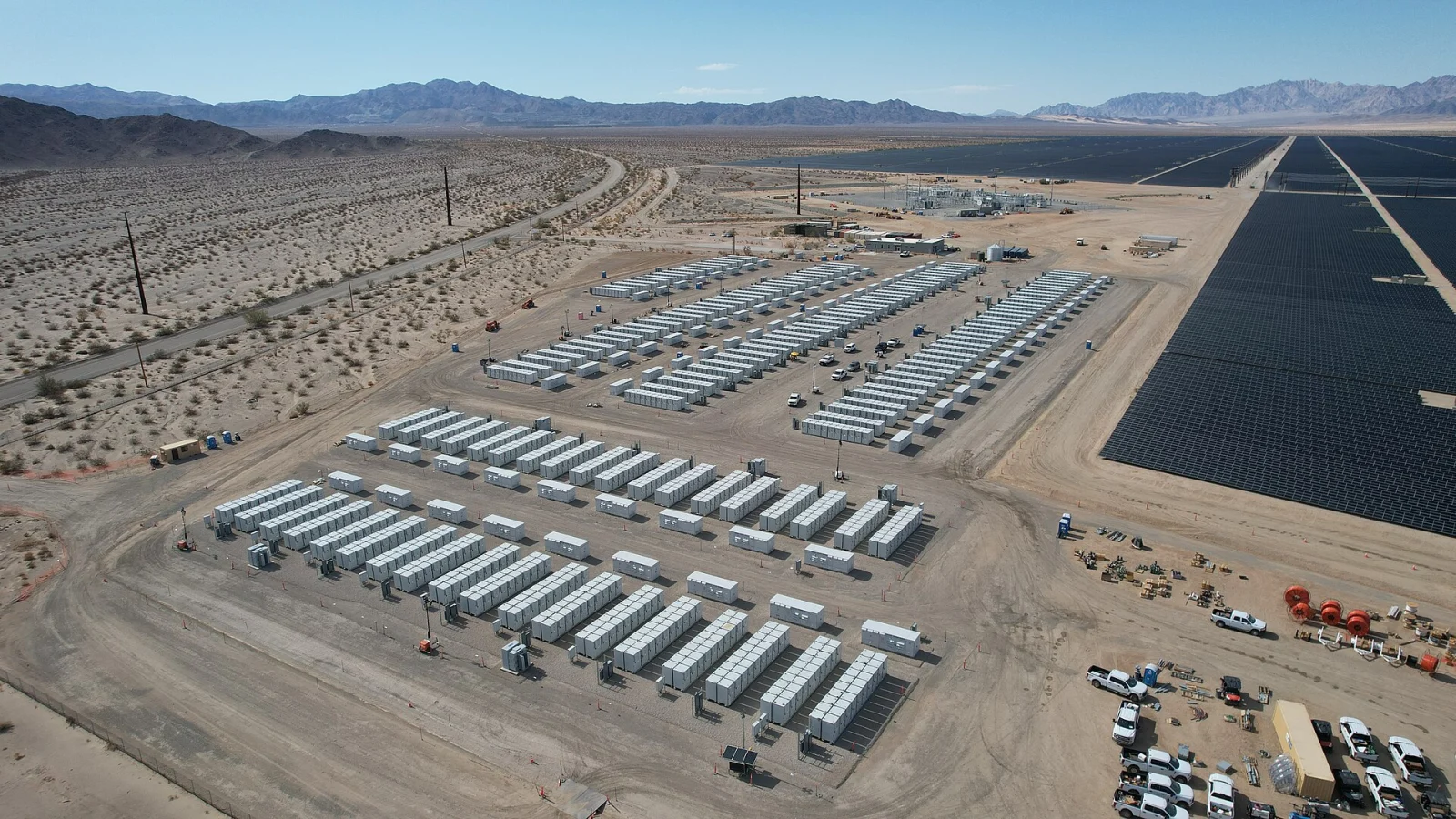
A battery energy storage system (BESS) is a grid-connected installation that charges batteries with electricity when it is plentiful or cheap and discharges it when demand, prices or reliability needs are higher. A modern BESS combines lithium-ion cells grouped into modules and racks, a battery management system that guards each cell, inverters and a power conversion system that turn direct current into alternating current, an energy management system that decides when to charge, and cooling and fire protection equipment. Utilities, independent power producers and large energy users deploy these systems for price arbitrage, frequency regulation, peak capacity and the shifting of midday solar output into the evening.
A BESS is a power plant built from layers of hardware
The smallest unit in a BESS is the battery cell, and everything above it exists to make thousands of cells behave like one dispatchable resource. A November 2024 report prepared by Idaho National Laboratory for the U.S. Department of Energy describes cells and modules connected in series and parallel to reach the voltage and capacity a project needs. Modules are mounted in racks, and racks sit inside containers or purpose-built enclosures on the project site. Because the building block is modular, the same cell and rack design can be repeated to reach very different project sizes, which lets integrators standardize hardware across customers.
Above the cells, the INL report identifies several control and conversion layers that determine how safely and profitably a system runs.
- Battery management system (BMS). Hardware and software that manage charge and discharge and monitor the cell environment, including temperature and overcurrent, and that pass data to the higher-level controls.
- Inverters and the power conversion system (PCS). Inverters convert direct current from the batteries into alternating current for the grid and back again, while the PCS groups multiple inverters with control and protection equipment at large sites.
- Transformers. A site grid transformer raises output to the voltage of the interconnection.
- Energy management system (EMS). The master controller that coordinates the whole plant, takes market or utility dispatch instructions and sets charge and discharge schedules.
- Safety and environmental systems. Cooling, fire and gas detection, emergency shutdown and intrusion detection, which protect both the equipment and the surrounding community.
The split between these layers matters commercially because each one fails, ages and is procured differently. The EMS in particular determines whether a project captures the revenue it was financed on. Buyers comparing bids therefore look beyond the cell supplier to the integrator that writes the controls, a theme examined in the battery management system market report.
Power rating and duration describe two separate limits
Every BESS carries two separate ratings that buyers and planners often confuse. The power rating, in megawatts, sets how fast the system can charge or discharge and is largely fixed by the inverters and the interconnection. The energy rating, in megawatt-hours, sets how long the system can sustain that output and is fixed by the number of cells installed. Dividing energy by power gives duration, so a 100 MW system with 400 MWh of batteries is a four-hour battery.
Duration drives cost structure because energy and power are priced separately. The National Renewable Energy Laboratory's 2024 Annual Technology Baseline models utility-scale lithium-ion systems with 2, 4, 6, 8 and 10 hours of storage and calculates total system cost per kilowatt as battery pack cost per kilowatt-hour multiplied by duration, plus a balance-of-system cost per kilowatt. In practice, adding hours adds cells but not inverters, so each extra hour raises cost less than proportionally. The same baseline assumes roughly one cycle per day, which yields a capacity factor of 16.7% for a four-hour system and 8.3% for a two-hour system.
Four hours has become a common design point in the largest U.S. markets. The California Independent System Operator's Department of Market Monitoring states that most batteries in the CAISO market have a duration of four hours. A February 2026 presentation by the Electric Reliability Council of Texas (ERCOT) notes that one-hour, two-hour and four-hour-plus systems are all entering its market, showing that the right duration depends on which service a project is built to sell.
Lithium iron phosphate now dominates stationary storage
Most grid batteries use one of two lithium-ion chemistries, nickel manganese cobalt (NMC) or lithium iron phosphate (LFP). NREL's baseline notes that LFP became the primary chemistry for stationary storage starting in 2022, and ERCOT states that most BESS in its region are currently built with LFP technology. For a stationary buyer, the choice turns on cycle life, thermal behavior, cost per kilowatt-hour and supply security, since a fixed site is far less sensitive to pack weight than a vehicle is. Supply conditions for that chemistry are covered in the lithium iron phosphate battery market analysis.
Chemistry is not the only design choice for longer-duration storage. ERCOT also identifies zinc batteries as an emerging long-duration option, and other electrochemical and mechanical approaches compete for applications beyond four hours. For multi-day or seasonal shifting, planners also study chemical carriers, such as the hydrogen pathways compared in an earlier post on green hydrogen vs. blue hydrogen.
U.S. battery capacity has grown about 70% a year
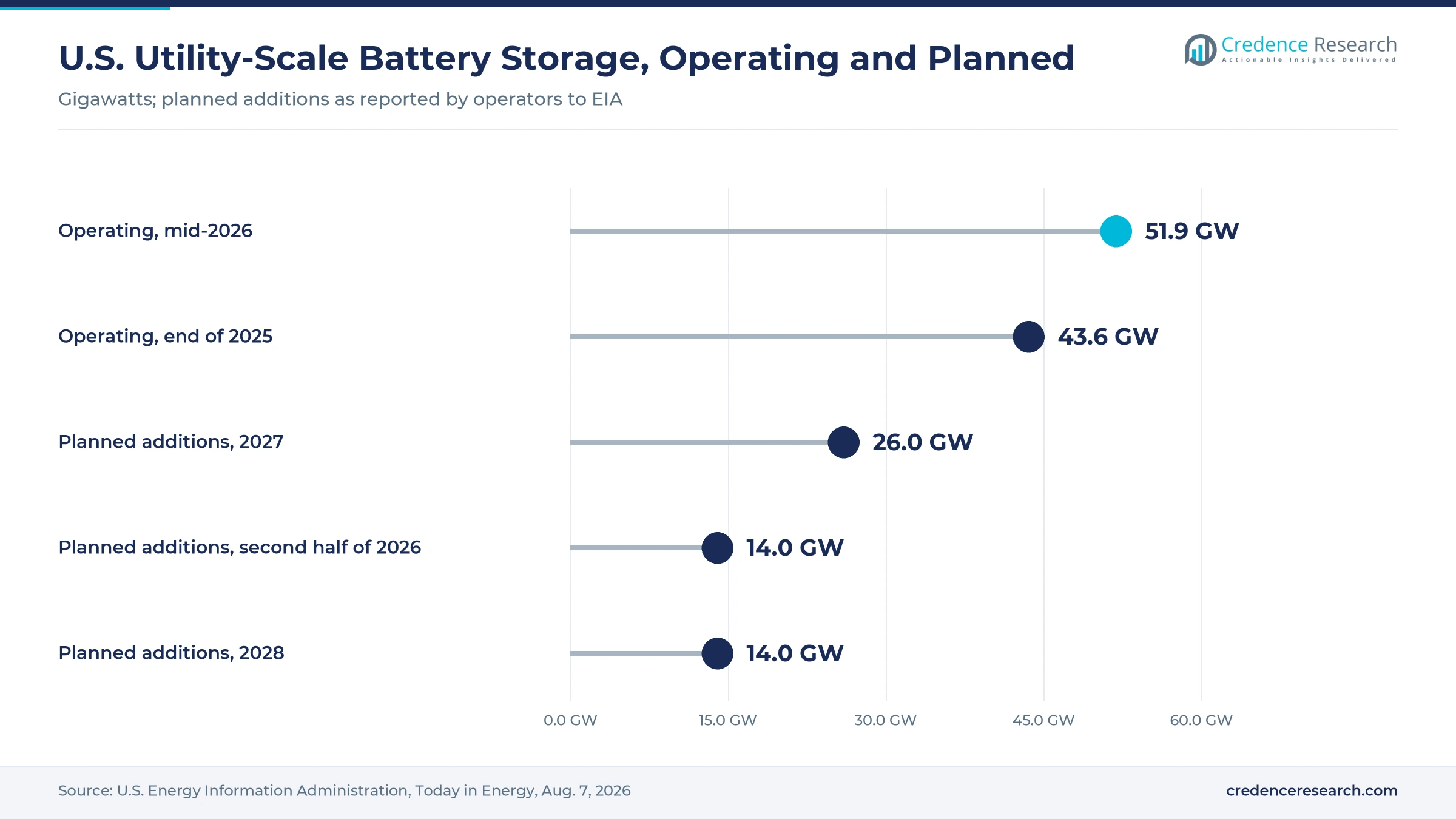
Grid batteries have moved from pilot scale to a major share of new capacity in a few years. The U.S. Energy Information Administration reported on Aug. 7, 2026 that utility-scale battery capacity grew at an average annual rate of 70% over the previous three years. Operational capacity reached 43.6 gigawatts by the end of 2025, and operators added another 8.3 GW in the first six months of 2026, bringing the total to nearly 52 GW. Operators told the agency they expect to bring another 54 GW online over the following two and a half years, including 26 GW planned for 2027 alone.
The growth is concentrated in regions with high solar penetration and competitive power markets. CAISO's market monitor counts about 13,000 MW of batteries in its balancing area in December 2024, up from about 500 MW in 2020. ERCOT listed 15,712 MW of installed and operating BESS capacity in the same presentation and reported that battery output set an all-time record of more than 8 GW in October 2025.
Planned capacity is not guaranteed capacity, however, because most capacity that entered queues historically withdrew. The Lawrence Berkeley National Laboratory's Queued Up 2026 edition counts roughly 749 GW of storage in U.S. interconnection queues at the end of 2025, but it also finds that only 13% of the capacity that requested interconnection from 2000 to 2020 had reached commercial operation by the end of 2025. The same study puts the median time from interconnection request to commercial operation at more than five years for projects built in 2025. Grid access, rather than battery supply, is therefore the gating factor for many developers.
Grid batteries earn money from several services
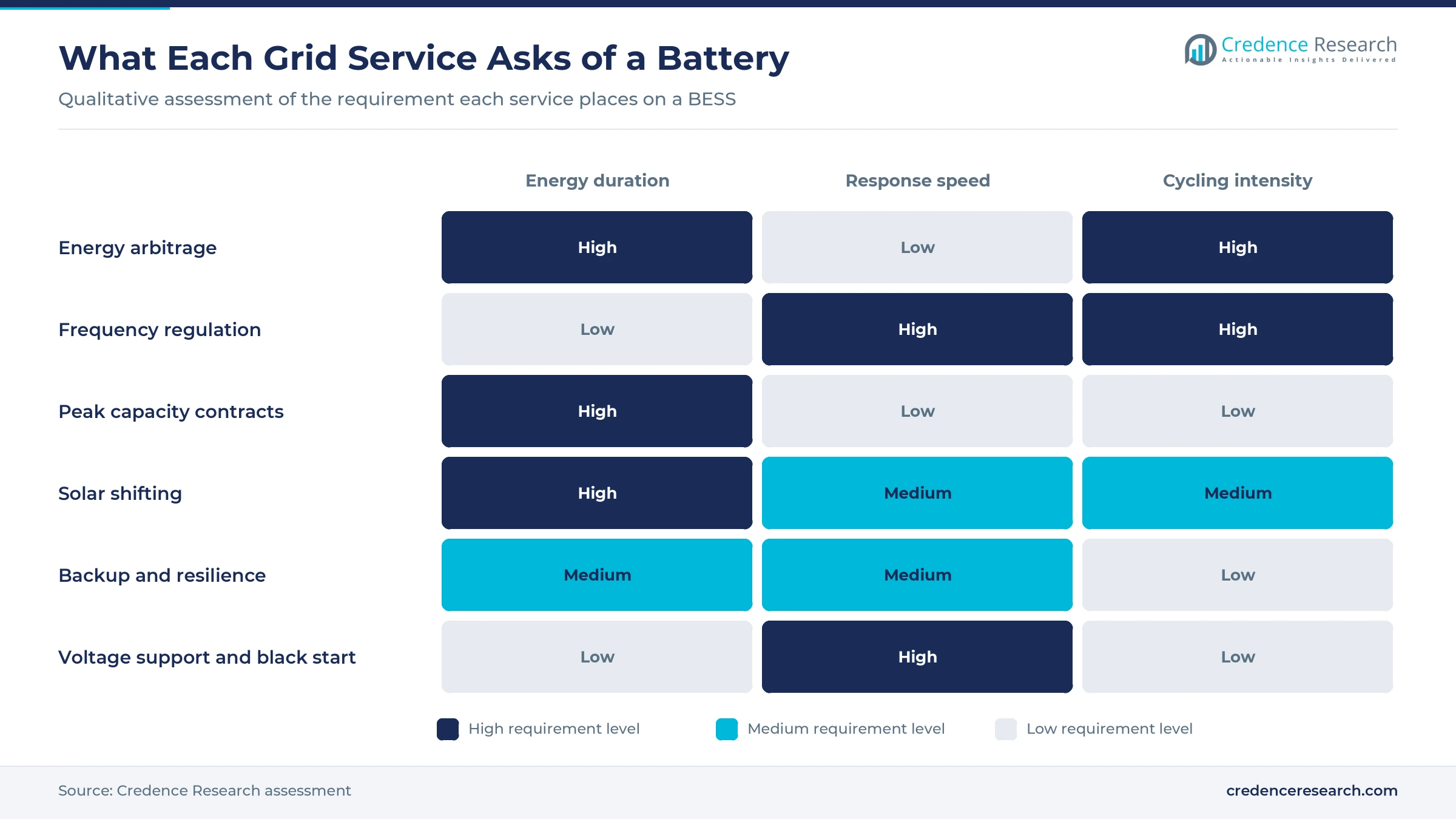
A BESS can perform different jobs depending on where it connects and how it is dispatched. The EIA reported in September 2025 that 66% of utility-scale battery capacity listed price arbitrage among its uses, and that arbitrage was the primary use for 41% of capacity, followed by frequency regulation at 24%. Arbitrage means charging when wholesale prices are low and discharging when they are high, which in solar-heavy grids typically means charging at midday and discharging in the early evening.
CAISO data show how arbitrage works at the scale of a full grid. Its market monitor found that charging between hour-ending 10 and 13 equaled about 14.7% of CAISO load in 2024, while batteries supplied about 8.6% of CAISO energy during hours 17 to 21. Average battery output peaked at about 5,700 MW in hour-ending 19 in 2024, up from 2,700 MW in 2023. Energy sales provided nearly 82% of battery market revenue in 2024. ERCOT similarly describes early battery participation in its region as mostly in ancillary services, a pattern that has shifted as the fleet grew.
That shift reflects the fixed size of reserve and regulation requirements. Those requirements follow reliability needs rather than total demand, so a growing fleet must sell most of its output as energy. CAISO's monitor reports that net market revenue for batteries fell from $103 per kilowatt-year in 2022 to $78 in 2023 and $53 in 2024, and it attributes the 2024 decline largely to lower peak energy prices and lower loads than in 2023. With energy dominant, project economics depend on evening price spreads, capacity contracts and the quality of bidding software.
Batteries also provide reliability services that are harder to price in wholesale markets. ERCOT notes that batteries can supply reactive power for voltage support and black start capability, and that non-spinning reserve duration requirements are creating a price premium for that product.
Federal rules opened wholesale markets to storage
Battery growth depends on market rules that let storage both buy and sell power. The Federal Energy Regulatory Commission's Order No. 841, issued on Feb. 15, 2018, required each regional grid operator to create a participation model for electric storage resources. Under that model, a storage resource is eligible to provide all capacity, energy and ancillary services it is technically capable of providing, can set the clearing price as both buyer and seller, and must face a minimum size requirement no higher than 100 kilowatts.
The rule changed which companies can build storage and what they can sell. Before it, batteries often had to fit into categories designed for generators or demand response, which limited the services they could sell. With a defined participation model, merchant developers can build storage without a utility contract, and grid operators can dispatch it alongside conventional plants. Texas has followed its own market design, and ERCOT notes that the asset's current state of charge is now included in the ERCOT dispatch algorithm, which simplifies compliance for battery operators.
State of charge is the operational detail that sets storage apart from a gas plant. A battery can only discharge energy it has already stored, so operators must decide hours in advance how much to hold back. CAISO's market monitor observed that batteries can enter peak net load hours with diminished charge on high-priced days, partly because some units discharge early and the real-time market has a limited optimization horizon.
Efficiency losses and capacity fade erode margins
A battery returns less electricity than it absorbs, because cells, inverters, transformers and cooling all consume energy. The EIA found that the U.S. utility-scale battery fleet operated with an average monthly round-trip efficiency of 82% in 2019, compared with 79% for pumped-storage hydro facilities. NREL's 2024 baseline assumes a round-trip efficiency of 85% for new lithium-ion systems. Field data include auxiliary loads such as cooling and standby power, which may help explain why measured fleet efficiency sits below design assumptions.
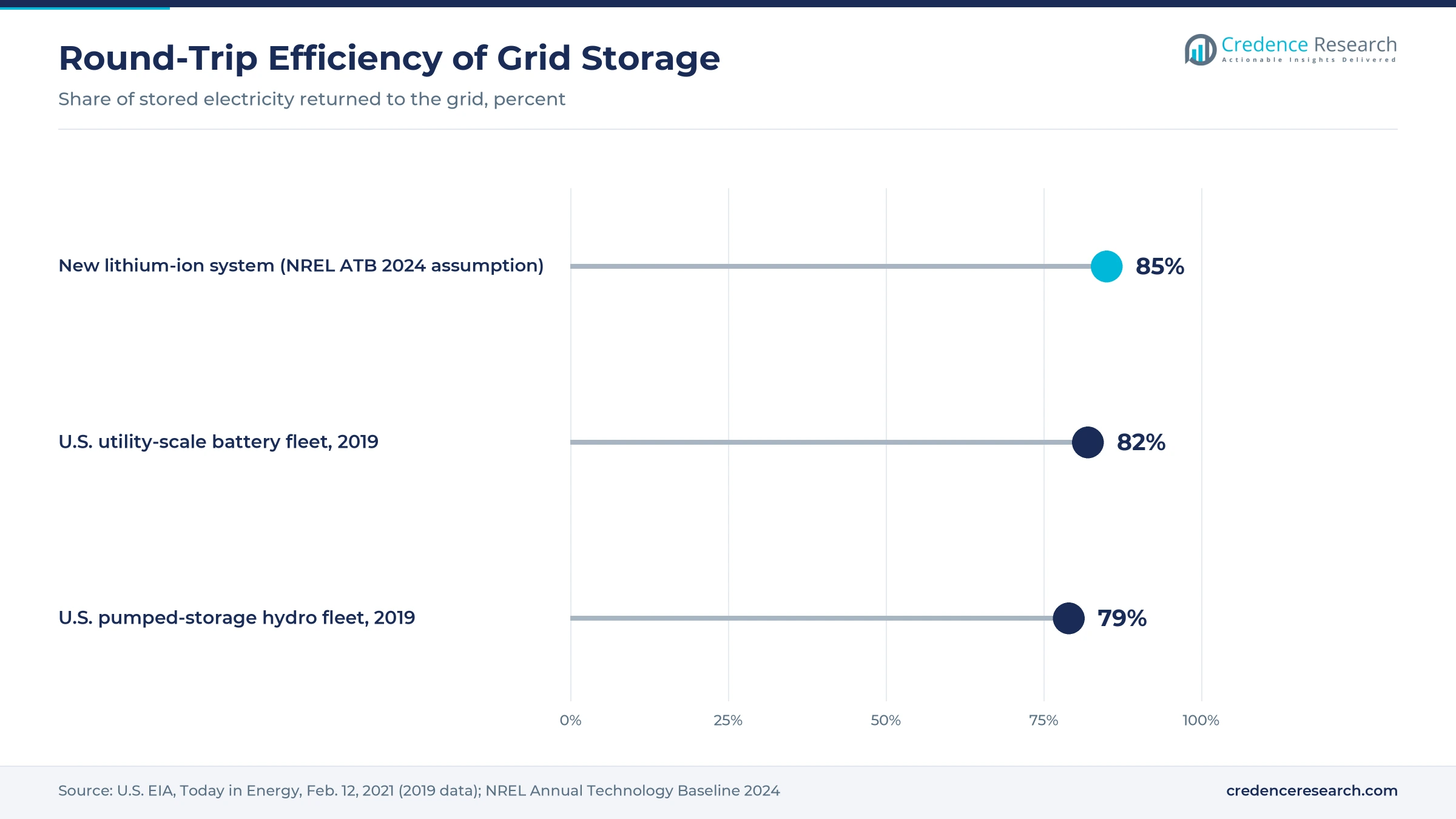
Round-trip efficiency directly affects the margin on every arbitrage cycle. A system with 85% efficiency must buy about 1.18 MWh to sell 1 MWh, so the price spread between charging and discharging hours has to cover that loss before it produces any profit. Capacity also fades with use, and NREL's baseline includes augmentation, the periodic addition of new modules, in fixed operation and maintenance costs so that a system can hold its rated capacity over a 15-year life. The baseline estimates fixed operation and maintenance at 2.5% of capital cost per kilowatt each year. Buyers should check whether a bid guarantees energy capacity over time or only at commissioning.
Fire safety standards shape siting and design
Lithium-ion cells can enter thermal runaway, a self-heating reaction that can spread from one cell to its neighbors and release flammable gases. That risk became highly visible on Jan. 16, 2025, when a battery storage system at the Moss Landing power plant in Monterey County, California, caught fire. The U.S. Environmental Protection Agency describes the 300-megawatt system as holding about 100,000 lithium-ion batteries, of which about 55% were damaged. The agency conducted air monitoring and reached an enforceable agreement with the owner in July 2025 for battery removal under EPA oversight. By late June 2026, EPA reported that removal of intact batteries was nearly complete, with more than 33,000 sent off-site for recycling. On Sept. 18, 2026, however, damaged batteries still inside the building caught fire again, and the agency estimates that about 1,300 battery modules burned.
Codes and test methods aim to keep a single failure from spreading. According to UL Solutions, the 2026 edition of NFPA 855, the installation standard for stationary energy storage, requires fire testing and large-scale fire testing in certain situations, and names UL 9540A as its only fire and explosion test method. UL 9540A is the test method for evaluating thermal runaway fire propagation in battery energy storage systems, and its sixth edition, published March 13, 2026, revised large-scale fire testing and added a large-scale deflagration test for enclosures. The 2024 International Fire Code also calls for large-scale fire testing of a representative system.
These requirements influence design choices well before a fire department review. Large-scale test results inform how units are spaced, how enclosures handle gas buildup and how detection and shutdown systems are configured, so they feed directly into site layout and land requirements. Safety documentation therefore carries commercial weight as well as engineering weight, particularly where local officials review projects after a widely reported incident.
What buyers, utilities and investors should evaluate
A BESS is evaluated less on the battery itself than on how well the full system matches a specific grid need. Utilities, developers, procurement teams and investors each focus on different questions.
- Utilities and grid planners should match duration to the shape of their peak, since a four-hour system serves a narrow evening peak well but may not cover a longer winter morning and evening demand pattern.
- Developers should model several revenue streams, including energy arbitrage, ancillary services and capacity contracts, and test how revenue changes as more batteries enter the same market, as CAISO data illustrate.
- Procurement teams should compare integrators on controls software, warranty terms for usable energy, augmentation plans and UL 9540A test evidence, not only on cell price.
- Investors should treat interconnection position as a core asset, given LBNL's finding that most queued capacity historically never reached operation, and should track rule changes in the markets where projects sell.
Batteries are becoming the main tool for shifting solar output and meeting evening peaks in the largest U.S. markets, and the planned pipeline points to continued additions through 2028. The limits are equally specific, namely interconnection delays, falling ancillary service prices, efficiency losses, capacity fade and fire safety obligations. Regional deployment patterns and project types are analyzed further in the battery energy storage system market, grid-scale battery market and grid-connected battery energy storage market reports.
Go deeper with our research
- Battery Energy Storage System Market Size & Forecast, 2032
- Grid-Scale Battery Market Size, Growth, Share and Forecast 2032
- Grid Connected Battery Energy Storage Market Size, Growth & Forecast
- Lithium Iron Phosphate Battery Market Size, Share and Forecast 2032
- Battery Management System Market Size, Trends, Share & Forecast 2032