
Malaysia Aviation Group Commits to Up to 16 Boeing 787-10 Jets in First Dreamliner Order
Malaysia Aviation Group, the parent of Malaysia Airlines, has committed to its first-ever order for Boeing 787 Dreamliner jets, choosing up to 16 of the largest 787-10 variant to anchor a new long-haul flagship fleet. Boeing and the state-linked airline group announced the commitment in Kuala Lumpur on Nov. 25, 2026, covering 10 firm aircraft and the opportunity to acquire six more once the purchase is finalized. The deal makes Malaysia Airlines the country's first 787 operator and marks a notable widebody win for Boeing in Southeast Asia.
Key developments
- Malaysia Aviation Group (MAG) committed to buy 10 Boeing 787-10 airplanes, with an opportunity to acquire six more, for a total of up to 16 jets.
- The order is MAG's first for the 787 family, and Boeing said the 787-10 will become Malaysia Airlines' next flagship as it modernizes its widebody fleet.
- Boeing lists the 787-10 at up to 375 passengers and says it burns 25% less fuel than the airplanes it typically replaces.
- The purchase is not yet final; Boeing described it as a commitment that will take effect "once finalized." No delivery schedule, price or engine selection was disclosed.
- MAG's existing Boeing fleet includes 19 737-8 and 38 737 Next-Generation jets, with 18 more 737-8 and 12 737-10 airplanes on order.
Industry background
The 787-10 is the stretched member of Boeing's twin-aisle Dreamliner family, which also includes the 787-8 and 787-9. Its composite airframe and newer-generation engines are designed to lower fuel burn per seat on medium- and long-haul routes. Boeing said the 787 family has helped airlines open more than 550 new nonstop routes over 15 years of service, a sign of how the aircraft has been used to connect city pairs that once relied on larger four-engine jets.
Malaysia Airlines has relied on Airbus for its recent widebody planning. MAG announced orders for Airbus A330neo aircraft, including a 2025 order for 20 additional A330neo jets, and its current long-haul flagship role has been filled by the Airbus A350-900. Aviation outlets including ch-aviation, citing Bloomberg, reported in September 2026 that the carrier was nearing a 787-10 order to replace its leased A350-900 fleet. The official Boeing release does not say which aircraft the 787-10 will replace.
The announcement drew senior government attention. Boeing's photo caption lists Prime Minister Anwar Ibrahim, Malaysian transport ministry officials and the managing director of state investor Khazanah Nasional Berhad among those present, along with a commercial executive from engine maker GE Aerospace.
Industry implications
MAG president and group CEO Captain Nasaruddin A. Bakar called the purchase "a strategic investment in the future of Malaysia Aviation Group," saying the jet will bring greater capacity, efficiency and flexibility to the long-haul network. Boeing said long-haul flights to and from Southeast Asia have risen more than 50% in the past decade, and it described the region as the fastest-growing commercial aviation market.
For airlines in the region, the order reflects a broader shift toward twin-engine widebodies that can match capacity to demand on routes to Europe, North Asia and Australia without the cost burden of very large aircraft. The 787-10's range is shorter than that of the 787-9, which tends to steer it toward high-density, medium-to-long missions. That suggests MAG plans to use the type on trunk routes where seat count and fuel efficiency matter more than ultra-long range.
The commitment also sits within a heavy fleet renewal program at MAG that spans narrowbodies and widebodies from both major manufacturers. Splitting widebody business between Airbus and Boeing gives the group more flexibility on delivery slots at a time when production constraints have pushed back aircraft availability across the industry.
Competitive and supply chain implications
For Boeing, the order is a competitive gain at a long-standing Airbus widebody customer. Boeing has been working to rebuild 787 production rates after years of quality and supply chain disruptions, and new orders from carriers with no prior 787 fleet add to a backlog that depends on steady output from its South Carolina final assembly site and a global supplier base.
Malaysia also has a direct industrial stake in Boeing's supply chain. Boeing Composites Malaysia, which the company describes as its first wholly owned manufacturing facility in Southeast Asia with an all-Malaysian workforce, gives the partnership a manufacturing dimension beyond aircraft purchases. Brendan Nelson, president of Boeing Global, pointed to nearly 80 years of partnership with Malaysia in the announcement.
Engine selection remains an open question in the public record. The 787 is offered with GE Aerospace GEnx and Rolls-Royce Trent 1000 engines, and the presence of a GE Aerospace executive at the signing is not, on its own, confirmation of an engine award. Any engine contract would carry long-term maintenance revenue for the winning supplier.
Regional implications
The order strengthens Kuala Lumpur's position as Malaysia Airlines works to rebuild international connectivity and compete with hub carriers in Singapore, Bangkok and the Gulf for Southeast Asian long-haul traffic. Erika Pearson, Boeing vice president of Sales and Marketing for Southeast Asia and Oceania, said the company was delighted to build on its long-standing partnership with the group.
Government involvement matters in this case. MAG is owned by Khazanah Nasional, and the presence of the prime minister and transport ministry leaders signals that fleet investment is being framed as part of national aviation and tourism policy.
Credence Research analysis
The most significant element of the announcement is not the size of the order but the change in widebody strategy it represents. Malaysia Airlines has built its long-haul identity on Airbus aircraft, and adding the 787-10 introduces a second widebody family with separate pilot training, spare parts pools and maintenance programs. Airlines usually accept that complexity only when the economics or delivery timing justify it, which points to availability of slots and per-seat operating costs on regional trunk routes as key factors behind the decision.
The deal also shows how Southeast Asian carriers are using fleet orders to hedge against delivery delays at both manufacturers. Until MAG and Boeing finalize the agreement and disclose delivery timing, the commercial impact will remain uncertain. The finalization, the engine choice and the schedule for retiring or returning existing leased widebodies are the details that will show how quickly the 787-10 reshapes the Malaysia Airlines network.
What comes next
- Finalization of the purchase agreement for the 10 firm 787-10 aircraft, after which Boeing would typically post the order to its orders and deliveries data.
- A decision on whether MAG exercises the opportunity to acquire six additional 787-10 jets.
- Disclosure of the engine selection between the GE Aerospace and Rolls-Royce options.
- Announcement of a delivery schedule and the routes the 787-10 will serve.
- Continued deliveries of the 737-8 and 737-10 narrowbodies already on order with Boeing.
Sources
- Boeing: Malaysia Aviation Group Commits to Order up to 16 Boeing 787 Dreamliner Jets (Nov. 25, 2026)
- Malaysia Airlines: MAG Acquires 20 Additional A330neo Aircraft (2025)
- ch-aviation: Malaysia Airlines nears B787-10 order (September 2026)
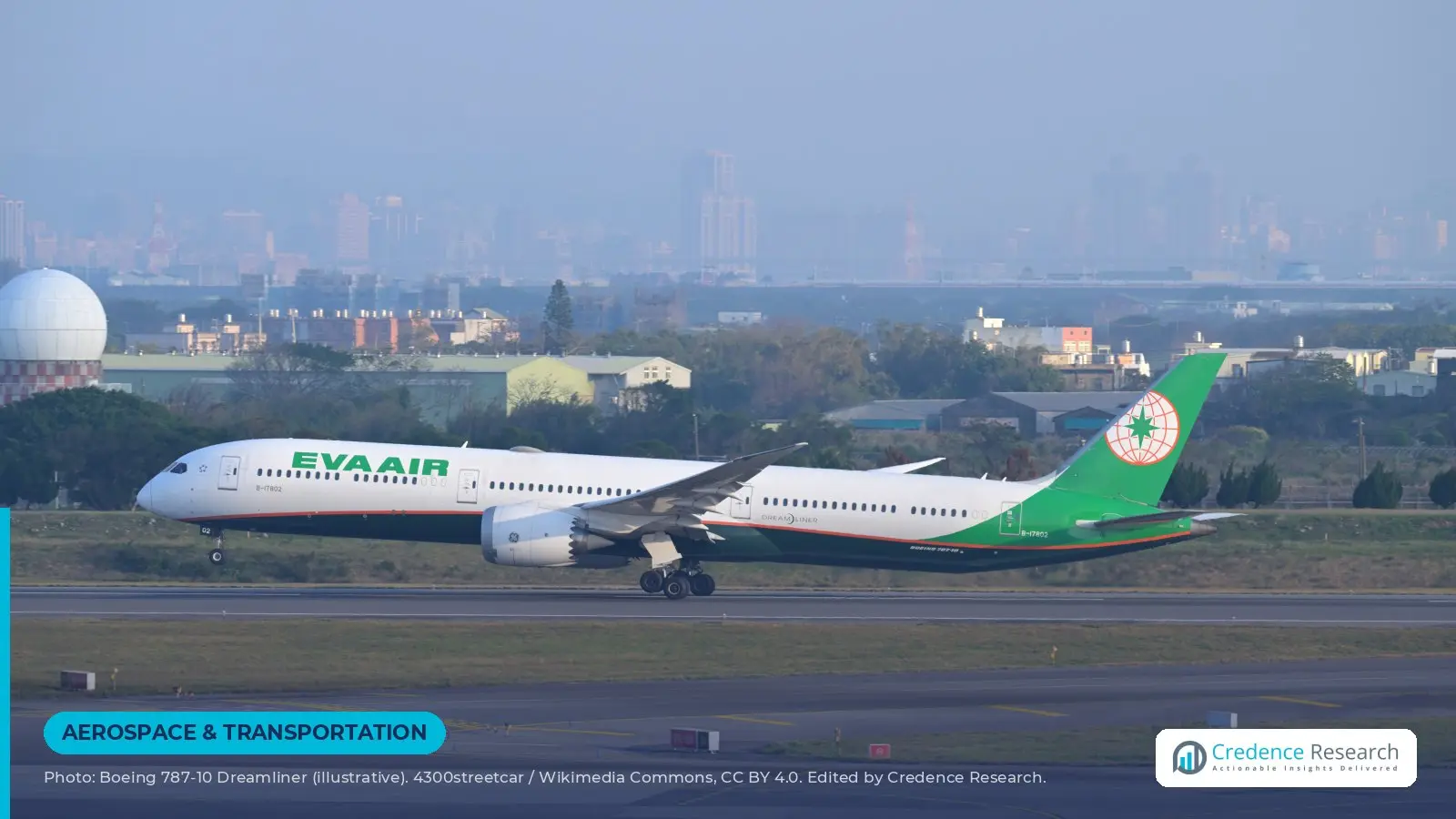
Image: Boeing 787-10 Dreamliner (illustrative, EVA Air livery) departing Taoyuan, by 4300streetcar via Wikimedia Commons, CC BY 4.0. Cropped and edited by Credence Research.

About the Author

Senior News Editor at Credence Research Inc