
| REPORT ATTRIBUTE | DETAILS |
|---|---|
| Historical Period | 2020-2023 |
| Base Year | 2024 |
| Forecast Period | 2025-2032 |
| Africa Safari Tourism Market Size 2024 | USD 19,182 million |
| Africa Safari Tourism Market, CAGR | 6.5% |
| Africa Safari Tourism Market Size 2032 | USD 31,746 million |
Market Overview
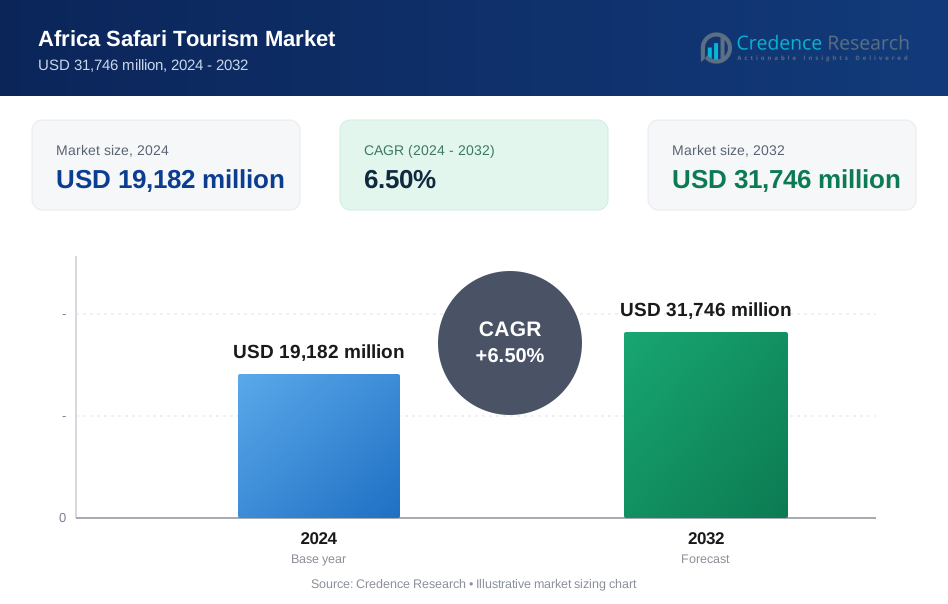
The Africa Safari Tourism Market is projected to grow from USD 19,182 million in 2024 to USD 31,746 million by 2032, registering a CAGR of 6.5%.
The safari tourism market in Africa is experiencing significant growth driven by rising global interest in wildlife experiences, cultural exploration, and adventure travel. Increasing disposable incomes, especially among middle-class travelers from Asia and Europe, are fueling demand for luxury and mid-range safari packages. Governments across African nations are enhancing tourism infrastructure, simplifying visa policies, and investing in national park conservation, which boosts tourist arrivals. Digital platforms and social media have amplified the visibility of African safari destinations, attracting eco-conscious and experience-driven travelers. Trends such as sustainable tourism, community-based safari operations, and personalized itineraries are gaining momentum. Wildlife photography, luxury mobile camps, and glamping are also reshaping the safari landscape. Furthermore, partnerships between tour operators and conservation organizations are reinforcing the appeal of ethical tourism. The rise in multigenerational travel and growing interest in off-the-grid experiences further support market expansion. These drivers and evolving trends position Africa’s safari tourism sector for robust and sustained growth over the coming years.
The safari tourism in Africa market spans Eastern, Southern, Central, and Western Africa, with Eastern Africa leading at 46% market share due to established wildlife destinations like Kenya’s Masai Mara and Tanzania’s Serengeti. Southern Africa follows with 34%, supported by South Africa’s Kruger National Park and Botswana’s Okavango Delta. Central and Western Africa, with a 20% share, are emerging markets offering niche experiences in Gabon, Cameroon, and Ghana. Key players driving the market include &Beyond, Wilderness Safaris, Singita, Asilia Africa, Abercrombie & Kent, Elewana Collection, Sanctuary Retreats, Thomson Safaris, Nomad Tanzania, Great Plains Conservation, African Bush Camps, and Ker & Downey. These companies focus on high-quality wildlife experiences, conservation-led operations, and tailored safari packages. The market’s growth depends on regional stability, infrastructure development, and commitment to sustainable tourism across all regions.
Market Insights
- The safari tourism market in Africa is set to grow from USD 19,182 million in 2024 to USD 31,746 million by 2032, registering a CAGR of 6.5%.
- Increased global interest in wildlife, nature, and cultural experiences is driving demand, especially from middle-class travelers in Asia and Europe seeking luxury and mid-range safari options.
- Governments are supporting growth through infrastructure upgrades, visa policy simplification, and conservation funding, improving access and tourist satisfaction.
- Eco-conscious tourism is gaining momentum, with travelers preferring sustainable lodges, local community involvement, and ethical wildlife practices aligned with global environmental standards.
- The luxury safari segment is expanding, offering private guides, wellness retreats, and personalized itineraries that cater to affluent and multigenerational travelers.
- Eastern Africa holds 46% market share, Southern Africa 34%, while Central and Western Africa collectively hold 20%, offering emerging opportunities with unique biodiversity.
- Challenges such as political instability, climate change, poaching, and infrastructure gaps threaten long-term growth, highlighting the need for conservation and regional stability.
Market Drivers
Rising Global Interest in Wildlife and Nature-Based Experiences
Safari tourism in Africa benefits from the increasing global demand for authentic wildlife encounters and nature-based travel. Tourists are prioritizing unique experiences that offer a deeper connection with nature, especially in Africa’s renowned national parks and game reserves. This trend is particularly strong among travelers from North America, Europe, and parts of Asia. Social media exposure and documentary content have amplified the allure of African safaris. It has turned bucket-list travel into a mainstream demand. Travelers seek immersive, guided wildlife adventures rather than passive sightseeing. The industry continues to gain momentum due to the emotional and educational value associated with observing animals in their natural habitat.
- For instance, Kenya reported a 44% increase in safari bookings in 2023 compared to pre-pandemic levels, highlighting surging interest among international visitors eager to witness the Great Migration in the Maasai Mara.
Government Support and Infrastructure Development
Several African nations are actively promoting safari tourism through improved infrastructure and policy reforms. Investments in airports, roads, and digital connectivity around key wildlife destinations are making travel more accessible and convenient. Governments are also simplifying visa regulations and offering incentives to attract international tour operators. Safari tourism in Africa is receiving strong support through public-private partnerships aimed at upgrading conservation zones and eco-lodges. It benefits further from international funding directed toward wildlife protection and community development. These efforts enhance visitor experience while ensuring long-term ecological sustainability. The combination of accessibility and safety improvements is encouraging steady tourist inflows.
- For instance, in Kenya, the government, in partnership with the Kenya Airports Authority, completed upgrades to Wilson Airport in 2021, increasing its capacity to handle more regional flights and boost access to Maasai Mara-a key safari destination.
Growing Demand for Sustainable and Responsible Tourism
Eco-conscious travel is shaping the future of safari tourism in Africa, with travelers showing preference for environmentally responsible and community-driven tourism models. Tour operators are integrating sustainability into their offerings through low-impact lodging, renewable energy use, and local sourcing. Safari tourism in Africa is responding by promoting wildlife conservation and involving indigenous communities in tourism activities. It attracts travelers who want to contribute to preservation efforts through meaningful experiences. Certifications like Fair Trade Tourism and partnerships with conservation NGOs are further validating ethical practices. This alignment with global sustainability standards is building trust and loyalty among conscious consumers.
Expansion of Luxury and Personalized Safari Experiences
Luxury travel demand is reshaping safari tourism in Africa, with affluent travelers seeking comfort, privacy, and exclusivity. High-end safari lodges and mobile camps now offer private guides, customized itineraries, and gourmet dining. It caters to clients who value curated, hassle-free experiences while maintaining close proximity to nature. Tour operators are introducing wellness retreats, photographic safaris, and cultural immersion alongside traditional game drives. The rise in multigenerational family travel is also encouraging tailored safari experiences for different age groups. Increased spending on premium travel services is fueling job creation, innovation, and regional economic development.
Market Trends
Growing Popularity of Experiential and Photographic Safaris
Travelers are increasingly seeking immersive and experience-rich journeys that go beyond conventional game drives. Experiential safaris now include guided bush walks, night drives, birdwatching tours, and interactive photography sessions. Safari tourism in Africa is adapting by offering tailored itineraries that focus on storytelling and wildlife education. Tourists are using high-resolution photography to capture rare animal behavior, creating lifelong memories. Tour operators are responding with expert-led photographic safaris and workshops. This trend supports deeper engagement with Africa’s landscapes and biodiversity. It aligns with a rising preference for slower, more mindful travel.
- For instance, lodges like Singita and Namiri in Tanzania provide specialized photographic safaris, where guests use high-resolution cameras to capture rare animal behaviors, supported by professional guides and custom workshops.
Integration of Technology into Safari Offerings
Digital innovation is transforming how travelers explore and book safaris. Mobile apps now allow real-time wildlife tracking, booking management, and virtual lodge tours. Safari tourism in Africa is leveraging drones, AI, and satellite communication to enhance wildlife monitoring and visitor safety. Smart lodges provide Wi-Fi access, solar-powered amenities, and app-controlled services to elevate the guest experience. Virtual reality previews of safari destinations are helping tourists plan with greater confidence. It strengthens the value proposition for digitally savvy travelers who seek convenience without compromising authenticity. This shift also boosts operational efficiency across tour operations.
- For instance, Mfuwe Lodge in Zambia uses solar panels for electricity, water heating, and lighting in each chalet, while its operations are supported by a digital booking system that streamlines guest reservations and enhances the overall experience.
Expansion of Community-Based and Cultural Safaris
Community involvement is reshaping how safari experiences are designed and delivered. Safari tourism in Africa is incorporating cultural storytelling, traditional performances, and village visits into travel itineraries. It enhances traveler awareness of local heritage while supporting economic inclusion. Tourists now want to connect with indigenous communities and understand their relationship with wildlife. Operators are hiring local guides and sourcing products from nearby artisans. This approach fosters sustainable development and creates shared value for host communities. It adds cultural depth to the safari experience, increasing its appeal among socially conscious travelers.
Rise of Eco-Lodges and Sustainable Safari Camps
Eco-friendly accommodations are gaining traction across key safari destinations in Africa. Lodges now emphasize minimal environmental impact through solar power, water recycling, and biodegradable materials. Safari tourism in Africa benefits from travelers preferring green-certified stays that align with conservation ethics. Operators promote low-footprint travel through carbon offset programs and wildlife preservation initiatives. Guests appreciate transparency in sustainability efforts and often choose properties that support rewilding and anti-poaching. It fosters loyalty among environmentally conscious tourists. This trend strengthens the market’s reputation as a responsible, future-forward travel segment.
Market Challenges Analysis
Political Instability and Security Concerns in Key Regions
Unrest and political instability in parts of Africa create uncertainty for tourists and operators alike. Conflict-prone areas and inconsistent governance undermine traveler confidence and restrict access to prime safari destinations. Safari tourism in Africa depends heavily on perceptions of safety, which are easily influenced by media coverage and travel advisories. Tour operators face challenges in rerouting itineraries and maintaining service continuity during unrest. Insurance costs also rise in unstable regions, affecting affordability. These issues hinder long-term planning and discourage investment in affected zones.
Environmental Threats and Wildlife Conservation Issues
Climate change, habitat loss, and poaching continue to challenge the ecological foundations of safari tourism. Changes in rainfall patterns and rising temperatures disrupt wildlife migration and reduce biodiversity. Safari tourism in Africa relies on healthy ecosystems and visible wildlife populations to attract visitors. Diminishing natural resources and human-wildlife conflict strain conservation efforts. Governments and tour operators face difficulties balancing tourism growth with environmental stewardship. Without sustained conservation investment, the sector risks losing its core attraction and credibility.
Market Opportunities
Emerging Demand from Asia-Pacific and Latin American Travelers
The rising middle class in Asia-Pacific and Latin America presents a major opportunity for expansion. Increasing disposable incomes and a growing appetite for long-haul, experience-driven travel are opening new source markets for safari operators. Safari tourism in Africa can capture this demand by tailoring marketing strategies, multilingual services, and travel packages to these regions. Airlines are also expanding direct routes between Africa and Asian hubs, improving accessibility. Travel influencers and media in these regions are helping build awareness of Africa’s safari offerings. This expanding market base diversifies revenue streams and reduces dependence on traditional Western markets.
Growth of Wellness and Transformational Safari Experiences
Wellness tourism continues to grow, offering opportunities to integrate health-focused elements into safari travel. Tour operators are incorporating yoga retreats, meditation, and spa treatments in nature-based settings. Safari tourism in Africa can leverage its natural environment to create restorative, holistic experiences for health-conscious travelers. It appeals to those seeking mental clarity, digital detox, and emotional rejuvenation. Lodges can capitalize on this trend by offering sustainable, wellness-oriented packages in secluded settings. These offerings increase length of stay and spend per visitor while broadening the market beyond traditional wildlife enthusiasts.
Market Segmentation Analysis:
By Type
Safari tourism in Africa offers diverse experiences tailored to traveler preferences, with adventure safaris drawing thrill-seekers for off-road expeditions and wildlife tracking. Luxury safaris cater to high-net-worth individuals who seek exclusive lodges, private guides, and premium amenities. Cultural safaris are gaining traction among travelers interested in local heritage, traditional lifestyles, and community visits. Honeymoon and family safaris appeal to those seeking safe, curated experiences in nature with customized itineraries. Safari tourism in Africa continues to expand offerings across these categories to meet evolving global demand.
- For instance, Singita Lebombo Lodge in Greater Kruger National Park, South Africa, features private butlers, infinity pools, and fine dining under the stars, offering guests front-row seats to wildlife spectacles.
By Accommodation Type
Accommodation variety plays a key role in enhancing traveler experience and meeting diverse budgets. Safari resorts and lodges dominate the market, offering full-service amenities in scenic settings. Safari camps provide a closer-to-nature feel, often located in remote, game-rich areas. Treehouses attract niche travelers seeking novelty and immersive views of the landscape. Safari tourism in Africa supports all categories by integrating sustainability, comfort, and local aesthetics into property design. It encourages longer stays and higher visitor satisfaction.
- For instance, JW Marriott Masai Mara Lodge features 21 tented suites with private outdoor Jacuzzis and decks, along with all-inclusive safari packages and wellness experiences, exemplifying the high standards of luxury safari accommodation.
By Group
Group type strongly influences safari preferences and package customization. Families often prefer guided group safaris with child-friendly features, while couples choose romantic, secluded settings. Friends seek shared adventure and cultural experiences, favoring flexible group itineraries. Solo travelers prioritize safety, expert guidance, and opportunities for social interaction. Safari tourism in Africa responds by designing targeted experiences for each group type. It maximizes engagement by offering tailored services and group-specific amenities.
Segments:
Based on Type
- Adventure Safari
- Luxury Safari
- Cultural Safari
- Honeymoon/Family Safari
Based on Accommodation Type
- Safari Resorts and Lodges
- Safari Camps
- Treehouses
- Others
Based on Group
- Friends
- Families
- Couples
- Solos
Based on Booking Mode
- Direct Booking
- Agents and Affiliates Account
- Marketplace Booking
Based on Region
- Northern Africa
- Sub-Saharan Africa
- Rest of Sub-Saharan Africa
Regional Analysis
Eastern Africa
Eastern Africa holds the largest share of the safari tourism in Africa market, accounting for 46% in 2024. Countries like Kenya, Tanzania, and Uganda lead with well-established wildlife circuits such as the Serengeti, Masai Mara, and Bwindi Impenetrable Forest. These destinations offer iconic experiences like the Great Migration and gorilla trekking. Strong conservation policies, developed infrastructure, and international marketing campaigns drive consistent tourist inflows. Safari tourism in Africa finds its strongest foothold here due to the combination of natural diversity and mature tourism ecosystems. Tour operators benefit from reliable logistics, experienced guides, and a wide range of accommodations.
Southern Africa
Southern Africa contributes 34% to the safari tourism in Africa market, led by South Africa, Botswana, Namibia, and Zimbabwe. It attracts travelers with luxury safaris, diverse terrains, and top-tier conservation areas like Kruger National Park and the Okavango Delta. Safari experiences here often include self-drive options, Big Five sightings, and integrated wine or cultural tours. Safari tourism in Africa thrives in this region through cross-border safari packages and established regional air networks. Government policies supporting private reserves and eco-tourism ventures continue to strengthen the industry. The region appeals to both first-time visitors and seasoned wildlife enthusiasts.
Central and Western Africa
Central and Western Africa hold a smaller market share, accounting for 20% of the safari tourism in Africa market. These regions offer rich biodiversity and rare species but face challenges such as limited infrastructure and political instability. Destinations like Gabon, Cameroon, and Ghana are gaining attention for off-the-beaten-path safaris and primate tracking. Safari tourism in Africa is slowly expanding here as eco-tourism investments and regional partnerships emerge. It attracts niche travelers looking for unique ecosystems and cultural immersion. Improving access and visibility could unlock significant long-term growth potential in this underexplored region.
Key Player Analysis
- African Bush Camps
- Great Plains Conservation
- Nomad Tanzania
- Elewana Collection
- Ker & Downey
- Abercrombie & Kent
- Singita
- &Beyond
- Wilderness Safaris
- Thomson Safaris
- Sanctuary Retreats
- Asilia Africa
Competitive Analysis
The safari tourism in Africa market features a highly competitive landscape shaped by premium operators, boutique service providers, and regionally dominant brands. Companies such as &Beyond, Wilderness Safaris, and Singita lead the luxury segment with exclusive lodges, conservation-driven operations, and tailored guest experiences. Asilia Africa, Nomad Tanzania, and African Bush Camps cater to adventurous travelers through immersive, eco-focused safaris. Firms like Abercrombie & Kent and Thomson Safaris offer high-end, multi-country itineraries with strong logistical capabilities. The Elewana Collection and Sanctuary Retreats provide mid-to-luxury range options across East and Southern Africa. Great Plains Conservation and Ker & Downey differentiate themselves with personalized services and sustainable tourism models. Safari tourism in Africa remains highly fragmented, encouraging innovation in service delivery, conservation partnerships, and community engagement. Companies compete by offering differentiated experiences, superior wildlife access, and customer-centric hospitality. Strategic collaborations and investments in digital outreach and conservation remain key factors for market leadership.
Recent Developments
- In June 2025, Contiki introduced three new safari-focused itineraries for young travelers, expanding adventure offerings across South Africa, Kenya, Tanzania, and Eswatini.
- In April 2025, Virgin Limited Edition announced direct flights between its two Kenyan safari lodges-Mahali Mzuri and Finch Hattons-to streamline dual-location safari travel.
- In February 2024, Radisson Hotels opened its first safari property in South Africa, the Radisson Safari Hotel Hoedspruit, marking its expansion into wildlife tourism.
- In December 2024, African Travel, Inc. unveiled Concierge Safaris for 2025, featuring luxury 11-day escorted journeys with personalized service and dedicated travel concierges.
- In September 2023, Ximuwu Lodge launched inclusive safari experiences in South Africa, offering wheelchair-accessible game drives with opportunities to see lions, rhinos, giraffes, and more.
Market Concentration & Characteristics
The safari tourism in Africa market is moderately concentrated, with a mix of large international operators and regionally specialized companies competing across key destinations. Leading firms like &Beyond, Wilderness Safaris, and Singita dominate the luxury segment through vertically integrated services, exclusive lodges, and strong conservation credentials. Mid-sized operators such as Asilia Africa, Elewana Collection, and African Bush Camps maintain strong regional presence by offering authentic, eco-conscious experiences. The market is characterized by high entry barriers, including regulatory compliance, conservation partnerships, and infrastructure demands. It requires operators to maintain quality standards, engage with local communities, and adapt to seasonal demand shifts. Safari tourism in Africa relies heavily on the appeal of unique wildlife encounters, safety assurances, and sustainable practices. Seasonal fluctuations, long-haul travel dependencies, and political conditions impact demand patterns and pricing. Operators differentiate through experience personalization, conservation initiatives, and digital marketing. The market structure encourages innovation while rewarding brands that balance luxury with responsible tourism.
Report Coverage
The research report offers an in-depth analysis based on Type, Accomodation Type, Group, Booking Mode and Region. It details leading market players, providing an overview of their business, product offerings, investments, revenue streams, and key applications. Additionally, the report includes insights into the competitive environment, SWOT analysis, current market trends, as well as the primary drivers and constraints. Furthermore, it discusses various factors that have driven market expansion in recent years. The report also explores market dynamics, regulatory scenarios, and technological advancements that are shaping the industry. It assesses the impact of external factors and global economic changes on market growth. Lastly, it provides strategic recommendations for new entrants and established companies to navigate the complexities of the market.
Future Outlook
- Demand for immersive and experience-driven safaris will continue to grow among global travelers seeking authentic wildlife encounters.
- Eco-tourism models will shape the market, with increased focus on sustainability, conservation, and community involvement.
- Luxury and wellness-focused safaris will gain more traction among high-income travelers looking for exclusive and personalized services.
- Regional governments will invest further in infrastructure, improving accessibility to remote parks and reserves.
- Digital platforms and influencer marketing will expand the global visibility of African safari destinations.
- Demand from Asia-Pacific and Latin American tourists will rise, diversifying the visitor base beyond traditional Western markets.
- Tour operators will adopt advanced technologies like mobile apps, drones, and virtual bookings to enhance customer experience.
- Wildlife preservation efforts will remain central, with stronger collaboration between governments, NGOs, and tourism stakeholders.
- Political stability and safety improvements will influence traveler confidence and destination selection.
- Off-the-beaten-path regions like Central and Western Africa will emerge as niche safari destinations with unique ecosystems.
Request a Free Sample
Fill in your details and we'll send you a free sample report.
- Sample data tables & charts
- Research methodology
Need a Custom Version of This Report?
Tailor the scope, geography, or segments to your exact requirements.
- Custom geography or segment scope
- Direct access to our analyst team
Frequently Asked Questions
What is the current size of the Safari tourism in Africa?
What factors are driving the growth of the Safari tourism in Africa?
What are some challenges faced by the Safari tourism in Africa?
Who are the major players in the Safari tourism in Africa?
Table of Content
Chapter 1. Report Introduction
- 1.1 Report Description & Purpose
- 1.1.1 Report Title & Market Definition
- 1.1.2 Unique Selling Propositions (USP) & Key Differentiators
- 1.1.3 Value Proposition for Stakeholders
- 1.2 Research Objectives
- 1.2.1 Market Sizing Objectives (Volume & Revenue) (Volume Where Applicable)
- 1.2.2 Segmentation Objectives
- 1.2.3 Competitive Intelligence Objectives
- 1.2.4 Forecast & Scenario Objectives
- 1.3 Report Scope
- 1.3.1 Africa Safari Tourism Scope – Segments & Subsegments Covered
- 1.3.2 Geographic Scope – Selected Region & Countries Covered
- 1.3.3 Historical Period, Base Year & Forecast Period (2024; forecast to 2032)
- 1.3.4 Inclusions & Exclusions
- 1.4 Industry Classification & Applicable Codes
- 1.5 Currency, Measurement Units & Valuation Basis
- 1.6 Target Stakeholders
- 1.7 Limitations & Assumptions
Chapter 2. Executive Summary
- 2.1 Africa Safari Tourism Snapshot
- 2.1.1 Market Size – Historical (2024) & Forecast (2024-2032) (2024: USD 19,182 million → 2032: USD 31,746 million)
- 2.1.2 Volume & Revenue – Regional Totals (Volume Where Applicable)
- 2.1.3 Key Market Highlights – Top Five Facts
- 2.2 Africa Safari Tourism Segmentation Snapshot
- 2.2.1 Market Split by Country – 2024 vs. 2032
- 2.3 Competitive Snapshot
- 2.3.1 Top 10 Players by Revenue Share – 2024
- 2.3.2 Top 10 Players by Volume Share – 2024 (Volume Where Applicable)
- 2.3.3 Recent Strategic Developments (18-Month Summary)
- 2.4 Key Investment Highlights & Strategic Conclusions
Chapter 3. Africa Safari Tourism Dynamics & Industry Analysis
- 3.1 Market Overview & Context
- 3.1.1 Africa Safari Tourism Position in the Broader Industry Value Chain
- 3.1.2 Demand Structure & Purchasing Dynamics
- 3.1.3 Market Maturity & Development Stage by Country
- 3.2 Africa Safari Tourism Drivers
- 3.3 Africa Safari Tourism Restraints & Challenges
- 3.4 Africa Safari Tourism Opportunities
- 3.5 Porter's Five Forces Analysis
- 3.5.1 Threat of New Entrants
- 3.5.2 Bargaining Power of Suppliers
- 3.5.3 Bargaining Power of Buyers
- 3.5.4 Threat of Substitutes
- 3.5.5 Competitive Rivalry – Intensity Assessment
- 3.6 Africa Safari Tourism Value Chain Analysis
- 3.6.1 Upstream – Key Inputs, Resources & Suppliers
- 3.6.1.1 Key Input/Resource 1
- 3.6.1.2 Key Input/Resource 2
- 3.6.1.3 Key Input/Resource 3
- 3.6.2 Midstream – Core Operations & Value Creation
- 3.6.2.1 Operating Model & Process Overview
- 3.6.2.2 Key Operating Locations & Capabilities by Company
- 3.6.3 Downstream – Market Channels & End Users
- 3.6.3.1 Direct Sales & Customer Engagement Channels
- 3.6.3.2 Indirect Sales, Intermediaries & Partner Channels
- 3.6.4 Value Chain Profitability Analysis
- 3.6.1 Upstream – Key Inputs, Resources & Suppliers
- 3.7 PESTEL Analysis
- 3.7.1 Political Factors
- 3.7.2 Economic Factors
- 3.7.3 Social Factors
- 3.7.4 Technological Factors
- 3.7.5 Environmental Factors
- 3.7.6 Legal Factors
- 3.8 Africa Safari Tourism Supply Chain Analysis
- 3.8.1 Critical Input & Resource Availability Risk Assessment
- 3.8.2 Supplier & Operational Concentration Risk (Geographic Exposure)
- 3.8.3 Supply & Service Disruption Impact Analysis
- 3.9 Regional & Country Regulatory Landscape
Note: The regulatory and policy landscape section covers regulations based on their applicability to the market, Africa Safari Tourism category, geography, and scope of the study. Only regulatory frameworks with a material impact on operations, compliance, trade, sustainability, or market access are analyzed in detail.
Chapter 4. Key Investment Pockets & Opportunity Analysis
- 4.1 Africa Safari Tourism Attractiveness Analysis
- 4.1.1 By Country – Investment Attractiveness Matrix (Market Size × CAGR)
- 4.2 Absolute Revenue Growth Opportunity
- 4.2.1 By Country – Absolute Revenue Growth Through 2032
- 4.3 Incremental Demand Opportunity
- 4.3.1 By Country – Incremental Demand Through 2032
- 4.3.2 Segment – Incremental Demand
- 4.4 Emerging Submarket Opportunity Deep Dive (Subject to Applicability)
- 4.5 Priority Country Opportunity Scorecards
- 4.5.1 Priority Country 1
- 4.5.2 Priority Country 2
- 4.5.3 Priority Country 3
- 4.5.4 Priority Country 4
Note: Priority countries are selected from within the region covered by the study. Numbered entries are indicative and are populated with relevant country names based on market size, growth potential, and strategic relevance.
Chapter 5. Africa Safari Tourism Cross-Border Trade & Market Access Analysis
- 5.1 Intra-Regional & Extra-Regional Trade Overview
- 5.1.1 Regional Export Value by Country (2024)
- 5.1.2 Regional Export Volume by Country (2024) (Volume Where Applicable)
- 5.1.3 Regional Import Value by Country (2024)
- 5.1.4 Regional Import Volume by Country (2024) (Volume Where Applicable)
- 5.1.5 Net Trade Balance by Country (2024)
- 5.2 Export Analysis – Segment
- 5.2.1 Category 1 (Applicable Classification Code)
- 5.2.2 Category 2 (Applicable Classification Code)
- 5.2.3 Category 3 (Applicable Classification Code)
- 5.2.4 Category 4 (Applicable Classification Code)
- 5.2.5 Category 5 (Applicable Classification Code)
- 5.3 Import Analysis – Segment
- 5.3.1 Category 1 (Applicable Classification Code)
- 5.3.2 Category 2 (Applicable Classification Code)
- 5.3.3 Category 3 (Applicable Classification Code)
- 5.3.4 Category 4 (Applicable Classification Code)
- 5.3.5 Category 5 (Applicable Classification Code)
- 5.4 Cross-Border Pricing & Transaction Benchmarks
- 5.4.1 Export Pricing – Segment & Country
- 5.4.2 Import Pricing – Segment & Source Country
- 5.4.3 Price Trends (2024)
- 5.5 Key Cross-Border Trade & Delivery Routes
- 5.5.1 Cross-Border Trade/Delivery Route 1
- 5.5.2 Cross-Border Trade/Delivery Route 2
- 5.5.3 Cross-Border Trade/Delivery Route 3
- 5.5.4 Cross-Border Trade/Delivery Route 4
- 5.5.5 Cross-Border Trade/Delivery Route 5
- 5.6 Trade Policy & Market Access Impact Assessment
- 5.6.1 Tariff & Non-Tariff Barriers
- 5.6.2 Regional Trade & Economic Integration Frameworks
- 5.6.3 Bilateral & Multilateral Trade Agreements
- 5.6.4 Cross-Border Operating, Licensing & Localization Requirements
Note: Cross-border analysis applies where relevant to Africa Safari Tourism. Country trade flows distinguish intra-regional activity from trade with markets outside the region. Regional external trade totals exclude intra-regional flows to avoid double counting. Classifications and transaction measures follow the market scope; volume and route analyses apply only where meaningful.
Chapter 6. Competitive Landscape & Company Benchmarking
- 6.1 Africa Safari Tourism Concentration & Structure
- 6.1.1 Herfindahl-Hirschman Index (HHI) – vs. 2024
- 6.1.2 Leading, Mid-Sized & Emerging Player Structure
- 6.1.3 Global, Regional & Local Player Dynamics
- 6.2 Africa Safari Tourism Share Analysis – 2024
- 6.2.1 Regional Revenue Share by Company
- 6.2.2 Regional Volume Share by Company (Volume Where Applicable)
- 6.2.3 Company Revenue Share by Country
- 6.2.4 Market Share Evolution ( vs. 2024)
- 6.2.5 Company Market Share by Key Segment
- 6.2.6 Company Market Share by Customer Group
- 6.3 Operating Scale, Capacity & Infrastructure Analysis
- 6.3.1 Regional Operating Scale & Supply Capacity
- 6.3.2 Resource Utilization & Operating Efficiency
- 6.3.3 Output, Service Delivery & Activity Metrics
- 6.3.4 Operating Footprint & Infrastructure Map
- 6.3.5 Planned Operational & Capacity Expansion
- 6.4 Africa Safari Tourism Competitive Benchmarking Matrix
- 6.4.1 Revenue, Growth, Profitability & Operating Metric Comparison
- 6.4.2 Channel Revenue Mix
- 6.4.3 Revenue Exposure by Country Within the Region
- 6.4.4 R&D Intensity
- 6.4.5 Sustainability Maturity
- 6.5 Strategic Developments in Africa Safari Tourism (Last 24 Months)
- 6.5.1 Mergers, Acquisitions & Divestments
- 6.5.2 New Products, Services & Solutions in Africa Safari Tourism
- 6.5.3 Operational & Infrastructure Expansions
- 6.5.4 Strategic Alliances, Joint Ventures & Partnerships
- 6.5.5 Distribution Expansion & Market Entry
- 6.5.6 Sustainability & ESG Initiatives
- 6.6 Competitive Strategy Mapping
- 6.6.1 Leader, Challenger, Follower & Niche Classification
- 6.6.2 Pricing Strategy Comparison
- 6.6.3 Channel Strategy Matrix
Note: Strategic developments are included based on their materiality and the availability of reliable information.
Chapter 7. Africa Safari Tourism – By Sales & Delivery Channel
- 7.1 Segment Overview
- 7.1.1 Volume & Revenue Split by Channel (2024 & 2032) (Volume Where Applicable)
- 7.1.2 Channel Mix Evolution (2024-2032)
Chapter 8. Country Market Analysis – Regional Overview
- 8.1 Country Market Overview Within the Region
- 8.1.1 Country Volume Share Within the Region (Where Applicable)
- 8.1.2 Country Revenue Share Within the Region
- 8.1.3 Market Volume by Country (Where Applicable)
- 8.1.4 Market Revenue by Country
- 8.1.5 Country Forecasts Through 2032
- 8.2 Cross-Country Segment Analysis
- 8.2.1 By Sales & Delivery Channel
- 8.2.2 By Competitive Positioning & Price Tier
Chapter 9. Africa Safari Tourism – Priority Country 1
Chapter 10. Africa Safari Tourism – Priority Country 2
Chapter 11. Africa Safari Tourism – Priority Country 3
Chapter 12. Africa Safari Tourism – Priority Country 4
Chapter 13. Africa Safari Tourism Company Profiles
- 13.1 [Company 01]
- 13.1.1 Company Overview
- 13.1.2 Key Management Personnel
- 13.1.3 Products & Services Portfolio
- 13.1.4 Financial Performance
- 13.1.5 Regional Market Focus & Country Presence
- 13.1.6 Recent Developments & Strategic Initiatives
Note: The company profile list is preliminary and may change based on research findings, market developments, data availability, and client requirements.
Chapter 14. Appendices
- Appendix A – List of Abbreviations & Acronyms
- Appendix B – Industry Classification Code Reference – Full Series
- Appendix C – Supply, Output & Operating Capacity Data Tables
- Appendix D – End-Use & Demand Base Tables
- Appendix E – Demand, Adoption & Usage Assumptions
- Appendix F – Pricing & Revenue Metric Reference Tables
- Appendix G – Company Operations & Infrastructure Database
- Appendix H – Cross-Border Trade & Activity Data Tables (Where Applicable)
- Appendix I – Regulatory Summary Tables
- Appendix J – Primary Research Participant List (Anonymized)
- Appendix K – Primary Research Questionnaire Framework
- Appendix L – Data Sources & Bibliography
- Appendix M – Market Size Divergence & Source Comparison
Chapter 15. Research Methodology
- 15.1 Research Framework & Philosophy
- 15.2 Secondary Research – Sources, Hierarchy & Data Extraction
- 15.3 Data Modeling – Country-Level Estimates & Regional Aggregation
- 15.4 Primary Research – Stakeholder Framework, LOI & Sample Sizes
- 15.5 Forecast Methodology – Regression, Scenario & Sensitivity Analysis
- 15.6 Quality Control – Four-Layer Validation Framework
- 15.7 Limitations & Standard Assumptions
- 15.8 Disclaimer