
| REPORT ATTRIBUTE | DETAILS |
|---|---|
| Historical Period | 2019-2022 |
| Base Year | 2023 |
| Forecast Period | 2024-2032 |
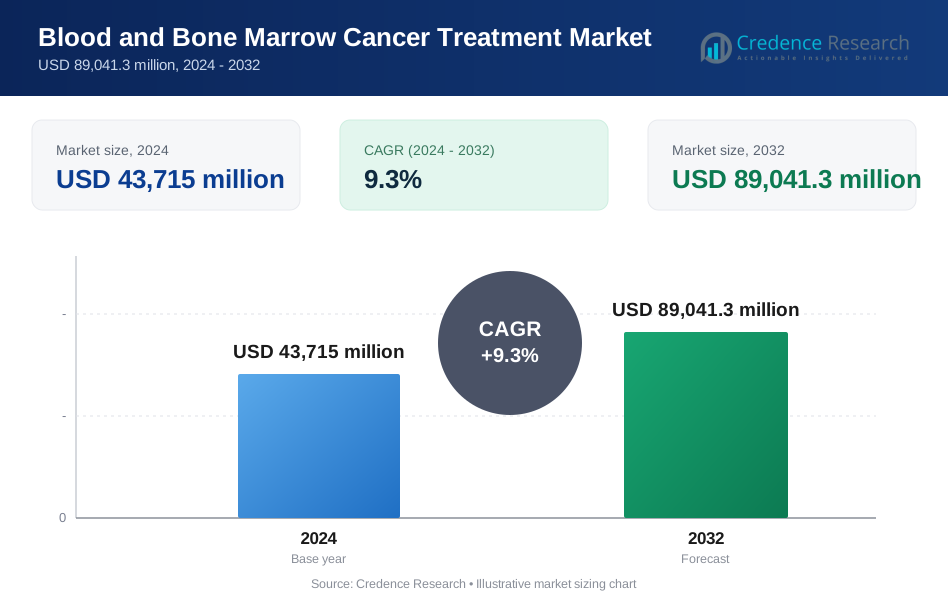
| Blood and Bone Marrow Cancer Treatment Market Size 2024 | USD 43,715 Million |
| Blood and Bone Marrow Cancer Treatment Market, CAGR | 9.3% |
| Blood and Bone Marrow Cancer Treatment Market Size 2032 | USD 89,041.3 Million |
Market Overview
The Blood and Bone Marrow Cancer Treatment Market is expected to grow from USD 43,715 million in 2024 to USD 89,041.3 million by 2032, reflecting a robust CAGR of 9.3%.
The Blood and Bone Marrow Cancer Treatment market is driven by advancements in targeted therapies, immunotherapies, and personalized medicine, offering more effective and tailored treatment options for patients. Increasing research and clinical trials are enhancing treatment outcomes, while rising awareness about blood and bone marrow cancers contributes to early detection and better prognosis. Additionally, the growing prevalence of these cancers, particularly among aging populations, is fueling demand for innovative therapies. Market trends include the rise of CAR-T cell therapies and the development of next-generation biologics, further driving market expansion and improving patient outcomes.
The geographical landscape of the blood and bone marrow cancer treatment market is diverse, with significant activity in North America, Europe, and emerging markets in Asia-Pacific. North America, led by the U.S., dominates due to advanced healthcare infrastructure and high treatment adoption rates. Europe also exhibits strong growth, driven by healthcare advancements and research funding. In the Asia-Pacific region, countries like Japan, China, and India are seeing increasing investments in cancer care. Key players in this market include AllCells LLC, ATCC Inc., Gilead Sciences, Inc., Novartis AG, Merck Millipore Corporation, and Bluebird Bio, Inc.
Market Drivers
Increasing Prevalence of Blood Cancers
The rising incidence of blood cancers, including leukemia, lymphoma, and myeloma, is a key driver of the blood and bone marrow cancer treatment market. Factors such as aging populations, lifestyle changes, and environmental influences are contributing to this increase. For instance, the Leukemia & Lymphoma Society reports that an estimated 1,698,339 people in the United States are living with or in remission from leukemia, lymphoma, myeloma, myelodysplastic syndromes (MDS), or myeloproliferative neoplasms (MPNs). As the prevalence of these cancers continues to grow, there is an expanding need for more effective treatments. This surge in demand for therapies to address blood cancers is a central factor behind the market’s growth.
Advancements in Treatment Options
Significant advancements in treatment options, particularly targeted therapies, immunotherapies, and CAR-T cell therapies, are improving patient outcomes and survival rates. These innovations are revolutionizing the treatment landscape for blood cancers by offering more precise and personalized therapeutic approaches. For instance, the U.S. Food and Drug Administration (FDA) approved three new drugs to treat multiple myeloma in 2022 alone. The availability of cutting-edge therapies has made treatment more effective, driving strong demand in the market. As more breakthroughs emerge, treatment options for blood and bone marrow cancers continue to evolve, further accelerating market growth.
Growing Geriatric Population and Rising Healthcare Expenditure
The aging population is more vulnerable to blood cancers, contributing to a rise in demand for effective treatments. This demographic shift is expected to fuel market growth, as older individuals are at higher risk for conditions like leukemia and lymphoma. For instance, the National Cancer Institute notes that the convergence of an aging population and peak cancer incidence among those aged 65 to 74 will result in a significant rise in the number of people diagnosed with cancer. Furthermore, rising healthcare expenditure, particularly in developed countries, is increasing access to advanced cancer treatments and diagnostic tools. This spending allows for the adoption of innovative therapies, further expanding market opportunities.
Government Initiatives, Awareness, and Early Diagnosis
Government initiatives and funding aimed at supporting cancer research and clinical trials are also bolstering market expansion. For instance, the Indian Council of Medical Research (ICMR) has established over 250 registries under the National Cancer Registry Programme to generate reliable data on the magnitude and patterns of cancer. Increased awareness of blood cancers, coupled with advances in early detection, is driving timely diagnosis and intervention, which positively impacts treatment outcomes. The combination of governmental support and heightened awareness ensures a steady pipeline of innovations and better access to treatments, fueling the growth of the blood cancer treatment market globally.
Market Trends
Advancements in Targeted Therapies and Immunotherapy
The landscape of blood and bone marrow cancer treatment is being shaped by significant advancements in targeted therapies and immunotherapy. Precision medicine, which tailors treatments based on genetic mutations unique to individual patients, is becoming more prevalent. This approach not only improves efficacy but also minimizes side effects, making treatment more effective and less invasive. In parallel, immunotherapies, such as CAR-T cell therapy, are revolutionizing cancer care by harnessing the body’s immune system to combat cancer cells. These therapies offer a promising alternative to traditional treatments by providing highly personalized and potentially curative options. Combination therapies are also gaining traction, where multiple drugs with different mechanisms of action are used together to optimize treatment outcomes. This multi-pronged approach enhances the therapeutic impact and provides a comprehensive solution for treating complex blood cancers.
Emerging Trends in Digital Health, Emerging Markets, and Gene Therapy
In addition to advancements in treatment, technological innovations are playing a pivotal role in transforming the blood cancer treatment market. AI-powered tools are enhancing early diagnosis, risk assessment, and treatment planning, enabling clinicians to make data-driven decisions. For instance, a new AI tool developed by Harvard Medical School can diagnose cancer, guide treatment choices, and predict patient survival across multiple cancer types. Digital health solutions are also improving patient engagement, monitoring, and remote care, ensuring that patients can access timely and effective treatment options. Meanwhile, emerging markets, particularly in developing countries, are seeing increased investments in cancer care infrastructure. This growth is making cancer treatments more affordable and accessible, especially for underserved populations. Gene therapy is another cutting-edge trend, with technologies like CRISPR-Cas9 offering the potential for novel treatments that could cure certain types of blood cancers. As clinical trials and research continue to evaluate new drugs and treatment combinations, the increased funding in cancer research is driving ongoing innovation in the field. Additionally, patient advocacy groups are playing an essential role by raising awareness, providing emotional support, and influencing healthcare policies. Patient-centric approaches are being adopted to improve both the quality of life and the outcomes for individuals undergoing treatment, ensuring a holistic approach to cancer care.
Market Challenges Analysis
High Cost of Treatment and Accessibility Challenges
One of the primary challenges in the blood and bone marrow cancer treatment market is the high cost associated with novel therapies. Innovative treatments like CAR-T cell therapy and advanced immunotherapies are life-saving but often come with exorbitant price tags, limiting their accessibility. For instance, the cost of CAR-T cell therapy can exceed $350,000 per dose, making it unaffordable for many patients in low- and middle-income countries. The financial burden of these therapies is particularly acute in low- and middle-income countries, where healthcare systems may not be equipped to provide such costly treatments. While these therapies have proven to significantly improve patient outcomes, their high prices restrict the number of patients who can afford them. As a result, patients in underserved regions are left without access to potentially life-saving options, contributing to a global disparity in cancer care. Addressing the cost issue requires a multifaceted approach, including government subsidies, price controls, and patient assistance programs that can make these treatments more affordable.
Side Effects, Drug Resistance, and Clinical Trial Access
The effectiveness of blood cancer treatments is often compromised by severe side effects and the development of drug resistance. Many traditional treatments, such as chemotherapy, and newer immunotherapies, come with intense side effects like hair loss, fatigue, immune system suppression, and even long-term complications such as increased risk of secondary cancers or organ damage. These side effects significantly impact a patient's quality of life and adherence to treatment regimens, complicating the overall treatment process. Additionally, cancer cells can evolve to become resistant to drugs over time, necessitating continuous innovation to develop new therapies. Limited access to clinical trials further exacerbates these challenges, as trials are often concentrated in developed regions, leaving patients in less accessible areas without opportunities to benefit from cutting-edge treatments. Strict eligibility criteria for clinical trials also exclude many patients who might otherwise be candidates for experimental therapies. To address these challenges, it is essential to expand clinical trial networks, relax eligibility criteria, and invest in the development of more effective, less toxic treatments. Ongoing research and patient support services are critical for improving treatment adherence, managing side effects, and ensuring equitable access to clinical trials worldwide.
Market Segmentation Analysis:
By Type:
The blood and bone marrow cancer treatment market is primarily segmented into chemotherapy, immunotherapy, stem cell transplant, and radiotherapy. Chemotherapy remains the most widely used treatment, aiming to destroy rapidly dividing cancer cells. However, the growing shift towards targeted therapies has increased the adoption of immunotherapies, including CAR-T cell therapy, which stimulates the immune system to target cancer cells more effectively. Stem cell transplants, often used for patients with leukemia and lymphoma, help regenerate damaged bone marrow, improving treatment outcomes. Radiotherapy, which targets specific cancerous cells in localized areas, is also commonly combined with other therapies. As advancements in each of these treatment modalities continue, the market for blood and bone marrow cancer treatments is expanding, with immunotherapy and stem cell transplants emerging as promising alternatives to traditional chemotherapy.
By Application:
The market is also segmented by application, which includes multiple myeloma, leukemia, lymphoma, and other blood cancers. Leukemia and lymphoma are the most prevalent, with treatments ranging from chemotherapy and stem cell transplants to immunotherapies and radiotherapy. The rising demand for personalized and targeted treatment approaches has fueled growth in these segments, particularly through the development of immunotherapies such as CAR-T cell therapies. Multiple myeloma, although less common, is witnessing rapid growth due to advancements in treatment options that combine chemotherapy, stem cell transplants, and cutting-edge immunotherapies. These application segments are vital drivers of market growth, with continued innovations improving treatment efficacy and patient survival rates.
Segments:
Based on Type:
- Chemotherapy
- Immunotherapy
- Stem Cell Transplant
- Radiotherapy
Based on Application
- Multiple Myeloma
- Leukemia
- Lymphoma
- Others
Based on the Geography:
- North America
- U.S.
- Canada
- Mexico
- Europe
- Germany
- France
- U.K.
- Italy
- Spain
- Rest of Europe
- Asia Pacific
- China
- Japan
- India
- South Korea
- South-east Asia
- Rest of Asia Pacific
- Latin America
- Brazil
- Argentina
- Rest of Latin America
- Middle East & Africa
- GCC Countries
- South Africa
- Rest of the Middle East and Africa
Regional Analysis
North America
North America holds the largest market share in the blood and bone marrow cancer treatment market, accounting for approximately 40% of the global revenue. The region's dominance is primarily driven by its advanced healthcare infrastructure, high healthcare spending, and well-established medical research and clinical trial networks. The United States, in particular, has seen significant advancements in cancer research, particularly in immunotherapy and targeted therapies, which have contributed to improved survival rates for blood cancer patients. The rapid adoption of cutting-edge treatments such as CAR-T cell therapy and stem cell transplants, along with the availability of innovative drugs, supports the region’s strong market position. Moreover, the growing number of cancer patients due to the aging population and increased awareness of blood cancers further propels market growth. Government initiatives and funding for cancer research also play a crucial role in driving the expansion of the market, ensuring that new therapies reach the market efficiently. However, the high cost of treatment remains a challenge in this region, limiting access to some advanced therapies for certain patient demographics.
Asia-Pacific
The Asia Pacific region, accounting for approximately 25% of the global market share, is experiencing rapid growth in the blood and bone marrow cancer treatment market. The increase in healthcare spending, coupled with improving healthcare infrastructure in countries like China and India, is propelling market expansion. These countries are investing heavily in cancer research and the development of affordable treatment options, which is making advanced therapies more accessible. Additionally, the rising prevalence of blood cancers, particularly leukemia and lymphoma, due to urbanization, changing lifestyles, and an aging population, has spurred demand for new treatments. The growth of clinical trial networks in Asia Pacific is also helping to increase patient access to innovative therapies, which further supports market growth. Moreover, the region's large and diverse population presents a significant opportunity for pharmaceutical companies to expand their reach. Despite these positive trends, challenges such as limited awareness, uneven healthcare access across rural and urban areas, and economic disparities remain significant barriers to overcoming the full potential of the market in the region.
Key Player Analysis
- AllCells LLC.
- ATCC Inc.
- Bluebird Bio, Inc.
- Cruline Human Biospecimen PRO
- Cellular Dynamics International
- Conversant Bio ABM Inc.
- Gilead Sciences, Inc.
- Hemacare Corporation
- Lifeline Cell Technology
- Merck Millipore Corporation
- Mesoblast Ltd.
- Novartis AG
- PromoCell GmbH
- ReachBio LLC.
- Sanofi-Aventis LLC.
- STEMCELL Technologies
- Actinium Pharmaceuticals, Inc.
Competitive Analysis
The blood and bone marrow cancer treatment market is highly competitive, with leading players focusing on innovation and strategic collaborations to enhance their market position. Companies such as Merck Millipore Corporation, Sanofi-Aventis LLC, AllCells LLC, STEMCELL Technologies, ATCC Inc., Hemacare Corporation, Cellular Dynamics International, ReachBio LLC, Conversant Bio ABM Inc., PromoCell GmbH, Lifeline Cell Technology, Mesoblast Ltd., Actinium Pharmaceuticals, Inc., Bluebird Bio, Gilead Sciences, Inc., and Novartis AG are at the forefront, leveraging advancements in chemotherapy, immunotherapy, and stem cell-based therapies. These companies are investing in cutting-edge research, clinical trials, and strategic partnerships to develop novel therapies and improve patient outcomes. Additionally, market players are increasingly exploring gene therapies and precision medicine to address the unmet needs of blood cancer treatment. Ongoing efforts in regulatory approvals, product development, and global expansion further intensify competition, making it a dynamic and rapidly evolving market.
Recent Developments
- On March 15, 2024, a new Paediatric Bone Marrow Transplant (BMT) unit was launched at the Institute of Child Health (ICH) and Hospital for Children. Funded by the National Health Mission and State government, the unit features five BMT rooms and a dedicated operation theatre for bone marrow harvest. It aims to perform 60 transplants annually.
- On February 14, 2024, researchers from the University of Missouri School of Medicine discovered potential treatments for two types of complications following bone marrow transplants. These transplants are often used to treat leukemia and other blood cancers. However, a common issue called graft vs. host disease (GvHD) occurs when donated cells attack the recipient's cells.
- In December 2023, doctors at Department of Hematology & Stem Cell Transplantation at Army Hospital R&R performed a successful bone marrow transplant (BMT) on 7-year-old Master Sushant Paudel, who had a rare primary immunodeficiency disorder. Despite the absence of a suitable donor, the hematology team orchestrated the transplant, offering hope for others with similar conditions.
- In March 2022, new research from The General Hospital Corporation offered promising insights for bone marrow and stem cell transplantation in patients with blood-related diseases. Scientists have identified a distinctive gene signature expressed by hematopoietic stem cells, which are crucial for generating healthy blood cells post-transplantation.
Market Concentration & Characteristics
The blood and bone marrow cancer treatment market exhibits a moderate to high level of concentration, with a few key players dominating the landscape. Leading pharmaceutical companies, such as Merck, Novartis, and Gilead Sciences, hold significant market share due to their advanced research capabilities and wide-ranging portfolios of innovative treatments, including chemotherapy, immunotherapy, and stem cell therapies. These companies are heavily investing in clinical trials, research and development, and strategic acquisitions to enhance their product offerings and expand their market presence. However, the market also features a diverse array of smaller biotech firms and emerging players, often focusing on niche therapies such as gene editing and personalized medicine. The characteristics of the market are defined by rapid technological advancements, increasing treatment options, and growing patient demand for more effective and less invasive therapies. As a result, competition remains strong, with both large and small players continuously striving for innovation and market leadership.
Report Coverage
The research report offers an in-depth analysis based on Type, Application and Geography. It details leading market players, providing an overview of their business, product offerings, investments, revenue streams, and key applications. Additionally, the report includes insights into the competitive environment, SWOT analysis, current market trends, as well as the primary drivers and constraints. Furthermore, it discusses various factors that have driven market expansion in recent years. The report also explores market dynamics, regulatory scenarios, and technological advancements that are shaping the industry. It assesses the impact of external factors and global economic changes on market growth. Lastly, it provides strategic recommendations for new entrants and established companies to navigate the complexities of the market.
Future Outlook
- The demand for blood and bone marrow cancer treatments is expected to grow as the incidence of blood cancers rises globally.
- Advances in immunotherapy and targeted therapies will continue to improve patient outcomes and survival rates.
- Gene therapy and CRISPR-based treatments may revolutionize the approach to curing blood cancers in the near future.
- The increasing focus on personalized medicine will lead to more tailored and effective treatment options for individual patients.
- Emerging markets, particularly in Asia-Pacific and Latin America, will see a surge in demand due to expanding healthcare access.
- New drug approvals and innovative clinical trials are expected to enhance the available treatment portfolio for blood cancer patients.
- The integration of digital health technologies, including AI for early diagnosis and treatment planning, will improve healthcare delivery.
- Enhanced patient support systems, including counseling and educational programs, will improve adherence to complex treatment regimens.
- The growing collaboration between pharmaceutical companies and research institutions will drive continuous innovation in blood cancer therapies.
- As healthcare systems improve worldwide, more equitable access to advanced treatments will contribute to better outcomes in blood cancer care.
Request a Free Sample
Fill in your details and we'll send you a free sample report.
- Sample data tables & charts
- Research methodology
Need a Custom Version of This Report?
Tailor the scope, geography, or segments to your exact requirements.
- Custom geography or segment scope
- Direct access to our analyst team
Frequently Asked Questions
What is the current size of the Blood and Bone Marrow Cancer Treatment market?
What factors are driving the growth of the Blood and Bone Marrow Cancer Treatment market?
What are the key segments within the Blood and Bone Marrow Cancer Treatment market?
What are some challenges faced by the Blood and Bone Marrow Cancer Treatment market?
Who are the major players in the Blood and Bone Marrow Cancer Treatment market?
Table of Content
Chapter 1. Report Introduction
- 1.1 Report Description & Purpose
- 1.1.1 Report Title & Market Definition
- 1.1.2 Unique Selling Propositions (USP) & Key Differentiators
- 1.1.3 Value Proposition for Stakeholders
- 1.2 Research Objectives
- 1.2.1 Market Sizing Objectives (Volume & Revenue)
- 1.2.2 Segmentation Objectives
- 1.2.3 Competitive Intelligence Objectives
- 1.2.4 Forecast & Scenario Objectives
- 1.3 Report Scope
- 1.3.1 Blood and Bone Marrow Cancer Treatment Scope – Types & Subtypes Covered
- 1.3.2 Geographic Scope – Regions & Countries Covered
- 1.3.3 Historical Period, Base Year & Forecast Period (2024; forecast to 2032)
- 1.3.4 Inclusions & Exclusions
- 1.4 HS Code & Classification Framework
- 1.5 Currency, Units & Pricing Basis
- 1.6 Target Stakeholders
- 1.7 Limitations & Assumptions
Chapter 2. Executive Summary
- 2.1 Global Blood and Bone Marrow Cancer Treatment Market Snapshot
- 2.1.1 Market Size – Historical (2024) & Forecast (2024-2032) (2024: USD 43,715 million → 2032: USD 89,041.3 million)
- 2.1.2 Volume & Revenue – Global Totals
- 2.1.3 Key Market Highlights – Top Five Facts
- 2.2 Blood and Bone Marrow Cancer Treatment Market Segmentation Snapshot
- 2.2.1 Market Split by Region – 2024 vs. 2032
- 2.3 Competitive Snapshot
- 2.3.1 Top 10 Players by Revenue Share – 2024
- 2.3.2 Top 10 Players by Volume Share – 2024
- 2.3.3 Recent Strategic Developments (18-Month Summary)
- 2.4 Key Investment Highlights & Strategic Conclusions
Chapter 3. Blood and Bone Marrow Cancer Treatment Market Dynamics & Industry Analysis
- 3.1 Market Overview & Context
- 3.1.1 Blood and Bone Marrow Cancer Treatment Market Position in the Broader Automotive Value Chain
- 3.1.2 OEM vs. Replacement Market Dynamics
- 3.1.3 Market Maturity & Development Stage by Region
- 3.2 Blood and Bone Marrow Cancer Treatment Market Drivers
- 3.3 Blood and Bone Marrow Cancer Treatment Market Restraints & Challenges
- 3.4 Blood and Bone Marrow Cancer Treatment Market Opportunities
- 3.5 Porter's Five Forces Analysis
- 3.5.1 Threat of New Entrants
- 3.5.2 Bargaining Power of Suppliers
- 3.5.3 Bargaining Power of Buyers
- 3.5.4 Threat of Substitutes
- 3.5.5 Competitive Rivalry – Intensity Assessment
- 3.6 Blood and Bone Marrow Cancer Treatment Value Chain Analysis
- 3.6.1 Upstream – Raw Material/Input Suppliers
- 3.6.1.1 Raw Material/Input 1
- 3.6.1.2 Raw Material/Input 2
- 3.6.1.3 Raw Material/Input 3
- 3.6.2 Midstream – Production/Manufacturing/Service Delivery
- 3.6.2.1 Production/Process Overview
- 3.6.2.2 Key Facility Locations & Capacity by Manufacturer
- 3.6.3 Downstream – Distribution & End Consumer
- 3.6.3.1 Primary Channel – B2B/OEM
- 3.6.3.2 Secondary Channels – Dealer, Retail, Online, Direct
- 3.6.4 Value Chain Profitability Analysis
- 3.6.1 Upstream – Raw Material/Input Suppliers
- 3.7 PESTEL Analysis
- 3.7.1 Political Factors
- 3.7.2 Economic Factors
- 3.7.3 Social Factors
- 3.7.4 Technological Factors
- 3.7.5 Environmental Factors
- 3.7.6 Legal Factors
- 3.8 Blood and Bone Marrow Cancer Treatment Supply Chain Analysis
- 3.8.1 Raw Material/Input Supply Risk Assessment
- 3.8.2 Manufacturing Concentration Risk (Geographic Exposure)
- 3.8.3 Trade Disruption Impact Analysis
- 3.9 Regulatory & Policy Landscape
Note: The regulatory and policy landscape section covers regulations based on their applicability to the market, Blood and Bone Marrow Cancer Treatment category, geography, and scope of the study. Only regulatory frameworks with a material impact on operations, compliance, trade, sustainability, or market access are analyzed in detail.
Chapter 4. Key Investment Pockets & Opportunity Analysis
- 4.1 Blood and Bone Marrow Cancer Treatment Market Attractiveness Analysis
- 4.1.1 By Region – Investment Attractiveness Matrix (Volume × CAGR)
- 4.2 Absolute Revenue Growth Opportunity
- 4.2.1 By Region – Absolute USD Growth Through 2032
- 4.3 Incremental Volume Opportunity
- 4.3.1 By Region – Incremental Volume Through 2032
- 4.3.2 Segment – Incremental Volume
- 4.4 Emerging Submarket Opportunity Deep Dive (Subject to Applicability)
- 4.5 Emerging Market Opportunity Scorecards
- 4.5.1 United States
- 4.5.2 Europe
- 4.5.3 Asia
- 4.5.4 Middle East & Africa
Note: Emerging Market Opportunity Scorecards will be included based on relevance and strategic importance. Regions listed are indicative and may vary depending on data availability and market dynamics.
Chapter 5. Blood and Bone Marrow Cancer Treatment Import-Export Analysis & Trade Flows
- 5.1 Global Trade Overview
- 5.1.1 Global Export Value by Country (2024)
- 5.1.2 Global Export Volume by Country (2024)
- 5.1.3 Global Import Value by Country (2024)
- 5.1.4 Global Import Volume by Country (2024)
- 5.1.5 Net Trade Balance by Country (2024)
- 5.2 Export Analysis – Segment
- 5.2.1 Type 1 (HS Code)
- 5.2.2 Type 2 (HS Code)
- 5.2.3 Type 3 (HS Code)
- 5.2.4 Type 4 (HS Code)
- 5.2.5 Type 5 (HS Code)
- 5.3 Import Analysis – Segment
- 5.3.1 Type 1 (HS Code)
- 5.3.2 Type 2 (HS Code)
- 5.3.3 Type 3 (HS Code)
- 5.3.4 Type 4 (HS Code)
- 5.3.5 Type 5 (HS Code)
- 5.4 Average Unit Trade Prices
- 5.4.1 Average Export Price – Segment & Country
- 5.4.2 Average Import Price – Segment & Source Country
- 5.4.3 Price Trends (2024)
- 5.5 Key Trade Route Analysis
- 5.5.1 Trade Route 1
- 5.5.2 Trade Route 2
- 5.5.3 Trade Route 3
- 5.5.4 Trade Route 4
- 5.5.5 Trade Route 5
- 5.6 Trade Policy Impact Assessment
- 5.6.1 US Anti-Dumping & Section 301 Tariffs
- 5.6.2 EU Customs Union Impact
- 5.6.3 Major Free Trade Agreements
- 5.6.4 USMCA Rules of Origin
Note: Trade policy analysis will be included only where relevant to the Blood and Bone Marrow Cancer Treatment market.
Chapter 6. Competitive Landscape & Company Benchmarking
- 6.1 Blood and Bone Marrow Cancer Treatment Market Concentration & Structure
- 6.1.1 Herfindahl-Hirschman Index (HHI) – vs. 2024
- 6.1.2 Tier 1, Tier 2 & Tier 3 Market Structure
- 6.1.3 Global, Regional & Local Player Dynamics
- 6.2 Blood and Bone Marrow Cancer Treatment Market Share Analysis – 2024
- 6.2.1 Global Revenue Share by Company
- 6.2.2 Global Volume Share by Company
- 6.2.3 Regional Revenue Share
- 6.2.4 Market Share Evolution ( vs. 2024)
- 6.2.5 OEM Segment Share by Company
- 6.2.6 Replacement Segment Share by Company
- 6.3 Production/Delivery Capacity & Facility Analysis
- 6.3.1 Global Installed Capacity
- 6.3.2 Capacity Utilization Rates
- 6.3.3 Production/Output Volume
- 6.3.4 Facility Locations & Capacity Map
- 6.3.5 Planned Capacity Additions
- 6.4 Blood and Bone Marrow Cancer Treatment Competitive Benchmarking Matrix
- 6.4.1 Revenue, Volume, CAGR & Profitability Comparison
- 6.4.2 Channel Revenue Mix
- 6.4.3 Geographic Revenue Exposure
- 6.4.4 R&D Intensity
- 6.4.5 Sustainability Maturity
- 6.5 Strategic Developments in Blood and Bone Marrow Cancer Treatment (Last 24 Months)
- 6.5.1 Mergers, Acquisitions & Divestments
- 6.5.2 New Blood and Bone Marrow Cancer Treatment Launches
- 6.5.3 Facility Expansions
- 6.5.4 Strategic Alliances, Joint Ventures & Partnerships
- 6.5.5 Distribution Expansion & Market Entry
- 6.5.6 Sustainability & ESG Initiatives
- 6.6 Competitive Strategy Mapping
- 6.6.1 Leader, Challenger, Follower & Niche Classification
- 6.6.2 Pricing Strategy Comparison
- 6.6.3 Channel Strategy Matrix
Note: Strategic developments are included based on their materiality and the availability of reliable information.
Chapter 7. Global Blood and Bone Marrow Cancer Treatment Market – By Distribution Channel
- 7.1 Segment Overview
- 7.1.1 Volume & Revenue Split by Channel (2024 & 2032)
- 7.1.2 Channel Mix Evolution (2024-2032)
Chapter 8. Regional Market Analysis – Global Overview
- 8.1 Global Regional Overview
- 8.1.1 Regional Volume Share
- 8.1.2 Regional Revenue Share
- 8.1.3 Regional Volume by Region
- 8.1.4 Regional Revenue by Region
- 8.1.5 Regional Forecast Through 2032
- 8.2 Cross-Regional Segment Analysis
- 8.2.1 By Distribution Channel
- 8.2.2 By Brand/Price Tier
Chapter 9. North America Blood and Bone Marrow Cancer Treatment Market
- 9.1 United States
- 9.2 Canada
- 9.3 Mexico
Chapter 10. Europe Blood and Bone Marrow Cancer Treatment Market
- 10.1 Germany
- 10.2 France
- 10.3 Italy
- 10.4 United Kingdom
- 10.5 Spain
- 10.6 Poland
- 10.7 Russia
- 10.8 Netherlands
- 10.9 Belgium
- 10.10 Sweden
- 10.11 Denmark
- 10.12 Norway
- 10.13 Rest of Europe
Chapter 11. Asia Pacific Blood and Bone Marrow Cancer Treatment Market
- 11.1 China
- 11.2 India
- 11.3 Japan
- 11.4 South Korea
- 11.5 Thailand
- 11.6 Indonesia
- 11.7 Vietnam
- 11.8 Malaysia
- 11.9 Australia
- 11.10 Rest of Asia Pacific
Chapter 12. Latin America Blood and Bone Marrow Cancer Treatment Market
- 12.1 Brazil
- 12.2 Argentina
- 12.3 Colombia
- 12.4 Chile
- 12.5 Rest of Latin America
Chapter 13. Middle East Blood and Bone Marrow Cancer Treatment Market
- 13.1 Saudi Arabia
- 13.2 United Arab Emirates
- 13.3 Turkey
- 13.4 Israel
- 13.5 Iran
- 13.6 Rest of the Middle East
Chapter 14. Africa Blood and Bone Marrow Cancer Treatment Market
- 14.1 South Africa
- 14.2 Egypt
- 14.3 Nigeria
- 14.4 Morocco
- 14.5 Rest of Africa
Chapter 15. Blood and Bone Marrow Cancer Treatment Company Profiles
- 15.1 [Company 01]
- 15.1.1 Company Overview
- 15.1.2 Key Management Personnel
- 15.1.3 Products & Services Portfolio
- 15.1.4 Financial Performance
- 15.1.5 Key Market Focus & Geographic Presence
- 15.1.6 Recent Developments & Strategic Initiatives
Note: The company profile list is preliminary and may change based on research findings, market developments, data availability, and client requirements.
Chapter 16. Appendices
- Appendix A – List of Abbreviations & Acronyms
- Appendix B – Industry Classification Code Reference – Full Series
- Appendix C – Production & Capacity Data Tables
- Appendix D – End-Use & Demand Base Tables
- Appendix E – Consumption & Replacement Rate Assumptions
- Appendix F – ASP Reference Tables
- Appendix G – Manufacturing & Facility Database
- Appendix H – Import-Export Data Tables
- Appendix I – Regulatory Summary Tables
- Appendix J – Primary Research Participant List (Anonymized)
- Appendix K – Primary Research Questionnaire Framework
- Appendix L – Data Sources & Bibliography
- Appendix M – Market Size Divergence & Source Comparison
Chapter 17. Research Methodology
- 17.1 Research Framework & Philosophy
- 17.2 Secondary Research – Sources, Hierarchy & Data Extraction
- 17.3 Data Modeling – Bottom-Up & Top-Down Market Sizing
- 17.4 Primary Research – Stakeholder Framework, LOI & Sample Sizes
- 17.5 Forecast Methodology – Regression, Scenario & Sensitivity Analysis
- 17.6 Quality Control – Four-Layer Validation Framework
- 17.7 Limitations & Standard Assumptions
- 17.8 Disclaimer
