
| REPORT ATTRIBUTE | DETAILS |
|---|---|
| Historical Period | 2020-2023 |
| Base Year | 2024 |
| Forecast Period | 2025-2032 |
| Body Sculpting Body Contouring Market Size 2024 | USD 8,005.80 million |
| Body Sculpting Body Contouring Market, CAGR | 10.80% |
| Body Sculpting Body Contouring Market Size 2032 | USD 19,251.04 million |
Market Overview:
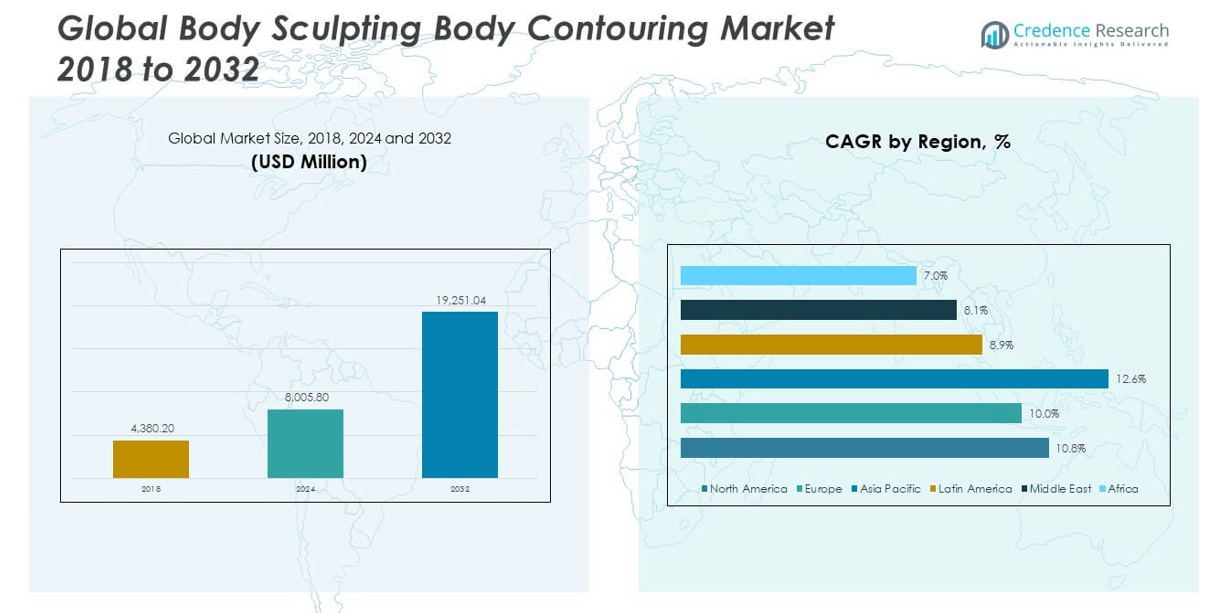
The Global Body Sculpting Body Contouring Market size was valued at USD 4,380.20 million in 2018 to USD 8,005.80 million in 2024 and is anticipated to reach USD 19,251.04 million by 2032, at a CAGR of 10.80% during the forecast period.
The growth of the global body sculpting and body contouring market is primarily driven by the rising prevalence of obesity and unhealthy lifestyles across both developed and emerging economies. A significant portion of the global population is increasingly affected by sedentary habits, poor diet, and lack of physical activity, leading to a growing demand for aesthetic procedures that address excess fat and body shape concerns. Additionally, the market benefits from a strong shift in consumer preference toward non-invasive and minimally invasive treatment options that offer effective results with minimal downtime and fewer complications. Technologies such as cryolipolysis, ultrasound, radiofrequency, and laser-based systems are gaining rapid acceptance among patients and clinics alike. Furthermore, technological advancements continue to fuel innovation in the market, with manufacturers introducing multi-functional devices, AI-driven platforms, and personalized treatment protocols. This has made procedures more efficient, user-friendly, and customizable. Another important growth catalyst is the rise in disposable income and increasing aesthetic consciousness among individuals, especially in urban areas.
North America holds the largest share of the global body sculpting and body contouring market, driven by high aesthetic awareness, advanced healthcare infrastructure, and a large base of consumers opting for both surgical and non-surgical cosmetic procedures. The United States dominates the region, with a robust presence of certified aesthetic clinics, experienced professionals, and continuous device innovation. Europe follows as the second-largest market, with countries such as Germany, the United Kingdom, France, and Italy experiencing steady growth in demand for body contouring procedures. This growth is supported by favorable reimbursement policies in selective procedures and a well-established medical aesthetic industry. The Asia Pacific region is emerging as the fastest-growing market, owing to increasing urbanization, rising middle-class income, and expanding medical tourism in countries like South Korea, India, Thailand, and China. Meanwhile, the Latin America and Middle East & Africa markets show steady but slower growth due to varying levels of healthcare access and affordability.
Market Insights:
- The Global Body Sculpting Body Contouring Market grew from USD 4,380.20 million in 2018 to USD 8,005.80 million in 2024 and is projected to reach USD 19,251.04 million by 2032, registering a CAGR of 10.80%.
- The market is experiencing strong growth due to the global rise in obesity, poor dietary habits, and sedentary lifestyles, prompting increased demand for fat reduction and body reshaping procedures.
- Consumer preference is shifting toward non-invasive and minimally invasive treatments like cryolipolysis, radiofrequency, and laser-based systems, which offer reduced downtime and higher safety.
- Continuous innovation in body contouring technologies such as AI-enabled devices, 3D imaging, and real-time monitoring is boosting treatment efficiency and competitive differentiation.
- Growing aesthetic awareness, social media influence, and rising disposable income are expanding the market, especially in emerging economies such as India, China, and Brazil.
- High treatment costs and lack of insurance coverage are major barriers, particularly in low-income regions, where procedures remain largely out-of-pocket and limit patient access.
- North America holds the largest market share, followed by Europe, while Asia Pacific emerges as the fastest-growing region, driven by medical tourism and a growing middle class.
Market Drivers:
Rising Global Obesity Rates and Unhealthy Lifestyle Habits Are Driving Treatment Demand
The increasing prevalence of obesity and related lifestyle disorders is a major driver of growth in the Global Body Sculpting Body Contouring Market. Sedentary behavior, poor dietary habits, and a lack of regular physical activity have contributed to a surge in overweight and obese individuals worldwide. This shift has led to heightened demand for aesthetic treatments aimed at fat reduction and body reshaping. Consumers are actively seeking alternatives to traditional weight loss methods, particularly when lifestyle changes fail to yield visible results. The market responds to this demand with a variety of body sculpting solutions tailored to different body types and needs. It benefits from a growing population segment that views body contouring as an essential step toward improved health, confidence, and appearance.
Consumer Preference for Non-Invasive and Minimally Invasive Procedures Is Accelerating Market Growth
A significant shift in consumer preference toward non-invasive and minimally invasive aesthetic procedures is transforming the Global Body Sculpting Body Contouring Market. Individuals increasingly opt for treatments that offer visible outcomes with reduced recovery time and minimal risk. Technologies such as cryolipolysis, radiofrequency energy, high-intensity focused ultrasound (HIFU), and laser lipolysis are gaining widespread adoption due to their safety profile and effectiveness. It supports both medical professionals and patients with a diverse range of clinically proven devices and procedures. Clinics and med spas are expanding their non-surgical offerings to meet rising demand, making these treatments more accessible to a broader audience. The market benefits from this trend by positioning non-invasive contouring solutions as safe, time-efficient alternatives to surgery.
- For example, Cynosure's SculpSure® is a real and FDA-cleared device that uses diode laser technology to target and destroy fat cells. It is a non-invasive body contouring system that utilizes a 1060 nm diode laser to heat and eliminate fat cells, with clinical studies showing a reduction in treated fat layer thickness.
Advancements in Technology and Device Innovation Are Enhancing Market Competitiveness
Continuous technological innovation plays a critical role in driving the Global Body Sculpting Body Contouring Market. Device manufacturers are introducing advanced equipment that combines multiple energy modalities for more effective and targeted treatments. AI-enabled systems, 3D imaging, and real-time treatment monitoring are becoming integral features, enhancing treatment precision and patient outcomes. It gains a competitive edge through these advancements, which improve procedural efficiency and reduce operator dependency. The focus on R&D and strategic collaborations fosters innovation, allowing companies to differentiate their offerings and capture a larger market share. This dynamic product landscape encourages both new entrants and established players to invest in cutting-edge solutions that deliver superior results.
- Cutera’s truSculpt® iD, for example, features real-time temperature control and impedance monitoring, ensuring uniform heating and improved patient safety.
Increasing Aesthetic Awareness and Rising Disposable Income Are Expanding the Consumer Base
Growing consumer awareness of aesthetic procedures, supported by social media influence and changing beauty standards, is significantly impacting the Global Body Sculpting Body Contouring Market. Individuals are more informed about treatment options and actively seek personalized solutions to meet their body goals. This shift aligns with rising disposable income levels, particularly in emerging economies where urbanization and improved healthcare access drive spending on elective procedures. It is experiencing accelerated adoption in markets like Asia-Pacific and Latin America due to the expanding middle class and rising emphasis on physical appearance. The market continues to grow as consumers perceive body contouring treatments not only as cosmetic enhancements but also as a means to improve self-esteem and lifestyle quality. These evolving consumer expectations are creating sustained demand for high-performance, results-oriented procedures.
Market Trends:
Integration of Artificial Intelligence and Smart Technologies Is Reshaping Procedure Delivery
The incorporation of artificial intelligence (AI) and smart technologies into body contouring systems is emerging as a transformative trend in the Global Body Sculpting Body Contouring Market. AI is now being used to assist practitioners in creating customized treatment plans based on patient anatomy, previous results, and skin response. Advanced software solutions enable real-time monitoring, precision targeting, and automated energy calibration to optimize safety and efficacy. It benefits clinics by reducing procedural variability and improving treatment outcomes across patient demographics. Smart devices with integrated sensors are enabling practitioners to fine-tune energy levels and adjust parameters without interrupting the session. This shift toward intelligent, user-friendly technology is streamlining treatment workflows and improving patient satisfaction.
- For example, Allergan’s CoolSculpting Elite system incorporates proprietary AI algorithms that analyze patient-specific data to customize treatment parameters. According to Allergan, the system’s "Freeze Detect" technology uses real-time temperature sensors and feedback loops to automatically adjust cooling intensity, reducing the risk of adverse events and improving fat reduction consistency.
Surge in Male Aesthetic Treatments Is Redefining the Consumer Demographic
Male participation in aesthetic treatments is increasing and reshaping the demand landscape within the Global Body Sculpting Body Contouring Market. Traditionally dominated by female consumers, the market is witnessing a notable rise in male patients seeking procedures to enhance abdominal definition, reduce love handles, or tone arms and chest. This shift is encouraging clinics to redesign marketing strategies and service offerings tailored to male aesthetics. It is driving the development of gender-specific treatment protocols and product positioning by manufacturers. Clinics are now training staff to better understand male preferences, including privacy concerns and faster recovery times. The market is evolving to reflect a broader consumer base, leading to more diverse treatment applications and a wider appeal.
Combination Treatments and Multi-Technology Platforms Are Becoming the Norm
There is a growing trend toward combination treatments that address multiple concerns in a single session, boosting demand in the Global Body Sculpting Body Contouring Market. Patients increasingly prefer comprehensive solutions that target fat reduction, skin tightening, and muscle toning simultaneously. Manufacturers are responding by launching multi-technology platforms that integrate modalities such as cryolipolysis, radiofrequency, and electromagnetic stimulation. It is enabling practitioners to deliver more versatile and efficient outcomes with reduced treatment time and higher patient retention. Clinics are also bundling procedures to create value-driven packages, increasing average revenue per customer. The demand for holistic solutions is elevating expectations and pushing innovation beyond single-function devices.
- For example, BTL Aesthetics provides peer-reviewed clinical studies showing that EMSCULPT NEO, which combines high-intensity focused electromagnetic (HIFEM) technology with synchronized radiofrequency, achieves an average 30% reduction in subcutaneous fat and a 25% increase in muscle volume after four sessions. These metrics are reported in the device’s clinical summary and have been validated in multicenter trials published by BTL.
Expansion of Virtual Consultations and Digital Engagement Is Shaping Access
Virtual consultations and digital touchpoints are rapidly gaining traction in the Global Body Sculpting Body Contouring Market. With the rise of telehealth platforms and virtual care services, aesthetic providers are leveraging online tools to educate patients, assess eligibility, and build treatment plans remotely. This trend gained momentum during the pandemic and continues to influence patient engagement and lead conversion. It is creating new opportunities for clinics to reach wider audiences without geographic limitations. Providers are integrating digital platforms for appointment scheduling, pre-treatment instructions, and post-treatment follow-ups to improve continuity of care. These digital enhancements are reshaping how patients interact with clinics and increasing the overall accessibility of body contouring treatments.
Market Challenges Analysis:
High Treatment Costs and Limited Insurance Coverage Are Restricting Mass Adoption
One of the primary challenges facing the Global Body Sculpting Body Contouring Market is the high cost of procedures, which limits access for a large segment of the population. Most body contouring treatments, especially those involving advanced technologies, require multiple sessions and significant financial investment. Since these procedures are classified as elective or cosmetic, insurance companies typically do not provide reimbursement. This creates a financial barrier, particularly in middle- and low-income countries, where disposable income is lower. It continues to rely heavily on out-of-pocket expenditure, which restricts consumer reach and slows market penetration. While demand is growing, affordability remains a critical obstacle to widespread adoption.
Regulatory Variability and Lack of Standardization Are Impacting Consistency and Trust
Another significant challenge within the Global Body Sculpting Body Contouring Market is the lack of uniform regulatory standards across regions. Regulatory frameworks for approving and monitoring body contouring devices vary widely from country to country, creating uncertainty for manufacturers and practitioners. It affects the speed of product launches and limits cross-border expansion. Clinics may adopt technologies that differ in efficacy and safety, leading to inconsistent patient outcomes and potential reputational risks. The absence of standard treatment protocols also makes it difficult for consumers to compare services or assess the credibility of providers. Building patient trust and ensuring regulatory clarity will be critical to sustaining long-term market growth and protecting brand integrity.
Market Opportunities:
Rising Demand in Emerging Markets Is Unlocking New Revenue Streams
Emerging economies across Asia-Pacific, Latin America, and the Middle East offer significant growth potential for the Global Body Sculpting Body Contouring Market. Increasing urbanization, rising disposable incomes, and growing aesthetic awareness are fueling demand for body contouring services in these regions. A younger population, coupled with exposure to global beauty trends, is driving interest in non-invasive aesthetic treatments. It can capitalize on this trend by expanding service availability and partnering with local distributors to improve access to advanced technologies. The growing network of clinics and medical spas in cities like Mumbai, Bangkok, and São Paulo is creating new opportunities for device manufacturers and service providers. These regions represent untapped markets with large consumer bases and favorable long-term demand dynamics.
Expansion of Medical Tourism and Wellness Tourism Is Supporting Market Penetration
The rise of medical tourism in countries such as Turkey, Mexico, India, and Thailand is creating new channels for the Global Body Sculpting Body Contouring Market. Competitive pricing, skilled practitioners, and high-quality care attract international patients seeking affordable and effective aesthetic procedures. It benefits from the integration of body contouring treatments into broader wellness tourism packages, which include recovery services, luxury accommodations, and holistic care. Governments in several countries are also promoting health tourism, which supports infrastructure development and international marketing. Providers that align services with global standards and invest in multilingual, culturally adaptive care can strengthen their position. This growing cross-border demand creates scalable opportunities for revenue diversification and brand visibility.
Market Segmentation Analysis:
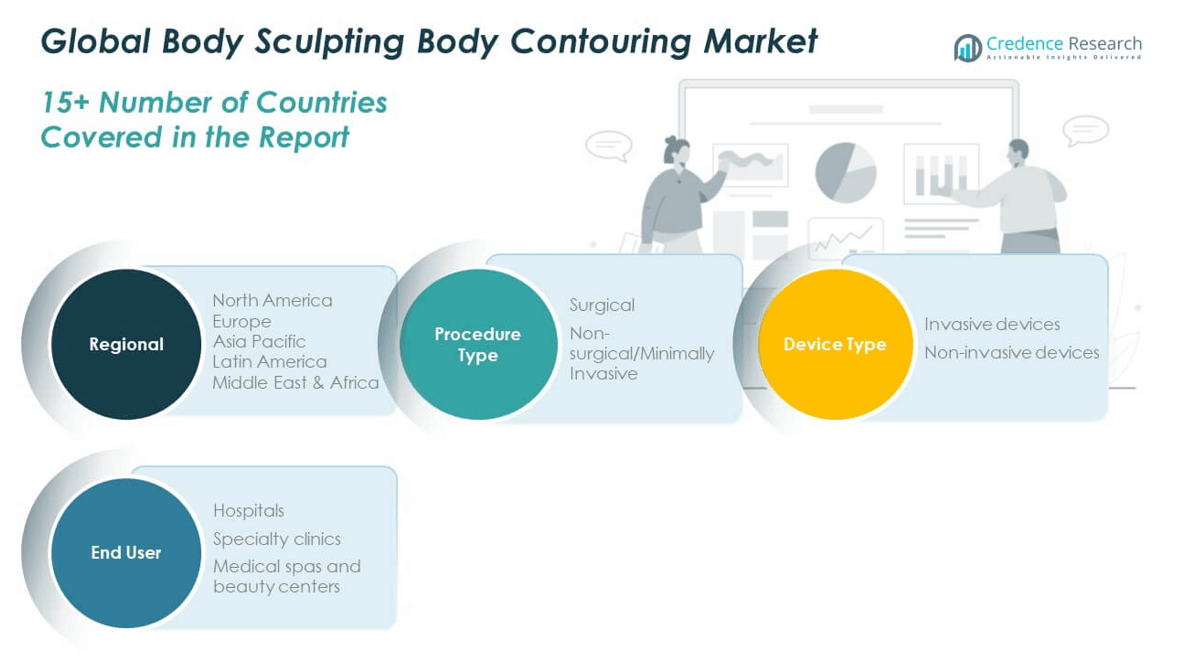
The Global Body Sculpting Body Contouring Market is segmented by procedure type, device type, and end user, each contributing distinctly to market dynamics.
By procedure type, non-surgical and minimally invasive treatments dominate the market due to their increasing popularity among patients seeking effective results with minimal downtime and reduced risk. Surgical procedures continue to hold a share, especially for cases requiring extensive fat removal or skin tightening, but their growth is slower compared to non-invasive alternatives.
By device type, non-invasive devices lead in adoption, driven by advancements in cryolipolysis, ultrasound, and radiofrequency technologies. These devices support safe, outpatient treatments and cater to a broad demographic. Invasive devices remain relevant in clinical settings for procedures requiring greater precision and depth but face slower adoption due to longer recovery periods.
- For example, Alma Lasers’ LipoLife platform integrates high-powered diode laser technology (1470 nm wavelength) for simultaneous fat emulsification and skin tightening, with clinical.
By end user, medical spas and beauty centers hold a strong market share due to growing accessibility and consumer preference for wellness-driven aesthetic services. Specialty clinics follow closely, offering expertise and personalized care. Hospitals account for a smaller share but continue to provide body contouring procedures as part of broader surgical services. The market reflects a clear trend toward outpatient, device-based, and convenience-focused treatment environments.
- For example, MicroAire’s PAL system remains a preferred choice in hospital settings for large-volume liposuction.
Segmentation:
By Procedure Type
- Surgical
- Non-surgical / Minimally Invasive
By Device Type
- Invasive Devices
- Non-invasive Devices
By End User
- Hospitals
- Specialty Clinics
- Medical Spas and Beauty Centers
By Region
- North America
- U.S.
- Canada
- Mexico
- Europe
- Germany
- France
- U.K.
- Italy
- Spain
- Rest of Europe
- Asia Pacific
- China
- Japan
- India
- South Korea
- South-east Asia
- Rest of Asia Pacific
- Latin America
- Brazil
- Argentina
- Rest of Latin America
- Middle East & Africa
- GCC Countries
- South Africa
- Rest of the Middle East and Africa
Regional Analysis:
North America
The North America Body Sculpting Body Contouring Market size was valued at USD 1,858.69 million in 2018 to USD 3,360.88 million in 2024 and is anticipated to reach USD 8,104.79 million by 2032, at a CAGR of 10.8% during the forecast period. North America holds the highest share in the Global Body Sculpting Body Contouring Market, accounting for 31% of the total market. It leads due to the high adoption of advanced non-invasive technologies, a large base of skilled professionals, and growing demand for aesthetic enhancements. The United States is the primary contributor, with a well-established network of aesthetic clinics, supportive reimbursement policies for select procedures, and strong consumer awareness. The increasing prevalence of obesity and higher discretionary spending power further amplify the demand for both surgical and non-surgical body contouring treatments. Leading manufacturers consistently launch innovative technologies in this region to stay competitive and cater to the evolving expectations of patients. North America is expected to maintain its dominance through continuous innovation and rising aesthetic awareness.
Europe
The Europe Body Sculpting Body Contouring Market size was valued at USD 1,367.69 million in 2018 to USD 2,417.89 million in 2024 and is anticipated to reach USD 5,506.14 million by 2032, at a CAGR of 10.0% during the forecast period. Europe represents the second-largest regional market, accounting for nearly 23% of the Global Body Sculpting Body Contouring Market. The region benefits from increasing aesthetic acceptance, especially in countries such as Germany, France, the UK, and Italy. Patients in Europe are shifting preference toward non-invasive and combination treatments that deliver natural-looking results. It is supported by a strong network of dermatologists, aesthetic clinics, and wellness centers offering cutting-edge technologies. Regulatory frameworks across Europe focus on product quality and safety, which has encouraged manufacturers to invest in CE-certified innovations. The market continues to grow steadily due to a balanced combination of affordability, technology access, and patient education.
Asia Pacific
The Asia Pacific Body Sculpting Body Contouring Market size was valued at USD 802.58 million in 2018 to USD 1,596.08 million in 2024 and is anticipated to reach USD 4,370.08 million by 2032, at a CAGR of 12.6% during the forecast period. Asia Pacific is the fastest-growing region, capturing 20% of the Global Body Sculpting Body Contouring Market. Rapid urbanization, growing middle-class income, and heightened awareness of beauty and aesthetics are driving demand across China, India, South Korea, and Japan. It benefits from a booming medical tourism sector, especially in Thailand and South Korea, where cost-effective yet advanced services attract international clients. Clinics across Asia are increasingly investing in high-end, multifunctional devices to meet rising expectations for quick, visible outcomes. Social media trends and influencer culture have significantly shaped consumer preferences in this region. The expanding reach of aesthetic brands and service providers is expected to sustain long-term growth in Asia Pacific.
Latin America
The Latin America Body Sculpting Body Contouring Market size was valued at USD 184.99 million in 2018 to USD 333.42 million in 2024 and is anticipated to reach USD 698.56 million by 2032, at a CAGR of 8.9% during the forecast period. Latin America contributes 6% of the Global Body Sculpting Body Contouring Market, with Brazil and Mexico leading regional demand. The rising popularity of cosmetic procedures, cultural emphasis on body aesthetics, and affordable treatment costs are stimulating growth in urban centers. It shows promising development driven by increased consumer access to certified clinics and growing social acceptance of body contouring treatments. Local players and international brands are investing in training and distribution networks to enhance service quality and reach. Despite economic challenges in parts of the region, demand remains stable due to a growing aspirational population. Strong medical tourism activity in Brazil is also bolstering the market outlook.
Middle East
The Middle East Body Sculpting Body Contouring Market size was valued at USD 110.53 million in 2018 to USD 182.75 million in 2024 and is anticipated to reach USD 362.45 million by 2032, at a CAGR of 8.1% during the forecast period. The Middle East holds a 4% share in the Global Body Sculpting Body Contouring Market and is witnessing steady growth driven by expanding private healthcare investments. Countries like the UAE and Saudi Arabia are seeing a surge in aesthetic clinics, wellness centers, and luxury medical facilities. It is influenced by a growing base of affluent consumers seeking advanced body contouring options as part of premium healthcare packages. Cultural openness to cosmetic treatments, especially among younger demographics, supports market expansion. Global manufacturers are forming local partnerships to distribute FDA- and CE-approved technologies in the region. The focus on luxury medical tourism is further contributing to the rising demand for high-end aesthetic services.
Africa
The Africa Body Sculpting Body Contouring Market size was valued at USD 55.70 million in 2018 to USD 114.79 million in 2024 and is anticipated to reach USD 209.03 million by 2032, at a CAGR of 7.0% during the forecast period. Africa holds a modest 2% share of the Global Body Sculpting Body Contouring Market, yet displays growing potential in urban hubs such as South Africa, Nigeria, and Kenya. Increasing awareness of non-surgical cosmetic procedures and rising beauty consciousness among the younger population are supporting slow but steady growth. It faces challenges such as limited access to advanced technology, low affordability, and a shortage of specialized professionals. Still, local clinics are expanding their offerings and adopting cost-effective solutions to attract new customers. Rising digital outreach and social media marketing are educating consumers about available treatments. Long-term growth will depend on improved healthcare infrastructure and targeted investments by aesthetic equipment manufacturers.
Key Player Analysis:
- Hologic
- AbbVie
- Bausch Health
- Candela Medical
- Boston Scientific
- Alma Lasers
- MicroAire Surgical Instruments
- Nouvag
- BTL Group of Companies
- Merz Pharma
- InMode Aesthetic Solutions
- Erchonia Corporation
Competitive Analysis:
The Global Body Sculpting Body Contouring Market is highly competitive, with leading players focusing on innovation, product development, and strategic partnerships to strengthen their market presence. Key companies such as Cutera Inc., BTL Aesthetics, Cynosure, Allergan (AbbVie), InMode Ltd., and Lumenis Ltd. offer a wide range of non-invasive and minimally invasive technologies. It is characterized by continuous advancements in radiofrequency, cryolipolysis, and ultrasound-based devices, which allow firms to differentiate their offerings. Companies invest in clinical trials, marketing campaigns, and physician training programs to boost brand recognition and procedural adoption. Market participants are also expanding geographically through distributor networks and acquisitions to tap into emerging markets. The competitive landscape favors firms with strong R&D capabilities, diverse product portfolios, and regulatory approvals. Rising consumer demand and evolving aesthetic standards continue to drive innovation and intensify rivalry among both global and regional players.
Recent Developments:
- In April 2025, Candela Medical launched the Vbeam Pro® laser platform, which is a significant advancement in pulsed dye laser technology. This device is used for precision treatment of vascular and dermatologic conditions, including those relevant to aesthetic and body contouring procedures.
- In March 2025, Alma Lasers introduced the latest edition of its Alma Harmony aesthetic platform. This system integrates advanced laser and light technologies for highly personalized treatments across various skin types and conditions, with a focus on efficiency and enhanced patient outcomes in aesthetic and body contouring applications.
- In January 2025, MicroAire Surgical Instruments acquired NEOSYAD, a company specializing in adipose tissue engineering technology. NEOSYAD’s AdiMate® device and Adipure® kit, which streamline adipose tissue preparation for liposuction and fat grafting, directly strengthen MicroAire’s position in the global adipose tissue and body contouring market
Market Concentration & Characteristics:
The Global Body Sculpting Body Contouring Market exhibits moderate to high market concentration, with a few major players holding a significant share through proprietary technologies and established distribution networks. It is defined by rapid technological evolution, high capital investment, and strong brand positioning. The market favors companies with regulatory approvals, robust R&D pipelines, and multi-modality device offerings. Barriers to entry remain high due to stringent compliance standards and the need for clinical validation. It is also characterized by a growing preference for non-invasive solutions, shorter treatment durations, and devices with minimal downtime. Innovation cycles are frequent, and patient-driven demand shapes product development and service delivery.
Report Coverage:
The research report offers an in-depth analysis based on procedure type, device type, and end user. It details leading market players, providing an overview of their business, product offerings, investments, revenue streams, and key applications. Additionally, the report includes insights into the competitive environment, SWOT analysis, current market trends, as well as the primary drivers and constraints. Furthermore, it discusses various factors that have driven market expansion in recent years. The report also explores market dynamics, regulatory scenarios, and technological advancements that are shaping the industry. It assesses the impact of external factors and global economic changes on market growth. Lastly, it provides strategic recommendations for new entrants and established companies to navigate the complexities of the market.
Future Outlook:
- Increasing adoption of AI-integrated and smart body contouring devices will enhance treatment precision and personalization.
- Rising demand among male consumers will expand the market’s demographic reach and diversify service offerings.
- Growth in combination treatment platforms will drive demand for multi-functional, time-efficient solutions.
- Expanding medical tourism in Asia and the Middle East will support cross-border revenue generation.
- Regulatory harmonization across key markets will streamline product approvals and global device launches.
- Surge in digital consultations and remote pre-treatment assessments will broaden patient engagement.
- Emergence of skin-tightening and muscle-toning innovations will complement fat-reduction procedures.
- Strategic collaborations between device manufacturers and aesthetic clinics will boost technology adoption.
- Increasing investments in emerging markets will improve accessibility and market penetration.
- Social media influence and rising aesthetic awareness will continue to shape consumer preferences and accelerate procedure uptake.

Request a Free Sample
Fill in your details and we'll send you a free sample report.
- Sample data tables & charts
- Research methodology
Market Dynamics
Rising Global Obesity Rates and Unhealthy Lifestyles
The increasing prevalence of obesity and sedentary habits worldwide is fueling demand for body sculpting and contouring procedures, as more individuals seek effective solutions for fat reduction and body reshaping when traditional weight loss methods fall short.
Shift Toward Non-Invasive and Minimally Invasive Procedures
Consumer preference is rapidly moving toward non-invasive and minimally invasive treatments such as cryolipolysis, radiofrequency, and laser-based systems, which offer visible results with less downtime and fewer complications, expanding the market’s reach.
Technological Advancements and Device Innovation
Continuous innovation, including AI-enabled platforms, 3D imaging, and multi-functional devices, is enhancing treatment precision, safety, and customization, making procedures more attractive to both providers and patients.
Increasing Aesthetic Awareness and Disposable Income
Growing awareness of aesthetic procedures, influenced by social media and changing beauty standards, combined with rising disposable incomes - especially in emerging economies - is expanding the consumer base for body contouring treatments.
Expansion of Medical Tourism and Wellness Tourism
Countries with advanced healthcare infrastructure and competitive pricing, particularly in Asia Pacific and the Middle East, are attracting international patients for body contouring procedures, supporting cross-border market growth.
Need a Custom Version of This Report?
Tailor the scope, geography, or segments to your exact requirements.
- Custom geography or segment scope
- Direct access to our analyst team
Frequently Asked Questions
What is the current size of the Global Body Sculpting Body Contouring Market?
What are the key segments within the Global Body Sculpting Body Contouring Market?
What are some challenges faced by the Global Body Sculpting Body Contouring Market?
Who are the major players in the Global Body Sculpting Body Contouring Market?
Table of Content
Chapter 1 Market Segmentation
- 1.1 Segmentation Framework
- 1.1.1 Product and Service Classification
- 1.1.2 Application and End-Use Classification
- 1.1.3 Technology and Solution Classification
- 1.1.4 Customer and Distribution Channel Classification
- 1.1.5 Geographic Segmentation
- 1.1.6 Market Segment Definitions and Boundaries
- 1.2 By End User
- 1.2.1 Hospitals
- 1.2.2 Specialty Clinics
- 1.2.3 Medical Spas and Beauty Centers
- 1.3 By Device Type
- 1.3.1 Invasive Devices
- 1.3.2 Non-invasive Devices
- 1.4 By Procedure Type
- 1.4.1 Surgical
- 1.4.2 Non-surgical / Minimally Invasive
Chapter 2 Introduction
- 2.1 Report Objectives and Scope
- 2.2 Product Definition and Industry Terminology
- 2.3 Market Inclusions and Exclusions
- 2.4 Research Process
- 2.4.1 Primary Research and Expert Interviews
- 2.4.2 Secondary Research and Source Review
- 2.4.3 Top-Down and Bottom-Up Estimation
- 2.4.4 Data Triangulation and Verification
- 2.5 Market Size Measurement Basis
- 2.5.1 2024: USD 8,005.80 million → 2032: USD 19,251.04 million
- 2.6 Historical and Forecast Reference Periods
- 2.6.1 Base Year: 2024
- 2.6.2 Forecast Period: 2024-2032
- 2.7 Research Assumptions and Limitations
Chapter 3 Executive Summary
- 3.1 Market Snapshot and Key Findings
- 3.2 Base-Year Market Size, 2024
- 3.3 Forecast Market Size, 2032
- 3.4 Revenue and Volume Growth Outlook
- 3.5 Key Demand and Supply Indicators
- 3.6 Leading Market Segments
- 3.7 Fastest-Growing Market Opportunities
- 3.8 Regional Performance Highlights
- 3.9 Technology and Industry Transformation
- 3.10 Competitive Landscape Summary
- 3.11 Analyst View and Strategic Implications
Chapter 4 Global Body Sculpting Body Contouring Market Trends and Developments
- 4.1 Historical Industry Development
- 4.2 Recent Market Trends and Developments
- 4.3 Demand and Customer Behavior Trends
- 4.4 Technology and Product Innovation
- 4.5 Artificial Intelligence, Automation and Digitalization
- 4.6 Local Manufacturing and Supply Chain Realignment
- 4.7 Industry Partnerships, Mergers and Acquisitions
- 4.8 Sustainability and Circular Economy Developments
- 4.9 Government and Private Sector Investment Trends
- 4.10 Emerging Business Models and Commercialization
- 4.11 Industry Developments and Announcements
Chapter 5 Global Body Sculpting Body Contouring Market Production, Supply and Demand Analysis
- 5.1 Demand Trend and Consumption Analysis
- 5.2 Demand Forecast, 2024-2032
- 5.3 Production and Output Trend
- 5.4 Production and Output Forecast, 2024-2032
- 5.5 Installed Capacity and Capacity Utilization
- 5.6 Company-Wise Production Plants and Statistics
- 5.6.1 Installed Production Capacity
- 5.6.2 Actual Production
- 5.6.3 Planned Capacity and Expansion Targets
- 5.7 Supply Chain Structure and Procurement Trends
- 5.8 Supply-Demand Gap and Bottlenecks
- 5.9 Import Dependence and Sourcing Structure
- 5.10 Contract Manufacturing and Outsourcing
- 5.11 Regional Supply and Demand Concentration
Chapter 6 Global Body Sculpting Body Contouring Market Pricing Analysis
- 6.1 Pricing Structure and Measurement
- 6.2 Historical Pricing Trends
- 6.3 Pricing Outlook, 2024-2032
- 6.4 Average Selling Price and Unit Economics
- 6.5 Pricing by Product and Market Segment
- 6.6 Geographic Pricing Differences
- 6.7 Key Input, Energy, Labor and Logistics Costs
- 6.8 Contract Pricing and Purchasing Models
- 6.9 Pricing Sensitivity and Competitive Positioning
- 6.10 Price, Margin and Profitability Implications
Chapter 7 Global Body Sculpting Body Contouring Market Dynamics
- 7.1 Market Growth Drivers
- 7.1.1 Demand-Side Drivers
- 7.1.2 Technology and Innovation Drivers
- 7.1.3 Infrastructure and Investment Drivers
- 7.1.4 Regulatory and Policy Drivers
- 7.2 Market Restraints
- 7.2.1 Cost and Affordability Constraints
- 7.2.2 Technology and Adoption Barriers
- 7.2.3 Supply Chain and Operational Constraints
- 7.3 Market Challenges
- 7.3.1 Competitive Pressure and Margin Erosion
- 7.3.2 Skills, Infrastructure and Implementation Gaps
- 7.4 Emerging Market Opportunities
- 7.5 Market Dynamics Impact and Time-Horizon Assessment
Chapter 8 Global Body Sculpting Body Contouring Value Chain Analysis
- 8.1 Industry Value Chain Overview
- 8.2 Upstream Suppliers and Critical Inputs
- 8.3 Technology and Component Providers
- 8.4 Manufacturing or Service Delivery
- 8.5 Distribution, Channel Partners and Integrators
- 8.6 Downstream Applications and End Users
- 8.7 Value Addition and Profit Pools
- 8.8 Vertical Integration and Outsourcing
- 8.9 Supplier Concentration and Risk
- 8.10 Supply Chain Localization and Resilience
Chapter 9 Global Body Sculpting Body Contouring Market Regulations and Policies
- 9.1 Relevant Laws, Standards and Compliance Frameworks
- 9.2 Product, Service, Safety and Quality Requirements
- 9.3 Government Policies, Incentives and Subsidies
- 9.4 Imports, Exports and Trade Barriers
- 9.5 Public Procurement and Local Content Requirements
- 9.6 Environmental and Sustainability Compliance
- 9.7 Upcoming Policy Changes and Market Implications
Chapter 10 Global Body Sculpting Body Contouring Market Hotspots and Opportunities
- 10.1 Market Opportunity Mapping and Growth Hotspots
- 10.2 High-Growth Applications and Customer Groups
- 10.3 Underserved Markets and White-Space Opportunities
- 10.4 Emerging Technology and Product Opportunities
- 10.5 New Capacity and Investment Hotspots
- 10.6 Market Entry and Expansion Opportunities
- 10.7 Distribution and Partnership Opportunities
- 10.8 Near-Term and Long-Term Commercial Potential
- 10.9 Opportunity Attractiveness and Execution Risks
Chapter 11 Global Body Sculpting Body Contouring Market Outlook, 2024-2032
- 11.1 Market Size and Analysis
- 11.1.1 Revenue (Market Measurement: 2024: USD 8,005.80 million → 2032: USD 19,251.04 million)
- 11.1.2 Market Volume and Quantity Sold
- 11.1.3 Historical Market Size
- 11.1.4 Base-Year Market Size, 2024
- 11.2 Market Forecast, 2024-2032
- 11.2.1 Revenue Forecast to 2032
- 11.2.2 Volume Forecast to 2032
- 11.2.3 CAGR and Year-on-Year Growth
- 11.2.4 Incremental Revenue Opportunity
- 11.3 Forecast Assumptions and Scenario Analysis
- 11.3.1 Base-Case Forecast
- 11.3.2 Optimistic and Conservative Scenarios
- 11.3.3 Technology, Pricing and Policy Sensitivities
- 11.4 Market Attractiveness and Growth Outlook
Chapter 12 Global Body Sculpting Body Contouring Market Segmentation and Outlook
- 12.1 Segmentation Summary and Market Shares, 2024
- 12.2 Largest and Fastest-Growing Segments
- 12.3 By End User - Market Size and Forecast, 2024-2032
- 12.3.1 Segment Definition and Scope
- 12.3.2 Historical Market Size
- 12.3.3 Revenue Forecast, 2024-2032
- 12.3.4 Volume Forecast, 2024-2032
- 12.3.5 Base-Year Market Share, 2024
- 12.3.6 Segment CAGR and Growth Drivers
- 12.3.7 Subsegment Market Size and Forecast
- 12.3.7.1 Hospitals
- 12.3.7.2 Specialty Clinics
- 12.3.7.3 Medical Spas and Beauty Centers
- 12.3.8 Subsegment Pricing and Adoption Trends
- 12.3.9 Leading Suppliers and Competition
- 12.3.10 Regional Demand and Opportunities
- 12.4 By Device Type - Market Size and Forecast, 2024-2032
- 12.4.1 Segment Definition and Scope
- 12.4.2 Historical Market Size
- 12.4.3 Revenue Forecast, 2024-2032
- 12.4.4 Volume Forecast, 2024-2032
- 12.4.5 Base-Year Market Share, 2024
- 12.4.6 Segment CAGR and Growth Drivers
- 12.4.7 Subsegment Market Size and Forecast
- 12.4.7.1 Invasive Devices
- 12.4.7.2 Non-invasive Devices
- 12.4.8 Subsegment Pricing and Adoption Trends
- 12.4.9 Leading Suppliers and Competition
- 12.4.10 Regional Demand and Opportunities
- 12.5 By Procedure Type - Market Size and Forecast, 2024-2032
- 12.5.1 Segment Definition and Scope
- 12.5.2 Historical Market Size
- 12.5.3 Revenue Forecast, 2024-2032
- 12.5.4 Volume Forecast, 2024-2032
- 12.5.5 Base-Year Market Share, 2024
- 12.5.6 Segment CAGR and Growth Drivers
- 12.5.7 Subsegment Market Size and Forecast
- 12.5.7.1 Surgical
- 12.5.7.2 Non-surgical / Minimally Invasive
- 12.5.8 Subsegment Pricing and Adoption Trends
- 12.5.9 Leading Suppliers and Competition
- 12.5.10 Regional Demand and Opportunities
- 12.6 Segment Growth Comparison
- 12.7 Segment Attractiveness and Priority Matrix
Chapter 13 Global Body Sculpting Body Contouring End-Use and Application Market Outlook
- 13.1 End-Use Industry and Customer Demand Structure
- 13.2 Leading Applications and Customer Groups
- 13.3 End-Use Market Size, Share and Forecast
- 13.4 Major End-Use Industry Deep Dives
- 13.4.1 Customer Requirements and Use Cases
- 13.4.2 Demand and Replacement Cycles
- 13.4.3 Technical and Regulatory Considerations
- 13.4.4 Purchasing and Procurement Models
- 13.4.5 Leading Vendors and Distribution Channels
- 13.4.6 Forecast and Commercial Opportunities
- 13.5 Emerging Applications and Cross-Segment Demand
- 13.6 End-Use Industry Investment Priorities
Chapter 14 Global Body Sculpting Body Contouring Geographic Market Outlook, 2024-2032
- 14.1 Regional Market Size and Share, 2024
- 14.2 Regional Market Forecast, 2024-2032
- 14.3 Regional Pricing, Production and Demand Differences
- 14.4 North America
- 14.4.1 United States
- 14.4.2 Canada
- 14.4.3 Mexico
- 14.5 Europe
- 14.5.1 Germany
- 14.5.2 France
- 14.5.3 Italy
- 14.5.4 United Kingdom
- 14.5.5 Spain
- 14.5.6 Poland
- 14.5.7 Russia
- 14.5.8 Netherlands
- 14.5.9 Belgium
- 14.5.10 Sweden
- 14.5.11 Denmark
- 14.5.12 Norway
- 14.5.13 Rest of Europe
- 14.6 Asia Pacific
- 14.6.1 China
- 14.6.2 India
- 14.6.3 Japan
- 14.6.4 South Korea
- 14.6.5 Thailand
- 14.6.6 Indonesia
- 14.6.7 Vietnam
- 14.6.8 Malaysia
- 14.6.9 Australia
- 14.6.10 Rest of Asia Pacific
- 14.7 Latin America
- 14.7.1 Brazil
- 14.7.2 Argentina
- 14.7.3 Colombia
- 14.7.4 Chile
- 14.7.5 Rest of Latin America
- 14.8 Middle East
- 14.8.1 Saudi Arabia
- 14.8.2 United Arab Emirates
- 14.8.3 Turkey
- 14.8.4 Israel
- 14.8.5 Iran
- 14.8.6 Rest of the Middle East
- 14.9 Africa
- 14.9.1 South Africa
- 14.9.2 Egypt
- 14.9.3 Nigeria
- 14.9.4 Morocco
- 14.9.5 Rest of Africa
- 14.10 Regional Investment, Policy and Supply Chain Differences
- 14.11 Regional Competitive Landscape
- 14.12 Geographic Growth Hotspots
Chapter 15 Global Body Sculpting Body Contouring Technology, Innovation and Sustainability Outlook
- 15.1 Technology Landscape and Maturity
- 15.2 Product, Process and Service Innovation
- 15.3 AI, Automation and Digital Tools in the Industry
- 15.4 Technology Adoption and Performance Benchmarking
- 15.5 Innovation Pipeline and R&D Investment
- 15.6 Patent and Intellectual Property Trends
- 15.7 Energy Efficiency and Resource Management
- 15.8 Sustainability, Recycling and Circularity
- 15.9 Technology Roadmap, 2024-2032
- 15.10 Risks of Obsolescence and Technology Substitution
Chapter 16 Global Body Sculpting Body Contouring Market Key Strategic Imperatives
- 16.1 Growth and Market Entry Priorities
- 16.2 High-Return Products and Segments
- 16.3 Pricing, Profitability and Cost Optimization
- 16.4 Technology Investment and Product Differentiation
- 16.5 Supply Chain Localization and Resilience
- 16.6 Distribution and Customer Acquisition
- 16.7 Partnership, Acquisition and Capacity Strategy
- 16.8 Regional Expansion Priorities
- 16.9 Short-, Medium- and Long-Term Actions
Chapter 17 Competition Outlook
- 17.1 Industry Competition Characteristics
- 17.2 Market Structure and Concentration
- 17.3 Market Share and Competitive Positioning, 2024
- 17.4 Company-Wise Revenue and Product Benchmarking
- 17.5 Production and Service Capacity Benchmarking
- 17.6 Technology, Pricing and Differentiation
- 17.7 Regional Footprint and Distribution Strength
- 17.8 Mergers, Acquisitions and Strategic Alliances
- 17.9 New Entrants and Competitive Threats
- 17.10 Porter's Five Forces and Industry Attractiveness
- 17.11 Competitive Outlook, 2024-2032
Chapter 18 Company Profiles
- 18.1 Company Coverage and Selection Criteria
- 18.2 Hologic
- 18.2.1 Business Description
- 18.2.2 Company Ownership and Geographic Presence
- 18.2.3 Product and Service Portfolio
- 18.2.4 Manufacturing and Operating Footprint
- 18.2.5 Production Capacity and Expansion Plans
- 18.2.6 Financial Performance and Investment
- 18.2.7 Market Share and Competitive Position
- 18.2.8 Technology and Innovation Capabilities
- 18.2.9 Strategic Alliances or Partnerships
- 18.2.10 Recent Developments
- 18.2.11 Growth Strategy and Outlook
- 18.3 AbbVie
- 18.4 Bausch Health
- 18.5 Candela Medical
- 18.6 Alma Lasers
- 18.7 MicroAire Surgical Instruments
- 18.8 BTL Group of Companies
- 18.9 Merz Pharma
- 18.10 InMode Aesthetic Solutions
- 18.11 Erchonia Corporation
- 18.12 Other Relevant Market Participants
Note: Every listed company is profiled on the structure shown under the first company. The company list is preliminary and may change based on research findings, market developments, data availability and client requirements.
Chapter 19 Disclaimer
- 19.1 Research and Forecast Disclaimer
- 19.2 Data Source and Estimation Limitations
Note: The depth of individual sections depends on data availability for this market. Volume, capacity, trade and other unit-based metrics are included where applicable.

