
| REPORT ATTRIBUTE | DETAILS |
|---|---|
| Historical Period | 2019-2022 |
| Base Year | 2023 |
| Forecast Period | 2024-2032 |
| Electronic Bidet Seats Market Size 2024 | USD 3,542.10 million |
| Electronic Bidet Seats Market, CAGR | 6.80% |
| Electronic Bidet Seats Market Size 2032 | USD 6,403.27 million |
Market Overview
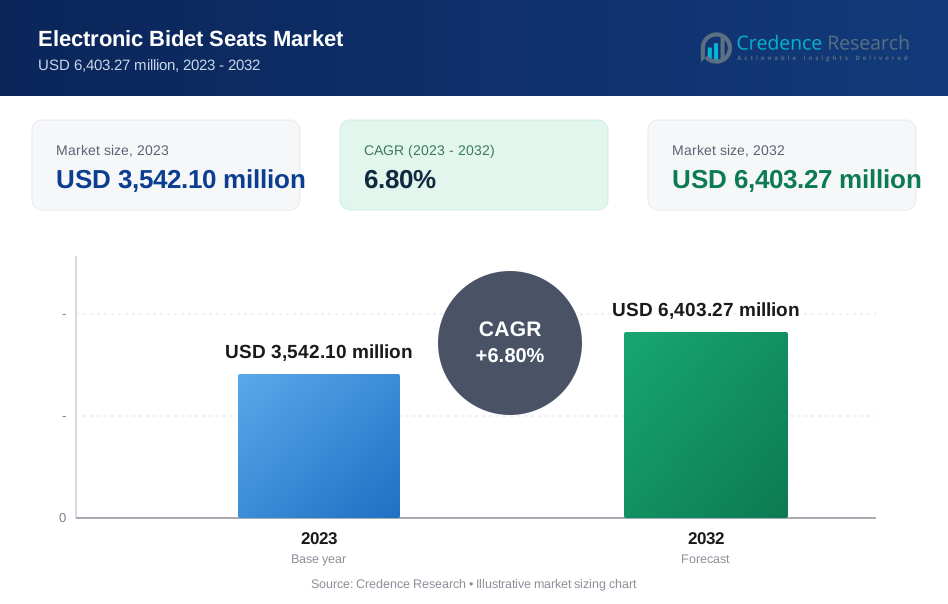
The Electronic Bidet Seats Market is projected to grow from USD 3,542.10 million in 2023 to an estimated USD 6,403.27 million by 2032, with a compound annual growth rate (CAGR) of 6.80% from 2024 to 2032. This significant growth highlights a rising demand for enhanced bathroom hygiene solutions, driven by increasing awareness of personal hygiene and advancements in bidet technology.
Key drivers of the Electronic bidet seats market include a surge in consumer preference for luxury bathroom products and the ongoing shift towards eco-friendly and water-saving technologies. Trends such as the growing popularity of smart homes and IoT integration also contribute to market growth, as manufacturers incorporate Wi-Fi connectivity and mobile app control features to enhance user experience. Additionally, the increasing focus on elderly care and accessibility is driving demand for easy-to-use electronic bidet seats that provide comfort and convenience, thereby expanding the market potential.
Geographically, the Asia-Pacific region dominates the Electronic bidet seats market, primarily due to high adoption rates in countries like Japan and South Korea, where bidets are a staple in households. North America and Europe are also witnessing substantial growth, propelled by increasing consumer awareness and demand for advanced sanitary solutions. Leading players in the market include TOTO Ltd., Kohler Co., LIXIL Corporation, and Panasonic Corporation, which consistently focus on innovation and product diversification to maintain a competitive edge and expand their customer base globally.
Market Drivers
Increasing Awareness and Focus on Personal Hygiene
In recent years, there has been a heightened global emphasis on personal hygiene, which is driving the demand for electronic bidet seats. Consumers are increasingly recognizing the health benefits associated with bidet use, including improved cleanliness and reduced reliance on toilet paper. These seats offer advanced hygiene features, such as adjustable water pressure, temperature control, and self-cleaning nozzles, which enhance the user's experience and ensure better sanitation. The COVID-19 pandemic amplified this trend, as more people became concerned about sanitation practices and sought out products that could provide a higher level of cleanliness. For instance, a survey conducted in 2023 found that 78% of respondents reported increased concern about personal hygiene since the COVID-19 pandemic began, with 42% expressing interest in trying electronic bidet seats for improved cleanliness. This growing awareness about personal hygiene is fueling the demand for electronic bidet seats in both residential and commercial sectors. Furthermore, the rise of hygiene-focused advertising and educational campaigns by manufacturers has played a role in shifting consumer behavior toward embracing electronic bidet seats as a staple bathroom product.
Technological Advancements and Product Innovation
The Electronic Bidet Seats Market is benefitting significantly from rapid technological advancements and continuous product innovation. Manufacturers are investing heavily in research and development to introduce new features that cater to modern consumer preferences. Today's electronic bidet seats often come equipped with smart capabilities, including remote controls, customizable settings, heated seats, and even air drying functions. With the advent of the Internet of Things (IoT), some models now offer Wi-Fi connectivity, allowing users to control and monitor their bidet seats through smartphone applications. For instance, a leading electronic bidet seat manufacturer reported that their latest model, launched in 2024, incorporates 15 distinct features including UV sterilization, voice control, and personalized user profiles, compared to just 5 features in their 2015 model. These innovations provide greater convenience and personalization, attracting a broad customer base. Additionally, product designs are becoming more ergonomic and aesthetically appealing, blending seamlessly with various bathroom styles. Technological advancements not only enhance user comfort and satisfaction but also position electronic bidet seats as a premium, desirable product in the home. The continuous introduction of new features and improvements has a positive impact on market growth, as it encourages customers to upgrade their existing units and attracts new buyers.
Rising Demand for Eco-friendly and Water-saving Solutions
As environmental awareness grows, consumers are increasingly seeking eco-friendly and water-saving alternatives for their homes, including in their bathrooms. Electronic bidet seats align with this trend by significantly reducing the need for toilet paper, which leads to less deforestation and fewer environmental impacts associated with paper production. Additionally, many modern bidet seats are designed to conserve water while maintaining effective cleaning performance, appealing to environmentally conscious consumers. For instance, a 2024 study estimated that a household using an electronic bidet seat can save up to 50 gallons of water per week compared to traditional toilet paper use, while also reducing toilet paper consumption by approximately 75%. In areas with strict water conservation regulations, the water-saving capabilities of these products become a valuable selling point. Many manufacturers are also focusing on energy efficiency, incorporating features such as on-demand heating systems that reduce overall power consumption. This trend toward sustainability resonates with a growing segment of consumers who prioritize products with minimal environmental impact, driving demand for electronic bidet seats globally. Furthermore, as more consumers become aware of the potential environmental benefits of bidet usage, it is likely that this trend will continue to drive market growth.
Growing Demand for Elderly Care and Accessibility Solutions
With aging populations, particularly in developed regions such as North America, Europe, and parts of Asia, there is an increasing demand for products that cater to elderly and mobility-challenged individuals. Electronic bidet seats offer convenience and enhanced accessibility, making them ideal for senior citizens and people with disabilities. These seats reduce the physical effort needed to maintain personal hygiene, which is especially valuable for those with limited mobility or health conditions. Many models include user-friendly controls, hands-free functions, and safety features that allow seniors to maintain independence and dignity. Additionally, healthcare providers and senior care facilities are recognizing the benefits of electronic bidet seats, which has led to increased adoption in assisted living environments. As the global population continues to age, the demand for accessible bathroom solutions that provide comfort, hygiene, and ease of use is expected to rise. The inclusion of features like gentle wash functions and ergonomic designs positions electronic bidet seats as a preferred choice in elderly care, contributing to sustained market growth.
Market Trends
Integration of Smart Technology and IoT Capabilities
The incorporation of smart technology and Internet of Things (IoT) capabilities into electronic bidet seats has become a significant trend, catering to the growing demand for convenience and customization. Many modern electronic bidet seats now offer advanced features, including remote controls, app-based management, and voice command compatibility with virtual assistants like Amazon Alexa and Google Assistant. Users can personalize their experience with adjustable water pressure, temperature, and even specific user presets stored in mobile apps. Additionally, some smart bidet seats monitor usage patterns and provide maintenance reminders, ensuring optimal functionality and longevity. As more consumers embrace smart home ecosystems, these connected bidet seats seamlessly integrate into existing setups, allowing users to control multiple home appliances from a single device. This trend reflects a broader consumer shift towards connected devices that provide enhanced comfort, control, and convenience in daily routines. The rise of smart technology in electronic bidet seats is helping manufacturers target a tech-savvy audience interested in upgrading their bathroom experience. For instance, a leading smart bidet manufacturer reported that their IoT-enabled models saw a 300% increase in sales over the past year, with users activating voice commands an average of 5 times per day.
Increasing Demand for Sustainable and Environmentally Friendly Features
As environmental awareness grows, electronic bidet seats are gaining popularity due to their eco-friendly benefits, particularly their ability to reduce toilet paper usage significantly. This aligns with consumer preferences for sustainable products that support waste reduction and conservation efforts. Many electronic bidet models are now designed with water-saving features, such as adjustable spray modes that control water flow for efficient cleaning. In addition, manufacturers are prioritizing energy efficiency by incorporating technologies such as on-demand heating systems, which heat water only when needed, thereby reducing power consumption. Some brands also highlight eco-friendly certifications and sustainable manufacturing practices in their marketing to attract environmentally conscious customers. This trend is especially evident in regions where there is strong regulatory emphasis on water conservation and sustainable living. The emphasis on environmental benefits has not only broadened the appeal of electronic bidet seats but has also positioned them as a practical solution for households aiming to reduce their ecological footprint. As sustainability remains a key concern for consumers, the demand for environmentally friendly electronic bidet seats is expected to continue growing. For instance, a recent study found that households using electronic bidets reduced their toilet paper consumption by up to 75%, saving an estimated 50-100 rolls per year per household.
Market Restraints and Challenges
High Initial Cost and Installation Complexity
One of the primary challenges in the electronic bidet seats market is the relatively high upfront cost associated with these products. Compared to traditional toilet seats, electronic bidet seats are often perceived as luxury items due to their advanced features and technology. For many consumers, especially in developing regions, the price can be a significant deterrent, limiting the market’s growth potential. Additionally, the installation process can sometimes be complex, requiring professional assistance for electrical and plumbing connections. This added complexity and potential installation expense can further discourage potential buyers. In regions with limited availability of skilled installers or inadequate infrastructure for such products, the adoption rate remains lower. This cost barrier is particularly challenging for manufacturers trying to penetrate price-sensitive markets, as they need to balance the provision of advanced features with affordability. Consequently, the high initial cost and installation complexity continue to pose obstacles to the widespread adoption of electronic bidet seats, especially in emerging markets.
Limited Awareness and Cultural Preferences
Another significant restraint in the electronic bidet seats market is limited consumer awareness, particularly in regions where bidet usage is not culturally prevalent. In countries with low bidet adoption rates, consumers may lack knowledge about the benefits and functionalities of electronic bidet seats, resulting in a preference for traditional bathroom solutions. Cultural factors and long-standing bathroom habits also play a role, as many people may be hesitant to adopt a new technology that differs from their established routines. Furthermore, in certain regions, there are misconceptions about bidet use, often associated with a lack of understanding regarding the hygiene and environmental benefits these products offer. This lack of awareness and cultural resistance makes it challenging for manufacturers to expand into new markets and necessitates significant educational efforts and marketing campaigns to build demand. Addressing these cultural and awareness-related challenges remains essential for companies aiming to increase the global reach of electronic bidet seats.
Market Segmentation Analysis
By Type
Electronic bidet seats are available in three main types: tank, tankless, and hybrid. Tank-type bidet seats are traditional models that heat and store water in a reservoir, making them affordable and simple, though they require a reheating period between uses, which may not suit those seeking immediate convenience. Tankless bidet seats, on the other hand, utilize instant heating technology to provide a continuous warm water supply, making them popular for their energy efficiency and appeal to tech-savvy consumers, especially in regions where smart home adoption is high. Hybrid bidet seats blend features from both tank and tankless designs, offering a practical balance between warm water availability and cost-effectiveness, which appeals to consumers in both mid-range and premium segments. Together, these types cater to a broad range of consumer preferences and budgets in the electronic bidet seat market.
By Application
Electronic bidet seats are used in both commercial and residential applications. In commercial settings like hotels, healthcare facilities, and luxury public restrooms, they are increasingly popular for their hygienic and user-friendly features, enhancing the reputation of establishments focused on customer comfort and sanitation. Demand in the commercial sector is expected to grow as businesses aim to offer enhanced bathroom experiences. In the residential segment, which holds a significant market share, homeowners are investing more in hygiene and bathroom luxury, especially in developed regions. Rising awareness of health and environmental benefits drives residential demand, with smart bidet seats featuring IoT integration particularly appealing to consumers looking to incorporate convenience and smart home technologies into their daily lives.
Segments
Based on Type
- Tank Type
- Tankless Type
- Hybrid Type
Based on Application
- Commercial
- Residential
Based on Operation
- Smart Bidets
- Integrated Bidet Toilet Systems
Based on Region
- North America
- United States
- Canada
- Mexico
- Europe
- United Kingdom
- Germany
- France
- Italy
- Spain
- Asia-Pacific
- China
- India
- Japan
- Australia
- South Korea
- Latin America
- Brazil
- Argentina
- Chile
- Middle East and Africa
- United Arab Emirates
- South Africa
- Saudi Arabia
Regional Analysis
Asia-Pacific (45%):
The Asia-Pacific region dominates the electronic bidet seats market, holding the largest market share of approximately 45%. This significant share is primarily driven by widespread cultural acceptance and long-standing usage in countries like Japan and South Korea, where bidets are commonplace in households and public facilities. High consumer awareness of hygiene benefits and a preference for technologically advanced home products support robust demand in these markets. Additionally, the growing middle-class population and urbanization across other parts of Asia, such as China and Southeast Asia, are contributing to rising adoption rates. Increasing disposable incomes, especially in urban areas, further drive the demand for luxury bathroom products, including electronic bidet seats. As more households in the Asia-Pacific region shift toward improved sanitary practices and bathroom technologies, the market in this region is expected to continue its upward trajectory.
North America (20%):
North America holds a market share of approximately 20%, driven by rising awareness of personal hygiene, environmental sustainability, and luxury bathroom products. In recent years, there has been a notable increase in demand for electronic bidet seats in the U.S. and Canada, primarily fueled by consumers seeking enhanced hygiene solutions and comfort features. The growing popularity of smart home technologies is also contributing to market expansion, as smart bidet seats with IoT connectivity align with broader consumer preferences for smart, connected devices. The COVID-19 pandemic accelerated awareness and adoption, as many consumers turned to hands-free and touchless sanitary solutions. Although bidet seats are relatively new to the North American market, educational campaigns and targeted marketing by manufacturers are increasing consumer interest and driving growth in the region.
Key players
- Toto
- LIXIL
- Panasonic
- Kohler
- Coway
- Toshiba
- OMO
- Brondell
- Dong Yang Magic
- Dongfeng
Competitive Analysis
The electronic bidet seats market is highly competitive, with key players like Toto, LIXIL, Panasonic, and Kohler dominating due to their strong brand recognition, extensive product portfolios, and continuous innovation. Toto and LIXIL lead in terms of market share, particularly in the Asia-Pacific region, by leveraging their technological advancements and deep market understanding. Panasonic and Kohler focus on integrating smart technology and eco-friendly features, catering to environmentally conscious consumers. Emerging brands like Coway and Brondell are gaining traction by targeting the North American market with affordable, user-friendly options that appeal to a broad customer base. Meanwhile, Dong Yang Magic and Dongfeng maintain a strong presence in their respective local markets, primarily through competitive pricing and accessible products. These companies continuously strive to differentiate themselves through innovation, sustainability, and enhanced consumer experience to maintain their competitive edge.
Recent Developments
- In February 2024, Toto unveiled the new NEOREST WX1 and WX2 Smart Bidet Toilets at KBIS 2024. These wall-hung models feature advanced cleaning technologies, IoT connectivity, and were awarded Red Dot and iF awards for design excellence.
- In January 2024, Kohler launched the PureWash E930 bidet seat at CES 2024. This smart bidet seat offers voice control compatibility with Amazon Alexa and Google Home, app connectivity, and customizable water temperature and pressure settings.
- In November 2023, Coway announced that its BEREX Reclining Massage Bed, which includes bidet functionality, was named a CES 2024 Innovation Awards Honoree. The product is set to launch in South Korea in 2024.
- In February 2022, Brondell entered the smart toilet market with the launch of its Sanctuary 5000 Smart Bidet Toilet.
Market Concentration and Characteristics
The electronic bidet seats market is moderately concentrated, with a few dominant players such as Toto, LIXIL, Panasonic, and Kohler holding a substantial market share. These leading companies benefit from strong brand recognition, extensive distribution networks, and a commitment to continuous product innovation, which allows them to maintain a competitive edge. Market characteristics include a high emphasis on technological advancements, such as smart connectivity, water-saving features, and customizable options, which cater to evolving consumer preferences for convenience, hygiene, and sustainability. Additionally, the market is characterized by regional variations in adoption rates; for instance, the Asia-Pacific region, particularly Japan and South Korea, exhibits high penetration due to cultural acceptance, while North America and Europe are experiencing growth driven by rising awareness of hygiene and eco-friendly practices. Overall, the market dynamics reflect a trend towards premiumization and the increasing integration of smart home technologies.
Report Coverage
The research report offers an in-depth analysis based on Type, Application, Operation and Region. It details leading market players, providing an overview of their business, product offerings, investments, revenue streams, and key applications. Additionally, the report includes insights into the competitive environment, SWOT analysis, current market trends, as well as the primary drivers and constraints. Furthermore, it discusses various factors that have driven market expansion in recent years. The report also explores market dynamics, regulatory scenarios, and technological advancements that are shaping the industry. It assesses the impact of external factors and global economic changes on market growth. Lastly, it provides strategic recommendations for new entrants and established companies to navigate the complexities of the market.
Future Outlook
- The market is projected to grow steadily, driven by increasing awareness of hygiene and health benefits, as consumers prioritize personal sanitation solutions.
- Integration with smart home systems and IoT capabilities will continue to appeal to tech-savvy consumers, making electronic bidet seats a key part of connected home environments.
- As disposable incomes rise and awareness spreads, developing regions like Latin America and parts of Asia will see growing adoption of electronic bidet seats.
- With growing environmental concerns, manufacturers will emphasize water-saving and energy-efficient features, aligning with consumer demand for eco-friendly products.
- Businesses, particularly in the hospitality and healthcare sectors, are likely to invest more in electronic bidet seats to enhance guest comfort and promote hygiene
- Future bidet models will likely offer more customizable features, allowing users to personalize their experience with programmable settings and user profiles.
- The aging population will drive demand for electronic bidet seats that provide accessibility and ease of use, particularly in developed countries.
- E-commerce platforms and direct-to-consumer sales channels will expand, making it easier for consumers to access a wider variety of bidet products.
- Manufacturers will focus on sleek, minimalistic designs that blend seamlessly into modern bathrooms, appealing to consumers seeking both functionality and style.
- Companies will continue to invest in research and development to offer innovative features, such as UV sterilization, deodorization, and automatic lid opening, to meet evolving consumer preferences and differentiate in the market.
Request a Free Sample
Fill in your details and we'll send you a free sample report.
- Sample data tables & charts
- Research methodology
Need a Custom Version of This Report?
Tailor the scope, geography, or segments to your exact requirements.
- Custom geography or segment scope
- Direct access to our analyst team
Frequently Asked Questions
What is the size of Electronic Bidet Seats Market?
What are the key factors driving the growth of the electronic bidet seats market?
Which region holds the largest share in the electronic bidet seats market?
How does the electronic bidet seats market cater to the aging population?
Table of Content
Chapter 1. Report Introduction
- 1.1 Report Description & Purpose
- 1.1.1 Report Title & Market Definition
- 1.1.2 Unique Selling Propositions (USP) & Key Differentiators
- 1.1.3 Value Proposition for Stakeholders
- 1.2 Research Objectives
- 1.2.1 Market Sizing Objectives (Volume & Revenue) (Volume Where Applicable)
- 1.2.2 Segmentation Objectives
- 1.2.3 Competitive Intelligence Objectives
- 1.2.4 Forecast & Scenario Objectives
- 1.3 Report Scope
- 1.3.1 Electronic Bidet Seats Scope – Segments & Subsegments Covered
- 1.3.2 Geographic Scope – Regions & Countries Covered
- 1.3.3 Historical Period, Base Year & Forecast Period (2023; forecast to 2032)
- 1.3.4 Inclusions & Exclusions
- 1.4 Industry Classification & Applicable Codes
- 1.5 Currency, Measurement Units & Valuation Basis
- 1.6 Target Stakeholders
- 1.7 Limitations & Assumptions
Chapter 2. Executive Summary
- 2.1 Global Electronic Bidet Seats Market Snapshot
- 2.1.1 Market Size – Historical (2023) & Forecast (2023-2032) (2023: USD 3,542.10 million → 2032: USD 6,403.27 million)
- 2.1.2 Volume & Revenue – Global Totals (Volume Where Applicable)
- 2.1.3 Key Market Highlights – Top Five Facts
- 2.2 Electronic Bidet Seats Market Segmentation Snapshot
- 2.2.1 Market Split by Region – 2023 vs. 2032
- 2.3 Competitive Snapshot
- 2.3.1 Top 10 Players by Revenue Share – 2023
- 2.3.2 Top 10 Players by Volume Share – 2023 (Volume Where Applicable)
- 2.3.3 Recent Strategic Developments (18-Month Summary)
- 2.4 Key Investment Highlights & Strategic Conclusions
Chapter 3. Electronic Bidet Seats Market Dynamics & Industry Analysis
- 3.1 Market Overview & Context
- 3.1.1 Electronic Bidet Seats Market Position in the Broader Industry Value Chain
- 3.1.2 Demand Structure & Purchasing Dynamics
- 3.1.3 Market Maturity & Development Stage by Region
- 3.2 Electronic Bidet Seats Market Drivers
- 3.3 Electronic Bidet Seats Market Restraints & Challenges
- 3.4 Electronic Bidet Seats Market Opportunities
- 3.5 Porter's Five Forces Analysis
- 3.5.1 Threat of New Entrants
- 3.5.2 Bargaining Power of Suppliers
- 3.5.3 Bargaining Power of Buyers
- 3.5.4 Threat of Substitutes
- 3.5.5 Competitive Rivalry – Intensity Assessment
- 3.6 Electronic Bidet Seats Value Chain Analysis
- 3.6.1 Upstream – Key Inputs, Resources & Suppliers
- 3.6.1.1 Key Input/Resource 1
- 3.6.1.2 Key Input/Resource 2
- 3.6.1.3 Key Input/Resource 3
- 3.6.2 Midstream – Core Operations & Value Creation
- 3.6.2.1 Operating Model & Process Overview
- 3.6.2.2 Key Operating Locations & Capabilities by Company
- 3.6.3 Downstream – Market Channels & End Users
- 3.6.3.1 Direct Sales & Customer Engagement Channels
- 3.6.3.2 Indirect Sales, Intermediaries & Partner Channels
- 3.6.4 Value Chain Profitability Analysis
- 3.6.1 Upstream – Key Inputs, Resources & Suppliers
- 3.7 PESTEL Analysis
- 3.7.1 Political Factors
- 3.7.2 Economic Factors
- 3.7.3 Social Factors
- 3.7.4 Technological Factors
- 3.7.5 Environmental Factors
- 3.7.6 Legal Factors
- 3.8 Electronic Bidet Seats Supply Chain Analysis
- 3.8.1 Critical Input & Resource Availability Risk Assessment
- 3.8.2 Supplier & Operational Concentration Risk (Geographic Exposure)
- 3.8.3 Supply & Service Disruption Impact Analysis
- 3.9 Regulatory & Policy Landscape
Note: The regulatory and policy landscape section covers regulations based on their applicability to the market, Electronic Bidet Seats category, geography, and scope of the study. Only regulatory frameworks with a material impact on operations, compliance, trade, sustainability, or market access are analyzed in detail.
Chapter 4. Key Investment Pockets & Opportunity Analysis
- 4.1 Electronic Bidet Seats Market Attractiveness Analysis
- 4.1.1 By Region – Investment Attractiveness Matrix (Market Size × CAGR)
- 4.2 Absolute Revenue Growth Opportunity
- 4.2.1 By Region – Absolute Revenue Growth Through 2032
- 4.3 Incremental Demand Opportunity
- 4.3.1 By Region – Incremental Demand Through 2032
- 4.3.2 Segment – Incremental Demand
- 4.4 Emerging Submarket Opportunity Deep Dive (Subject to Applicability)
- 4.5 Priority Market Opportunity Scorecards
- 4.5.1 United States
- 4.5.2 Europe
- 4.5.3 Asia
- 4.5.4 Middle East & Africa
Note: Priority market opportunity scorecards reflect the geographic scope and strategic relevance of the study. Listed markets are indicative and may be adapted to the industry.
Chapter 5. Electronic Bidet Seats Cross-Border Trade & Market Access Analysis
- 5.1 International Trade & Cross-Border Activity Overview
- 5.1.1 Global Export Value by Country (2023)
- 5.1.2 Global Export Volume by Country (2023) (Volume Where Applicable)
- 5.1.3 Global Import Value by Country (2023)
- 5.1.4 Global Import Volume by Country (2023) (Volume Where Applicable)
- 5.1.5 Net Trade Balance by Country (2023)
- 5.2 Export Analysis – Segment
- 5.2.1 Category 1 (Applicable Classification Code)
- 5.2.2 Category 2 (Applicable Classification Code)
- 5.2.3 Category 3 (Applicable Classification Code)
- 5.2.4 Category 4 (Applicable Classification Code)
- 5.2.5 Category 5 (Applicable Classification Code)
- 5.3 Import Analysis – Segment
- 5.3.1 Category 1 (Applicable Classification Code)
- 5.3.2 Category 2 (Applicable Classification Code)
- 5.3.3 Category 3 (Applicable Classification Code)
- 5.3.4 Category 4 (Applicable Classification Code)
- 5.3.5 Category 5 (Applicable Classification Code)
- 5.4 Cross-Border Pricing & Transaction Benchmarks
- 5.4.1 Export Pricing – Segment & Country
- 5.4.2 Import Pricing – Segment & Source Country
- 5.4.3 Price Trends (2023)
- 5.5 Key Cross-Border Trade & Delivery Routes
- 5.5.1 Cross-Border Trade/Delivery Route 1
- 5.5.2 Cross-Border Trade/Delivery Route 2
- 5.5.3 Cross-Border Trade/Delivery Route 3
- 5.5.4 Cross-Border Trade/Delivery Route 4
- 5.5.5 Cross-Border Trade/Delivery Route 5
- 5.6 Trade Policy & Market Access Impact Assessment
- 5.6.1 Tariff & Non-Tariff Barriers
- 5.6.2 Regional Trade & Economic Integration Frameworks
- 5.6.3 Bilateral & Multilateral Trade Agreements
- 5.6.4 Cross-Border Operating, Licensing & Localization Requirements
Note: This chapter applies where cross-border trade or delivery is relevant to Electronic Bidet Seats. Goods, services, and digital offerings are assessed using applicable classifications and transaction measures. Import-export volumes, trade balances, and route analyses are included only where meaningful to the market.
Chapter 6. Competitive Landscape & Company Benchmarking
- 6.1 Electronic Bidet Seats Market Concentration & Structure
- 6.1.1 Herfindahl-Hirschman Index (HHI) – vs. 2023
- 6.1.2 Leading, Mid-Sized & Emerging Player Structure
- 6.1.3 Global, Regional & Local Player Dynamics
- 6.2 Electronic Bidet Seats Market Share Analysis – 2023
- 6.2.1 Global Revenue Share by Company
- 6.2.2 Global Volume Share by Company (Volume Where Applicable)
- 6.2.3 Regional Revenue Share
- 6.2.4 Market Share Evolution ( vs. 2023)
- 6.2.5 Company Market Share by Key Segment
- 6.2.6 Company Market Share by Customer Group
- 6.3 Operating Scale, Capacity & Infrastructure Analysis
- 6.3.1 Global Operating Scale & Supply Capacity
- 6.3.2 Resource Utilization & Operating Efficiency
- 6.3.3 Output, Service Delivery & Activity Metrics
- 6.3.4 Operating Footprint & Infrastructure Map
- 6.3.5 Planned Operational & Capacity Expansion
- 6.4 Electronic Bidet Seats Competitive Benchmarking Matrix
- 6.4.1 Revenue, Growth, Profitability & Operating Metric Comparison
- 6.4.2 Channel Revenue Mix
- 6.4.3 Geographic Revenue Exposure
- 6.4.4 R&D Intensity
- 6.4.5 Sustainability Maturity
- 6.5 Strategic Developments in Electronic Bidet Seats (Last 24 Months)
- 6.5.1 Mergers, Acquisitions & Divestments
- 6.5.2 New Products, Services & Solutions in Electronic Bidet Seats
- 6.5.3 Operational & Infrastructure Expansions
- 6.5.4 Strategic Alliances, Joint Ventures & Partnerships
- 6.5.5 Distribution Expansion & Market Entry
- 6.5.6 Sustainability & ESG Initiatives
- 6.6 Competitive Strategy Mapping
- 6.6.1 Leader, Challenger, Follower & Niche Classification
- 6.6.2 Pricing Strategy Comparison
- 6.6.3 Channel Strategy Matrix
Note: Strategic developments are included based on their materiality and the availability of reliable information.
Chapter 7. Global Electronic Bidet Seats Market – By Sales & Delivery Channel
- 7.1 Segment Overview
- 7.1.1 Volume & Revenue Split by Channel (2023 & 2032) (Volume Where Applicable)
- 7.1.2 Channel Mix Evolution (2023-2032)
Chapter 8. Regional Market Analysis – Global Overview
- 8.1 Global Regional Overview
- 8.1.1 Regional Volume Share (Volume Where Applicable)
- 8.1.2 Regional Revenue Share
- 8.1.3 Regional Volume by Region (Volume Where Applicable)
- 8.1.4 Regional Revenue by Region
- 8.1.5 Regional Forecast Through 2032
- 8.2 Cross-Regional Segment Analysis
- 8.2.1 By Sales & Delivery Channel
- 8.2.2 By Competitive Positioning & Price Tier
Chapter 9. North America Electronic Bidet Seats Market
- 9.1 United States
- 9.2 Canada
- 9.3 Mexico
Chapter 10. Europe Electronic Bidet Seats Market
- 10.1 Germany
- 10.2 France
- 10.3 Italy
- 10.4 United Kingdom
- 10.5 Spain
- 10.6 Poland
- 10.7 Russia
- 10.8 Netherlands
- 10.9 Belgium
- 10.10 Sweden
- 10.11 Denmark
- 10.12 Norway
- 10.13 Rest of Europe
Chapter 11. Asia Pacific Electronic Bidet Seats Market
- 11.1 China
- 11.2 India
- 11.3 Japan
- 11.4 South Korea
- 11.5 Thailand
- 11.6 Indonesia
- 11.7 Vietnam
- 11.8 Malaysia
- 11.9 Australia
- 11.10 Rest of Asia Pacific
Chapter 12. Latin America Electronic Bidet Seats Market
- 12.1 Brazil
- 12.2 Argentina
- 12.3 Colombia
- 12.4 Chile
- 12.5 Rest of Latin America
Chapter 13. Middle East Electronic Bidet Seats Market
- 13.1 Saudi Arabia
- 13.2 United Arab Emirates
- 13.3 Turkey
- 13.4 Israel
- 13.5 Iran
- 13.6 Rest of the Middle East
Chapter 14. Africa Electronic Bidet Seats Market
- 14.1 South Africa
- 14.2 Egypt
- 14.3 Nigeria
- 14.4 Morocco
- 14.5 Rest of Africa
Chapter 15. Electronic Bidet Seats Company Profiles
- 15.1 [Company 01]
- 15.1.1 Company Overview
- 15.1.2 Key Management Personnel
- 15.1.3 Products & Services Portfolio
- 15.1.4 Financial Performance
- 15.1.5 Key Market Focus & Geographic Presence
- 15.1.6 Recent Developments & Strategic Initiatives
Note: The company profile list is preliminary and may change based on research findings, market developments, data availability, and client requirements.
Chapter 16. Appendices
- Appendix A – List of Abbreviations & Acronyms
- Appendix B – Industry Classification Code Reference – Full Series
- Appendix C – Supply, Output & Operating Capacity Data Tables
- Appendix D – End-Use & Demand Base Tables
- Appendix E – Demand, Adoption & Usage Assumptions
- Appendix F – Pricing & Revenue Metric Reference Tables
- Appendix G – Company Operations & Infrastructure Database
- Appendix H – Cross-Border Trade & Activity Data Tables (Where Applicable)
- Appendix I – Regulatory Summary Tables
- Appendix J – Primary Research Participant List (Anonymized)
- Appendix K – Primary Research Questionnaire Framework
- Appendix L – Data Sources & Bibliography
- Appendix M – Market Size Divergence & Source Comparison
Chapter 17. Research Methodology
- 17.1 Research Framework & Philosophy
- 17.2 Secondary Research – Sources, Hierarchy & Data Extraction
- 17.3 Data Modeling – Bottom-Up & Top-Down Market Sizing
- 17.4 Primary Research – Stakeholder Framework, LOI & Sample Sizes
- 17.5 Forecast Methodology – Regression, Scenario & Sensitivity Analysis
- 17.6 Quality Control – Four-Layer Validation Framework
- 17.7 Limitations & Standard Assumptions
- 17.8 Disclaimer
