
| REPORT ATTRIBUTE | DETAILS |
|---|---|
| Historical Period | 2020-2023 |
| Base Year | 2024 |
| Forecast Period | 2025-2032 |
| Italy Cyber Physical Systems Market Size 2024 | USD 3425.78 million |
| Italy Cyber Physical Systems Market, CAGR | 8.79% |
| Italy Cyber Physical Systems Market Size 2032 | USD 6723.84 million |
Market Overview:
The Italy Cyber Physical Systems is projected to grow from USD 3425.78 million in 2024 to an estimated USD 6723.84 million by 2032, with a compound annual growth rate (CAGR) of 8.79% from 2024 to 2032.
Several factors are driving the expansion of CPS in Italy. The nation's strategic position in the Mediterranean enhances its role as a hub for digital infrastructure, attracting substantial investments in data centers and related technologies. Initiatives like the National Recovery and Resilience Plan (PNRR) allocate significant funds for digital infrastructure security, with €6.71 billion earmarked from 2022 to 2026, including €820 million specifically for security measures. These investments underscore Italy's commitment to enhancing its digital capabilities, thereby fostering the growth of CPS across various sectors. Moreover, Italy's proactive regulatory framework ensures the smooth implementation of CPS projects, driving innovation and attracting global players in the field. With continued focus on sustainable technology and smart cities, CPS is expected to play a pivotal role in Italy’s long-term technological transformation.
Regionally, Italy exhibits a varied landscape in CPS adoption. Northern regions, particularly Milan, are at the forefront, benefiting from robust industrial bases and proximity to major European markets. Milan accounts for a significant portion of data center investments, attracting 38% of the total investments in early 2024. This concentration is due to the region's advanced technological infrastructure and its appeal to international investors. In contrast, southern regions are catching up, with increasing investments aimed at reducing the digital divide and promoting balanced regional development. The Italian government's focus on digital transformation is evident through initiatives aimed at enhancing digital infrastructure and services nationwide, ensuring that the benefits of CPS are widely distributed across the country. Additionally, regional collaboration with local businesses and municipalities further accelerates the adoption of CPS, ensuring it is integrated across diverse sectors such as manufacturing, healthcare, and transportation.
Market Insights:
- Italy’s Cyber-Physical Systems (CPS) market is projected to grow from USD 3,425.78 million in 2024 to USD 6,723.84 million by 2032, with a CAGR of 8.79%
- The Global Cyber Physical Systems is projected to grow from USD 1,25,271.30 million in 2024 to an estimated USD 2,71,668.59 million by 2032, with a compound annual growth rate (CAGR) of 10.16% from 2024 to 2032.
- Northern Italy, particularly Milan, dominates CPS investments, accounting for 38% of data center investments in 2024.
- The government's National Recovery and Resilience Plan (PNRR) allocates significant funds for digital infrastructure, driving CPS adoption across industries.
- The manufacturing sector is a primary driver for CPS, with increasing demand for automation, predictive maintenance, and smart factories.
- Government-backed security funding of €820 million between 2022 and 2026 ensures enhanced data protection for CPS technologies.
- Italy is focused on regional development, with southern regions catching up to northern areas in terms of CPS adoption through targeted investments.
- Despite growth, challenges such as high implementation costs, integration with legacy systems, and data security concerns remain barriers for widespread adoption.
Report scope
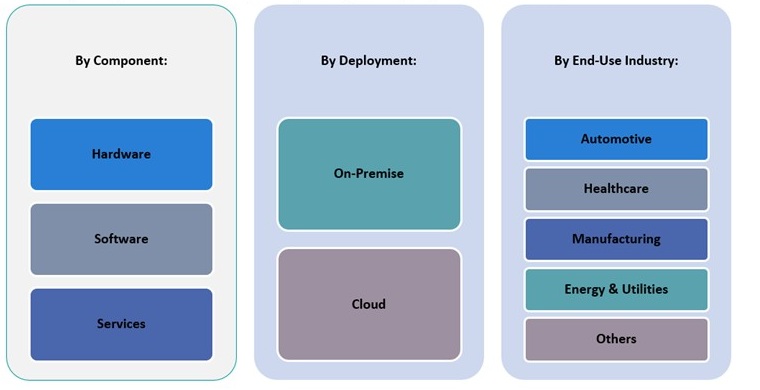
This report segments the Italy Cyber Physical Systems Market as follow;
Market Drivers:
Technological Advancements and Digital Transformation
The rapid pace of technological advancements is a key driver for the growth of Cyber-Physical Systems (CPS) in Italy. The integration of IoT (Internet of Things), AI (Artificial Intelligence), and machine learning into industrial operations is revolutionizing how businesses function. These innovations enable real-time data processing, remote monitoring, and enhanced decision-making capabilities. As industries across Italy embrace digital transformation, the demand for advanced systems that can effectively manage and integrate physical and digital elements is increasing. The development of 5G technology, in particular, is a significant enabler of CPS, providing faster connectivity and supporting the efficient operation of interconnected systems in sectors such as manufacturing, healthcare, and transportation.
Government Initiatives and Funding
Government initiatives play a pivotal role in driving the adoption of CPS in Italy. The National Recovery and Resilience Plan (PNRR), which allocates substantial funds to digitalization efforts, has been a catalyst for innovation and infrastructure development. Italy's focus on digital transformation through significant investments in infrastructure, including €6.71 billion earmarked for digital projects between 2022 and 2026, underlines the commitment to technological advancements. Specific funding for security measures, as part of the broader digital infrastructure plan, further strengthens the foundation for CPS adoption. These government-backed initiatives ensure the continuous development of CPS, enabling businesses to leverage digital systems for enhanced operational efficiency and productivity.
Rising Demand for Industrial Automation
The increasing need for industrial automation is another significant factor propelling the CPS market in Italy. With industries seeking to optimize operations, reduce costs, and improve product quality, the demand for intelligent, automated solutions is on the rise. CPS provides the technological backbone necessary for automation by enabling real-time monitoring, predictive maintenance, and automated control. Italy's manufacturing sector, which is a major contributor to the national economy, is increasingly adopting CPS to improve efficiency and maintain competitiveness in the global market. For instance, Siemens Italy has collaborated with Tecnimont to deliver advanced predictive maintenance services using CPS solutions to monitor critical plant assets. The growing trend towards smart factories and Industry 4.0 initiatives in Italy is expected to continue, further boosting the demand for CPS.
Improved Data Security and Safety Regulations
As cyber threats become more sophisticated, the need for robust data security and safety measures has become a driving force behind CPS adoption. The increasing complexity of interconnected systems necessitates the implementation of advanced security protocols to protect critical infrastructure from cyber-attacks. For example, Italy's National Cybersecurity Perimeter mandates stringent measures for safeguarding networks and IT systems critical to national security. Italy's emphasis on enhancing digital security through various regulations and standards, such as the General Data Protection Regulation (GDPR), contributes to the growth of CPS. These regulations ensure that digital systems are secure, reliable, and comply with international safety standards. Consequently, businesses are more inclined to adopt CPS, knowing that these systems provide a higher level of security and safety, which is crucial for safeguarding their operations and sensitive data.
Market Trends:
Adoption of Smart Manufacturing
Smart manufacturing is one of the leading trends driving the growth of Cyber-Physical Systems (CPS) in Italy. Italian manufacturers are increasingly adopting CPS to improve productivity, reduce operational costs, and maintain a competitive edge. The integration of CPS with advanced technologies such as robotics, AI, and real-time data analytics allows for greater automation and precision in the manufacturing process. This trend is particularly evident in Italy's industrial sectors, including automotive, textiles, and electronics, where efficiency and quality control are paramount. The rise of smart factories, driven by Industry 4.0 principles, has become a major focus for manufacturers aiming to leverage CPS for better process control and resource optimization. According to the Italian National Agency for New Technologies, Energy, and Sustainable Economic Development (ENEA), over 50% of Italian manufacturing companies have already adopted some form of digital automation, signaling a significant shift towards intelligent production systems.
Integration of IoT in Various Sectors
The integration of the Internet of Things (IoT) with Cyber-Physical Systems is gaining significant momentum in Italy. IoT is playing a crucial role in enhancing the connectivity of physical devices and systems, enabling them to exchange data and make autonomous decisions. In Italy, IoT applications are expanding beyond manufacturing to sectors such as agriculture, logistics, healthcare, and smart cities. For instance, Italian cities like Milan and Turin are integrating IoT-based CPS solutions into their urban infrastructure, enabling better traffic management, waste collection, and energy use monitoring. The adoption of IoT technologies in Italy is expected to accelerate, with continued growth projected in the coming years.
Focus on Sustainability and Energy Efficiency
Sustainability and energy efficiency are emerging as key trends influencing the Cyber-Physical Systems market in Italy. As environmental concerns continue to rise globally, businesses and government agencies in Italy are increasingly looking for ways to reduce their carbon footprint and energy consumption. For instance, the Italian Government’s National Energy Strategy promotes initiatives such as “nearly zero-energy buildings” under the National Recovery and Resilience Plan (NRRP), which includes €400 million funding for energy efficiency projects targeting SMEs. CPS technologies play a critical role in this transition by enabling better resource management, optimized energy use, and smarter grid systems. The adoption of smart grid systems in Italy, for example, is facilitating the more efficient distribution and consumption of energy. The Italian government has introduced several initiatives aimed at promoting energy efficiency and sustainability, such as the National Energy Strategy, which aims to reduce greenhouse gas emissions and improve energy performance. CPS, with its ability to monitor, control, and optimize energy use in real-time, is at the forefront of Italy’s efforts to meet these sustainability targets.
Growing Investment in Cybersecurity
As the adoption of Cyber-Physical Systems continues to increase across Italy, the need for robust cybersecurity solutions is also growing. With more devices and systems becoming interconnected, the risk of cyber-attacks and data breaches is a significant concern for businesses and government agencies alike. This has led to a surge in investments aimed at enhancing the security of CPS networks and devices. According to a report by the Italian Cybersecurity Agency (ACN), cybercrime in Italy has risen by over 20% in recent years, prompting the country to ramp up its efforts in protecting critical infrastructure. The increasing investment in cybersecurity is expected to drive innovation in CPS, with businesses looking for secure solutions that can protect sensitive data while ensuring operational continuity. This trend is further supported by European Union regulations on data protection and cybersecurity, which are pushing Italian companies to adopt more secure CPS technologies to comply with international standards.
Market Challenges Analysis:
High Implementation Costs
One of the primary challenges facing the growth of Cyber-Physical Systems (CPS) in Italy is the high initial implementation cost. The deployment of CPS technologies requires significant investments in advanced hardware, software, and infrastructure upgrades. Small and medium-sized enterprises (SMEs), which make up a large portion of the Italian economy, may struggle to afford these initial costs. While the long-term benefits of CPS in terms of efficiency, productivity, and automation are clear, the upfront capital required to integrate these systems can be a substantial barrier for many businesses. Additionally, the need for specialized personnel to design, implement, and maintain CPS solutions further increases operational costs, limiting widespread adoption.
Data Privacy and Security Concerns
As CPS involves the integration of physical systems with digital technologies, data privacy and security remain significant concerns for Italian businesses. The increasing amount of sensitive data generated by interconnected systems creates a prime target for cyber-attacks. While Italy has stringent data protection regulations, such as the General Data Protection Regulation (GDPR), ensuring the security of CPS networks and devices remains a challenge. Vulnerabilities in system architecture, inadequate security protocols, and the complexity of managing data across multiple platforms can expose businesses to potential breaches. Ensuring the privacy and protection of critical data is essential for businesses to confidently adopt CPS, and the risk of cyber threats remains a key restraint.
Integration with Legacy Systems
Another challenge to the widespread adoption of CPS in Italy is the integration of new systems with existing legacy infrastructures. Many Italian businesses still rely on older technologies that are not designed to communicate or operate with modern CPS solutions. Upgrading or replacing these legacy systems can be time-consuming and costly, with the risk of disrupting operations. Moreover, businesses may face difficulties in training employees to use the new technologies effectively. The integration process requires careful planning and execution to ensure a smooth transition, which can delay the adoption of CPS and increase operational risks.
Regulatory and Compliance Challenges
The evolving landscape of CPS technology poses regulatory hurdles for Italian businesses. Companies must navigate a complex framework of local, national, and European regulations concerning data protection, cybersecurity, and industrial standards. For instance, compliance with GDPR requires significant investments in technical and organizational measures to ensure data security. Additionally, sectors like healthcare and transportation face stricter compliance requirements due to their critical nature. Non-compliance can result in fines or reputational damage, making regulatory adherence a costly and time-consuming process for businesses adopting CPS.
Market Opportunities:
Italy's Cyber-Physical Systems (CPS) market presents significant opportunities, particularly in the smart manufacturing sector. As Italian manufacturers strive to improve productivity, reduce operational costs, and remain competitive in the global market, the integration of CPS technologies offers a clear path forward. The country's focus on Industry 4.0 initiatives, which promote automation and digitalization across industrial operations, creates a fertile environment for CPS adoption. Manufacturers in sectors such as automotive, textiles, and machinery are increasingly turning to CPS to enable real-time data analysis, predictive maintenance, and autonomous control systems. With Italian manufacturing accounting for over 15% of the country's GDP, the potential for widespread CPS adoption in this sector presents a substantial growth opportunity. Moreover, government-backed initiatives like the National Recovery and Resilience Plan (PNRR) aim to further support digital transformation in manufacturing, offering incentives and funding to accelerate CPS deployment.
Another significant opportunity for CPS in Italy lies in the development of smart cities and the integration of Internet of Things (IoT) technologies. Cities such as Milan, Turin, and Rome are at the forefront of adopting CPS solutions for smart urban infrastructure, including traffic management, waste management, and energy efficiency. The Italian government’s ongoing efforts to promote digital infrastructure through substantial investments in IoT and CPS technologies open up avenues for innovation in urban services. With Italy's urban population growing and cities becoming more complex, the demand for intelligent, connected systems that optimize resource management and enhance quality of life will continue to rise. As businesses and local governments look to implement these solutions, the CPS market in Italy is well-positioned for growth, offering opportunities for companies specializing in IoT, automation, and data analytics.
Market Segmentation Analysis:
The Italy Cyber-Physical Systems (CPS) market is segmented across various components, deployment models, and end-use industries, each of which plays a vital role in shaping market growth.
By Component The CPS market in Italy is divided into hardware, software, and services. The hardware segment, which includes sensors, actuators, and controllers, holds a significant share as these components form the foundation of CPS systems. Software solutions, including analytics tools, AI, and machine learning platforms, are critical for managing and processing data generated by CPS, driving their increasing adoption. The services segment, which encompasses installation, maintenance, and system integration, is growing rapidly as companies seek specialized expertise for effective deployment and optimization of CPS technologies.
By Deployment CPS in Italy can be deployed through on-premise or cloud-based models. The on-premise deployment is widely used by industries with strict data security and privacy requirements, such as healthcare and automotive. However, cloud deployment is increasingly gaining traction due to its scalability, flexibility, and cost-effectiveness. The cloud model allows businesses to integrate CPS across multiple locations and access real-time data from anywhere, driving adoption in industries like energy, utilities, and manufacturing.
By End-Use Industry The key end-use industries for CPS in Italy include automotive, healthcare, manufacturing, and energy & utilities. Automotive companies are leveraging CPS to improve vehicle safety, performance, and autonomous driving systems. The healthcare sector benefits from CPS for patient monitoring, diagnostics, and personalized treatment solutions. Manufacturing and energy sectors are embracing CPS to optimize operations, improve energy efficiency, and enable smart grid management. Other industries, including logistics and agriculture, are also adopting CPS for enhanced automation and operational efficiency.
Segmentation:
By Component:
- Hardware
- Software
- Services
By Deployment:
- On-Premise
- Cloud
By End-Use Industry:
- Automotive
- Healthcare
- Manufacturing
- Energy & Utilities
- Others
Regional Analysis:
Italy's Cyber-Physical Systems (CPS) market exhibits significant regional variations, influenced by industrial concentration, technological infrastructure, and economic activities.
Northern Italy
The northern regions, particularly Lombardy, Emilia-Romagna, and Veneto, are at the forefront of CPS adoption. These areas host a dense network of manufacturing industries, including automotive, machinery, and electronics, driving the demand for advanced automation and smart manufacturing solutions. Milan, the economic hub, leads in implementing CPS technologies, contributing substantially to Italy's overall market share. While exact market share percentages are not publicly disclosed, it's estimated that northern Italy accounts for approximately 60-70% of the national CPS market, reflecting its industrial prominence.
Central Italy
Central regions such as Tuscany, Lazio, and Marche are gradually embracing CPS technologies. Lazio, with Rome as its capital, focuses on sectors like aerospace, defense, and services, exploring CPS applications in urban infrastructure and public services. The adoption rate here is moderate, contributing an estimated 15-20% to the national CPS market.
Southern Italy and Islands
Southern regions, including Calabria, Sicily, and Campania, are in the early stages of CPS integration. Challenges such as infrastructural limitations and lower industrial density have slowed adoption. However, ongoing initiatives aim to bridge this gap, with these regions collectively contributing around 10-15% to Italy's CPS market.
Key Player Analysis:
- Siemens AG
- ABB Ltd.
- Schneider Electric SE
- Bosch Rexroth AG
- Thales Group
- Dassault Systèmes
- SAP SE
- Rolls-Royce Holdings plc
- Airbus SE
- Philips N.V.
Competitive Analysis:
The Italy Cyber-Physical Systems (CPS) market is highly competitive, with both local and international players vying for market share. Leading Italian technology firms, such as Leonardo S.p.A. and ABB Italia, are major contributors to the market, offering advanced CPS solutions across various sectors, including aerospace, energy, and manufacturing. These companies leverage their expertise in automation, robotics, and AI to cater to the growing demand for smart manufacturing and industrial automation solutions. Additionally, multinational corporations like Siemens, Bosch, and Honeywell are expanding their presence in the Italian CPS market, capitalizing on their global reach and established technological capabilities. The competition in the CPS sector is driven by technological innovation, service offerings, and the ability to deliver customized solutions to meet the specific needs of industries such as automotive, healthcare, and energy. As Italy continues its push towards digital transformation, competition will intensify, particularly in regions outside the industrially dominant north.
Recent Developments:
- In February 2025, ABB Ltd. showcased its AI-driven solutions at the ARC Industry Leadership Forum. These solutions, including ABB Ability™ Genix APM and OPTIMAX®, aim to optimize industrial operations by integrating energy management, advanced process control, and carbon tracking. ABB also emphasized its commitment to cybersecurity and automation advancements to support autonomous industrial operations.
- In February 2025, Bosch Rexroth AG highlighted key automation trends for 2025, including the integration of artificial intelligence for efficiency, enhanced cybersecurity measures under the Cyber Resilience Act (CRA), sustainability initiatives, and open ecosystems for innovation.
- In March 2024, Airbus SE announced its acquisition of INFODAS, a German cybersecurity company specializing in IT solutions for public sector defense and critical infrastructures. This move aligns with Airbus' strategy to bolster its cybersecurity portfolio amidst rising digital threats.
Market Concentration & Characteristics:
The Italian Cyber-Physical Systems (CPS) market is characterized by a high degree of regional concentration, with the northern regions-particularly Lombardy, Emilia-Romagna, and Veneto-dominating the sector. These areas are industrial hubs, hosting numerous manufacturing and technology companies that drive CPS adoption. While precise market share figures are not publicly available, it is estimated that these northern regions account for approximately 60-70% of Italy's CPS market, reflecting their significant industrial activity and technological infrastructure. Central regions, including Tuscany and Lazio, are emerging markets for CPS, with increasing investments in smart infrastructure and digital technologies. Southern regions and islands face challenges such as infrastructural limitations and lower industrial density, resulting in a smaller share of the CPS market. However, ongoing initiatives and government programs aim to promote digital transformation across these areas, fostering a more balanced distribution of CPS adoption nationwide.
Report Coverage:
The research report offers an in-depth analysis based on Component, Deployment and End-Use Industry. It details leading market players, providing an overview of their business, product offerings, investments, revenue streams, and key applications. Additionally, the report includes insights into the competitive environment, SWOT analysis, current market trends, as well as the primary drivers and constraints. Furthermore, it discusses various factors that have driven market expansion in recent years. The report also explores market dynamics, regulatory scenarios, and technological advancements that are shaping the industry. It assesses the impact of external factors and global economic changes on market growth. Lastly, it provides strategic recommendations for new entrants and established companies to navigate the complexities of the market.
Future Outlook:
- The Italian CPS market is expected to grow significantly, driven by advancements in automation and industrial IoT.
- Northern Italy will continue to lead in CPS adoption, but southern regions will experience accelerated growth due to government incentives.
- The manufacturing sector will remain the largest contributor to CPS demand, particularly in smart factories and industrial automation.
- Investment in smart cities will rise, with CPS playing a crucial role in urban management, energy efficiency, and infrastructure optimization.
- Healthcare will see expanded CPS applications, particularly in remote monitoring, patient care, and personalized medicine.
- The automotive sector will increasingly adopt CPS for autonomous driving, vehicle safety, and connected vehicle systems.
- Cloud-based CPS solutions will gain market share due to scalability, flexibility, and cost-effectiveness.
- Cybersecurity solutions tailored for CPS will become more sophisticated as the risk of cyber threats grows.
- IoT integration with CPS will continue to evolve, enabling greater connectivity and real-time decision-making across industries.
- Ongoing government support through the National Recovery and Resilience Plan will foster innovation and infrastructure development nationwide.

Request a Free Sample
Fill in your details and we'll send you a free sample report.
- Sample data tables & charts
- Research methodology
Market Dynamics
Technological Advancements and Digital Transformation
The rapid integration of IoT, AI, and machine learning into Italian industries is enabling real-time data processing, automation, and smarter decision-making, which is accelerating the adoption of cyber-physical systems across sectors such as manufacturing, healthcare, and transportation.
Government Initiatives and Funding
Significant government investments, particularly through the National Recovery and Resilience Plan (PNRR), are providing substantial funding for digital infrastructure and security, directly supporting the deployment and expansion of CPS technologies nationwide.
Rising Demand for Industrial Automation
Italian manufacturers are increasingly adopting CPS to optimize operations, enable predictive maintenance, and implement smart factory solutions, driven by the need to enhance productivity and maintain global competitiveness.
Improved Data Security and Safety Regulations
Stringent regulations such as GDPR and the National Cybersecurity Perimeter are pushing organizations to adopt CPS solutions that meet high standards for data protection and operational safety, fostering trust and wider market adoption.
Regional Digitalization and Smart City Initiatives
Targeted investments in digital infrastructure, especially in northern regions and emerging smart city projects in cities like Milan and Turin, are creating new opportunities for CPS deployment in urban management, energy efficiency, and public services.
Need a Custom Version of This Report?
Tailor the scope, geography, or segments to your exact requirements.
- Custom geography or segment scope
- Direct access to our analyst team
Frequently Asked Questions
What is the current size of the Italy Cyber Physical Systems Market?
What factors are driving the growth of the Italy Cyber Physical Systems market?
What are the key segments within the Italy Cyber Physical Systems market?
Who are the major players in the Italy Cyber Physical Systems Market?
Table of Content
Chapter 1 Market Segmentation
- 1.1 Segmentation Framework
- 1.1.1 Product and Service Classification
- 1.1.2 Application and End-Use Classification
- 1.1.3 Technology and Solution Classification
- 1.1.4 Customer and Distribution Channel Classification
- 1.1.5 Geographic Segmentation
- 1.1.6 Market Segment Definitions and Boundaries
- 1.2 By Component
- 1.2.1 Hardware
- 1.2.2 Software
- 1.2.3 Services
- 1.3 By Deployment
- 1.3.1 On-Premise
- 1.3.2 Cloud
- 1.4 By End-Use Industry
- 1.4.1 Automotive
- 1.4.2 Healthcare
- 1.4.3 Manufacturing
- 1.4.4 Energy & Utilities
- 1.4.5 Others
Chapter 2 Introduction
- 2.1 Report Objectives and Scope
- 2.2 Product Definition and Industry Terminology
- 2.3 Market Inclusions and Exclusions
- 2.4 Research Process
- 2.4.1 Primary Research and Expert Interviews
- 2.4.2 Secondary Research and Source Review
- 2.4.3 Top-Down and Bottom-Up Estimation
- 2.4.4 Data Triangulation and Verification
- 2.5 Market Size Measurement Basis
- 2.5.1 2024: USD 3,425.78 million → 2032: USD 6,723.84 million
- 2.6 Historical and Forecast Reference Periods
- 2.6.1 Base Year: 2024
- 2.6.2 Forecast Period: 2024-2032
- 2.7 Research Assumptions and Limitations
Chapter 3 Executive Summary
- 3.1 Market Snapshot and Key Findings
- 3.2 Base-Year Market Size, 2024
- 3.3 Forecast Market Size, 2032
- 3.4 Revenue and Volume Growth Outlook
- 3.5 Key Demand and Supply Indicators
- 3.6 Leading Market Segments
- 3.7 Fastest-Growing Market Opportunities
- 3.8 Regional Performance Highlights
- 3.9 Technology and Industry Transformation
- 3.10 Competitive Landscape Summary
- 3.11 Analyst View and Strategic Implications
Chapter 4 Italy Cyber Physical Systems Market Trends and Developments
- 4.1 Historical Industry Development
- 4.2 Recent Market Trends and Developments
- 4.3 Demand and Customer Behavior Trends
- 4.4 Technology and Product Innovation
- 4.5 Artificial Intelligence, Automation and Digitalization
- 4.6 Local Manufacturing and Supply Chain Realignment
- 4.7 Industry Partnerships, Mergers and Acquisitions
- 4.8 Sustainability and Circular Economy Developments
- 4.9 Government and Private Sector Investment Trends
- 4.10 Emerging Business Models and Commercialization
- 4.11 Industry Developments and Announcements
Chapter 5 Italy Cyber Physical Systems Market Supply and Demand Analysis
- 5.1 Demand Trend and Consumption Analysis
- 5.2 Demand Forecast, 2024-2032
- 5.3 Supply Chain Structure and Procurement Trends
- 5.4 Supply-Demand Gap and Bottlenecks
- 5.5 Import Dependence and Sourcing Structure
- 5.6 Regional Supply and Demand Concentration
Chapter 6 Italy Cyber Physical Systems Market Pricing Analysis
- 6.1 Pricing Structure and Measurement
- 6.2 Historical Pricing Trends
- 6.3 Pricing Outlook, 2024-2032
- 6.4 Pricing by Product and Market Segment
- 6.5 Geographic Pricing Differences
- 6.6 Key Input, Energy, Labor and Logistics Costs
- 6.7 Contract Pricing and Purchasing Models
- 6.8 Pricing Sensitivity and Competitive Positioning
- 6.9 Price, Margin and Profitability Implications
Chapter 7 Italy Cyber Physical Systems Market Dynamics
- 7.1 Market Growth Drivers
- 7.1.1 Demand-Side Drivers
- 7.1.2 Technology and Innovation Drivers
- 7.1.3 Infrastructure and Investment Drivers
- 7.1.4 Regulatory and Policy Drivers
- 7.2 Market Restraints
- 7.2.1 Cost and Affordability Constraints
- 7.2.2 Technology and Adoption Barriers
- 7.2.3 Supply Chain and Operational Constraints
- 7.3 Market Challenges
- 7.3.1 Competitive Pressure and Margin Erosion
- 7.3.2 Skills, Infrastructure and Implementation Gaps
- 7.4 Emerging Market Opportunities
- 7.5 Market Dynamics Impact and Time-Horizon Assessment
Chapter 8 Italy Cyber Physical Systems Value Chain Analysis
- 8.1 Industry Value Chain Overview
- 8.2 Upstream Suppliers and Critical Inputs
- 8.3 Technology and Component Providers
- 8.4 Manufacturing or Service Delivery
- 8.5 Distribution, Channel Partners and Integrators
- 8.6 Downstream Applications and End Users
- 8.7 Value Addition and Profit Pools
- 8.8 Vertical Integration and Outsourcing
- 8.9 Supplier Concentration and Risk
- 8.10 Supply Chain Localization and Resilience
Chapter 9 Italy Cyber Physical Systems Market Regulations and Policies
- 9.1 Relevant Laws, Standards and Compliance Frameworks
- 9.2 Product, Service, Safety and Quality Requirements
- 9.3 Government Policies, Incentives and Subsidies
- 9.4 Imports, Exports and Trade Barriers
- 9.5 Public Procurement and Local Content Requirements
- 9.6 Data Protection, AI and Cybersecurity Compliance
- 9.7 Upcoming Policy Changes and Market Implications
Chapter 10 Italy Cyber Physical Systems Market Hotspots and Opportunities
- 10.1 Market Opportunity Mapping and Growth Hotspots
- 10.2 High-Growth Applications and Customer Groups
- 10.3 Underserved Markets and White-Space Opportunities
- 10.4 Emerging Technology and Product Opportunities
- 10.5 New Capacity and Investment Hotspots
- 10.6 Market Entry and Expansion Opportunities
- 10.7 Distribution and Partnership Opportunities
- 10.8 Near-Term and Long-Term Commercial Potential
- 10.9 Opportunity Attractiveness and Execution Risks
Chapter 11 Italy Cyber Physical Systems Market Outlook, 2024-2032
- 11.1 Market Size and Analysis
- 11.1.1 Revenue (Market Measurement: 2024: USD 3,425.78 million → 2032: USD 6,723.84 million)
- 11.1.2 Historical Market Size
- 11.1.3 Base-Year Market Size, 2024
- 11.2 Market Forecast, 2024-2032
- 11.2.1 Revenue Forecast to 2032
- 11.2.2 CAGR and Year-on-Year Growth
- 11.2.3 Incremental Revenue Opportunity
- 11.3 Forecast Assumptions and Scenario Analysis
- 11.3.1 Base-Case Forecast
- 11.3.2 Optimistic and Conservative Scenarios
- 11.3.3 Technology, Pricing and Policy Sensitivities
- 11.4 Market Attractiveness and Growth Outlook
Chapter 12 Italy Cyber Physical Systems Market Segmentation and Outlook
- 12.1 Segmentation Summary and Market Shares, 2024
- 12.2 Largest and Fastest-Growing Segments
- 12.3 By Component - Market Size and Forecast, 2024-2032
- 12.3.1 Segment Definition and Scope
- 12.3.2 Historical Market Size
- 12.3.3 Revenue Forecast, 2024-2032
- 12.3.4 Base-Year Market Share, 2024
- 12.3.5 Segment CAGR and Growth Drivers
- 12.3.6 Subsegment Market Size and Forecast
- 12.3.6.1 Hardware
- 12.3.6.2 Software
- 12.3.6.3 Services
- 12.3.7 Subsegment Pricing and Adoption Trends
- 12.3.8 Leading Suppliers and Competition
- 12.3.9 Regional Demand and Opportunities
- 12.4 By Deployment - Market Size and Forecast, 2024-2032
- 12.4.1 Segment Definition and Scope
- 12.4.2 Historical Market Size
- 12.4.3 Revenue Forecast, 2024-2032
- 12.4.4 Base-Year Market Share, 2024
- 12.4.5 Segment CAGR and Growth Drivers
- 12.4.6 Subsegment Market Size and Forecast
- 12.4.6.1 On-Premise
- 12.4.6.2 Cloud
- 12.4.7 Subsegment Pricing and Adoption Trends
- 12.4.8 Leading Suppliers and Competition
- 12.4.9 Regional Demand and Opportunities
- 12.5 By End-Use Industry - Market Size and Forecast, 2024-2032
- 12.5.1 Segment Definition and Scope
- 12.5.2 Historical Market Size
- 12.5.3 Revenue Forecast, 2024-2032
- 12.5.4 Base-Year Market Share, 2024
- 12.5.5 Segment CAGR and Growth Drivers
- 12.5.6 Subsegment Market Size and Forecast
- 12.5.6.1 Automotive
- 12.5.6.2 Healthcare
- 12.5.6.3 Manufacturing
- 12.5.6.4 Energy & Utilities
- 12.5.6.5 Others
- 12.5.7 Subsegment Pricing and Adoption Trends
- 12.5.8 Leading Suppliers and Competition
- 12.5.9 Regional Demand and Opportunities
- 12.6 Segment Growth Comparison
- 12.7 Segment Attractiveness and Priority Matrix
Chapter 13 Italy Cyber Physical Systems End-Use and Application Market Outlook
- 13.1 End-Use Industry and Customer Demand Structure
- 13.2 Leading Applications and Customer Groups
- 13.3 End-Use Market Size, Share and Forecast
- 13.4 Major End-Use Industry Deep Dives
- 13.4.1 Customer Requirements and Use Cases
- 13.4.2 Demand and Replacement Cycles
- 13.4.3 Technical and Regulatory Considerations
- 13.4.4 Purchasing and Procurement Models
- 13.4.5 Leading Vendors and Distribution Channels
- 13.4.6 Forecast and Commercial Opportunities
- 13.5 Emerging Applications and Cross-Segment Demand
- 13.6 End-Use Industry Investment Priorities
Chapter 14 Italy Cyber Physical Systems Geographic Market Outlook, 2024-2032
- 14.1 Domestic Market Distribution and Demand Clusters
- 14.2 State- or Province-Wise Market Size and Forecast, 2024-2032
- 14.3 City and Metropolitan Market Outlook
- 14.4 Industrial, Manufacturing and Commercial Clusters
- 14.5 Geographic Concentration of Key End Users
- 14.6 Local Pricing and Purchasing Differences
- 14.7 Domestic Production Facilities and Capacity Map
- 14.8 Local Infrastructure and Project Pipeline
- 14.9 State-Level Policy and Incentive Differences
- 14.10 Subnational Investment Hotspots and Opportunities
- 14.11 Distribution and Logistics Networks
- 14.12 Domestic Competitive Footprint
Chapter 15 Italy Cyber Physical Systems Technology, Innovation and Sustainability Outlook
- 15.1 Technology Landscape and Maturity
- 15.2 Product, Process and Service Innovation
- 15.3 AI, Automation and Digital Tools in the Industry
- 15.4 Technology Adoption and Performance Benchmarking
- 15.5 Innovation Pipeline and R&D Investment
- 15.6 Patent and Intellectual Property Trends
- 15.7 Energy Efficiency and Resource Management
- 15.8 Sustainability, Recycling and Circularity
- 15.9 Technology Roadmap, 2024-2032
- 15.10 Risks of Obsolescence and Technology Substitution
Chapter 16 Italy Cyber Physical Systems Market Key Strategic Imperatives
- 16.1 Growth and Market Entry Priorities
- 16.2 High-Return Products and Segments
- 16.3 Pricing, Profitability and Cost Optimization
- 16.4 Technology Investment and Product Differentiation
- 16.5 Supply Chain Localization and Resilience
- 16.6 Distribution and Customer Acquisition
- 16.7 Partnership, Acquisition and Capacity Strategy
- 16.8 Regional Expansion Priorities
- 16.9 Short-, Medium- and Long-Term Actions
Chapter 17 Competition Outlook
- 17.1 Industry Competition Characteristics
- 17.2 Market Structure and Concentration
- 17.3 Market Share and Competitive Positioning, 2024
- 17.4 Company-Wise Revenue and Product Benchmarking
- 17.5 Production and Service Capacity Benchmarking
- 17.6 Technology, Pricing and Differentiation
- 17.7 Regional Footprint and Distribution Strength
- 17.8 Mergers, Acquisitions and Strategic Alliances
- 17.9 New Entrants and Competitive Threats
- 17.10 Porter's Five Forces and Industry Attractiveness
- 17.11 Competitive Outlook, 2024-2032
Chapter 18 Company Profiles
- 18.1 Company Coverage and Selection Criteria
- 18.2 Siemens AG
- 18.2.1 Business Description
- 18.2.2 Company Ownership and Geographic Presence
- 18.2.3 Product and Service Portfolio
- 18.2.4 Manufacturing and Operating Footprint
- 18.2.5 Financial Performance and Investment
- 18.2.6 Market Share and Competitive Position
- 18.2.7 Technology and Innovation Capabilities
- 18.2.8 Strategic Alliances or Partnerships
- 18.2.9 Recent Developments
- 18.2.10 Growth Strategy and Outlook
- 18.3 ABB Ltd.
- 18.4 Schneider Electric SE
- 18.5 Bosch Rexroth AG
- 18.6 Thales Group
- 18.7 Dassault Systèmes
- 18.8 SAP SE
- 18.9 Rolls-Royce Holdings plc
- 18.10 Airbus SE
- 18.11 Philips N.V.
- 18.12 Other Relevant Market Participants
Note: Every listed company is profiled on the structure shown under the first company. The company list is preliminary and may change based on research findings, market developments, data availability and client requirements.
Chapter 19 Disclaimer
- 19.1 Research and Forecast Disclaimer
- 19.2 Data Source and Estimation Limitations
Note: The depth of individual sections depends on data availability for this market. Volume, capacity, trade and other unit-based metrics are included where applicable.

