
| REPORT ATTRIBUTE | DETAILS |
|---|---|
| Historical Period | 2019-2022 |
| Base Year | 2023 |
| Forecast Period | 2024-2032 |
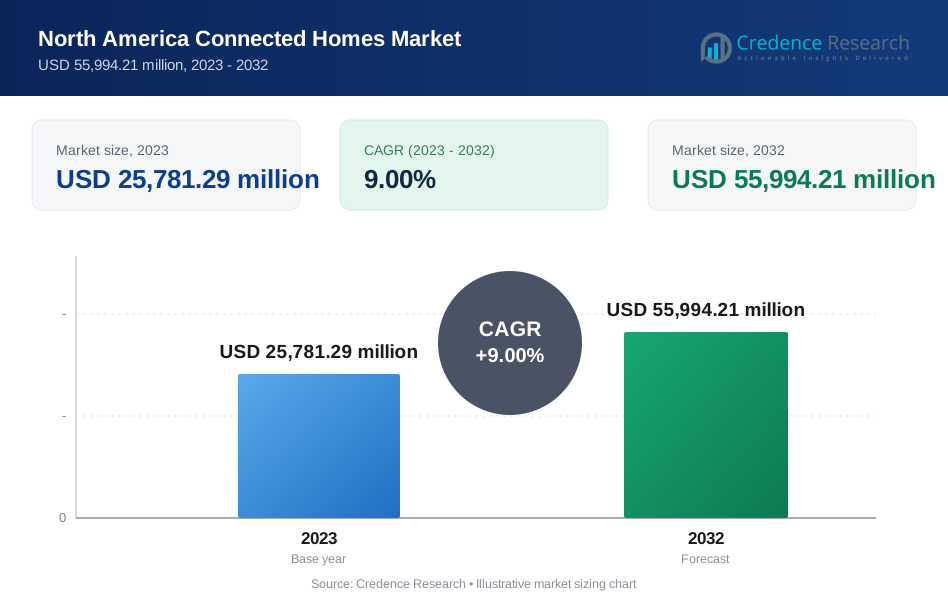
| North America Connected Homes Market Size 2023 | USD 25,781.29 Million |
| North America Connected Homes Market, CAGR | 9.00% |
| North America Connected Homes Market Size 2032 | USD 55,994.21 Million |
Market Overview
The North America Connected Homes Market is projected to grow from USD 25,781.29 million in 2023 to USD 55,994.21 million by 2032, at a compound annual growth rate (CAGR) of 9.00%.
The North America Connected Homes Market is propelled by the increasing adoption of smart home technologies that enhance convenience, security, and energy management. The region's robust technological infrastructure, including widespread high-speed internet access and the proliferation of IoT devices, supports this growth. Consumer preferences for remote home management systems and automated devices are significant trends, along with technological advancements in AI and machine learning that improve device interconnectivity and functionality. Moreover, the push towards energy efficiency and sustainability in homes continues to drive the adoption of smart solutions in the market.
The North America Connected Homes Market is experiencing robust growth, driven by technological advancements and a high rate of digital adoption across the region. The United States leads in market size and innovation, thanks to significant investments from key players such as Google Inc., Amazon, and Apple, which are continuously expanding their smart home product lines. Canada and Mexico also contribute to regional growth, with increasing consumer awareness and adoption of connected home technologies. These countries benefit from the presence of major companies like Honeywell and Cisco Systems Inc., which provide a wide range of solutions from security to energy management in connected homes.
Market Drivers
High Demand for Convenience and Security
In North America, the demand for connected home devices continues to grow as consumers seek greater convenience and security. For instance, in North America, the demand for smart locks has surged by 30% in the last quarter, with remote monitoring systems following closely at a 25% increase. This reflects the growing need for convenience and security among consumers. Automated lighting has also seen a rise, with a 20% uptick in installations, as homeowners seek to enhance the safety and functionality of their living spaces. Features such as remote monitoring, smart locks, and automated lighting directly address these needs, enhancing both the functionality and safety of modern homes. This shift towards more secure and efficient living environments is accelerating the adoption of connected technologies, as homeowners increasingly prioritize solutions that offer ease of use and peace of mind.
Robust Technological Foundations
North America's early adoption of technology, coupled with its strong internet infrastructure, creates a robust foundation for the connected homes market. In terms of technological foundations, 85% of homes in North America now have access to high-speed internet, which is crucial for the operation of connected home devices. This robust digital infrastructure has led to a 40% growth in the adoption of advanced home technologies over the past two years. The region's extensive high-speed internet penetration is essential for the functionality of connected home devices, which rely heavily on stable and fast internet connections. This well-established digital framework facilitates the seamless integration and operation of advanced home technologies, further propelling the market forward.
Focus on Energy Efficiency and Sustainability
The growing emphasis on energy efficiency and sustainability is another key driver in the North American connected homes market. Focusing on energy efficiency, the installation of smart thermostats has grown by 35%, while energy-efficient lighting systems have seen a 50% increase in adoption. These sustainable solutions are not only reducing energy consumption by an average of 25% per household but are also contributing to the region’s environmental goals, resonating with the values of eco-conscious consumers. Homeowners are increasingly adopting smart thermostats, lighting systems, and energy-efficient appliances to reduce their energy usage and environmental footprint. These technologies not only help manage and decrease energy consumption but also align with broader environmental goals, making them highly appealing to eco-conscious consumers.
Advancements in Smart Home Interaction
The rise of voice assistants and the integration of smart speakers are transforming user interactions within connected homes. Popular voice assistants like Amazon Alexa and Google Assistant enable hands-free control of various home devices, offering a convenient and intuitive user experience. This capability to manage home environments through simple voice commands is enhancing the accessibility and attractiveness of smart home systems, driving further market growth in North America.
Market Trends
Enhanced Customization and AI Integration in Smart Homes
North American consumers are increasingly seeking smart home systems that offer personalization and customization. For instance, in North America, AI-integrated smart thermostats have seen a 50% increase in sales, with many models learning and adapting to users’ habits to save an average of 20% on energy bills. AI-powered refrigerators have also become popular, with a 35% rise in adoption, suggesting recipes to over 60% of their users based on dietary preferences and available ingredients. This trend is driven by the desire for devices that can be tailored to individual lifestyles and preferences, such as creating custom routines, scheduling automated tasks, and integrating with personal wellness devices like fitness trackers. Additionally, the integration of Artificial Intelligence (AI) is revolutionizing the user experience, making homes more intelligent and responsive. AI technologies enable thermostats to learn and adapt to a user’s habits, automatically adjusting the temperature, and AI-powered refrigerators that suggest recipes based on dietary preferences and available ingredients. These advancements in customization and AI integration cater to the evolving needs of consumers, enhancing the functionality and appeal of connected home systems.
Advancements in Smart Kitchens, Bathrooms, and Health Solutions
The growth of smart technologies in kitchens and bathrooms marks a significant trend in the North American market. In the realm of smart kitchens and bathrooms, smart faucets that can measure water usage and control temperature via voice commands have been installed in 25% more homes this year. Voice-controlled recipe assistants have seen a 40% increase in usage, making cooking more accessible and enjoyable. The market for connected water leak detectors has grown by 30%, providing homeowners with real-time alerts and preventing costly damages. The health and wellness sector has also seen significant advancements, with smart air quality monitors being adopted by 45% more households, helping to ensure a healthier living environment. Integrated sleep trackers have been incorporated into 30% more bedrooms, aiding in the improvement of sleep quality. Smart mirrors, offering personalized fitness guidance, have seen a 20% uptick in installations, reflecting the growing trend of health-oriented smart home solutions. Devices like smart air quality monitors, integrated sleep trackers, and smart mirrors offering personalized fitness guidance are becoming integral components of the home, focused on enhancing users' health and well-being. These sectors are not only advancing in terms of technology but are also becoming critical in addressing the holistic needs of consumers, promoting both convenience and health-oriented lifestyles within the connected home ecosystem.
Market Challenges Analysis
Addressing Security Concerns and Reducing Technical Barriers
Data security and privacy remain significant concerns for consumers considering smart home technologies. The fear of data breaches and unauthorized access to connected devices continues to challenge market growth. To build consumer trust, companies must implement robust security measures and maintain transparent data practices. This includes enhancing encryption methods and providing clear user control over data collection and usage. Alongside security issues, the technical complexity of setting up and operating smart home systems poses another hurdle. These systems often require a certain level of technological proficiency, which can deter less tech-savvy consumers. To foster wider adoption, the industry needs to develop more user-friendly interfaces and simplify the installation processes, making these technologies accessible to a broader audience.
Overcoming Economic and Compatibility Challenges
High upfront costs and ongoing financial commitments are significant barriers to adopting smart home technologies. While the cost of smart devices is gradually decreasing, outfitting a full home remains a substantial investment. Additionally, some smart home functionalities depend on recurring subscription services, leading to subscription fatigue among consumers. Addressing these financial barriers involves finding a balance between offering advanced features and maintaining affordability. Moreover, the issue of interoperability between different brands and devices continues to complicate the user experience. Achieving seamless integration requires enhanced standardization and clear compatibility labeling to ensure devices work together effectively. Furthermore, as smart home systems increase in complexity, the demand for skilled technicians for installation and maintenance is growing. Investing in workforce development and training programs is essential to equip technicians with the necessary skills to support the evolving needs of the smart home market.
Market Segmentation Analysis:
By Functionality:
The North America Connected Homes Market is segmented by functionality into several key areas that cater to the diverse needs of consumers. Energy and Utilities Management is rapidly growing as homeowners increasingly prioritize devices that can optimize energy usage, such as smart thermostats and automated lighting systems. The Smart Entertainment segment is also significant, with a focus on devices that enhance home media experiences, including smart TVs and speakers that integrate seamlessly with various digital media platforms. Wellness and Monitoring technologies are expanding as well, with products like health monitoring systems and emergency notification devices becoming more prevalent to support in-home healthcare. Security and Safety remain a crucial segment, with substantial investments in smart locks, surveillance cameras, and integrated security systems. Lastly, Smart Appliances are transforming household convenience, offering features like remote operation and maintenance notifications, further driving the market's growth.
By Component:
Segmentation of the North America Connected Homes Market by component highlights the technological diversity within the industry. Light Control Solutions are essential for energy management and creating ambient home environments. Security Solutions, including advanced surveillance systems and alarms, address the high demand for home safety. Entertainment Solutions continue to evolve, with innovative integrations that allow for more immersive audio-visual experiences from the comfort of one's living room. Home Healthcare Solutions are gaining traction by incorporating technologies that facilitate better patient monitoring and care at home. Lastly, Energy Management Solutions are increasingly sought after for their ability to significantly reduce energy consumption and automate home energy systems. Each component plays a vital role in meeting the specific preferences and needs of North American consumers, contributing to the robust growth of the connected homes market.
Segments:
Based on Functionality
- Energy and Utilities Management
- Smart Entertainment
- Wellness and Monitoring
- Security and Safety
- Smart Appliance
Based on Component
- Light Control Solution
- Security Solution
- Entertainment Solution
- Home Healthcare Solution
- Energy Management Solution
Based on Platform
- Smartphones
- Laptops
- Home Gateway
- Other Platforms
Based on Type of Homes
- Apartment
- Villa/Bungalow
- Other Homes
Based on the Geography:
- U.S.
- Canada
- Mexico
Regional Analysis
The United States accounts for a dominant market share of approximately 85% in the North America Connected Homes market. As a leading adopter of advanced technologies, the US has witnessed a significant growth in the demand for connected home solutions. Major metropolitan areas such as New York, Los Angeles, and Chicago have been at the forefront of this trend, driven by consumer demand for convenience, energy efficiency, and home automation. Additionally, the presence of major technology companies and the proliferation of smart devices have further fueled the growth of the connected homes market in the US.
Canada holds a market share of around 15% in the North America Connected Homes market. While the adoption rate has been relatively slower compared to the US, cities like Toronto, Vancouver, and Montreal have seen a steady increase in the demand for connected home solutions. Government initiatives promoting energy efficiency and sustainable living, coupled with the growing awareness of smart home technologies, have contributed to the market's growth in Canada.
Key Player Analysis
- ABB Limited
- Emerson Electric Co.
- Honeywell International Inc.
- Schneider Electric SE
- Siemens AG
- LG Electronics Inc.
- Cisco Systems Inc.
- Google Inc. (Alphabet Inc)
- Microsoft Corporation
- GE Appliances (Haier Group)
- IBM Corporation
- Legrand SA
- Lutron Electronics Co. Inc.
- United Technologies Corporation
- Control4 Corporation
Competitive Analysis
In the competitive landscape of the North America Connected Homes Market, leading players such as Google Inc., Amazon, and Apple dominate due to their innovative capabilities and extensive product ecosystems. These tech giants leverage their advanced R&D facilities to integrate AI and machine learning, enhancing the functionality and user experience of smart home devices. Companies like Honeywell and Schneider Electric are also pivotal, offering specialized solutions in energy management and security systems, which cater to the growing demand for sustainable and secure home environments. Moreover, emerging players are introducing disruptive technologies that challenge the status quo, pushing the boundaries of what smart home systems can achieve. This competitive environment is characterized by rapid technological advancements and strategic partnerships, driving continuous improvements in product offerings and expanding the market reach of connected home solutions across North America.
Recent Developments
- In 2023, the advanced home automation with Alexa was introduced by Amazon with the penetration of the artificial intelligence that can do wonders in controlling the home with the connected devices. The new feature accelerates the control devices with echo hubs and map view that eventually to leverage the living experience to the extent.
- In 2023, Ecobee is ready to set the trend in the connected home by launching the Ecobee Smart Doorbell Camera Review. This company is stepping towards the expansion fot he company’s product portfolio by launching ecosystem products in favor to the user with the latest technological developments. Ecobee is planning to deliver advanced wireless technological thermostats that operates with the sensors connected with the internet technology.
Market Concentration & Characteristics
The North America Connected Homes Market exhibits a moderate to high level of market concentration, with major technology giants like Google, Amazon, and Apple playing dominant roles. These industry leaders capitalize on their robust technological infrastructure and broad consumer base to innovate and scale quickly. The market is characterized by intense competition among these established players and a continuous influx of innovative startups introducing niche technologies and services. Such dynamics foster a highly competitive environment that drives technological advancements and market growth. Furthermore, strategic collaborations and acquisitions are common as companies aim to enhance their product portfolios and expand their market footprint. This concentration of large players, coupled with the relentless pace of innovation, shapes the market's characteristics, including its competitive landscape and the pace at which new technologies are adopted.
Report Coverage
The research report offers an in-depth analysis based on Functionality, Component, Platform, Type of Homes and Geography. It details leading market players, providing an overview of their business, product offerings, investments, revenue streams, and key applications. Additionally, the report includes insights into the competitive environment, SWOT analysis, current market trends, as well as the primary drivers and constraints. Furthermore, it discusses various factors that have driven market expansion in recent years. The report also explores market dynamics, regulatory scenarios, and technological advancements that are shaping the industry. It assesses the impact of external factors and global economic changes on market growth. Lastly, it provides strategic recommendations for new entrants and established companies to navigate the complexities of the market.
Future Outlook
- Adoption of AI and machine learning will significantly enhance the functionality and user experience of smart home devices.
- Increased investment in smart home technology by major tech companies will drive innovation and market growth.
- Expansion of 5G networks will improve the reliability and efficiency of connected home systems.
- Growing consumer demand for energy-efficient solutions will boost the market for smart energy management devices.
- Enhanced focus on data privacy and security will be crucial for gaining consumer trust and driving adoption.
- Integration of smart home devices with health and wellness technologies will become more prevalent.
- Development of more affordable smart home solutions will broaden the market reach.
- Strategic partnerships between tech giants and startups will foster innovation and product diversity.
- Voice-controlled interfaces and virtual assistants will continue to gain popularity among consumers.
- Increased consumer awareness and education about the benefits of connected homes will drive market expansion.
Request a Free Sample
Fill in your details and we'll send you a free sample report.
- Sample data tables & charts
- Research methodology
Need a Custom Version of This Report?
Tailor the scope, geography, or segments to your exact requirements.
- Custom geography or segment scope
- Direct access to our analyst team
Frequently Asked Questions
What is the current size of the North America Connected Homes Market?
What factors are driving the growth of the North America Connected Homes Market?
What are the key segments within the North America Connected Homes Market?
What are some challenges faced by the North America Connected Homes Market?
Who are the major players in the North America Connected Homes Market?
Which segment is leading the market share?
Table of Content
Chapter 1. Report Introduction
- 1.1 Report Description & Purpose
- 1.1.1 Report Title & Market Definition
- 1.1.2 Unique Selling Propositions (USP) & Key Differentiators
- 1.1.3 Value Proposition for Stakeholders
- 1.2 Research Objectives
- 1.2.1 Market Sizing Objectives (Volume & Revenue)
- 1.2.2 Segmentation Objectives
- 1.2.3 Competitive Intelligence Objectives
- 1.2.4 Forecast & Scenario Objectives
- 1.3 Report Scope
- 1.3.1 North America Connected Homes Scope – Types & Subtypes Covered
- 1.3.2 Geographic Scope – Regions & Countries Covered
- 1.3.3 Historical Period, Base Year & Forecast Period (2023; forecast to 2032)
- 1.3.4 Inclusions & Exclusions
- 1.4 HS Code & Classification Framework
- 1.5 Currency, Units & Pricing Basis
- 1.6 Target Stakeholders
- 1.7 Limitations & Assumptions
Chapter 2. Executive Summary
- 2.1 Global North America Connected Homes Market Snapshot
- 2.1.1 Market Size – Historical (2023) & Forecast (2023-2032) (2023: USD 25,781.29 million → 2032: USD 55,994.21 million)
- 2.1.2 Volume & Revenue – Global Totals
- 2.1.3 Key Market Highlights – Top Five Facts
- 2.2 North America Connected Homes Market Segmentation Snapshot
- 2.2.1 Market Split by Region – 2023 vs. 2032
- 2.3 Competitive Snapshot
- 2.3.1 Top 10 Players by Revenue Share – 2023
- 2.3.2 Top 10 Players by Volume Share – 2023
- 2.3.3 Recent Strategic Developments (18-Month Summary)
- 2.4 Key Investment Highlights & Strategic Conclusions
Chapter 3. North America Connected Homes Market Dynamics & Industry Analysis
- 3.1 Market Overview & Context
- 3.1.1 North America Connected Homes Market Position in the Broader Automotive Value Chain
- 3.1.2 OEM vs. Replacement Market Dynamics
- 3.1.3 Market Maturity & Development Stage by Region
- 3.2 North America Connected Homes Market Drivers
- 3.3 North America Connected Homes Market Restraints & Challenges
- 3.4 North America Connected Homes Market Opportunities
- 3.5 Porter's Five Forces Analysis
- 3.5.1 Threat of New Entrants
- 3.5.2 Bargaining Power of Suppliers
- 3.5.3 Bargaining Power of Buyers
- 3.5.4 Threat of Substitutes
- 3.5.5 Competitive Rivalry – Intensity Assessment
- 3.6 North America Connected Homes Value Chain Analysis
- 3.6.1 Upstream – Raw Material/Input Suppliers
- 3.6.1.1 Raw Material/Input 1
- 3.6.1.2 Raw Material/Input 2
- 3.6.1.3 Raw Material/Input 3
- 3.6.2 Midstream – Production/Manufacturing/Service Delivery
- 3.6.2.1 Production/Process Overview
- 3.6.2.2 Key Facility Locations & Capacity by Manufacturer
- 3.6.3 Downstream – Distribution & End Consumer
- 3.6.3.1 Primary Channel – B2B/OEM
- 3.6.3.2 Secondary Channels – Dealer, Retail, Online, Direct
- 3.6.4 Value Chain Profitability Analysis
- 3.6.1 Upstream – Raw Material/Input Suppliers
- 3.7 PESTEL Analysis
- 3.7.1 Political Factors
- 3.7.2 Economic Factors
- 3.7.3 Social Factors
- 3.7.4 Technological Factors
- 3.7.5 Environmental Factors
- 3.7.6 Legal Factors
- 3.8 North America Connected Homes Supply Chain Analysis
- 3.8.1 Raw Material/Input Supply Risk Assessment
- 3.8.2 Manufacturing Concentration Risk (Geographic Exposure)
- 3.8.3 Trade Disruption Impact Analysis
- 3.9 Regulatory & Policy Landscape
Note: The regulatory and policy landscape section covers regulations based on their applicability to the market, North America Connected Homes category, geography, and scope of the study. Only regulatory frameworks with a material impact on operations, compliance, trade, sustainability, or market access are analyzed in detail.
Chapter 4. Key Investment Pockets & Opportunity Analysis
- 4.1 North America Connected Homes Market Attractiveness Analysis
- 4.1.1 By Region – Investment Attractiveness Matrix (Volume × CAGR)
- 4.2 Absolute Revenue Growth Opportunity
- 4.2.1 By Region – Absolute USD Growth Through 2032
- 4.3 Incremental Volume Opportunity
- 4.3.1 By Region – Incremental Volume Through 2032
- 4.3.2 Segment – Incremental Volume
- 4.4 Emerging Submarket Opportunity Deep Dive (Subject to Applicability)
- 4.5 Emerging Market Opportunity Scorecards
- 4.5.1 United States
- 4.5.2 Europe
- 4.5.3 Asia
- 4.5.4 Middle East & Africa
Note: Emerging Market Opportunity Scorecards will be included based on relevance and strategic importance. Regions listed are indicative and may vary depending on data availability and market dynamics.
Chapter 5. North America Connected Homes Import-Export Analysis & Trade Flows
- 5.1 Global Trade Overview
- 5.1.1 Global Export Value by Country (2023)
- 5.1.2 Global Export Volume by Country (2023)
- 5.1.3 Global Import Value by Country (2023)
- 5.1.4 Global Import Volume by Country (2023)
- 5.1.5 Net Trade Balance by Country (2023)
- 5.2 Export Analysis – Segment
- 5.2.1 Type 1 (HS Code)
- 5.2.2 Type 2 (HS Code)
- 5.2.3 Type 3 (HS Code)
- 5.2.4 Type 4 (HS Code)
- 5.2.5 Type 5 (HS Code)
- 5.3 Import Analysis – Segment
- 5.3.1 Type 1 (HS Code)
- 5.3.2 Type 2 (HS Code)
- 5.3.3 Type 3 (HS Code)
- 5.3.4 Type 4 (HS Code)
- 5.3.5 Type 5 (HS Code)
- 5.4 Average Unit Trade Prices
- 5.4.1 Average Export Price – Segment & Country
- 5.4.2 Average Import Price – Segment & Source Country
- 5.4.3 Price Trends (2023)
- 5.5 Key Trade Route Analysis
- 5.5.1 Trade Route 1
- 5.5.2 Trade Route 2
- 5.5.3 Trade Route 3
- 5.5.4 Trade Route 4
- 5.5.5 Trade Route 5
- 5.6 Trade Policy Impact Assessment
- 5.6.1 US Anti-Dumping & Section 301 Tariffs
- 5.6.2 EU Customs Union Impact
- 5.6.3 Major Free Trade Agreements
- 5.6.4 USMCA Rules of Origin
Note: Trade policy analysis will be included only where relevant to the North America Connected Homes market.
Chapter 6. Competitive Landscape & Company Benchmarking
- 6.1 North America Connected Homes Market Concentration & Structure
- 6.1.1 Herfindahl-Hirschman Index (HHI) – vs. 2023
- 6.1.2 Tier 1, Tier 2 & Tier 3 Market Structure
- 6.1.3 Global, Regional & Local Player Dynamics
- 6.2 North America Connected Homes Market Share Analysis – 2023
- 6.2.1 Global Revenue Share by Company
- 6.2.2 Global Volume Share by Company
- 6.2.3 Regional Revenue Share
- 6.2.4 Market Share Evolution ( vs. 2023)
- 6.2.5 OEM Segment Share by Company
- 6.2.6 Replacement Segment Share by Company
- 6.3 Production/Delivery Capacity & Facility Analysis
- 6.3.1 Global Installed Capacity
- 6.3.2 Capacity Utilization Rates
- 6.3.3 Production/Output Volume
- 6.3.4 Facility Locations & Capacity Map
- 6.3.5 Planned Capacity Additions
- 6.4 North America Connected Homes Competitive Benchmarking Matrix
- 6.4.1 Revenue, Volume, CAGR & Profitability Comparison
- 6.4.2 Channel Revenue Mix
- 6.4.3 Geographic Revenue Exposure
- 6.4.4 R&D Intensity
- 6.4.5 Sustainability Maturity
- 6.5 Strategic Developments in North America Connected Homes (Last 24 Months)
- 6.5.1 Mergers, Acquisitions & Divestments
- 6.5.2 New North America Connected Homes Launches
- 6.5.3 Facility Expansions
- 6.5.4 Strategic Alliances, Joint Ventures & Partnerships
- 6.5.5 Distribution Expansion & Market Entry
- 6.5.6 Sustainability & ESG Initiatives
- 6.6 Competitive Strategy Mapping
- 6.6.1 Leader, Challenger, Follower & Niche Classification
- 6.6.2 Pricing Strategy Comparison
- 6.6.3 Channel Strategy Matrix
Note: Strategic developments are included based on their materiality and the availability of reliable information.
Chapter 7. Global North America Connected Homes Market – By Distribution Channel
- 7.1 Segment Overview
- 7.1.1 Volume & Revenue Split by Channel (2023 & 2032)
- 7.1.2 Channel Mix Evolution (2023-2032)
Chapter 8. Regional Market Analysis – Global Overview
- 8.1 Global Regional Overview
- 8.1.1 Regional Volume Share
- 8.1.2 Regional Revenue Share
- 8.1.3 Regional Volume by Region
- 8.1.4 Regional Revenue by Region
- 8.1.5 Regional Forecast Through 2032
- 8.2 Cross-Regional Segment Analysis
- 8.2.1 By Distribution Channel
- 8.2.2 By Brand/Price Tier
Chapter 9. North America North America Connected Homes Market
- 9.1 United States
- 9.2 Canada
- 9.3 Mexico
Chapter 10. Europe North America Connected Homes Market
- 10.1 Germany
- 10.2 France
- 10.3 Italy
- 10.4 United Kingdom
- 10.5 Spain
- 10.6 Poland
- 10.7 Russia
- 10.8 Netherlands
- 10.9 Belgium
- 10.10 Sweden
- 10.11 Denmark
- 10.12 Norway
- 10.13 Rest of Europe
Chapter 11. Asia Pacific North America Connected Homes Market
- 11.1 China
- 11.2 India
- 11.3 Japan
- 11.4 South Korea
- 11.5 Thailand
- 11.6 Indonesia
- 11.7 Vietnam
- 11.8 Malaysia
- 11.9 Australia
- 11.10 Rest of Asia Pacific
Chapter 12. Latin America North America Connected Homes Market
- 12.1 Brazil
- 12.2 Argentina
- 12.3 Colombia
- 12.4 Chile
- 12.5 Rest of Latin America
Chapter 13. Middle East North America Connected Homes Market
- 13.1 Saudi Arabia
- 13.2 United Arab Emirates
- 13.3 Turkey
- 13.4 Israel
- 13.5 Iran
- 13.6 Rest of the Middle East
Chapter 14. Africa North America Connected Homes Market
- 14.1 South Africa
- 14.2 Egypt
- 14.3 Nigeria
- 14.4 Morocco
- 14.5 Rest of Africa
Chapter 15. North America Connected Homes Company Profiles
- 15.1 [Company 01]
- 15.1.1 Company Overview
- 15.1.2 Key Management Personnel
- 15.1.3 Products & Services Portfolio
- 15.1.4 Financial Performance
- 15.1.5 Key Market Focus & Geographic Presence
- 15.1.6 Recent Developments & Strategic Initiatives
Note: The company profile list is preliminary and may change based on research findings, market developments, data availability, and client requirements.
Chapter 16. Appendices
- Appendix A – List of Abbreviations & Acronyms
- Appendix B – Industry Classification Code Reference – Full Series
- Appendix C – Production & Capacity Data Tables
- Appendix D – End-Use & Demand Base Tables
- Appendix E – Consumption & Replacement Rate Assumptions
- Appendix F – ASP Reference Tables
- Appendix G – Manufacturing & Facility Database
- Appendix H – Import-Export Data Tables
- Appendix I – Regulatory Summary Tables
- Appendix J – Primary Research Participant List (Anonymized)
- Appendix K – Primary Research Questionnaire Framework
- Appendix L – Data Sources & Bibliography
- Appendix M – Market Size Divergence & Source Comparison
Chapter 17. Research Methodology
- 17.1 Research Framework & Philosophy
- 17.2 Secondary Research – Sources, Hierarchy & Data Extraction
- 17.3 Data Modeling – Bottom-Up & Top-Down Market Sizing
- 17.4 Primary Research – Stakeholder Framework, LOI & Sample Sizes
- 17.5 Forecast Methodology – Regression, Scenario & Sensitivity Analysis
- 17.6 Quality Control – Four-Layer Validation Framework
- 17.7 Limitations & Standard Assumptions
- 17.8 Disclaimer
