
| REPORT ATTRIBUTE | DETAILS |
|---|---|
| Historical Period | 2019-2022 |
| Base Year | 2023 |
| Forecast Period | 2024-2032 |
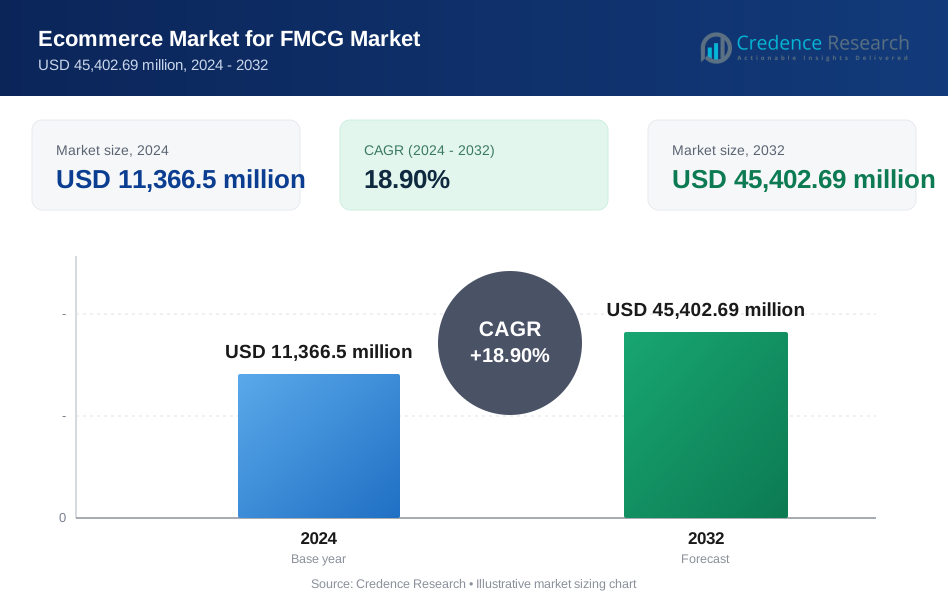
| Ecommerce Market Size 2024 | USD 11,366.5 Million |
| Ecommerce Market, CAGR | 18.90% |
| Ecommerce Market Size 2032 | USD 45,402.69 Million |
Market Overview
The Ecommerce Market for FMCG is projected to grow from USD 11,366.5 million in 2024 to USD 45,402.69 million by 2032, reflecting a compound annual growth rate (CAGR) of 18.90%.
The Ecommerce Market for FMCG is experiencing rapid growth driven by increasing internet penetration, rising smartphone usage, and a growing preference for convenient shopping experiences. Consumers' shift towards online platforms for purchasing everyday goods is bolstered by competitive pricing, diverse product availability, and speedy delivery services. Additionally, technological advancements such as AI-driven recommendations, personalized marketing, and seamless payment solutions are enhancing customer experiences and fostering loyalty. This trend is further supported by strategic partnerships between e-commerce giants and FMCG brands, aiming to expand their reach and improve supply chain efficiencies.
The Ecommerce Market for FMCG is dominated by key players across major regions including North America, Europe, and Asia-Pacific. North America, led by giants like Amazon and Walmart, commands a significant market share due to high internet penetration and advanced logistics. In Europe, Tesco and Carrefour drive market growth with robust online platforms and extensive product ranges. Asia-Pacific is the fastest-growing region, with Alibaba and JD.com leading the charge, fueled by rapid urbanization and increasing smartphone usage. These key players leverage strong supply chains, competitive pricing, and wide product assortments to maintain their dominance in the global market.
Market Drivers
Growing Internet Penetration and Smartphone Adoption
The rapid increase in internet penetration and smartphone adoption worldwide has significantly boosted the ecommerce market for FMCG products. For instance, smartphone ownership reached 85% among American adults, and home broadband subscriptions hit 77%, marking increases from previous years. With more people gaining access to the internet and owning smartphones, a larger audience can conveniently browse, compare, and purchase FMCG items online. This trend is particularly pronounced in emerging markets, where internet accessibility is expanding at a remarkable pace. The availability of mobile-friendly ecommerce platforms further enhances the shopping experience, making it easier for consumers to shop for everyday essentials from the comfort of their homes.
Shift Towards Online Convenience
Consumers are increasingly prioritizing convenience in their shopping experiences, driving a shift towards online purchasing of FMCG products. E-commerce platforms provide the ease of shopping from anywhere, at any time, with the added benefit of doorstep delivery. This convenience is especially appealing for busy individuals and families who prefer to avoid the hassle of physical shopping trips. For instance, online grocery/FMCG sales grew more than 15% in 2021, in a global grocery market which grew 2.1%. The ability to quickly and efficiently purchase groceries, personal care items, and household supplies online has become a significant driver of growth in the ecommerce FMCG sector.
Rapid Urbanization and Busy Lifestyles
Urbanization and the resulting busy lifestyles are key factors driving the growth of the ecommerce FMCG market. As more people move to urban areas and lead increasingly hectic lives, the demand for convenient shopping solutions rises. E-commerce addresses this need by offering a seamless way for consumers to order and receive their daily essentials without taking time out of their busy schedules. For instance, Urban China’s FMCG market demonstrated a modest recovery in the first quarter of 2024, achieving a 2.6% year-on-year sales growth. The growth of online grocery shopping, in particular, highlights how ecommerce platforms are meeting the needs of urban consumers looking for efficient and time-saving shopping options.
Competitive Prices and Wider Product Selection
E-commerce platforms are known for offering competitive prices and attractive discounts on FMCG products, making them appealing to budget-conscious consumers. The ability to compare prices easily and take advantage of special offers and promotions further incentivizes online shopping. Additionally, ecommerce platforms provide a wider product selection compared to traditional brick-and-mortar stores. Consumers can find niche or specialty items that may not be available locally, enhancing their overall shopping experience. This broad availability of products, combined with cost savings, drives consumer preference for online shopping in the FMCG sector.
Market Trends
Omnichannel Retail Strategies and Social Commerce
Successful FMCG e-commerce strategies are increasingly incorporating omnichannel retail approaches. This involves combining online and offline channels to provide a seamless shopping experience. For instance, 87% of retailers recognize the critical nature of an omnichannel marketing strategy for their success. Features like click-and-collect options allow consumers to order products online and pick them up at a physical store, combining the convenience of online shopping with the immediacy of in-store pickup. Additionally, in-store kiosks enable customers to browse and order online products for home delivery while shopping in a physical store, enhancing the overall shopping experience. The rise of social commerce and influencer marketing is also transforming the FMCG market. Social media platforms are becoming vital channels for FMCG brands to reach and engage with consumers. Influencer marketing, where social media influencers promote products to their followers, and social commerce, which allows consumers to purchase products directly through social media platforms, are creating new avenues for online FMCG sales. These strategies not only expand brand reach but also leverage the power of social proof and peer recommendations to drive sales.
Livestreaming and Emerging Technologies
Livestreaming and interactive shopping experiences are gaining popularity in the FMCG market. Livestream shopping events, where hosts demonstrate products and offer special deals in real-time, allow for dynamic engagement with consumers. For example, livestream e-commerce sales in the U.S. reached $50 billion in 2023 and are projected to grow by 36% over the next three years. These events can significantly boost online FMCG sales by creating a sense of urgency and excitement. Consumers can ask questions, see products in action, and make purchases during the livestream, creating a more immersive shopping experience. Additionally, emerging technologies such as augmented reality (AR) are poised to enhance the online FMCG shopping experience. AR can be used to virtually try on beauty products, visualize how a new home appliance would look in a kitchen, or even preview food items before purchase. These technologies provide an interactive and engaging way for consumers to shop online, helping them make more informed purchasing decisions and increasing overall customer satisfaction. As these trends continue to evolve, they are expected to play a crucial role in shaping the future of the e-commerce FMCG market.
Market Challenges Analysis
Data Security and Last-Mile Delivery
Last-mile delivery presents logistical challenges, particularly in dense urban areas or remote locations. Efficient and timely delivery is crucial for customer satisfaction but can be difficult to achieve. E-commerce platforms need to invest in robust delivery networks and consider partnerships with local delivery providers to ensure smooth last-mile delivery. Additionally, e-commerce transactions involve sharing personal information and payment details, raising concerns about data security and privacy. Ensuring robust data security measures and transparent privacy policies are essential to gain consumer trust for online FMCG purchases. Clear communication about data protection practices and addressing consumer concerns transparently can build confidence in the online shopping experience, encouraging more frequent and higher-value transactions.
Solutions to Overcome Challenges
Optimizing delivery routes and logistics, implementing minimum order requirements, and offering subscription incentives are practical solutions to improve profitability and efficiency. Strategic partnerships with FMCG brands can enhance product offerings and attract new customers. Investment in cold chain infrastructure ensures the freshness and quality of perishable items, while providing detailed product information and transparent communication builds consumer trust. Focusing on high-margin products and value-added services can increase profitability, while enhancing data security practices and ensuring efficient last-mile delivery improves overall customer satisfaction. By addressing these challenges strategically, e-commerce platforms can better meet consumer demands and thrive in the competitive FMCG market.
Market Segmentation Analysis:
By Product Type:
The Ecommerce Market for FMCG is segmented by product type into food and beverages, personal care, household care, and health care products. Food and beverages dominate this segment due to the high frequency of purchases and the essential nature of these items. Consumers increasingly prefer buying groceries online for convenience, variety, and access to competitive prices. Personal care and household care products also see significant online sales, driven by the convenience of home delivery and the availability of subscription services. Health care products, including over-the-counter medicines and wellness items, are gaining traction as consumers seek accessible and discreet purchasing options online.
By Platform:
The market is segmented by platform into dedicated e-commerce websites, online marketplaces, and direct-to-consumer (DTC) channels. Dedicated e-commerce websites, such as Amazon and Walmart, offer a wide range of FMCG products with attractive discounts and fast delivery options. Online marketplaces like Alibaba and eBay provide a platform for multiple vendors to reach a broad audience, offering competitive prices and extensive product choices. DTC channels, where brands sell directly through their websites, are growing as companies seek to build direct relationships with consumers, offering personalized experiences and loyalty programs to enhance customer retention and satisfaction.
Segments:
Based on Product Type:
- Food and Beverages
- Personal Care
- Household Care
- Health Care Products
Based on Platform:
- Dedicated E-commerce Websites
- Online Marketplaces
- Direct-to-Consumer (DTC) Channels
Based on End-User:
- Individual Consumers
- Businesses
Based on the Geography:
- North America
- The U.S.
- Canada
- Mexico
- Europe
- Germany
- France
- The U.K.
- Italy
- Spain
- Rest of Europe
- Asia Pacific
- China
- Japan
- India
- South Korea
- South-east Asia
- Rest of Asia Pacific
- Latin America
- Brazil
- Argentina
- Rest of Latin America
- Middle East & Africa
- GCC Countries
- South Africa
- Rest of the Middle East and Africa
Regional Analysis
Asia-Pacific
Asia-Pacific region commands approximately 45% of the market share, driven by its large population, rapidly increasing internet penetration, and widespread adoption of mobile shopping. China dominates the landscape, fueled by its robust digital infrastructure and innovative e-commerce platforms like Alibaba and JD.com. India follows as a fast-growing market, propelled by rising disposable incomes and improving last-mile delivery networks. The region's growth is further bolstered by emerging Southeast Asian markets such as Indonesia and Vietnam, where a young, tech-savvy population is driving rapid e-commerce adoption for FMCG products.
North America
North America holds roughly 25% of the market share, with the United States at the forefront. The region's growth is sustained by well-established e-commerce giants like Amazon and Walmart, advanced logistics capabilities, and consumers' increasing preference for online grocery shopping. The COVID-19 pandemic has accelerated this trend, with many consumers shifting to online purchases for everyday essentials. The market is characterized by high competition, leading to innovative solutions such as subscription-based models and same-day delivery services. Canada contributes significantly to the region's market share, with its consumers showing a growing appetite for online FMCG purchases, particularly in urban areas. The North American market also sees a rising trend in direct-to-consumer models for FMCG brands, allowing for more personalized shopping experiences and data-driven marketing strategies.
Key Player Analysis
- Amazon (U.S.)
- Alibaba Group (China)
- Walmart (U.S.)
- Rakuten (Japan)
- com (China)
- Target (U.S.)
- Tesco (U.K.)
- Carrefour (France)
- Flipkart (India)
- eBay (U.S.)
Competitive Analysis
In the Ecommerce Market for FMCG, leading players like Amazon, Walmart, Alibaba, and JD.com dominate through vast product offerings, competitive pricing, and advanced logistics networks. Amazon and Walmart leverage their extensive distribution channels and technological prowess to offer seamless shopping experiences and rapid delivery services in North America. Alibaba and JD.com lead in Asia-Pacific by capitalizing on the region's rapid urbanization and high smartphone penetration, providing consumers with diverse product choices and efficient delivery solutions. Tesco and Carrefour hold strong positions in Europe, combining their traditional retail strengths with robust online platforms. These leading players focus on strategic partnerships with FMCG brands, innovative marketing strategies, and customer-centric services to maintain their competitive edge. Their ability to adapt to evolving consumer preferences, invest in technology, and enhance supply chain efficiencies positions them as dominant forces in the global Ecommerce FMCG market.
Market Concentration & Characteristics
The Ecommerce Market for FMCG exhibits moderate to high market concentration, dominated by a few key players such as Amazon, Walmart, Alibaba, and JD.com. These companies leverage their extensive supply chain networks, advanced technological infrastructure, and vast product offerings to capture significant market shares. The market is characterized by intense competition, with leading players continually innovating to enhance user experience through personalized recommendations, subscription services, and quick delivery options. The integration of AI and data analytics for targeted marketing and efficient inventory management further defines the market. Additionally, there is a growing trend towards omnichannel strategies, where traditional retailers blend online and offline experiences to cater to consumer preferences. The dynamic nature of this market, driven by technological advancements and evolving consumer behaviors, ensures continuous growth and transformation.
Report Coverage
The research report offers an in-depth analysis based on Product Type, Platform, End-User and Geography. It details leading market players, providing an overview of their business, product offerings, investments, revenue streams, and key applications. Additionally, the report includes insights into the competitive environment, SWOT analysis, current market trends, as well as the primary drivers and constraints. Furthermore, it discusses various factors that have driven market expansion in recent years. The report also explores market dynamics, regulatory scenarios, and technological advancements that are shaping the industry. It assesses the impact of external factors and global economic changes on market growth. Lastly, it provides strategic recommendations for new entrants and established companies to navigate the complexities of the market.
Future Outlook
- The eCommerce market for FMCG will continue to grow rapidly due to increasing internet penetration and smartphone adoption.
- Investment in advanced logistics and delivery infrastructure will enhance service efficiency and customer satisfaction.
- Personalization and AI-driven recommendations will become more prevalent, improving customer engagement and sales.
- The rise of subscription services will ensure steady demand and customer loyalty for FMCG products.
- Integration of voice assistants and smart devices will streamline the shopping experience for consumers.
- Sustainability and eco-friendly practices will become key selling points for eCommerce platforms.
- Expansion into rural and remote areas will provide new growth opportunities.
- Enhanced data security measures will be critical to gaining and maintaining consumer trust.
- Collaboration between eCommerce platforms and FMCG brands will result in innovative product offerings and promotions.
- The continued development of quick commerce (Q-commerce) will meet the demand for ultra-fast delivery services.
Request a Free Sample
Fill in your details and we'll send you a free sample report.
- Sample data tables & charts
- Research methodology
Need a Custom Version of This Report?
Tailor the scope, geography, or segments to your exact requirements.
- Custom geography or segment scope
- Direct access to our analyst team
Frequently Asked Questions
What is the current size of the Ecommerce Market for FMCG Market?
What factors are driving the growth of the Ecommerce Market for FMCG Market?
What are the key segments within the Ecommerce Market for FMCG Market?
What are some challenges faced by the Ecommerce Market for FMCG Market?
Who are the major players in the Ecommerce Market for FMCG Market?
Which segment is leading the market share?
Table of Content
Chapter 1. Report Introduction
- 1.1 Report Description & Purpose
- 1.1.1 Report Title & Market Definition
- 1.1.2 Unique Selling Propositions (USP) & Key Differentiators
- 1.1.3 Value Proposition for Stakeholders
- 1.2 Research Objectives
- 1.2.1 Market Sizing Objectives (Volume & Revenue)
- 1.2.2 Segmentation Objectives
- 1.2.3 Competitive Intelligence Objectives
- 1.2.4 Forecast & Scenario Objectives
- 1.3 Report Scope
- 1.3.1 Ecommerce Market for FMCG Scope – Types & Subtypes Covered
- 1.3.2 Geographic Scope – Regions & Countries Covered
- 1.3.3 Historical Period, Base Year & Forecast Period (2024; forecast to 2032)
- 1.3.4 Inclusions & Exclusions
- 1.4 HS Code & Classification Framework
- 1.5 Currency, Units & Pricing Basis
- 1.6 Target Stakeholders
- 1.7 Limitations & Assumptions
Chapter 2. Executive Summary
- 2.1 Global Ecommerce Market for FMCG Market Snapshot
- 2.1.1 Market Size – Historical (2024) & Forecast (2024-2032) (2024: USD 11,366.5 million → 2032: USD 45,402.69 million)
- 2.1.2 Volume & Revenue – Global Totals
- 2.1.3 Key Market Highlights – Top Five Facts
- 2.2 Ecommerce Market for FMCG Market Segmentation Snapshot
- 2.2.1 Market Split by Region – 2024 vs. 2032
- 2.3 Competitive Snapshot
- 2.3.1 Top 10 Players by Revenue Share – 2024
- 2.3.2 Top 10 Players by Volume Share – 2024
- 2.3.3 Recent Strategic Developments (18-Month Summary)
- 2.4 Key Investment Highlights & Strategic Conclusions
Chapter 3. Ecommerce Market for FMCG Market Dynamics & Industry Analysis
- 3.1 Market Overview & Context
- 3.1.1 Ecommerce Market for FMCG Market Position in the Broader Automotive Value Chain
- 3.1.2 OEM vs. Replacement Market Dynamics
- 3.1.3 Market Maturity & Development Stage by Region
- 3.2 Ecommerce Market for FMCG Market Drivers
- 3.3 Ecommerce Market for FMCG Market Restraints & Challenges
- 3.4 Ecommerce Market for FMCG Market Opportunities
- 3.5 Porter's Five Forces Analysis
- 3.5.1 Threat of New Entrants
- 3.5.2 Bargaining Power of Suppliers
- 3.5.3 Bargaining Power of Buyers
- 3.5.4 Threat of Substitutes
- 3.5.5 Competitive Rivalry – Intensity Assessment
- 3.6 Ecommerce Market for FMCG Value Chain Analysis
- 3.6.1 Upstream – Raw Material/Input Suppliers
- 3.6.1.1 Raw Material/Input 1
- 3.6.1.2 Raw Material/Input 2
- 3.6.1.3 Raw Material/Input 3
- 3.6.2 Midstream – Production/Manufacturing/Service Delivery
- 3.6.2.1 Production/Process Overview
- 3.6.2.2 Key Facility Locations & Capacity by Manufacturer
- 3.6.3 Downstream – Distribution & End Consumer
- 3.6.3.1 Primary Channel – B2B/OEM
- 3.6.3.2 Secondary Channels – Dealer, Retail, Online, Direct
- 3.6.4 Value Chain Profitability Analysis
- 3.6.1 Upstream – Raw Material/Input Suppliers
- 3.7 PESTEL Analysis
- 3.7.1 Political Factors
- 3.7.2 Economic Factors
- 3.7.3 Social Factors
- 3.7.4 Technological Factors
- 3.7.5 Environmental Factors
- 3.7.6 Legal Factors
- 3.8 Ecommerce Market for FMCG Supply Chain Analysis
- 3.8.1 Raw Material/Input Supply Risk Assessment
- 3.8.2 Manufacturing Concentration Risk (Geographic Exposure)
- 3.8.3 Trade Disruption Impact Analysis
- 3.9 Regulatory & Policy Landscape
Note: The regulatory and policy landscape section covers regulations based on their applicability to the market, Ecommerce Market for FMCG category, geography, and scope of the study. Only regulatory frameworks with a material impact on operations, compliance, trade, sustainability, or market access are analyzed in detail.
Chapter 4. Key Investment Pockets & Opportunity Analysis
- 4.1 Ecommerce Market for FMCG Market Attractiveness Analysis
- 4.1.1 By Region – Investment Attractiveness Matrix (Volume × CAGR)
- 4.2 Absolute Revenue Growth Opportunity
- 4.2.1 By Region – Absolute USD Growth Through 2032
- 4.3 Incremental Volume Opportunity
- 4.3.1 By Region – Incremental Volume Through 2032
- 4.3.2 Segment – Incremental Volume
- 4.4 Emerging Submarket Opportunity Deep Dive (Subject to Applicability)
- 4.5 Emerging Market Opportunity Scorecards
- 4.5.1 United States
- 4.5.2 Europe
- 4.5.3 Asia
- 4.5.4 Middle East & Africa
Note: Emerging Market Opportunity Scorecards will be included based on relevance and strategic importance. Regions listed are indicative and may vary depending on data availability and market dynamics.
Chapter 5. Ecommerce Market for FMCG Import-Export Analysis & Trade Flows
- 5.1 Global Trade Overview
- 5.1.1 Global Export Value by Country (2024)
- 5.1.2 Global Export Volume by Country (2024)
- 5.1.3 Global Import Value by Country (2024)
- 5.1.4 Global Import Volume by Country (2024)
- 5.1.5 Net Trade Balance by Country (2024)
- 5.2 Export Analysis – Segment
- 5.2.1 Type 1 (HS Code)
- 5.2.2 Type 2 (HS Code)
- 5.2.3 Type 3 (HS Code)
- 5.2.4 Type 4 (HS Code)
- 5.2.5 Type 5 (HS Code)
- 5.3 Import Analysis – Segment
- 5.3.1 Type 1 (HS Code)
- 5.3.2 Type 2 (HS Code)
- 5.3.3 Type 3 (HS Code)
- 5.3.4 Type 4 (HS Code)
- 5.3.5 Type 5 (HS Code)
- 5.4 Average Unit Trade Prices
- 5.4.1 Average Export Price – Segment & Country
- 5.4.2 Average Import Price – Segment & Source Country
- 5.4.3 Price Trends (2024)
- 5.5 Key Trade Route Analysis
- 5.5.1 Trade Route 1
- 5.5.2 Trade Route 2
- 5.5.3 Trade Route 3
- 5.5.4 Trade Route 4
- 5.5.5 Trade Route 5
- 5.6 Trade Policy Impact Assessment
- 5.6.1 US Anti-Dumping & Section 301 Tariffs
- 5.6.2 EU Customs Union Impact
- 5.6.3 Major Free Trade Agreements
- 5.6.4 USMCA Rules of Origin
Note: Trade policy analysis will be included only where relevant to the Ecommerce Market for FMCG market.
Chapter 6. Competitive Landscape & Company Benchmarking
- 6.1 Ecommerce Market for FMCG Market Concentration & Structure
- 6.1.1 Herfindahl-Hirschman Index (HHI) – vs. 2024
- 6.1.2 Tier 1, Tier 2 & Tier 3 Market Structure
- 6.1.3 Global, Regional & Local Player Dynamics
- 6.2 Ecommerce Market for FMCG Market Share Analysis – 2024
- 6.2.1 Global Revenue Share by Company
- 6.2.2 Global Volume Share by Company
- 6.2.3 Regional Revenue Share
- 6.2.4 Market Share Evolution ( vs. 2024)
- 6.2.5 OEM Segment Share by Company
- 6.2.6 Replacement Segment Share by Company
- 6.3 Production/Delivery Capacity & Facility Analysis
- 6.3.1 Global Installed Capacity
- 6.3.2 Capacity Utilization Rates
- 6.3.3 Production/Output Volume
- 6.3.4 Facility Locations & Capacity Map
- 6.3.5 Planned Capacity Additions
- 6.4 Ecommerce Market for FMCG Competitive Benchmarking Matrix
- 6.4.1 Revenue, Volume, CAGR & Profitability Comparison
- 6.4.2 Channel Revenue Mix
- 6.4.3 Geographic Revenue Exposure
- 6.4.4 R&D Intensity
- 6.4.5 Sustainability Maturity
- 6.5 Strategic Developments in Ecommerce Market for FMCG (Last 24 Months)
- 6.5.1 Mergers, Acquisitions & Divestments
- 6.5.2 New Ecommerce Market for FMCG Launches
- 6.5.3 Facility Expansions
- 6.5.4 Strategic Alliances, Joint Ventures & Partnerships
- 6.5.5 Distribution Expansion & Market Entry
- 6.5.6 Sustainability & ESG Initiatives
- 6.6 Competitive Strategy Mapping
- 6.6.1 Leader, Challenger, Follower & Niche Classification
- 6.6.2 Pricing Strategy Comparison
- 6.6.3 Channel Strategy Matrix
Note: Strategic developments are included based on their materiality and the availability of reliable information.
Chapter 7. Global Ecommerce Market for FMCG Market – By Distribution Channel
- 7.1 Segment Overview
- 7.1.1 Volume & Revenue Split by Channel (2024 & 2032)
- 7.1.2 Channel Mix Evolution (2024-2032)
Chapter 8. Regional Market Analysis – Global Overview
- 8.1 Global Regional Overview
- 8.1.1 Regional Volume Share
- 8.1.2 Regional Revenue Share
- 8.1.3 Regional Volume by Region
- 8.1.4 Regional Revenue by Region
- 8.1.5 Regional Forecast Through 2032
- 8.2 Cross-Regional Segment Analysis
- 8.2.1 By Distribution Channel
- 8.2.2 By Brand/Price Tier
Chapter 9. North America Ecommerce Market for FMCG Market
- 9.1 United States
- 9.2 Canada
- 9.3 Mexico
Chapter 10. Europe Ecommerce Market for FMCG Market
- 10.1 Germany
- 10.2 France
- 10.3 Italy
- 10.4 United Kingdom
- 10.5 Spain
- 10.6 Poland
- 10.7 Russia
- 10.8 Netherlands
- 10.9 Belgium
- 10.10 Sweden
- 10.11 Denmark
- 10.12 Norway
- 10.13 Rest of Europe
Chapter 11. Asia Pacific Ecommerce Market for FMCG Market
- 11.1 China
- 11.2 India
- 11.3 Japan
- 11.4 South Korea
- 11.5 Thailand
- 11.6 Indonesia
- 11.7 Vietnam
- 11.8 Malaysia
- 11.9 Australia
- 11.10 Rest of Asia Pacific
Chapter 12. Latin America Ecommerce Market for FMCG Market
- 12.1 Brazil
- 12.2 Argentina
- 12.3 Colombia
- 12.4 Chile
- 12.5 Rest of Latin America
Chapter 13. Middle East Ecommerce Market for FMCG Market
- 13.1 Saudi Arabia
- 13.2 United Arab Emirates
- 13.3 Turkey
- 13.4 Israel
- 13.5 Iran
- 13.6 Rest of the Middle East
Chapter 14. Africa Ecommerce Market for FMCG Market
- 14.1 South Africa
- 14.2 Egypt
- 14.3 Nigeria
- 14.4 Morocco
- 14.5 Rest of Africa
Chapter 15. Ecommerce Market for FMCG Company Profiles
- 15.1 [Company 01]
- 15.1.1 Company Overview
- 15.1.2 Key Management Personnel
- 15.1.3 Products & Services Portfolio
- 15.1.4 Financial Performance
- 15.1.5 Key Market Focus & Geographic Presence
- 15.1.6 Recent Developments & Strategic Initiatives
Note: The company profile list is preliminary and may change based on research findings, market developments, data availability, and client requirements.
Chapter 16. Appendices
- Appendix A – List of Abbreviations & Acronyms
- Appendix B – Industry Classification Code Reference – Full Series
- Appendix C – Production & Capacity Data Tables
- Appendix D – End-Use & Demand Base Tables
- Appendix E – Consumption & Replacement Rate Assumptions
- Appendix F – ASP Reference Tables
- Appendix G – Manufacturing & Facility Database
- Appendix H – Import-Export Data Tables
- Appendix I – Regulatory Summary Tables
- Appendix J – Primary Research Participant List (Anonymized)
- Appendix K – Primary Research Questionnaire Framework
- Appendix L – Data Sources & Bibliography
- Appendix M – Market Size Divergence & Source Comparison
Chapter 17. Research Methodology
- 17.1 Research Framework & Philosophy
- 17.2 Secondary Research – Sources, Hierarchy & Data Extraction
- 17.3 Data Modeling – Bottom-Up & Top-Down Market Sizing
- 17.4 Primary Research – Stakeholder Framework, LOI & Sample Sizes
- 17.5 Forecast Methodology – Regression, Scenario & Sensitivity Analysis
- 17.6 Quality Control – Four-Layer Validation Framework
- 17.7 Limitations & Standard Assumptions
- 17.8 Disclaimer
