Market Insights
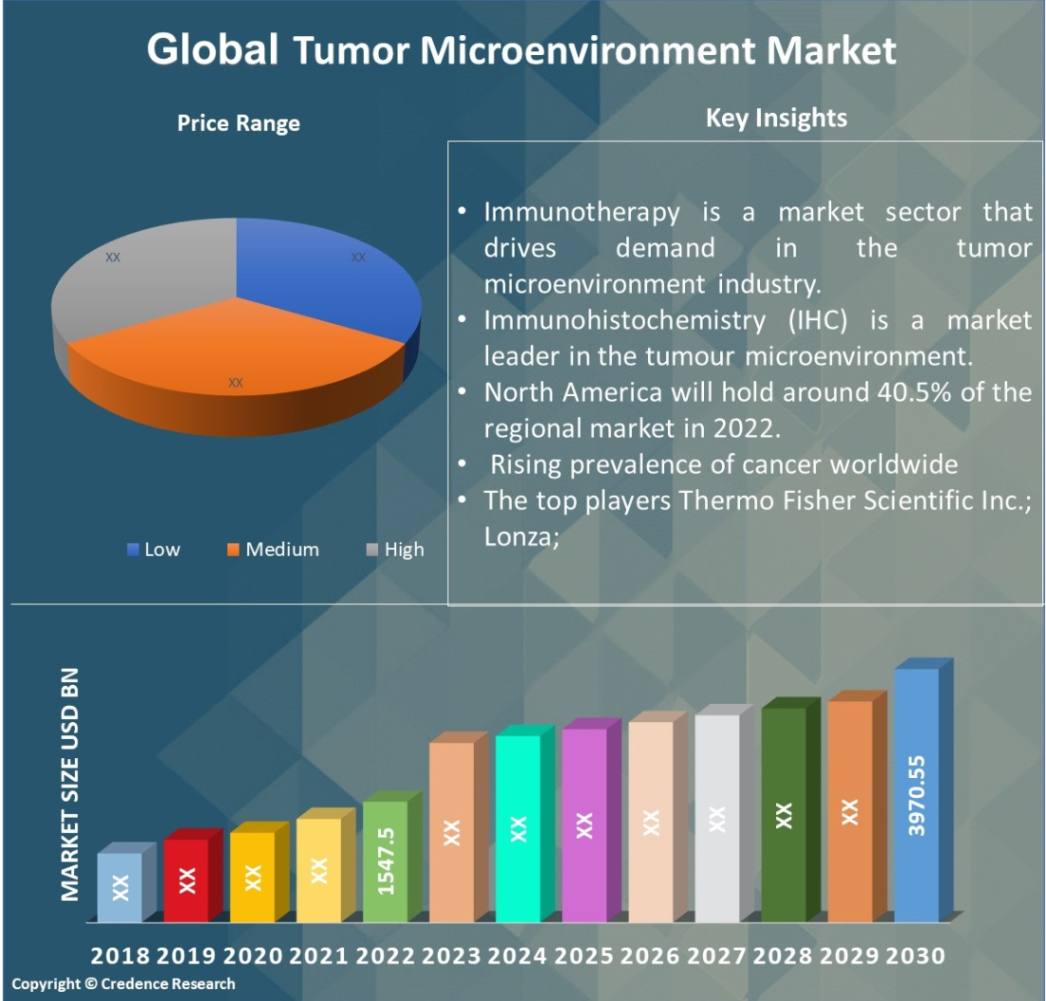
- The global demand for Tumor Microenvironment was valued at USD 1547.5 Million in 2022 and is expected to reach USD 3970.55 Million in 2030, growing at a CAGR of 12.50% between 2023 and 2030.
- Stromal cells and immune cells are two popular essential subgroups.
- Immunohistochemistry (IHC) is one of the major firms in the tumour microenvironment market, and genomic and proteomic profiling is another significant market segment.
- Immunotherapy is a market segment that drives demand in the tumour microenvironment industry, and customized medicine is another that is rapidly expanding.
- Two prominent market niches are hematological malignancies and solid tumours.
- The tumour microenvironment market is dominated by biotechnology and pharmaceutical companies, with academic and research institutes being another popular sector.
- In 2022, North America will account for approximately 40.5% of the regional market. This is due to the region's large outsourcing services, and the Asia Pacific region will be the fastest growing.
- The rising global cancer incidence promotes market expansion.
- The variability and complexity of tumour microenvironments impede market expansion.
Executive Summary
Market Definition
The tumor microenvironment (TME) is the environment around a tumor, including the surrounding blood vessels, immune cells, fibroblasts, signaling molecules, and the extracellular matrix (ECM). The tumor and the surrounding microenvironment are closely related and interact constantly. The growing collaboration among key industry players for product launches further benefits the market. Furthermore, increased R&D expenditure drives market expansion.
Market Overview
The global Tumor Microenvironment Market has witnessed steady growth in recent years and is expected to grow at a CAGR of 12.50% between 2023 and 2030. The market was valued at USD 1547.5 million in 2022 and is expected to reach USD 3970.55 million in 2030.
Studying the cells, blood arteries, and immune system that surround and interact with a tumor is known as the Tumor Microenvironment Market. Cancer research is a fast-growing field. Better knowledge of tumor biology and the creation of targeted treatments are the main factors driving the market demand in this sector. Concerning the most favored segment and market share holder.
Segmentation by TME Components
- Two well-liked subsets that are essential are stromal cells and immunological cells. Tumor microenvironment immune cells, including natural killer cells and T cells, are vital constituents. They are a major subject of cancer immunotherapy research because of their capacity to identify and eradicate cancer cells.
Segmentation by Research and Diagnostics
- One of the leading companies in the tumor microenvironment market is immunohistochemistry (IHC). With the use of the popular IHC technology, researchers may see particular proteins in tissue samples and gain important understanding of the tumor microenvironment.
- Genomic and proteomic profiling is another market area that holds a substantial proportion. In this section, the genetic and protein expression profiles of tumor cells are analyzed. This facilitates the study of the molecular features of the tumor microenvironment and allows for the development of customized treatment plans.
Segmentation by Therapeutic Strategies
- Immunotherapy is a market sector that drives demand in the tumor microenvironment industry. The goal of immunotherapy is to strengthen the immune system's ability to combat cancerous cells. It has drawn a lot of interest and is now regarded as a promising method of treating cancer.
- The area of personalized medicine is another with the quickest growth. Personalized medicine seeks to customize treatment plans according to each patient's particular traits, including immune function, tumor biomarkers, and genetic profile.
Segmentation by Cancer Types
- Hematological malignancies and solid tumors are two significant market niches. Tumors that develop in tissues or organs, such as colon, lung, or breast cancer, are referred to as solid tumors. Most cancer cases are caused by these tumors, which have been well investigated in the oncology area.
Segmentation by Therapeutic Strategies
- Companies involved in biotechnology and pharmaceuticals dominate the tumor microenvironment market. These businesses are essential to the development of cutting-edge treatments and tools that target the tumor microenvironment and enhance patient outcomes. They devote a lot of funds on clinical studies, research and development, and the production of cancer medicines.
- The academic and research institutes market sector is another well-liked one.
Segmentation by Region
- North America will hold around 40.5% of the regional market in 2022.
- The Asia Pacific tumour microenvironment market is expected to grow the fastest.
- The rest of the world, including Latin America, the Middle East, and Africa, supplies the remaining demand for Tumor Microenvironment.
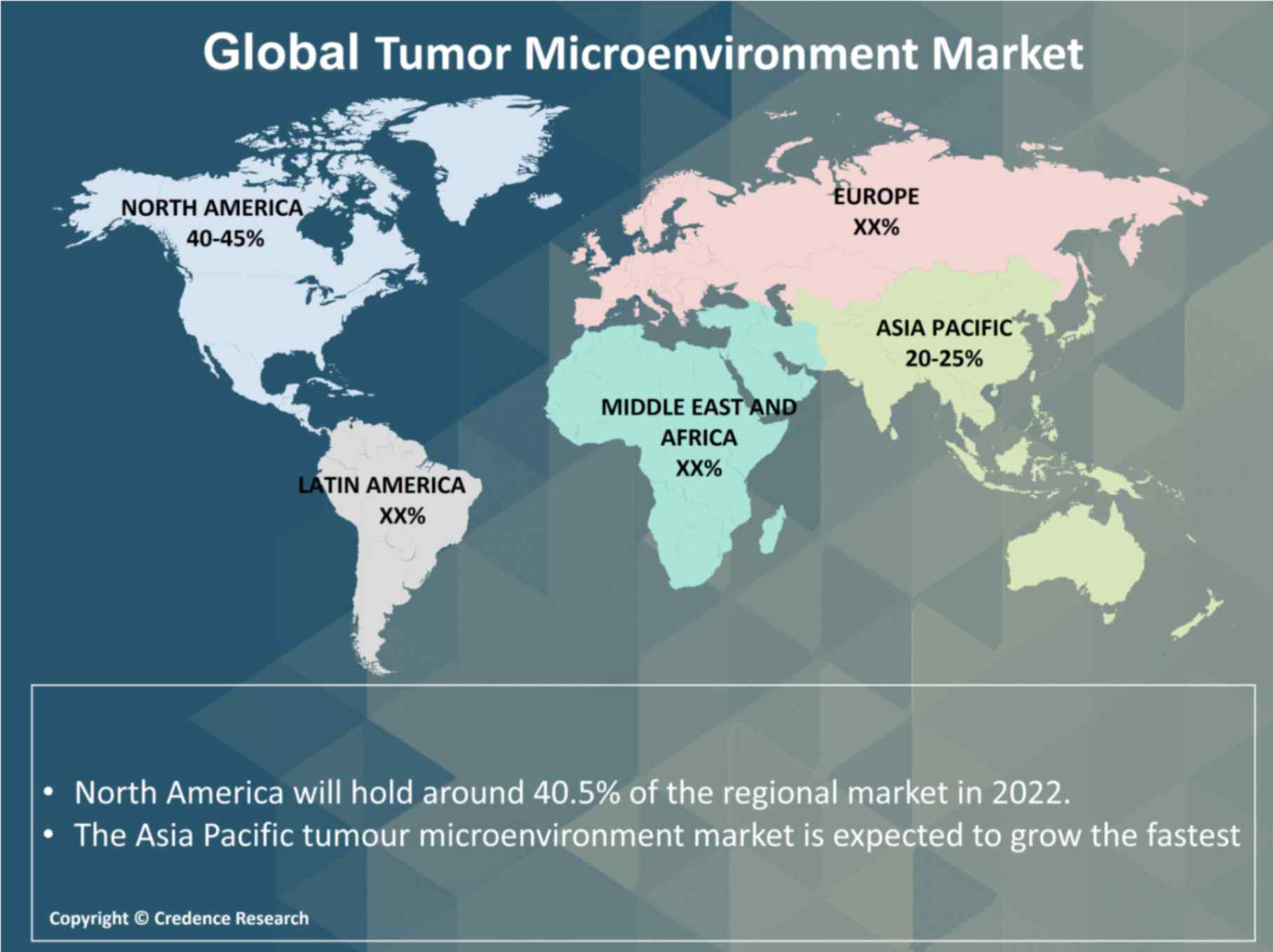
North America is expected to account for maximum share of the tumour microenvironment market share in 2023, making it the largest market during the forecast period. The presence of major pharmaceutical and biotech companies in North America, government funding for life science research, and the increased use of novel technologies are all factors contributing to the market's expansion.
Growth in the tumor microenvironment market is anticipated to be highest in Asia Pacific, with a compound annual growth rate (CAGR) of more than 16.2% throughout the projected period. A sizable patient base, expanding knowledge of cutting-edge diagnostic technologies, and an improved healthcare infrastructure are all factors contributing to the market's growth in Asia Pacific.
Key Highlights of the Report
The global Tumor Microenvironment Market is segmented by TME Components, Research and Diagnostics, Therapeutic Strategies, Cancer Types, Therapeutic Strategies, and region. Immunotherapy is a growing market category in the tumour microenvironment industry. Furthermore, hematological malignancies and solid tumours are two prominent market areas, and biotechnology and pharmaceutical companies dominate the tumour microenvironment industry. Further, two important subsets are stromal cells and immune cells, with North America leading the market growth.
Increasing desire for customized medicine in cancer therapy, advances in technology and imaging techniques for tumour analysis, and a greater emphasis on targeted medicines and immunotherapies. In addition, the high cost of tumour microenvironment studies, the scarcity of competent specialists in this specialized sector, and the stringent regulatory criteria for the development and licensing of new medicines are also obstacles.
Nonetheless, In 2023, North America is estimated to hold the largest share of the tumour microenvironment market. Furthermore, the tumour microenvironment market is expected to expand the fastest in Asia Pacific, with a compound annual growth rate (CAGR) of more than 16.2% throughout the forecast period.
What Are The Main Drivers Of The Global Tumor Microenvironment Market?
The market for tumor microenvironments is being driven by a number of important factors, including the growing need for personalized medicine in cancer treatment, which aims to individually customize treatments based on each patient's unique tumor microenvironment, resulting in more targeted and effective therapies. Additionally, technological and imaging advancements have greatly enhanced our understanding of the tumor microenvironment, enabling better visualization and characterization of surrounding cells, blood vessels, and immune cells, which provides important insights for cancer research.
What Are The Major Challenges Faced By The Global Tumor Microenvironment Market?
Although the market for tumor microenvironments is quite promising, there are several limitations to take into account. The high expense of tumor microenvironment studies is one of the main obstacles. Smaller research institutes and clinics may not be able to access this specialty due to the high cost of the tools, materials, and knowledge needed. Furthermore, there aren't many qualified experts in tumor microenvironment analysis in the field. Finding competent people in this particular profession is difficult since it demands a thorough understanding of both cancer biology and cutting-edge imaging tools. Finally, the research and approval of new medicines must adhere to strict regulatory standards. This may result in more expenses and delays when introducing novel therapies to the market.
What Are The Growth Opportunities In The Global Tumor Microenvironment Market?
The market for tumor microenvironments offers a number of fascinating chances for expansion and development. There is a great chance to gain a deeper comprehension of the tumor microenvironment due to the increasing global incidence of cancer. Understanding the intricate relationships that exist within the tumor microenvironment can help us create more potent treatments and enhance patient outcomes. Furthermore, partnerships and cooperation among academic institutions, business, and research centers might promote more study and advancement in this area. We can speed up the development of new methods and treatments by combining our resources and expertise.
Market Drivers
The global Tumor Microenvironment Market is driven by several factors. The following are the key drivers of the global Tumor Microenvironment Market:
RISING INCIDENCE OF CANCER
An estimated 19.3 million new cases of cancer were reported worldwide in 2020, according to an article released by the National Center for Biotechnology Information (NCBI), 2021. This can be linked to a number of things, including an aging population, shifting lifestyles, and more exposure to risk factors for cancer. It is anticipated that the growing incidence of cancer will stimulate study of the tumor microenvironment in order to comprehend the course of the disease and create more effective treatments and diagnostics. For example, with over 2.2 million new cases worldwide, breast cancer is currently the most frequent cancer, according to Globocan 2020 predictions. Because of this high occurrence, further research on the tumor microenvironment will be needed to create medicines specifically for breast cancer.
Market Restraints
The global Tumor Microenvironment Market faces some challenges that may hinder its growth. These include the following:
Tumor Microenvironment Heterogeneity And Complexity
The microenvironment of a tumor is incredibly dynamic and complicated, with interactions between many cell types and matrix elements. Furthermore, there is a great deal of heterogeneity within tumor sites, as well as between types of tumors and patients. The development of targeted medicines is hampered by this variability and complexity. Characterizing the complexities of TMEs requires extensive, longitudinal profiling.
Opportunities
The global Tumor Microenvironment Market offers significant growth opportunities. These include the following:
Therapeutic Treatments That Focus On The Tumor Microenvironment
To improve patient outcomes in cancer, concentrate on multi-targeted therapy and synergistic medication combinations. Combination therapy, such as PARP and PD-1 inhibitors, aim to target both the immune system and cancer cells. Creating conjugated hybrid biomolecules that target several disease factors in the TME is an additional strategy. Based on the examination of the tumor microenvironment, such logical combination regimens present a number of opportunities. High-dimensional investigation of tumor microenvironments employing radiomics, pathological pictures, multi-omics data, etc., is possible with AI and machine learning. AI is capable of recognizing new cooperative, spatial, morphometric, and functional characteristics. This may make it possible to precisely characterize the TME and forecast results. AI is being used by businesses like PathAI, QuPath, Paige, and others for tissue image analysis. Increased use of AI will improve our understanding of the tumor ecology.
As a result, increased research and development will accelerate market growth and provide lucrative market possibilities for industry participants. Increased public-private or private-private collaborations will also help the market thrive.
Competitive Landscape
Key Players
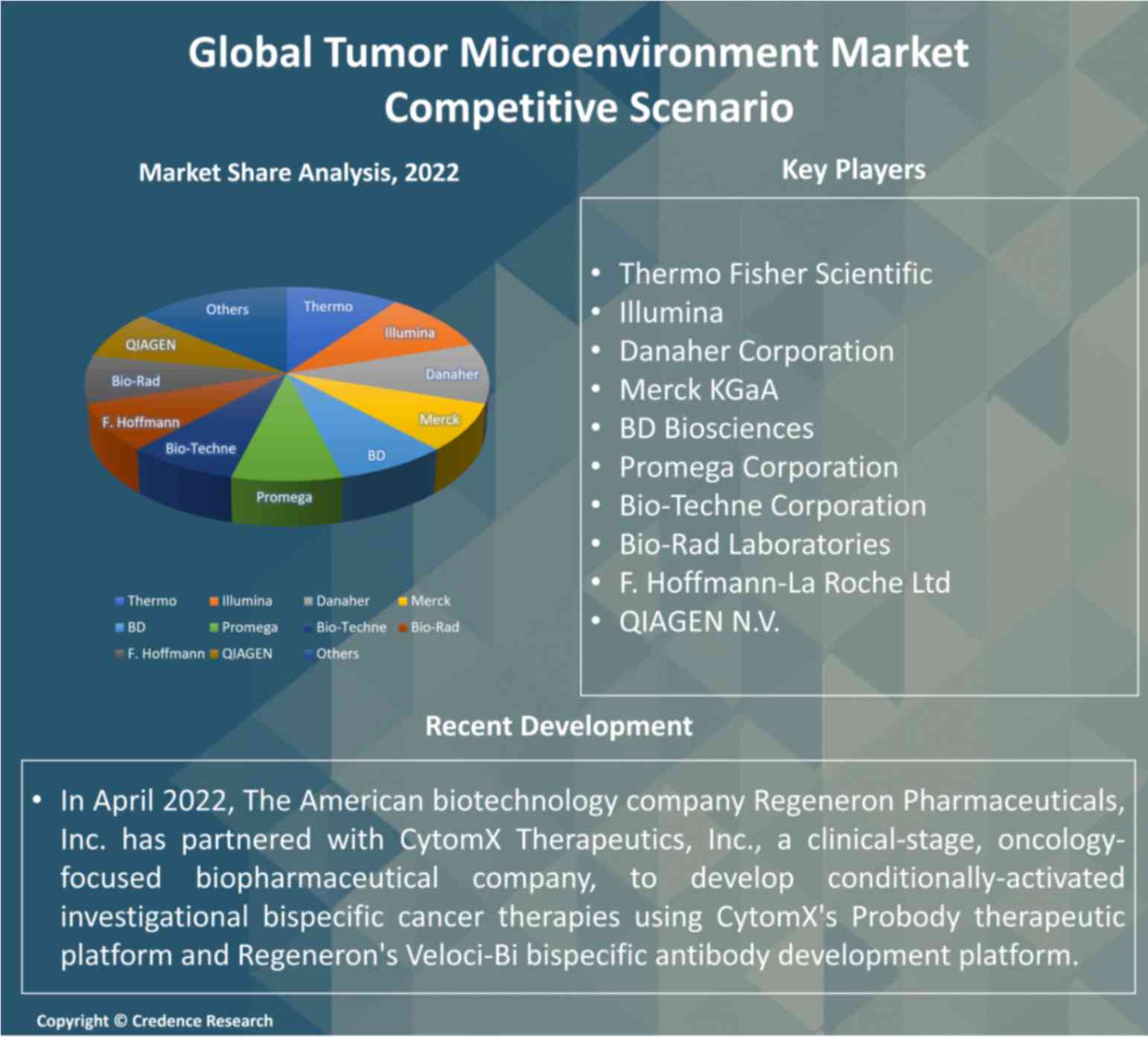
The global Tumor Microenvironment Market is highly competitive, with several key players. Some of the major players in the market and their market share are as follows:
- Thermo Fisher Scientific
- Illumina
- Danaher Corporation
- Merck KGaA
- BD Biosciences
- Promega Corporation
- Bio-Techne Corporation
- Bio-Rad Laboratories
- Hoffmann-La Roche Ltd
- QIAGEN N.V.
- Sartorius AG
- PerkinElmer
- Miltenyi Biotec
- Cell Signaling Technology
- BioLegend
- Abcam
- Takara Bio
- Fluidigm Corporation
- NanoString Technologies
- 10x Genomics
- Bethyl Laboratories
These organizations prioritize product innovation, distribution channel expansion, and mergers and acquisitions to stay competitive.
The global Tumor Microenvironment Market's key players continually seek to stay ahead by offering new products and developments.
In June 2023, The Japanese multinational pharmaceutical corporation Astellas Pharma Inc. and the country's largest real estate developer, Mitsui Fudosan Co., Ltd., jointly announced that Astellas had opened an open innovation hub called "TME imaging and interactive research for innovation (TME iLab)".
In September 2023, Biopharmaceutical company Coherus BioSciences, Inc. announced the completion of the previously disclosed acquisition of clinical-stage immuno-oncology (I-O) startup Surface Oncology, Inc. (Surface or Surface Oncology), which is creating next-generation immunotherapies that target the tumor microenvironment.
Summary of Key Findings
- Tumour microenvironment heterogeneity and complexity limit market expansion.
- Market segmented by TME Components, Research and Diagnostic, Therapeutic Strategies, Cencer Types, End-Users and region.
- The tumour microenvironment market is dominated by biotechnology and pharmaceutical companies.
- Immunotherapy is a market segment that drives demand in the tumour microenvironment industry.
- North America is leading market growth; the market is highly competitive with key players including Eurofins Scientific, Inc.; Sartorius AG; Merck KGaA; Thermo Fisher Scientific Inc.; Lonza; Thermo Fisher Scientific Inc.;
Future Outlook
- Increasing focus on personalized medicine
- Advancements in immunotherapy
- Growing adoption of combination therapies
- Rising investments in research and development
- Technological advancements in imaging techniques
- Development of novel biomarkers
- Expansion of pharmaceutical companies in this field
- Collaborations and partnerships for research and clinical trials
- Rising prevalence of cancer worldwide
- Increasing awareness about the importance of tumor microenvironment analysis.
How CXOs Can Benefit from the Credence Research Tumor Microenvironment Market Report
The Credence Research Tumor Microenvironment Market Report provides CXOs with a comprehensive overview of the market, including:
- Market size and growth forecast: The report provides detailed estimates of the global Tumor Microenvironment Market size, segmented by TME Components, Research and Diagnostic, Therapeutic Strategies, cencer Types, End-Users and region. It also includes forecasts for the market through 2032, based on key trends and drivers.
- Market segmentation: The report segments the Tumor Microenvironment Market by global Tumor Microenvironment market size, segmented by TME Components, Research and Diagnostic, Therapeutic Strategies, cencer Types, End-Users and region. This segmentation provides CXOs with a granular understanding of the market and the opportunities in each segment.
- Competitive landscape: The report profiles the key players in the Tumor Microenvironment Market and provides insights into their strategies, product offerings, and financial performance. This information can help CXOs to identify and assess their competition.
- Key trends and drivers: The report identifies and analyzes the key trends and drivers that are shaping the Tumor Microenvironment Market. This information can help CXOs to make informed decisions about their investments and strategies.
CXOs can use the insights from the Credence Research Tumor Microenvironment Market Report to:
- Identify growth opportunities: The report can help CXOs to identify new growth opportunities in the Tumor Microenvironment Market. For example, exploring emerging therapies or targeting specific components of the tumor microenvironment for drug development. This can lead to innovative approaches and potential breakthroughs in cancer treatment.
- Make informed investment decisions: The report can help CXOs to make informed investment decisions about Tumor Microenvironment. For example, CXOs can use the report to analyze market trends, assess the potential of different therapeutic approaches, and evaluate the competitive landscape.
- Develop competitive strategies: The report can help CXOs to develop competitive strategies for their Tumor Microenvironment businesses. For example, it could emphasize effective strategies utilized by industry leaders, such as innovative product development or targeted marketing initiatives.
- Track market developments: The report can help CXOs to track market developments and stay ahead of the curve. For example, it might provide real-time updates on emerging technologies, regulatory changes, or shifts in consumer preferences.
Overall, the Credence Research Tumor Microenvironment Market Report is a valuable resource for CXOs who are looking to gain a deeper understanding of the market and identify opportunities for growth.
Segmentation
- By TME Components:
- Immune Cells
- Stromal Cells
- Blood Vessels
- Extracellular Matrix (ECM)
- Cytokines and Chemokines
- Hypoxia
- By Research and Diagnostics:
- Immunohistochemistry (IHC)
- Flow Cytometry
- Genomic and Proteomic Profiling
- Imaging Techniques
- Liquid Biopsies
- By Therapeutic Strategies:
- Immunotherapy
- Anti-angiogenic Therapies
- Stromal-Targeting Therapies
- Hypoxia-Targeted Therapies
- Personalized Medicine
- By Cancer Types:
- Solid Tumors
- Hematological Malignancies
- By Therapeutic Strategies:
- Academic and Research Institutions
- Biotechnology and Pharmaceutical Companies
- Clinical Laboratories
- Hospitals and Clinics
- By Region
- North America
- U.S.
- Canada
- Mexico
- Europe
- Germany
- France
- U.K.
- Italy
- Spain
- Rest of Europe
- Asia Pacific
- China
- Japan
- India
- South Korea
- South-east Asia
- Rest of Asia Pacific
- Latin America
- Brazil
- Argentina
- Rest of Latin America
- Middle East & Africa
- GCC Countries
- South Africa
- Rest of Middle East and Africa
- North America

Request a Free Sample
Fill in your details and we'll send you a free sample report.
- Sample data tables & charts
- Research methodology
Market Dynamics
Rising Global Cancer Incidence
The increasing number of cancer cases worldwide is driving demand for advanced research and diagnostics focused on the tumor microenvironment, as understanding and targeting the TME is critical for developing effective cancer therapies.
Advancements in Immunotherapy and Personalized Medicine
Breakthroughs in immunotherapy and the growing adoption of personalized medicine are fueling market growth, as these approaches rely on detailed analysis of the tumor microenvironment to tailor treatments and improve patient outcomes.
Technological Innovations in Diagnostics and Profiling
Progress in genomic, proteomic, and imaging technologies enables more precise characterization of the tumor microenvironment, supporting the development of targeted therapies and enhancing research capabilities.
Increased R&D Investments and Collaborations
Rising investments from biotechnology and pharmaceutical companies, along with collaborations between industry and academic institutions, are accelerating innovation and expanding the pipeline of TME-targeted therapies and diagnostic tools.
Need a Custom Version of This Report?
Tailor the scope, geography, or segments to your exact requirements.
- Custom geography or segment scope
- Direct access to our analyst team
Frequently Asked Questions
What is the current size of the global Tumor Microenvironment Market?
What is the expected growth rate of the Tumor Microenvironment Market between 2023 and 2030?
Which segment is leading the market share in terms of TME Components?
Which Research and Diagnostics segment governs the demand for Tumor Microenvironments in the world?
Table of Content
Chapter 1 Market Segmentation
- 1.1 Segmentation Framework
- 1.1.1 Product and Service Classification
- 1.1.2 Application and End-Use Classification
- 1.1.3 Technology and Solution Classification
- 1.1.4 Customer and Distribution Channel Classification
- 1.1.5 Geographic Segmentation
- 1.1.6 Market Segment Definitions and Boundaries
- 1.2 By Cancer Types
- 1.2.1 Solid Tumors
- 1.2.2 Hematological Malignancies
- 1.3 By TME Components
- 1.3.1 Immune Cells
- 1.3.2 Stromal Cells
- 1.3.3 Blood Vessels
- 1.3.4 Extracellular Matrix (ECM)
- 1.3.5 Cytokines and Chemokines
- 1.3.6 Hypoxia
- 1.4 By Therapeutic Strategies
- 1.4.1 Immunotherapy
- 1.4.2 Anti-angiogenic Therapies
- 1.4.3 Stromal-Targeting Therapies
- 1.4.4 Hypoxia-Targeted Therapies
- 1.4.5 Personalized Medicine
- 1.5 By Research and Diagnostics
- 1.5.1 Immunohistochemistry (IHC)
- 1.5.2 Flow Cytometry
- 1.5.3 Genomic and Proteomic Profiling
- 1.5.4 Imaging Techniques
- 1.5.5 Liquid Biopsies
Chapter 2 Introduction
- 2.1 Report Objectives and Scope
- 2.2 Product Definition and Industry Terminology
- 2.3 Market Inclusions and Exclusions
- 2.4 Research Process
- 2.4.1 Primary Research and Expert Interviews
- 2.4.2 Secondary Research and Source Review
- 2.4.3 Top-Down and Bottom-Up Estimation
- 2.4.4 Data Triangulation and Verification
- 2.5 Market Size Measurement Basis
- 2.5.1 2022: USD 1547.5 Million → 2030: USD 3,970.55 Million
- 2.6 Historical and Forecast Reference Periods
- 2.6.1 Base Year: 2022
- 2.6.2 Forecast Period: 2022-2030
- 2.7 Research Assumptions and Limitations
Chapter 3 Executive Summary
- 3.1 Market Snapshot and Key Findings
- 3.2 Base-Year Market Size, 2022
- 3.3 Forecast Market Size, 2030
- 3.4 Revenue and Volume Growth Outlook
- 3.5 Key Demand and Supply Indicators
- 3.6 Leading Market Segments
- 3.7 Fastest-Growing Market Opportunities
- 3.8 Regional Performance Highlights
- 3.9 Technology and Industry Transformation
- 3.10 Competitive Landscape Summary
- 3.11 Analyst View and Strategic Implications
Chapter 4 Global Tumor Microenvironment Market Trends and Developments
- 4.1 Historical Industry Development
- 4.2 Recent Market Trends and Developments
- 4.3 Demand and Customer Behavior Trends
- 4.4 Technology and Product Innovation
- 4.5 Artificial Intelligence, Automation and Digitalization
- 4.6 Local Manufacturing and Supply Chain Realignment
- 4.7 Industry Partnerships, Mergers and Acquisitions
- 4.8 Sustainability and Circular Economy Developments
- 4.9 Government and Private Sector Investment Trends
- 4.10 Emerging Business Models and Commercialization
- 4.11 Industry Developments and Announcements
Chapter 5 Global Tumor Microenvironment Market Production, Supply and Demand Analysis
- 5.1 Demand Trend and Consumption Analysis
- 5.2 Demand Forecast, 2022-2030
- 5.3 Production and Output Trend
- 5.4 Production and Output Forecast, 2022-2030
- 5.5 Installed Capacity and Capacity Utilization
- 5.6 Company-Wise Production Plants and Statistics
- 5.6.1 Installed Production Capacity
- 5.6.2 Actual Production
- 5.6.3 Planned Capacity and Expansion Targets
- 5.7 Supply Chain Structure and Procurement Trends
- 5.8 Supply-Demand Gap and Bottlenecks
- 5.9 Import Dependence and Sourcing Structure
- 5.10 Contract Manufacturing and Outsourcing
- 5.11 Regional Supply and Demand Concentration
Chapter 6 Global Tumor Microenvironment Market Pricing Analysis
- 6.1 Pricing Structure and Measurement
- 6.2 Historical Pricing Trends
- 6.3 Pricing Outlook, 2022-2030
- 6.4 Average Selling Price and Unit Economics
- 6.5 Pricing by Product and Market Segment
- 6.6 Geographic Pricing Differences
- 6.7 Key Input, Energy, Labor and Logistics Costs
- 6.8 Contract Pricing and Purchasing Models
- 6.9 Pricing Sensitivity and Competitive Positioning
- 6.10 Price, Margin and Profitability Implications
Chapter 7 Global Tumor Microenvironment Market Dynamics
- 7.1 Market Growth Drivers
- 7.1.1 Demand-Side Drivers
- 7.1.2 Technology and Innovation Drivers
- 7.1.3 Infrastructure and Investment Drivers
- 7.1.4 Regulatory and Policy Drivers
- 7.2 Market Restraints
- 7.2.1 Cost and Affordability Constraints
- 7.2.2 Technology and Adoption Barriers
- 7.2.3 Supply Chain and Operational Constraints
- 7.3 Market Challenges
- 7.3.1 Competitive Pressure and Margin Erosion
- 7.3.2 Skills, Infrastructure and Implementation Gaps
- 7.4 Emerging Market Opportunities
- 7.5 Market Dynamics Impact and Time-Horizon Assessment
Chapter 8 Global Tumor Microenvironment Value Chain Analysis
- 8.1 Industry Value Chain Overview
- 8.2 Upstream Suppliers and Critical Inputs
- 8.3 Technology and Component Providers
- 8.4 Manufacturing or Service Delivery
- 8.5 Distribution, Channel Partners and Integrators
- 8.6 Downstream Applications and End Users
- 8.7 Value Addition and Profit Pools
- 8.8 Vertical Integration and Outsourcing
- 8.9 Supplier Concentration and Risk
- 8.10 Supply Chain Localization and Resilience
Chapter 9 Global Tumor Microenvironment Market Regulations and Policies
- 9.1 Relevant Laws, Standards and Compliance Frameworks
- 9.2 Product, Service, Safety and Quality Requirements
- 9.3 Government Policies, Incentives and Subsidies
- 9.4 Imports, Exports and Trade Barriers
- 9.5 Public Procurement and Local Content Requirements
- 9.6 Environmental and Sustainability Compliance
- 9.7 Upcoming Policy Changes and Market Implications
Chapter 10 Global Tumor Microenvironment Market Hotspots and Opportunities
- 10.1 Market Opportunity Mapping and Growth Hotspots
- 10.2 High-Growth Applications and Customer Groups
- 10.3 Underserved Markets and White-Space Opportunities
- 10.4 Emerging Technology and Product Opportunities
- 10.5 New Capacity and Investment Hotspots
- 10.6 Market Entry and Expansion Opportunities
- 10.7 Distribution and Partnership Opportunities
- 10.8 Near-Term and Long-Term Commercial Potential
- 10.9 Opportunity Attractiveness and Execution Risks
Chapter 11 Global Tumor Microenvironment Market Outlook, 2022-2030
- 11.1 Market Size and Analysis
- 11.1.1 Revenue (Market Measurement: 2022: USD 1547.5 Million → 2030: USD 3,970.55 Million)
- 11.1.2 Market Volume and Quantity Sold
- 11.1.3 Historical Market Size
- 11.1.4 Base-Year Market Size, 2022
- 11.2 Market Forecast, 2022-2030
- 11.2.1 Revenue Forecast to 2030
- 11.2.2 Volume Forecast to 2030
- 11.2.3 CAGR and Year-on-Year Growth
- 11.2.4 Incremental Revenue Opportunity
- 11.3 Forecast Assumptions and Scenario Analysis
- 11.3.1 Base-Case Forecast
- 11.3.2 Optimistic and Conservative Scenarios
- 11.3.3 Technology, Pricing and Policy Sensitivities
- 11.4 Market Attractiveness and Growth Outlook
Chapter 12 Global Tumor Microenvironment Market Segmentation and Outlook
- 12.1 Segmentation Summary and Market Shares, 2022
- 12.2 Largest and Fastest-Growing Segments
- 12.3 By Cancer Types - Market Size and Forecast, 2022-2030
- 12.3.1 Segment Definition and Scope
- 12.3.2 Historical Market Size
- 12.3.3 Revenue Forecast, 2022-2030
- 12.3.4 Volume Forecast, 2022-2030
- 12.3.5 Base-Year Market Share, 2022
- 12.3.6 Segment CAGR and Growth Drivers
- 12.3.7 Subsegment Market Size and Forecast
- 12.3.7.1 Solid Tumors
- 12.3.7.2 Hematological Malignancies
- 12.3.8 Subsegment Pricing and Adoption Trends
- 12.3.9 Leading Suppliers and Competition
- 12.3.10 Regional Demand and Opportunities
- 12.4 By TME Components - Market Size and Forecast, 2022-2030
- 12.4.1 Segment Definition and Scope
- 12.4.2 Historical Market Size
- 12.4.3 Revenue Forecast, 2022-2030
- 12.4.4 Volume Forecast, 2022-2030
- 12.4.5 Base-Year Market Share, 2022
- 12.4.6 Segment CAGR and Growth Drivers
- 12.4.7 Subsegment Market Size and Forecast
- 12.4.7.1 Immune Cells
- 12.4.7.2 Stromal Cells
- 12.4.7.3 Blood Vessels
- 12.4.7.4 Extracellular Matrix (ECM)
- 12.4.7.5 Cytokines and Chemokines
- 12.4.7.6 Hypoxia
- 12.4.8 Subsegment Pricing and Adoption Trends
- 12.4.9 Leading Suppliers and Competition
- 12.4.10 Regional Demand and Opportunities
- 12.5 By Therapeutic Strategies - Market Size and Forecast, 2022-2030
- 12.5.1 Segment Definition and Scope
- 12.5.2 Historical Market Size
- 12.5.3 Revenue Forecast, 2022-2030
- 12.5.4 Volume Forecast, 2022-2030
- 12.5.5 Base-Year Market Share, 2022
- 12.5.6 Segment CAGR and Growth Drivers
- 12.5.7 Subsegment Market Size and Forecast
- 12.5.7.1 Immunotherapy
- 12.5.7.2 Anti-angiogenic Therapies
- 12.5.7.3 Stromal-Targeting Therapies
- 12.5.7.4 Hypoxia-Targeted Therapies
- 12.5.7.5 Personalized Medicine
- 12.5.8 Subsegment Pricing and Adoption Trends
- 12.5.9 Leading Suppliers and Competition
- 12.5.10 Regional Demand and Opportunities
- 12.6 By Research and Diagnostics - Market Size and Forecast, 2022-2030
- 12.6.1 Segment Definition and Scope
- 12.6.2 Historical Market Size
- 12.6.3 Revenue Forecast, 2022-2030
- 12.6.4 Volume Forecast, 2022-2030
- 12.6.5 Base-Year Market Share, 2022
- 12.6.6 Segment CAGR and Growth Drivers
- 12.6.7 Subsegment Market Size and Forecast
- 12.6.7.1 Immunohistochemistry (IHC)
- 12.6.7.2 Flow Cytometry
- 12.6.7.3 Genomic and Proteomic Profiling
- 12.6.7.4 Imaging Techniques
- 12.6.7.5 Liquid Biopsies
- 12.6.8 Subsegment Pricing and Adoption Trends
- 12.6.9 Leading Suppliers and Competition
- 12.6.10 Regional Demand and Opportunities
- 12.7 Segment Growth Comparison
- 12.8 Segment Attractiveness and Priority Matrix
Chapter 13 Global Tumor Microenvironment Geographic Market Outlook, 2022-2030
- 13.1 Regional Market Size and Share, 2022
- 13.2 Regional Market Forecast, 2022-2030
- 13.3 Regional Pricing, Production and Demand Differences
- 13.4 North America
- 13.4.1 United States
- 13.4.2 Canada
- 13.4.3 Mexico
- 13.5 Europe
- 13.5.1 Germany
- 13.5.2 France
- 13.5.3 Italy
- 13.5.4 United Kingdom
- 13.5.5 Spain
- 13.5.6 Poland
- 13.5.7 Russia
- 13.5.8 Netherlands
- 13.5.9 Belgium
- 13.5.10 Sweden
- 13.5.11 Denmark
- 13.5.12 Norway
- 13.5.13 Rest of Europe
- 13.6 Asia Pacific
- 13.6.1 China
- 13.6.2 India
- 13.6.3 Japan
- 13.6.4 South Korea
- 13.6.5 Thailand
- 13.6.6 Indonesia
- 13.6.7 Vietnam
- 13.6.8 Malaysia
- 13.6.9 Australia
- 13.6.10 Rest of Asia Pacific
- 13.7 Latin America
- 13.7.1 Brazil
- 13.7.2 Argentina
- 13.7.3 Colombia
- 13.7.4 Chile
- 13.7.5 Rest of Latin America
- 13.8 Middle East
- 13.8.1 Saudi Arabia
- 13.8.2 United Arab Emirates
- 13.8.3 Turkey
- 13.8.4 Israel
- 13.8.5 Iran
- 13.8.6 Rest of the Middle East
- 13.9 Africa
- 13.9.1 South Africa
- 13.9.2 Egypt
- 13.9.3 Nigeria
- 13.9.4 Morocco
- 13.9.5 Rest of Africa
- 13.10 Regional Investment, Policy and Supply Chain Differences
- 13.11 Regional Competitive Landscape
- 13.12 Geographic Growth Hotspots
Chapter 14 Global Tumor Microenvironment Technology, Innovation and Sustainability Outlook
- 14.1 Technology Landscape and Maturity
- 14.2 Product, Process and Service Innovation
- 14.3 AI, Automation and Digital Tools in the Industry
- 14.4 Technology Adoption and Performance Benchmarking
- 14.5 Innovation Pipeline and R&D Investment
- 14.6 Patent and Intellectual Property Trends
- 14.7 Energy Efficiency and Resource Management
- 14.8 Sustainability, Recycling and Circularity
- 14.9 Technology Roadmap, 2022-2030
- 14.10 Risks of Obsolescence and Technology Substitution
Chapter 15 Global Tumor Microenvironment Market Key Strategic Imperatives
- 15.1 Growth and Market Entry Priorities
- 15.2 High-Return Products and Segments
- 15.3 Pricing, Profitability and Cost Optimization
- 15.4 Technology Investment and Product Differentiation
- 15.5 Supply Chain Localization and Resilience
- 15.6 Distribution and Customer Acquisition
- 15.7 Partnership, Acquisition and Capacity Strategy
- 15.8 Regional Expansion Priorities
- 15.9 Short-, Medium- and Long-Term Actions
Chapter 16 Competition Outlook
- 16.1 Industry Competition Characteristics
- 16.2 Market Structure and Concentration
- 16.3 Market Share and Competitive Positioning, 2022
- 16.4 Company-Wise Revenue and Product Benchmarking
- 16.5 Production and Service Capacity Benchmarking
- 16.6 Technology, Pricing and Differentiation
- 16.7 Regional Footprint and Distribution Strength
- 16.8 Mergers, Acquisitions and Strategic Alliances
- 16.9 New Entrants and Competitive Threats
- 16.10 Porter's Five Forces and Industry Attractiveness
- 16.11 Competitive Outlook, 2022-2030
Chapter 17 Company Profiles
- 17.1 Company Coverage and Selection Criteria
- 17.2 Thermo Fisher Scientific
- 17.2.1 Business Description
- 17.2.2 Company Ownership and Geographic Presence
- 17.2.3 Product and Service Portfolio
- 17.2.4 Manufacturing and Operating Footprint
- 17.2.5 Production Capacity and Expansion Plans
- 17.2.6 Financial Performance and Investment
- 17.2.7 Market Share and Competitive Position
- 17.2.8 Technology and Innovation Capabilities
- 17.2.9 Strategic Alliances or Partnerships
- 17.2.10 Recent Developments
- 17.2.11 Growth Strategy and Outlook
- 17.3 Illumina
- 17.4 Danaher Corporation
- 17.5 Merck KGaA
- 17.6 BD Biosciences
- 17.7 Bio-Rad Laboratories
- 17.8 Hoffmann-La Roche Ltd
- 17.9 QIAGEN N.V.
- 17.10 Sartorius AG
- 17.11 PerkinElmer
- 17.12 Other Relevant Market Participants
Note: Every listed company is profiled on the structure shown under the first company. The company list is preliminary and may change based on research findings, market developments, data availability and client requirements.
Chapter 18 Disclaimer
- 18.1 Research and Forecast Disclaimer
- 18.2 Data Source and Estimation Limitations
Note: The depth of individual sections depends on data availability for this market. Volume, capacity, trade and other unit-based metrics are included where applicable.