
Brands buy creator-shot ads through matching platforms
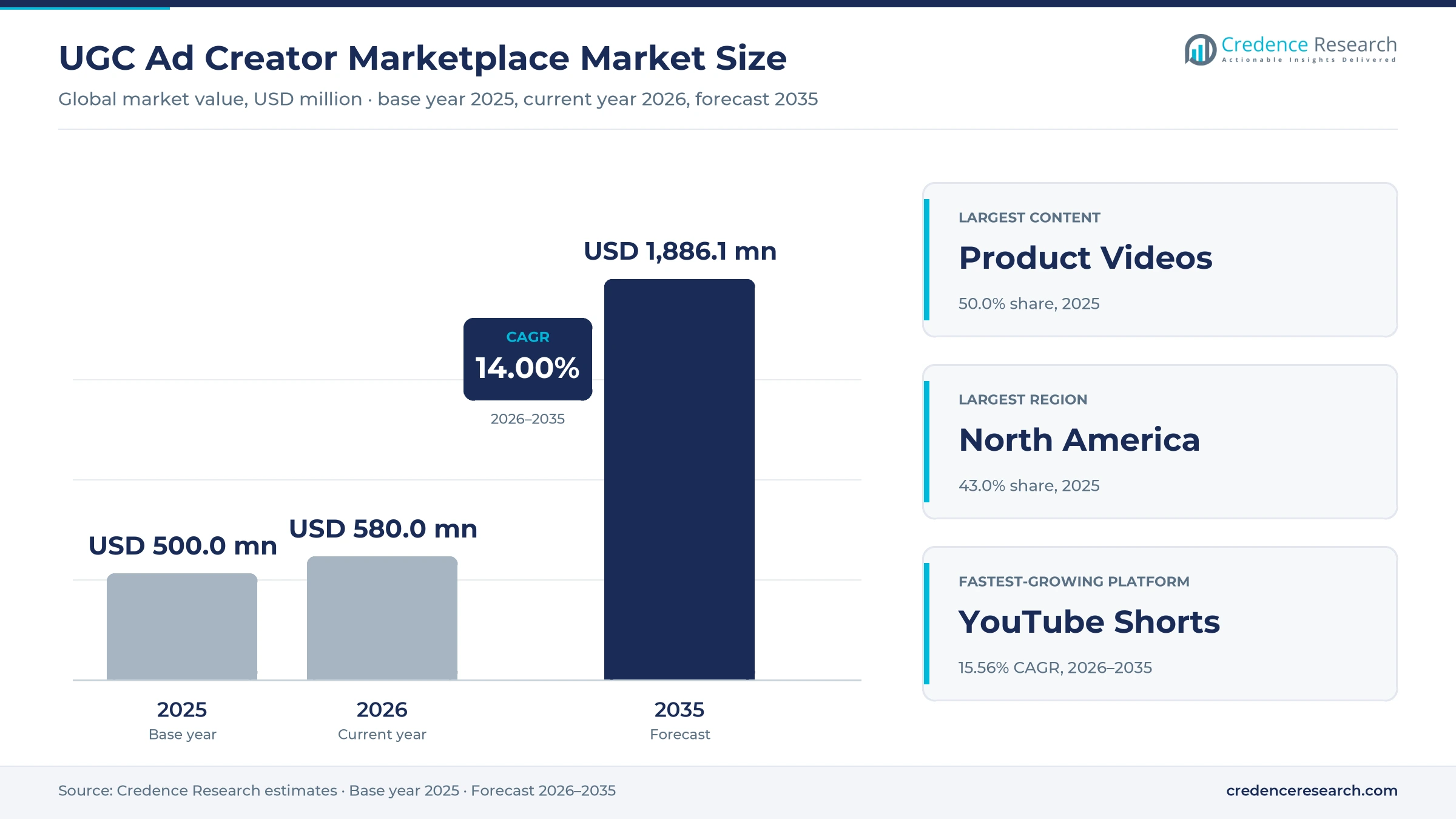
The global UGC ad creator marketplace market was valued at USD 500.0 million in 2025 and is projected to increase from USD 580.0 million in 2026 to USD 1.89 billion by 2035, registering a CAGR of 14.00% during 2026–2035. Demand comes from direct-to-consumer brands, app developers and agencies that need a steady flow of short, creator-shot videos for paid social campaigns, and that buy them through marketplaces which match briefs with vetted creators and license the footage. North America held the largest regional share, 43.0% in 2025, because performance advertisers there were the first to treat creator content as a core media buy. Latin America is the fastest-growing region at 15.16% a year, as in-app shopping reaches Brazil and Mexico and creates demand for product demos. On the commercial side, platforms now connect creator marketplaces directly to ad managers, and AI tools for editing, dubbing and avatars are cutting the time from brief to live ad.
What do UGC ad creator marketplaces sell, and to whom?
The market covers creator fees and platform margins for short videos that independent creators film to a brand brief and license for use in paid ads, bought through self-serve or managed marketplaces. Content includes product videos and demos, testimonials and reviews, and unboxing clips, delivered with raw and edited footage, hooks and aspect-ratio variants for TikTok, Meta and YouTube Shorts placements.
The scope excludes media spend used to run the ads, fees for sponsored posts published on a creator's own channel, and agency production outside a marketplace. The value chain runs from creators through vetting, matching, brief and rights-management software to brands and agencies, which then load the licensed videos into social ad managers.
UGC Ad Creator Marketplace Market Insights
- The market grows from USD 500.0 million in 2025 to USD 1.89 billion by 2035 at a 14.00% CAGR, as brands need far more ad variants than in-house teams can shoot.
- North America held 43.0% of 2025 value, supported by U.S. creator ad spend that IAB put at $37 billion for 2025.
- Product Videos led with 50.0% of 2025 value, as brands test many short demos to find a few winning ads.
- On Sept. 17, 2026, Meta launched its Creator Marketing Hub globally, adding Facebook creators to its Creator Marketplace API.
- Competition centers on creator pool size, turnaround and usage rights, with Insense listing more than 100,000 vetted creators in 35 countries.
Product videos lead while unboxing grows fastest
Why do product videos account for most UGC ad orders?
Based on content, the market is categorized into product videos, testimonials and unboxing. Product Videos led with 50.0% of 2025 value because performance teams test many demos to find a few winners, and an Agentio analysis of $130 million in Meta ad spend found a median creative hit rate of about 20%, according to Net Influencer in August 2026. Unboxing grows fastest at 15.13% a year, as in-app shopping spreads, and TikTok Shop opened in Japan on June 30, 2025, its 17th market, according to TechNode. Testimonials face tighter rules after the FTC review rule took effect in October 2024.
Which buyers spend the most on creator-shot ads?
Based on buyer, the market is categorized into DTC brands, apps and agencies. DTC Brands led with 55.0% of 2025 value because they buy video in volume to feed social ad accounts, and Billo, whose videos start at $99, says its creatives sit behind more than $269 million in ad spend. Agencies grow fastest at 14.78% a year, as agencies outsource production, and Insense says its managed services team delivered more than 20,000 creator assets for nearly 200 brands. App developers also buy, since Apple said in June 2025 that its App Store ecosystem handled about $1.3 trillion in 2024.
How do Meta, TikTok and YouTube Shorts split UGC ad demand?
Based on platform, the market is categorized into Meta, TikTok and YouTube Shorts. Meta led with 46.0% of 2025 value because most licensed creator ads run in Facebook and Instagram feeds, and a Meta white paper of October 2026 reported 45% lower median cost per incremental purchase across 20 EMEA lift studies, according to PPC Land. YouTube Shorts grows fastest at 15.56% a year, as YouTube chief executive Neal Mohan said in June 2025 that Shorts averaged about 200 billion daily views, up from 70 billion in March 2024, according to TheWrap.
| Segment Group | Leading Sub-segment | Share, 2025 | Fastest-growing Sub-segment | CAGR, 2026–2035 |
|---|---|---|---|---|
| By Content | Product Videos | 50.0% | Unboxing | 15.13% |
| By Buyer | DTC Brands | 55.0% | Agencies | 14.78% |
| By Platform | Meta | 46.0% | YouTube Shorts | 15.56% |
Request a Free Sample
Fill in your details and we'll send you a free sample report.
- Sample data tables & charts
- Research methodology
Ad volume needs, cheaper sourcing and AI editing lift demand
Brands need scalable creator-shot ad content
Brands need far more ad variants than in-house teams can film, because social ad systems reward fresh creative and punish fatigue. IAB projected U.S. creator economy ad spend at $37 billion for 2025, up 26% from $29.5 billion in 2024 and about four times faster than total media, and 48% of ad buyers called creators a must-buy. Winning Meta ads fatigue after about 36 days, with cost per acquisition rising an average of 1.8 times, according to an Agentio report covered by Net Influencer in August 2026. As a result, brands order videos in batches rather than as single shoots. In the Credence Research model this adds about 5.6 percentage points to annual growth to 2035.
Marketplace matching lowers campaign sourcing costs
Finding and contracting the right creators is slow and costly, so marketplaces that pre-vet talent and let creators apply to briefs remove most of that work. About one-third of brands cite identifying the right creators as their biggest hurdle, according to IAB in November 2025. Insense lists more than 100,000 vetted UGC creators from more than 35 countries, with licensed raw and edited footage within 14 days. JoinBrands counted more than 150,000 creators and over 500 applications a day when it expanded to the U.K., Canada and Australia in August 2024. In the Credence Research model this adds about 3.9 percentage points to annual growth to 2035.
AI-assisted editing speeds production and iteration
AI editing tools cut the time between raw footage and a set of test-ready ad variants, so each creator video can yield more hooks, crops and languages. IAB found that nearly three in four creator ad buyers use or plan to use AI, and 49% of current users apply it to content editing. Meta released its Edits video app globally on April 22, 2025, with automatic captions and green screen, according to Nairametrics. TikTok added Image to Video and Text to Video tools to Symphony Creative Studio in June 2025, according to iPhone in Canada. Billo also sells a CreativeOps tool from $149 a month. In the Credence Research model this adds about 2.5 percentage points to annual growth to 2035.
Platform APIs link marketplaces to ad managers
Direct links between creator marketplaces and platform ad tools make licensed content easier to launch and measure, which raises the value of each order. Meta added Facebook creators to its Creator Marketplace API and extended its Content Discovery API when it launched the Creator Marketing Hub globally in September 2026, according to Marketing Dive. #paid announced a creator discovery integration with Snapchat on Jan. 28, 2025, citing Spotlight's more than 500 million monthly active users. Insense lists Meta Business Partner and TikTok Marketing Partner status, which links its creator pool to both ad systems. In turn, marketplaces that plug into these tools gain share among buyers who use influencer marketing platforms for discovery.
Partnership ads, AI avatars and shop launches reshape demand
Shift from licensed clips toward partnership ads
Advertisers are shifting from running licensed clips on their own handles toward partnership ads that run under the creator's name, which changes what marketplaces must deliver. Across $130 million of spend on 65,000 ads from 137 brands, partnership ads delivered 19% higher click-through and 5% lower cost per acquisition than licensed UGC, according to Agentio in August 2026. Meta's October 2026 white paper put the planning threshold at 30% of assets as partnership ads, according to PPC Land. Meta also made partnership ads manageable through its Ads MCP connector in September 2026. As a result, marketplaces now bundle handle access and usage rights with every video order.
Rise of AI avatars and generated presenters
AI presenters are emerging alongside human creators, which adds a cheaper option for translation and simple product explainers. TikTok launched Symphony Digital Avatars and AI Dubbing on June 17, 2024, with stock avatars in more than 30 languages built from paid actors licensed for commercial use. TikTok said in June 2025 that AI dubbing covered more than 15 languages, according to iPhone in Canada. However, 95% of advertisers have concerns about AI in creator marketing, according to IAB in November 2025. In turn, marketplaces position human creators for testimonials and unboxing, and AI tools for localized variants of proven ads.
Shopping rollouts open demand for unboxing video
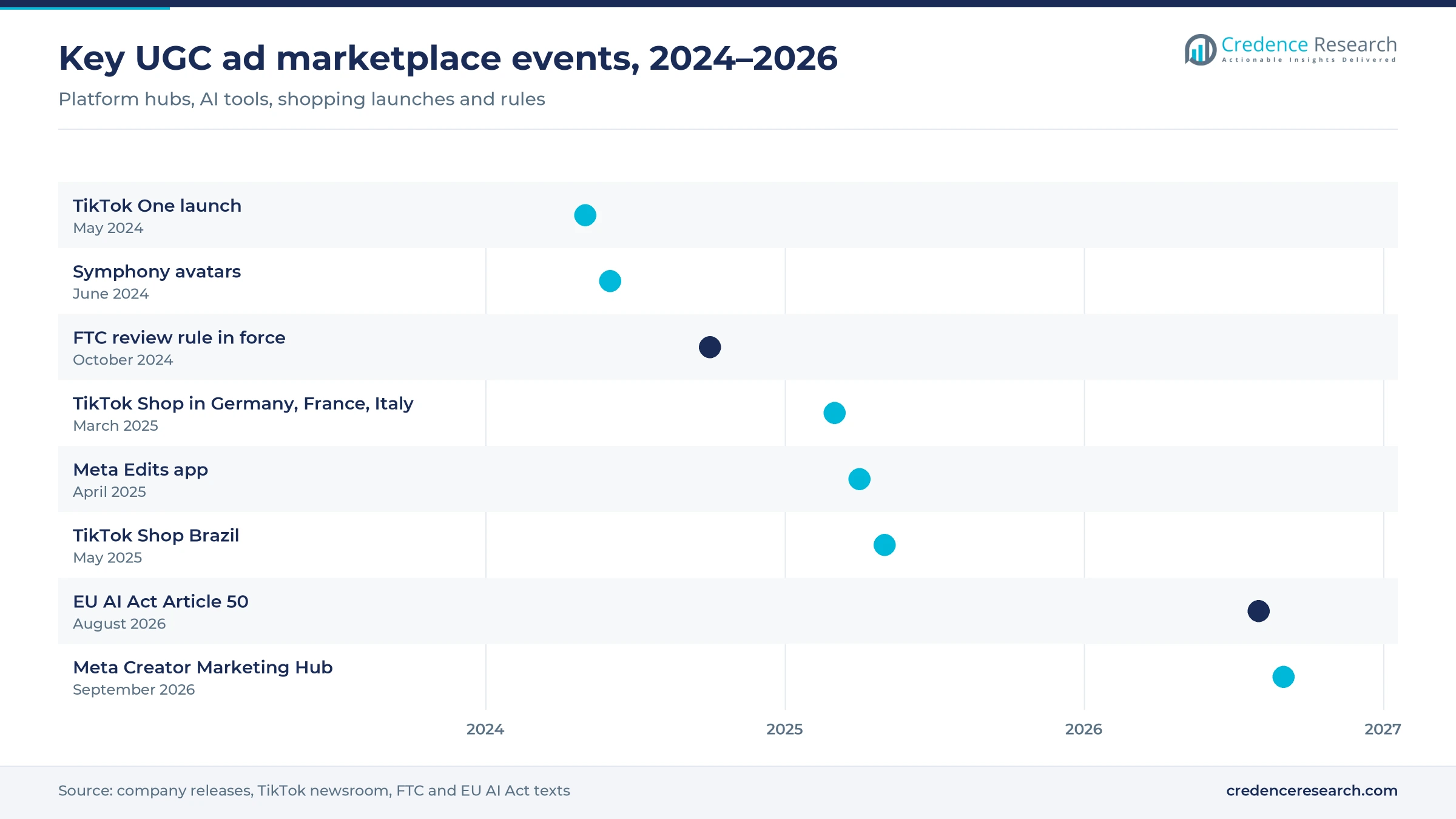
In-app shopping launches create a clear opening for unboxing and demo videos, because product listings on TikTok Shop need short clips that show the item in use. TikTok Shop opened in Germany, France and Italy on March 31, 2025, according to Spielwarenmesse, then launched in Brazil on May 8, 2025, according to the TikTok newsroom. It reached Japan on June 30, 2025, its 17th market, where TikTok has more than 20 million users, according to TechNode. Each launch brings new sellers that lack in-house video and photo teams. As a result, unboxing grows at 15.13% a year, the fastest content segment to 2035.
YouTube Shorts and app advertisers open new budgets
YouTube Shorts and app install campaigns offer an opening beyond Meta and TikTok, because both need vertical creator video at scale. Shorts averaged about 200 billion daily views in June 2025, according to TheWrap, and the format sits inside the wider short-video platforms landscape. #paid named YouTube title partner of its 2025 Creator Marketing Summit on Oct. 20, 2025, according to Mediabistro. YouTube Creator Partnerships boosts ran about 30% lower CPMs than Meta partnership ads for the same creative, according to Agentio. As a result, YouTube Shorts grows at 15.56% a year, the fastest platform segment.
Review rules, AI labels and ad fatigue raise campaign costs
FTC review rule raises testimonial compliance costs
U.S. rules on reviews now reach paid testimonial videos, which raises compliance work for marketplaces. The FTC rule on consumer reviews and testimonials took effect on Oct. 21, 2024, banning fake or misrepresented testimonials and fake social indicators, with civil penalties of up to $51,744 per violation. In turn, brands must confirm that creators used the product and disclose the paid relationship. Marketplaces respond with product seeding, usage checks and disclosure prompts inside briefs.
EU AI labeling rules add work for edited ads
European transparency rules add a labeling step for AI-altered creator ads, which affects avatar and dubbing work. Article 50 of the EU AI Act applies from Aug. 2, 2026, and deployers of deepfakes must disclose that image, audio or video content was artificially generated or manipulated. Disclosure must come at the latest when a viewer first sees the content. As a result, marketplaces selling dubbed or avatar variants into Europe add labels and keep records of which tools altered each video.
TikTok ownership change adds U.S. planning risk
Ownership changes at TikTok's U.S. business have made some brands cautious about committing creative budgets to one app. ByteDance kept a 19.9% stake in the new TikTok USDS Joint Venture, with Oracle, Silver Lake and MGX at 15% each, according to Engadget in January 2026. The venture said it would retrain the recommendation algorithm on U.S. user data. As a result, buyers spread UGC orders across Meta and YouTube Shorts, which limits growth in TikTok-only briefs.
Price pressure narrows marketplace margins
Entry prices for a single UGC video have fallen, which squeezes margins for marketplaces and creators. soona said on April 28, 2026, that single videos on soona UGC start at $89, compared with $110 in an earlier Trend offer, and Billo videos start at $99. In turn, marketplaces with thin service layers compete mainly on price. Platforms respond with subscription tools, managed services from $2,000 a month at Billo and data on which hooks perform.
North America leads as Latin America grows fastest
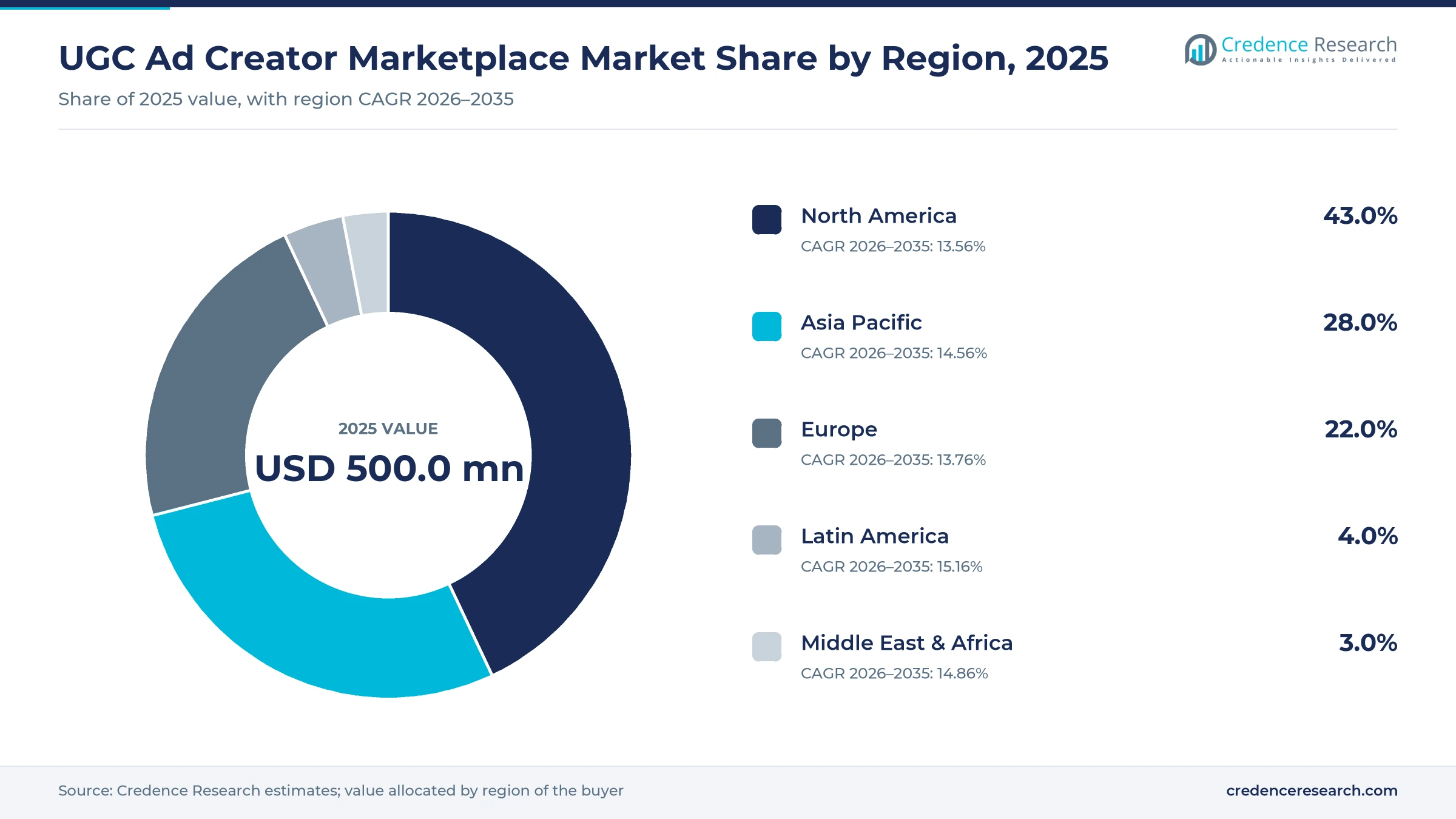
| Region | Value, 2025 (USD million) | Share, 2025 | CAGR, 2026–2035 |
|---|---|---|---|
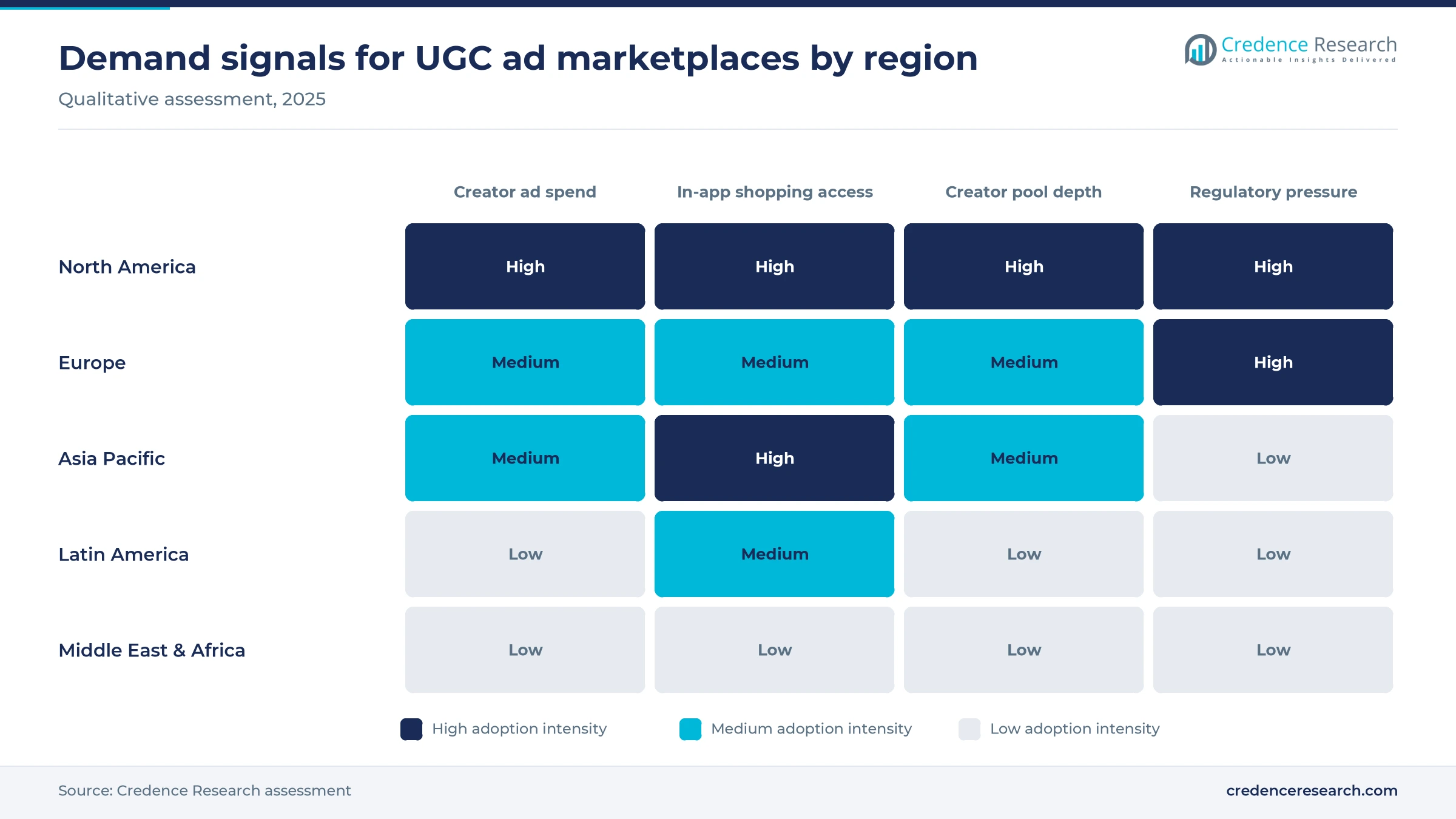
| North America | 215.0 | 43.0% | 13.56% |
| Asia Pacific | 140.0 | 28.0% | 14.56% |
| Europe | 110.0 | 22.0% | 13.76% |
| Latin America | 20.0 | 4.0% | 15.16% |
| Middle East & Africa | 15.0 | 3.0% | 14.86% |
North America leads on creator ad spending
North America held 43.0% of 2025 value and grows at 13.56% a year, because U.S. brands treat creator content as a core media line. IAB put U.S. creator ad spend at $37 billion for 2025, and its projection of $44 billion for 2026 was cited by PPC Land in October 2026. Most UGC marketplaces, including Billo, JoinBrands and #paid, built their creator pools in the U.S. and Canada first, close to the largest digital video advertising buyers. However, the FTC review rule and TikTok ownership change add compliance and planning work.
Asia Pacific grows on shopping launches and scale
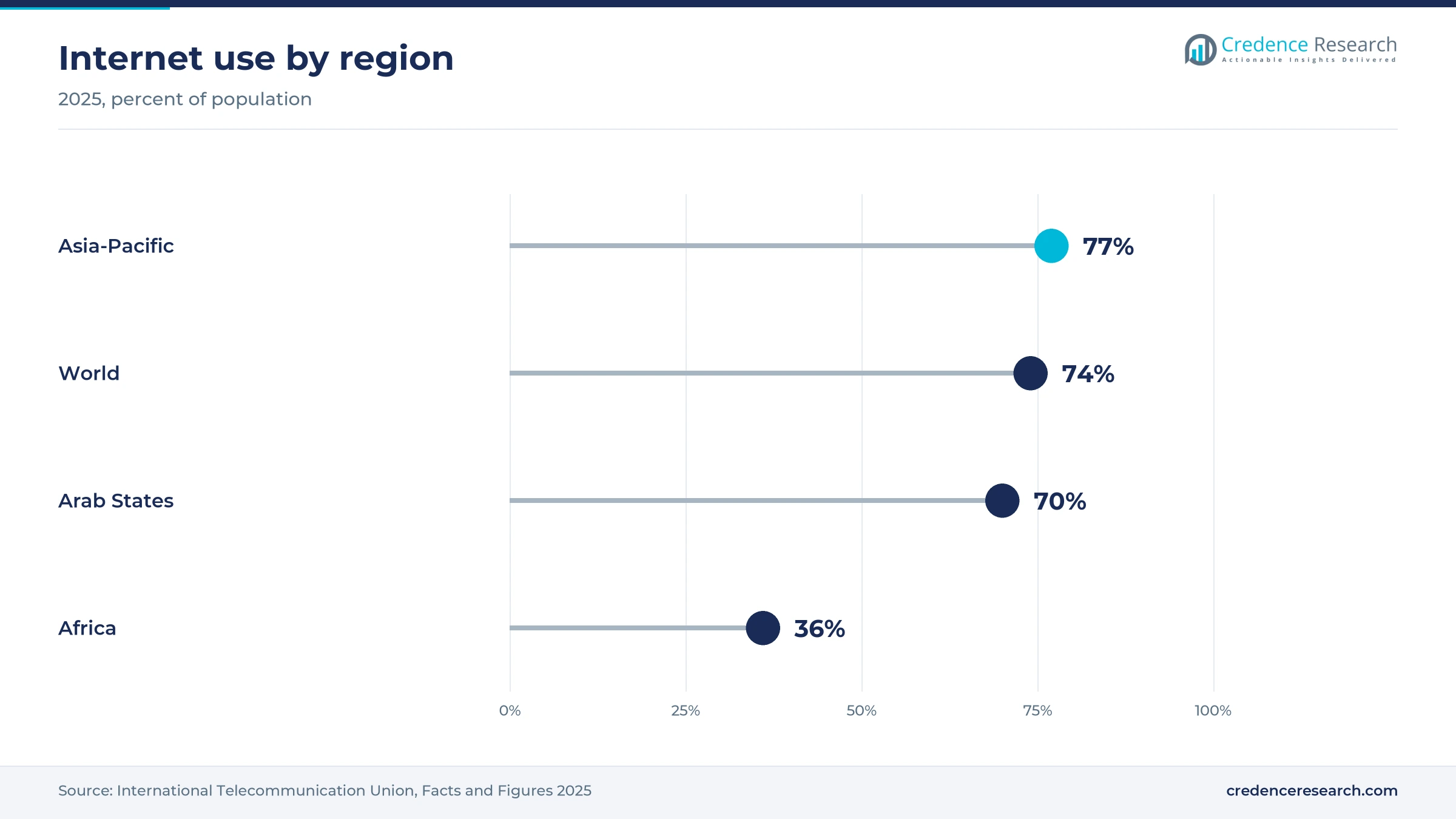
Asia Pacific held 28.0% of 2025 value and grows at 14.56% a year, as in-app shopping and large mobile audiences raise demand for product demos. ITU put internet use in Asia-Pacific at 77% in 2025, above the world average of 74%. TikTok Shop launched in Japan on June 30, 2025, where TikTok has more than 20 million users. JoinBrands also added Australia to its creator network in August 2024, which widened English-language supply.
Europe grows on partnership ads and new shops
Europe held 22.0% of 2025 value and grows at 13.76% a year, supported by U.K., German and French brands that buy creator ads for Meta and TikTok. TikTok Shop opened in Germany, France and Italy on March 31, 2025. Meta's October 2026 white paper drew on 20 conversion lift studies from EMEA advertisers. However, Article 50 of the EU AI Act, in force from August 2026, adds labeling work for AI-dubbed or avatar ads.
Latin America is the fastest-growing region
Latin America held 4.0% of 2025 value and grows fastest at 15.16% a year, as in-app shopping reaches the region. TikTok Shop launched in Brazil on May 8, 2025, with video and live shopping and an affiliate program for creators, according to the TikTok newsroom. Local sellers that lack in-house video teams therefore turn to marketplaces for product demos and unboxing clips. Spanish and Portuguese creator pools remain small, which leaves room for new entrants.
Middle East & Africa gains from mobile video reach
Middle East & Africa held 3.0% of 2025 value and grows at 14.86% a year, from a small base of brand buyers. ITU put internet use at 70% in the Arab States in 2025 but only 36% in Africa, which limits reach outside the Gulf and a few large African markets. Gulf retail, beauty and app brands therefore lead regional demand. AI dubbing in more than 15 languages also helps brands adapt proven English ads for Arabic-speaking audiences.
Platform hubs, AI suites and rebrands in 2024–2026
| Development | Status and market relevance |
|---|---|
| In May 2024, TikTok folded its Creator Marketplace into TikTok One, a hub reaching nearly two million creators. | Announced May 23, 2024; central brand-creator matching tool on TikTok |
| In June 2024, TikTok launched Symphony Digital Avatars and AI Dubbing for brands, creators and agencies. | Launched June 17, 2024; stock avatars in more than 30 languages |
| In January 2025, #paid expanded its Snapchat partnership with a creator discovery integration in North America. | Announced Jan. 28, 2025; beta with full insights integration by March 2025 |
| In April 2026, soona rebranded Trend.io as soona UGC and dropped credit packages for per-video pricing from $89. | Announced April 28, 2026; beta opened April 30, 2026 |
| In September 2026, Meta launched its Creator Marketing Hub globally and added Facebook creators to its Creator Marketplace API. | Announced Sept. 17, 2026; rollout continues through 2026 |
Matching engines, rights tools and AI editing
- Matching engines let creators apply to brand briefs, so Insense and JoinBrands fill campaigns from pools of more than 100,000 creators without manual outreach or talent agents.
- Rights and handle access tools record usage terms and grant ad permissions, which partnership ads on Meta and TikTok require before a brand can run a video under the creator's handle.
- AI editing suites turn one shoot into many hooks, captions and crops, as in Meta Edits and TikTok Symphony Creative Studio, which also add captions, dubbing and AI-generated backgrounds.
- Creative analytics score hooks and formats against past results, as Billo does with patterns from more than 326,000 ads, so buyers can brief creators on the openings most likely to hold attention.
Need a Custom Version of This Report?
Tailor the scope, geography, or segments to your exact requirements.
- Custom geography or segment scope
- Direct access to our analyst team
Marketplaces compete on creator pools, speed and rights
Competition centers on creator pool size, turnaround time, usage rights and links to platform ad tools. Billo competes with self-serve video orders from $99, creative analytics and a managed service for larger accounts. Insense combines a pool of more than 100,000 vetted creators with Meta and TikTok partner status and delivery within 14 days. #paid focuses on managed campaigns for large brands and has partnerships with Snapchat and YouTube. JoinBrands runs a marketplace with more than 150,000 creators across the U.S., the U.K., Canada and Australia. Trend.io, now soona UGC, sells per-video content with perpetual usage rights. Platform-owned hubs such as TikTok One and the Meta Creator Marketing Hub also compete for discovery, alongside broader influencer marketing agencies, so service depth and data have become key differentiators.
Companies profiled and their roles in this market
| Company | Type | Role in the market |
|---|---|---|
| Billo | Self-serve marketplace | UGC video orders from $99 with CreativeOps analytics and managed service |
| Insense | Creator marketplace | More than 100,000 vetted creators in 35+ countries; Meta and TikTok partner |
| #paid | Managed creator platform | Campaigns for large brands; Snapchat and YouTube partnerships |
| JoinBrands | Creator marketplace | More than 150,000 creators in the U.S., U.K., Canada and Australia |
| Trend.io (soona UGC) | UGC content platform | Per-video content from $89 with perpetual usage rights |
Growth depends on volume of tested ads, not single hits
Credence Research's view is that the UGC ad creator marketplace market will grow near its forecast pace only if marketplaces help brands test many ads, not just source single hits. Winning creator ads fatigue after about five weeks, so steady volume matters more than one viral clip. Rules are tightening as well, with the FTC review rule in force since October 2024 and EU AI labeling from August 2026. Marketplaces that combine large vetted creator pools, clear rights, partnership ad access and AI editing will hold share by 2035.
Model built from platform, regulator and trade data
The report uses 2025 as the base year and forecasts to 2035. Market values come from the Credence Research model, which combines marketplace disclosures on creator pools, prices and payouts with platform announcements from Meta, TikTok and YouTube, industry association data on creator ad spend, official internet use statistics from the International Telecommunication Union and rules from U.S. and EU authorities. Regional, content, buyer and platform splits are Credence Research estimates based on ad spend by region, shopping availability and published campaign mix. No interviews or surveys were used for this edition of the report.
Shopping video and AI editing carry growth to 2035
The market is projected to reach USD 1.89 billion by 2035, growing at a 14.00% CAGR from USD 580.0 million in 2026. Product videos will remain the largest content type, while unboxing gains as TikTok Shop and other in-app stores spread to new countries. North America will stay the largest region, and Latin America will grow fastest from a small base. Partnership ads and AI editing will shape what marketplaces sell, while review and AI labeling rules raise the value of verified creators and clear usage rights.
Frequently Asked Questions
How big is the UGC ad creator marketplace market?
Which region leads the market?
Which region grows fastest?
Which content type leads UGC ad orders?
Why is YouTube Shorts the fastest-growing platform?
How do FTC rules affect UGC testimonials?
What is the difference between licensed UGC and partnership ads?
Who are the main companies in the UGC ad creator marketplace market?
Table of Content
Chapter 1 Market Segmentation
- 1.1 Segmentation Framework
- 1.1.1 Product and Service Classification
- 1.1.2 Application and End-Use Classification
- 1.1.3 Technology and Solution Classification
- 1.1.4 Customer and Distribution Channel Classification
- 1.1.5 Geographic Segmentation
- 1.1.6 Market Segment Definitions and Boundaries
- 1.2 By Content
- 1.2.1 Product Videos
- 1.2.2 Testimonials
- 1.2.3 Unboxing
- 1.3 By Buyer
- 1.3.1 DTC Brands
- 1.3.2 Apps
- 1.3.3 Agencies
- 1.4 By Platform
- 1.4.1 Meta
- 1.4.2 TikTok
- 1.4.3 YouTube Shorts
Chapter 2 Introduction
- 2.1 Report Objectives and Scope
- 2.2 Product Definition and Industry Terminology
- 2.3 Market Inclusions and Exclusions
- 2.4 Research Process
- 2.4.1 Primary Research and Expert Interviews
- 2.4.2 Secondary Research and Source Review
- 2.4.3 Top-Down and Bottom-Up Estimation
- 2.4.4 Data Triangulation and Verification
- 2.5 Market Size Measurement Basis
- 2.5.1 2025: USD 500.0 million → 2035: USD 1.89 billion
- 2.6 Historical and Forecast Reference Periods
- 2.6.1 Historical Period: 2018-2025
- 2.6.2 Base Year: 2025
- 2.6.3 Forecast Period: 2025-2035
- 2.7 Research Assumptions and Limitations
Chapter 3 Executive Summary
- 3.1 Market Snapshot and Key Findings
- 3.2 Base-Year Market Size, 2025
- 3.3 Forecast Market Size, 2035
- 3.4 Revenue and Volume Growth Outlook
- 3.5 Key Demand and Supply Indicators
- 3.6 Leading Market Segments
- 3.7 Fastest-Growing Market Opportunities
- 3.8 Regional Performance Highlights
- 3.9 Technology and Industry Transformation
- 3.10 Competitive Landscape Summary
- 3.11 Analyst View and Strategic Implications
Chapter 4 Global UGC Ad Creator Marketplace Market Trends and Developments
- 4.1 Historical Industry Development, 2018-2025
- 4.2 Recent Market Trends and Developments
- 4.3 Demand and Customer Behavior Trends
- 4.4 Technology and Product Innovation
- 4.5 Artificial Intelligence, Automation and Digitalization
- 4.6 Local Manufacturing and Supply Chain Realignment
- 4.7 Industry Partnerships, Mergers and Acquisitions
- 4.8 Sustainability and Circular Economy Developments
- 4.9 Government and Private Sector Investment Trends
- 4.10 Emerging Business Models and Commercialization
- 4.11 Industry Developments and Announcements
Chapter 5 Global UGC Ad Creator Marketplace Market Production, Supply and Demand Analysis
- 5.1 Demand Trend and Consumption Analysis, 2018-2025
- 5.2 Demand Forecast, 2025-2035
- 5.3 Production and Output Trend, 2018-2025
- 5.4 Production and Output Forecast, 2025-2035
- 5.5 Installed Capacity and Capacity Utilization
- 5.6 Company-Wise Production Plants and Statistics
- 5.6.1 Installed Production Capacity
- 5.6.2 Actual Production
- 5.6.3 Planned Capacity and Expansion Targets
- 5.7 Supply Chain Structure and Procurement Trends
- 5.8 Supply-Demand Gap and Bottlenecks
- 5.9 Import Dependence and Sourcing Structure
- 5.10 Contract Manufacturing and Outsourcing
- 5.11 Regional Supply and Demand Concentration
Chapter 6 Global UGC Ad Creator Marketplace Market Pricing Analysis
- 6.1 Pricing Structure and Measurement
- 6.2 Historical Pricing Trends, 2018-2025
- 6.3 Pricing Outlook, 2025-2035
- 6.4 Average Selling Price and Unit Economics
- 6.5 Pricing by Product and Market Segment
- 6.6 Geographic Pricing Differences
- 6.7 Key Input, Energy, Labor and Logistics Costs
- 6.8 Contract Pricing and Purchasing Models
- 6.9 Pricing Sensitivity and Competitive Positioning
- 6.10 Price, Margin and Profitability Implications
Chapter 7 Global UGC Ad Creator Marketplace Market Dynamics
- 7.1 Market Growth Drivers
- 7.1.1 Demand-Side Drivers
- 7.1.2 Technology and Innovation Drivers
- 7.1.3 Infrastructure and Investment Drivers
- 7.1.4 Regulatory and Policy Drivers
- 7.2 Market Restraints
- 7.2.1 Cost and Affordability Constraints
- 7.2.2 Technology and Adoption Barriers
- 7.2.3 Supply Chain and Operational Constraints
- 7.3 Market Challenges
- 7.3.1 Competitive Pressure and Margin Erosion
- 7.3.2 Skills, Infrastructure and Implementation Gaps
- 7.4 Emerging Market Opportunities
- 7.5 Market Dynamics Impact and Time-Horizon Assessment
Chapter 8 Global UGC Ad Creator Marketplace Value Chain Analysis
- 8.1 Industry Value Chain Overview
- 8.2 Upstream Suppliers and Critical Inputs
- 8.3 Technology and Component Providers
- 8.4 Manufacturing or Service Delivery
- 8.5 Distribution, Channel Partners and Integrators
- 8.6 Downstream Applications and End Users
- 8.7 Value Addition and Profit Pools
- 8.8 Vertical Integration and Outsourcing
- 8.9 Supplier Concentration and Risk
- 8.10 Supply Chain Localization and Resilience
Chapter 9 Global UGC Ad Creator Marketplace Market Regulations and Policies
- 9.1 Relevant Laws, Standards and Compliance Frameworks
- 9.2 Product, Service, Safety and Quality Requirements
- 9.3 Government Policies, Incentives and Subsidies
- 9.4 Imports, Exports and Trade Barriers
- 9.5 Public Procurement and Local Content Requirements
- 9.6 Environmental and Sustainability Compliance
- 9.7 Data Protection, AI and Cybersecurity Compliance
- 9.8 Upcoming Policy Changes and Market Implications
Chapter 10 Global UGC Ad Creator Marketplace Market Hotspots and Opportunities
- 10.1 Market Opportunity Mapping and Growth Hotspots
- 10.2 High-Growth Applications and Customer Groups
- 10.3 Underserved Markets and White-Space Opportunities
- 10.4 Emerging Technology and Product Opportunities
- 10.5 New Capacity and Investment Hotspots
- 10.6 Market Entry and Expansion Opportunities
- 10.7 Distribution and Partnership Opportunities
- 10.8 Near-Term and Long-Term Commercial Potential
- 10.9 Opportunity Attractiveness and Execution Risks
Chapter 11 Global UGC Ad Creator Marketplace Market Outlook, 2025-2035
- 11.1 Market Size and Analysis
- 11.1.1 Revenue (Market Measurement: 2025: USD 500.0 million → 2035: USD 1.89 billion)
- 11.1.2 Market Volume and Quantity Sold
- 11.1.3 Historical Market Size, 2018-2025
- 11.1.4 Base-Year Market Size, 2025
- 11.2 Market Forecast, 2025-2035
- 11.2.1 Revenue Forecast to 2035
- 11.2.2 Volume Forecast to 2035
- 11.2.3 CAGR and Year-on-Year Growth
- 11.2.4 Incremental Revenue Opportunity
- 11.3 Forecast Assumptions and Scenario Analysis
- 11.3.1 Base-Case Forecast
- 11.3.2 Optimistic and Conservative Scenarios
- 11.3.3 Technology, Pricing and Policy Sensitivities
- 11.4 Market Attractiveness and Growth Outlook
Chapter 12 Global UGC Ad Creator Marketplace Market Segmentation and Outlook
- 12.1 Segmentation Summary and Market Shares, 2025
- 12.2 Largest and Fastest-Growing Segments
- 12.3 By Content - Market Size and Forecast, 2025-2035
- 12.3.1 Segment Definition and Scope
- 12.3.2 Historical Market Size, 2018-2025
- 12.3.3 Revenue Forecast, 2025-2035
- 12.3.4 Volume Forecast, 2025-2035
- 12.3.5 Base-Year Market Share, 2025
- 12.3.6 Segment CAGR and Growth Drivers
- 12.3.7 Subsegment Market Size and Forecast
- 12.3.7.1 Product Videos
- 12.3.7.2 Testimonials
- 12.3.7.3 Unboxing
- 12.3.8 Subsegment Pricing and Adoption Trends
- 12.3.9 Leading Suppliers and Competition
- 12.3.10 Regional Demand and Opportunities
- 12.4 By Buyer - Market Size and Forecast, 2025-2035
- 12.4.1 Segment Definition and Scope
- 12.4.2 Historical Market Size, 2018-2025
- 12.4.3 Revenue Forecast, 2025-2035
- 12.4.4 Volume Forecast, 2025-2035
- 12.4.5 Base-Year Market Share, 2025
- 12.4.6 Segment CAGR and Growth Drivers
- 12.4.7 Subsegment Market Size and Forecast
- 12.4.7.1 DTC Brands
- 12.4.7.2 Apps
- 12.4.7.3 Agencies
- 12.4.8 Subsegment Pricing and Adoption Trends
- 12.4.9 Leading Suppliers and Competition
- 12.4.10 Regional Demand and Opportunities
- 12.5 By Platform - Market Size and Forecast, 2025-2035
- 12.5.1 Segment Definition and Scope
- 12.5.2 Historical Market Size, 2018-2025
- 12.5.3 Revenue Forecast, 2025-2035
- 12.5.4 Volume Forecast, 2025-2035
- 12.5.5 Base-Year Market Share, 2025
- 12.5.6 Segment CAGR and Growth Drivers
- 12.5.7 Subsegment Market Size and Forecast
- 12.5.7.1 Meta
- 12.5.7.2 TikTok
- 12.5.7.3 YouTube Shorts
- 12.5.8 Subsegment Pricing and Adoption Trends
- 12.5.9 Leading Suppliers and Competition
- 12.5.10 Regional Demand and Opportunities
- 12.6 Segment Growth Comparison
- 12.7 Segment Attractiveness and Priority Matrix
Chapter 13 Global UGC Ad Creator Marketplace Geographic Market Outlook, 2025-2035
- 13.1 Regional Market Size and Share, 2025
- 13.2 Regional Market Forecast, 2025-2035
- 13.3 Regional Pricing, Production and Demand Differences
- 13.4 North America
- 13.4.1 United States
- 13.4.2 Canada
- 13.4.3 Mexico
- 13.5 Europe
- 13.5.1 Germany
- 13.5.2 France
- 13.5.3 Italy
- 13.5.4 United Kingdom
- 13.5.5 Spain
- 13.5.6 Poland
- 13.5.7 Russia
- 13.5.8 Netherlands
- 13.5.9 Belgium
- 13.5.10 Sweden
- 13.5.11 Denmark
- 13.5.12 Norway
- 13.5.13 Rest of Europe
- 13.6 Asia Pacific
- 13.6.1 China
- 13.6.2 India
- 13.6.3 Japan
- 13.6.4 South Korea
- 13.6.5 Thailand
- 13.6.6 Indonesia
- 13.6.7 Vietnam
- 13.6.8 Malaysia
- 13.6.9 Australia
- 13.6.10 Rest of Asia Pacific
- 13.7 Latin America
- 13.7.1 Brazil
- 13.7.2 Argentina
- 13.7.3 Colombia
- 13.7.4 Chile
- 13.7.5 Rest of Latin America
- 13.8 Middle East
- 13.8.1 Saudi Arabia
- 13.8.2 United Arab Emirates
- 13.8.3 Turkey
- 13.8.4 Israel
- 13.8.5 Iran
- 13.8.6 Rest of the Middle East
- 13.9 Africa
- 13.9.1 South Africa
- 13.9.2 Egypt
- 13.9.3 Nigeria
- 13.9.4 Morocco
- 13.9.5 Rest of Africa
- 13.10 Regional Investment, Policy and Supply Chain Differences
- 13.11 Regional Competitive Landscape
- 13.12 Geographic Growth Hotspots
Chapter 14 Global UGC Ad Creator Marketplace Technology, Innovation and Sustainability Outlook
- 14.1 Technology Landscape and Maturity
- 14.2 Product, Process and Service Innovation
- 14.3 AI, Automation and Digital Tools in the Industry
- 14.4 Technology Adoption and Performance Benchmarking
- 14.5 Innovation Pipeline and R&D Investment
- 14.6 Patent and Intellectual Property Trends
- 14.7 Energy Efficiency and Resource Management
- 14.8 Sustainability, Recycling and Circularity
- 14.9 Technology Roadmap, 2025-2035
- 14.10 Risks of Obsolescence and Technology Substitution
Chapter 15 Global UGC Ad Creator Marketplace Market Key Strategic Imperatives
- 15.1 Growth and Market Entry Priorities
- 15.2 High-Return Products and Segments
- 15.3 Pricing, Profitability and Cost Optimization
- 15.4 Technology Investment and Product Differentiation
- 15.5 Supply Chain Localization and Resilience
- 15.6 Distribution and Customer Acquisition
- 15.7 Partnership, Acquisition and Capacity Strategy
- 15.8 Regional Expansion Priorities
- 15.9 Short-, Medium- and Long-Term Actions
Chapter 16 Competition Outlook
- 16.1 Industry Competition Characteristics
- 16.2 Market Structure and Concentration
- 16.3 Market Share and Competitive Positioning, 2025
- 16.4 Company-Wise Revenue and Product Benchmarking
- 16.5 Production and Service Capacity Benchmarking
- 16.6 Technology, Pricing and Differentiation
- 16.7 Regional Footprint and Distribution Strength
- 16.8 Mergers, Acquisitions and Strategic Alliances
- 16.9 New Entrants and Competitive Threats
- 16.10 Porter's Five Forces and Industry Attractiveness
- 16.11 Competitive Outlook, 2025-2035
Chapter 17 Company Profiles
- 17.1 Company Coverage and Selection Criteria
- 17.2 Billo
- 17.2.1 Business Description
- 17.2.2 Company Ownership and Geographic Presence
- 17.2.3 Product and Service Portfolio
- 17.2.4 Manufacturing and Operating Footprint
- 17.2.5 Production Capacity and Expansion Plans
- 17.2.6 Financial Performance and Investment
- 17.2.7 Market Share and Competitive Position
- 17.2.8 Technology and Innovation Capabilities
- 17.2.9 Strategic Alliances or Partnerships
- 17.2.10 Recent Developments
- 17.2.11 Growth Strategy and Outlook
- 17.3 Insense
- 17.4 #paid
- 17.5 JoinBrands
- 17.6 Trend.io (soona UGC)
- 17.7 Other Relevant Market Participants
Note: Every listed company is profiled on the structure shown under the first company. The company list is preliminary and may change based on research findings, market developments, data availability and client requirements.
Chapter 18 Disclaimer
- 18.1 Research and Forecast Disclaimer
- 18.2 Data Source and Estimation Limitations
Note: The depth of individual sections depends on data availability for this market. Volume, capacity, trade and other unit-based metrics are included where applicable.

