
BASF to Sell Battery Recycling Business to cylib, Narrows Battery Focus to Cathode Materials
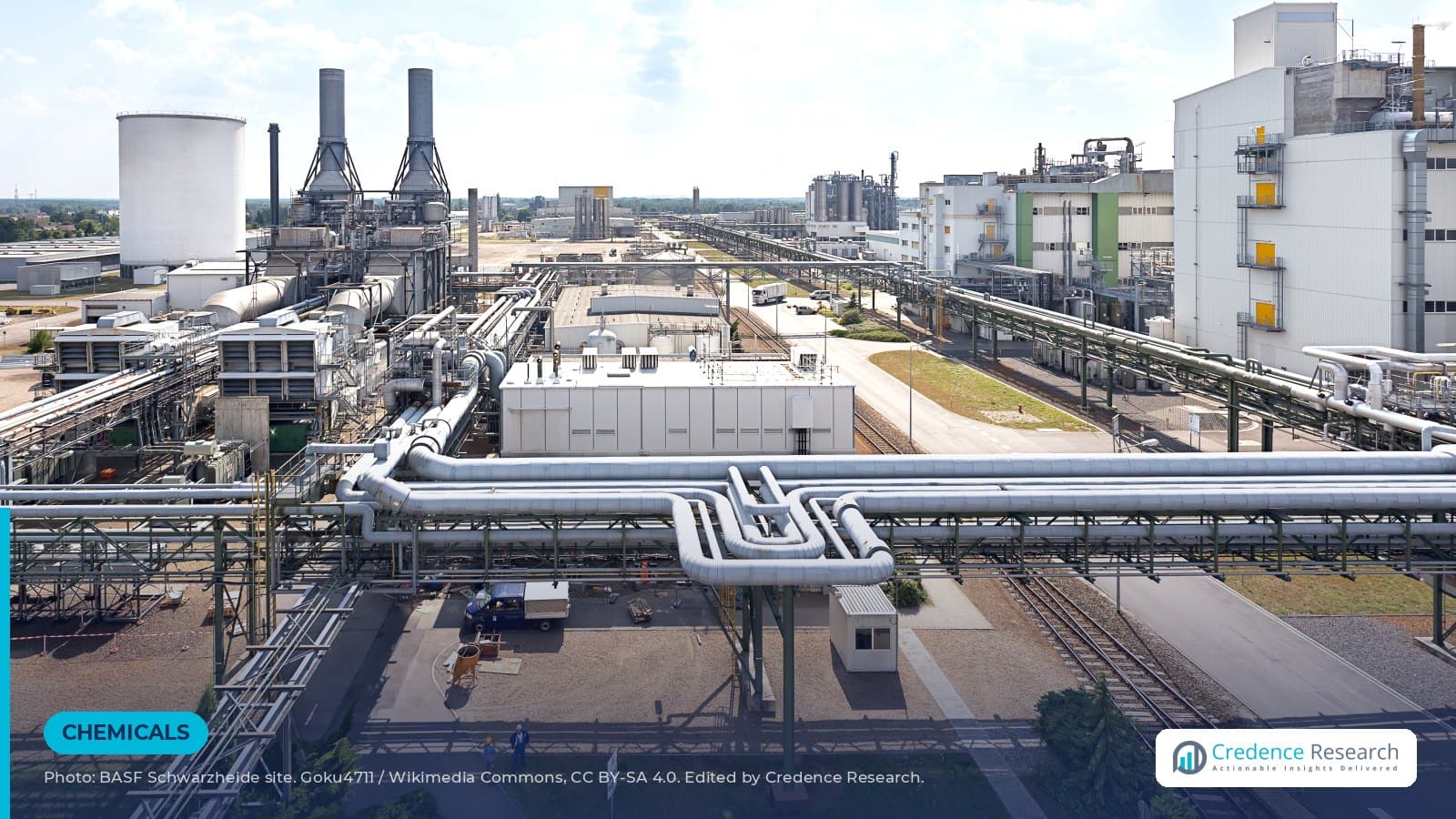
BASF has agreed to sell its battery recycling business in Europe and North America to cylib, the Aachen, Germany-based recycling company, and will narrow its Battery Materials division to cathode active materials alone. The German chemical group disclosed the deal on Nov. 23, 2026, three days after the two companies signed the agreement on Nov. 20. The transfer covers BASF's black mass production plant and its battery recycling prototype plant in Schwarzheide, Germany, and financial terms were not disclosed.
Key developments
- cylib will acquire BASF's battery recycling activities in Europe and North America, including intellectual property, customer contracts, partner relationships and the two Schwarzheide recycling plants.
- Closing is expected between the second and third quarters of 2027, subject to approval by the relevant authorities and customary conditions. BASF will continue to manage the business until then.
- BASF's Battery Materials division will focus exclusively on cathode active materials, or CAM, which the company says offers the highest potential for value creation.
- BASF is exploring strategic options, including partners, for two mothballed sites: its Battle Creek, Michigan, production site and its precursor cathode materials plant in Harjavalta, Finland.
- On the same day, BASF said it had started initial CAM deliveries from Schwarzheide to CATL, building on a global framework agreement the companies signed in July 2025.
Industry background
Battery recycling begins by discharging and shredding spent lithium-ion cells and production scrap into black mass, a fine powder that concentrates lithium, nickel, cobalt and other valuable elements. Refiners then use hydrometallurgical processes to recover those metals in a form that can return to cathode production. Owning both steps lets a producer close the loop between scrap and new material, which is the logic BASF followed when it co-located cathode production and recycling at Schwarzheide.
In June 2023, BASF said it had become the first company to establish a co-located battery materials and recycling center in Europe. Schwarzheide also houses what BASF calls Germany's only plant for high-performance cathode active materials. The company began recalibrating its battery strategy in 2024 as electric vehicle demand in Europe and North America grew more slowly than many suppliers had planned for. Since then, the division has adjusted investment plans, cut costs and capital spending, signed long-term customer agreements and looked for partners for activities outside its future portfolio.
cylib, founded as a spin-off from RWTH Aachen University, treats recycling as its core business. According to trade publication ICIS, the company runs a pilot facility in Aachen and is building a plant in Dormagen, Germany, with 30,000 metric tons a year of recycling capacity.
Industry implications
The deal shows a large chemical producer stepping back from parts of the battery value chain where margins are thin and volumes depend on a slower electric vehicle ramp. Anup Kothari, a member of BASF's Board of Executive Directors, said battery materials remain an attractive long-term growth market but carry significant market and technology risks. He tied the move to BASF's "Winning Ways" strategy, under which individual businesses are expected to stand on their own and compete in their markets.
Daniel Schönfelder, president of BASF's Battery Materials division, said cathode active materials are a key differentiator for battery performance, safety, cost and sustainability. He said BASF will concentrate its global production and research footprint, customer-specific product development and nickel-based cathode expertise in that area. For automakers and cell makers, that means BASF will now meet them as a cathode supplier rather than as a full-loop partner that also takes back scrap.
For the recycling segment, the transaction points toward consolidation around specialists. Europe's Battery Regulation sets material recovery targets for lithium, nickel and cobalt and requires minimum recycled content in new industrial and electric vehicle batteries from 2031. Recyclers with industrial-scale black mass and refining capacity are positioned to supply that recycled content.
Competitive and supply chain implications
Gideon Schwich, cylib's co-chief executive and co-founder, said Schwarzheide gives cylib another European site where end-of-life batteries are processed into black mass. Combining that front-end capacity with cylib's Dormagen plant would give the company a broader path from collected batteries to recovered raw materials. Schönfelder said the business will benefit from cylib's specialized recycling technology, growing industrial scale and integrated approach.
Existing customer and partner relationships transfer with the business, which should limit disruption for battery makers and automotive suppliers that send scrap to Schwarzheide. Because the black mass plant remains on the same site as BASF's cathode plant, the two companies could keep a practical feedstock link even under separate ownership, although neither company has announced a supply agreement for recovered metals.
The same-day CATL announcement shows where BASF intends to compete. Schönfelder said the first deliveries followed close collaboration on development, qualification, production and supply, and that the two companies developed a cathode product tailored to CATL and moved it into production in Germany. BASF also supplies CATL in China from its Changsha plant. Supplying the world's largest battery maker from Germany positions BASF as a local cathode source for Chinese cell makers building capacity in Europe.
Regional implications
In Germany, the Lusatia region around Schwarzheide keeps both cathode production and black mass processing, now under two owners. North Rhine-Westphalia gains weight as cylib's base, with Aachen research and Dormagen industrial operations. For the European Union, the deal keeps recycling assets in European hands, which supports the bloc's push to secure lithium, nickel and cobalt supply at home.
In North America, BASF's recycling activities, including customer contracts, also pass to cylib. Separately, the Battle Creek site in Michigan remains mothballed while BASF looks for a partner. In Finland, the Harjavalta precursor plant, which was built to anchor a European nickel-based cathode supply chain, also awaits a new plan.
Credence Research analysis
BASF is giving up the part of the battery loop that needs the most scale and offers the least differentiation for a chemical producer. Black mass production is capital-intensive and depends on steady scrap supply, which has lagged as European cell factories were delayed or canceled. Handing it to a specialist that is already building larger capacity lets BASF preserve the asset and customer base while removing it from its own balance sheet. Pairing the announcement with the CATL deliveries signals that BASF wants to be judged on cathode chemistry and customer qualification rather than on vertical integration.
For cylib, the deal accelerates its shift from startup to industrial operator. The key test will be integration: running a site inside a larger BASF complex, retaining experienced staff and turning black mass into refined battery-grade metals at a cost that competes with primary supply. The unresolved futures of Battle Creek and Harjavalta remain the clearest signal of how far Western cathode supply chain buildouts have slipped behind earlier plans.
What comes next
- Regulatory reviews of the BASF-cylib transaction, with closing targeted between the second and third quarters of 2027.
- Any decisions on partners for the mothballed Battle Creek and Harjavalta sites.
- Progress on cylib's Dormagen plant and integration of the Schwarzheide recycling operations.
- Further CAM supply volumes from Schwarzheide to CATL and other customers.
- Implementation of recovery and recycled-content rules under the EU Battery Regulation.
Sources
- BASF: BASF Battery Materials focuses its portfolio on Cathode Active Materials (Nov. 23, 2026)
- BASF: From Europe for Europe: BASF starts battery materials supply to CATL (Nov. 23, 2026)
- ICIS: BASF to sell Battery Recycling business to cylib (Nov. 23, 2026)
- BASF: Battery materials meet recycling (June 2023)
Image: BASF Schwarzheide site in Germany, by Goku4711 via Wikimedia Commons, CC BY-SA 4.0. Cropped and edited by Credence Research.

About the Author

Senior News Editor at Credence Research Inc