
Overseas holidays and cabin rules decide what buyers pack
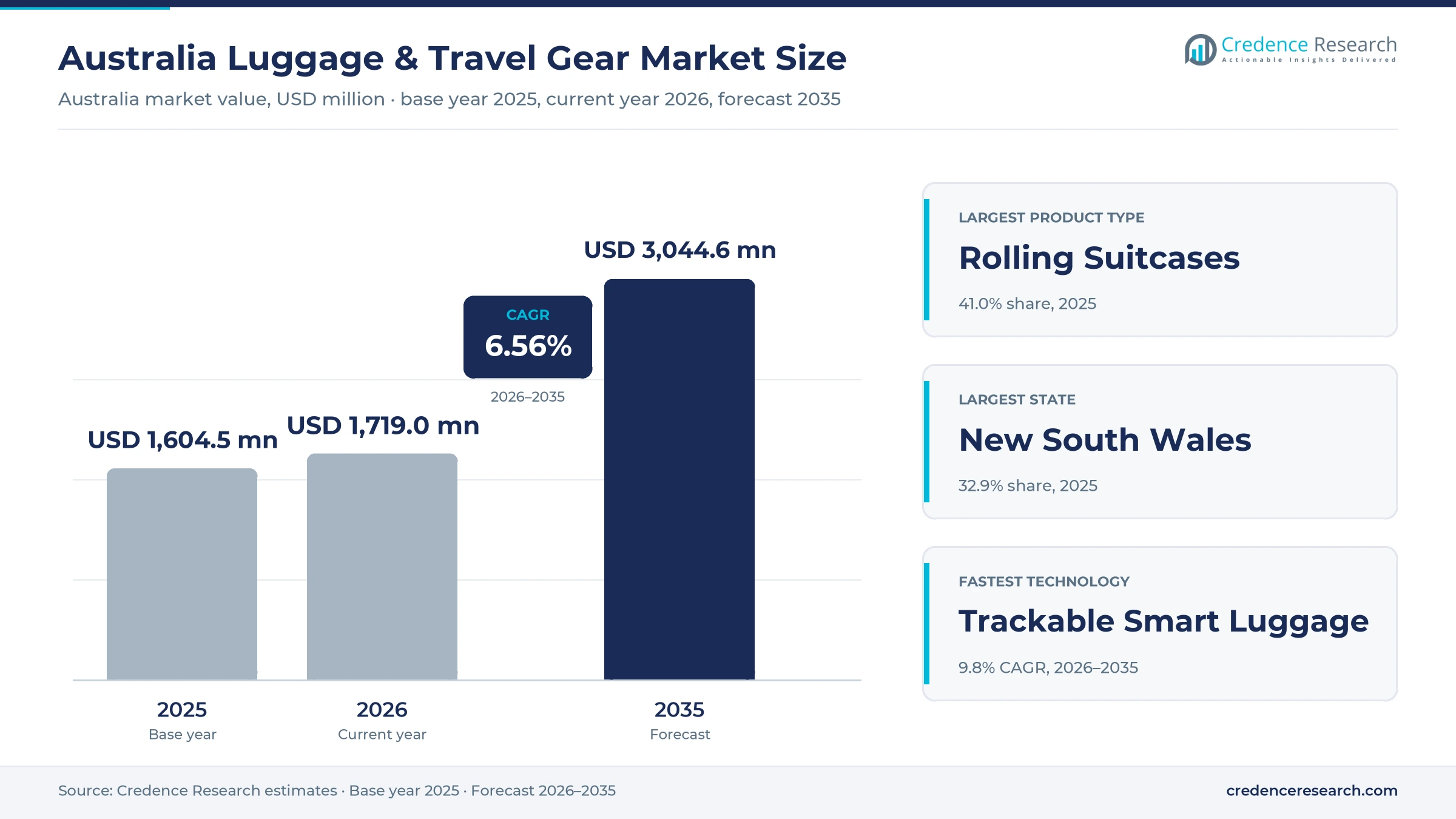
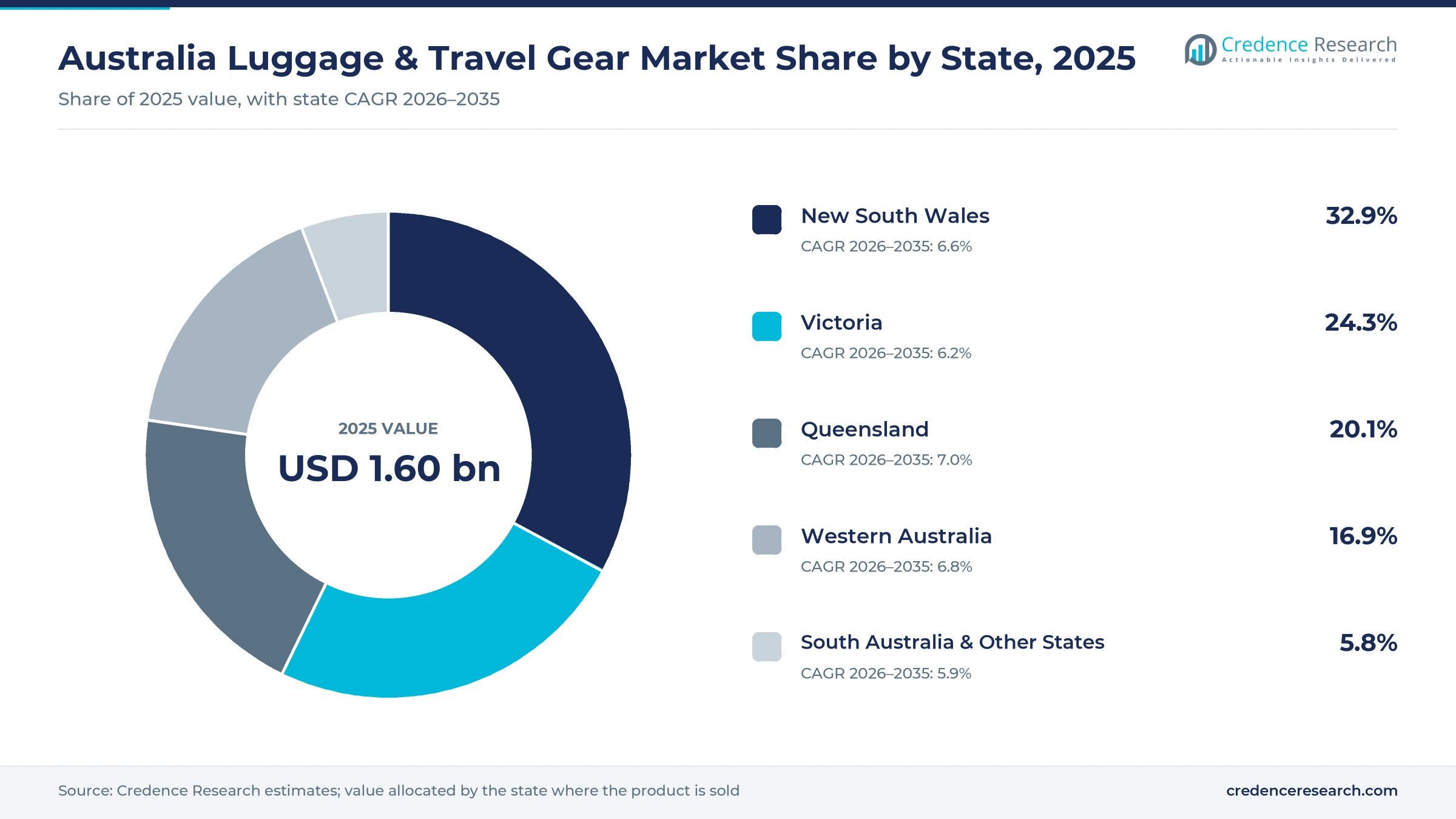
The Australia luggage and travel gear market was valued at USD 1.60 billion in 2025 and is projected to increase from USD 1.72 billion in 2026 to USD 3.04 billion by 2035, registering a CAGR of 6.56% during 2026–2035. Demand comes from residents replacing and upgrading cases for short-haul holidays in Asia, from domestic leisure and business travelers, and from families, students and adventure travelers who buy backpacks, duffels and packing accessories. Almost all product is imported, so value is set by brand, retail channel and the shell and wheel specification rather than by local manufacturing. New South Wales held the largest regional share, 32.9% in 2025, because Sydney concentrates international departures and flagship retail. Queensland is the fastest-growing state at 7.0% a year in Credence Research estimates, as Brisbane Airport’s international passengers rose 16.3% in 2024-25, according to the ACCC. Airline cabin rules are the most important commercial change, because Virgin Australia changed its carry-on allowance in February 2026 and Jetstar moves to a size-based model in February 2027.
Imported hard-shell cases and carry gear make up most of the value
The market counts the retail value of rolling suitcases, travel backpacks, duffel and weekender bags, business travel bags and travel accessories such as packing cubes, toiletry kits, locks, tags and neck pillows sold to consumers and businesses in Australia. Sales run through specialty luggage chains, department stores, brand-owned stores and airport shops, brand websites and online marketplaces.
Everyday handbags, wallets, school bags and hiking packs sold for bushwalking rather than travel are excluded, as are luggage rental, repair-only services and duty-free sales to departing foreign visitors. The value chain runs from contract factories in China and Southeast Asia through brand owners and local wholesalers to retail, with most margin captured at the brand and retail stages.
Australia Luggage & Travel Gear Market Insights
- The market was valued at USD 1.60 billion in 2025 and is projected to reach USD 3.04 billion by 2035, growing at a 6.56% CAGR as outbound holiday trips and airport capacity rise.
- New South Wales held 32.9% of 2025 value, supported by Sydney Airport retail and the October 2026 opening of Western Sydney International Airport.
- Rolling suitcases held 41.0% of 2025 value, because checked and cabin cases remain the core purchase for overseas holiday trips.
- July launched CaseSafe in October 2025, a suitcase whose integrated lock works with Apple Find My and Google Find Hub, signaling a shift to built-in tracking.
- Competition pairs Strand’s national store network with direct-to-consumer brands such as July and Bellroy, which opened or announced Melbourne flagship stores during 2026.
Rolling cases lead while trackable shells grow fastest
Checked and cabin cases hold value as backpacks gain
Based on product type, the market is categorized into rolling suitcases, travel backpacks, duffel and weekender bags, business travel bags and travel accessories. Rolling Suitcases led with 41.0% of 2025 value because overseas holidays still require a checked or overhead case, and UN Comtrade records show Australia imported USD 183.9 million of plastic- or textile-shelled trunks and suitcases under HS 4202.12 in 2025. Travel Backpacks grow fastest at 7.7% a year as Jetstar limits free cabin baggage to a 40 by 30 by 20 centimeter underseat bag from Feb. 2, 2027, which favors compact packs and smart backpacks sized for that space.
Plain shells dominate while tracker cases scale
Based on technology, the market is categorized into conventional luggage, trackable smart luggage, integrated charging luggage, anti-theft and biometric luggage and modular and compression systems. Conventional Luggage led with 71.0% of 2025 value because economy and mid-range cases sold by Kmart, Strand and department stores rarely carry electronics, and a Kmart 79 centimeter hard case lists at A$129 in November 2026. Trackable Smart Luggage grows fastest at 9.8% a year as tracker locks plug into crowdsourced networks, with Google saying Find Hub reaches more than a billion Android devices, which lowers the cost of adding location tracking technologies to a case.
Mid-range cases lead and premium brands gain share
Based on price tier, the market is categorized into economy, mid-range, premium and luxury. Mid-Range led with 38.0% of 2025 value because Strand and the department stores carry most branded cases between discount and premium price points, and Myer sold a Delsey Chatelet Air 2.0 carry-on listed at A$579 for A$231 in November 2026, pulling premium labels into mid-range price bands. Premium grows fastest at 7.6% a year as travelers trade up to longer warranties and lighter shells, and Inside Retail reported in August 2026 that Antler now accounts for 40% of Strand’s domestic business after its 2023 relaunch.
Specialty chains lead while marketplaces grow fastest
Based on distribution channel, the market is categorized into specialty luggage retailers, department stores, brand-owned stores, brand e-commerce and online marketplaces. Specialty Luggage Retailers led with 31.0% of 2025 value because Strand alone operates more than 260 stores across Australia and New Zealand, placing a luggage specialist in most regional shopping centers. Online Marketplaces grow fastest at 7.7% a year as Australians spent A$18.9 billion through online marketplaces in 2025, the largest online category in the Australia Post annual eCommerce report, while parcel lockers and e-commerce fulfillment services make bulky cases easier to deliver and return.
| Segment Group | Leading Sub-segment | Share, 2025 | Fastest-growing Sub-segment | CAGR, 2026–2035 |
|---|---|---|---|---|
| By Product Type | Rolling Suitcases | 41.0% | Travel Backpacks | 7.7% |
| By Technology | Conventional Luggage | 71.0% | Trackable Smart Luggage | 9.8% |
| By Price Tier | Mid-Range | 38.0% | Premium | 7.6% |
| By Distribution Channel | Specialty Luggage Retailers | 31.0% | Online Marketplaces | 7.7% |
Shelf prices run from discount shells to aluminum luxury
Pricing works per piece, with sets used to lift basket value in economy and mid-range ranges and single cabin cases carrying the highest price per liter in premium and luxury. Shell material, wheel and lock specification, warranty length and brand set the shelf price, while landed cost follows freight rates and the Australian dollar because nearly every case is imported. Department stores list mid-range and premium imports at full price and then discount heavily, so a Delsey Chatelet Air 2.0 carry-on listed at A$579 sold for A$231 at Myer in November 2026. Brands that sell direct, such as July and RIMOWA, hold prices closer to list and fund flagship stores from that margin.
| Product and tier | Typical price or fee | Basis |
|---|---|---|
| Economy hard case, 79 centimeter (Kmart) | A$129 | Kmart Australia listing, November 2026 |
| Mid-range to premium carry-on (Delsey Chatelet Air 2.0, 55 centimeter) | A$579 list, A$231 on promotion | Myer listing, November 2026 |
| Premium trackable case (July CaseSafe range) | A$395 to A$495 | Ragtrader, October 2025 |
| Luxury aluminum cabin case (RIMOWA Original Cabin) | A$2,320 | RIMOWA Australia online store, November 2026 |
| Paid overhead cabin bag (Jetstar Priority Carry-on) | From A$25 one way | AirlineRatings, August 2026 |
Request a Free Sample
Fill in your details and we'll send you a free sample report.
- Sample data tables & charts
- Research methodology
Record outbound trips and new airport capacity lift sales
Outbound holidays return to and pass pre-pandemic levels
Travel frequency sets the replacement cycle for cases, because each extra overseas trip adds wear to wheels, handles and shells and raises the chance of a new purchase before the next holiday. The Australian Bureau of Statistics counted 12.7 million short-term resident trips overseas in 2025-26, up 4% in a year and 32% above the level of ten years earlier. Trips to Japan have more than doubled since 2018-19, rising 105%, and Indonesia now takes 14% of all resident departures. Those destinations favor medium checked cases and cabin spinners over large trunks, a mix that sustains demand for Rolling Suitcases and lighter polycarbonate shells. Retailers with strong carry-on ranges gain most from this short-haul mix, which included 992,550 resident trips to Japan in 2025-26, according to the ABS.
Omnichannel retail widens reach for luggage brands
Luggage is a considered purchase that shoppers research online and often test in store, so brands that join both channels convert more of the trips that Australians plan. Australia Post reported that online shopping reached a record A$82.6 billion in 2025, up 13.9%, with 9.8 million households buying online and the average shopper using 16 online brands. Bellroy, which built its business online and through wholesale partners, is opening its first standalone store on Little Collins Street in Melbourne as part of a plan for about 20 stores in five years, SmartCompany reported in October 2026. Strand has also said its Rundle Mall concept is the first of several CBD stores, so the chain protects physical reach while Online Marketplaces gain share.
Airport and visitor-economy capacity expands
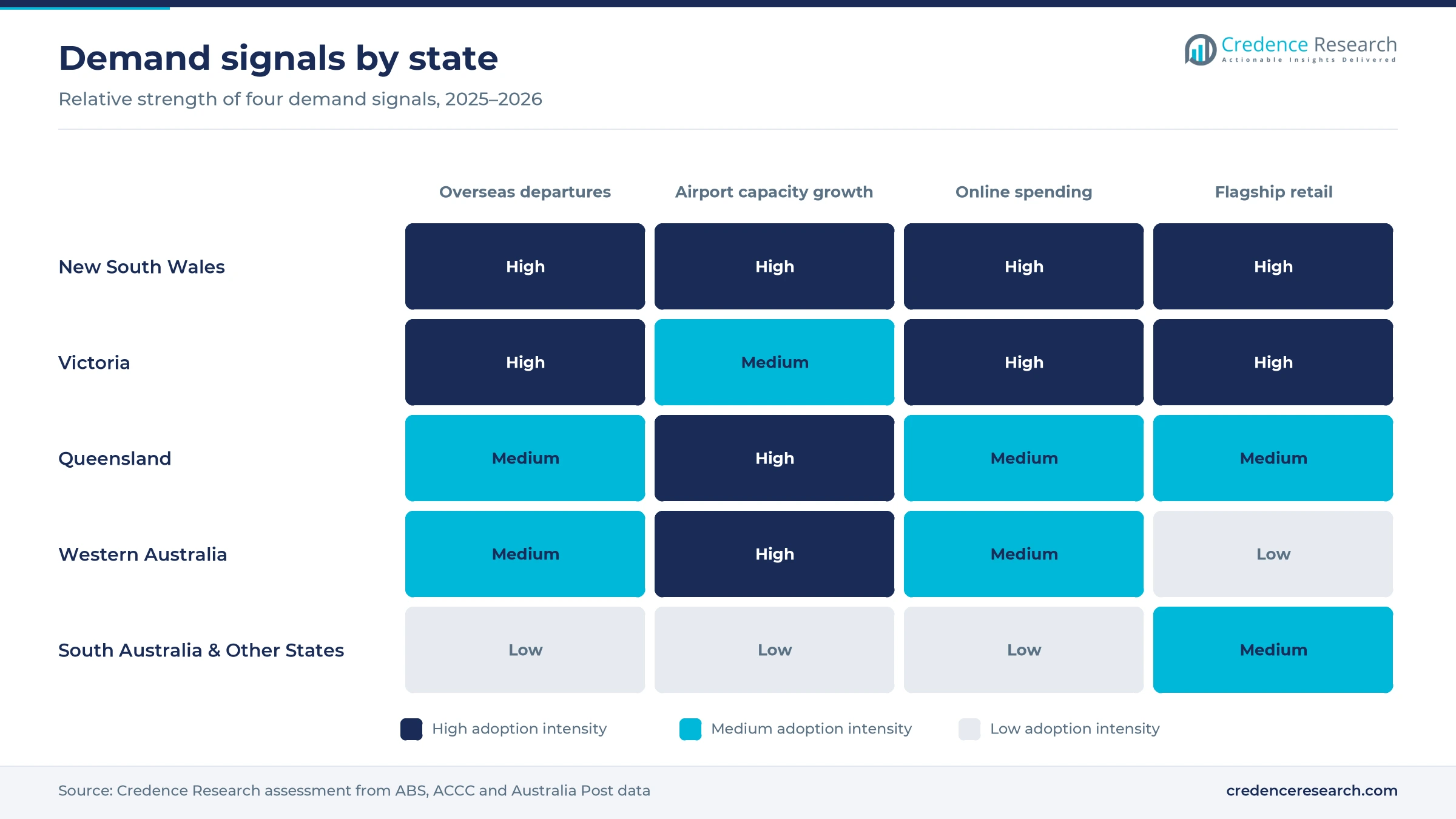
New terminal space and air routes add departure points and airside retail, and both increase the number of travelers who buy or replace a case close to the trip. The ACCC airport monitoring report found that Brisbane, Melbourne, Perth and Sydney invested A$1.5 billion in aeronautical facilities in 2024-25, up 43.6%, and proposed almost A$20 billion of projects over the next decade. International passengers at those four airports rose 9.5% to 40.4 million in 2024-25. Western Sydney International Airport, whose opening is covered in the opportunities below, adds a fifth major gateway that the ACCC figures do not yet cover. Airport retailers and travel-focused brands gain first from the new capacity.
Size-led cabin allowances force a carry-on refresh
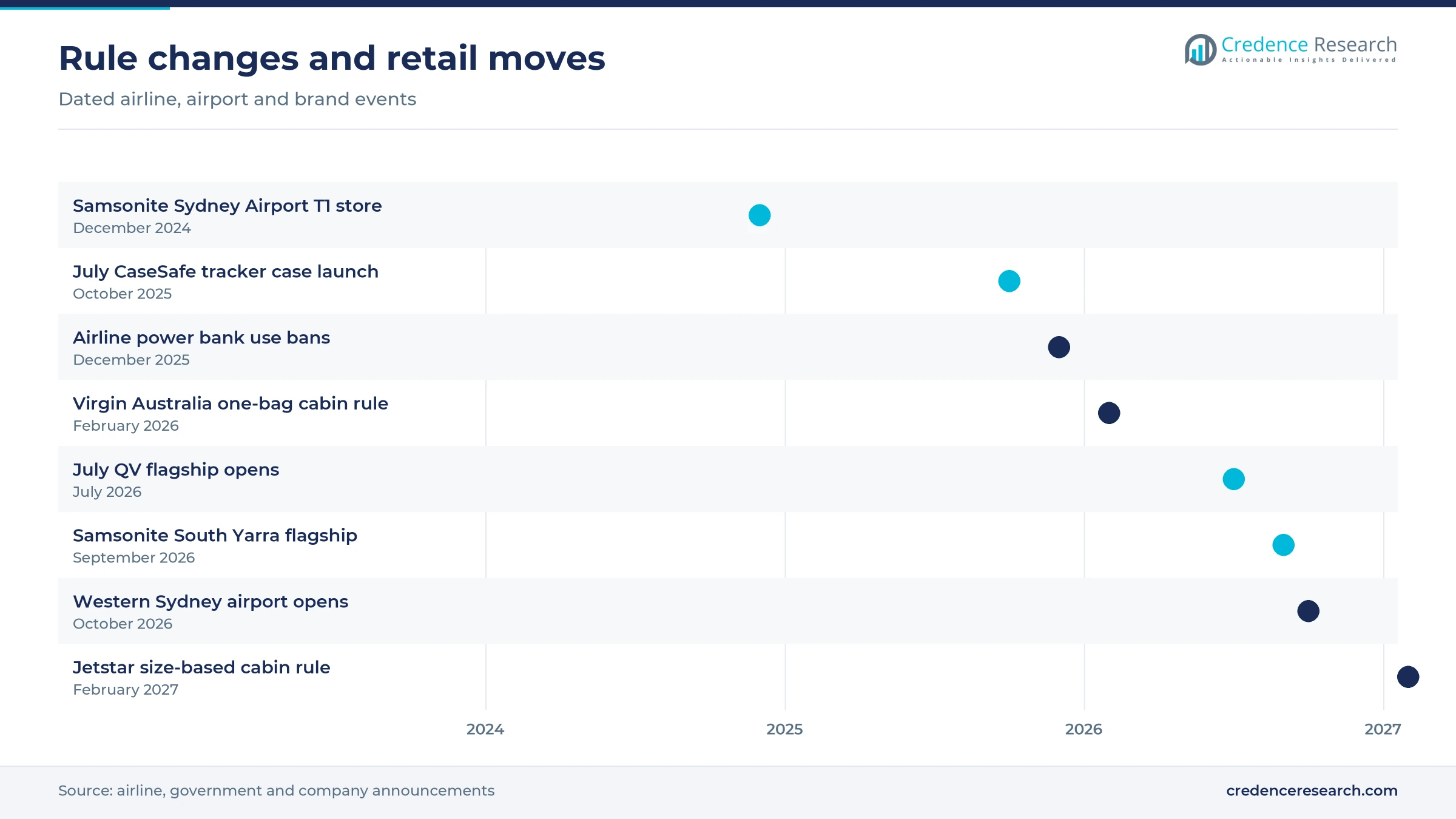
Airline cabin rules decide which carry-on sizes are usable, so a rule change can make existing bags obsolete and trigger a replacement purchase. Virgin Australia moved economy passengers to one carry-on bag of up to 8 kilograms from Feb. 2, 2026, replacing two bags with a combined seven kilogram limit, according to Australian Aviation in October 2025. Jetstar announced in August 2026 that it will drop its seven kilogram cabin limit on Feb. 2, 2027, allowing a free underseat bag and selling overhead space as Priority Carry-on. AirlineRatings reported that Priority Carry-on starts at A$25 one way. Makers of compact spinners and underseat packs that fit these dimensions are best placed, while owners of oversized cabin cases face a forced upgrade.
Built-in trackers and repair services reshape premium cases
Built-in trackers are shifting from add-on to standard
Brands are shifting tracking from a separate tag into the case itself to address the main traveler fear of a lost checked bag, creating openings for trackable shells across leisure and business travel. July launched CaseSafe in October 2025, a suitcase with an integrated, battery-operated TSA-approved lock that works with Apple Find My and Google Find Hub. The range retails from A$395 to A$495 in carry-on, checked and checked plus sizes, so tracking sits at a premium but not a luxury price. July developed the product in consultation with Apple and Google, which gives it access to both phone ecosystems from launch. With trackable cases the fastest-growing technology, rivals without a tracker option risk losing premium shelf space.
Repair and aftercare are emerging as purchase criteria
Premium brands are shifting toward repairable designs and in-store service to justify higher prices, creating openings for spare parts and service revenue. Bellroy launched its first two wheeled carry-on bags in May 2025, a hard-shell spinner and a soft-shell tipper that it says can be repaired in under 10 minutes. Samsonite’s South Yarra flagship, opened in September 2026, includes Sam Cares stations for repair and aftercare as well as personalization services, according to LATTE Luxury News, and it followed July’s 250 square meter QV store by two months. Strand’s August 2026 Rundle Mall concept adds an elevated service format led by Antler, which accounts for 40% of Strand’s domestic business. These moves reward brands that hold spare wheels and handles in Australia, while low-priced imports without parts support lose repeat buyers.
Western Sydney opens a new catchment for travel retail
Western Sydney International Airport gives luggage sellers a new opening in a catchment that previously drove to Mascot for every flight. The airport opened to passengers on Oct. 25, 2026, when Jetstar flight JQ362 left for the Gold Coast, and the Prime Minister’s office said in June 2026 that it would operate curfew-free and handle up to 10 million passengers a year. Western Sydney is home to half of Sydney’s population and is described by the government as Australia’s third-largest economy. Jetstar operates the first services, including up to 14 weekly flights to Melbourne, which brings many first-time flyers into low-cost carry-on rules. Retailers in Penrith, Parramatta and Liverpool shopping centers and airside operators can capture this demand for compliant cabin bags and family sets.
Queensland gateways offer an opening ahead of 2032
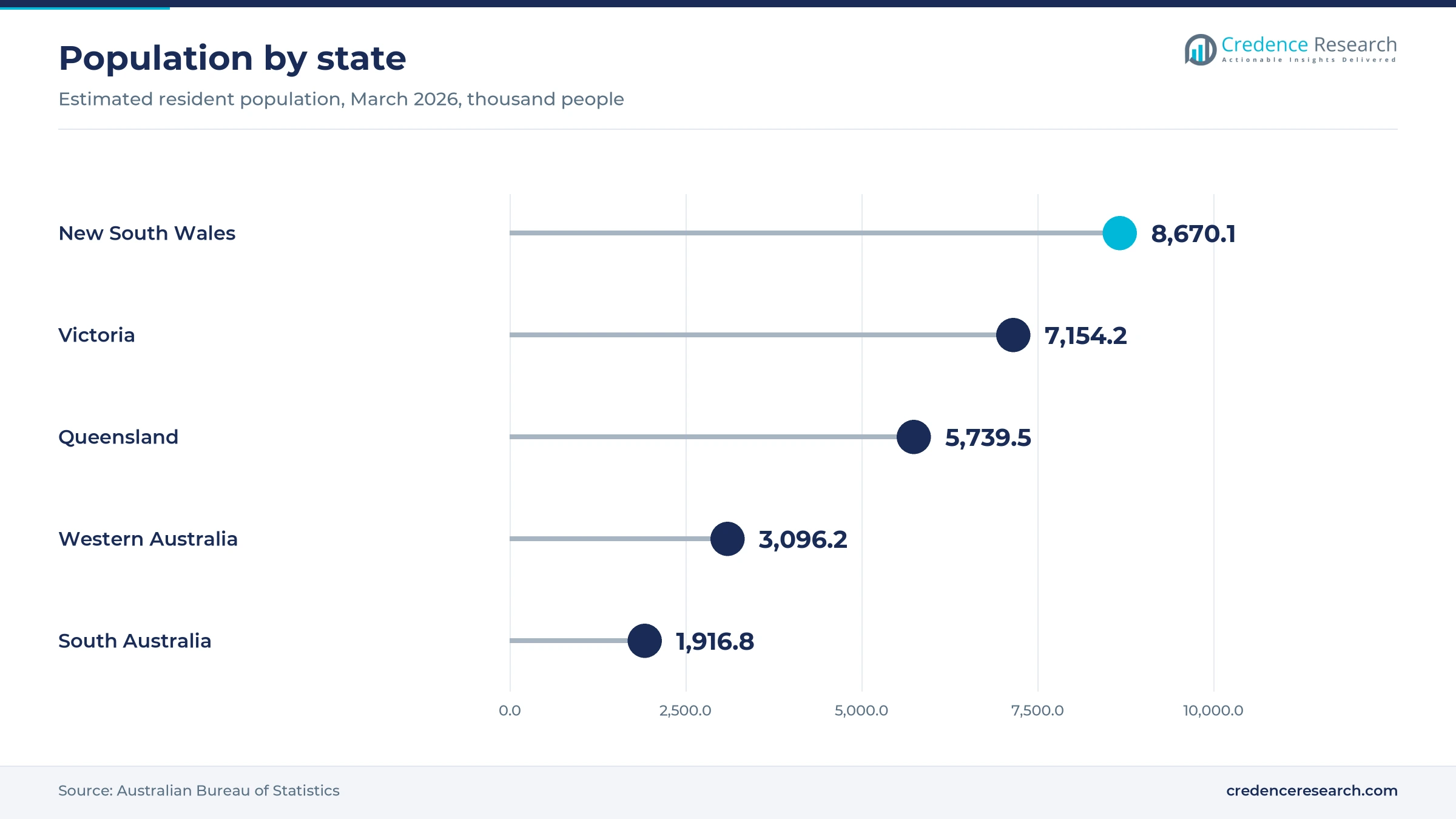
Queensland offers an opening for store and airport retail investment because airport capacity and international travel are both rising ahead of the 2032 Olympic and Paralympic Games. The federal government approved Brisbane Airport’s 2026 Master Plan in June 2026, setting two decades of development for the state’s largest international gateway, according to Australian Aviation. The ACCC reported that international passengers at Brisbane Airport rose 16.3% in 2024-25, the second-fastest rate among the four major airports. Queensland is also the fastest-growing state in this report, and its population reached 5.74 million in March 2026, according to the ABS. Brands that secure Brisbane CBD and airport sites before the Games build-up can lock in visibility with both residents and visitors.
Battery rules, discounting and imports squeeze margins
Power bank bans limit charging-luggage appeal
Airline battery rules restrict the main selling point of integrated charging luggage. Virgin Australia banned in-flight use of portable power banks from Dec. 1, 2025, and Qantas, QantasLink and Jetstar followed from Dec. 15, 2025, after a mid-air fire on a Sydney to Hobart flight, according to the NRMA. Cases sold on built-in battery packs are most exposed, because travelers now see little benefit in a charger they cannot use onboard. Makers are likely to shift toward removable battery bays and tracker-only electronics.
Shorter, cheaper trips hold back spending per traveler
Cost-of-living pressure is changing how Australians travel at home, which caps spending on large case sets. Tourism Research Australia reported that domestic overnight trips stayed relatively stable at 113 million in 2025, while day trips grew strongly and travelers chose lower-cost and shorter trips. Economy and mid-range sellers are most exposed, because short trips need only a cabin bag or duffel and buyers trade down when budgets tighten. Retailers respond with bundled sets and promotions that protect volume but erode margin.
Import dependence exposes costs to freight and currency
Nearly all cases sold in Australia are made offshore, so landed cost moves with freight rates, supplier pricing and the Australian dollar. UN Comtrade data show China supplied USD 731.8 million of the USD 1,486.1 million in HS 4202 bags and cases imported in 2025 at CIF value, a 49% share, although that heading also covers handbags and wallets. Mid-range brands that sell through department stores are most exposed, because they cannot pass on cost increases while those stores discount heavily. Dual sourcing from Vietnam and Indonesia limits the risk only partly.
Fewer new international students soften long-stay demand
The student and long-stay segment depends on new arrivals who buy large cases and duffels for the move and for trips home. Department of Education data show new international students fell 15% to 202,882 in 2025, while total students eased 0.5% to 846,321, according to The PIE News in March 2026. Retailers near university precincts in Sydney and Melbourne are most exposed, because commencing students drive the largest single purchases. The drop shifts growth toward resident holiday travelers rather than migration-linked buyers.
Sydney leads on volume while Queensland grows fastest
| State | Value, 2025 (USD billion) | Share, 2025 | CAGR, 2026–2035 |
|---|---|---|---|
| New South Wales | 0.53 | 32.9% | 6.6% |
| Victoria | 0.39 | 24.3% | 6.2% |
| Queensland | 0.32 | 20.1% | 7.0% |
| Western Australia | 0.27 | 16.9% | 6.8% |
| South Australia & Other States | 0.09 | 5.8% | 5.9% |
New South Wales leads through Sydney’s twin gateways
New South Wales held 32.9% of 2025 value and grows at 6.6% a year. Samsonite opened a store in Sydney Airport’s Terminal 1 in December 2024, according to the Moodie Davitt Report, adding airside reach at the state’s main international gateway. The state’s 8.67 million residents at March 2026 make it the largest buyer base, and its online shoppers spent A$26.4 billion in 2025, the most of any state, according to Australia Post. The Western Sydney airport opening lifts growth slightly above the national rate.
Victoria is the home base for direct luggage brands
Victoria held 24.3% of 2025 value and grows at 6.2% a year, slightly below the national rate. Melbourne is home to July, Bellroy and Crumpler, and the city received three flagship openings in 2026, July at QV in July, Samsonite at Capitol Grand in September and Bellroy on Little Collins Street in October. Those stores lift brand visibility and premium mix, but Victoria has no new airport in the forecast period. Retail density is high, so growth depends on premium trading up rather than new buyers.
Queensland grows fastest on airport and Games investment
Queensland held 20.1% of 2025 value and grows at 7.0% a year, the fastest of any state. Brisbane’s international traffic growth, noted in the trends section, adds departures and Queensland online shoppers spent A$17.8 billion in 2025, according to Australia Post. Gold Coast and Cairns tourism adds visitor demand for duffels and accessories. The approved Brisbane master plan and 2032 Games preparations support store openings across South East Queensland.
Western Australia spends above its population share
Western Australia held 16.9% of the Australia luggage and travel gear market in 2025 and grows at 6.8% a year. Its value share is higher than its 3.10 million residents would suggest, because long distances to the east coast and Asia make frequent air travel routine for residents and fly-in fly-out workers. The ACCC reported that Perth Airport recorded the strongest international passenger growth of the four major airports in 2024-25, up 17.8%. Public state-level luggage sales data are not available, so this share rests on the Credence Research model.
South Australia and smaller states trail on value
South Australia & Other States held 5.8% of 2025 value and grow at 5.9% a year, the slowest rate. The group covers South Australia, Tasmania, the ACT and the Northern Territory, where fewer international routes and smaller retail networks limit premium sales. Strand and Antler opened a concept store in Rundle Mall, Adelaide, in August 2026, which shows chains still invest in the region’s CBD. The share is low against population, which the model attributes to travel and income patterns, an evidence gap without state sales data.
Flagship openings and a tracker case mark 2025 and 2026
| Development | Status and market relevance |
|---|---|
| In October 2025, July launched CaseSafe, a suitcase range with an integrated tracker lock compatible with Apple Find My and Google Find Hub, priced from A$395 to A$495. | Commercial launch; it sets a price point for trackable luggage that rivals must meet. |
| In July 2026, July opened its largest flagship store, more than 250 square meters at QV in Melbourne, and said it would be its last new Australian store. | Opened; the brand now shifts expansion capital to overseas markets. |
| In August 2026, Strand and its British subsidiary Antler opened a concept store in Rundle Mall, Adelaide, as the first of several planned CBD stores. | Opened, with a rollout plan announced; it signals a premium shift in the national chain. |
| In September 2026, Samsonite opened a new Australian flagship store at Capitol Grand in South Yarra, Melbourne, with repair stations and personalization services. | Opened; it adds aftercare services that support premium pricing. |
| In October 2026, Bellroy announced its first standalone store on Little Collins Street, Melbourne and set a target of about 20 stores within five years. | Store opening and expansion plan announced; it moves an online-first brand into physical retail. |
Polycarbonate shells, tracker locks and repairable parts
- Polycarbonate shells replace older ABS plastic on most mid-range and premium cases because they flex under impact and save weight against airline limits.
- Integrated tracker locks combine a TSA-approved lock with a battery-powered locator that reports through phone networks, so travelers can see a checked case without a separate tag.
- Removable battery bays let travelers take out a charging pack before checking a case, which now matters more after Australian airlines restricted power bank use onboard.
- Repairable wheel and handle modules let stores and owners replace worn parts in minutes, which extends case life and supports longer warranties in premium ranges.
Need a Custom Version of This Report?
Tailor the scope, geography, or segments to your exact requirements.
- Custom geography or segment scope
- Direct access to our analyst team
One national chain faces fast direct brands and luxury
Competition splits into three groups that win in different ways. Strandbags Group, which owns Antler, competes on store reach and a portfolio that runs from own-brand cases to premium British luggage. Samsonite Australia and RIMOWA rely on global brand strength, department store concessions and their own flagships, and RIMOWA sells through stores at David Jones Sydney, Westfield Sydney and Chadstone as well as its Australian website. July and Bellroy, both founded in Melbourne, sell mainly direct and compete on design, warranty and product features such as integrated tracking and repairable parts. KMD Brands sells hybrid trolleys and duffels for adventure travelers through Kathmandu stores, while Delsey sells through Myer and Heys through its own Australian website. The Australian Luggage Co. imports and wholesales the TOSCA brand to local retailers, and Kmart Group sells Anko own-brand cases through Kmart and Target stores. Price, not technology, still decides most economy purchases in Kmart and marketplace ranges.
How concentrated is the supply side?
The supply side is moderately concentrated at retail and fragmented at brand level. Strand operates the only national specialist chain, with more than 260 stores across Australia and New Zealand, down from a pre-pandemic peak of around 300, while Myer, David Jones and Kmart provide the main general merchandise outlets. Brand owners such as Samsonite, July and RIMOWA run their own stores and websites, which keeps both retail and brand margin in one company. Manufacturing is almost entirely offshore, so entry barriers sit in brand building, store leases and inventory rather than factories. Margins are highest for direct-selling premium brands and lowest for wholesalers supplying discount ranges.
Specialty chains, direct brands and luxury houses
| Company | Type | Role in the market |
|---|---|---|
| Samsonite Australia Pty Ltd. | Global brand owner | Sells Samsonite cases and business bags through flagships, airport stores and department stores |
| Strandbags Group Pty Ltd. (Antler) | National specialist chain | Runs more than 260 Strand stores and owns the Antler premium luggage brand |
| July & Co Pty Ltd. | Direct-to-consumer brand | Sells polycarbonate cases, CaseSafe tracker luggage and accessories online and in flagships |
| RIMOWA Australia Pty Ltd. | Luxury brand owner | Sells aluminum and polycarbonate cases through Sydney and Melbourne stores and online |
| KMD Brands Limited (Kathmandu) | Outdoor and travel retailer | Sells hybrid trolleys, wheeled duffels and travel packs through Kathmandu stores |
| Bellroy Pty Ltd. | Direct-to-consumer brand | Sells travel backpacks, organizers and repairable wheeled carry-ons online and in stores |
| Delsey S.A. | Global brand owner | Sells hard-shell cases in Australia through Myer and other retailers |
| Heys Australia Pty Ltd. | Brand distributor | Sells lightweight hard-side and soft-side Heys luggage through its Australian website |
| The Australian Luggage Co. | Importer and wholesaler | Owns TOSCA and wholesales luggage and travel accessories to Australian retailers since 1996 |
| Kmart Group (Wesfarmers) | Mass-market retailer and own brand | Sells Anko hard-case luggage and sets through Kmart and Target stores and online |
Cabin rules and trip mix will move value more than volume
Credence Research’s view is that value growth in the Australia luggage and travel gear market will come more from what travelers buy than from how many cases they buy. Outbound trips grow at low single digits, but cabin rules, tracker integration and repair services move buyers toward compliant, higher-priced carry-on cases. Brands that combine local aftercare with direct sales hold the best margins. Carry-on demand also depends on the Jetstar cabin change of Feb. 2, 2027, which changes the free cabin allowance for every Jetstar passenger. The weakest evidence sits in state-level sales, because no official series tracks luggage retail by state, so regional estimates carry the most uncertainty.
Estimates rest on trip, import, price and retail data
The report uses 2025 as the base year and forecasts value to 2035 in USD million at retail prices. Market values come from the Credence Research model, built from UN Comtrade import data for bags and cases, Australian Bureau of Statistics travel and population data, Tourism Research Australia visitor statistics, the ACCC airport monitoring report and retail price checks. Segment, technology, price tier, channel and state splits are Credence Research estimates from company announcements, store networks and online listings. No interviews or surveys were conducted for this edition of the report.
Asia holidays and two new gateways shape demand to 2035
The market is expected to grow from USD 1.72 billion in 2026 to USD 3.04 billion by 2035 as residents keep traveling to Asia and airports add capacity. Carry-on cases and underseat bags gain share first after the airline allowance changes, while trackable cases reach mid-range ranges by 2030. Queensland and New South Wales together held 53.0% of 2025 demand, and both gain most from the Brisbane master plan and Western Sydney airport. Victoria grows at 6.2% a year, so its share eases slightly as Queensland and Western Australia gain demand. The main risks are a fall in household travel budgets, further battery restrictions and higher landed costs from offshore suppliers.
Airline rules and Asian holidays set the range of outcomes
The outcome depends mainly on how often residents travel overseas and on how quickly airline rules push carry-on replacement. A downside case follows weaker household budgets and a fall in outbound trips, which would shift demand to economy cases. The base case assumes steady short-haul holiday growth and gradual adoption of trackable cases. An upside case requires faster premium trading up, strong Western Sydney and Brisbane traffic and rapid replacement of cabin bags after the Jetstar change in 2027.
| Scenario | CAGR, 2026–2035 | Value, 2035 | What has to hold |
|---|---|---|---|
| Downside | 5.1% | USD 2.68 billion | Outbound trips stall and buyers trade down to economy cases and marketplaces |
| Base | 6.56% | USD 3.04 billion | Short-haul holidays grow steadily and trackable cases reach the mid-range by 2030 |
| Upside | 7.9% | USD 3.40 billion | Cabin bag replacement and premium trading up run ahead of trip growth |
Frequently Asked Questions
How big is the Australia luggage and travel gear market?
Which product type leads the market?
Which state holds the largest share?
Which state grows fastest?
How are airline rules affecting luggage purchases?
Which technology grows fastest?
Who are the main companies in the market?
What are the main challenges for suppliers?
Table of Content
Chapter 1 Market Segmentation
- 1.1 Segmentation Framework
- 1.1.1 Product and Service Classification
- 1.1.2 Application and End-Use Classification
- 1.1.3 Technology and Solution Classification
- 1.1.4 Customer and Distribution Channel Classification
- 1.1.5 Geographic Segmentation
- 1.1.6 Market Segment Definitions and Boundaries
- 1.2 By Product Type
- 1.2.1 Rolling Suitcases
- 1.2.2 Travel Backpacks
- 1.2.3 Duffel & Weekender Bags
- 1.2.4 Business Travel Bags
- 1.2.5 Travel Accessories
- 1.3 By Technology
- 1.3.1 Conventional Luggage
- 1.3.2 Trackable Smart Luggage
- 1.3.3 Integrated Charging Luggage
- 1.3.4 Anti-Theft & Biometric Luggage
- 1.3.5 Modular & Compression Systems
- 1.4 By Price Tier
- 1.4.1 Economy
- 1.4.2 Mid-Range
- 1.4.3 Premium
- 1.4.4 Luxury
- 1.5 By State
- 1.5.1 New South Wales
- 1.5.2 Victoria
- 1.5.3 Queensland
- 1.5.4 Western Australia
- 1.5.5 South Australia & Other States
Chapter 2 Introduction
- 2.1 Report Objectives and Scope
- 2.2 Product Definition and Industry Terminology
- 2.3 Market Inclusions and Exclusions
- 2.4 Research Process
- 2.4.1 Primary Research and Expert Interviews
- 2.4.2 Secondary Research and Source Review
- 2.4.3 Top-Down and Bottom-Up Estimation
- 2.4.4 Data Triangulation and Verification
- 2.5 Market Size Measurement Basis
- 2.5.1 2025: USD 1.60 billion → 2035: USD 3.04 billion
- 2.6 Historical and Forecast Reference Periods
- 2.6.1 Historical Period: 2018-2025
- 2.6.2 Base Year: 2025
- 2.6.3 Forecast Period: 2025-2035
- 2.7 Research Assumptions and Limitations
Chapter 3 Executive Summary
- 3.1 Market Snapshot and Key Findings
- 3.2 Base-Year Market Size, 2025
- 3.3 Forecast Market Size, 2035
- 3.4 Revenue and Volume Growth Outlook
- 3.5 Key Demand and Supply Indicators
- 3.6 Leading Market Segments
- 3.7 Fastest-Growing Market Opportunities
- 3.8 Regional Performance Highlights
- 3.9 Technology and Industry Transformation
- 3.10 Competitive Landscape Summary
- 3.11 Analyst View and Strategic Implications
Chapter 4 Australia Luggage & Travel Gear Market Trends and Developments
- 4.1 Historical Industry Development, 2018-2025
- 4.2 Recent Market Trends and Developments
- 4.3 Demand and Customer Behavior Trends
- 4.4 Technology and Product Innovation
- 4.5 Artificial Intelligence, Automation and Digitalization
- 4.6 Local Manufacturing and Supply Chain Realignment
- 4.7 Industry Partnerships, Mergers and Acquisitions
- 4.8 Sustainability and Circular Economy Developments
- 4.9 Government and Private Sector Investment Trends
- 4.10 Emerging Business Models and Commercialization
- 4.11 Industry Developments and Announcements
Chapter 5 Australia Luggage & Travel Gear Market Production, Supply and Demand Analysis
- 5.1 Demand Trend and Consumption Analysis, 2018-2025
- 5.2 Demand Forecast, 2025-2035
- 5.3 Production and Output Trend, 2018-2025
- 5.4 Production and Output Forecast, 2025-2035
- 5.5 Installed Capacity and Capacity Utilization
- 5.6 Company-Wise Production Plants and Statistics
- 5.6.1 Installed Production Capacity
- 5.6.2 Actual Production
- 5.6.3 Planned Capacity and Expansion Targets
- 5.7 Supply Chain Structure and Procurement Trends
- 5.8 Supply-Demand Gap and Bottlenecks
- 5.9 Import Dependence and Sourcing Structure
- 5.10 Contract Manufacturing and Outsourcing
- 5.11 Regional Supply and Demand Concentration
Chapter 6 Australia Luggage & Travel Gear Market Pricing Analysis
- 6.1 Pricing Structure and Measurement
- 6.2 Historical Pricing Trends, 2018-2025
- 6.3 Pricing Outlook, 2025-2035
- 6.4 Average Selling Price and Unit Economics
- 6.5 Pricing by Product and Market Segment
- 6.6 Geographic Pricing Differences
- 6.7 Key Input, Energy, Labor and Logistics Costs
- 6.8 Contract Pricing and Purchasing Models
- 6.9 Pricing Sensitivity and Competitive Positioning
- 6.10 Price, Margin and Profitability Implications
Chapter 7 Australia Luggage & Travel Gear Market Dynamics
- 7.1 Market Growth Drivers
- 7.1.1 Demand-Side Drivers
- 7.1.2 Technology and Innovation Drivers
- 7.1.3 Infrastructure and Investment Drivers
- 7.1.4 Regulatory and Policy Drivers
- 7.2 Market Restraints
- 7.2.1 Cost and Affordability Constraints
- 7.2.2 Technology and Adoption Barriers
- 7.2.3 Supply Chain and Operational Constraints
- 7.3 Market Challenges
- 7.3.1 Competitive Pressure and Margin Erosion
- 7.3.2 Skills, Infrastructure and Implementation Gaps
- 7.4 Emerging Market Opportunities
- 7.5 Market Dynamics Impact and Time-Horizon Assessment
Chapter 8 Australia Luggage & Travel Gear Value Chain Analysis
- 8.1 Industry Value Chain Overview
- 8.2 Upstream Suppliers and Critical Inputs
- 8.3 Technology and Component Providers
- 8.4 Manufacturing or Service Delivery
- 8.5 Distribution, Channel Partners and Integrators
- 8.6 Downstream Applications and End Users
- 8.7 Value Addition and Profit Pools
- 8.8 Vertical Integration and Outsourcing
- 8.9 Supplier Concentration and Risk
- 8.10 Supply Chain Localization and Resilience
Chapter 9 Australia Luggage & Travel Gear Market Regulations and Policies
- 9.1 Relevant Laws, Standards and Compliance Frameworks
- 9.2 Product, Service, Safety and Quality Requirements
- 9.3 Government Policies, Incentives and Subsidies
- 9.4 Imports, Exports and Trade Barriers
- 9.5 Public Procurement and Local Content Requirements
- 9.6 Environmental and Sustainability Compliance
- 9.7 Upcoming Policy Changes and Market Implications
Chapter 10 Australia Luggage & Travel Gear Market Hotspots and Opportunities
- 10.1 Market Opportunity Mapping and Growth Hotspots
- 10.2 High-Growth Applications and Customer Groups
- 10.3 Underserved Markets and White-Space Opportunities
- 10.4 Emerging Technology and Product Opportunities
- 10.5 New Capacity and Investment Hotspots
- 10.6 Market Entry and Expansion Opportunities
- 10.7 Distribution and Partnership Opportunities
- 10.8 Near-Term and Long-Term Commercial Potential
- 10.9 Opportunity Attractiveness and Execution Risks
Chapter 11 Australia Luggage & Travel Gear Market Outlook, 2025-2035
- 11.1 Market Size and Analysis
- 11.1.1 Revenue (Market Measurement: 2025: USD 1.60 billion → 2035: USD 3.04 billion)
- 11.1.2 Market Volume and Quantity Sold
- 11.1.3 Historical Market Size, 2018-2025
- 11.1.4 Base-Year Market Size, 2025
- 11.2 Market Forecast, 2025-2035
- 11.2.1 Revenue Forecast to 2035
- 11.2.2 Volume Forecast to 2035
- 11.2.3 CAGR and Year-on-Year Growth
- 11.2.4 Incremental Revenue Opportunity
- 11.3 Forecast Assumptions and Scenario Analysis
- 11.3.1 Base-Case Forecast
- 11.3.2 Optimistic and Conservative Scenarios
- 11.3.3 Technology, Pricing and Policy Sensitivities
- 11.4 Market Attractiveness and Growth Outlook
Chapter 12 Australia Luggage & Travel Gear Market Segmentation and Outlook
- 12.1 Segmentation Summary and Market Shares, 2025
- 12.2 Largest and Fastest-Growing Segments
- 12.3 By Product Type - Market Size and Forecast, 2025-2035
- 12.3.1 Segment Definition and Scope
- 12.3.2 Historical Market Size, 2018-2025
- 12.3.3 Revenue Forecast, 2025-2035
- 12.3.4 Volume Forecast, 2025-2035
- 12.3.5 Base-Year Market Share, 2025
- 12.3.6 Segment CAGR and Growth Drivers
- 12.3.7 Subsegment Market Size and Forecast
- 12.3.7.1 Rolling Suitcases
- 12.3.7.2 Travel Backpacks
- 12.3.7.3 Duffel & Weekender Bags
- 12.3.7.4 Business Travel Bags
- 12.3.7.5 Travel Accessories
- 12.3.8 Subsegment Pricing and Adoption Trends
- 12.3.9 Leading Suppliers and Competition
- 12.3.10 Regional Demand and Opportunities
- 12.4 By Technology - Market Size and Forecast, 2025-2035
- 12.4.1 Segment Definition and Scope
- 12.4.2 Historical Market Size, 2018-2025
- 12.4.3 Revenue Forecast, 2025-2035
- 12.4.4 Volume Forecast, 2025-2035
- 12.4.5 Base-Year Market Share, 2025
- 12.4.6 Segment CAGR and Growth Drivers
- 12.4.7 Subsegment Market Size and Forecast
- 12.4.7.1 Conventional Luggage
- 12.4.7.2 Trackable Smart Luggage
- 12.4.7.3 Integrated Charging Luggage
- 12.4.7.4 Anti-Theft & Biometric Luggage
- 12.4.7.5 Modular & Compression Systems
- 12.4.8 Subsegment Pricing and Adoption Trends
- 12.4.9 Leading Suppliers and Competition
- 12.4.10 Regional Demand and Opportunities
- 12.5 By Price Tier - Market Size and Forecast, 2025-2035
- 12.5.1 Segment Definition and Scope
- 12.5.2 Historical Market Size, 2018-2025
- 12.5.3 Revenue Forecast, 2025-2035
- 12.5.4 Volume Forecast, 2025-2035
- 12.5.5 Base-Year Market Share, 2025
- 12.5.6 Segment CAGR and Growth Drivers
- 12.5.7 Subsegment Market Size and Forecast
- 12.5.7.1 Economy
- 12.5.7.2 Mid-Range
- 12.5.7.3 Premium
- 12.5.7.4 Luxury
- 12.5.8 Subsegment Pricing and Adoption Trends
- 12.5.9 Leading Suppliers and Competition
- 12.5.10 Regional Demand and Opportunities
- 12.6 By State - Market Size and Forecast, 2025-2035
- 12.6.1 Segment Definition and Scope
- 12.6.2 Historical Market Size, 2018-2025
- 12.6.3 Revenue Forecast, 2025-2035
- 12.6.4 Volume Forecast, 2025-2035
- 12.6.5 Base-Year Market Share, 2025
- 12.6.6 Segment CAGR and Growth Drivers
- 12.6.7 Subsegment Market Size and Forecast
- 12.6.7.1 New South Wales
- 12.6.7.2 Victoria
- 12.6.7.3 Queensland
- 12.6.7.4 Western Australia
- 12.6.7.5 South Australia & Other States
- 12.6.8 Subsegment Pricing and Adoption Trends
- 12.6.9 Leading Suppliers and Competition
- 12.6.10 Regional Demand and Opportunities
- 12.7 Segment Growth Comparison
- 12.8 Segment Attractiveness and Priority Matrix
Chapter 13 Australia Luggage & Travel Gear Geographic Market Outlook, 2025-2035
- 13.1 Domestic Market Distribution and Demand Clusters
- 13.2 State- or Province-Wise Market Size and Forecast, 2025-2035
- 13.3 City and Metropolitan Market Outlook
- 13.4 Industrial, Manufacturing and Commercial Clusters
- 13.5 Geographic Concentration of Key End Users
- 13.6 Local Pricing and Purchasing Differences
- 13.7 Domestic Production Facilities and Capacity Map
- 13.8 Local Infrastructure and Project Pipeline
- 13.9 State-Level Policy and Incentive Differences
- 13.10 Subnational Investment Hotspots and Opportunities
- 13.11 Distribution and Logistics Networks
- 13.12 Domestic Competitive Footprint
Chapter 14 Australia Luggage & Travel Gear Technology, Innovation and Sustainability Outlook
- 14.1 Technology Landscape and Maturity
- 14.2 Product, Process and Service Innovation
- 14.3 AI, Automation and Digital Tools in the Industry
- 14.4 Technology Adoption and Performance Benchmarking
- 14.5 Innovation Pipeline and R&D Investment
- 14.6 Patent and Intellectual Property Trends
- 14.7 Energy Efficiency and Resource Management
- 14.8 Sustainability, Recycling and Circularity
- 14.9 Technology Roadmap, 2025-2035
- 14.10 Risks of Obsolescence and Technology Substitution
Chapter 15 Australia Luggage & Travel Gear Market Key Strategic Imperatives
- 15.1 Growth and Market Entry Priorities
- 15.2 High-Return Products and Segments
- 15.3 Pricing, Profitability and Cost Optimization
- 15.4 Technology Investment and Product Differentiation
- 15.5 Supply Chain Localization and Resilience
- 15.6 Distribution and Customer Acquisition
- 15.7 Partnership, Acquisition and Capacity Strategy
- 15.8 Regional Expansion Priorities
- 15.9 Short-, Medium- and Long-Term Actions
Chapter 16 Competition Outlook
- 16.1 Industry Competition Characteristics
- 16.2 Market Structure and Concentration
- 16.3 Market Share and Competitive Positioning, 2025
- 16.4 Company-Wise Revenue and Product Benchmarking
- 16.5 Production and Service Capacity Benchmarking
- 16.6 Technology, Pricing and Differentiation
- 16.7 Regional Footprint and Distribution Strength
- 16.8 Mergers, Acquisitions and Strategic Alliances
- 16.9 New Entrants and Competitive Threats
- 16.10 Porter's Five Forces and Industry Attractiveness
- 16.11 Competitive Outlook, 2025-2035
Chapter 17 Company Profiles
- 17.1 Company Coverage and Selection Criteria
- 17.2 Samsonite Australia Pty Ltd.
- 17.2.1 Business Description
- 17.2.2 Company Ownership and Geographic Presence
- 17.2.3 Product and Service Portfolio
- 17.2.4 Manufacturing and Operating Footprint
- 17.2.5 Production Capacity and Expansion Plans
- 17.2.6 Financial Performance and Investment
- 17.2.7 Market Share and Competitive Position
- 17.2.8 Technology and Innovation Capabilities
- 17.2.9 Strategic Alliances or Partnerships
- 17.2.10 Recent Developments
- 17.2.11 Growth Strategy and Outlook
- 17.3 Strandbags Group Pty Ltd. (Antler)
- 17.4 July & Co Pty Ltd.
- 17.5 RIMOWA Australia Pty Ltd.
- 17.6 KMD Brands Limited (Kathmandu)
- 17.7 Bellroy Pty Ltd.
- 17.8 Delsey S.A.
- 17.9 Heys Australia Pty Ltd.
- 17.10 The Australian Luggage Co.
- 17.11 Kmart Group (Wesfarmers)
- 17.12 Other Relevant Market Participants
Note: Every listed company is profiled on the structure shown under the first company. The company list is preliminary and may change based on research findings, market developments, data availability and client requirements.
Chapter 18 Disclaimer
- 18.1 Research and Forecast Disclaimer
- 18.2 Data Source and Estimation Limitations
Note: The depth of individual sections depends on data availability for this market. Volume, capacity, trade and other unit-based metrics are included where applicable.

