
| REPORT ATTRIBUTE | DETAILS |
|---|---|
| Historical Period | 2020-2023 |
| Base Year | 2024 |
| Forecast Period | 2025-2032 |
| Azimuth Thrusters Market Size 2024 | USD 581 million |
| Azimuth Thrusters Market, CAGR | 0.63% |
| Azimuth Thrusters Market Size 2032 | USD 611 million |
Market Overview
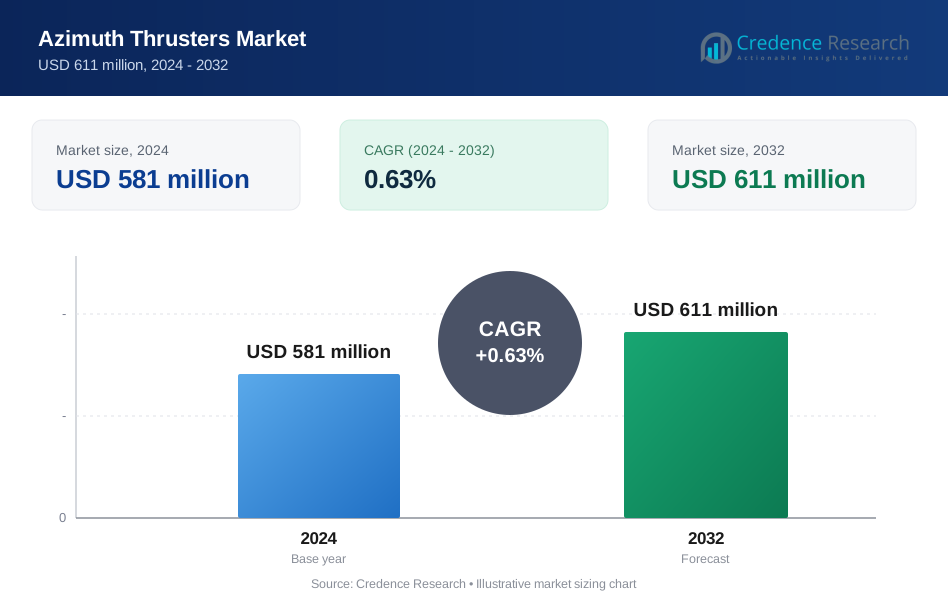
Azimuth Thrusters Market size was valued at USD 581 million in 2024 and is anticipated to reach USD 611 million by 2032, at a CAGR of 0.63% during the forecast period.
The Azimuth Thrusters Market is primarily driven by the rising demand for enhanced maneuverability and fuel efficiency in marine vessels, as well as the ongoing modernization of fleets in commercial, offshore, and naval sectors. Increasing adoption of dynamic positioning systems in offshore oil and gas exploration, coupled with growing investments in advanced shipbuilding technologies, supports market growth. Environmental regulations that emphasize reduced emissions and improved energy efficiency are prompting operators to choose azimuth thrusters over conventional propulsion systems. Additionally, the integration of digital control systems and predictive maintenance technologies is emerging as a significant trend, enabling real-time performance monitoring and reducing operational downtime. Industry players are also focusing on the development of hybrid and electric azimuth thrusters to meet evolving sustainability requirements. Collectively, these drivers and trends underscore the market’s steady progression towards more efficient, eco-friendly, and technologically advanced propulsion solutions for a broad range of maritime applications.
The geographical analysis of the Azimuth Thrusters Market highlights strong demand across Europe, Asia Pacific, and North America, where established maritime industries and ongoing fleet modernization drive significant adoption of advanced propulsion systems. Europe remains a leader due to its robust shipbuilding sector and increasing investment in offshore wind projects, while Asia Pacific benefits from rapid expansion in commercial shipping and offshore exploration activities. North America’s focus on naval modernization and offshore energy development also supports steady growth for azimuth thrusters. Key players such as ABB Ltd., Wärtsilä Oyj Abp, Kongsberg Maritime (Kongsberg Gruppen), and Schottel Group play a pivotal role in shaping the market landscape. These companies continue to innovate with efficient, environmentally friendly solutions and maintain strong partnerships with global shipbuilders, positioning themselves at the forefront of technological advancement and market competitiveness in the maritime propulsion sector.
Market Insights
- The Azimuth Thrusters Market was valued at USD 581 million in 2024 and is expected to reach USD 611 million by 2032, registering a CAGR of 0.63% during the forecast period.
- The market is primarily driven by the demand for improved maneuverability and operational efficiency across commercial, offshore, and naval vessels.
- Key trends include the rising adoption of hybrid and electric propulsion systems, advanced digital monitoring, and the integration of smart control technologies.
- Leading players such as ABB Ltd., Wärtsilä Oyj Abp, Kongsberg Maritime (Kongsberg Gruppen), and Schottel Group focus on innovation, sustainability, and strategic collaborations to strengthen their market position.
- The market faces restraints due to high initial investment costs and complex integration requirements, which may limit adoption among smaller operators and aging fleets.
- Europe maintains strong market momentum due to robust shipbuilding, fleet modernization, and investments in offshore wind projects, while Asia Pacific and North America benefit from expanding shipping activities and naval upgrades.
- Competitive dynamics are shaped by continuous technological advancement, growing focus on aftermarket services, and increased demand for retrofitting and fleet modernization solutions worldwide.
Market Drivers
Growing Demand for Enhanced Maneuverability and Operational Efficiency in Marine Vessels
The Azimuth Thrusters Market benefits significantly from the rising need for improved maneuverability and precise vessel control across a variety of marine applications. Operators in commercial shipping, offshore support, and passenger transport require advanced propulsion systems that allow vessels to move in any direction without the need for traditional rudders. The azimuth thruster’s unique capability to rotate 360 degrees around the vertical axis offers significant advantages in tight harbor environments, dynamic positioning, and docking operations. This adaptability enhances vessel handling in challenging conditions, supporting safer and more efficient operations. Ship owners and fleet operators prioritize investments in systems that deliver tangible operational efficiencies, lower fuel consumption, and reduced maintenance demands. The market’s expansion is supported by a continued focus on vessel uptime and reliability, both of which are enhanced by azimuth thruster technology.
Rising Adoption in Offshore Oil and Gas Exploration and Production Activities
The Azimuth Thrusters Market sees robust growth prospects from the offshore oil and gas sector, where dynamic positioning and station-keeping are critical. Offshore platforms, drilling rigs, and support vessels must maintain accurate positioning for safe and efficient operations, often in harsh marine environments. Azimuth thrusters offer the necessary maneuverability, precision, and redundancy required for these demanding applications. Companies in this sector invest heavily in thruster solutions that support dynamic positioning systems, allowing vessels to hold position even in adverse weather or strong currents. This capability not only supports safety but also enhances productivity by minimizing downtime during transfer or drilling activities. The integration of advanced control technologies further elevates performance, making azimuth thrusters indispensable to offshore energy operations.
- For instance, rising investments in offshore oil and gas exploration are fueling demand for azimuth thrusters in support vessels and drilling rigs.
Environmental Regulations Driving Shift Towards Efficient and Sustainable Propulsion
The Azimuth Thrusters Market is influenced by global environmental regulations that mandate lower emissions and improved energy efficiency in marine transportation. Regulatory authorities across key shipping regions impose strict requirements on greenhouse gas emissions, encouraging vessel owners to upgrade to propulsion systems that deliver higher efficiency and lower environmental impact. Azimuth thrusters contribute to this shift by enabling optimal thrust distribution and fuel economy. It supports the trend towards hybrid and electric propulsion, which aligns with industry efforts to achieve decarbonization targets. Adoption of these advanced systems allows operators to remain compliant while realizing long-term cost savings from reduced fuel consumption and maintenance needs.
- For instance, stricter emissions regulations are encouraging vessel owners to adopt hybrid and electric propulsion systems, including azimuth thrusters.
Technological Advancements and Integration of Digital Solutions
The Azimuth Thrusters Market is shaped by ongoing technological innovation, including the integration of digital monitoring and predictive maintenance tools. Manufacturers focus on developing thrusters with advanced automation, remote diagnostics, and real-time data analytics to optimize performance and reliability. These digital solutions support proactive maintenance schedules, reducing the risk of unplanned downtime and extending equipment lifespan. Smart control systems further improve maneuverability, safety, and energy management. It enables fleet operators to make informed decisions based on operational data, resulting in greater efficiency and reduced operational costs. The continued evolution of digital technologies positions the market for sustained advancement and competitive differentiation.
Market Trends
Increasing Integration of Hybrid and Electric Propulsion Systems
The Azimuth Thrusters Market witnesses a growing trend toward hybrid and electric propulsion technologies, driven by industry demands for enhanced energy efficiency and reduced environmental impact. Shipbuilders and fleet operators seek solutions that combine conventional engines with electric motors to optimize power usage and lower fuel consumption. Hybrid azimuth thrusters support operational flexibility, allowing vessels to switch between power sources depending on mission requirements or environmental regulations. This trend aligns with global efforts to decarbonize the maritime sector and achieve compliance with stringent emission standards. Manufacturers invest in research and development to refine electric thruster systems, enhancing reliability and scalability for different vessel classes. It strengthens the market’s role in enabling sustainable maritime operations.
Advancements in Digitalization and Smart Control Technologies
The Azimuth Thrusters Market experiences significant progress through the adoption of digital monitoring, automation, and smart control systems. Operators leverage real-time data analytics, remote diagnostics, and predictive maintenance tools to optimize thruster performance and reduce operational disruptions. The integration of IoT and cloud-based platforms enhances visibility into equipment status, supporting timely maintenance and minimizing downtime. Smart control solutions offer improved vessel maneuverability and safety by enabling precise thrust adjustments based on navigation requirements. It encourages a data-driven approach to fleet management, helping operators achieve higher efficiency and lower lifecycle costs. These technological advancements reflect the market’s shift toward greater operational intelligence and connectivity.
- For instance, manufacturers are integrating IoT-enabled monitoring and predictive maintenance solutions into azimuth thrusters to enhance reliability and reduce operational costs.
Focus on Customization and Modular Design for Diverse Applications
The Azimuth Thrusters Market trends toward greater product customization and modularity to meet the evolving requirements of various marine sectors. Shipowners demand propulsion solutions tailored to specific vessel sizes, operational profiles, and application needs, such as offshore support, tugs, ferries, or naval vessels. Modular thruster designs facilitate easier installation, maintenance, and future upgrades, reducing overall vessel downtime. Manufacturers respond by offering flexible product platforms that accommodate different power ratings, mounting configurations, and integration options. It enables operators to optimize vessel performance while reducing total cost of ownership. This focus on customization underscores the market’s responsiveness to changing end-user demands.
- For instance, manufacturers are offering modular pump systems tailored to the requirements of various industries, including water utilities, oil and gas, and power generation.
Growth in Retrofit Projects and Aftermarket Services
The Azimuth Thrusters Market increasingly sees demand from retrofit projects and aftermarket service offerings, supporting aging fleets seeking operational upgrades. Vessel operators invest in replacing outdated propulsion systems with modern azimuth thrusters to improve maneuverability, fuel efficiency, and regulatory compliance. Aftermarket services such as remote support, component upgrades, and maintenance packages become critical for ensuring continuous vessel availability. Service providers focus on expanding their global footprint to offer timely assistance and minimize service disruptions for clients. It drives recurring revenue streams and reinforces long-term relationships between manufacturers and fleet operators. The emphasis on retrofit and service trends highlights the market’s role in supporting fleet modernization and lifecycle management.
Market Challenges Analysis
High Initial Investment and Complex Integration Hinder Widespread Adoption
The Azimuth Thrusters Market faces challenges related to the high initial capital expenditure required for purchasing and installing advanced propulsion systems. Shipowners and operators must allocate significant budgets not only for the thruster units themselves but also for the complex engineering and integration processes. The need for skilled technicians and specialized infrastructure further elevates project costs, which can deter smaller operators from upgrading to azimuth thruster technology. It creates a barrier to market entry, especially for those operating on tight margins or managing older fleets. Extended lead times for customization and installation can delay project timelines and impact vessel availability. Cost sensitivity across the marine sector intensifies scrutiny of return on investment and limits the pace of new technology adoption.
- For instance, shipowners and operators must allocate significant budgets for thruster units, engineering, and integration, which can deter smaller operators from upgrading.
Maintenance Demands and Technical Skill Gaps Affect Operational Reliability
The Azimuth Thrusters Market contends with operational challenges stemming from the maintenance demands of advanced propulsion systems. Regular servicing, inspections, and occasional overhauls are essential to ensure continuous performance and prevent costly downtime. Operators must invest in skilled personnel who possess the technical expertise to manage and maintain digital controls, mechanical components, and power systems unique to azimuth thrusters. Limited access to trained professionals or spare parts can prolong maintenance cycles, reducing vessel uptime and efficiency. It increases the operational risk for fleet managers who must balance performance with ongoing maintenance costs. These challenges highlight the need for robust support networks and training programs to sustain long-term market growth.
Market Opportunities
Rising Demand for Hybrid and Electric Vessels Presents New Growth Avenues
The Azimuth Thrusters Market stands to benefit from the accelerating transition toward hybrid and electric-powered vessels across commercial, offshore, and passenger segments. Regulatory pressure for emission reduction and industry commitment to sustainable practices prompt vessel operators to adopt propulsion solutions that support cleaner operations. The development of high-efficiency electric azimuth thrusters aligns with this trend, enabling shipbuilders to deliver vessels with lower carbon footprints and improved energy management. It opens up substantial opportunities for manufacturers to collaborate with shipyards and technology providers in delivering next-generation solutions tailored for low-emission fleets. Investments in research and development for advanced motor technologies and integrated control systems further expand the potential for market growth. The increasing number of green shipbuilding projects globally provides a strong foundation for long-term expansion.
Retrofit and Modernization Initiatives Offer Significant Aftermarket Potential
The Azimuth Thrusters Market finds opportunities in the growing wave of fleet modernization and retrofit projects, driven by both regulatory requirements and the need for operational efficiency. Shipowners increasingly seek to upgrade existing vessels with azimuth thruster systems to enhance maneuverability, fuel efficiency, and compliance with environmental standards. It stimulates demand for tailored retrofit packages, engineering services, and ongoing technical support. Aftermarket offerings, such as remote diagnostics, predictive maintenance, and spare parts management, present recurring revenue opportunities for service providers and OEMs. The focus on extending vessel lifecycles and optimizing operational costs supports a robust market for aftermarket solutions. This trend positions the market to capture value across both newbuild and existing vessel segments.
Market Segmentation Analysis:
By Type:
The Azimuth Thrusters Market demonstrates strong segmentation by power output, with the type segment divided into less than 1500KW, 1500KW-3500KW, and more than 3500KW categories. Less than 1500KW thrusters cater primarily to small-scale vessels such as tugboats and recreational boats, where maneuverability and compact design are essential. The 1500KW-3500KW segment holds substantial demand from medium-sized commercial vessels, offshore support vessels, and ferries that require a balance of power and efficiency for diverse operational needs. More than 3500KW thrusters target large vessels, including naval ships and offshore drilling platforms, where robust propulsion and high thrust capacity are critical to supporting heavy loads and challenging sea conditions. The differentiation across these categories enables operators to select propulsion systems tailored to specific vessel sizes and mission profiles.
By Drive System:
Drive system segmentation in the Azimuth Thrusters Market includes electric drive, diesel drive, and hydraulic drive systems. Electric drive systems are gaining traction due to growing environmental awareness and regulatory pressure for reduced emissions, making them a preferred choice for new-build vessels and those focused on sustainability. Diesel drive systems remain popular in regions and applications where fuel flexibility and high power density are required, supporting a variety of commercial and industrial vessels. Hydraulic drive systems serve specialized use cases, offering precise control and robust performance for vessels operating in dynamic or heavy-duty environments. The diversity in drive systems allows vessel operators to address unique operational requirements and adapt to changing technological trends.
By Vessel Type:
Vessel type segmentation highlights the broad applicability of azimuth thrusters across naval ships, offshore drilling, recreational boats, offshore wind farms-including crew transfer vessels (CTVs) and service operation vessels (SOVs)-and other specialized vessels. Naval ships utilize high-capacity thrusters to support tactical maneuvering, enhanced agility, and rapid response, while offshore drilling platforms depend on powerful thrusters for station-keeping and dynamic positioning during critical operations. Recreational boats and smaller commercial vessels benefit from the maneuverability and ease of operation that azimuth thrusters provide, supporting safety and user experience. The growing offshore wind farm sector fuels demand for azimuth thrusters in CTVs and SOVs, enabling precise navigation and efficient crew transfer in challenging conditions. The market’s ability to serve a diverse range of vessel types underscores its adaptability and enduring relevance in the global maritime industry.
Segments:
Based on Type:
- Less than 1500KW
- 1500KW-3500KW
- More than 3500KW
Based on Drive System
- Electric Drive System
- Diesel Drive System
- Hydraulic Drive System
Based on Vessel Type
- Naval Ships
- Offshore Drilling
- Recreational Boats
- Offshore Wind Farms (CTVs, SOVs)
- Others
Based on End-user
- OEM
- Aftermarket
Based on the Geography:
- North America
- U.S.
- Canada
- Mexico
- Europe
- UK
- France
- Germany
- Italy
- Spain
- Russia
- Belgium
- Netherlands
- Austria
- Sweden
- Poland
- Denmark
- Switzerland
- Rest of Europe
- Asia Pacific
- China
- Japan
- South Korea
- India
- Australia
- Thailand
- Indonesia
- Vietnam
- Malaysia
- Philippines
- Taiwan
- Rest of Asia Pacific
- Latin America
- Brazil
- Argentina
- Peru
- Chile
- Colombia
- Rest of Latin America
- Middle East
- UAE
- KSA
- Israel
- Turkey
- Iran
- Rest of Middle East
- Africa
- Egypt
- Nigeria
- Algeria
- Morocco
- Rest of Africa
Regional Analysis
Europe
Europe leads the market with a commanding share of approximately 34%, attributed to the region’s well-established maritime industry, extensive shipbuilding activities, and strong emphasis on adopting advanced marine technologies. European countries such as Norway, the Netherlands, Germany, and the United Kingdom invest heavily in fleet modernization, offshore wind farm installations, and naval upgrades, all of which drive significant demand for azimuth thrusters. The presence of prominent OEMs and marine equipment manufacturers enhances regional market strength, while stringent environmental regulations accelerate the shift towards hybrid and electric propulsion systems. European ports’ ongoing modernization projects and the expansion of the offshore renewable sector reinforce the region’s leadership, establishing it as a benchmark for technological advancement and sustainability in marine propulsion.
Asia Pacific
Asia Pacific holds the second-largest market share at around 31% in 2024, driven by the rapid growth of commercial shipping, offshore exploration, and naval investments across China, Japan, South Korea, and Southeast Asian nations. The region’s substantial shipbuilding capacity and the rising number of newly commissioned vessels create strong demand for modern, efficient propulsion systems such as azimuth thrusters. China and South Korea, in particular, play key roles as global shipbuilding hubs, fostering innovation in marine technology and supporting the adoption of energy-efficient solutions. The expansion of offshore oil and gas operations, together with new offshore wind projects in countries like China and Taiwan, further fuels market opportunities. The Asia Pacific market benefits from favorable government initiatives, growing exports, and increased attention to maritime safety and vessel maneuverability, positioning the region for sustained growth.
North America
North America accounts for a market share of about 21% in the global Azimuth Thrusters Market, underpinned by steady investments in naval modernization, offshore energy, and commercial marine sectors in the United States and Canada. North American shipyards focus on integrating advanced propulsion solutions to support vessel agility, fuel efficiency, and regulatory compliance. The offshore oil and gas sector in the Gulf of Mexico and growing interest in Arctic exploration continue to spur demand for robust thruster systems capable of withstanding harsh environmental conditions. Regulatory frameworks that mandate emission reductions and encourage adoption of digital technologies contribute to market expansion. The region’s strong aftermarket services, technical expertise, and focus on operational reliability strengthen North America’s presence in the azimuth thrusters landscape.
The Middle East & Africa
The Middle East & Africa region captures a market share of approximately 9%, supported by active offshore oil and gas exploration, port infrastructure investments, and fleet expansion in Gulf Cooperation Council (GCC) countries. Shipowners in the Middle East pursue advanced propulsion technologies to improve maneuverability and efficiency in both commercial and support vessels. The region’s focus on building world-class port facilities and strengthening maritime logistics supports ongoing adoption of azimuth thrusters. Africa’s market remains nascent but shows growth potential through offshore resource development and increased participation in international trade. Strategic investments in modernizing regional fleets and enhancing operational performance contribute to the gradual market rise across both subregions.
Latin America
Latin America holds a market share of about 5%, with market growth primarily concentrated in Brazil, Mexico, and other coastal nations involved in offshore energy and shipping. Investment in offshore oil and gas exploration, especially in Brazilian deepwater fields, drives demand for dynamic positioning vessels equipped with azimuth thrusters. Latin American ports’ ongoing expansion and modernization projects further support regional uptake of advanced marine propulsion. While the market remains smaller compared to other regions, rising demand for efficient vessel maneuvering and regulatory compliance are expected to foster steady growth. The combination of local fleet modernization efforts and international collaboration positions Latin America as an emerging participant in the global azimuth thrusters market.
Key Player Analysis
- Wuxi Ruifeng Marine Propulsion Co. Ltd.
- Jastram GmbH & Co KG
- Wärtsilä Oyj Abp
- Kongsberg Maritime (Kongsberg Gruppen)
- ABB Ltd.
- ZF Friedrichshafen AG
- Brunvoll AS
- Schottel Group
- Steerprop Ltd.
- Kawasaki Heavy Industries Ltd.
- Hydromaster
- IHI Power Systems Co. Ltd. (IHI Corporation)
- Thrustmaster of Texas Inc.
- Twin Disc Inc.
Competitive Analysis
The competitive landscape of the Azimuth Thrusters Market features prominent players such as ABB Ltd., Wärtsilä Oyj Abp, Kongsberg Maritime (Kongsberg Gruppen), Schottel Group, Brunvoll AS, ZF Friedrichshafen AG, Steerprop Ltd., Thrustmaster of Texas Inc., Twin Disc Inc., Hydromaster, Jastram GmbH & Co KG, IHI Power Systems Co. Ltd. (IHI Corporation), Kawasaki Heavy Industries Ltd., and Wuxi Ruifeng Marine Propulsion Co. Ltd. These companies hold significant market share due to their extensive product portfolios, advanced engineering capabilities, and long-standing relationships with leading shipbuilders globally. They invest in research and development to enhance propulsion efficiency, reliability, and environmental performance, focusing on hybrid and electric thruster technologies to meet evolving regulatory demands. Strategic partnerships, mergers, and acquisitions are common strategies to expand market reach and enhance technological expertise. Leading players also prioritize aftermarket services, digital solutions, and custom engineering support to strengthen customer loyalty and generate recurring revenue streams. The market remains competitive, with differentiation achieved through innovation, global service networks, and the ability to deliver tailored propulsion solutions for a broad spectrum of vessel types and operational requirements.
Recent Developments
- In November 2024, Astilleros GONDAN and Brunvoll finalized an agreement for Brunvoll to supply a package of azimuth thrusters for an Ocean Energy Support Vessel. As part of this contract, six Brunvoll thrusters, three for azimuth propulsion and three for retractable azimuth thrusters, will be installed on a vessel created by Salt Ship Design. The ship is expected to be delivered to Østensjø Rederi in the latter part of 2027.
- In August 2024, Kongsberg Marine, a leading innovator of maritime technologies, introduced the RD-AZ-2300, a new Rim-drive Azimuth Thruster. The company's newest electric propulsion system provides a strong and effective propeller for an expanded variety of vessels. The RD-AZ-2300 is the perfect choice for ships that operate in harsh conditions, like offshore wind farms.
- In June 2024, Two new azimuth thrusters were successfully installed as the propulsion technologies on the Oceanographic Science Vessel (OOSV) at the Vancouver Shipyards of Seaspan. The thrusters, which weigh 37,900 kg each, provide advanced maneuvering and control by turning the machine horizontally. This marks a significant accomplishment for the program.
- In May 2024, Kongsberg Maritime announced a major update to one of the company's leading subsea construction ships, Solstad's Normand Sentinel. With this modification, the ship will switch to the cutting-edge electric rim-drive azimuth thrusters of Kongsberg Maritime, which will be a significant advancement in achieving marine energy efficiency.
- In May 2024, ZF Marine, a leading manufacturer of propulsion technologies, introduced the ZF AT 50 Series, expanding its line of azimuth thrusters. With outputs of up to 815 kW, ZF is broadening the spectrum of marine vessels that can benefit from the optimal propulsion of this advanced azimuth thruster. Moreover, the ZF AT 50 is as much as 17% more effective than the previous model, based on its innovative gear design and enclosure.
Market Concentration & Characteristics
The Azimuth Thrusters Market exhibits moderate to high market concentration, characterized by the dominance of a select group of established players with strong technological expertise and global service networks. It is shaped by continuous innovation, with leading companies focusing on advanced propulsion systems, digital integration, and environmentally sustainable solutions to address regulatory and operational requirements. The market favors manufacturers capable of delivering customized and reliable products for a diverse range of vessel types, from commercial and offshore vessels to naval ships and recreational boats. Demand is closely tied to shipbuilding activity, fleet modernization programs, and investments in offshore energy and renewable projects. It remains highly competitive, driven by the pursuit of greater energy efficiency, operational reliability, and lifecycle value. Barriers to entry include high capital requirements, complex engineering standards, and the need for extensive support infrastructure, which reinforce the strong positions of established players within the industry.
Report Coverage
The research report offers an in-depth analysis based on Type, Drive System, Vessel Type, End-user and Geography. It details leading market players, providing an overview of their business, product offerings, investments, revenue streams, and key applications. Additionally, the report includes insights into the competitive environment, SWOT analysis, current market trends, as well as the primary drivers and constraints. Furthermore, it discusses various factors that have driven market expansion in recent years. The report also explores market dynamics, regulatory scenarios, and technological advancements that are shaping the industry. It assesses the impact of external factors and global economic changes on market growth. Lastly, it provides strategic recommendations for new entrants and established companies to navigate the complexities of the market.
Future Outlook
- The Azimuth Thrusters Market is projected to experience steady growth, driven by increasing demand for advanced marine propulsion systems across various vessel types.
- The adoption of hybrid and electric azimuth thrusters is expected to rise, aligning with global efforts to reduce emissions and enhance fuel efficiency in maritime operations.
- Technological advancements, including integration with digital control systems and automation, are anticipated to improve maneuverability and operational efficiency of vessels equipped with azimuth thrusters.
- The offshore oil and gas sector's expansion is likely to boost the demand for azimuth thrusters, particularly for dynamic positioning and station-keeping applications.
- Retrofitting existing vessels with azimuth thrusters presents a significant opportunity, as operators seek to modernize fleets and comply with evolving environmental regulations.
- The Asia Pacific region is expected to dominate the market, supported by robust shipbuilding activities and increasing investments in maritime infrastructure.
- Europe is projected to maintain a significant market share, driven by stringent environmental regulations and the region's focus on sustainable shipping solutions.
- North America's market growth is likely to be influenced by investments in naval modernization and offshore energy projects.
- The market is expected to witness increased competition among key players, leading to innovations in product offerings and strategic collaborations.
- Overall, the Azimuth Thrusters Market is poised for growth, supported by technological advancements, regulatory pressures, and the global push towards sustainable maritime operations.
Request a Free Sample
Fill in your details and we'll send you a free sample report.
- Sample data tables & charts
- Research methodology
Need a Custom Version of This Report?
Tailor the scope, geography, or segments to your exact requirements.
- Custom geography or segment scope
- Direct access to our analyst team
Frequently Asked Questions
What is the current size of the Azimuth Thrusters Market?
What factors are driving the growth of the Azimuth Thrusters Market?
What are some challenges faced by the Azimuth Thrusters Market?
Who are the major players in the Azimuth Thrusters Market?
Table of Content
Chapter 1. Report Introduction
- 1.1 Report Description & Purpose
- 1.1.1 Report Title & Market Definition
- 1.1.2 Unique Selling Propositions (USP) & Key Differentiators
- 1.1.3 Value Proposition for Stakeholders
- 1.2 Research Objectives
- 1.2.1 Market Sizing Objectives (Volume & Revenue)
- 1.2.2 Segmentation Objectives
- 1.2.3 Competitive Intelligence Objectives
- 1.2.4 Forecast & Scenario Objectives
- 1.3 Report Scope
- 1.3.1 Azimuth Thrusters Scope – Types & Subtypes Covered
- 1.3.2 Geographic Scope – Regions & Countries Covered
- 1.3.3 Historical Period, Base Year & Forecast Period (2024; forecast to 2032)
- 1.3.4 Inclusions & Exclusions
- 1.4 HS Code & Classification Framework
- 1.5 Currency, Units & Pricing Basis
- 1.6 Target Stakeholders
- 1.7 Limitations & Assumptions
Chapter 2. Executive Summary
- 2.1 Global Azimuth Thrusters Market Snapshot
- 2.1.1 Market Size – Historical (2024) & Forecast (2024-2032) (2024: USD 581 million → 2032: USD 611 million)
- 2.1.2 Volume & Revenue – Global Totals
- 2.1.3 Key Market Highlights – Top Five Facts
- 2.2 Azimuth Thrusters Market Segmentation Snapshot
- 2.2.1 Market Split by Region – 2024 vs. 2032
- 2.3 Competitive Snapshot
- 2.3.1 Top 10 Players by Revenue Share – 2024
- 2.3.2 Top 10 Players by Volume Share – 2024
- 2.3.3 Recent Strategic Developments (18-Month Summary)
- 2.4 Key Investment Highlights & Strategic Conclusions
Chapter 3. Azimuth Thrusters Market Dynamics & Industry Analysis
- 3.1 Market Overview & Context
- 3.1.1 Azimuth Thrusters Market Position in the Broader Automotive Value Chain
- 3.1.2 OEM vs. Replacement Market Dynamics
- 3.1.3 Market Maturity & Development Stage by Region
- 3.2 Azimuth Thrusters Market Drivers
- 3.3 Azimuth Thrusters Market Restraints & Challenges
- 3.4 Azimuth Thrusters Market Opportunities
- 3.5 Porter's Five Forces Analysis
- 3.5.1 Threat of New Entrants
- 3.5.2 Bargaining Power of Suppliers
- 3.5.3 Bargaining Power of Buyers
- 3.5.4 Threat of Substitutes
- 3.5.5 Competitive Rivalry – Intensity Assessment
- 3.6 Azimuth Thrusters Value Chain Analysis
- 3.6.1 Upstream – Raw Material/Input Suppliers
- 3.6.1.1 Raw Material/Input 1
- 3.6.1.2 Raw Material/Input 2
- 3.6.1.3 Raw Material/Input 3
- 3.6.2 Midstream – Production/Manufacturing/Service Delivery
- 3.6.2.1 Production/Process Overview
- 3.6.2.2 Key Facility Locations & Capacity by Manufacturer
- 3.6.3 Downstream – Distribution & End Consumer
- 3.6.3.1 Primary Channel – B2B/OEM
- 3.6.3.2 Secondary Channels – Dealer, Retail, Online, Direct
- 3.6.4 Value Chain Profitability Analysis
- 3.6.1 Upstream – Raw Material/Input Suppliers
- 3.7 PESTEL Analysis
- 3.7.1 Political Factors
- 3.7.2 Economic Factors
- 3.7.3 Social Factors
- 3.7.4 Technological Factors
- 3.7.5 Environmental Factors
- 3.7.6 Legal Factors
- 3.8 Azimuth Thrusters Supply Chain Analysis
- 3.8.1 Raw Material/Input Supply Risk Assessment
- 3.8.2 Manufacturing Concentration Risk (Geographic Exposure)
- 3.8.3 Trade Disruption Impact Analysis
- 3.9 Regulatory & Policy Landscape
Note: The regulatory and policy landscape section covers regulations based on their applicability to the market, Azimuth Thrusters category, geography, and scope of the study. Only regulatory frameworks with a material impact on operations, compliance, trade, sustainability, or market access are analyzed in detail.
Chapter 4. Key Investment Pockets & Opportunity Analysis
- 4.1 Azimuth Thrusters Market Attractiveness Analysis
- 4.1.1 By Region – Investment Attractiveness Matrix (Volume × CAGR)
- 4.2 Absolute Revenue Growth Opportunity
- 4.2.1 By Region – Absolute USD Growth Through 2032
- 4.3 Incremental Volume Opportunity
- 4.3.1 By Region – Incremental Volume Through 2032
- 4.3.2 Segment – Incremental Volume
- 4.4 Emerging Submarket Opportunity Deep Dive (Subject to Applicability)
- 4.5 Emerging Market Opportunity Scorecards
- 4.5.1 United States
- 4.5.2 Europe
- 4.5.3 Asia
- 4.5.4 Middle East & Africa
Note: Emerging Market Opportunity Scorecards will be included based on relevance and strategic importance. Regions listed are indicative and may vary depending on data availability and market dynamics.
Chapter 5. Azimuth Thrusters Import-Export Analysis & Trade Flows
- 5.1 Global Trade Overview
- 5.1.1 Global Export Value by Country (2024)
- 5.1.2 Global Export Volume by Country (2024)
- 5.1.3 Global Import Value by Country (2024)
- 5.1.4 Global Import Volume by Country (2024)
- 5.1.5 Net Trade Balance by Country (2024)
- 5.2 Export Analysis – Segment
- 5.2.1 Type 1 (HS Code)
- 5.2.2 Type 2 (HS Code)
- 5.2.3 Type 3 (HS Code)
- 5.2.4 Type 4 (HS Code)
- 5.2.5 Type 5 (HS Code)
- 5.3 Import Analysis – Segment
- 5.3.1 Type 1 (HS Code)
- 5.3.2 Type 2 (HS Code)
- 5.3.3 Type 3 (HS Code)
- 5.3.4 Type 4 (HS Code)
- 5.3.5 Type 5 (HS Code)
- 5.4 Average Unit Trade Prices
- 5.4.1 Average Export Price – Segment & Country
- 5.4.2 Average Import Price – Segment & Source Country
- 5.4.3 Price Trends (2024)
- 5.5 Key Trade Route Analysis
- 5.5.1 Trade Route 1
- 5.5.2 Trade Route 2
- 5.5.3 Trade Route 3
- 5.5.4 Trade Route 4
- 5.5.5 Trade Route 5
- 5.6 Trade Policy Impact Assessment
- 5.6.1 US Anti-Dumping & Section 301 Tariffs
- 5.6.2 EU Customs Union Impact
- 5.6.3 Major Free Trade Agreements
- 5.6.4 USMCA Rules of Origin
Note: Trade policy analysis will be included only where relevant to the Azimuth Thrusters market.
Chapter 6. Competitive Landscape & Company Benchmarking
- 6.1 Azimuth Thrusters Market Concentration & Structure
- 6.1.1 Herfindahl-Hirschman Index (HHI) – vs. 2024
- 6.1.2 Tier 1, Tier 2 & Tier 3 Market Structure
- 6.1.3 Global, Regional & Local Player Dynamics
- 6.2 Azimuth Thrusters Market Share Analysis – 2024
- 6.2.1 Global Revenue Share by Company
- 6.2.2 Global Volume Share by Company
- 6.2.3 Regional Revenue Share
- 6.2.4 Market Share Evolution ( vs. 2024)
- 6.2.5 OEM Segment Share by Company
- 6.2.6 Replacement Segment Share by Company
- 6.3 Production/Delivery Capacity & Facility Analysis
- 6.3.1 Global Installed Capacity
- 6.3.2 Capacity Utilization Rates
- 6.3.3 Production/Output Volume
- 6.3.4 Facility Locations & Capacity Map
- 6.3.5 Planned Capacity Additions
- 6.4 Azimuth Thrusters Competitive Benchmarking Matrix
- 6.4.1 Revenue, Volume, CAGR & Profitability Comparison
- 6.4.2 Channel Revenue Mix
- 6.4.3 Geographic Revenue Exposure
- 6.4.4 R&D Intensity
- 6.4.5 Sustainability Maturity
- 6.5 Strategic Developments in Azimuth Thrusters (Last 24 Months)
- 6.5.1 Mergers, Acquisitions & Divestments
- 6.5.2 New Azimuth Thrusters Launches
- 6.5.3 Facility Expansions
- 6.5.4 Strategic Alliances, Joint Ventures & Partnerships
- 6.5.5 Distribution Expansion & Market Entry
- 6.5.6 Sustainability & ESG Initiatives
- 6.6 Competitive Strategy Mapping
- 6.6.1 Leader, Challenger, Follower & Niche Classification
- 6.6.2 Pricing Strategy Comparison
- 6.6.3 Channel Strategy Matrix
Note: Strategic developments are included based on their materiality and the availability of reliable information.
Chapter 7. Global Azimuth Thrusters Market – By Distribution Channel
- 7.1 Segment Overview
- 7.1.1 Volume & Revenue Split by Channel (2024 & 2032)
- 7.1.2 Channel Mix Evolution (2024-2032)
Chapter 8. Regional Market Analysis – Global Overview
- 8.1 Global Regional Overview
- 8.1.1 Regional Volume Share
- 8.1.2 Regional Revenue Share
- 8.1.3 Regional Volume by Region
- 8.1.4 Regional Revenue by Region
- 8.1.5 Regional Forecast Through 2032
- 8.2 Cross-Regional Segment Analysis
- 8.2.1 By Distribution Channel
- 8.2.2 By Brand/Price Tier
Chapter 9. North America Azimuth Thrusters Market
- 9.1 United States
- 9.2 Canada
- 9.3 Mexico
Chapter 10. Europe Azimuth Thrusters Market
- 10.1 Germany
- 10.2 France
- 10.3 Italy
- 10.4 United Kingdom
- 10.5 Spain
- 10.6 Poland
- 10.7 Russia
- 10.8 Netherlands
- 10.9 Belgium
- 10.10 Sweden
- 10.11 Denmark
- 10.12 Norway
- 10.13 Rest of Europe
Chapter 11. Asia Pacific Azimuth Thrusters Market
- 11.1 China
- 11.2 India
- 11.3 Japan
- 11.4 South Korea
- 11.5 Thailand
- 11.6 Indonesia
- 11.7 Vietnam
- 11.8 Malaysia
- 11.9 Australia
- 11.10 Rest of Asia Pacific
Chapter 12. Latin America Azimuth Thrusters Market
- 12.1 Brazil
- 12.2 Argentina
- 12.3 Colombia
- 12.4 Chile
- 12.5 Rest of Latin America
Chapter 13. Middle East Azimuth Thrusters Market
- 13.1 Saudi Arabia
- 13.2 United Arab Emirates
- 13.3 Turkey
- 13.4 Israel
- 13.5 Iran
- 13.6 Rest of the Middle East
Chapter 14. Africa Azimuth Thrusters Market
- 14.1 South Africa
- 14.2 Egypt
- 14.3 Nigeria
- 14.4 Morocco
- 14.5 Rest of Africa
Chapter 15. Azimuth Thrusters Company Profiles
- 15.1 [Company 01]
- 15.1.1 Company Overview
- 15.1.2 Key Management Personnel
- 15.1.3 Products & Services Portfolio
- 15.1.4 Financial Performance
- 15.1.5 Key Market Focus & Geographic Presence
- 15.1.6 Recent Developments & Strategic Initiatives
Note: The company profile list is preliminary and may change based on research findings, market developments, data availability, and client requirements.
Chapter 16. Appendices
- Appendix A – List of Abbreviations & Acronyms
- Appendix B – Industry Classification Code Reference – Full Series
- Appendix C – Production & Capacity Data Tables
- Appendix D – End-Use & Demand Base Tables
- Appendix E – Consumption & Replacement Rate Assumptions
- Appendix F – ASP Reference Tables
- Appendix G – Manufacturing & Facility Database
- Appendix H – Import-Export Data Tables
- Appendix I – Regulatory Summary Tables
- Appendix J – Primary Research Participant List (Anonymized)
- Appendix K – Primary Research Questionnaire Framework
- Appendix L – Data Sources & Bibliography
- Appendix M – Market Size Divergence & Source Comparison
Chapter 17. Research Methodology
- 17.1 Research Framework & Philosophy
- 17.2 Secondary Research – Sources, Hierarchy & Data Extraction
- 17.3 Data Modeling – Bottom-Up & Top-Down Market Sizing
- 17.4 Primary Research – Stakeholder Framework, LOI & Sample Sizes
- 17.5 Forecast Methodology – Regression, Scenario & Sensitivity Analysis
- 17.6 Quality Control – Four-Layer Validation Framework
- 17.7 Limitations & Standard Assumptions
- 17.8 Disclaimer
