Market Overview:
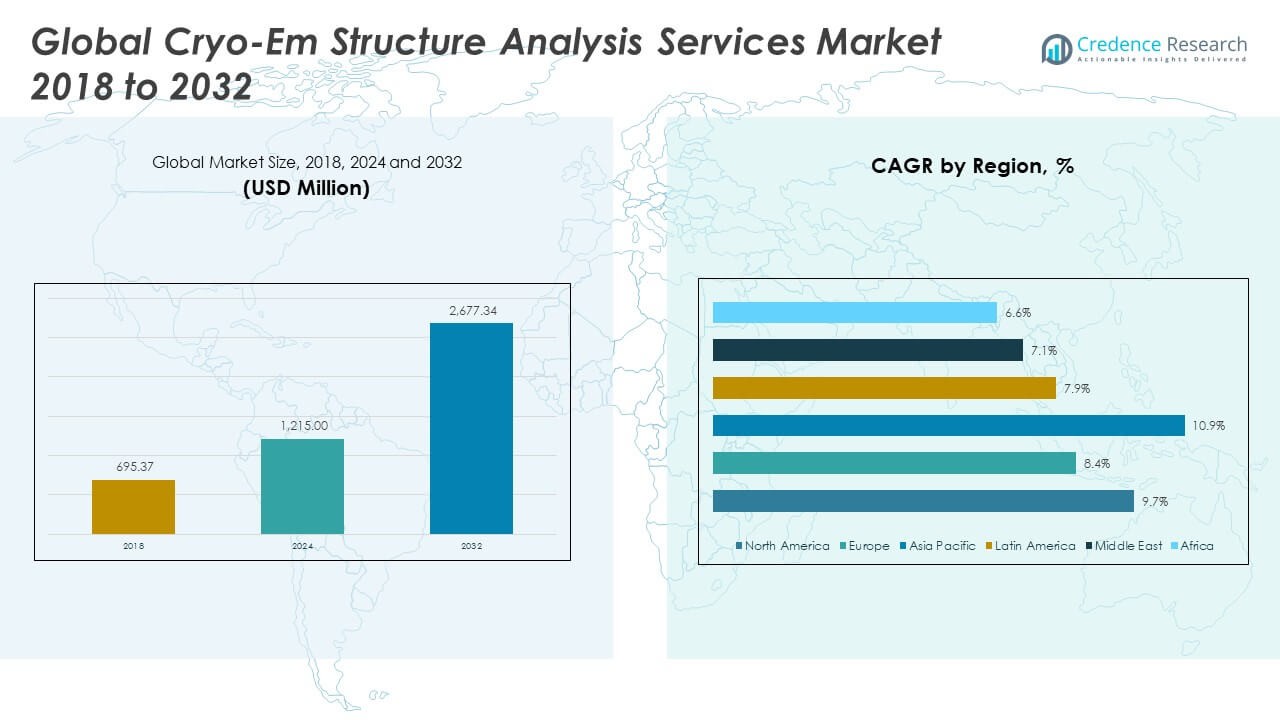
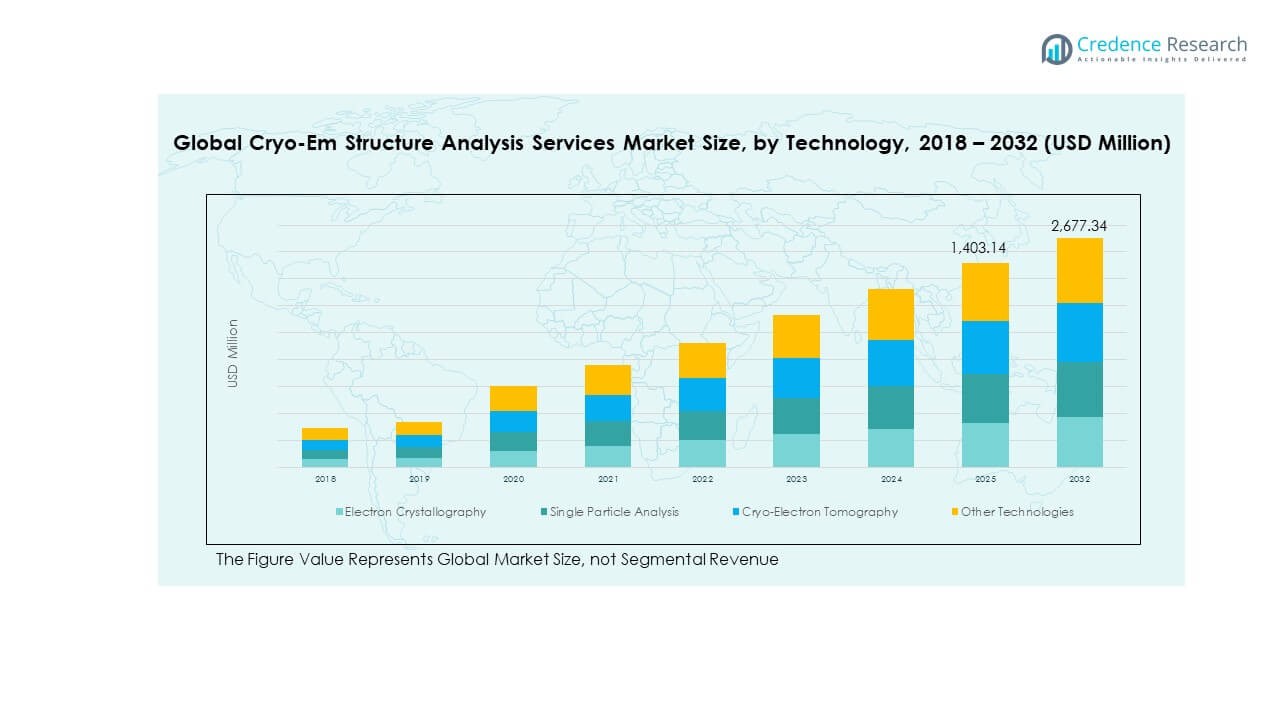
The Global Cryo-Em Structure Analysis Services Market size was valued at USD 695.37 million in 2018 to USD 1,215.00 million in 2024 and is anticipated to reach USD 2,677.34 million by 2032, at a CAGR of 9.67% during the forecast period.
| REPORT ATTRIBUTE | DETAILS |
|---|---|
| Historical Period | 2020-2024 |
| Base Year | 2024 |
| Forecast Period | 2025-2032 |
| Cryo-Em Structure Analysis Services Market Size 2024 | USD 1,215.00 Million |
| Cryo-Em Structure Analysis Services Market , CAGR | 9.67% |
| Cryo-Em Structure Analysis Services Market Size 2032 | USD 2,677.34 Million |
The market is being driven by rising demand for high-resolution structural biology techniques, especially in drug discovery and protein characterization. Advances in cryo-electron microscopy technologies are enhancing accuracy, enabling researchers to study complex biomolecular structures at near-atomic levels. Increased pharmaceutical and biotechnology investments, coupled with the growing adoption of structural analysis for therapeutic development, are accelerating the demand. Furthermore, academic research institutions and contract research organizations are actively expanding their cryo-EM capabilities to meet the rising need for precision-driven biomedical innovations.
Regionally, North America holds a strong position in the market due to advanced infrastructure, high R&D spending, and early adoption of cryo-EM technologies by pharmaceutical and biotech companies. Europe follows with robust government funding and collaborative research initiatives supporting structural biology. Meanwhile, Asia-Pacific is emerging as the fastest-growing region, driven by increasing investments in life sciences, expanding academic collaborations, and rising demand for innovative drug development solutions in countries such as China, Japan, and India. These dynamics collectively highlight a global shift toward broader accessibility and utilization of cryo-EM services.
Market Insights:
- The Global Cryo-Em Structure Analysis Services Market was valued at USD 695.37 million in 2018, reached USD 1,215.00 million in 2024, and is anticipated to attain USD 2,677.34 million by 2032, growing at a CAGR of 9.67%.
- North America held 43.9% of the 2024 share, Europe accounted for 17.6%, and Asia Pacific contributed 30.0%, with their dominance driven by strong R&D ecosystems, advanced infrastructure, and pharmaceutical adoption.
- Asia Pacific is the fastest-growing region with a 10.9% CAGR, supported by heavy investments in life sciences, expanding collaborations, and rising demand in China, Japan, and India.
- Single Particle Analysis dominated with an estimated 52% share in 2024, making it the most widely adopted technology due to its capability to resolve biomolecules at near-atomic resolution.
- Cryo-Electron Tomography followed with around 22% share, reflecting its growing importance in studying macromolecules in native cellular environments and advancing biomedical research.
Market Drivers
Rising demand for advanced structural biology techniques in drug discovery and therapeutic research
The Global Cryo-Em Structure Analysis Services Market benefits from the growing reliance on high-resolution imaging for accurate protein and biomolecular characterization. Pharmaceutical companies are adopting cryo-EM to accelerate drug discovery pipelines and enhance target validation. It provides insights into structural dynamics that traditional techniques such as X-ray crystallography cannot achieve. Researchers value its ability to study biomolecules in near-native environments without requiring crystallization. Academic institutions are investing in infrastructure to strengthen collaborative research outputs. Contract research organizations are expanding service capabilities to meet industry demand. Government initiatives supporting life sciences innovation are also contributing to wider adoption. The growing acceptance of cryo-EM across research and clinical applications strengthens its role in advancing biomedical discoveries.
- For example, Pfizer operates a cryo-electron microscopy (cryo-EM) facility at its Groton, Connecticut research site, where it uses a Titan Krios microscope to advance structural biology studies. The company applies cryo-EM to visualize complex biomolecular structures and accelerate drug discovery by enabling precise analysis of drug–target interactions across multiple therapeutic areas.
Expanding pharmaceutical and biotechnology industry investments driving technological adoption
The Global Cryo-Em Structure Analysis Services Market is experiencing growth fueled by increasing funding in drug development and precision medicine initiatives. Pharmaceutical and biotechnology firms are investing in cryo-EM services to evaluate complex biomolecular interactions. It supports the identification of druggable targets, leading to efficient development of novel therapeutics. The growing prevalence of chronic diseases and the demand for biologics create a favorable environment for adoption. Companies prioritize structural analysis to reduce failure rates in clinical trials and shorten timelines. Research partnerships between industry and academia are promoting collaborative innovation. Large-scale investments in biopharmaceutical R&D further enhance the need for cryo-EM services. Governments supporting healthcare innovation are indirectly strengthening this sector’s growth prospects.
- For example, AstraZeneca is a member of the Cambridge Pharmaceutical Cryo-EM Consortium, which was established with FEI, the University of Cambridge, the UK Medical Research Council, and several pharmaceutical partners. Through this initiative, AstraZeneca leverages access to advanced cryo-electron microscopy facilities in Cambridge to study complex protein structures and accelerate research in areas such as oncology and cardiometabolic diseases.
Rising awareness of cryo-EM advantages over conventional imaging techniques in research communities
The Global Cryo-Em Structure Analysis Services Market benefits from a broader understanding of cryo-EM’s strengths compared to traditional tools. Scientists acknowledge its ability to visualize large protein complexes at atomic-level resolution. It avoids limitations of crystallography, including challenges in producing stable crystals. Cryo-EM delivers structural clarity for difficult-to-crystallize molecules such as membrane proteins and viral assemblies. Research teams value its potential in virology, oncology, and neuroscience. Service providers are building stronger educational outreach to inform research communities about the applications. Academic programs integrating cryo-EM training are improving workforce readiness. This collective awareness leads to increased service utilization across multiple disciplines.
Growing role of government initiatives and collaborative research programs enhancing access
The Global Cryo-Em Structure Analysis Services Market is supported by funding policies aimed at promoting structural biology infrastructure. National research agencies allocate grants to universities and institutions to install high-end cryo-EM equipment. It enhances accessibility for researchers who cannot invest in costly independent facilities. International collaborations are fostering data-sharing platforms for structural biology. Service providers are partnering with government-backed laboratories to expand service reach. Funding also supports workforce development through specialized training initiatives. Collaborative frameworks accelerate discoveries in life sciences and medicine. These combined efforts build a supportive ecosystem that promotes sustainable growth of cryo-EM services globally.
Market Trends
Integration of artificial intelligence and automation improving structural analysis workflows
The Global Cryo-Em Structure Analysis Services Market is witnessing the adoption of artificial intelligence to accelerate image processing and data interpretation. AI-powered algorithms enable faster particle recognition and reconstruction accuracy. It reduces the time required for complex structural modeling and minimizes manual errors. Automated systems streamline high-throughput data collection in laboratories. Integration of machine learning models enhances predictive insights for structural validation. Service providers are adopting digital platforms to improve efficiency. Academic institutions are also incorporating AI-driven software into cryo-EM research. This trend is redefining structural biology through more efficient and scalable solutions.
- For example, Thermo Fisher Scientific offers its EPU software platform, including the AI-enabled Smart EPU, to automate single-particle cryo-EM data collection. The software streamlines image acquisition, enhances throughput, and improves reproducibility by reducing manual intervention, enabling researchers to efficiently generate high-quality micrographs for structural analysis.
Expansion of cryo-EM applications into emerging healthcare and clinical research areas
The Global Cryo-Em Structure Analysis Services Market is broadening its scope beyond traditional drug discovery. Cryo-EM services are increasingly used to understand disease mechanisms in oncology, virology, and neurodegenerative disorders. It aids in developing vaccines and advanced biologics by revealing pathogen structures in detail. Clinical researchers use cryo-EM data to validate diagnostic biomarkers. Expanding into personalized medicine, it supports identification of individual-level molecular signatures. Hospitals and clinical labs are beginning to explore cryo-EM integration. Growth of translational research initiatives accelerates its healthcare relevance. The expansion of applications establishes cryo-EM as a versatile tool in medical science.
- For example, researchers at the University of California, San Diego have used cryo-electron microscopy to investigate the structure and function of LRRK2, a protein strongly linked to Parkinson’s disease. Their studies revealed how LRRK2 interacts with microtubules, providing new insights into its role in cellular processes and highlighting pathways that may be relevant for future therapeutic strategies.
Rising collaborations between academic institutions and contract research organizations
The Global Cryo-Em Structure Analysis Services Market is being shaped by increasing partnerships that pool expertise and resources. Academic institutions contribute advanced research capabilities and training. Contract research organizations offer operational efficiency and scalability. It creates a balanced ecosystem where discoveries move quickly toward application. Collaborations reduce capital burdens on smaller labs and extend service availability. Industry stakeholders find value in shared research outputs for drug pipelines. International networks enhance global data repositories in structural biology. Joint ventures are emerging to establish shared cryo-EM centers. These partnerships accelerate both technological progress and adoption.
Technological innovations enhancing resolution and expanding structural coverage
The Global Cryo-Em Structure Analysis Services Market is evolving through technological breakthroughs that improve imaging resolution. Advanced electron detectors and phase plates are enabling higher-quality structural reconstructions. It supports analysis of smaller proteins and more complex biomolecules. Cryo-EM advancements allow better visualization of dynamic molecular processes. Service providers are upgrading facilities with next-generation instruments. Researchers gain access to structural information that was previously unattainable. Technology leaders are developing scalable hardware for broader adoption. These innovations are expanding the boundaries of what cryo-EM can achieve in life sciences research.
Market Challenges Analysis
High capital investment and operational complexity restricting accessibility for smaller players
The Global Cryo-Em Structure Analysis Services Market faces challenges due to the significant financial burden associated with cryo-EM infrastructure. Advanced microscopes require multi-million-dollar investments, which restrict smaller laboratories and institutions from adoption. It is also difficult to maintain specialized equipment due to high operational costs. Service providers must invest heavily in skilled staff to ensure accurate results. Many academic institutions rely on shared facilities, which creates bottlenecks in accessibility. Lack of widespread funding further limits deployment in developing countries. These challenges make scalability difficult, despite the strong demand for services. Ensuring affordable access remains a key hurdle for sustainable growth.
Workforce shortages and technical barriers slowing efficient adoption in research institutions
The Global Cryo-Em Structure Analysis Services Market is constrained by the shortage of skilled professionals with expertise in cryo-EM operations. Advanced image processing requires training that only a limited workforce possesses. It is difficult to scale operations when highly specialized knowledge is concentrated in few centers. Complex workflows and computational demands create additional adoption hurdles. Service providers struggle to balance demand with the available workforce. Academic programs are expanding training initiatives, but the gap persists. Developing countries face an even wider shortfall of skilled staff. These barriers slow the global expansion of cryo-EM services despite technological progress.
Market Opportunities
Expanding role of cryo-EM in personalized medicine and emerging drug development pipelines
The Global Cryo-Em Structure Analysis Services Market presents strong opportunities in the field of personalized medicine and novel therapeutic development. It enables visualization of individual-specific molecular interactions, supporting precision drug design. Pharmaceutical firms are exploring cryo-EM to target diseases with unmet medical needs. Growing adoption in biologics and vaccine development creates new avenues for service providers. Research organizations are leveraging cryo-EM for rare disease analysis. Expanding use cases beyond structural biology increase its commercial significance. Collaborations in healthcare innovation further strengthen this trend. Opportunities for expansion remain high across clinical and pharmaceutical domains.
Rising demand in Asia-Pacific and other emerging regions driving service expansion
The Global Cryo-Em Structure Analysis Services Market is positioned for growth in Asia-Pacific and other emerging markets. It benefits from increasing government investments in life sciences infrastructure. Countries such as China and India are expanding cryo-EM facilities to support biomedical research. Rising collaborations between local institutions and global players create opportunities for regional service growth. Academic networks are enhancing training programs to develop skilled talent pools. Service providers are targeting these regions for cost-effective expansion. Global firms are investing in regional partnerships to capture demand. This momentum highlights significant opportunities for market growth outside mature economies.
Market Segmentation Analysis:
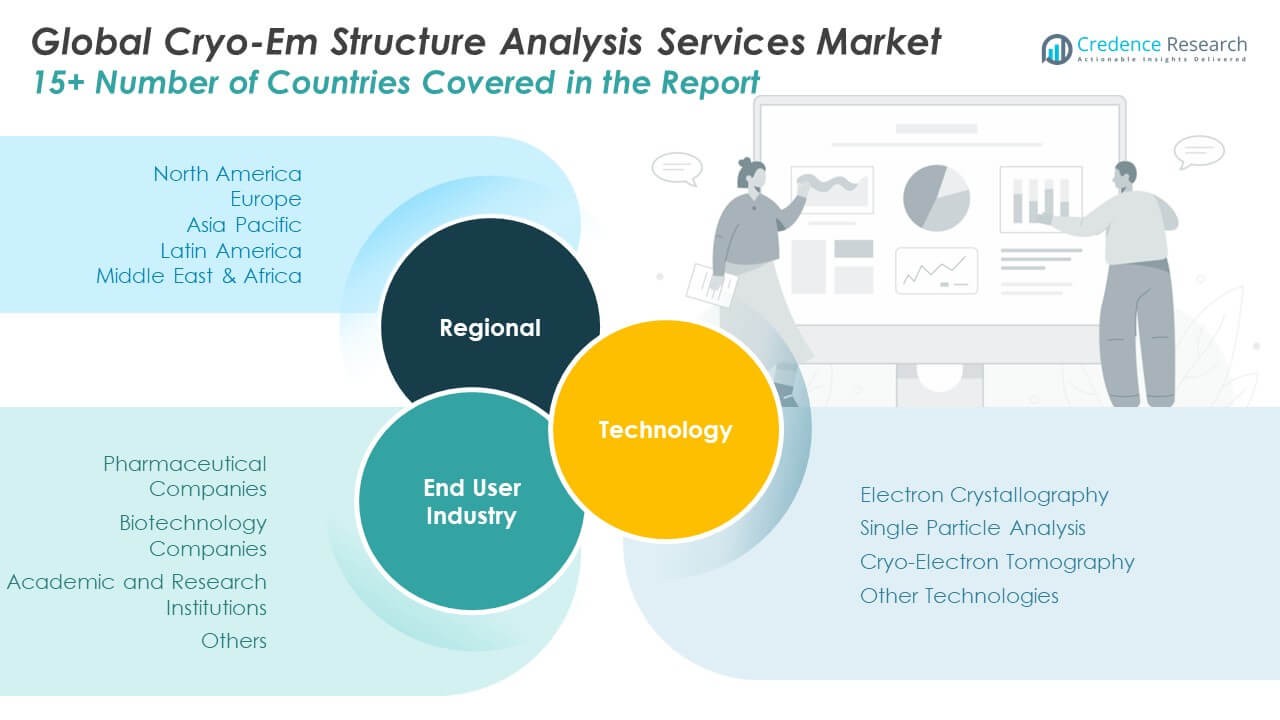
The Global Cryo-Em Structure Analysis Services Market is segmented
By technology into electron crystallography, single particle analysis, cryo-electron tomography, and other technologies. Single particle analysis dominates due to its ability to resolve biomolecules at near-atomic resolution without crystallization. It is widely used in drug discovery and structural biology, making it the preferred approach across pharmaceutical and academic research. Cryo-electron tomography is gaining traction for its strength in studying macromolecules in their native environments, especially in cellular contexts. Electron crystallography remains relevant for membrane proteins and complex assemblies, while other technologies support niche applications and emerging innovations. This segmentation underscores the varied strengths of each method and their collective role in driving adoption across biomedical research.
- For example, Cryo‑electron tomography (cryo‑ET) has been used to visualize bacterial Type III secretion systems (T3SS) in situ, revealing their architecture and how they engage host cells with high structural fidelity.
By end user industry, the Global Cryo-Em Structure Analysis Services Market covers pharmaceutical companies, biotechnology companies, academic and research institutions, and others. Pharmaceutical companies lead demand, using cryo-EM services for drug discovery, target validation, and structural optimization of biologics. Biotechnology firms rely on it to accelerate pipeline development and enhance precision in therapeutic design. Academic and research institutions represent a critical segment, with universities and government-funded centers expanding access to cryo-EM infrastructure. Other end users, including clinical laboratories and contract research organizations, are increasingly integrating cryo-EM for specialized projects. The diverse adoption across these industries reinforces the market’s strategic importance in both commercial and academic applications.
- NanoImaging Services and Cube Biotech’s 2024 partnership offers a prime example: they developed a fully integrated gene-to-structure workflow using cryo-EM for membrane protein targets.
Segmentation:
By Technology
- Electron Crystallography
- Single Particle Analysis
- Cryo-Electron Tomography
- Other Technologies
By End User Industry
- Pharmaceutical Companies
- Biotechnology Companies
- Academic and Research Institutions
- Others
By Region
- North America (U.S., Canada, Mexico)
- Europe (UK, France, Germany, Italy, Spain, Russia, Rest of Europe)
- Asia Pacific (China, Japan, South Korea, India, Australia, Southeast Asia, Rest of APAC)
- Latin America (Brazil, Argentina, Rest of Latin America)
- Middle East (GCC Countries, Israel, Turkey, Rest of Middle East)
- Africa (South Africa, Egypt, Rest of Africa)
Regional Analysis:
North America
The North America Global Cryo-Em Structure Analysis Services Market size was valued at USD 308.21 million in 2018 to USD 533.01 million in 2024 and is anticipated to reach USD 1,177.75 million by 2032, at a CAGR of 9.7% during the forecast period. North America holds the largest share of the market, accounting for 43.9% of the 2024 global revenue. The region benefits from advanced infrastructure, high R&D spending, and early adoption of cryo-EM services by leading pharmaceutical and biotechnology companies. It leads in collaborations between academic institutions and contract research organizations, enabling greater accessibility to advanced technologies. It also receives strong government funding and industry investment, creating a favorable ecosystem for expansion. The U.S. dominates regional adoption due to its concentration of pharmaceutical giants and research institutes. Canada contributes steadily with government-backed life sciences initiatives, while Mexico shows gradual growth through increasing academic participation. This leadership position reflects North America’s role as a hub for technological advancements and commercialization of cryo-EM services.
Europe
The Europe Global Cryo-Em Structure Analysis Services Market size was valued at USD 129.58 million in 2018 to USD 213.98 million in 2024 and is anticipated to reach USD 428.69 million by 2032, at a CAGR of 8.4% during the forecast period. Europe contributes 17.6% of the 2024 global revenue. Strong emphasis on collaborative research frameworks and public funding supports steady growth across the region. The UK, Germany, and France lead the adoption curve with well-established structural biology research centers. It benefits from European Union programs that encourage cross-border collaborations and infrastructure development. Academic institutions and pharmaceutical companies work closely to advance drug discovery using cryo-EM. Germany’s technological strength and the UK’s biomedical research leadership give the region a competitive edge. Southern Europe, including Italy and Spain, is gradually increasing adoption through expanding academic investments. Europe’s balanced mix of public initiatives and private investment positions it as a consistent growth contributor to the global market.
Asia Pacific
The Asia Pacific Global Cryo-Em Structure Analysis Services Market size was valued at USD 197.18 million in 2018 to USD 364.14 million in 2024 and is anticipated to reach USD 876.41 million by 2032, at a CAGR of 10.9% during the forecast period. Asia Pacific represents 30.0% of the 2024 global revenue and is the fastest-growing regional market. China leads adoption due to heavy investment in life sciences infrastructure and national-level research programs. Japan maintains strong demand with advanced academic institutions and partnerships with global technology providers. It also benefits from the growing focus on precision medicine and biologics development in India and South Korea. Expanding collaborations between regional universities and global pharmaceutical firms are accelerating adoption. Australia and Southeast Asia are emerging contributors with increasing government-backed initiatives. Lower costs of operations make Asia Pacific attractive for international players establishing partnerships and research centers. The region’s rapid expansion highlights its rising importance in the global structural biology landscape.
Latin America
The Latin America Global Cryo-Em Structure Analysis Services Market size was valued at USD 31.45 million in 2018 to USD 54.25 million in 2024 and is anticipated to reach USD 105.18 million by 2032, at a CAGR of 7.9% during the forecast period. Latin America contributes 4.5% of the 2024 global revenue. Brazil dominates the region with significant government-backed initiatives in biotechnology and structural biology. Argentina follows with growing academic participation and partnerships with international research networks. It faces challenges in infrastructure investment, but increasing collaborations with North American and European institutions are bridging this gap. Contract research organizations are gradually introducing cryo-EM services to meet the needs of pharmaceutical pipelines. Government support for innovation in healthcare creates a foundation for expansion. Regional universities are playing a critical role in promoting advanced structural research. Despite infrastructure limitations, Latin America is steadily building its presence in this market.
Middle East
The Middle East Global Cryo-Em Structure Analysis Services Market size was valued at USD 18.17 million in 2018 to USD 28.82 million in 2024 and is anticipated to reach USD 52.79 million by 2032, at a CAGR of 7.1% during the forecast period. The Middle East accounts for 2.4% of the 2024 global revenue. Israel leads adoption with advanced research institutes and strong government support for life sciences. The GCC countries are investing heavily in healthcare research infrastructure to diversify economies and support biomedical innovation. Turkey contributes with a growing focus on academic research and regional collaborations. It benefits from increasing partnerships with global pharmaceutical and technology firms. Regional universities and medical centers are establishing advanced laboratories to promote structural biology research. High capital requirements still limit adoption in certain markets. However, government-backed initiatives and international partnerships create long-term growth prospects for the region.
Africa
The Africa Global Cryo-Em Structure Analysis Services Market size was valued at USD 10.78 million in 2018 to USD 20.80 million in 2024 and is anticipated to reach USD 36.52 million by 2032, at a CAGR of 6.6% during the forecast period. Africa represents 1.7% of the 2024 global revenue. South Africa is the leading market with advanced academic infrastructure and government-supported research programs. Egypt is expanding its role through partnerships with international research bodies. It faces challenges in terms of funding, infrastructure, and availability of skilled professionals. Limited awareness among smaller institutions continues to restrict adoption. However, regional governments are gradually recognizing the importance of structural biology for healthcare innovation. Collaborations with global universities and research institutions are improving access to cryo-EM technology. Growing investment in higher education and science is creating opportunities for gradual expansion. Africa remains an emerging market with long-term potential.
Key Player Analysis:
- Thermo Fisher Scientific
- JEOL Ltd.
- FEI Company
- Gatan, Inc.
- Bruker Corporation
- Hitachi High-Technologies Corporation
- Carl Zeiss AG
- Leica Microsystems
- Asahi Spectra Co., Ltd.
- Ametek, Inc.
Competitive Analysis:
The Global Cryo-Em Structure Analysis Services Market is highly competitive with leading players such as Thermo Fisher Scientific, JEOL Ltd., Bruker Corporation, Hitachi High-Technologies Corporation, and Carl Zeiss AG dominating the landscape. These companies focus on advanced cryo-EM instrumentation, detectors, and imaging software, strengthening their positions through innovation and acquisitions. It is driven by continuous technological upgrades that enhance resolution and speed of structural analysis. Service providers collaborate with academic institutions and pharmaceutical firms to expand accessibility. Emerging players, including contract research organizations, contribute by offering cost-effective solutions for specialized projects. Competitive strategies emphasize product portfolio diversification, regional expansion, and partnerships. The market reflects strong competition between global leaders and regional firms seeking to establish footholds in high-growth geographies.
Recent Developments:
- In August 2024, IIT Kanpur inaugurated India's National Cryo-EM facility, a milestone that integrates support from the Science and Engineering Research Board (SERB) and the Anusandhan National Research Foundation (ANRF) to advance drug discovery and disease research with advanced cryo-EM capabilities.
- In April 2025, Thermo Fisher Scientific launched the Krios 5 Cryo-Transmission Electron Microscope (Cryo-TEM), which leverages enhanced optics and AI-enabled automation to improve throughput by up to 25% compared to previous models, supporting advanced breakthroughs in structural biology and drug discovery.
- In July 2023, Generate Biomedicines launched a new cryo-EM laboratory in Massachusetts, USA, equipped with AI-powered technology to accelerate drug development, demonstrating increased investment in structural biology research using cryo-EM structure analysis services.
- In 2023, Fujitsu Limited, in a collaboration with RIKEN’s Drug Development Platform Division, developed an AI technology to predict protein structural changes from electron microscope images as 3D density maps, streamlining drug discovery workflows in protein structure analysis services.
Market Concentration & Characteristics:
The Global Cryo-Em Structure Analysis Services Market shows moderate to high concentration, with a few multinational firms holding significant market share. It is characterized by high entry barriers due to substantial capital investments, technical complexity, and the requirement for specialized expertise. Industry leaders dominate advanced technology segments, while smaller providers serve niche applications and regional markets. Strategic alliances and collaborations play a central role in expanding service reach. Continuous R&D investment defines the market’s competitive edge, with players competing on innovation, precision, and scalability.
Report Coverage:
The research report offers an in-depth analysis based on Technology and End User Industry. It details leading market players, providing an overview of their business, product offerings, investments, revenue streams, and key applications. Additionally, the report includes insights into the competitive environment, SWOT analysis, current market trends, as well as the primary drivers and constraints. Furthermore, it discusses various factors that have driven market expansion in recent years. The report also explores market dynamics, regulatory scenarios, and technological advancements that are shaping the industry. It assesses the impact of external factors and global economic changes on market growth. Lastly, it provides strategic recommendations for new entrants and established companies to navigate the complexities of the market.
Future Outlook:
- The Global Cryo-Em Structure Analysis Services Market will expand with rising integration of high-resolution imaging into pharmaceutical and biotechnology pipelines.
- Adoption will accelerate as cryo-EM becomes a mainstream tool for drug discovery and precision medicine.
- Service providers will benefit from increased collaborations between academia, research institutions, and industry.
- Technological improvements in detectors and automation will reduce processing time and improve data accuracy.
- Growth in personalized medicine will enhance demand for molecular-level insights offered by cryo-EM services.
- Emerging markets in Asia-Pacific and the Middle East will attract investment due to expanding research infrastructure.
- Contract research organizations will gain a larger role by providing cost-effective and scalable service models.
- Artificial intelligence integration will streamline analysis workflows and enhance reproducibility of structural data.
- Governments and funding agencies will support expansion through infrastructure grants and training programs.
- Expanding applications in virology, oncology, and neuroscience will create new revenue opportunities for service providers.

Request a Free Sample
Fill in your details and we'll send you a free sample report.
- Sample data tables & charts
- Research methodology
Market Dynamics
Adoption in Drug Discovery and Therapeutic Research
Pharmaceutical and biotechnology companies are increasingly utilizing cryo-EM structure analysis services to accelerate drug discovery, target validation, and the development of biologics, as cryo-EM enables high-resolution visualization of biomolecular interactions that are critical for precision medicine.
Technological Advancements in Cryo-EM
Continuous improvements in cryo-EM instrumentation, such as enhanced detectors, automation, and AI-driven image processing, are increasing throughput, accuracy, and accessibility, making advanced structural analysis more feasible for a broader range of research and commercial applications.
Expansion of Academic and Collaborative Research Infrastructure
Academic institutions and contract research organizations are investing in cryo-EM facilities and forming partnerships to expand access, share resources, and drive innovation, which is increasing the overall capacity and utilization of cryo-EM services globally.
Government and Public Funding Initiatives
National and regional governments are supporting the installation of cryo-EM infrastructure and workforce development through grants and collaborative programs, lowering barriers to entry and enabling more institutions to participate in advanced structural biology research.
Rising Demand in Emerging Markets
Asia-Pacific and other emerging regions are experiencing rapid growth in cryo-EM adoption due to increased investments in life sciences, expanding academic collaborations, and the need for innovative drug development solutions, driving global market expansion.
Need a Custom Version of This Report?
Tailor the scope, geography, or segments to your exact requirements.
- Custom geography or segment scope
- Direct access to our analyst team
Frequently Asked Questions
What is the current market size for Global Cryo-Em Structure Analysis Services Market, and what is its projected size in 2032?
At what Compound Annual Growth Rate is the Global Cryo-Em Structure Analysis Services Market projected to grow between 2024 and 2032?
Which Global Cryo-Em Structure Analysis Services Market market segment held the largest share in 2024?
What are the primary factors fueling the growth of the Global Cryo-Em Structure Analysis Services Market?
Who are the leading companies in the Global Cryo-Em Structure Analysis Services Market?
Which region commanded the largest share of the Global Cryo-Em Structure Analysis Services Market in 2024?
Table of Content
Chapter 1 Market Segmentation
- 1.1 Segmentation Framework
- 1.1.1 Product and Service Classification
- 1.1.2 Application and End-Use Classification
- 1.1.3 Technology and Solution Classification
- 1.1.4 Customer and Distribution Channel Classification
- 1.1.5 Geographic Segmentation
- 1.1.6 Market Segment Definitions and Boundaries
- 1.2 By Technology
- 1.2.1 Electron Crystallography
- 1.2.2 Single Particle Analysis
- 1.2.3 Cryo-Electron Tomography
- 1.2.4 Other Technologies
- 1.3 By End User Industry
- 1.3.1 Pharmaceutical Companies
- 1.3.2 Biotechnology Companies
- 1.3.3 Academic and Research Institutions
- 1.3.4 Others
Chapter 2 Introduction
- 2.1 Report Objectives and Scope
- 2.2 Product Definition and Industry Terminology
- 2.3 Market Inclusions and Exclusions
- 2.4 Research Process
- 2.4.1 Primary Research and Expert Interviews
- 2.4.2 Secondary Research and Source Review
- 2.4.3 Top-Down and Bottom-Up Estimation
- 2.4.4 Data Triangulation and Verification
- 2.5 Market Size Measurement Basis
- 2.5.1 2024: USD 1,215.00 million → 2032: USD 2,677.34 million
- 2.6 Historical and Forecast Reference Periods
- 2.6.1 Base Year: 2024
- 2.6.2 Forecast Period: 2024-2032
- 2.7 Research Assumptions and Limitations
Chapter 3 Executive Summary
- 3.1 Market Snapshot and Key Findings
- 3.2 Base-Year Market Size, 2024
- 3.3 Forecast Market Size, 2032
- 3.4 Revenue and Volume Growth Outlook
- 3.5 Key Demand and Supply Indicators
- 3.6 Leading Market Segments
- 3.7 Fastest-Growing Market Opportunities
- 3.8 Regional Performance Highlights
- 3.9 Technology and Industry Transformation
- 3.10 Competitive Landscape Summary
- 3.11 Analyst View and Strategic Implications
Chapter 4 Global Cryo-Em Structure Analysis Services Market Trends and Developments
- 4.1 Historical Industry Development
- 4.2 Recent Market Trends and Developments
- 4.3 Demand and Customer Behavior Trends
- 4.4 Technology and Product Innovation
- 4.5 Artificial Intelligence, Automation and Digitalization
- 4.6 Local Manufacturing and Supply Chain Realignment
- 4.7 Industry Partnerships, Mergers and Acquisitions
- 4.8 Sustainability and Circular Economy Developments
- 4.9 Government and Private Sector Investment Trends
- 4.10 Emerging Business Models and Commercialization
- 4.11 Industry Developments and Announcements
Chapter 5 Global Cryo-Em Structure Analysis Services Market Supply and Demand Analysis
- 5.1 Demand Trend and Consumption Analysis
- 5.2 Demand Forecast, 2024-2032
- 5.3 Supply Chain Structure and Procurement Trends
- 5.4 Supply-Demand Gap and Bottlenecks
- 5.5 Import Dependence and Sourcing Structure
- 5.6 Regional Supply and Demand Concentration
Chapter 6 Global Cryo-Em Structure Analysis Services Market Pricing Analysis
- 6.1 Pricing Structure and Measurement
- 6.2 Historical Pricing Trends
- 6.3 Pricing Outlook, 2024-2032
- 6.4 Pricing by Product and Market Segment
- 6.5 Geographic Pricing Differences
- 6.6 Key Input, Energy, Labor and Logistics Costs
- 6.7 Contract Pricing and Purchasing Models
- 6.8 Pricing Sensitivity and Competitive Positioning
- 6.9 Price, Margin and Profitability Implications
Chapter 7 Global Cryo-Em Structure Analysis Services Market Dynamics
- 7.1 Market Growth Drivers
- 7.1.1 Demand-Side Drivers
- 7.1.2 Technology and Innovation Drivers
- 7.1.3 Infrastructure and Investment Drivers
- 7.1.4 Regulatory and Policy Drivers
- 7.2 Market Restraints
- 7.2.1 Cost and Affordability Constraints
- 7.2.2 Technology and Adoption Barriers
- 7.2.3 Supply Chain and Operational Constraints
- 7.3 Market Challenges
- 7.3.1 Competitive Pressure and Margin Erosion
- 7.3.2 Skills, Infrastructure and Implementation Gaps
- 7.4 Emerging Market Opportunities
- 7.5 Market Dynamics Impact and Time-Horizon Assessment
Chapter 8 Global Cryo-Em Structure Analysis Services Value Chain Analysis
- 8.1 Industry Value Chain Overview
- 8.2 Upstream Suppliers and Critical Inputs
- 8.3 Technology and Component Providers
- 8.4 Manufacturing or Service Delivery
- 8.5 Distribution, Channel Partners and Integrators
- 8.6 Downstream Applications and End Users
- 8.7 Value Addition and Profit Pools
- 8.8 Vertical Integration and Outsourcing
- 8.9 Supplier Concentration and Risk
- 8.10 Supply Chain Localization and Resilience
Chapter 9 Global Cryo-Em Structure Analysis Services Market Regulations and Policies
- 9.1 Relevant Laws, Standards and Compliance Frameworks
- 9.2 Product, Service, Safety and Quality Requirements
- 9.3 Government Policies, Incentives and Subsidies
- 9.4 Imports, Exports and Trade Barriers
- 9.5 Public Procurement and Local Content Requirements
- 9.6 Data Protection, AI and Cybersecurity Compliance
- 9.7 Upcoming Policy Changes and Market Implications
Chapter 10 Global Cryo-Em Structure Analysis Services Market Hotspots and Opportunities
- 10.1 Market Opportunity Mapping and Growth Hotspots
- 10.2 High-Growth Applications and Customer Groups
- 10.3 Underserved Markets and White-Space Opportunities
- 10.4 Emerging Technology and Product Opportunities
- 10.5 New Capacity and Investment Hotspots
- 10.6 Market Entry and Expansion Opportunities
- 10.7 Distribution and Partnership Opportunities
- 10.8 Near-Term and Long-Term Commercial Potential
- 10.9 Opportunity Attractiveness and Execution Risks
Chapter 11 Global Cryo-Em Structure Analysis Services Market Outlook, 2024-2032
- 11.1 Market Size and Analysis
- 11.1.1 Revenue (Market Measurement: 2024: USD 1,215.00 million → 2032: USD 2,677.34 million)
- 11.1.2 Historical Market Size
- 11.1.3 Base-Year Market Size, 2024
- 11.2 Market Forecast, 2024-2032
- 11.2.1 Revenue Forecast to 2032
- 11.2.2 CAGR and Year-on-Year Growth
- 11.2.3 Incremental Revenue Opportunity
- 11.3 Forecast Assumptions and Scenario Analysis
- 11.3.1 Base-Case Forecast
- 11.3.2 Optimistic and Conservative Scenarios
- 11.3.3 Technology, Pricing and Policy Sensitivities
- 11.4 Market Attractiveness and Growth Outlook
Chapter 12 Global Cryo-Em Structure Analysis Services Market Segmentation and Outlook
- 12.1 Segmentation Summary and Market Shares, 2024
- 12.2 Largest and Fastest-Growing Segments
- 12.3 By Technology - Market Size and Forecast, 2024-2032
- 12.3.1 Segment Definition and Scope
- 12.3.2 Historical Market Size
- 12.3.3 Revenue Forecast, 2024-2032
- 12.3.4 Base-Year Market Share, 2024
- 12.3.5 Segment CAGR and Growth Drivers
- 12.3.6 Subsegment Market Size and Forecast
- 12.3.6.1 Electron Crystallography
- 12.3.6.2 Single Particle Analysis
- 12.3.6.3 Cryo-Electron Tomography
- 12.3.6.4 Other Technologies
- 12.3.7 Subsegment Pricing and Adoption Trends
- 12.3.8 Leading Suppliers and Competition
- 12.3.9 Regional Demand and Opportunities
- 12.4 By End User Industry - Market Size and Forecast, 2024-2032
- 12.4.1 Segment Definition and Scope
- 12.4.2 Historical Market Size
- 12.4.3 Revenue Forecast, 2024-2032
- 12.4.4 Base-Year Market Share, 2024
- 12.4.5 Segment CAGR and Growth Drivers
- 12.4.6 Subsegment Market Size and Forecast
- 12.4.6.1 Pharmaceutical Companies
- 12.4.6.2 Biotechnology Companies
- 12.4.6.3 Academic and Research Institutions
- 12.4.6.4 Others
- 12.4.7 Subsegment Pricing and Adoption Trends
- 12.4.8 Leading Suppliers and Competition
- 12.4.9 Regional Demand and Opportunities
- 12.5 Segment Growth Comparison
- 12.6 Segment Attractiveness and Priority Matrix
Chapter 13 Global Cryo-Em Structure Analysis Services End-Use and Application Market Outlook
- 13.1 End-Use Industry and Customer Demand Structure
- 13.2 Leading Applications and Customer Groups
- 13.3 End-Use Market Size, Share and Forecast
- 13.4 Major End-Use Industry Deep Dives
- 13.4.1 Customer Requirements and Use Cases
- 13.4.2 Demand and Replacement Cycles
- 13.4.3 Technical and Regulatory Considerations
- 13.4.4 Purchasing and Procurement Models
- 13.4.5 Leading Vendors and Distribution Channels
- 13.4.6 Forecast and Commercial Opportunities
- 13.5 Emerging Applications and Cross-Segment Demand
- 13.6 End-Use Industry Investment Priorities
Chapter 14 Global Cryo-Em Structure Analysis Services Geographic Market Outlook, 2024-2032
- 14.1 Regional Market Size and Share, 2024
- 14.2 Regional Market Forecast, 2024-2032
- 14.3 Regional Pricing, Production and Demand Differences
- 14.4 North America
- 14.4.1 United States
- 14.4.2 Canada
- 14.4.3 Mexico
- 14.5 Europe
- 14.5.1 Germany
- 14.5.2 France
- 14.5.3 Italy
- 14.5.4 United Kingdom
- 14.5.5 Spain
- 14.5.6 Poland
- 14.5.7 Russia
- 14.5.8 Netherlands
- 14.5.9 Belgium
- 14.5.10 Sweden
- 14.5.11 Denmark
- 14.5.12 Norway
- 14.5.13 Rest of Europe
- 14.6 Asia Pacific
- 14.6.1 China
- 14.6.2 India
- 14.6.3 Japan
- 14.6.4 South Korea
- 14.6.5 Thailand
- 14.6.6 Indonesia
- 14.6.7 Vietnam
- 14.6.8 Malaysia
- 14.6.9 Australia
- 14.6.10 Rest of Asia Pacific
- 14.7 Latin America
- 14.7.1 Brazil
- 14.7.2 Argentina
- 14.7.3 Colombia
- 14.7.4 Chile
- 14.7.5 Rest of Latin America
- 14.8 Middle East
- 14.8.1 Saudi Arabia
- 14.8.2 United Arab Emirates
- 14.8.3 Turkey
- 14.8.4 Israel
- 14.8.5 Iran
- 14.8.6 Rest of the Middle East
- 14.9 Africa
- 14.9.1 South Africa
- 14.9.2 Egypt
- 14.9.3 Nigeria
- 14.9.4 Morocco
- 14.9.5 Rest of Africa
- 14.10 Regional Investment, Policy and Supply Chain Differences
- 14.11 Regional Competitive Landscape
- 14.12 Geographic Growth Hotspots
Chapter 15 Global Cryo-Em Structure Analysis Services Technology, Innovation and Sustainability Outlook
- 15.1 Technology Landscape and Maturity
- 15.2 Product, Process and Service Innovation
- 15.3 AI, Automation and Digital Tools in the Industry
- 15.4 Technology Adoption and Performance Benchmarking
- 15.5 Innovation Pipeline and R&D Investment
- 15.6 Energy Efficiency and Resource Management
- 15.7 Sustainability, Recycling and Circularity
- 15.8 Technology Roadmap, 2024-2032
- 15.9 Risks of Obsolescence and Technology Substitution
Chapter 16 Global Cryo-Em Structure Analysis Services Market Key Strategic Imperatives
- 16.1 Growth and Market Entry Priorities
- 16.2 High-Return Products and Segments
- 16.3 Pricing, Profitability and Cost Optimization
- 16.4 Technology Investment and Product Differentiation
- 16.5 Supply Chain Localization and Resilience
- 16.6 Distribution and Customer Acquisition
- 16.7 Partnership, Acquisition and Capacity Strategy
- 16.8 Regional Expansion Priorities
- 16.9 Short-, Medium- and Long-Term Actions
Chapter 17 Competition Outlook
- 17.1 Industry Competition Characteristics
- 17.2 Market Structure and Concentration
- 17.3 Market Share and Competitive Positioning, 2024
- 17.4 Company-Wise Revenue and Product Benchmarking
- 17.5 Production and Service Capacity Benchmarking
- 17.6 Technology, Pricing and Differentiation
- 17.7 Regional Footprint and Distribution Strength
- 17.8 Mergers, Acquisitions and Strategic Alliances
- 17.9 New Entrants and Competitive Threats
- 17.10 Porter's Five Forces and Industry Attractiveness
- 17.11 Competitive Outlook, 2024-2032
Chapter 18 Company Profiles
- 18.1 Company Coverage and Selection Criteria
- 18.2 Thermo Fisher Scientific
- 18.2.1 Business Description
- 18.2.2 Company Ownership and Geographic Presence
- 18.2.3 Product and Service Portfolio
- 18.2.4 Manufacturing and Operating Footprint
- 18.2.5 Financial Performance and Investment
- 18.2.6 Market Share and Competitive Position
- 18.2.7 Technology and Innovation Capabilities
- 18.2.8 Strategic Alliances or Partnerships
- 18.2.9 Recent Developments
- 18.2.10 Growth Strategy and Outlook
- 18.3 JEOL Ltd.
- 18.4 FEI Company
- 18.5 Gatan, Inc.
- 18.6 Bruker Corporation
- 18.7 Hitachi High-Technologies Corporation
- 18.8 Carl Zeiss AG
- 18.9 Leica Microsystems
- 18.10 Asahi Spectra Co., Ltd.
- 18.11 Ametek, Inc.
- 18.12 Other Relevant Market Participants
Note: Every listed company is profiled on the structure shown under the first company. The company list is preliminary and may change based on research findings, market developments, data availability and client requirements.
Chapter 19 Disclaimer
- 19.1 Research and Forecast Disclaimer
- 19.2 Data Source and Estimation Limitations
Note: The depth of individual sections depends on data availability for this market. Volume, capacity, trade and other unit-based metrics are included where applicable.