
| REPORT ATTRIBUTE | DETAILS |
|---|---|
| Historical Period | 2020-2023 |
| Base Year | 2024 |
| Forecast Period | 2025-2032 |
| Dunnage Air Bags Market Size 2024 | USD 471 million |
| Dunnage Air Bags Market, CAGR | 5.69% |
| Dunnage Air Bags Market Size 2032 | USD 733.31 million |
Market Overview:
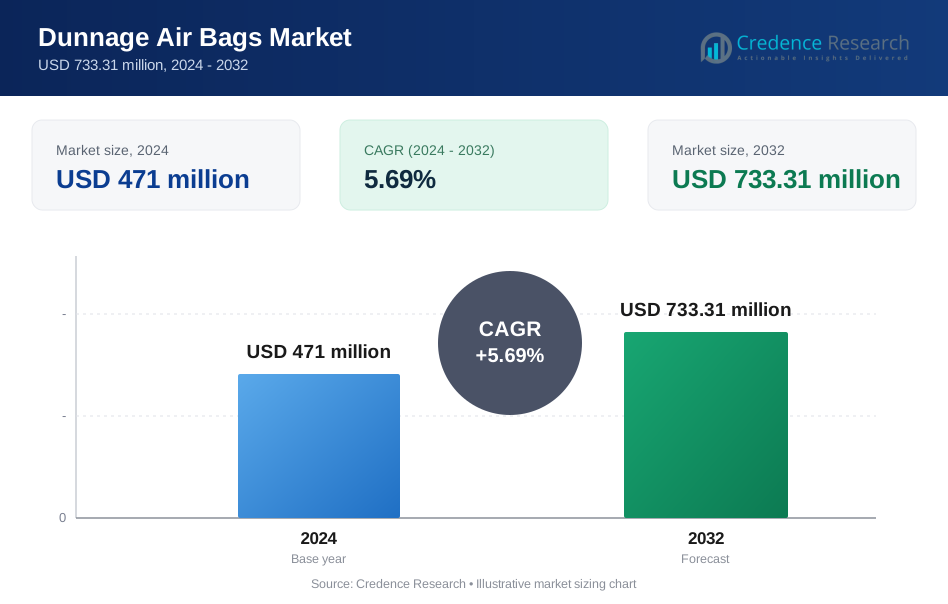
Dunnage Air Bags Market size was valued at USD 471 million in 2024 and is anticipated to reach USD 733.31 million by 2032, at a CAGR of 5.69% during the forecast period (2024-2032).
Key drivers contributing to the growth of the Dunnage Air Bags Market include the rising need for protective packaging in the global shipping and logistics industry. With the increasing volume of goods transported internationally, there is a heightened demand for packaging solutions that ensure the safety and integrity of products during transit. Additionally, the growing emphasis on sustainable packaging solutions has led to an uptick in the use of recyclable and reusable dunnage air bags, which offer an eco-friendly alternative to traditional packaging materials. The demand for cost-effective and efficient transportation solutions further drives the market, particularly as companies seek to minimize product damage and reduce operational costs. Moreover, the expansion of e-commerce and the rise in cross-border trade have further amplified the demand for protective packaging solutions, fueling market growth.
Regionally, the Dunnage Air Bags Market is segmented into North America, Europe, Asia Pacific, Latin America, and the Middle East & Africa. North America dominates the market, driven by the presence of leading logistics companies and high adoption rates of innovative packaging solutions. The region’s robust transportation network and demand for advanced packaging technologies contribute significantly to market growth. Europe follows closely, with significant growth in the automotive and industrial sectors that rely heavily on air bag technology for safe transportation. The region's increasing focus on sustainability also accelerates the adoption of eco-friendly packaging solutions. The Asia Pacific region is expected to witness the highest growth rate due to the expansion of manufacturing and export activities in countries like China and India. Rising manufacturing output and the growing middle class in these countries are key factors propelling demand. The growing focus on trade and infrastructure development in Latin America and the Middle East also presents opportunities for market growth in these regions.
Market Insights:
- The Dunnage Air Bags Market was valued at USD 471 million in 2024 and is expected to reach USD 733.31 million by 2032, growing at a CAGR of 5.69% during the forecast period.
- Increasing demand for protective packaging solutions in logistics and e-commerce is driving the market, especially with the rise in international trade and need for secure transportation of goods.
- Dunnage air bags help reduce product damage during transit, offering a cost-effective way to stabilize and protect goods, which is contributing to their wide adoption across industries such as automotive, electronics, and consumer goods.
- The growing emphasis on sustainability is pushing businesses to seek eco-friendly alternatives, driving the use of recyclable and reusable Dunnage air bags as a sustainable packaging solution.
- The rise of e-commerce and global trade has heightened the need for secure, cost-effective packaging, positioning Dunnage air bags as a preferred solution for international shipping.
- Dunnage air bags contribute to operational cost savings by minimizing damage, reducing the need for bulky packaging materials, and improving logistics efficiency.
- North America leads the market with a 40% share, followed by Europe at 30%, while the Asia Pacific region is experiencing the highest growth, driven by industrialization and increasing manufacturing activities.
Market Drivers:
Rising Demand for Secure Packaging in Global Logistics and Transportation
The Dunnage air bags market benefits from the increasing demand for secure packaging solutions in the logistics and transportation industries. With the rise in international trade, securing goods during transit has become a top priority for businesses across multiple sectors. Goods are often subjected to rough handling during shipping, which can result in significant product damage. Dunnage air bags offer a reliable, cost-effective method for stabilizing and protecting products from shifting or crushing, ensuring the safety of the cargo. Companies recognize the value of these protective packaging solutions, which directly contributes to market growth. These factors drive wider adoption across industries such as automotive, electronics, and consumer goods.
Focus on Sustainability and Eco-Friendly Packaging Solutions
The growing emphasis on sustainable packaging solutions plays a critical role in boosting the Dunnage air bags market. Many companies are shifting to recyclable and reusable packaging materials in response to consumer demand for more eco-friendly alternatives. Dunnage air bags align with this trend, offering an environmentally conscious packaging option that reduces waste. Unlike traditional packaging materials, these bags can be recycled or reused, making them a more sustainable choice for businesses looking to reduce their carbon footprint. Regulatory pressures and consumer preferences are further encouraging companies to adopt green packaging solutions, fueling the demand for Dunnage air bags.
- For instance, Dunnage Engineering partnered with Nefab Group in 2020 to enhance the use of eco-friendly dunnage air bags globally, providing integrated sustainable packaging solutions for customers.
Growth in E-Commerce and Cross-Border Trade
E-commerce growth is one of the key factors driving the Dunnage air bags market. The increase in online shopping and the demand for fast, reliable shipping solutions have elevated the need for protective packaging. Dunnage air bags are particularly suited to the e-commerce sector, where products are often shipped globally, and any damage can result in costly returns and customer dissatisfaction. Cross-border trade also demands packaging solutions that prevent damage and meet international shipping standards. These factors contribute significantly to the expanding market for Dunnage air bags.
- For instance, Macfarlane Packaging’s 2022 Unboxing Survey found that over 1,000 UK consumers reported a 25% reduction in excessive packaging by online retailers since 2016, reflecting improved adoption of efficient and protective packaging solutions.
Cost Efficiency and Operational Benefits for Businesses
Dunnage air bags provide a cost-effective solution for businesses looking to minimize damage and optimize operational efficiency. By stabilizing goods during transit, they help reduce the likelihood of product damage, which ultimately lowers costs associated with returns, replacements, and insurance claims. The use of these air bags eliminates the need for expensive, bulky packaging materials, reducing both material costs and storage space requirements. Companies can also benefit from faster loading and unloading times, improving overall operational efficiency. These factors make Dunnage air bags a valuable asset for businesses aiming to streamline their logistics operations and reduce costs.
Market Trends:
Adoption of Advanced Materials and Technologies in Dunnage Air Bags
The Dunnage air bags market is experiencing a shift towards the incorporation of advanced materials and technologies in the manufacturing of packaging solutions. Manufacturers are increasingly using high-strength, durable materials such as multi-layer plastic films and reinforced fabrics to improve the performance and reliability of air bags. These materials provide greater protection for fragile goods, enhancing the stability of products during transit. Innovations such as air-tight seals and adjustable pressure systems have been introduced to provide customizable protection depending on the nature of the cargo. These technological advancements contribute to the efficiency and effectiveness of Dunnage air bags, making them more suitable for a wider range of applications across industries such as automotive, pharmaceuticals, and electronics.
- For example, Signode’s paper dunnage airbags feature a lock down valve that creates an airtight seal, and their largest model (1200 x 2250 mm) is recommended for securing voids up to 400 mm, offering enhanced safety and stability for large shipments.
Integration of Digital Solutions for Tracking and Monitoring
Another key trend in the Dunnage air bags market is the integration of digital solutions for tracking and monitoring. With increasing concerns about cargo safety and real-time visibility during transit, digital technologies are being incorporated into air bag systems. Manufacturers are now offering air bags equipped with sensors that monitor internal pressure and detect any potential damage or failure during transportation. These smart air bags allow businesses to track their shipments and ensure the integrity of goods in real-time. By providing immediate data on the condition of the cargo, digital solutions improve supply chain transparency and enhance customer satisfaction. The growing demand for data-driven logistics solutions is expected to further accelerate the adoption of digitally integrated Dunnage air bags.
- For instance, Cordstrap B.V. offers digital monitoring of containers using its dunnage air bags, enabling clients to track cargo safety and optimize logistics operations with real-time data integration.
Market Challenges Analysis:
Fluctuating Raw Material Costs and Supply Chain Disruptions
One of the significant challenges faced by the Dunnage air bags market is the fluctuation in raw material costs. The price volatility of key materials, such as plastic films and other composite materials, can impact production costs and ultimately affect market prices. Supply chain disruptions, particularly due to geopolitical issues or natural disasters, can further exacerbate the problem, leading to delays in production and increased costs. These factors make it difficult for manufacturers to maintain consistent pricing and product availability. Companies must adapt to these fluctuations, which can create uncertainty in both short-term operations and long-term planning.
- For instance, in 2025, the United States implemented new tariffs on imported packaging materials, prompting manufacturers to shift sourcing strategies and invest in domestic polymer suppliers, with one major U.S. distributor reporting a reduction in average lead times by 12 days after partnering with regional converters.
Competition from Alternative Packaging Solutions
The Dunnage air bags market faces increased competition from alternative packaging solutions, such as foam packaging and rigid containers, which can offer comparable protection for goods during transit. While Dunnage air bags are favored for their lightweight and cost-effective nature, some industries may opt for these alternatives due to perceived benefits in certain applications, such as higher durability or specific use cases. This competition limits the potential for market growth in certain sectors and forces manufacturers to continuously innovate and improve their offerings to maintain a competitive edge.Market Opportunities:
Expanding E-Commerce and Global Trade Driving Demand for Protective Packaging
The rapid expansion of e-commerce and global trade presents significant opportunities for the Dunnage air bags market. As international shipping and cross-border transactions continue to grow, the demand for efficient and secure packaging solutions has increased. Dunnage air bags provide a lightweight and cost-effective option for securing goods during transit, making them ideal for industries such as e-commerce, electronics, and automotive. The need for protective packaging solutions that minimize product damage and reduce operational costs positions Dunnage air bags as a key solution for businesses seeking to improve their logistics operations. Companies focusing on cross-border trade and e-commerce can capitalize on this growing market segment.
Sustainability Initiatives and Regulatory Pressures Fueling Growth
The increasing emphasis on sustainability and environmental impact presents another opportunity for the Dunnage air bags market. Governments and regulatory bodies worldwide are pushing for eco-friendly packaging solutions to reduce waste and carbon footprints. Dunnage air bags, being recyclable and reusable, align with these sustainability initiatives. Companies that adopt environmentally friendly packaging solutions can appeal to the growing consumer demand for green alternatives. This market shift provides an opportunity for manufacturers to innovate and enhance their product offerings, further expanding the adoption of Dunnage air bags across various industries.
Market Segmentation Analysis:
By Material Type
The Dunnage air bags market is segmented by material type into paper, plastic, and fabric. Paper-based Dunnage air bags are widely used for their cost-effectiveness and eco-friendly nature, contributing significantly to the market. Plastic air bags are favored for their durability and strength, especially in heavy-duty applications. Fabric air bags are preferred for their flexibility and ability to conform to various shapes, offering additional cushioning. This segmentation ensures that various industries can select the most suitable material type depending on their packaging needs.
- For instance, a 4-ply abrasion-resistant paper Dunnage airbag measuring 36" x 48" is specifically designed for easy installation in voids and is reinforced with sewn ends for added strength, making it ideal for truck, intermodal, and ocean container transport.
By Bag Type
The Dunnage air bags market is further divided into manual and automatic bag types. Manual air bags are commonly used due to their simplicity and lower cost. They require manual inflation and are ideal for small to medium-sized shipments. Automatic air bags, on the other hand, are designed for high-volume and larger shipments, offering automated inflation and faster processing times. The demand for automatic bags is growing, particularly among industries focused on improving operational efficiency and reducing labor costs.
- For instance, the 36" x 84" Level 1 Poly Woven Dunnage Air Bag can be manually inflated in less than 30 seconds using a compatible inflator, and is widely used in road trucks, intermodal rail cars, and overseas containers for efficient cargo stabilization.
By Application
The Dunnage air bags market serves various applications, including automotive, consumer goods, electronics, and food and beverage. The automotive industry is a major driver of demand, as it requires secure packaging solutions for parts during transportation. Consumer goods and electronics sectors also rely on Dunnage air bags for protecting products during shipping. The growing e-commerce sector further fuels demand across multiple applications, with an increasing need for secure and cost-effective packaging solutions.
Segmentations:
- By Material Type
- Paper
- Plastic
- Fabric
- By Bag Type
- Manual
- Automatic
- By Application
- Automotive
- Consumer Goods
- Electronics
- Food and Beverage
- Pharmaceuticals
- Industrial
- By End-Use
- Logistics & Transportation
- Retail
- E-Commerce
- By Region
- North America
- U.S.
- Canada
- Mexico
- Europe
- Germany
- France
- U.K.
- Italy
- Spain
- Rest of Europe
- Asia Pacific
- China
- Japan
- India
- South Korea
- South-east Asia
- Rest of Asia Pacific
- Latin America
- Brazil
- Argentina
- Rest of Latin America
- Middle East & Africa
- GCC Countries
- South Africa
- Rest of the Middle East and Africa
- North America
Regional Analysis:
North America Leading Region Driven by Robust Logistics and Adoption of Advanced Packaging Solutions
North America holds a market share of 40% in the Dunnage air bags market, with the U.S. and Canada being the largest consumers of these packaging solutions. The region’s well-established logistics infrastructure and high adoption of innovative packaging technologies contribute to its dominance. A strong presence of multinational corporations across industries such as automotive, electronics, and consumer goods increases demand for protective packaging. Companies in the region increasingly recognize the efficiency and cost-effectiveness of Dunnage air bags for securing goods during transit. The U.S. logistics market’s ongoing investment in technology further accelerates the adoption of these packaging solutions. The growing emphasis on sustainability and green packaging initiatives enhances North America’s market leadership.
Europe Strong Demand Driven by Sustainable Packaging Solutions
Europe holds a market share of 30% in the Dunnage air bags market, driven by demand for sustainable packaging solutions. Countries such as Germany, the U.K., and France contribute significantly to this demand, particularly from industries such as automotive, pharmaceuticals, and manufacturing. The region’s regulatory push for reducing waste and carbon footprints leads to increased adoption of recyclable and reusable materials like Dunnage air bags. With a strong manufacturing and export sector, the demand for secure, protective packaging continues to rise. The region’s push for sustainability further drives the adoption of these air bags, reinforcing Europe’s prominent role in the market.
Asia Pacific Fastest Growing Region Driven by Industrialization and Manufacturing Expansion
Asia Pacific holds a market share of 25% in the Dunnage air bags market, experiencing the highest growth rate due to rapid industrialization and increasing manufacturing activities in countries like China and India. This region accounts for a growing share of global demand for protective packaging as its manufacturing and export activities continue to expand. The rise of e-commerce and the growing middle-class population in emerging markets increase the need for secure, cost-effective packaging. Improving infrastructure and logistics networks in the region support the growing demand for packaging solutions, making Asia Pacific the fastest-growing market for Dunnage air bags. The region’s expanding consumer base further accelerates market growth, positioning it as a key player globally.
Key Player Analysis:
- Phoebese Industrial
- Cordstrap B.V
- G&H GmbH Rothschenk
- AB Air bags
- Signode Industrial Group LLC
- Litco International, Inc.
- Cargo Tuff LLC
- Southern Bracing Systems
- Packbest Air Packaging Co.
- Atlas Dunnage
- Royal Packaging Industries
- Green Label Packaging
Competitive Analysis:
The Dunnage air bags market is competitive, with key players focusing on expanding their product offerings and enhancing operational efficiencies. Leading companies like Inflatable Packaging, Nefab Group, and Dunlop Systems and Components have established a strong presence by providing innovative and sustainable packaging solutions. These players emphasize customization options, offering air bags tailored to specific industries, including automotive, electronics, and logistics. Companies are also investing in eco-friendly alternatives to meet the rising demand for sustainable packaging solutions. Competitive strategies include partnerships, product innovations, and global expansion to capture market share. New entrants are leveraging technology to enhance product design, improving the durability and effectiveness of Dunnage air bags. The market remains dynamic, with competition intensifying in regions like North America and Asia Pacific, where demand for protective packaging solutions continues to grow. Companies are focused on addressing challenges related to raw material costs and supply chain disruptions to maintain a competitive edge.
Recent Developments:
- In June 2025, Signode announced the introduction of a new hand tool, the BXT4 Battery Hand Tool for Plastic Strapping with EasyTrigger™ Technology.
- In February 2024, Packbest Air Packaging Co. launched a new air dunnage bag, targeting the transportation and logistics sector.
- In November 2024, Royal Containers (a related company) announced a strategic partnership with Proprint Services, enhancing their combined offerings in corrugated packaging, POP displays, and folding carton manufacturing.
Market Concentration & Characteristics:
The Dunnage air bags market exhibits moderate concentration, with a few key players holding significant market share. Leading companies like Inflatable Packaging, Nefab Group, and Dunlop Systems and Components dominate the market, focusing on product innovation, customization, and sustainable solutions. These players continue to expand their global footprint, particularly in regions like North America and Asia Pacific. Smaller players are entering the market by offering cost-effective alternatives and leveraging technology to develop improved packaging solutions. The market is characterized by the growing demand for eco-friendly packaging, driven by sustainability concerns. Companies are focusing on providing packaging solutions that align with these preferences, offering recyclable and reusable products. The increasing need for secure transportation of goods, especially in e-commerce and global logistics, drives competition and pushes market players to innovate continuously.
Report Coverage:
The research report offers an in-depth analysis based on Material Type, Bag Type, Application, End-Use and Region. It details leading market players, providing an overview of their business, product offerings, investments, revenue streams, and key applications. Additionally, the report includes insights into the competitive environment, SWOT analysis, current market trends, as well as the primary drivers and constraints. Furthermore, it discusses various factors that have driven market expansion in recent years. The report also explores market dynamics, regulatory scenarios, and technological advancements that are shaping the industry. It assesses the impact of external factors and global economic changes on market growth. Lastly, it provides strategic recommendations for new entrants and established companies to navigate the complexities of the market.
Future Outlook:
- The Dunnage air bags market is expected to see continued growth as industries demand more secure and cost-effective packaging solutions for goods in transit.
- The increasing focus on sustainability will drive more businesses to adopt recyclable and reusable Dunnage air bags, responding to growing environmental concerns.
- Advances in materials technology will lead to the development of more durable, lightweight, and efficient Dunnage air bags.
- The expansion of e-commerce and cross-border trade will further fuel demand for protective packaging, particularly in emerging markets.
- Companies are likely to invest more in custom-designed air bags tailored to specific industry needs, such as automotive, electronics, and pharmaceuticals.
- The rising cost of traditional packaging materials will push businesses to adopt more cost-efficient solutions, with Dunnage air bags offering a practical alternative.
- Increased global manufacturing activity, especially in Asia Pacific, will expand the market for Dunnage air bags as companies look for reliable, space-saving packaging.
- Technological integration, such as smart packaging with sensors, could provide enhanced security and tracking capabilities, making Dunnage air bags even more attractive.
- Regional competition will intensify as companies strive to capture market share in high-growth areas like North America, Europe, and Asia Pacific.
- Regulatory pressures on packaging waste and carbon footprints will drive further adoption of eco-friendly solutions, boosting demand for Dunnage air bags.
Request a Free Sample
Fill in your details and we'll send you a free sample report.
- Sample data tables & charts
- Research methodology
Need a Custom Version of This Report?
Tailor the scope, geography, or segments to your exact requirements.
- Custom geography or segment scope
- Direct access to our analyst team
Frequently Asked Questions
What is the current size of the Dunnage Air Bags Market?
Which regions dominate the Dunnage Air Bags Market?
How do sustainable packaging solutions impact the market?
What role does e-commerce play in the Dunnage Air Bags Market?
Table of Content
Chapter 1. Report Introduction
- 1.1 Report Description & Purpose
- 1.1.1 Report Title & Market Definition
- 1.1.2 Unique Selling Propositions (USP) & Key Differentiators
- 1.1.3 Value Proposition for Stakeholders
- 1.2 Research Objectives
- 1.2.1 Market Sizing Objectives (Volume & Revenue)
- 1.2.2 Segmentation Objectives
- 1.2.3 Competitive Intelligence Objectives
- 1.2.4 Forecast & Scenario Objectives
- 1.3 Report Scope
- 1.3.1 Dunnage Air Bags Scope – Types & Subtypes Covered
- 1.3.2 Geographic Scope – Regions & Countries Covered
- 1.3.3 Historical Period, Base Year & Forecast Period (2024; forecast to 2032)
- 1.3.4 Inclusions & Exclusions
- 1.4 HS Code & Classification Framework
- 1.5 Currency, Units & Pricing Basis
- 1.6 Target Stakeholders
- 1.7 Limitations & Assumptions
Chapter 2. Executive Summary
- 2.1 Global Dunnage Air Bags Market Snapshot
- 2.1.1 Market Size – Historical (2024) & Forecast (2024-2032) (2024: USD 471 million → 2032: USD 733.31 million)
- 2.1.2 Volume & Revenue – Global Totals
- 2.1.3 Key Market Highlights – Top Five Facts
- 2.2 Dunnage Air Bags Market Segmentation Snapshot
- 2.2.1 Market Split by Region – 2024 vs. 2032
- 2.3 Competitive Snapshot
- 2.3.1 Top 10 Players by Revenue Share – 2024
- 2.3.2 Top 10 Players by Volume Share – 2024
- 2.3.3 Recent Strategic Developments (18-Month Summary)
- 2.4 Key Investment Highlights & Strategic Conclusions
Chapter 3. Dunnage Air Bags Market Dynamics & Industry Analysis
- 3.1 Market Overview & Context
- 3.1.1 Dunnage Air Bags Market Position in the Broader Automotive Value Chain
- 3.1.2 OEM vs. Replacement Market Dynamics
- 3.1.3 Market Maturity & Development Stage by Region
- 3.2 Dunnage Air Bags Market Drivers
- 3.3 Dunnage Air Bags Market Restraints & Challenges
- 3.4 Dunnage Air Bags Market Opportunities
- 3.5 Porter's Five Forces Analysis
- 3.5.1 Threat of New Entrants
- 3.5.2 Bargaining Power of Suppliers
- 3.5.3 Bargaining Power of Buyers
- 3.5.4 Threat of Substitutes
- 3.5.5 Competitive Rivalry – Intensity Assessment
- 3.6 Dunnage Air Bags Value Chain Analysis
- 3.6.1 Upstream – Raw Material/Input Suppliers
- 3.6.1.1 Raw Material/Input 1
- 3.6.1.2 Raw Material/Input 2
- 3.6.1.3 Raw Material/Input 3
- 3.6.2 Midstream – Production/Manufacturing/Service Delivery
- 3.6.2.1 Production/Process Overview
- 3.6.2.2 Key Facility Locations & Capacity by Manufacturer
- 3.6.3 Downstream – Distribution & End Consumer
- 3.6.3.1 Primary Channel – B2B/OEM
- 3.6.3.2 Secondary Channels – Dealer, Retail, Online, Direct
- 3.6.4 Value Chain Profitability Analysis
- 3.6.1 Upstream – Raw Material/Input Suppliers
- 3.7 PESTEL Analysis
- 3.7.1 Political Factors
- 3.7.2 Economic Factors
- 3.7.3 Social Factors
- 3.7.4 Technological Factors
- 3.7.5 Environmental Factors
- 3.7.6 Legal Factors
- 3.8 Dunnage Air Bags Supply Chain Analysis
- 3.8.1 Raw Material/Input Supply Risk Assessment
- 3.8.2 Manufacturing Concentration Risk (Geographic Exposure)
- 3.8.3 Trade Disruption Impact Analysis
- 3.9 Regulatory & Policy Landscape
Note: The regulatory and policy landscape section covers regulations based on their applicability to the market, Dunnage Air Bags category, geography, and scope of the study. Only regulatory frameworks with a material impact on operations, compliance, trade, sustainability, or market access are analyzed in detail.
Chapter 4. Key Investment Pockets & Opportunity Analysis
- 4.1 Dunnage Air Bags Market Attractiveness Analysis
- 4.1.1 By Region – Investment Attractiveness Matrix (Volume × CAGR)
- 4.2 Absolute Revenue Growth Opportunity
- 4.2.1 By Region – Absolute USD Growth Through 2032
- 4.3 Incremental Volume Opportunity
- 4.3.1 By Region – Incremental Volume Through 2032
- 4.3.2 Segment – Incremental Volume
- 4.4 Emerging Submarket Opportunity Deep Dive (Subject to Applicability)
- 4.5 Emerging Market Opportunity Scorecards
- 4.5.1 United States
- 4.5.2 Europe
- 4.5.3 Asia
- 4.5.4 Middle East & Africa
Note: Emerging Market Opportunity Scorecards will be included based on relevance and strategic importance. Regions listed are indicative and may vary depending on data availability and market dynamics.
Chapter 5. Dunnage Air Bags Import-Export Analysis & Trade Flows
- 5.1 Global Trade Overview
- 5.1.1 Global Export Value by Country (2024)
- 5.1.2 Global Export Volume by Country (2024)
- 5.1.3 Global Import Value by Country (2024)
- 5.1.4 Global Import Volume by Country (2024)
- 5.1.5 Net Trade Balance by Country (2024)
- 5.2 Export Analysis – Segment
- 5.2.1 Type 1 (HS Code)
- 5.2.2 Type 2 (HS Code)
- 5.2.3 Type 3 (HS Code)
- 5.2.4 Type 4 (HS Code)
- 5.2.5 Type 5 (HS Code)
- 5.3 Import Analysis – Segment
- 5.3.1 Type 1 (HS Code)
- 5.3.2 Type 2 (HS Code)
- 5.3.3 Type 3 (HS Code)
- 5.3.4 Type 4 (HS Code)
- 5.3.5 Type 5 (HS Code)
- 5.4 Average Unit Trade Prices
- 5.4.1 Average Export Price – Segment & Country
- 5.4.2 Average Import Price – Segment & Source Country
- 5.4.3 Price Trends (2024)
- 5.5 Key Trade Route Analysis
- 5.5.1 Trade Route 1
- 5.5.2 Trade Route 2
- 5.5.3 Trade Route 3
- 5.5.4 Trade Route 4
- 5.5.5 Trade Route 5
- 5.6 Trade Policy Impact Assessment
- 5.6.1 US Anti-Dumping & Section 301 Tariffs
- 5.6.2 EU Customs Union Impact
- 5.6.3 Major Free Trade Agreements
- 5.6.4 USMCA Rules of Origin
Note: Trade policy analysis will be included only where relevant to the Dunnage Air Bags market.
Chapter 6. Competitive Landscape & Company Benchmarking
- 6.1 Dunnage Air Bags Market Concentration & Structure
- 6.1.1 Herfindahl-Hirschman Index (HHI) – vs. 2024
- 6.1.2 Tier 1, Tier 2 & Tier 3 Market Structure
- 6.1.3 Global, Regional & Local Player Dynamics
- 6.2 Dunnage Air Bags Market Share Analysis – 2024
- 6.2.1 Global Revenue Share by Company
- 6.2.2 Global Volume Share by Company
- 6.2.3 Regional Revenue Share
- 6.2.4 Market Share Evolution ( vs. 2024)
- 6.2.5 OEM Segment Share by Company
- 6.2.6 Replacement Segment Share by Company
- 6.3 Production/Delivery Capacity & Facility Analysis
- 6.3.1 Global Installed Capacity
- 6.3.2 Capacity Utilization Rates
- 6.3.3 Production/Output Volume
- 6.3.4 Facility Locations & Capacity Map
- 6.3.5 Planned Capacity Additions
- 6.4 Dunnage Air Bags Competitive Benchmarking Matrix
- 6.4.1 Revenue, Volume, CAGR & Profitability Comparison
- 6.4.2 Channel Revenue Mix
- 6.4.3 Geographic Revenue Exposure
- 6.4.4 R&D Intensity
- 6.4.5 Sustainability Maturity
- 6.5 Strategic Developments in Dunnage Air Bags (Last 24 Months)
- 6.5.1 Mergers, Acquisitions & Divestments
- 6.5.2 New Dunnage Air Bags Launches
- 6.5.3 Facility Expansions
- 6.5.4 Strategic Alliances, Joint Ventures & Partnerships
- 6.5.5 Distribution Expansion & Market Entry
- 6.5.6 Sustainability & ESG Initiatives
- 6.6 Competitive Strategy Mapping
- 6.6.1 Leader, Challenger, Follower & Niche Classification
- 6.6.2 Pricing Strategy Comparison
- 6.6.3 Channel Strategy Matrix
Note: Strategic developments are included based on their materiality and the availability of reliable information.
Chapter 7. Global Dunnage Air Bags Market – By Distribution Channel
- 7.1 Segment Overview
- 7.1.1 Volume & Revenue Split by Channel (2024 & 2032)
- 7.1.2 Channel Mix Evolution (2024-2032)
Chapter 8. Regional Market Analysis – Global Overview
- 8.1 Global Regional Overview
- 8.1.1 Regional Volume Share
- 8.1.2 Regional Revenue Share
- 8.1.3 Regional Volume by Region
- 8.1.4 Regional Revenue by Region
- 8.1.5 Regional Forecast Through 2032
- 8.2 Cross-Regional Segment Analysis
- 8.2.1 By Distribution Channel
- 8.2.2 By Brand/Price Tier
Chapter 9. North America Dunnage Air Bags Market
- 9.1 United States
- 9.2 Canada
- 9.3 Mexico
Chapter 10. Europe Dunnage Air Bags Market
- 10.1 Germany
- 10.2 France
- 10.3 Italy
- 10.4 United Kingdom
- 10.5 Spain
- 10.6 Poland
- 10.7 Russia
- 10.8 Netherlands
- 10.9 Belgium
- 10.10 Sweden
- 10.11 Denmark
- 10.12 Norway
- 10.13 Rest of Europe
Chapter 11. Asia Pacific Dunnage Air Bags Market
- 11.1 China
- 11.2 India
- 11.3 Japan
- 11.4 South Korea
- 11.5 Thailand
- 11.6 Indonesia
- 11.7 Vietnam
- 11.8 Malaysia
- 11.9 Australia
- 11.10 Rest of Asia Pacific
Chapter 12. Latin America Dunnage Air Bags Market
- 12.1 Brazil
- 12.2 Argentina
- 12.3 Colombia
- 12.4 Chile
- 12.5 Rest of Latin America
Chapter 13. Middle East Dunnage Air Bags Market
- 13.1 Saudi Arabia
- 13.2 United Arab Emirates
- 13.3 Turkey
- 13.4 Israel
- 13.5 Iran
- 13.6 Rest of the Middle East
Chapter 14. Africa Dunnage Air Bags Market
- 14.1 South Africa
- 14.2 Egypt
- 14.3 Nigeria
- 14.4 Morocco
- 14.5 Rest of Africa
Chapter 15. Dunnage Air Bags Company Profiles
- 15.1 [Company 01]
- 15.1.1 Company Overview
- 15.1.2 Key Management Personnel
- 15.1.3 Products & Services Portfolio
- 15.1.4 Financial Performance
- 15.1.5 Key Market Focus & Geographic Presence
- 15.1.6 Recent Developments & Strategic Initiatives
Note: The company profile list is preliminary and may change based on research findings, market developments, data availability, and client requirements.
Chapter 16. Appendices
- Appendix A – List of Abbreviations & Acronyms
- Appendix B – Industry Classification Code Reference – Full Series
- Appendix C – Production & Capacity Data Tables
- Appendix D – End-Use & Demand Base Tables
- Appendix E – Consumption & Replacement Rate Assumptions
- Appendix F – ASP Reference Tables
- Appendix G – Manufacturing & Facility Database
- Appendix H – Import-Export Data Tables
- Appendix I – Regulatory Summary Tables
- Appendix J – Primary Research Participant List (Anonymized)
- Appendix K – Primary Research Questionnaire Framework
- Appendix L – Data Sources & Bibliography
- Appendix M – Market Size Divergence & Source Comparison
Chapter 17. Research Methodology
- 17.1 Research Framework & Philosophy
- 17.2 Secondary Research – Sources, Hierarchy & Data Extraction
- 17.3 Data Modeling – Bottom-Up & Top-Down Market Sizing
- 17.4 Primary Research – Stakeholder Framework, LOI & Sample Sizes
- 17.5 Forecast Methodology – Regression, Scenario & Sensitivity Analysis
- 17.6 Quality Control – Four-Layer Validation Framework
- 17.7 Limitations & Standard Assumptions
- 17.8 Disclaimer
