
| REPORT ATTRIBUTE | DETAILS |
|---|---|
| Historical Period | 2020-2023 |
| Base Year | 2024 |
| Forecast Period | 2025-2032 |
| Fishing Clothing Market Size 2024 | USD 3872 Million |
| Fishing Clothing Market ,CAGR | 4.4 % |
| Fishing Clothing Market Size 2032 | USD 5464.6 Million |
Market Overview:
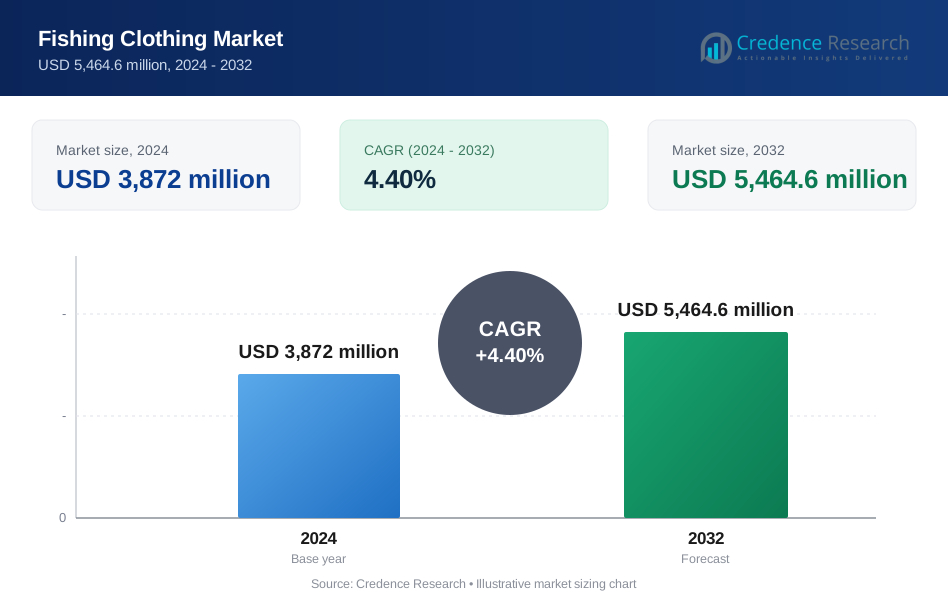
The fishing clothing market size was valued at USD 3872 million in 2024 and is anticipated to reach USD 5464.6 million by 2032, at a CAGR of 4.4 % during the forecast period (2024-2032).
Key market drivers include the growing popularity of fishing as a leisure activity, rising disposable incomes, and heightened demand for high-performance, weather-resistant clothing. Consumers increasingly seek apparel with features such as UV protection, breathability, waterproofing, and durability to enhance their fishing experience. Furthermore, technological advancements in fabric engineering and garment design are supporting the development of lightweight, quick-drying, and ergonomic fishing apparel, which addresses the specific needs of both amateur and professional anglers. The influence of social media and fishing tournaments has also contributed to the growing adoption of branded fishing clothing, particularly among younger demographics.
Regionally, North America leads the fishing clothing market, supported by a large base of recreational anglers, well-developed retail infrastructure, and the presence of major fishing apparel brands such as Pure Fishing, Inc., Shimano North America Fishing, Inc., Daiwa Corporation, and Lew's Fishing. The United States remains the largest contributor within the region, propelled by a culture of outdoor sports and significant investment in fishing-related tourism. Europe follows, driven by increasing fishing activities in countries such as Norway, Sweden, and the United Kingdom. The Asia-Pacific region is witnessing the fastest growth rate, attributed to expanding middle-class populations, rising interest in outdoor recreation, and supportive government initiatives promoting sport fishing in countries such as China, Japan, and Australia. This regional diversity underlines the global potential of the fishing clothing market throughout the forecast period.
Market Insights:
- The fishing clothing market reached USD 3,872 million in 2024 and is projected to hit USD 5,464.6 million by 2032.
- Growth is fueled by rising popularity of fishing as leisure, higher disposable incomes, and demand for weather-resistant apparel.
- Consumers prefer clothing with UV protection, waterproofing, breathability, and durability for a better fishing experience.
- Technological advances support lightweight, quick-drying, and ergonomic designs, attracting both amateur and professional anglers.
- North America holds 39% market share, with the United States leading due to strong angler culture and robust retail infrastructure.
- Europe maintains a 29% share, with Norway, Sweden, and the UK driving demand for eco-friendly and climate-adapted apparel.
- Asia-Pacific captures 24% share, expanding fastest due to a growing middle class, outdoor recreation interest, and government support.
Market Drivers:
Rising Participation in Recreational and Sport Fishing Activities:
The surge in recreational and sport fishing worldwide drives demand for specialized apparel. Consumers increasingly pursue fishing for relaxation, competition, and social interaction, fueling steady growth in equipment and apparel sales. The fishing clothing market responds with product lines tailored to both amateur and professional anglers. This demand supports expansion into new markets, especially as outdoor activities gain popularity among all age groups. Brands continue to collaborate with fishing organizations and influencers, elevating product awareness. Growth in fishing events and tournaments stimulates further interest in functional fishing clothing.
- For instance, in the United States alone, over 57.7 million people participated in recreational fishing in 2023, the highest number recorded in over a decade, underscoring the expanding consumer base driving apparel innovation.
Demand for High-Performance and Weather-Resistant Apparel:
Changing weather conditions and challenging fishing environments have heightened the need for technical apparel. The fishing clothing market addresses this with garments offering UV protection, water resistance, breathability, and thermal regulation. Anglers prioritize apparel that ensures comfort and safety in unpredictable climates. Product innovation in fabric engineering allows brands to deliver lightweight, durable, and ergonomic solutions. Consumers now expect clothing that adapts to multiple environments without sacrificing performance or style. This trend reinforces the value proposition of specialized fishing gear.
Influence of Lifestyle Trends and Social Media on Apparel Choices:
Lifestyle trends and digital engagement influence consumer preferences in the fishing clothing market. The rise of adventure tourism, eco-tourism, and outdoor recreation shapes apparel choices for style-conscious anglers. Social media platforms showcase new products and successful fishing experiences, creating aspirational demand for branded and fashionable gear. Companies capitalize on this trend by promoting signature collections and limited-edition collaborations. Younger demographics increasingly view fishing apparel as both a practical and lifestyle statement, further expanding market reach.
Advancements in Fabric Technology and Sustainable Materials:
Innovations in textile technology significantly enhance product functionality and sustainability. The fishing clothing market adopts eco-friendly materials, including recycled polyester and organic cotton, to align with environmental values. Brands invest in antimicrobial finishes, moisture-wicking properties, and seamless construction, which improve comfort and longevity. Regulatory requirements for chemical use and sustainability drive continued research and development in fabrics. These advancements enable companies to offer premium, high-performance clothing while meeting evolving consumer expectations for quality and responsibility.
- For instance,SITKA integrates Polygiene StayFresh™ antimicrobial technology in its technical fishing apparel, providing 24/7 odor control and allowing users to reduce wash frequency, extending garment lifespan with certified performance claims.
Market Trends:
Integration of Smart Technologies and Functional Design in Apparel:
The fishing clothing market is witnessing a strong trend toward the integration of smart technologies and advanced functionality in apparel. Companies are introducing garments with built-in UV sensors, moisture management systems, and temperature-regulating fabrics to address specific needs of anglers in varying weather conditions. Brands prioritize ergonomic design, with features such as reinforced stitching, articulated joints, and multi-pocket configurations that support both comfort and utility. The focus on wearable technology extends to app-connected devices embedded in clothing, providing real-time weather updates and performance tracking. These innovations increase the appeal of fishing apparel to tech-savvy and performance-oriented consumers. It supports a competitive advantage for brands that invest in continuous research and product development.
- For Instance, Columbia Sportswear’s Omni-Tech jackets feature waterproof and breathable technology, offering a moisture vapor transfer (MVT) breathability rating up to 10,000 grams per square meter per 24 hours, which optimizes comfort during active fishing sessions.
Shift Toward Sustainability and Eco-Conscious Manufacturing Practices:
Growing environmental awareness is shaping key trends within the fishing clothing market, prompting manufacturers to adopt sustainable practices and materials. Leading brands are launching product lines made from recycled plastics, biodegradable fabrics, and natural fibers that reduce environmental impact without compromising durability or performance. It supports transparency initiatives, including supply chain traceability and certifications for eco-friendly production. Consumer demand for ethical and responsible brands drives greater investment in circular economy models, garment recycling programs, and waste reduction throughout the production process. This trend enhances brand loyalty and aligns product offerings with global sustainability objectives, positioning eco-conscious companies for long-term growth.
- For instance, Ecoalf has recycled more than 200 million plastic bottles and helped recover 80 tonnes of fishing nets, all of which are turned into high-quality yarn for new garment production.
Market Challenges Analysis:
Intense Market Competition and Product Differentiation Hurdles:
The fishing clothing market faces significant challenges due to the presence of numerous global and regional brands competing for market share. Companies must continuously differentiate their products through innovation, design, and functionality to maintain customer loyalty. It often results in higher research and development costs, which smaller players may struggle to match. The influx of low-cost imitations and generic apparel further complicates the landscape, putting pressure on pricing and brand value. Building strong distribution channels and maintaining consistent product quality remain critical challenges for new entrants and established brands alike.
Volatility in Raw Material Costs and Regulatory Compliance:
Fluctuations in the prices of raw materials, such as synthetic fibers and technical fabrics, pose risks to cost management and profitability. The fishing clothing market must address growing regulatory requirements related to product safety, chemical use, and environmental impact. It increases the complexity of sourcing, manufacturing, and product certification processes. Companies face additional challenges aligning supply chains with evolving international standards while meeting consumer expectations for performance and sustainability. Delays or disruptions in logistics, especially in global markets, may further hinder timely product availability and market growth.
Market Opportunities:
Expansion into Emerging Markets and Untapped Consumer Segments:
The fishing clothing market presents significant opportunities for growth through expansion into emerging markets and untapped consumer segments. Rapid urbanization, rising disposable incomes, and increasing interest in recreational outdoor activities across Asia-Pacific, Latin America, and Africa create a fertile landscape for new entrants and established brands. It allows companies to tailor their offerings to local climate conditions, fishing practices, and cultural preferences. Targeting female anglers and youth demographics also opens new avenues for product diversification and brand loyalty. Strategic marketing, influencer partnerships, and accessible pricing can accelerate brand penetration in these regions.
Development of Eco-Friendly and Customizable Apparel Solutions:
The global shift toward sustainable lifestyles positions eco-friendly fishing clothing as a lucrative opportunity for brands focused on environmental responsibility. Companies that invest in biodegradable, recycled, and natural fiber apparel meet rising consumer demand and differentiate themselves in a crowded market. It enables collaboration with conservation organizations and drives brand visibility among environmentally conscious anglers. Advances in customization technology, such as digital printing and made-to-order solutions, support higher engagement and repeat purchases. This trend aligns well with growing preferences for unique, personalized apparel in the fishing clothing market.
Market Segmentation Analysis:
By Product:
The fishing clothing market includes jackets, vests, shirts, pants, shorts, hats, gloves, and waders. Jackets and shirts lead sales due to their adaptability and strong protective features. Manufacturers prioritize UV resistance, moisture-wicking, and ergonomic tailoring to attract a wide spectrum of anglers, from casual hobbyists to professionals.
- For instance, Orvis PRO Waders are built with a proprietary 100% Cordura nylon shell and four- to five-layer construction, proven to withstand over 100 days of rigorous use with no leaks or seam failures, making them one of the most durable water on the market.
By Distribution Channel:
It distributes products through specialty outdoor stores, sporting goods retailers, online platforms, and direct-to-consumer models. Online channels see rapid growth, fueled by convenience, product variety, and digital fitting tools. Specialty stores retain significance for high-value, technical purchases where expert advice and product trials matter.
By Price Range:
The market segments into mass-market, mid-range, and premium offerings. Premium products are gaining traction with consumers valuing performance technology and sustainable materials, while mass-market items hold strong appeal for beginners and budget-conscious buyers. This tiered structure enables brands to address diverse needs and foster brand loyalty across user segments.
- For instance, BMW integrates up to 100 per cent recycled plastic in specific thermoplastic components of its vehicles, aligning premium appeal with tangible sustainability advancements.
Segmentations:
By Product:
- Jackets
- Vests
- Shirts
- Pants
- Shorts
- Hats
- Gloves
- Waders
By Distribution Channel:
- Specialty Outdoor Stores
- Sporting Goods Retailers
- Online Platforms
- Direct-to-Consumer
By Price Range:
- Mass-Market
- Mid-Range
- Premium
By Region:
- North America
- Europe
- Asia-Pacific
- Latin America
- Middle East & Africa
Regional Analysis:
North America :
North America accounts for 39% share of the global fishing clothing market, driven by a strong tradition of recreational and sport fishing. The United States leads this region, supported by advanced retail infrastructure, widespread fishing tournaments, and the presence of prominent apparel brands. The region benefits from high consumer spending on outdoor gear and frequent product innovation that addresses local weather challenges. Companies in North America prioritize performance features such as UV protection, waterproofing, and ergonomic designs to meet the expectations of both casual and professional anglers. Retailers leverage online and brick-and-mortar channels to offer a wide assortment of specialized apparel. The region’s mature market ecosystem encourages strategic partnerships between brands, event organizers, and influencers.
Europe:
Europe holds a 29% share of the global fishing clothing market, characterized by a diverse angling culture spanning both inland and coastal fishing destinations. Northern European countries such as Norway, Sweden, and the United Kingdom contribute significantly to regional demand, supported by established fishing communities and robust outdoor sports industries. European consumers show strong preference for sustainable and eco-friendly apparel, encouraging manufacturers to adopt green materials and transparent supply chain practices. Brands tailor their products to accommodate the region’s variable climate, focusing on breathability and insulation features. The regulatory environment supports high product quality and safety standards, reinforcing consumer trust. Europe’s fishing festivals and tourism activities provide consistent opportunities for apparel sales growth.
Asia-Pacific :
Asia-Pacific represents 24% share of the fishing clothing market, registering the fastest growth rate among global regions. Countries such as China, Japan, and Australia drive regional momentum with rising disposable incomes and a growing interest in outdoor recreation. It benefits from government support for sport fishing, expanding retail networks, and increasing awareness of specialized fishing apparel. Local manufacturers invest in lightweight, quick-drying garments suited to tropical and coastal climates. International brands strengthen distribution partnerships to access the region’s large and youthful consumer base. The market’s expansion in Asia-Pacific is complemented by increasing penetration into Latin America, the Middle East, and Africa, where lifestyle changes and tourism bolster new demand.
Key Player Analysis:
- Pure Fishing, Inc.
- Shimano North America Fishing, Inc.
- Daiwa Corporation
- Lew's Fishing
- Zebco (Zero Hour Bomb Company)
- Plano Synergy Holdings, Inc.
- Rapala USA
- Croix Rods
- Johnson Outdoors Inc.
- Eagle Claw Fishing Tackle Co.
Competitive Analysis:
The fishing clothing market is defined by strong competition among established global brands and specialized regional players. Key competitors include Pure Fishing, Inc., Shimano North America Fishing, Inc., Daiwa Corporation, and Lew's Fishing. These companies maintain brand leadership through continual product innovation, technical advancements, and strategic partnerships with professional anglers and sports organizations. The market values high-performance apparel that combines durability, comfort, and weather protection. Companies differentiate themselves by investing in sustainable materials, ergonomic designs, and integrated technology. It relies on strong distribution networks, both online and offline, to reach a diverse customer base. Leading brands regularly launch exclusive collections, limited-edition collaborations, and targeted marketing campaigns to sustain customer engagement and capture new market segments. Competitive intensity drives ongoing improvement in product quality, brand visibility, and consumer loyalty across all regions.
Recent Developments:
- In May 2024, Daiwa House, through its U.S. subsidiary Stanley Martin Holdings, acquired Prestige Corporate Development and Prestige Site Works, a land developer based in North Carolina.
- In March 2025, the company expanded its partnership with Outdoor Team Works to include the Bass Pro Shops & Cabela's National Walleye Tour.
Market Concentration & Characteristics:
The fishing clothing market features moderate concentration, with several global and regional players competing for share through continuous innovation and brand positioning. It is characterized by strong product differentiation, frequent new launches, and a focus on advanced materials that enhance comfort, performance, and protection. Major brands leverage established distribution channels and invest in marketing partnerships with professional anglers and fishing organizations to build customer loyalty. The market values sustainability, leading to an increase in eco-friendly apparel lines and transparent supply chains. Intense competition drives companies to prioritize quality, ergonomic design, and technological integration, shaping the evolving landscape of fishing apparel worldwide.
Report Coverage:
The research report offers an in-depth analysis based onProduct, Distribution Channe, Price Range and Region. It details leading Market players, providing an overview of their business, product offerings, investments, revenue streams, and key applications. Additionally, the report includes insights into the competitive environment, SWOT analysis, current Market trends, as well as the primary drivers and constraints. Furthermore, it discusses various factors that have driven Market expansion in recent years. The report also explores Market dynamics, regulatory scenarios, and technological advancements that are shaping the industry. It assesses the impact of external factors and global economic changes on Market growth. Lastly, it provides strategic recommendations for new entrants and established companies to navigate the complexities of the Market.
Future Outlook:
- The fishing clothing market will continue to adopt wearable technology, embedding sensors and weather-responsive fabrics that enhance angler safety and comfort.
- Brands will deepen investment in sustainable materials, accelerating development of recycled and biodegradable textiles for eco‑friendly product lines.
- Manufacturers will expand customization options, enabling on-demand design, personalized fit, and region-specific styles through digital platforms.
- Companies will increasingly partner with conservation groups and fishing associations to promote environmental responsibility and strengthen brand integrity.
- Retailers will elevate the omnichannel experience by integrating virtual try-on tools and AI-driven size recommendations to reduce returns and enhance satisfaction.
- Urban and youth-focused marketing initiatives will drive greater brand engagement, with streetwear-inspired designs appealing to new angling demographics.
- Direct-to‑consumer models will grow influence, allowing brands to control pricing, collect consumer data, and rapidly test new product concepts.
- Regional adaptation will intensify, with garments tailored to local climate challenges-such as monsoon-resistant fabrics for tropical markets.
- Greater focus on lightweight and packable apparel will meet the needs of travel anglers and adventure tourism segments.
- Companies will commit to traceable supply chains by using block chain and certification systems, boosting transparency and accountability.
Request a Free Sample
Fill in your details and we'll send you a free sample report.
- Sample data tables & charts
- Research methodology
Need a Custom Version of This Report?
Tailor the scope, geography, or segments to your exact requirements.
- Custom geography or segment scope
- Direct access to our analyst team
Frequently Asked Questions
What is the current size of the fishing clothing market?
What factors are driving the growth of the fishing clothing market?
What are the key segments within the fishing clothing market?
What are some challenges faced by the fishing clothing market?
Who are the major players in the fishing clothing market?
Table of Content
Chapter 1. Report Introduction
- 1.1 Report Description & Purpose
- 1.1.1 Report Title & Market Definition
- 1.1.2 Unique Selling Propositions (USP) & Key Differentiators
- 1.1.3 Value Proposition for Stakeholders
- 1.2 Research Objectives
- 1.2.1 Market Sizing Objectives (Volume & Revenue)
- 1.2.2 Segmentation Objectives
- 1.2.3 Competitive Intelligence Objectives
- 1.2.4 Forecast & Scenario Objectives
- 1.3 Report Scope
- 1.3.1 Fishing Clothing Scope – Types & Subtypes Covered
- 1.3.2 Geographic Scope – Regions & Countries Covered
- 1.3.3 Historical Period, Base Year & Forecast Period (2024; forecast to 2032)
- 1.3.4 Inclusions & Exclusions
- 1.4 HS Code & Classification Framework
- 1.5 Currency, Units & Pricing Basis
- 1.6 Target Stakeholders
- 1.7 Limitations & Assumptions
Chapter 2. Executive Summary
- 2.1 Global Fishing Clothing Market Snapshot
- 2.1.1 Market Size – Historical (2024) & Forecast (2024-2032) (2024: USD 3,872 million → 2032: USD 5,464.6 million)
- 2.1.2 Volume & Revenue – Global Totals
- 2.1.3 Key Market Highlights – Top Five Facts
- 2.2 Fishing Clothing Market Segmentation Snapshot
- 2.2.1 Market Split by Region – 2024 vs. 2032
- 2.3 Competitive Snapshot
- 2.3.1 Top 10 Players by Revenue Share – 2024
- 2.3.2 Top 10 Players by Volume Share – 2024
- 2.3.3 Recent Strategic Developments (18-Month Summary)
- 2.4 Key Investment Highlights & Strategic Conclusions
Chapter 3. Fishing Clothing Market Dynamics & Industry Analysis
- 3.1 Market Overview & Context
- 3.1.1 Fishing Clothing Market Position in the Broader Automotive Value Chain
- 3.1.2 OEM vs. Replacement Market Dynamics
- 3.1.3 Market Maturity & Development Stage by Region
- 3.2 Fishing Clothing Market Drivers
- 3.3 Fishing Clothing Market Restraints & Challenges
- 3.4 Fishing Clothing Market Opportunities
- 3.5 Porter's Five Forces Analysis
- 3.5.1 Threat of New Entrants
- 3.5.2 Bargaining Power of Suppliers
- 3.5.3 Bargaining Power of Buyers
- 3.5.4 Threat of Substitutes
- 3.5.5 Competitive Rivalry – Intensity Assessment
- 3.6 Fishing Clothing Value Chain Analysis
- 3.6.1 Upstream – Raw Material/Input Suppliers
- 3.6.1.1 Raw Material/Input 1
- 3.6.1.2 Raw Material/Input 2
- 3.6.1.3 Raw Material/Input 3
- 3.6.2 Midstream – Production/Manufacturing/Service Delivery
- 3.6.2.1 Production/Process Overview
- 3.6.2.2 Key Facility Locations & Capacity by Manufacturer
- 3.6.3 Downstream – Distribution & End Consumer
- 3.6.3.1 Primary Channel – B2B/OEM
- 3.6.3.2 Secondary Channels – Dealer, Retail, Online, Direct
- 3.6.4 Value Chain Profitability Analysis
- 3.6.1 Upstream – Raw Material/Input Suppliers
- 3.7 PESTEL Analysis
- 3.7.1 Political Factors
- 3.7.2 Economic Factors
- 3.7.3 Social Factors
- 3.7.4 Technological Factors
- 3.7.5 Environmental Factors
- 3.7.6 Legal Factors
- 3.8 Fishing Clothing Supply Chain Analysis
- 3.8.1 Raw Material/Input Supply Risk Assessment
- 3.8.2 Manufacturing Concentration Risk (Geographic Exposure)
- 3.8.3 Trade Disruption Impact Analysis
- 3.9 Regulatory & Policy Landscape
Note: The regulatory and policy landscape section covers regulations based on their applicability to the market, Fishing Clothing category, geography, and scope of the study. Only regulatory frameworks with a material impact on operations, compliance, trade, sustainability, or market access are analyzed in detail.
Chapter 4. Key Investment Pockets & Opportunity Analysis
- 4.1 Fishing Clothing Market Attractiveness Analysis
- 4.1.1 By Region – Investment Attractiveness Matrix (Volume × CAGR)
- 4.2 Absolute Revenue Growth Opportunity
- 4.2.1 By Region – Absolute USD Growth Through 2032
- 4.3 Incremental Volume Opportunity
- 4.3.1 By Region – Incremental Volume Through 2032
- 4.3.2 Segment – Incremental Volume
- 4.4 Emerging Submarket Opportunity Deep Dive (Subject to Applicability)
- 4.5 Emerging Market Opportunity Scorecards
- 4.5.1 United States
- 4.5.2 Europe
- 4.5.3 Asia
- 4.5.4 Middle East & Africa
Note: Emerging Market Opportunity Scorecards will be included based on relevance and strategic importance. Regions listed are indicative and may vary depending on data availability and market dynamics.
Chapter 5. Fishing Clothing Import-Export Analysis & Trade Flows
- 5.1 Global Trade Overview
- 5.1.1 Global Export Value by Country (2024)
- 5.1.2 Global Export Volume by Country (2024)
- 5.1.3 Global Import Value by Country (2024)
- 5.1.4 Global Import Volume by Country (2024)
- 5.1.5 Net Trade Balance by Country (2024)
- 5.2 Export Analysis – Segment
- 5.2.1 Type 1 (HS Code)
- 5.2.2 Type 2 (HS Code)
- 5.2.3 Type 3 (HS Code)
- 5.2.4 Type 4 (HS Code)
- 5.2.5 Type 5 (HS Code)
- 5.3 Import Analysis – Segment
- 5.3.1 Type 1 (HS Code)
- 5.3.2 Type 2 (HS Code)
- 5.3.3 Type 3 (HS Code)
- 5.3.4 Type 4 (HS Code)
- 5.3.5 Type 5 (HS Code)
- 5.4 Average Unit Trade Prices
- 5.4.1 Average Export Price – Segment & Country
- 5.4.2 Average Import Price – Segment & Source Country
- 5.4.3 Price Trends (2024)
- 5.5 Key Trade Route Analysis
- 5.5.1 Trade Route 1
- 5.5.2 Trade Route 2
- 5.5.3 Trade Route 3
- 5.5.4 Trade Route 4
- 5.5.5 Trade Route 5
- 5.6 Trade Policy Impact Assessment
- 5.6.1 US Anti-Dumping & Section 301 Tariffs
- 5.6.2 EU Customs Union Impact
- 5.6.3 Major Free Trade Agreements
- 5.6.4 USMCA Rules of Origin
Note: Trade policy analysis will be included only where relevant to the Fishing Clothing market.
Chapter 6. Competitive Landscape & Company Benchmarking
- 6.1 Fishing Clothing Market Concentration & Structure
- 6.1.1 Herfindahl-Hirschman Index (HHI) – vs. 2024
- 6.1.2 Tier 1, Tier 2 & Tier 3 Market Structure
- 6.1.3 Global, Regional & Local Player Dynamics
- 6.2 Fishing Clothing Market Share Analysis – 2024
- 6.2.1 Global Revenue Share by Company
- 6.2.2 Global Volume Share by Company
- 6.2.3 Regional Revenue Share
- 6.2.4 Market Share Evolution ( vs. 2024)
- 6.2.5 OEM Segment Share by Company
- 6.2.6 Replacement Segment Share by Company
- 6.3 Production/Delivery Capacity & Facility Analysis
- 6.3.1 Global Installed Capacity
- 6.3.2 Capacity Utilization Rates
- 6.3.3 Production/Output Volume
- 6.3.4 Facility Locations & Capacity Map
- 6.3.5 Planned Capacity Additions
- 6.4 Fishing Clothing Competitive Benchmarking Matrix
- 6.4.1 Revenue, Volume, CAGR & Profitability Comparison
- 6.4.2 Channel Revenue Mix
- 6.4.3 Geographic Revenue Exposure
- 6.4.4 R&D Intensity
- 6.4.5 Sustainability Maturity
- 6.5 Strategic Developments in Fishing Clothing (Last 24 Months)
- 6.5.1 Mergers, Acquisitions & Divestments
- 6.5.2 New Fishing Clothing Launches
- 6.5.3 Facility Expansions
- 6.5.4 Strategic Alliances, Joint Ventures & Partnerships
- 6.5.5 Distribution Expansion & Market Entry
- 6.5.6 Sustainability & ESG Initiatives
- 6.6 Competitive Strategy Mapping
- 6.6.1 Leader, Challenger, Follower & Niche Classification
- 6.6.2 Pricing Strategy Comparison
- 6.6.3 Channel Strategy Matrix
Note: Strategic developments are included based on their materiality and the availability of reliable information.
Chapter 7. Global Fishing Clothing Market – By Distribution Channel
- 7.1 Segment Overview
- 7.1.1 Volume & Revenue Split by Channel (2024 & 2032)
- 7.1.2 Channel Mix Evolution (2024-2032)
Chapter 8. Regional Market Analysis – Global Overview
- 8.1 Global Regional Overview
- 8.1.1 Regional Volume Share
- 8.1.2 Regional Revenue Share
- 8.1.3 Regional Volume by Region
- 8.1.4 Regional Revenue by Region
- 8.1.5 Regional Forecast Through 2032
- 8.2 Cross-Regional Segment Analysis
- 8.2.1 By Distribution Channel
- 8.2.2 By Brand/Price Tier
Chapter 9. North America Fishing Clothing Market
- 9.1 United States
- 9.2 Canada
- 9.3 Mexico
Chapter 10. Europe Fishing Clothing Market
- 10.1 Germany
- 10.2 France
- 10.3 Italy
- 10.4 United Kingdom
- 10.5 Spain
- 10.6 Poland
- 10.7 Russia
- 10.8 Netherlands
- 10.9 Belgium
- 10.10 Sweden
- 10.11 Denmark
- 10.12 Norway
- 10.13 Rest of Europe
Chapter 11. Asia Pacific Fishing Clothing Market
- 11.1 China
- 11.2 India
- 11.3 Japan
- 11.4 South Korea
- 11.5 Thailand
- 11.6 Indonesia
- 11.7 Vietnam
- 11.8 Malaysia
- 11.9 Australia
- 11.10 Rest of Asia Pacific
Chapter 12. Latin America Fishing Clothing Market
- 12.1 Brazil
- 12.2 Argentina
- 12.3 Colombia
- 12.4 Chile
- 12.5 Rest of Latin America
Chapter 13. Middle East Fishing Clothing Market
- 13.1 Saudi Arabia
- 13.2 United Arab Emirates
- 13.3 Turkey
- 13.4 Israel
- 13.5 Iran
- 13.6 Rest of the Middle East
Chapter 14. Africa Fishing Clothing Market
- 14.1 South Africa
- 14.2 Egypt
- 14.3 Nigeria
- 14.4 Morocco
- 14.5 Rest of Africa
Chapter 15. Fishing Clothing Company Profiles
- 15.1 [Company 01]
- 15.1.1 Company Overview
- 15.1.2 Key Management Personnel
- 15.1.3 Products & Services Portfolio
- 15.1.4 Financial Performance
- 15.1.5 Key Market Focus & Geographic Presence
- 15.1.6 Recent Developments & Strategic Initiatives
Note: The company profile list is preliminary and may change based on research findings, market developments, data availability, and client requirements.
Chapter 16. Appendices
- Appendix A – List of Abbreviations & Acronyms
- Appendix B – Industry Classification Code Reference – Full Series
- Appendix C – Production & Capacity Data Tables
- Appendix D – End-Use & Demand Base Tables
- Appendix E – Consumption & Replacement Rate Assumptions
- Appendix F – ASP Reference Tables
- Appendix G – Manufacturing & Facility Database
- Appendix H – Import-Export Data Tables
- Appendix I – Regulatory Summary Tables
- Appendix J – Primary Research Participant List (Anonymized)
- Appendix K – Primary Research Questionnaire Framework
- Appendix L – Data Sources & Bibliography
- Appendix M – Market Size Divergence & Source Comparison
Chapter 17. Research Methodology
- 17.1 Research Framework & Philosophy
- 17.2 Secondary Research – Sources, Hierarchy & Data Extraction
- 17.3 Data Modeling – Bottom-Up & Top-Down Market Sizing
- 17.4 Primary Research – Stakeholder Framework, LOI & Sample Sizes
- 17.5 Forecast Methodology – Regression, Scenario & Sensitivity Analysis
- 17.6 Quality Control – Four-Layer Validation Framework
- 17.7 Limitations & Standard Assumptions
- 17.8 Disclaimer
