
| REPORT ATTRIBUTE | DETAILS |
|---|---|
| Historical Period | 2019-2022 |
| Base Year | 2023 |
| Forecast Period | 2024-2032 |
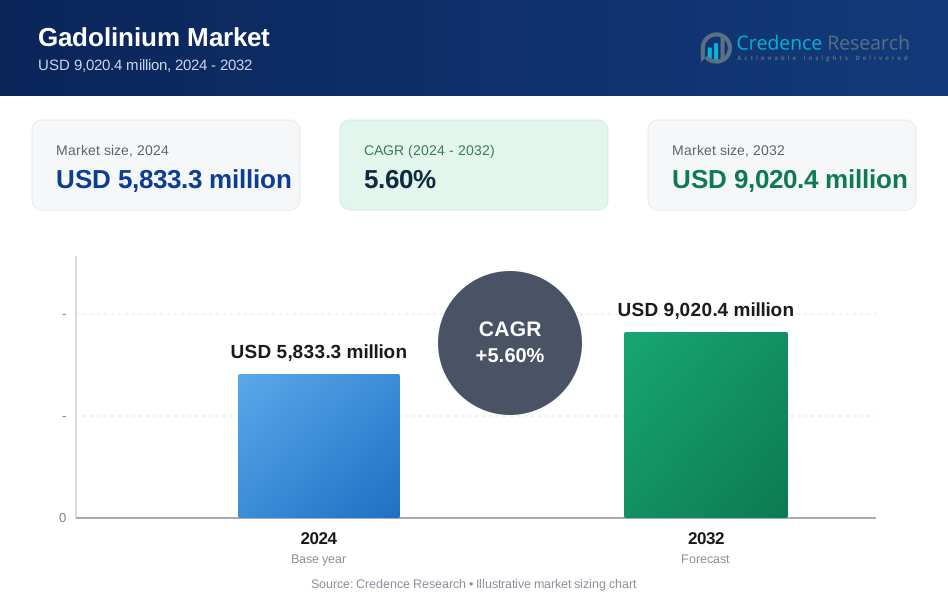
| Gadolinium Market Size 2024 | USD 5,833.3 Million |
| Gadolinium Market, CAGR | 5.60% |
| Gadolinium Market Size 2032 | USD 9,020.4 Million |
Market Overview
The Gadolinium Market is projected to grow from USD 5,833.3 million in 2024 to USD 9,020.4 million by 2032, reflecting a compound annual growth rate (CAGR) of 5.60%.
The Gadolinium Market is driven by increasing demand in advanced imaging technologies, such as magnetic resonance imaging (MRI), which utilize gadolinium-based contrast agents for enhanced imaging. Additionally, the rise in electronics and renewable energy applications fuels demand for gadolinium in high-performance magnets and phosphors. Key trends include the development of more efficient and safer gadolinium compounds and growing investments in healthcare and electronics sectors. The market also benefits from innovations in materials science, leading to improved gadolinium applications, while stringent regulations and environmental considerations shape its production and use.
The gadolinium market exhibits a diverse geographical landscape, with key players like Bracco Imaging S.p.A., GE Healthcare, and Bayer AG leading in North America and Europe, driven by strong healthcare and technological sectors. In Asia-Pacific, companies such as Daiichi Sankyo Company, Limited, and Taejoon Pharm Co., Ltd. are prominent, benefiting from growing industrial applications and medical advancements. The market is also supported by Guerbet Group and Mallinckrodt Pharmaceuticals, which have a global presence. Regional dynamics are shaped by the strategic expansions and innovations of these leading companies, contributing to the market's robust growth and global reach.
Market Drivers
Medical Imaging and Drug Delivery
Gadolinium's role in medical imaging is pivotal, particularly in Magnetic Resonance Imaging (MRI) where gadolinium-based contrast agents (GBCAs) are used to enhance image clarity and diagnostic accuracy. For instance, according to recent statistics by the Government of Canada, in 2020, diagnostic imaging held a major 21% share of Canada's medical device market. The increasing prevalence of chronic diseases and a growing reliance on advanced diagnostic techniques significantly drive the demand for gadolinium. These contrast agents are indispensable for providing high-resolution images that aid in accurate disease diagnosis and treatment planning. Moreover, gadolinium is being investigated for its potential in drug delivery systems. Its unique properties enable it to act as a carrier, potentially improving the targeted delivery and effectiveness of therapeutic drugs, which further stimulates demand in the healthcare sector.
Reactors and Waste Management
In the nuclear industry, gadolinium plays a crucial role in ensuring reactor safety and efficiency. It is used in control rods as a neutron absorber, helping to regulate the nuclear fission process within reactors. This application is essential for maintaining optimal operating conditions and preventing accidents. Additionally, gadolinium's neutron absorption properties are leveraged in nuclear waste management. It aids in the treatment and stabilization of radioactive waste, thus addressing environmental and safety concerns associated with nuclear energy production. For instance, the potential of an energy crisis is driving many economies to boost their investment in the nuclear energy sector, particularly in Japan and China. These applications underscore gadolinium's importance in maintaining the safety and effectiveness of nuclear reactors and managing their byproducts.
Functional Enhancements
Beyond healthcare and nuclear applications, gadolinium's magnetic properties make it valuable in the electronics industry. It is used in various electronic components to enhance performance, particularly in high-tech devices. For instance, the bolstering electronics industry is fueling the demand for gadolinium since it is utilized in the manufacturing of various electronic products such as smartphones, televisions and more. The growing demand for advanced electronics contributes to the increased use of gadolinium in this sector. Additionally, gadolinium is employed in metallurgy to improve the properties of alloys. By adding gadolinium, alloys exhibit enhanced strength, durability, and resistance to corrosion, which is beneficial for applications requiring robust and reliable materials. This broad utility in electronics and metallurgy highlights gadolinium's versatility and its role in advancing technology and material science.Innovative Applications and Market Growth
The exploration of new applications and innovations in gadolinium compounds drive further market growth. Advances in material science are leading to the development of more efficient and safer gadolinium-based products, expanding its use across various industries. For instance, researchers are trying various production approaches, nanoparticle structures, and surface modifications to develop gadolinium-based products with better performance, safety, and efficiency. The continual evolution of technology and increasing investment in research and development are contributing to the market's expansion. As industries seek to leverage gadolinium's unique properties for emerging applications, its market presence is set to grow, reflecting its increasing importance in both traditional and novel uses.
Market Trends
Advancements in Gadolinium-Based Contrast Agents and Medical Imaging
The healthcare sector continues to drive demand for gadolinium, particularly for gadolinium-based contrast agents (GBCAs), which are crucial for enhancing the quality of Magnetic Resonance Imaging (MRI) and other imaging techniques. For instance, a recent study published in PubMed Central highlighted that GBCAs represent one of the most advanced developments in the application of gadolinium for MRI. The industry is focused on developing safer, more efficient GBCAs to improve diagnostic accuracy and patient safety. Technological advancements in medical imaging, such as higher-resolution MRI machines, are fueling the need for advanced contrast agents that incorporate gadolinium. For instance, researchers are exploring various production approaches, nanoparticle structures, and surface modifications to develop gadolinium-based products with better performance and safety profiles. These developments ensure that diagnostic imaging remains precise and effective, reinforcing gadolinium's essential role in modern medicine. Efforts are concentrated on enhancing the performance and safety of GBCAs to meet evolving clinical requirements and to support the increasing demand for high-quality imaging solutions.
Sustainability, Supply Chain Stability, and Regulatory Changes
Sustainability is becoming a significant trend in the gadolinium market, with the industry focusing on developing environmentally friendly extraction and processing methods. This shift addresses growing environmental concerns and aligns with global sustainability goals. For instance, manufacturers are implementing measures to reduce water and energy consumption, optimize waste management, and use eco-designed packaging. Concurrently, ensuring a stable and reliable supply of gadolinium is crucial, given its limited availability and the concentration of supply sources in specific regions. Diversifying supply chains and reducing dependency on particular areas are essential strategies to mitigate supply risks. For instance, the growing global demand for contrast media, alongside the scarcity of raw materials like gadolinium, necessitates sustainable resource management practices. Additionally, the regulatory landscape for gadolinium-based contrast agents is evolving, with new regulations potentially impacting market dynamics. Staying updated with regulatory changes is critical for industry players to navigate compliance requirements and to maintain market access. For instance, concerns arose in 2006 when an association between GBCAs and nephrogenic systemic fibrosis (NSF) was established, leading to regulatory responses. Moreover, ongoing research into alternative contrast agents aims to reduce reliance on gadolinium, potentially influencing future market demand. This multifaceted approach to sustainability, supply chain management, and regulatory compliance highlights the complex factors shaping the gadolinium market and its future trajectory.
Market Challenges Analysis
Challenges of Limited Supply and Environmental Concerns
The gadolinium market faces significant challenges due to the limited global supply of this rare earth element. Gadolinium's scarcity often leads to supply chain disruptions and price volatility, as its extraction and processing are concentrated in a few regions. These supply constraints can result in fluctuating prices, impacting production costs and profitability for manufacturers. Additionally, the environmental impact of gadolinium extraction and processing is a growing concern. The mining and refining processes can lead to ecological degradation if not managed properly, necessitating the adoption of sustainable practices to mitigate adverse environmental effects. Companies are increasingly investing in technologies and methods that reduce the environmental footprint of gadolinium production, addressing both regulatory pressures and consumer demand for greener practices.
Regulatory Stringency, Safety Concerns, and Competition
The healthcare sector's stringent regulations for gadolinium-based contrast agents add another layer of complexity to the market. The approval and development of these products require rigorous testing and compliance with safety standards, which can increase development costs and time-to-market. Despite gadolinium’s general safety, there have been rare cases of adverse reactions, prompting continuous research and monitoring to ensure product safety and efficacy. Furthermore, the market faces competition from alternative contrast agents, with ongoing research exploring new substances that could potentially replace gadolinium. This competition could impact demand for gadolinium-based products, as emerging alternatives offer different benefits or address some of the existing challenges associated with gadolinium. The combined pressures of regulatory compliance, safety concerns, and the development of new technologies are reshaping the landscape of the gadolinium market, driving both innovation and strategic adjustments in the industry.
Market Segmentation Analysis:
By Product Type:
The gadolinium market is segmented by product type into acetate, acetylacetonate, oxide, nitrate, chloride, and other forms. Gadolinium acetate and acetylacetonate are widely used in various industrial and medical applications due to their stable chemical properties. Gadolinium oxide, known for its high purity, is crucial in the production of phosphors and electronic components. Gadolinium nitrate is primarily utilized in nuclear reactor applications due to its neutron-absorbing capabilities. Gadolinium chloride, while less common, finds use in specialized chemical processes and research. Each of these product types caters to specific industry requirements, influencing their demand and market dynamics. The "others" category encompasses less conventional forms of gadolinium compounds, which have niche applications across different sectors.
By Application:
In terms of application, the gadolinium market is divided into electronics, medical equipment, imaging agents, nuclear reactors, and other sectors. The electronics industry benefits from gadolinium's magnetic properties, which are integral to high-performance components. Medical equipment utilizes gadolinium in imaging agents, particularly for MRI contrast agents, enhancing diagnostic accuracy. Nuclear reactors rely on gadolinium for its effective neutron absorption, crucial for reactor control and safety. The "others" category includes applications such as research and development, where gadolinium's unique properties are leveraged for specialized uses. The diverse applications reflect gadolinium's versatility and its significant role in advancing technology and healthcare.
Segments:Based on Product Type:
- Acetate
- Acetylacetonate
- Oxide
- Nitrate
- Chloride
- Others
Based on Application:
- Electronics
- Medical Equipment
- Imaging Agents
- Nuclear Reactors
- Others
Based on the Geography:
- North America
- US
- Canada
- Mexico
- Europe
- Germany
- France
- UK
- Italy
- Spain
- Rest of Europe
- Asia Pacific
- China
- Japan
- India
- South Korea
- South-east Asia
- Rest of Asia Pacific
- Latin America
- Brazil
- Argentina
- Rest of Latin America
- Middle East & Africa
- GCC Countries
- South Africa
- Rest of the Middle East and Africa
Regional Analysis
North America
North America leads the global gadolinium market, commanding a substantial 40% market share. This dominance is primarily driven by the region's advanced healthcare infrastructure, high adoption rate of magnetic resonance imaging (MRI) technology, and significant investments in medical research. The United States, in particular, contributes heavily to this market leadership, with its large number of MRI procedures performed annually and strong presence of major medical equipment manufacturers. The North American gadolinium market is characterized by a high demand for gadolinium-based contrast agents in diagnostic imaging, especially in oncology and neurology. The region's market growth is further fueled by ongoing research and development activities in the field of contrast agent formulations, aiming to enhance image quality while minimizing potential side effects. Additionally, the presence of stringent regulatory frameworks, such as FDA guidelines, ensures the safety and efficacy of gadolinium-based products, bolstering consumer confidence. The market also benefits from the increasing prevalence of chronic diseases and the growing geriatric population, which drive the need for advanced diagnostic imaging techniques.
Europe
Europe holds the second-largest share in the gadolinium market at 30%, with countries like Germany, France, and the United Kingdom being key contributors. The European market is driven by a well-established healthcare system, strong focus on early disease detection, and increasing investments in medical imaging technologies. The region's market is characterized by a growing emphasis on personalized medicine, which requires advanced imaging techniques for precise diagnosis and treatment planning. European manufacturers have been at the forefront of developing macrocyclic gadolinium-based contrast agents, which are considered to have a better safety profile compared to linear agents. The market has also seen significant growth in the use of gadolinium in other applications, such as optical displays and nuclear reactors, diversifying its demand beyond the healthcare sector. Furthermore, European countries' commitment to reducing gadolinium accumulation in the environment has led to innovations in contrast agent recycling and the development of gadolinium-free alternatives for certain applications. As the region continues to prioritize healthcare innovation and environmental sustainability, the European gadolinium market is poised for steady growth, with ongoing research focusing on enhancing the efficacy and safety of gadolinium-based products.
Key Player Analysis
- Bracco Imaging S.p.A.
- GE Healthcare
- Bayer AG
- Daiichi Sankyo Company, Limited
- Guerbet Group
- Mallinckrodt Pharmaceuticals
- Taejoon Pharm Co., Ltd.
- J.B. Chemicals & Pharmaceuticals Ltd.
- Spago Nanomedical AB
- Isologic Innovative Radiopharmaceuticals
Competitive Analysis
The gadolinium market is highly competitive, featuring prominent players such as Bracco Imaging S.p.A., GE Healthcare, and Bayer AG. Bracco Imaging S.p.A. excels in developing advanced gadolinium-based contrast agents, bolstering its strong position in the medical imaging sector. GE Healthcare leverages its extensive research and development capabilities to innovate and enhance gadolinium applications, maintaining its leadership in the healthcare market. Bayer AG also plays a significant role with its comprehensive portfolio of diagnostic imaging solutions. Other key players like Daiichi Sankyo Company, Limited, and Guerbet Group contribute to the market with a focus on both medical and industrial uses of gadolinium. Mallinckrodt Pharmaceuticals and Taejoon Pharm Co., Ltd. further intensify competition by offering specialized products and expanding their global reach. These companies drive market dynamics through technological advancements, strategic collaborations, and extensive distribution networks, fostering a competitive and evolving industry landscape.
Recent Developments
- In June 2023, Germany-based Bayer AG began the Phase III clinical development program QUANTI. The company aims to evaluate the efficacy and safety of gadoquatrane, a cutting-edge extracellular, macrocyclic, Gd-based contrast agent (GBCA) for use in MRI imaging.
- In April 2023, United States-based GE Healthcare expanded the portfolio of MRI contrast agents. The company launched Pixxoscan (gadobutrol), a macrocyclic, non-ionic MRI gadolinium-based contrast agent (GBCA).
- In February 2021, Bracco introduced Lumason, a novel contrast agent designed for ultrasound imaging. Lumason made history as the first ultrasound contrast agent to receive FDA approval for application in pediatric patients with liver disease.
Market Concentration & Characteristics
The gadolinium market exhibits moderate to high concentration, with several key players dominating the landscape. Major companies such as Bracco Imaging S.p.A., GE Healthcare, and Bayer AG hold significant market shares due to their established reputations and extensive product portfolios. The market is characterized by its reliance on specialized applications, primarily in medical imaging and nuclear reactors, which drives demand for high-quality gadolinium compounds. The industry's characteristics include a focus on technological innovation and stringent regulatory compliance, particularly for medical applications. Companies invest heavily in research and development to enhance product performance and address safety concerns. Market dynamics are influenced by the limited supply of gadolinium, which can lead to fluctuations in pricing and supply chain challenges. Despite the competitive environment, high entry barriers exist due to the specialized nature of gadolinium products and the need for advanced manufacturing capabilities.
Report Coverage
The research report offers an in-depth analysis based on Product Type, Application and Geography. It details leading market players, providing an overview of their business, product offerings, investments, revenue streams, and key applications. Additionally, the report includes insights into the competitive environment, SWOT analysis, current market trends, as well as the primary drivers and constraints. Furthermore, it discusses various factors that have driven market expansion in recent years. The report also explores market dynamics, regulatory scenarios, and technological advancements that are shaping the industry. It assesses the impact of external factors and global economic changes on market growth. Lastly, it provides strategic recommendations for new entrants and established companies to navigate the complexities of the market.
Future Outlook
- The gadolinium market is expected to grow steadily due to increasing demand in medical imaging and nuclear applications.
- Technological advancements in imaging techniques will drive the need for more efficient and high-quality gadolinium-based contrast agents.
- Research into sustainable extraction and processing methods will become a major focus to address environmental concerns.
- The market will see increased investment in developing alternative contrast agents to reduce reliance on gadolinium.
- Expansion in emerging markets, particularly in Asia-Pacific, will contribute significantly to market growth.
- Regulatory changes and stricter standards will impact the development and approval of gadolinium-based products.
- The development of new gadolinium-based compounds with enhanced properties will offer growth opportunities.
- Growing healthcare infrastructure in developing regions will boost demand for gadolinium in medical applications.
- Efforts to stabilize supply chains and diversify sources will address issues related to limited gadolinium availability.
- Increased collaboration between industry players and research institutions will drive innovation and market expansion.
Request a Free Sample
Fill in your details and we'll send you a free sample report.
- Sample data tables & charts
- Research methodology
Need a Custom Version of This Report?
Tailor the scope, geography, or segments to your exact requirements.
- Custom geography or segment scope
- Direct access to our analyst team
Frequently Asked Questions
What is the current size of the Gadolinium Market?
What factors are driving the growth of the Gadolinium Market?
What are the key segments within the Gadolinium Market?
What are some challenges faced by the Gadolinium Market?
Who are the major players in the Gadolinium Market?
Which segment is leading the market share?
Table of Content
Chapter 1. Report Introduction
- 1.1 Report Description & Purpose
- 1.1.1 Report Title & Market Definition
- 1.1.2 Unique Selling Propositions (USP) & Key Differentiators
- 1.1.3 Value Proposition for Stakeholders
- 1.2 Research Objectives
- 1.2.1 Market Sizing Objectives (Volume & Revenue)
- 1.2.2 Segmentation Objectives
- 1.2.3 Competitive Intelligence Objectives
- 1.2.4 Forecast & Scenario Objectives
- 1.3 Report Scope
- 1.3.1 Gadolinium Scope – Types & Subtypes Covered
- 1.3.2 Geographic Scope – Regions & Countries Covered
- 1.3.3 Historical Period, Base Year & Forecast Period (2024; forecast to 2032)
- 1.3.4 Inclusions & Exclusions
- 1.4 HS Code & Classification Framework
- 1.5 Currency, Units & Pricing Basis
- 1.6 Target Stakeholders
- 1.7 Limitations & Assumptions
Chapter 2. Executive Summary
- 2.1 Global Gadolinium Market Snapshot
- 2.1.1 Market Size – Historical (2024) & Forecast (2024-2032) (2024: USD 5,833.3 million → 2032: USD 9,020.4 million)
- 2.1.2 Volume & Revenue – Global Totals
- 2.1.3 Key Market Highlights – Top Five Facts
- 2.2 Gadolinium Market Segmentation Snapshot
- 2.2.1 Market Split by Region – 2024 vs. 2032
- 2.3 Competitive Snapshot
- 2.3.1 Top 10 Players by Revenue Share – 2024
- 2.3.2 Top 10 Players by Volume Share – 2024
- 2.3.3 Recent Strategic Developments (18-Month Summary)
- 2.4 Key Investment Highlights & Strategic Conclusions
Chapter 3. Gadolinium Market Dynamics & Industry Analysis
- 3.1 Market Overview & Context
- 3.1.1 Gadolinium Market Position in the Broader Automotive Value Chain
- 3.1.2 OEM vs. Replacement Market Dynamics
- 3.1.3 Market Maturity & Development Stage by Region
- 3.2 Gadolinium Market Drivers
- 3.3 Gadolinium Market Restraints & Challenges
- 3.4 Gadolinium Market Opportunities
- 3.5 Porter's Five Forces Analysis
- 3.5.1 Threat of New Entrants
- 3.5.2 Bargaining Power of Suppliers
- 3.5.3 Bargaining Power of Buyers
- 3.5.4 Threat of Substitutes
- 3.5.5 Competitive Rivalry – Intensity Assessment
- 3.6 Gadolinium Value Chain Analysis
- 3.6.1 Upstream – Raw Material/Input Suppliers
- 3.6.1.1 Raw Material/Input 1
- 3.6.1.2 Raw Material/Input 2
- 3.6.1.3 Raw Material/Input 3
- 3.6.2 Midstream – Production/Manufacturing/Service Delivery
- 3.6.2.1 Production/Process Overview
- 3.6.2.2 Key Facility Locations & Capacity by Manufacturer
- 3.6.3 Downstream – Distribution & End Consumer
- 3.6.3.1 Primary Channel – B2B/OEM
- 3.6.3.2 Secondary Channels – Dealer, Retail, Online, Direct
- 3.6.4 Value Chain Profitability Analysis
- 3.6.1 Upstream – Raw Material/Input Suppliers
- 3.7 PESTEL Analysis
- 3.7.1 Political Factors
- 3.7.2 Economic Factors
- 3.7.3 Social Factors
- 3.7.4 Technological Factors
- 3.7.5 Environmental Factors
- 3.7.6 Legal Factors
- 3.8 Gadolinium Supply Chain Analysis
- 3.8.1 Raw Material/Input Supply Risk Assessment
- 3.8.2 Manufacturing Concentration Risk (Geographic Exposure)
- 3.8.3 Trade Disruption Impact Analysis
- 3.9 Regulatory & Policy Landscape
Note: The regulatory and policy landscape section covers regulations based on their applicability to the market, Gadolinium category, geography, and scope of the study. Only regulatory frameworks with a material impact on operations, compliance, trade, sustainability, or market access are analyzed in detail.
Chapter 4. Key Investment Pockets & Opportunity Analysis
- 4.1 Gadolinium Market Attractiveness Analysis
- 4.1.1 By Region – Investment Attractiveness Matrix (Volume × CAGR)
- 4.2 Absolute Revenue Growth Opportunity
- 4.2.1 By Region – Absolute USD Growth Through 2032
- 4.3 Incremental Volume Opportunity
- 4.3.1 By Region – Incremental Volume Through 2032
- 4.3.2 Segment – Incremental Volume
- 4.4 Emerging Submarket Opportunity Deep Dive (Subject to Applicability)
- 4.5 Emerging Market Opportunity Scorecards
- 4.5.1 United States
- 4.5.2 Europe
- 4.5.3 Asia
- 4.5.4 Middle East & Africa
Note: Emerging Market Opportunity Scorecards will be included based on relevance and strategic importance. Regions listed are indicative and may vary depending on data availability and market dynamics.
Chapter 5. Gadolinium Import-Export Analysis & Trade Flows
- 5.1 Global Trade Overview
- 5.1.1 Global Export Value by Country (2024)
- 5.1.2 Global Export Volume by Country (2024)
- 5.1.3 Global Import Value by Country (2024)
- 5.1.4 Global Import Volume by Country (2024)
- 5.1.5 Net Trade Balance by Country (2024)
- 5.2 Export Analysis – Segment
- 5.2.1 Type 1 (HS Code)
- 5.2.2 Type 2 (HS Code)
- 5.2.3 Type 3 (HS Code)
- 5.2.4 Type 4 (HS Code)
- 5.2.5 Type 5 (HS Code)
- 5.3 Import Analysis – Segment
- 5.3.1 Type 1 (HS Code)
- 5.3.2 Type 2 (HS Code)
- 5.3.3 Type 3 (HS Code)
- 5.3.4 Type 4 (HS Code)
- 5.3.5 Type 5 (HS Code)
- 5.4 Average Unit Trade Prices
- 5.4.1 Average Export Price – Segment & Country
- 5.4.2 Average Import Price – Segment & Source Country
- 5.4.3 Price Trends (2024)
- 5.5 Key Trade Route Analysis
- 5.5.1 Trade Route 1
- 5.5.2 Trade Route 2
- 5.5.3 Trade Route 3
- 5.5.4 Trade Route 4
- 5.5.5 Trade Route 5
- 5.6 Trade Policy Impact Assessment
- 5.6.1 US Anti-Dumping & Section 301 Tariffs
- 5.6.2 EU Customs Union Impact
- 5.6.3 Major Free Trade Agreements
- 5.6.4 USMCA Rules of Origin
Note: Trade policy analysis will be included only where relevant to the Gadolinium market.
Chapter 6. Competitive Landscape & Company Benchmarking
- 6.1 Gadolinium Market Concentration & Structure
- 6.1.1 Herfindahl-Hirschman Index (HHI) – vs. 2024
- 6.1.2 Tier 1, Tier 2 & Tier 3 Market Structure
- 6.1.3 Global, Regional & Local Player Dynamics
- 6.2 Gadolinium Market Share Analysis – 2024
- 6.2.1 Global Revenue Share by Company
- 6.2.2 Global Volume Share by Company
- 6.2.3 Regional Revenue Share
- 6.2.4 Market Share Evolution ( vs. 2024)
- 6.2.5 OEM Segment Share by Company
- 6.2.6 Replacement Segment Share by Company
- 6.3 Production/Delivery Capacity & Facility Analysis
- 6.3.1 Global Installed Capacity
- 6.3.2 Capacity Utilization Rates
- 6.3.3 Production/Output Volume
- 6.3.4 Facility Locations & Capacity Map
- 6.3.5 Planned Capacity Additions
- 6.4 Gadolinium Competitive Benchmarking Matrix
- 6.4.1 Revenue, Volume, CAGR & Profitability Comparison
- 6.4.2 Channel Revenue Mix
- 6.4.3 Geographic Revenue Exposure
- 6.4.4 R&D Intensity
- 6.4.5 Sustainability Maturity
- 6.5 Strategic Developments in Gadolinium (Last 24 Months)
- 6.5.1 Mergers, Acquisitions & Divestments
- 6.5.2 New Gadolinium Launches
- 6.5.3 Facility Expansions
- 6.5.4 Strategic Alliances, Joint Ventures & Partnerships
- 6.5.5 Distribution Expansion & Market Entry
- 6.5.6 Sustainability & ESG Initiatives
- 6.6 Competitive Strategy Mapping
- 6.6.1 Leader, Challenger, Follower & Niche Classification
- 6.6.2 Pricing Strategy Comparison
- 6.6.3 Channel Strategy Matrix
Note: Strategic developments are included based on their materiality and the availability of reliable information.
Chapter 7. Global Gadolinium Market – By Distribution Channel
- 7.1 Segment Overview
- 7.1.1 Volume & Revenue Split by Channel (2024 & 2032)
- 7.1.2 Channel Mix Evolution (2024-2032)
Chapter 8. Regional Market Analysis – Global Overview
- 8.1 Global Regional Overview
- 8.1.1 Regional Volume Share
- 8.1.2 Regional Revenue Share
- 8.1.3 Regional Volume by Region
- 8.1.4 Regional Revenue by Region
- 8.1.5 Regional Forecast Through 2032
- 8.2 Cross-Regional Segment Analysis
- 8.2.1 By Distribution Channel
- 8.2.2 By Brand/Price Tier
Chapter 9. North America Gadolinium Market
- 9.1 United States
- 9.2 Canada
- 9.3 Mexico
Chapter 10. Europe Gadolinium Market
- 10.1 Germany
- 10.2 France
- 10.3 Italy
- 10.4 United Kingdom
- 10.5 Spain
- 10.6 Poland
- 10.7 Russia
- 10.8 Netherlands
- 10.9 Belgium
- 10.10 Sweden
- 10.11 Denmark
- 10.12 Norway
- 10.13 Rest of Europe
Chapter 11. Asia Pacific Gadolinium Market
- 11.1 China
- 11.2 India
- 11.3 Japan
- 11.4 South Korea
- 11.5 Thailand
- 11.6 Indonesia
- 11.7 Vietnam
- 11.8 Malaysia
- 11.9 Australia
- 11.10 Rest of Asia Pacific
Chapter 12. Latin America Gadolinium Market
- 12.1 Brazil
- 12.2 Argentina
- 12.3 Colombia
- 12.4 Chile
- 12.5 Rest of Latin America
Chapter 13. Middle East Gadolinium Market
- 13.1 Saudi Arabia
- 13.2 United Arab Emirates
- 13.3 Turkey
- 13.4 Israel
- 13.5 Iran
- 13.6 Rest of the Middle East
Chapter 14. Africa Gadolinium Market
- 14.1 South Africa
- 14.2 Egypt
- 14.3 Nigeria
- 14.4 Morocco
- 14.5 Rest of Africa
Chapter 15. Gadolinium Company Profiles
- 15.1 [Company 01]
- 15.1.1 Company Overview
- 15.1.2 Key Management Personnel
- 15.1.3 Products & Services Portfolio
- 15.1.4 Financial Performance
- 15.1.5 Key Market Focus & Geographic Presence
- 15.1.6 Recent Developments & Strategic Initiatives
Note: The company profile list is preliminary and may change based on research findings, market developments, data availability, and client requirements.
Chapter 16. Appendices
- Appendix A – List of Abbreviations & Acronyms
- Appendix B – Industry Classification Code Reference – Full Series
- Appendix C – Production & Capacity Data Tables
- Appendix D – End-Use & Demand Base Tables
- Appendix E – Consumption & Replacement Rate Assumptions
- Appendix F – ASP Reference Tables
- Appendix G – Manufacturing & Facility Database
- Appendix H – Import-Export Data Tables
- Appendix I – Regulatory Summary Tables
- Appendix J – Primary Research Participant List (Anonymized)
- Appendix K – Primary Research Questionnaire Framework
- Appendix L – Data Sources & Bibliography
- Appendix M – Market Size Divergence & Source Comparison
Chapter 17. Research Methodology
- 17.1 Research Framework & Philosophy
- 17.2 Secondary Research – Sources, Hierarchy & Data Extraction
- 17.3 Data Modeling – Bottom-Up & Top-Down Market Sizing
- 17.4 Primary Research – Stakeholder Framework, LOI & Sample Sizes
- 17.5 Forecast Methodology – Regression, Scenario & Sensitivity Analysis
- 17.6 Quality Control – Four-Layer Validation Framework
- 17.7 Limitations & Standard Assumptions
- 17.8 Disclaimer
