
| REPORT ATTRIBUTE | DETAILS |
|---|---|
| Historical Period | 2019-2022 |
| Base Year | 2023 |
| Forecast Period | 2024-2032 |
| Perfume Ingredient Chemicals Market Size 2024 | USD 7115 million |
| Perfume Ingredient Chemicals Market, CAGR | 6.2% |
| Perfume Ingredient Chemicals Market Size 2032 | USD 11426.09 million |
Market Overview:
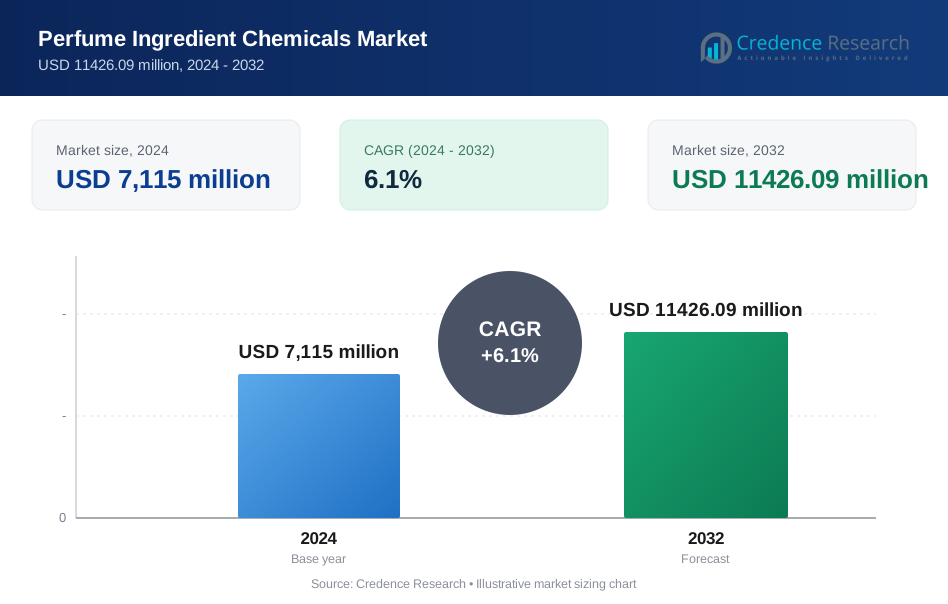
The Perfume Ingredient Chemicals Market is projected to grow from USD 7115 million in 2024 to an estimated USD 11426.09 million by 2032, with a compound annual growth rate (CAGR) of 6.1% from 2024 to 2032.
Key drivers of the Perfume Ingredient Chemicals market include the growing consumer demand for unique, natural, and sustainable fragrance ingredients. The increasing trend toward personalized and custom fragrances has led to a surge in the use of high-quality, rare ingredients. Additionally, the rising awareness of the importance of fragrance in personal grooming and its association with luxury and status is further driving the market. Innovations in the production of synthetic and natural fragrance ingredients, as well as advancements in the formulation of long-lasting scents, also contribute to market growth. Furthermore, the increasing focus on eco-friendly ingredients and sustainable sourcing is becoming a significant factor in shaping the future of the industry.
Regionally, Europe holds a dominant position in the Perfume Ingredient Chemicals market, led by France, which is a global hub for the fragrance industry. The market in Europe benefits from a long-standing tradition of fragrance production and a strong presence of leading perfume manufacturers. North America follows closely, driven by the growing demand for premium perfumes and rising disposable incomes. The Asia-Pacific region is expected to experience significant growth over the forecast period, fueled by rising urbanization, changing consumer preferences, and the expanding middle class in countries like China and India. This region’s growing interest in luxury products and personal care is expected to further boost market expansion.
Market Drivers:
Rising Consumer Demand for Premium Fragrances:
The growing demand for premium and luxury perfumes is a significant driver of the perfume ingredient chemicals market. Consumers are increasingly willing to spend on high-quality fragrance products that offer unique and lasting scents. This trend is particularly prominent in the luxury and personal care segments, where the use of superior perfume ingredients is essential for creating signature fragrances. For instance, according to a survey by Nielsen, 65 out of every 100 consumers prefer premium perfumes for their longevity and distinct aroma. As the global preference for personalized and bespoke perfumes increases, the demand for rare and high-quality ingredients continues to rise, stimulating market growth.
Shift Toward Natural and Sustainable Ingredients:
Consumers are becoming more conscious of the ingredients used in their perfumes, leading to a notable shift toward natural and sustainably sourced ingredients. With increasing concerns over health, wellness, and environmental impact, there is growing demand for fragrances made from natural botanicals and eco-friendly chemical alternatives. For instance, a report indicated that 75 out of every 100 consumers are willing to pay more for sustainably sourced ingredients in their perfumes. This shift is pushing perfume manufacturers to incorporate more sustainable and ethically sourced materials, boosting the market for natural perfume ingredient chemicals. Additionally, regulatory bodies are imposing stricter standards on the use of chemicals in personal care products, further driving the demand for safe and sustainable fragrance ingredients.
Innovations in Fragrance Formulation:
Advancements in fragrance technology and ingredient formulation are key drivers of the perfume ingredient chemicals market. Innovations, such as the development of longer-lasting and more stable fragrances, are gaining popularity among consumers. For instance, recent innovations have led to the development of fragrances that last over 12 hours, greatly appealing to consumers. Additionally, the ability to synthesize complex and unique fragrances using both natural and synthetic ingredients is expanding the possibilities in fragrance design. These technological advancements allow perfume manufacturers to create more sophisticated and customized scent profiles, attracting a wider range of consumers.
Growth in Emerging Markets:
The expanding middle class and rising disposable incomes in emerging markets, particularly in Asia-Pacific and Latin America, are driving significant growth in the perfume ingredient chemicals market. As consumers in these regions increasingly adopt Western-style beauty and grooming habits, demand for fragrance products is growing. For instance, the Asia-Pacific region saw a rise of 20 million units in perfume sales last year, reflecting the growing interest in fragrance products. Additionally, with the rise of luxury brands and an increasing preference for premium personal care products, the market for perfume ingredients in these regions is poised for considerable expansion. This growth presents new opportunities for both local and global manufacturers of fragrance ingredients.
Market Trends:
Increased Demand for Natural Ingredients:
A significant trend in the perfume ingredient chemicals market is the growing preference for natural and organic ingredients. As consumers become more health-conscious and environmentally aware, there is a shift towards fragrances derived from natural sources such as flowers, fruits, and herbs. For instance, according to the Natural Perfumers Guild, there has been an increase of 20 million units in the demand for perfumes containing natural extracts and essential oils over the past five years. This trend is driven by the rising demand for "clean" beauty products that use sustainably sourced materials, free from synthetic chemicals. Many leading perfume brands are now focusing on natural extracts and essential oils to cater to this demand, promoting both health and environmental benefits.
Sustainability and Ethical Sourcing:
Sustainability has become a core focus in the fragrance industry, with manufacturers increasingly adopting eco-friendly practices. This includes the sustainable sourcing of raw materials and using biodegradable or recyclable packaging. Companies are making efforts to reduce their carbon footprint and ensure that their ingredients are ethically sourced. For instance, L'Oréal has committed to sourcing 100 out of 100 of its renewable raw materials sustainably by 2030, which includes ingredients used in their fragrances. This trend is particularly strong in response to growing consumer concerns about the impact of the beauty industry on the environment. Additionally, regulations are becoming more stringent, requiring manufacturers to align with sustainability standards, which has prompted further innovation in sustainable ingredient sourcing.
Technological Advancements in Fragrance Creation:
Technological innovations in fragrance formulation are revolutionizing the perfume ingredient chemicals market. Advances in synthetic biology and biotechnology are allowing for the development of more complex and customizable scents. For instance, Firmenich, a leading fragrance and flavor company, has developed new biotech-based fragrance molecules that offer unique scent profiles and longer-lasting properties. Companies are leveraging artificial intelligence (AI) and machine learning to create unique fragrance blends, increasing the speed and efficiency of product development. These technologies also enable the creation of more stable fragrances with longer-lasting properties, responding to consumer demands for higher quality and more enduring scents.
Personalization and Customization:
Personalized and bespoke fragrances are a growing trend, particularly in the luxury segment of the market. Consumers are increasingly seeking unique, tailored scent experiences, leading to an increased demand for customizable perfumes. For instance, brands like Jo Malone London and Le Labo offer bespoke fragrance services where customers can create their own scents by selecting specific ingredients. Perfume manufacturers are offering consumers the ability to create their own fragrances by selecting specific ingredients or scents that resonate with their preferences. This trend is pushing the boundaries of the perfume ingredient chemicals market, with companies investing in new technologies and ingredients to offer highly personalized products.
Market Challenges Analysis:
Regulatory and Compliance Challenges:
One of the key challenges facing the perfume ingredient chemicals market is the stringent regulatory environment governing the use of chemicals in fragrances. Regulatory bodies across various regions, such as the European Union’s REACH (Registration, Evaluation, Authorisation, and Restriction of Chemicals) and the U.S. FDA, impose strict guidelines on the sourcing, formulation, and labeling of perfume ingredients. Manufacturers must comply with these regulations to ensure the safety of their products, which can increase production costs and limit the use of certain ingredients. Compliance with evolving regulations can also lead to delays in product development and market entry, posing a significant hurdle for companies in the industry.
Supply Chain Disruptions:
The global nature of the perfume ingredient chemicals market exposes it to supply chain vulnerabilities. The sourcing of raw materials, particularly rare natural ingredients, often involves complex and long supply chains, making the market susceptible to disruptions due to geopolitical issues, climate change, or supply shortages. For instance, environmental factors such as droughts or natural disasters can negatively impact the cultivation of essential fragrance plants, leading to a scarcity of raw materials and driving up costs. Such disruptions can affect the ability of perfume manufacturers to deliver products on time and at competitive prices, impacting their overall profitability.
Cost of Premium Ingredients:
The increasing demand for high-quality and sustainable ingredients presents another challenge. Premium and natural fragrance materials, such as rare essential oils, are often more expensive than synthetic alternatives. The rising cost of these ingredients, along with the added expense of sustainable sourcing practices, can increase production costs for perfume manufacturers. Smaller companies, in particular, may struggle to compete with larger, more established players that can absorb these higher costs, making it difficult for them to gain market share or maintain profitability.
Consumer Sensitivity to Price:
While there is growing demand for luxury and personalized perfumes, many consumers remain price-sensitive, particularly in emerging markets. Balancing the desire for premium, sustainable ingredients with the need to keep products affordable for a broad consumer base presents a challenge. Perfume manufacturers must find ways to innovate and create high-quality fragrances while maintaining competitive pricing structures to appeal to a wide range of consumers.
Market Segmentation Analysis:
By Product Type
The Perfume Ingredient Chemicals market is segmented into natural and synthetic ingredients. Natural ingredients, which include essential oils, floral extracts, and fruit oils, dominate the market due to the increasing consumer demand for organic and sustainable products. These ingredients are prized for their authenticity and complex scent profiles, making them highly sought after in the luxury and high-end fragrance segments. Synthetic ingredients, on the other hand, offer cost-effective alternatives and are commonly used to create consistent and long-lasting fragrances. As the demand for personalized and unique fragrances grows, synthetic ingredients continue to be a key component in the mass-market perfume sector, where affordability and scalability are essential.
By Application
The market is also segmented by application, including fine fragrances, personal care, and household products. Fine fragrances account for the largest market share, driven by consumer preference for high-quality perfumes and luxury scents. Personal care products, such as body lotions, shampoos, and deodorants, are another significant application area, where fragrance plays a key role in enhancing consumer appeal and satisfaction. The household products segment, which includes air fresheners and cleaning products, is also experiencing steady growth, driven by the increasing focus on pleasant scents in home environments. This diverse range of applications reflects the broad use of perfume ingredient chemicals across various consumer goods sectors, further fueling market expansion.
Segmentations:
By Product Type
Natural Ingredients
- Essential Oils
- Floral Extracts
- Fruit Oils
Synthetic Ingredients
- Aromachemicals
- Musks
- Synthetic Resins
By Application
Fine Fragrances
- Perfumes
- Eau De Toilettes
- Eau De Parfums
Personal Care
- Body Lotions
- Shampoos
- Deodorants
Household Products
- Air Fresheners
- Cleaning Products
- Scented Candles
By Region
- North America
- U.S.
- Canada
- Mexico
- Europe
- Germany
- France
- U.K.
- Italy
- Spain
- Rest of Europe
- Asia Pacific
- China
- Japan
- India
- South Korea
- South-east Asia
- Rest of Asia Pacific
- Latin America
- Brazil
- Argentina
- Rest of Latin America
- Middle East & Africa
- GCC Countries
- South Africa
- Rest of the Middle East and Africa
Regional Analysis:
North America
North America holds a significant share of the global Perfume Ingredient Chemicals market, accounting for approximately 30% of the total market. The region is driven by a well-established fragrance industry, particularly in the United States, which is home to numerous leading perfume brands and ingredient suppliers. The increasing demand for premium and luxury perfumes, along with growing consumer interest in natural and sustainable ingredients, supports market growth. Additionally, North America's strong regulatory environment ensures high-quality standards, which further strengthens consumer trust and contributes to the region’s leadership. The presence of major personal care and cosmetics companies also boosts the demand for perfume ingredients, with a rising trend towards customized fragrances.
Europe
Europe holds the largest share of the market, with an estimated 35% of global market share, driven primarily by France, which is a hub for the perfume industry. The region’s long-standing tradition of fragrance creation and production makes it the largest consumer of perfume ingredient chemicals. The demand for high-end, luxury fragrances and the growing trend toward sustainable and natural ingredients are significant drivers in this region. Furthermore, Europe is home to many renowned perfume manufacturers and ingredient suppliers, creating a robust and competitive market. Stringent regulatory frameworks, particularly in the EU, further shape the market landscape, ensuring a high standard of product safety and quality.
Asia-Pacific
The Asia-Pacific region is expected to experience the highest growth rate in the Perfume Ingredient Chemicals market, with an estimated market share of 20%. This growth is fueled by the increasing disposable income, urbanization, and rising consumer interest in luxury and personal care products in countries like China, India, and Japan. Additionally, the growing middle class and their demand for high-quality fragrance products contribute to the expansion of the market. The increasing focus on personal grooming and the rise of e-commerce platforms have also bolstered demand for both synthetic and natural perfume ingredients in the region.
Latin America
Latin America holds a smaller but steadily growing share of the market, accounting for about 5%. The region is witnessing an increased adoption of premium fragrances and rising awareness of personal care and grooming. Countries like Brazil and Mexico are key contributors to the growth in Latin America, with an increasing demand for fragrance ingredients in both fine perfumes and personal care products. The growth is also supported by a young and dynamic consumer base that is becoming more aware of international fragrance trends.
Middle East & Africa
The Middle East & Africa region, which holds a market share of approximately 10%, shows strong potential for growth. The region has a rich history of fragrance usage, particularly in countries like the UAE and Saudi Arabia, where luxury perfumes and aromatic products are highly valued. The market is supported by the growing demand for high-end, oriental, and exotic fragrances. Additionally, the expanding retail and e-commerce sectors are providing greater access to fragrance products, further driving market growth.
Key Player Analysis:
- BASF SE
- Eternis Fine Chemicals
- YingYang (China) Aroma Chemical Group
- KDAC CHEM Pvt. Ltd.
- Frutarom
- Harmony Organics Pvt. Ltd.
- Atul Ltd.
- Godavari Biorefineries Ltd.
- Givuadan
- Firmenich
- International Flavors and Fragrances Inc.
- Symrise
Competitive Analysis:
The Perfume Ingredient Chemicals market is highly competitive, with a mix of established global players and emerging regional manufacturers. Leading companies such as Givaudan, International Flavors & Fragrances (IFF), Symrise, and Firmenich dominate the market, benefiting from strong brand recognition, expansive product portfolios, and significant research and development (R&D) investments. For instance, Givaudan invested CHF 590 million in R&D in 2022 to enhance its fragrance offerings. These companies focus on innovation, offering a wide range of natural, synthetic, and sustainable fragrance ingredients to cater to the growing demand for personalized and high-quality fragrances. They also emphasize eco-friendly practices, leveraging sustainable sourcing and production methods to meet consumer demand for ethically produced products. Smaller regional players also contribute to the competition, particularly in emerging markets, offering cost-effective solutions and catering to local preferences. Strategic mergers and acquisitions, partnerships, and continuous product innovation are key strategies being employed to strengthen market positions. As sustainability becomes a critical factor, companies are focusing on developing natural and biodegradable ingredients, further intensifying competition.
Recent Developments:
- In March 2024, BASF Aroma Ingredients expanded its Isobionics® portfolio by launching a new natural flavor - Isobionics® Natural beta-Caryophyllene 80, produced from renewable resources using biotechnology.
- In April 2024, BASF introduced "Ingredients Revealed," a new digital service platform that enables developers to identify ingredients and formulations with specific criteria including sustainability information.
- In December 2024, Eternis Fine Chemicals completed the acquisition of Sharon Personal Care (Sharon PC), marking their strategic expansion into the personal care segment.
Market Concentration & Characteristics:
The Perfume Ingredient Chemicals market exhibits moderate concentration, with a few large players holding a significant portion of the market share, while numerous smaller, regional manufacturers also contribute to the overall competition. Major companies such as Givaudan, International Flavors & Fragrances (IFF), Symrise, and Firmenich dominate the market through their extensive product portfolios, global presence, and heavy investment in research and development. These players focus on innovation, sustainability, and high-quality ingredients to meet the growing consumer demand for personalized, luxurious, and natural fragrances. While the market is led by these established giants, smaller players continue to thrive by catering to niche markets or offering cost-effective solutions, particularly in emerging regions. The market is characterized by a continuous push for product diversification, sustainable sourcing practices, and the development of unique, long-lasting fragrance formulations, which drive innovation and competition across both premium and mass-market segments.
Report Coverage:
The research report offers an in-depth analysis based on Product Type and Application. It details leading market players, providing an overview of their business, product offerings, investments, revenue streams, and key applications. Additionally, the report includes insights into the competitive environment, SWOT analysis, current market trends, as well as the primary drivers and constraints. Furthermore, it discusses various factors that have driven market expansion in recent years. The report also explores market dynamics, regulatory scenarios, and technological advancements that are shaping the industry. It assesses the impact of external factors and global economic changes on market growth. Lastly, it provides strategic recommendations for new entrants and established companies to navigate the complexities of the market.
Future Outlook:
- The demand for natural and sustainable fragrance ingredients is expected to continue rising as consumers become more conscious of environmental and health factors.
- Technological advancements in fragrance formulation, including the use of artificial intelligence and biotechnology, will drive innovation in creating more complex and personalized fragrances.
- The growing popularity of eco-friendly and biodegradable ingredients will shape product development, as companies respond to the increasing demand for sustainable beauty and personal care products.
- The expansion of the middle class in emerging markets, particularly in Asia-Pacific and Latin America.
- The increasing use of personalized fragrances will drive market growth, as consumers seek unique scent experiences tailored to their preferences.
- Advances in e-commerce and digital platforms will make fragrance products more accessible globally.
- Collaborations between fragrance houses and luxury brands will become more prevalent, leading to the development of high-end, exclusive fragrance offerings.
- Regulatory pressures around ingredient transparency and sustainability will continue to push manufacturers to adopt cleaner and more ethical sourcing practices.
- The growing interest in wellness and self-care products will contribute to the demand for fragrance ingredients in personal care and home products.
- Increased focus on regional and cultural preferences in fragrance formulations will prompt companies to innovate in terms of scent profiles and ingredients specific to diverse global markets.
Request a Free Sample
Fill in your details and we'll send you a free sample report.
- Sample data tables & charts
- Research methodology
Need a Custom Version of This Report?
Tailor the scope, geography, or segments to your exact requirements.
- Custom geography or segment scope
- Direct access to our analyst team
Frequently Asked Questions
What is the current size of the Perfume Ingredient Chemicals Market?
What factors are driving the growth of the Perfume Ingredient Chemicals Market?
What are the key segments within the Perfume Ingredient Chemicals Market?
What are some challenges faced by the Perfume Ingredient Chemicals Market?
Who are the major players in the Perfume Ingredient Chemicals Market?
Which segment is leading the market share?
Table of Content
Chapter 1. Report Introduction
- 1.1 Report Description & Purpose
- 1.1.1 Report Title & Market Definition
- 1.1.2 Unique Selling Propositions (USP) & Key Differentiators
- 1.1.3 Value Proposition for Stakeholders
- 1.2 Research Objectives
- 1.2.1 Market Sizing Objectives (Volume & Revenue) (Volume Where Applicable)
- 1.2.2 Segmentation Objectives
- 1.2.3 Competitive Intelligence Objectives
- 1.2.4 Forecast & Scenario Objectives
- 1.3 Report Scope
- 1.3.1 Perfume Ingredient Chemicals Scope – Segments & Subsegments Covered
- 1.3.2 Geographic Scope – Regions & Countries Covered
- 1.3.3 Historical Period, Base Year & Forecast Period (2024; forecast to 2032)
- 1.3.4 Inclusions & Exclusions
- 1.4 Industry Classification & Applicable Codes
- 1.5 Currency, Measurement Units & Valuation Basis
- 1.6 Target Stakeholders
- 1.7 Limitations & Assumptions
Chapter 2. Executive Summary
- 2.1 Global Perfume Ingredient Chemicals Market Snapshot
- 2.1.1 Market Size – Historical (2024) & Forecast (2024-2032) (2024: USD 7,115 million → 2032: USD 11426.09 million)
- 2.1.2 Volume & Revenue – Global Totals (Volume Where Applicable)
- 2.1.3 Key Market Highlights – Top Five Facts
- 2.2 Perfume Ingredient Chemicals Market Segmentation Snapshot
- 2.2.1 Market Split by Region – 2024 vs. 2032
- 2.3 Competitive Snapshot
- 2.3.1 Top 10 Players by Revenue Share – 2024
- 2.3.2 Top 10 Players by Volume Share – 2024 (Volume Where Applicable)
- 2.3.3 Recent Strategic Developments (18-Month Summary)
- 2.4 Key Investment Highlights & Strategic Conclusions
Chapter 3. Perfume Ingredient Chemicals Market Dynamics & Industry Analysis
- 3.1 Market Overview & Context
- 3.1.1 Perfume Ingredient Chemicals Market Position in the Broader Industry Value Chain
- 3.1.2 Demand Structure & Purchasing Dynamics
- 3.1.3 Market Maturity & Development Stage by Region
- 3.2 Perfume Ingredient Chemicals Market Drivers
- 3.3 Perfume Ingredient Chemicals Market Restraints & Challenges
- 3.4 Perfume Ingredient Chemicals Market Opportunities
- 3.5 Porter's Five Forces Analysis
- 3.5.1 Threat of New Entrants
- 3.5.2 Bargaining Power of Suppliers
- 3.5.3 Bargaining Power of Buyers
- 3.5.4 Threat of Substitutes
- 3.5.5 Competitive Rivalry – Intensity Assessment
- 3.6 Perfume Ingredient Chemicals Value Chain Analysis
- 3.6.1 Upstream – Key Inputs, Resources & Suppliers
- 3.6.1.1 Key Input/Resource 1
- 3.6.1.2 Key Input/Resource 2
- 3.6.1.3 Key Input/Resource 3
- 3.6.2 Midstream – Core Operations & Value Creation
- 3.6.2.1 Operating Model & Process Overview
- 3.6.2.2 Key Operating Locations & Capabilities by Company
- 3.6.3 Downstream – Market Channels & End Users
- 3.6.3.1 Direct Sales & Customer Engagement Channels
- 3.6.3.2 Indirect Sales, Intermediaries & Partner Channels
- 3.6.4 Value Chain Profitability Analysis
- 3.6.1 Upstream – Key Inputs, Resources & Suppliers
- 3.7 PESTEL Analysis
- 3.7.1 Political Factors
- 3.7.2 Economic Factors
- 3.7.3 Social Factors
- 3.7.4 Technological Factors
- 3.7.5 Environmental Factors
- 3.7.6 Legal Factors
- 3.8 Perfume Ingredient Chemicals Supply Chain Analysis
- 3.8.1 Critical Input & Resource Availability Risk Assessment
- 3.8.2 Supplier & Operational Concentration Risk (Geographic Exposure)
- 3.8.3 Supply & Service Disruption Impact Analysis
- 3.9 Regulatory & Policy Landscape
Note: The regulatory and policy landscape section covers regulations based on their applicability to the market, Perfume Ingredient Chemicals category, geography, and scope of the study. Only regulatory frameworks with a material impact on operations, compliance, trade, sustainability, or market access are analyzed in detail.
Chapter 4. Key Investment Pockets & Opportunity Analysis
- 4.1 Perfume Ingredient Chemicals Market Attractiveness Analysis
- 4.1.1 By Region – Investment Attractiveness Matrix (Market Size × CAGR)
- 4.2 Absolute Revenue Growth Opportunity
- 4.2.1 By Region – Absolute Revenue Growth Through 2032
- 4.3 Incremental Demand Opportunity
- 4.3.1 By Region – Incremental Demand Through 2032
- 4.3.2 Segment – Incremental Demand
- 4.4 Emerging Submarket Opportunity Deep Dive (Subject to Applicability)
- 4.5 Priority Market Opportunity Scorecards
- 4.5.1 United States
- 4.5.2 Europe
- 4.5.3 Asia
- 4.5.4 Middle East & Africa
Note: Priority market opportunity scorecards reflect the geographic scope and strategic relevance of the study. Listed markets are indicative and may be adapted to the industry.
Chapter 5. Perfume Ingredient Chemicals Cross-Border Trade & Market Access Analysis
- 5.1 International Trade & Cross-Border Activity Overview
- 5.1.1 Global Export Value by Country (2024)
- 5.1.2 Global Export Volume by Country (2024) (Volume Where Applicable)
- 5.1.3 Global Import Value by Country (2024)
- 5.1.4 Global Import Volume by Country (2024) (Volume Where Applicable)
- 5.1.5 Net Trade Balance by Country (2024)
- 5.2 Export Analysis – Segment
- 5.2.1 Category 1 (Applicable Classification Code)
- 5.2.2 Category 2 (Applicable Classification Code)
- 5.2.3 Category 3 (Applicable Classification Code)
- 5.2.4 Category 4 (Applicable Classification Code)
- 5.2.5 Category 5 (Applicable Classification Code)
- 5.3 Import Analysis – Segment
- 5.3.1 Category 1 (Applicable Classification Code)
- 5.3.2 Category 2 (Applicable Classification Code)
- 5.3.3 Category 3 (Applicable Classification Code)
- 5.3.4 Category 4 (Applicable Classification Code)
- 5.3.5 Category 5 (Applicable Classification Code)
- 5.4 Cross-Border Pricing & Transaction Benchmarks
- 5.4.1 Export Pricing – Segment & Country
- 5.4.2 Import Pricing – Segment & Source Country
- 5.4.3 Price Trends (2024)
- 5.5 Key Cross-Border Trade & Delivery Routes
- 5.5.1 Cross-Border Trade/Delivery Route 1
- 5.5.2 Cross-Border Trade/Delivery Route 2
- 5.5.3 Cross-Border Trade/Delivery Route 3
- 5.5.4 Cross-Border Trade/Delivery Route 4
- 5.5.5 Cross-Border Trade/Delivery Route 5
- 5.6 Trade Policy & Market Access Impact Assessment
- 5.6.1 Tariff & Non-Tariff Barriers
- 5.6.2 Regional Trade & Economic Integration Frameworks
- 5.6.3 Bilateral & Multilateral Trade Agreements
- 5.6.4 Cross-Border Operating, Licensing & Localization Requirements
Note: This chapter applies where cross-border trade or delivery is relevant to Perfume Ingredient Chemicals. Goods, services, and digital offerings are assessed using applicable classifications and transaction measures. Import-export volumes, trade balances, and route analyses are included only where meaningful to the market.
Chapter 6. Competitive Landscape & Company Benchmarking
- 6.1 Perfume Ingredient Chemicals Market Concentration & Structure
- 6.1.1 Herfindahl-Hirschman Index (HHI) – vs. 2024
- 6.1.2 Leading, Mid-Sized & Emerging Player Structure
- 6.1.3 Global, Regional & Local Player Dynamics
- 6.2 Perfume Ingredient Chemicals Market Share Analysis – 2024
- 6.2.1 Global Revenue Share by Company
- 6.2.2 Global Volume Share by Company (Volume Where Applicable)
- 6.2.3 Regional Revenue Share
- 6.2.4 Market Share Evolution ( vs. 2024)
- 6.2.5 Company Market Share by Key Segment
- 6.2.6 Company Market Share by Customer Group
- 6.3 Operating Scale, Capacity & Infrastructure Analysis
- 6.3.1 Global Operating Scale & Supply Capacity
- 6.3.2 Resource Utilization & Operating Efficiency
- 6.3.3 Output, Service Delivery & Activity Metrics
- 6.3.4 Operating Footprint & Infrastructure Map
- 6.3.5 Planned Operational & Capacity Expansion
- 6.4 Perfume Ingredient Chemicals Competitive Benchmarking Matrix
- 6.4.1 Revenue, Growth, Profitability & Operating Metric Comparison
- 6.4.2 Channel Revenue Mix
- 6.4.3 Geographic Revenue Exposure
- 6.4.4 R&D Intensity
- 6.4.5 Sustainability Maturity
- 6.5 Strategic Developments in Perfume Ingredient Chemicals (Last 24 Months)
- 6.5.1 Mergers, Acquisitions & Divestments
- 6.5.2 New Products, Services & Solutions in Perfume Ingredient Chemicals
- 6.5.3 Operational & Infrastructure Expansions
- 6.5.4 Strategic Alliances, Joint Ventures & Partnerships
- 6.5.5 Distribution Expansion & Market Entry
- 6.5.6 Sustainability & ESG Initiatives
- 6.6 Competitive Strategy Mapping
- 6.6.1 Leader, Challenger, Follower & Niche Classification
- 6.6.2 Pricing Strategy Comparison
- 6.6.3 Channel Strategy Matrix
Note: Strategic developments are included based on their materiality and the availability of reliable information.
Chapter 7. Global Perfume Ingredient Chemicals Market – By Sales & Delivery Channel
- 7.1 Segment Overview
- 7.1.1 Volume & Revenue Split by Channel (2024 & 2032) (Volume Where Applicable)
- 7.1.2 Channel Mix Evolution (2024-2032)
Chapter 8. Regional Market Analysis – Global Overview
- 8.1 Global Regional Overview
- 8.1.1 Regional Volume Share (Volume Where Applicable)
- 8.1.2 Regional Revenue Share
- 8.1.3 Regional Volume by Region (Volume Where Applicable)
- 8.1.4 Regional Revenue by Region
- 8.1.5 Regional Forecast Through 2032
- 8.2 Cross-Regional Segment Analysis
- 8.2.1 By Sales & Delivery Channel
- 8.2.2 By Competitive Positioning & Price Tier
Chapter 9. North America Perfume Ingredient Chemicals Market
- 9.1 United States
- 9.2 Canada
- 9.3 Mexico
Chapter 10. Europe Perfume Ingredient Chemicals Market
- 10.1 Germany
- 10.2 France
- 10.3 Italy
- 10.4 United Kingdom
- 10.5 Spain
- 10.6 Poland
- 10.7 Russia
- 10.8 Netherlands
- 10.9 Belgium
- 10.10 Sweden
- 10.11 Denmark
- 10.12 Norway
- 10.13 Rest of Europe
Chapter 11. Asia Pacific Perfume Ingredient Chemicals Market
- 11.1 China
- 11.2 India
- 11.3 Japan
- 11.4 South Korea
- 11.5 Thailand
- 11.6 Indonesia
- 11.7 Vietnam
- 11.8 Malaysia
- 11.9 Australia
- 11.10 Rest of Asia Pacific
Chapter 12. Latin America Perfume Ingredient Chemicals Market
- 12.1 Brazil
- 12.2 Argentina
- 12.3 Colombia
- 12.4 Chile
- 12.5 Rest of Latin America
Chapter 13. Middle East Perfume Ingredient Chemicals Market
- 13.1 Saudi Arabia
- 13.2 United Arab Emirates
- 13.3 Turkey
- 13.4 Israel
- 13.5 Iran
- 13.6 Rest of the Middle East
Chapter 14. Africa Perfume Ingredient Chemicals Market
- 14.1 South Africa
- 14.2 Egypt
- 14.3 Nigeria
- 14.4 Morocco
- 14.5 Rest of Africa
Chapter 15. Perfume Ingredient Chemicals Company Profiles
- 15.1 [Company 01]
- 15.1.1 Company Overview
- 15.1.2 Key Management Personnel
- 15.1.3 Products & Services Portfolio
- 15.1.4 Financial Performance
- 15.1.5 Key Market Focus & Geographic Presence
- 15.1.6 Recent Developments & Strategic Initiatives
Note: The company profile list is preliminary and may change based on research findings, market developments, data availability, and client requirements.
Chapter 16. Appendices
- Appendix A – List of Abbreviations & Acronyms
- Appendix B – Industry Classification Code Reference – Full Series
- Appendix C – Supply, Output & Operating Capacity Data Tables
- Appendix D – End-Use & Demand Base Tables
- Appendix E – Demand, Adoption & Usage Assumptions
- Appendix F – Pricing & Revenue Metric Reference Tables
- Appendix G – Company Operations & Infrastructure Database
- Appendix H – Cross-Border Trade & Activity Data Tables (Where Applicable)
- Appendix I – Regulatory Summary Tables
- Appendix J – Primary Research Participant List (Anonymized)
- Appendix K – Primary Research Questionnaire Framework
- Appendix L – Data Sources & Bibliography
- Appendix M – Market Size Divergence & Source Comparison
Chapter 17. Research Methodology
- 17.1 Research Framework & Philosophy
- 17.2 Secondary Research – Sources, Hierarchy & Data Extraction
- 17.3 Data Modeling – Bottom-Up & Top-Down Market Sizing
- 17.4 Primary Research – Stakeholder Framework, LOI & Sample Sizes
- 17.5 Forecast Methodology – Regression, Scenario & Sensitivity Analysis
- 17.6 Quality Control – Four-Layer Validation Framework
- 17.7 Limitations & Standard Assumptions
- 17.8 Disclaimer
