
| REPORT ATTRIBUTE | DETAILS |
|---|---|
| Historical Period | 2019-2022 |
| Base Year | 2023 |
| Forecast Period | 2024-2032 |
| Peritoneal Dialysis Market Size 2024 | USD 9,430.13 Million |
| Peritoneal Dialysis Market, CAGR | 5.89% |
| Peritoneal Dialysis Market Size 2032 | USD 15,384.11 Million |
Market Overview
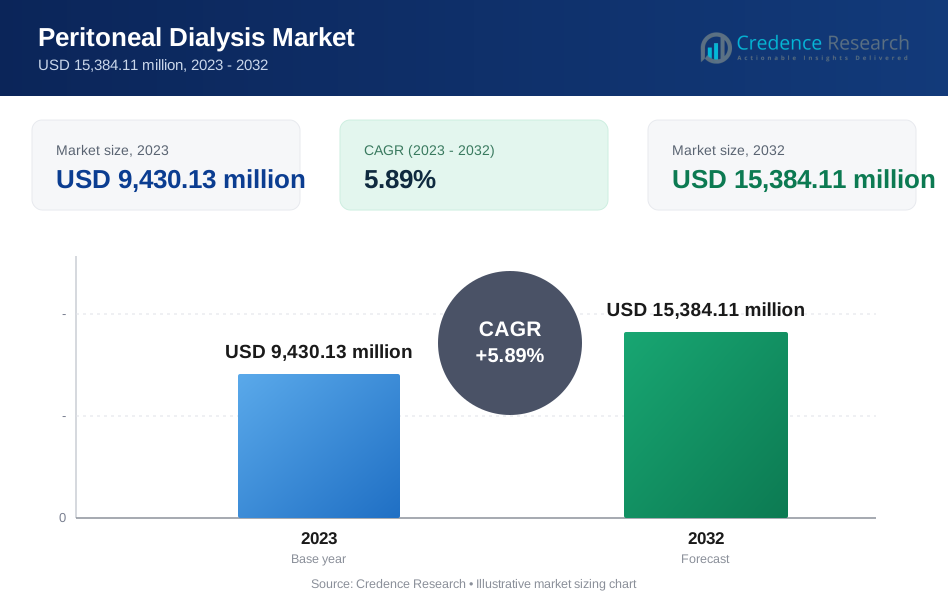
The global Peritoneal Dialysis Market is expected to grow from USD 9,430.13 million in 2023 to USD 15,384.11 million by 2032, reflecting a compound annual growth rate (CAGR) of 5.89%.
The global peritoneal dialysis market is driven by the rising prevalence of chronic kidney diseases (CKD) and the increasing demand for home-based dialysis treatments. With an aging population and growing awareness of peritoneal dialysis as a viable alternative to hemodialysis, the market is expanding. Technological advancements in peritoneal dialysis devices, including automated systems, have enhanced patient convenience and treatment efficacy, further fueling market growth. Additionally, the shift towards home-based care solutions is expected to drive adoption, offering patients more flexibility and reducing hospital visits. Moreover, the focus on improving patient outcomes and minimizing complications associated with dialysis treatments contributes to the market's expansion. The increasing healthcare expenditure, especially in emerging economies, is also supporting market growth. These trends are expected to accelerate as healthcare systems invest in innovative dialysis solutions to meet the growing demand for CKD treatment globally.
The global peritoneal dialysis market exhibits significant regional variation, with North America and Europe leading in terms of adoption due to advanced healthcare infrastructure and a high prevalence of chronic kidney disease (CKD). The Asia-Pacific region is experiencing rapid growth driven by increasing CKD rates, healthcare improvements, and the rising demand for home-based dialysis solutions. Latin America and the Middle East & Africa are also witnessing expansion as healthcare access improves. Key players in the global peritoneal dialysis market include industry giants such as Baxter International Inc., Fresenius Medical Care AG & Co. KGaA, DaVita Inc., and B. Braun Melsungen AG, all of which are actively involved in the development of innovative products. Additionally, companies like Medtronic, Nipro Corporation, and NxStage Medical play a crucial role in driving technological advancements, enhancing patient experience, and expanding the availability of peritoneal dialysis treatments across various regions.
Market Insights
- The global peritoneal dialysis market was valued at USD 9,430.13 million in 2023 and is expected to reach USD 15,384.11 million by 2032, growing at a CAGR of 5.89%.
- Increasing prevalence of chronic kidney disease (CKD) and a rising aging population are key drivers of market growth.
- Technological advancements, such as automated peritoneal dialysis systems, are enhancing patient convenience and treatment efficiency.
- The shift towards home-based dialysis solutions is a growing trend, driven by patient demand for convenience and cost-effectiveness.
- Market players are focusing on innovation and expanding product portfolios, contributing to heightened competition.
- Regulatory hurdles, high treatment costs, and complications such as infections in peritoneal dialysis pose restraints to market growth.
- North America and Europe hold dominant market shares, while the Asia-Pacific region is expected to see rapid growth due to improved healthcare infrastructure.
Market Drivers
Rising Prevalence of Chronic Kidney Disease (CKD)
One of the primary drivers of the global peritoneal dialysis market is the increasing prevalence of chronic kidney disease (CKD). As lifestyle changes, poor dietary habits, and a higher incidence of conditions like diabetes and hypertension contribute to kidney dysfunction, the demand for dialysis treatments is growing. For instance, the Global Burden of Disease Study reported that in 2019, there were 69,729,430 cases of CKD worldwide, with a significant increase in prevalence over the past three decades. CKD patients often require ongoing dialysis, and peritoneal dialysis, as an effective home-based option, is becoming a preferred solution for managing the disease, thereby boosting market growth.
Shift Toward Home-Based Dialysis
The shift towards home-based dialysis is rapidly gaining momentum, significantly driving the market for peritoneal dialysis. Home dialysis offers patients the flexibility to manage their treatment schedules independently, leading to increased quality of life and reduced hospital visits. For instance, a study published in Frontiers in Nephrology found that global interest in home dialysis modalities, including peritoneal dialysis, has been increasing, with significant interest levels observed in recent years. Healthcare systems are supporting this transition by focusing on training and equipping patients with the necessary tools for home-based care. As a result, more patients are choosing peritoneal dialysis over in-center options, which is driving the growth of the market.
Technological Advancements in Dialysis Systems
Technological innovations in peritoneal dialysis devices are another major driver of market growth. Automated peritoneal dialysis (APD) systems have improved treatment efficiency and patient comfort, allowing for more precise and less labor-intensive procedures. These advancements reduce complications associated with traditional dialysis methods, improve patient outcomes, and enhance overall treatment experience. As technology continues to evolve, it is expected that the adoption of automated systems will increase, driving further demand for peritoneal dialysis treatments.
Growing Awareness and Access to Healthcare
Increased awareness of peritoneal dialysis as a viable alternative to hemodialysis is also contributing to market expansion. Educational campaigns by healthcare organizations, coupled with government initiatives to improve access to dialysis treatments, have made peritoneal dialysis a more accessible and well-accepted treatment option. Additionally, rising healthcare expenditure in emerging markets has made peritoneal dialysis more affordable, further stimulating market growth as more patients gain access to this treatment option.
Market Trends
Increasing Adoption of Home-Based Dialysis
One of the key trends in the global peritoneal dialysis market is the growing preference for home-based dialysis treatments. With the convenience of performing dialysis at home, patients can better manage their treatment schedules, improving their quality of life. This trend is being supported by advancements in portable dialysis equipment and increased training programs for patients. For instance, a study published in Frontiers in Nephrology found that global interest in home dialysis modalities, including peritoneal dialysis, has been increasing, with significant interest levels observed in recent years. Healthcare systems are emphasizing home dialysis as part of a broader shift towards patient-centered care, leading to a higher adoption rate of peritoneal dialysis worldwide.
Technological Innovations in Dialysis Equipment
Technological advancements continue to shape the peritoneal dialysis landscape. Automated peritoneal dialysis (APD) machines, which enable patients to undergo treatment with minimal intervention, are increasingly being adopted. For instance, Medicover Hospitals has integrated portable dialysis machines into their renal care programs, enabling patients to maintain their daily routines while receiving the necessary treatment. These devices allow for better precision in dialysis, reducing complications and enhancing patient comfort. Additionally, innovations such as wearable dialysis devices and remote monitoring systems are expected to further improve treatment effectiveness, making peritoneal dialysis more convenient and efficient for patients.
Focus on Improving Patient Outcomes
There is a growing trend towards improving patient outcomes in peritoneal dialysis treatment. Healthcare providers and manufacturers are focused on developing new solutions that minimize complications, such as infections and fluid imbalance, which can arise with traditional dialysis methods. The introduction of new catheter designs, anti-infection agents, and more effective solutions for dialysis fluid are key trends aimed at enhancing the safety and effectiveness of peritoneal dialysis, contributing to better long-term outcomes for patients.
Expansion in Emerging Markets
The peritoneal dialysis market is experiencing notable growth in emerging markets, driven by increased healthcare access and government initiatives to improve treatment availability. In countries with growing populations and rising healthcare expenditures, peritoneal dialysis is becoming more accessible to patients in need. Manufacturers are focusing on these regions by developing cost-effective solutions tailored to local needs, expanding the reach of peritoneal dialysis and helping to address the growing burden of CKD in these areas. This trend is expected to continue as healthcare infrastructure improves globally.
Market Challenges Analysis
Limited Access to Healthcare Infrastructure
One of the significant challenges facing the global peritoneal dialysis market is the limited access to healthcare infrastructure, especially in developing regions. While peritoneal dialysis offers an alternative to hemodialysis, the availability of necessary equipment, trained medical professionals, and proper facilities for treatment is often inadequate in underserved areas. For instance, a report by the World Bank and WHO highlights that at least half of the world's population cannot obtain essential health services, underscoring the significant gaps in healthcare infrastructure. This lack of infrastructure hinders the widespread adoption of peritoneal dialysis in emerging markets, where chronic kidney disease (CKD) rates are rising. Despite the growing demand for dialysis treatments, healthcare systems in many regions struggle to meet the needs of the increasing patient population, limiting the market's growth potential.
Complications and Risks Associated with Treatment
Another challenge impacting the peritoneal dialysis market is the risk of complications associated with the procedure. Infections, particularly peritonitis, remain a significant concern for patients undergoing peritoneal dialysis, despite improvements in technology and training. Patients require continuous monitoring, and improper technique or inadequate hygiene can lead to infections and other health issues. Additionally, fluid imbalance and catheter-related problems can affect treatment outcomes, leading to increased hospitalizations or the need for alternative dialysis methods. While advancements in technology aim to reduce these risks, complications still pose a barrier to the optimal use of peritoneal dialysis, hindering its widespread adoption.
Market Opportunities
Expansion of Home-Based Dialysis Solutions
A key market opportunity for the global peritoneal dialysis sector lies in the expansion of home-based dialysis solutions. As healthcare systems globally emphasize patient-centric care, home dialysis presents an appealing alternative to in-clinic treatments. The growing demand for home-based peritoneal dialysis is supported by advancements in portable devices and remote monitoring technologies, which allow patients to manage their treatment schedules independently and more comfortably. This shift toward home dialysis offers manufacturers the chance to develop user-friendly devices and expand their product offerings tailored for home use, tapping into a significant market segment and improving patient outcomes. Additionally, the rising preference for home-based care aligns with healthcare cost-containment strategies, further driving demand for peritoneal dialysis.
Growth in Emerging Markets
Emerging markets present substantial growth opportunities for the global peritoneal dialysis market. With rising healthcare expenditures and the increasing burden of chronic kidney diseases (CKD) in regions such as Asia-Pacific, Latin America, and the Middle East, there is a growing need for accessible and affordable dialysis treatments. Governments in these regions are investing in healthcare infrastructure, which improves the accessibility of peritoneal dialysis. As awareness of CKD and dialysis treatment options increases, manufacturers can leverage these opportunities by introducing cost-effective products and establishing partnerships with healthcare providers to expand their reach. Moreover, localizing production and distribution can help address market needs and overcome regional barriers, positioning companies for long-term growth in these emerging markets.
Market Segmentation Analysis:
By Type:
The global peritoneal dialysis market is segmented by type into Continuous Ambulatory Peritoneal Dialysis (CAPD) and Automated Peritoneal Dialysis (APD). CAPD is the traditional form of dialysis, where patients manually perform the procedure several times a day. This type remains popular due to its simplicity, affordability, and minimal reliance on technology, making it a common choice in low-resource settings. However, the growing adoption of APD, which automates the dialysis process, is reshaping the market. APD offers the advantage of increased convenience, allowing patients to undergo treatment overnight with fewer interventions. This segment is experiencing strong growth, driven by technological advancements in automated systems and the preference for home-based care. The demand for APD is expected to continue rising, especially in developed markets where the focus is on improving patient comfort and treatment efficiency.
By Product:
The peritoneal dialysis market is also categorized based on products, which include peritoneal dialysis machines, peritoneal dialysis solutions, dialysis catheters, and other related products. Peritoneal dialysis machines are essential for both CAPD and APD treatments, with advancements in automated systems driving market growth. Peritoneal dialysis solutions are critical for the dialysis process, with new formulations improving patient outcomes by reducing complications like infections. Dialysis catheters, which provide access to the peritoneal cavity, are a key product segment, with innovations focusing on reducing infection risks and improving patient comfort. The "others" category includes accessories and consumables that support peritoneal dialysis treatments. This segment is expected to grow as manufacturers focus on improving the overall treatment experience, reducing the frequency of complications, and offering more patient-friendly solutions. The growing emphasis on home dialysis options is expected to further boost the demand for these products.
Segments:
Based on Type:
- Continuous Ambulatory Peritoneal Dialysis (CAPD)
- Automated Peritoneal Dialysis (APD)
Based on Product:
- Peritoneal Dialysis Machines
- Peritoneal Dialysis Solutions
- Dialysis Catheters
- Others
Based on End-user:
- Hospitals
- Dialysis Centers
- Home Care Settings
Based on the Geography:
- North America
- U.S.
- Canada
- Mexico
- Europe
- UK
- France
- Germany
- Italy
- Spain
- Russia
- Belgium
- Netherlands
- Austria
- Sweden
- Poland
- Denmark
- Switzerland
- Rest of Europe
- Asia Pacific
- China
- Japan
- South Korea
- India
- Australia
- Thailand
- Indonesia
- Vietnam
- Malaysia
- Philippines
- Taiwan
- Rest of Asia Pacific
- Latin America
- Brazil
- Argentina
- Peru
- Chile
- Colombia
- Rest of Latin America
- Middle East
- UAE
- KSA
- Israel
- Turkey
- Iran
- Rest of Middle East
- Africa
- Egypt
- Nigeria
- Algeria
- Morocco
- Rest of Africa
Regional Analysis
North America
North America holds a significant market share in the global peritoneal dialysis market, accounting for approximately 40% of the total revenue in 2023. The region’s dominance is primarily due to the high prevalence of chronic kidney disease (CKD) and the strong healthcare infrastructure in the U.S. and Canada. Additionally, North American patients increasingly prefer home dialysis options such as automated peritoneal dialysis (APD) due to the convenience and flexibility it offers. Government initiatives promoting home-based care and the growing adoption of advanced dialysis technologies further support market growth in this region. The U.S. is the largest contributor to the regional market, with substantial healthcare spending and a well-established peritoneal dialysis market. Market players in North America focus on offering innovative and efficient products, including automated machines and specialized dialysis solutions, driving continued growth in the region.
Europe
Europe accounts for 30% of the global peritoneal dialysis market, making it the second-largest regional market. The region benefits from strong healthcare systems, particularly in countries like Germany, the UK, and France, where peritoneal dialysis is widely accepted as an effective treatment for CKD. The increasing focus on improving patient outcomes and reducing healthcare costs has also contributed to the growth of peritoneal dialysis. The European market is characterized by a shift toward home-based dialysis, with patients preferring the convenience of performing treatments at home. Additionally, the rise in healthcare expenditure and government support for dialysis infrastructure is boosting market adoption in the region. The development of advanced peritoneal dialysis machines and solutions tailored to the needs of European patients further enhances market opportunities.
Asia-Pacific
The Asia-Pacific region is one of the fastest-growing markets for peritoneal dialysis, accounting for about 20% of the global market share. The high prevalence of CKD, especially in countries like China, Japan, and India, is driving the demand for dialysis treatments. Asia-Pacific faces a growing burden of diabetes and hypertension, leading to an increased incidence of kidney disease. Moreover, rising healthcare expenditures and improving healthcare infrastructure in emerging economies, particularly in China and India, are creating new opportunities for peritoneal dialysis. The region is also witnessing a shift toward home dialysis solutions as patients seek more flexible and accessible treatment options. Market players are focusing on expanding their presence in this region by offering affordable products that meet local healthcare needs.
Latin America and Middle East & Africa
The Latin American and Middle Eastern & African regions account for approximately 10% of the global peritoneal dialysis market. While these regions have lower market shares compared to North America, Europe, and Asia-Pacific, they are expected to experience rapid growth due to increasing healthcare access and the rising burden of CKD. In Latin America, countries like Brazil and Mexico are seeing higher adoption rates of peritoneal dialysis as part of expanding healthcare infrastructure and government initiatives aimed at improving CKD management. Similarly, in the Middle East and Africa, the rising incidence of kidney disease, coupled with healthcare system improvements, is contributing to the growing demand for dialysis treatments. As market awareness increases and affordable dialysis products become more accessible, the market in these regions is poised for significant expansion over the coming years.
Key Player Analysis
- Baxter International Inc.
- Fresenius Medical Care AG & Co. KGaA
- DaVita Inc.
- Braun Melsungen AG
- Nipro Corporation
- Medtronic plc
- NxStage Medical, Inc.
- Dialysis Clinic, Inc.
- Terumo Corporation
- Huaren Pharmaceutical Co., Ltd.
Competitive Analysis
The global peritoneal dialysis market is highly competitive, with key players focusing on product innovation, market expansion, and strategic partnerships to strengthen their positions. Leading players in the market include Baxter International Inc., Fresenius Medical Care AG & Co. KGaA, DaVita Inc., B. Braun Melsungen AG, Nipro Corporation, Medtronic plc, NxStage Medical, Inc., Dialysis Clinic, Inc., Terumo Corporation, and Huaren Pharmaceutical Co., Ltd. Companies are also investing in expanding their product portfolios, which include dialysis machines, solutions, and catheters, to cater to both home-care and clinical settings. In addition to technological innovations, partnerships and collaborations are key strategies used by market players to enhance their global footprint and expand into emerging markets. These efforts are essential, especially in regions like Asia-Pacific, where demand for peritoneal dialysis is growing due to rising incidences of chronic kidney disease and expanding healthcare infrastructure. Companies also face increasing pressure to offer cost-effective solutions, which has spurred competition in terms of product affordability and accessibility. For instance, a comprehensive review by IntechOpen highlights that peritoneal dialysis-related infections, including peritonitis, exit-site infections, and tunnel infections, result in significant morbidity and risk of death. Despite this, challenges such as high treatment costs, regulatory hurdles, and complications associated with peritoneal dialysis, such as infections and catheter issues, are limiting the market potential. Companies are continually working to address these issues through improved designs and more efficient treatment options. The market is expected to remain competitive as demand for dialysis solutions continues to rise globally.
Recent Developments
- In August 2024, Baxter International Inc (US) and Carlyle (US) signed a definitive agreement under which Carlyle will acquire Baxter's Kidney Care segment. The segment will be named Vantive, with the aim of creating a standalone kidney care company.
- In April 2023, Medtronic plc (Ireland) and DaVita Inc (US) launched Mozarc Medical—an independent new company that aims to reshape kidney health and drive patient-centered technology solutions.
- In August 2022, Fresenius Medical Care AG (Germany) acquired InterWell Health (US), a physician organization that drives innovation in the kidney care space in the US, and Cricket Health. Inc (US), provider of value-based kidney care with patient engagement and data platform.
Market Concentration & Characteristics
The global peritoneal dialysis market is moderately concentrated, with a few dominant players holding significant market share, while numerous smaller and regional companies cater to niche segments. The market is characterized by continuous innovation, as leading companies focus on enhancing product performance and introducing advanced technologies such as automated peritoneal dialysis systems. These advancements aim to improve patient outcomes, reduce complications, and offer greater convenience for home-based dialysis treatments. Market participants are also concentrating on expanding their portfolios to include dialysis machines, solutions, catheters, and other accessories to address the diverse needs of patients. The market is driven by the increasing prevalence of chronic kidney disease (CKD), an aging population, and growing healthcare expenditures, particularly in developed regions like North America and Europe. However, emerging markets in Asia-Pacific and Latin America are becoming key growth areas due to rising healthcare infrastructure and the demand for affordable and efficient dialysis solutions. The competitive landscape is also influenced by partnerships, mergers, and acquisitions, as companies seek to strengthen their market presence and distribution networks. Overall, the peritoneal dialysis market continues to evolve, with companies focusing on improving accessibility, affordability, and the quality of care, thereby shaping the future of the industry.
Report Coverage
The research report offers an in-depth analysis based on Type, Product, End-User and Geography. It details leading market players, providing an overview of their business, product offerings, investments, revenue streams, and key applications. Additionally, the report includes insights into the competitive environment, SWOT analysis, current market trends, as well as the primary drivers and constraints. Furthermore, it discusses various factors that have driven market expansion in recent years. The report also explores market dynamics, regulatory scenarios, and technological advancements that are shaping the industry. It assesses the impact of external factors and global economic changes on market growth. Lastly, it provides strategic recommendations for new entrants and established companies to navigate the complexities of the market.
Future Outlook
- The global peritoneal dialysis market is expected to continue growing due to the rising prevalence of chronic kidney disease (CKD) worldwide.
- Technological advancements, including automated systems and user-friendly dialysis machines, will drive future market growth.
- Increasing demand for home-based dialysis solutions will contribute to market expansion, offering patients greater convenience and autonomy.
- The Asia-Pacific region will experience significant growth, driven by improved healthcare infrastructure and rising CKD cases.
- The focus on reducing treatment-related complications, such as infections, will lead to innovations in dialysis solutions and catheters.
- Rising healthcare costs and the push for cost-effective treatments will fuel the adoption of more affordable peritoneal dialysis options.
- Regulatory support and government initiatives promoting home dialysis are expected to enhance market development in various regions.
- The shift toward personalized treatments will encourage the development of specialized peritoneal dialysis solutions tailored to individual patient needs.
- Companies will increasingly focus on expanding their presence in emerging markets to tap into the growing demand for dialysis services.
- Strategic partnerships, acquisitions, and collaborations will play a key role in the expansion of market players and their product offerings.
Request a Free Sample
Fill in your details and we'll send you a free sample report.
- Sample data tables & charts
- Research methodology
Need a Custom Version of This Report?
Tailor the scope, geography, or segments to your exact requirements.
- Custom geography or segment scope
- Direct access to our analyst team
Frequently Asked Questions
What is the current size of the Global Peritoneal Dialysis market?
What factors are driving the growth of the Global Peritoneal Dialysis market?
What are the key segments within the Global Peritoneal Dialysis market?
What are some challenges faced by the Global Peritoneal Dialysis market?
Who are the major players in the Global Peritoneal Dialysis market?
Table of Content
Chapter 1. Report Introduction
- 1.1 Report Description & Purpose
- 1.1.1 Report Title & Market Definition
- 1.1.2 Unique Selling Propositions (USP) & Key Differentiators
- 1.1.3 Value Proposition for Stakeholders
- 1.2 Research Objectives
- 1.2.1 Market Sizing Objectives (Volume & Revenue)
- 1.2.2 Segmentation Objectives
- 1.2.3 Competitive Intelligence Objectives
- 1.2.4 Forecast & Scenario Objectives
- 1.3 Report Scope
- 1.3.1 Peritoneal Dialysis Scope – Types & Subtypes Covered
- 1.3.2 Geographic Scope – Regions & Countries Covered
- 1.3.3 Historical Period, Base Year & Forecast Period (2023; forecast to 2032)
- 1.3.4 Inclusions & Exclusions
- 1.4 HS Code & Classification Framework
- 1.5 Currency, Units & Pricing Basis
- 1.6 Target Stakeholders
- 1.7 Limitations & Assumptions
Chapter 2. Executive Summary
- 2.1 Global Peritoneal Dialysis Market Snapshot
- 2.1.1 Market Size – Historical (2023) & Forecast (2023-2032) (2023: USD 9,430.13 million → 2032: USD 15,384.11 million)
- 2.1.2 Volume & Revenue – Global Totals
- 2.1.3 Key Market Highlights – Top Five Facts
- 2.2 Peritoneal Dialysis Market Segmentation Snapshot
- 2.2.1 Market Split by Region – 2023 vs. 2032
- 2.3 Competitive Snapshot
- 2.3.1 Top 10 Players by Revenue Share – 2023
- 2.3.2 Top 10 Players by Volume Share – 2023
- 2.3.3 Recent Strategic Developments (18-Month Summary)
- 2.4 Key Investment Highlights & Strategic Conclusions
Chapter 3. Peritoneal Dialysis Market Dynamics & Industry Analysis
- 3.1 Market Overview & Context
- 3.1.1 Peritoneal Dialysis Market Position in the Broader Automotive Value Chain
- 3.1.2 OEM vs. Replacement Market Dynamics
- 3.1.3 Market Maturity & Development Stage by Region
- 3.2 Peritoneal Dialysis Market Drivers
- 3.3 Peritoneal Dialysis Market Restraints & Challenges
- 3.4 Peritoneal Dialysis Market Opportunities
- 3.5 Porter's Five Forces Analysis
- 3.5.1 Threat of New Entrants
- 3.5.2 Bargaining Power of Suppliers
- 3.5.3 Bargaining Power of Buyers
- 3.5.4 Threat of Substitutes
- 3.5.5 Competitive Rivalry – Intensity Assessment
- 3.6 Peritoneal Dialysis Value Chain Analysis
- 3.6.1 Upstream – Raw Material/Input Suppliers
- 3.6.1.1 Raw Material/Input 1
- 3.6.1.2 Raw Material/Input 2
- 3.6.1.3 Raw Material/Input 3
- 3.6.2 Midstream – Production/Manufacturing/Service Delivery
- 3.6.2.1 Production/Process Overview
- 3.6.2.2 Key Facility Locations & Capacity by Manufacturer
- 3.6.3 Downstream – Distribution & End Consumer
- 3.6.3.1 Primary Channel – B2B/OEM
- 3.6.3.2 Secondary Channels – Dealer, Retail, Online, Direct
- 3.6.4 Value Chain Profitability Analysis
- 3.6.1 Upstream – Raw Material/Input Suppliers
- 3.7 PESTEL Analysis
- 3.7.1 Political Factors
- 3.7.2 Economic Factors
- 3.7.3 Social Factors
- 3.7.4 Technological Factors
- 3.7.5 Environmental Factors
- 3.7.6 Legal Factors
- 3.8 Peritoneal Dialysis Supply Chain Analysis
- 3.8.1 Raw Material/Input Supply Risk Assessment
- 3.8.2 Manufacturing Concentration Risk (Geographic Exposure)
- 3.8.3 Trade Disruption Impact Analysis
- 3.9 Regulatory & Policy Landscape
Note: The regulatory and policy landscape section covers regulations based on their applicability to the market, Peritoneal Dialysis category, geography, and scope of the study. Only regulatory frameworks with a material impact on operations, compliance, trade, sustainability, or market access are analyzed in detail.
Chapter 4. Key Investment Pockets & Opportunity Analysis
- 4.1 Peritoneal Dialysis Market Attractiveness Analysis
- 4.1.1 By Region – Investment Attractiveness Matrix (Volume × CAGR)
- 4.2 Absolute Revenue Growth Opportunity
- 4.2.1 By Region – Absolute USD Growth Through 2032
- 4.3 Incremental Volume Opportunity
- 4.3.1 By Region – Incremental Volume Through 2032
- 4.3.2 Segment – Incremental Volume
- 4.4 Emerging Submarket Opportunity Deep Dive (Subject to Applicability)
- 4.5 Emerging Market Opportunity Scorecards
- 4.5.1 United States
- 4.5.2 Europe
- 4.5.3 Asia
- 4.5.4 Middle East & Africa
Note: Emerging Market Opportunity Scorecards will be included based on relevance and strategic importance. Regions listed are indicative and may vary depending on data availability and market dynamics.
Chapter 5. Peritoneal Dialysis Import-Export Analysis & Trade Flows
- 5.1 Global Trade Overview
- 5.1.1 Global Export Value by Country (2023)
- 5.1.2 Global Export Volume by Country (2023)
- 5.1.3 Global Import Value by Country (2023)
- 5.1.4 Global Import Volume by Country (2023)
- 5.1.5 Net Trade Balance by Country (2023)
- 5.2 Export Analysis – Segment
- 5.2.1 Type 1 (HS Code)
- 5.2.2 Type 2 (HS Code)
- 5.2.3 Type 3 (HS Code)
- 5.2.4 Type 4 (HS Code)
- 5.2.5 Type 5 (HS Code)
- 5.3 Import Analysis – Segment
- 5.3.1 Type 1 (HS Code)
- 5.3.2 Type 2 (HS Code)
- 5.3.3 Type 3 (HS Code)
- 5.3.4 Type 4 (HS Code)
- 5.3.5 Type 5 (HS Code)
- 5.4 Average Unit Trade Prices
- 5.4.1 Average Export Price – Segment & Country
- 5.4.2 Average Import Price – Segment & Source Country
- 5.4.3 Price Trends (2023)
- 5.5 Key Trade Route Analysis
- 5.5.1 Trade Route 1
- 5.5.2 Trade Route 2
- 5.5.3 Trade Route 3
- 5.5.4 Trade Route 4
- 5.5.5 Trade Route 5
- 5.6 Trade Policy Impact Assessment
- 5.6.1 US Anti-Dumping & Section 301 Tariffs
- 5.6.2 EU Customs Union Impact
- 5.6.3 Major Free Trade Agreements
- 5.6.4 USMCA Rules of Origin
Note: Trade policy analysis will be included only where relevant to the Peritoneal Dialysis market.
Chapter 6. Competitive Landscape & Company Benchmarking
- 6.1 Peritoneal Dialysis Market Concentration & Structure
- 6.1.1 Herfindahl-Hirschman Index (HHI) – vs. 2023
- 6.1.2 Tier 1, Tier 2 & Tier 3 Market Structure
- 6.1.3 Global, Regional & Local Player Dynamics
- 6.2 Peritoneal Dialysis Market Share Analysis – 2023
- 6.2.1 Global Revenue Share by Company
- 6.2.2 Global Volume Share by Company
- 6.2.3 Regional Revenue Share
- 6.2.4 Market Share Evolution ( vs. 2023)
- 6.2.5 OEM Segment Share by Company
- 6.2.6 Replacement Segment Share by Company
- 6.3 Production/Delivery Capacity & Facility Analysis
- 6.3.1 Global Installed Capacity
- 6.3.2 Capacity Utilization Rates
- 6.3.3 Production/Output Volume
- 6.3.4 Facility Locations & Capacity Map
- 6.3.5 Planned Capacity Additions
- 6.4 Peritoneal Dialysis Competitive Benchmarking Matrix
- 6.4.1 Revenue, Volume, CAGR & Profitability Comparison
- 6.4.2 Channel Revenue Mix
- 6.4.3 Geographic Revenue Exposure
- 6.4.4 R&D Intensity
- 6.4.5 Sustainability Maturity
- 6.5 Strategic Developments in Peritoneal Dialysis (Last 24 Months)
- 6.5.1 Mergers, Acquisitions & Divestments
- 6.5.2 New Peritoneal Dialysis Launches
- 6.5.3 Facility Expansions
- 6.5.4 Strategic Alliances, Joint Ventures & Partnerships
- 6.5.5 Distribution Expansion & Market Entry
- 6.5.6 Sustainability & ESG Initiatives
- 6.6 Competitive Strategy Mapping
- 6.6.1 Leader, Challenger, Follower & Niche Classification
- 6.6.2 Pricing Strategy Comparison
- 6.6.3 Channel Strategy Matrix
Note: Strategic developments are included based on their materiality and the availability of reliable information.
Chapter 7. Global Peritoneal Dialysis Market – By Distribution Channel
- 7.1 Segment Overview
- 7.1.1 Volume & Revenue Split by Channel (2023 & 2032)
- 7.1.2 Channel Mix Evolution (2023-2032)
Chapter 8. Regional Market Analysis – Global Overview
- 8.1 Global Regional Overview
- 8.1.1 Regional Volume Share
- 8.1.2 Regional Revenue Share
- 8.1.3 Regional Volume by Region
- 8.1.4 Regional Revenue by Region
- 8.1.5 Regional Forecast Through 2032
- 8.2 Cross-Regional Segment Analysis
- 8.2.1 By Distribution Channel
- 8.2.2 By Brand/Price Tier
Chapter 9. North America Peritoneal Dialysis Market
- 9.1 United States
- 9.2 Canada
- 9.3 Mexico
Chapter 10. Europe Peritoneal Dialysis Market
- 10.1 Germany
- 10.2 France
- 10.3 Italy
- 10.4 United Kingdom
- 10.5 Spain
- 10.6 Poland
- 10.7 Russia
- 10.8 Netherlands
- 10.9 Belgium
- 10.10 Sweden
- 10.11 Denmark
- 10.12 Norway
- 10.13 Rest of Europe
Chapter 11. Asia Pacific Peritoneal Dialysis Market
- 11.1 China
- 11.2 India
- 11.3 Japan
- 11.4 South Korea
- 11.5 Thailand
- 11.6 Indonesia
- 11.7 Vietnam
- 11.8 Malaysia
- 11.9 Australia
- 11.10 Rest of Asia Pacific
Chapter 12. Latin America Peritoneal Dialysis Market
- 12.1 Brazil
- 12.2 Argentina
- 12.3 Colombia
- 12.4 Chile
- 12.5 Rest of Latin America
Chapter 13. Middle East Peritoneal Dialysis Market
- 13.1 Saudi Arabia
- 13.2 United Arab Emirates
- 13.3 Turkey
- 13.4 Israel
- 13.5 Iran
- 13.6 Rest of the Middle East
Chapter 14. Africa Peritoneal Dialysis Market
- 14.1 South Africa
- 14.2 Egypt
- 14.3 Nigeria
- 14.4 Morocco
- 14.5 Rest of Africa
Chapter 15. Peritoneal Dialysis Company Profiles
- 15.1 [Company 01]
- 15.1.1 Company Overview
- 15.1.2 Key Management Personnel
- 15.1.3 Products & Services Portfolio
- 15.1.4 Financial Performance
- 15.1.5 Key Market Focus & Geographic Presence
- 15.1.6 Recent Developments & Strategic Initiatives
Note: The company profile list is preliminary and may change based on research findings, market developments, data availability, and client requirements.
Chapter 16. Appendices
- Appendix A – List of Abbreviations & Acronyms
- Appendix B – Industry Classification Code Reference – Full Series
- Appendix C – Production & Capacity Data Tables
- Appendix D – End-Use & Demand Base Tables
- Appendix E – Consumption & Replacement Rate Assumptions
- Appendix F – ASP Reference Tables
- Appendix G – Manufacturing & Facility Database
- Appendix H – Import-Export Data Tables
- Appendix I – Regulatory Summary Tables
- Appendix J – Primary Research Participant List (Anonymized)
- Appendix K – Primary Research Questionnaire Framework
- Appendix L – Data Sources & Bibliography
- Appendix M – Market Size Divergence & Source Comparison
Chapter 17. Research Methodology
- 17.1 Research Framework & Philosophy
- 17.2 Secondary Research – Sources, Hierarchy & Data Extraction
- 17.3 Data Modeling – Bottom-Up & Top-Down Market Sizing
- 17.4 Primary Research – Stakeholder Framework, LOI & Sample Sizes
- 17.5 Forecast Methodology – Regression, Scenario & Sensitivity Analysis
- 17.6 Quality Control – Four-Layer Validation Framework
- 17.7 Limitations & Standard Assumptions
- 17.8 Disclaimer
