| REPORT ATTRIBUTE | DETAILS |
|---|---|
| Historical Period | 2019-2022 |
| Base Year | 2023 |
| Forecast Period | 2024-2032 |
| Trigeminal Neuralgia Treatment Market Size 2023 | USD 281.20 million |
| Trigeminal Neuralgia Treatment Market, CAGR | 5.20% |
| Trigeminal Neuralgia Treatment Market Size 2032 | USD 443.77 million |
Market Insights
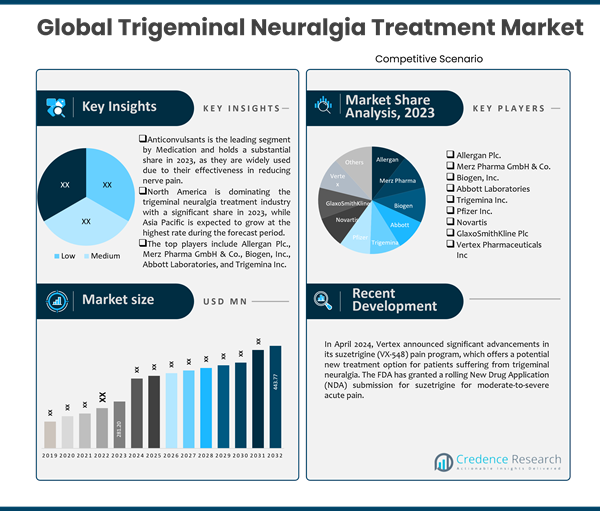
- The global demand for Trigeminal Neuralgia Treatment was valued at USD 281.20 million in 2023 and is expected to reach USD 443.77 million in 2032, growing at a CAGR of 5.20% between 2024 and 2032.
- The Anticonvulsants segment was the market leader by Medication, accounting for the highest share in value in 2023, and the Tricyclic Antidepressants (TCAs) segment is expected to grow rapidly throughout the forecast period.
- The Microvascular Decompression (MVD) segment was the market leader by Surgical Interventions, accounting for the highest share in value in 2023, and the Stereotactic Radiosurgery segment is expected to grow rapidly throughout the forecast period.
- The Acupuncture segment was the market leader by Alternative and Adjunctive Therapies, accounting for the highest share in value in 2023, and the Nutritional Therapy segment is expected to grow rapidly throughout the forecast period.
- The Transcutaneous Electrical Nerve Stimulation (TENS) segment is predicted to grow fastest over the projection period, while Neuromodulation Devices had the largest share by Medical Devices in 2023.
- North America is dominating the trigeminal neuralgia treatment industry, with over one-third of the market in 2023.
- The market's primary possibilities include advancements in minimally invasive surgical techniques, development of targeted pharmaceuticals, and expanding adoption of alternative therapies such as neuromodulation devices and TENS.
Executive Summary
Market Definition
Trigeminal Neuralgia (TN) Treatment encompasses a variety of medical and surgical methods aimed at alleviating the intense facial pain associated with trigeminal neuralgia, a chronic condition that affects the trigeminal nerve, which is responsible for facial sensation. The primary objective of these treatments is to minimize or eliminate pain episodes and enhance the patient's overall quality of life. Medications such as anticonvulsants, muscle relaxants, and low-dose tricyclic antidepressants are commonly used. Surgical options such as microvascular decompression (MVD), rhizotomy, and Gamma Knife radiosurgery can provide relief by altering nerve function.
Alternative therapies such as acupuncture and biofeedback, along with lifestyle changes such as avoiding pain triggers and managing stress through yoga and meditation, can also be beneficial. Treatment plans are individualized, often combining multiple approaches to effectively manage and reduce pain.
Market Overview
The global trigeminal neuralgia treatment market has witnessed steady growth in recent years and is expected to grow at a CAGR of 5.20% between 2024 and 2032. The market was valued at USD 281.20 million in 2023 and is expected to reach USD 443.77 million in 2032.
The increasing prevalence of trigeminal neuralgia globally is a significant factor driving the growth of the Trigeminal Neuralgia Treatment market. As awareness of the condition grows, more individuals are seeking medical attention, leading to a higher demand for effective treatment options. This rising prevalence is closely linked to an aging population, as trigeminal neuralgia is more common in older adults, thus contributing to the market expansion.
Additionally, increasing investments in research and development by pharmaceutical companies and healthcare organizations play a vital role in the market's growth. These investments lead to the discovery and development of new treatments, as well as the improvement of existing ones. The resulting innovations from such investments can significantly enhance the quality of life for patients, making treatments more effective and accessible, thus driving market growth.
Moreover, improvements in diagnostic techniques are another crucial factor propelling the TN treatment market. Advanced neuroimaging technologies, such as high-resolution magnetic resonance imaging (MRI), allow for earlier and more accurate detection of trigeminal neuralgia. Early and precise diagnosis is essential for timely intervention, which enhances treatment outcomes and increases the demand for TN therapies. The availability of sophisticated diagnostic tools thus supports market growth by facilitating better patient care.
Segmentation by Medication
- Anticonvulsants are the leading segment by Medication and held the dominant share in value in 2023. Anticonvulsants, particularly drugs such as carbamazepine and oxcarbazepine, are considered the first-line treatment for TN due to their effectiveness in managing neuropathic pain. Their widespread use and established efficacy make them the dominant choice among healthcare providers for treating TN, thus contributing to their substantial market share.
- The Tricyclic Antidepressants (TCAs) segment is expected to exhibit the highest CAGR during the forecast period. While traditionally used for depression, TCAs such as amitriptyline and nortriptyline have shown effectiveness in treating chronic pain conditions, including TN. The increasing recognition of their benefits in neuropathic pain management, combined with ongoing research and a broader acceptance of their use in TN treatment protocols, is driving rapid growth in this subsegment. The expanding use of TCAs, particularly in patients who may not respond well to anticonvulsants or muscle relaxants, highlights their growing importance and market presence.
- Muscle Relaxants also contribute substantially to the market share.
Segmentation by Surgical Interventions
- Microvascular Decompression (MVD) is the leading segment by Surgical Interventions and holds a substantial share in 2023. MVD is a well-established and highly effective surgical treatment for TN, particularly for patients who do not respond to medication. Its success rate and long-term relief outcomes contribute to its dominance in the surgical segment.
- Stereotactic Radiosurgery is the fastest-growing subsegment during the forecast period. Techniques such as Gamma Knife radiosurgery are gaining popularity due to their non-invasive nature, lower risk of complications, and shorter recovery times compared to traditional surgeries. As advancements in the precision and efficacy of radiosurgery continue, more patients and healthcare providers are opting for this treatment, driving rapid growth in this subsegment.
- Percutaneous Procedures also contribute substantially to the market share.
Segmentation by Alternative and Adjunctive Therapies
- Acupuncture is the leading segment by Alternative and Adjunctive Therapies and holds a substantial share in 2023. Acupuncture has gained significant acceptance as a complementary therapy for pain management, including TN, due to its widespread recognition, established protocols, and growing body of supportive evidence.
- Nutritional Therapy is the fastest-growing segment during the forecast period. Increasing awareness of the role of diet and nutrition in managing chronic pain conditions, alongside a growing preference for holistic and natural treatment approaches, is driving rapid adoption and interest in nutritional therapy for TN. Emerging research linking nutritional interventions to pain reduction and overall health improvements further accelerates the growth of this subsegment.
- Biofeedback also contributes substantially to the market share.
Segmentation by Medical Devices
- The Neuromodulation Devices held the largest market share by application in terms of value in 2023. Neuromodulation devices, such as neurostimulators, offer targeted electrical stimulation to modulate nerve activity and alleviate TN pain. Their established efficacy and growing adoption contribute to their dominance in this market segment.
- Transcutaneous Electrical Nerve Stimulation (TENS) is expected to be the fastest-growing segment during the forecasted period. TENS devices, which deliver electrical impulses through the skin to block pain signals, are gaining popularity as non-invasive and drug-free options for TN pain management. With increasing interest in alternative and adjunctive therapies, coupled with advancements in TENS technology, this subsegment is experiencing rapid growth in the TN treatment market.
Segmentation by Region
- North America holds the dominant share of the trigeminal neuralgia treatment market, driven by an advanced healthcare system, significant R&D investments, strong presence of key market players, increasing awareness, high healthcare spending, comprehensive insurance coverage, specialized pain management clinics, and multidisciplinary patient care approaches.
- The Asia Pacific region is anticipated to be the fastest-growing market for trigeminal neuralgia treatment during the forecast period, driven by an aging population, advancements in healthcare infrastructure, and increasing availability of specialized treatment centers.
- The rest of the world, including Latin America, the Middle East, and Africa, supplies the remaining demand for retail inventory management software.
North America holds the dominant share of the trigeminal neuralgia treatment market and is expected to maintain its dominance during the forecast period. This dominance is attributed to the increasing awareness of trigeminal neuralgia among healthcare professionals and the general population. Educational initiatives and awareness campaigns have significantly improved the recognition and understanding of the condition, leading to more timely and accurate diagnoses. Early diagnosis is crucial for effective management and treatment, which in turn drives the demand for advanced therapeutic options.
Moreover, high healthcare spending in North America allows for greater access to cutting-edge treatments and technologies. Patients in the region benefit from comprehensive insurance coverage and advanced healthcare facilities, which provide a wide range of treatment options, from pharmacological therapies to surgical interventions. The presence of numerous specialized pain management clinics and the availability of expert neurologists and neurosurgeons further contribute to the region's dominance in the trigeminal neuralgia treatment market.
On the other hand, the Asia Pacific region is anticipated to be the fastest-growing market for trigeminal neuralgia treatment during the forecast period. This rapid growth can be attributed to the increasing prevalence of trigeminal neuralgia, driven by an aging population. As the number of elderly individuals grows in this region, the incidence of trigeminal neuralgia also rises, as it is more common in older adults. Countries such as China, Japan, and India are witnessing a significant demographic shift toward an older population, thereby boosting the demand for effective treatment options for trigeminal neuralgia.
Moreover, advancements in healthcare infrastructure and the increasing availability of specialized treatment centers in the Asia Pacific region are further driving the growth of the market. Governments and private sectors in this region are heavily investing in healthcare facilities, ensuring access to advanced diagnostic and treatment options for trigeminal neuralgia. Consequently, innovations in medical technology, such as microvascular decompression surgery and Gamma Knife radiosurgery, are becoming more widely available, offering patients more effective and less invasive treatment alternatives. These factors, in turn, are driving the growth of the market.
Key Highlights of the Report
The global Trigeminal Neuralgia Treatment Market is segmented by medication, surgical interventions, alternative and adjunctive therapies, medical devices, and region. The Anticonvulsants segment dominated the market in 2023, holding the largest value share. However, Tricyclic Antidepressants (TCAs) are expected to see the fastest growth, and Neuromodulation Devices remain the primary Medical Devices, with North America leading the market share.
The increasing prevalence of trigeminal neuralgia, especially among the aging population, is significantly driving the growth of the Trigeminal Neuralgia Treatment market. As awareness grows, more individuals seek medical attention, boosting demand for effective treatments. Furthermore, advancements in diagnostic techniques, such as high-resolution MRI, enable earlier and more accurate detection, facilitating timely intervention and better patient care, fueling the market growth.
Nonetheless, while North America led growth in the Trigeminal Neuralgia Treatment industry in 2023, driven by an advanced healthcare system, significant R&D investments, a strong presence of key market players, increasing awareness, high healthcare spending, comprehensive insurance coverage, specialized pain management clinics, and multidisciplinary patient care approaches, Asia Pacific is set for the highest forecasted growth, driven by an aging population, advancements in healthcare infrastructure, and increasing availability of specialized treatment centers.
What Are The Main Drivers Of The Global Trigeminal Neuralgia Treatment Market?
The increasing prevalence of trigeminal neuralgia, especially among the aging population, is significantly driving the growth of the Trigeminal Neuralgia Treatment market. As awareness grows, more individuals seek medical attention, boosting demand for effective treatments. Furthermore, advancements in diagnostic techniques, such as high-resolution MRI, enable earlier and more accurate detection, facilitating timely intervention and better patient care, fueling the market growth.
What are The Major Challenges Faced By The Global Trigeminal Neuralgia Treatment Market?
The high cost of advanced treatment options significantly restrains the growth of the Trigeminal Neuralgia (TN) treatment market. Procedures often come with substantial expenses, making them inaccessible for many patients, especially in areas with limited healthcare funding or inadequate insurance coverage. Additionally, limited awareness and frequent misdiagnosis of TN lead to delays in diagnosis and treatment. This lack of recognition and proper care reduces the demand for TN-specific treatments, further hindering market expansion.
What Are The Growth Opportunities In The Global Trigeminal Neuralgia Treatment Market?
Ongoing advancements in medical technology and treatment methods are creating opportunities for future market growth. Innovations in minimally invasive surgical procedures, such as percutaneous techniques and advanced radiosurgery options, enhance treatment efficacy, reduce recovery times, and minimize complications. Additionally, the development of new pharmaceuticals and targeted therapies, as research into TN's pathophysiology progresses, promises more effective pain relief with fewer side effects, thus creating future market prospects.
Market Drivers
Growing Incidence of Trigeminal Neuralgia Globally
The prevalence of Trigeminal Neuralgia significantly drives the growth of the TN treatment market by directly influencing the demand for effective treatment options. According to Johns Hopkins Medicine, TN is the most common cause of facial pain, with approximately 15,000 new diagnoses annually in the United States. This high incidence underscores the critical need for advanced treatment solutions, boosting market demand.
Moreover, the rising geriatric population globally is significantly driving the growth of the TN treatment market. The World Economic Forum projects that the number of people aged 65 and older will double over the next three decades, reaching 1.6 billion by 2050. Similarly, the World Health Organization (WHO) predicts that by 2030, one in six people worldwide will be aged 60 years or over, with the number of individuals aged 80 years or older expected to triple from 2020 to 2050, reaching 426 million. Given that TN is more prevalent among older adults, this demographic shift will likely result in a substantial increase in TN cases, further propelling the demand for treatments.
Supporting this trend, a study published in Wiley titled "Incidence of Trigeminal Neuralgia: A Population-Based Study in Central Sweden" indicates that the incidence of TN increases with age, from 0.1 per 100,000 person-years in individuals aged 0-19 to 23.1 per 100,000 person-years in those aged 80 and older. The study also found a higher incidence rate in females (7.3 per 100,000 person-years) compared to males (3.7 per 100,000 person-years). These statistics highlight the growing need for targeted TN treatments as the global population ages, thereby driving the market's growth.
Market Restraints
High Cost of Advanced Treatment Options and Limited Awareness
The high cost of advanced treatment options associated with Trigeminal Neuralgia (TN) treatment is restraining the growth of the market. Procedures such as microvascular decompression and Gamma Knife radiosurgery, as well as newer, targeted pharmaceuticals, often come with substantial expenses. These costs can be prohibitive for many patients, particularly in regions with limited healthcare funding or inadequate insurance coverage. This financial barrier restricts access to these effective treatments, thus hindering market expansion.
Moreover, limited awareness and misdiagnosis of TN further constrain the market's growth. Many healthcare professionals and patients may not recognize the symptoms of TN or may confuse it with other types of facial pain, leading to delays in diagnosis and treatment. This lack of awareness and proper diagnosis means that a significant number of patients do not receive timely or appropriate care reducing the overall demand for TN-specific treatments.
Opportunities
Innovations in Medical Technology and Treatment Methods
The ongoing advancements in medical technology and treatment methods associated with Trigeminal Neuralgia are creating opportunities for future market growth. Innovations in minimally invasive surgical procedures, such as percutaneous techniques and advanced radiosurgery options, hold the promise of significantly enhancing treatment efficacy while reducing recovery times and minimizing complications. These advancements attract more individuals seeking effective and safer alternatives, thus driving market growth. The shift towards less invasive methods aligns with patient preferences for treatments that offer quicker recovery and fewer risks, further expanding the market.
Moreover, the development of new pharmaceuticals and targeted therapies presents another substantial opportunity. As research into the pathophysiology of TN progresses, there is an increasing potential for the creation of drugs that specifically target the underlying mechanisms of the condition. These novel treatments could offer more effective pain relief with fewer side effects compared to existing options, thereby improving patient outcomes and expanding the market. The focus on targeted therapies aligns with the broader trend in medicine towards precision medicine, which seeks to tailor treatments to individual patients' needs. This personalized approach can lead to better management of TN, higher patient satisfaction, and increased demand for innovative therapies, ultimately creating opportunities for market growth in the future.
Competitive Landscape
Key Players
The global trigeminal neuralgia treatment market is highly competitive, with several key players. Some of the major players in the market:
- Allergan Plc.
- Merz Pharma GmbH & Co.
- Biogen, Inc.
- Abbott Laboratories
- Trigemina Inc.
- Pfizer Inc.
- Novartis
- GlaxoSmithKline Plc.
- Vertex Pharmaceuticals Inc.
These organizations prioritize business expansions, partnerships, and collaborations to stay competitive.
The key players in the global trigeminal neuralgia treatment market continually seek to stay ahead through product launches.
In April 2024, Vertex announced significant advancements in its suzetrigine (VX-548) pain program, which offers a potential new treatment option for patients suffering from trigeminal neuralgia. The FDA has granted a rolling New Drug Application (NDA) submission for suzetrigine for moderate-to-severe acute pain.
How are Companies Performing in the Trigeminal Neuralgia Treatment Market?
The global trigeminal neuralgia treatment market is highly competitive, with several key players.
Startups are making significant contributions to advancing the Trigeminal Neuralgia (TN) treatment industry by introducing innovative solutions and addressing unmet needs in patient care. These entrepreneurial ventures leverage cutting-edge technologies and novel therapeutic approaches to enhance the management of TN symptoms and improve patient outcomes.
For instance, companies like Neuros Medical and Saluda Medical are developing neuromodulation devices specifically designed to target the trigeminal nerve and provide targeted pain relief for TN patients. These devices deliver electrical stimulation to modulate nerve activity, offering a non-invasive alternative to traditional treatments.
Additionally, startups are exploring alternative and complementary therapies, such as biofeedback, acupuncture, and nutritional interventions, to augment existing treatment options and offer patients holistic approaches to managing TN symptoms. Through research and development efforts, startups are expanding the treatment landscape and providing patients with more personalized and effective care options.
Moreover, startups are driving innovation in telemedicine and digital health solutions, enabling remote consultations, monitoring, and personalized care plans for TN patients. By leveraging telehealth platforms and mobile applications, these startups are improving access to specialized care and enhancing patient engagement and adherence to treatment regimens. As these startups continue to grow and collaborate with healthcare professionals and industry stakeholders, they hold the potential to significantly improve the lives of TN patients and drive positive change in the field of pain management.
Summary of Key Findings
- The increasing prevalence of trigeminal neuralgia, especially among the aging population, is significantly driving the growth of the Trigeminal Neuralgia Treatment market. As awareness grows, more individuals seek medical attention, boosting demand for effective treatments. Furthermore, advancements in diagnostic techniques, such as high-resolution MRI, enable earlier and more accurate detection, facilitating timely intervention and better patient care, fueling the market growth.
- Market segmented by Medication, Surgical Interventions, Alternative and Adjunctive Therapies, Medical Devices, and region.
- Anticonvulsants are the most popular, with the Neuromodulation Devices remaining the primary Medical Devices segment.
- North America is leading the market share; the market is highly competitive, with key players including Allergan Plc, Merz Pharma GmbH & Co., Biogen, Inc., Merz Pharma GmbH & Co., Abbott Laboratories, Trigemina Inc., Pfizer Inc., Novartis, and GlaxoSmithKline Plc. and Others.
Future Outlook
- Positive outlook for the global trigeminal neuralgia treatment market with significant growth potential in the North American region.
- The key drivers accelerating the growth of the trigeminal neuralgia treatment market include the increasing prevalence of trigeminal neuralgia, especially among the aging population. Moreover, advancements in diagnostic techniques, facilitating timely intervention and better patient care, fuel the market growth.
- During the forecast period, the high cost of advanced treatment are expected to restrain the market growth.
- Key firms must focus on product innovation, growing market reach, and maintaining competitive pricing to keep ahead of the competition.
How CXOs Can Benefit from the Credence Research Trigeminal Neuralgia Treatment Market Report
The Credence Research Trigeminal Neuralgia Treatment Market Report provides CXOs with a comprehensive overview of the market, including:
- Market size and growth forecast:The report provides detailed estimates of the global trigeminal neuralgia treatment market size, segmented by Medication, Surgical Interventions, Alternative and Adjunctive Therapies, end-user, and region. It also includes forecasts for the market through 2032 based on key trends and drivers.
- Market segmentation:The report segments the trigeminal neuralgia treatment market by Medication, Surgical Interventions, Alternative and Adjunctive Therapies, Medical Devices, and region. This segmentation provides CXOs with a granular understanding of the market and the opportunities in each segment.
- Competitive Landscape:The report profiles the key players in the trigeminal neuralgia treatment market and provides insights into their strategies, product offerings, and financial performance. This information can help CXOs to identify and assess their competition.
- Key trends and drivers:The report identifies and analyzes the key trends and drivers shaping the Trigeminal Neuralgia Treatment Market. This information can help CXOs make informed decisions about their investments and strategies.
CXOs can use the insights from the Credence Research Trigeminal Neuralgia Treatment Market Report to:
- Identify growth opportunities:The report can help CXOs identify new growth opportunities in the Trigeminal Neuralgia Treatment Market. For example, it identifies increasing prevalence of trigeminal neuralgia, especially among the aging population.
- Make informed investment decisions:The report can help CXOs make informed investment decisions about Trigeminal Neuralgia Treatment. For example, it provides insights into the key factors to consider when evaluating Trigeminal Neuralgia Treatment providers.
- Develop competitive strategies:The report can help CXOs develop competitive strategies for their Trigeminal Neuralgia Treatment businesses. For example, it identifies the key strategies that Trigeminal Neuralgia Treatment providers are using to differentiate themselves from their competitors.
- Track market developments:The report can help CXOs monitor market developments and stay ahead of the curve. For example, it provides insights into the latest trends and innovations in the Trigeminal Neuralgia Treatment Market.
The Credence Research Trigeminal Neuralgia Treatment Market Report is helpful for CXOs who want to learn more about the market and identify potential opportunities.
Segmentation
-
By Medication
- Anticonvulsants
- Muscle Relaxants
- Tricyclic Antidepressants (TCAs)
-
By Surgical Interventions
- Microvascular Decompression (MVD)
- Percutaneous Procedures
- Stereotactic Radiosurgery
-
By Alternative and Adjunctive Therapies
- Acupuncture
- Biofeedback
- Nutritional Therapy
-
By Medical Devices
- Neuromodulation Devices
- Transcutaneous Electrical Nerve Stimulation (TENS)
-
By Region
- North America
- US
- Canada
- Mexico
- Europe
- Germany
- France
- UK.
- Italy
- Spain
- Rest of Europe
- Asia Pacific
- China
- Japan
- India
- South Korea
- South-east Asia
- Rest of Asia Pacific
- Latin America
- Brazil
- Argentina
- Rest of Latin America
- Middle East & Africa
- GCC Countries
- South Africa
- Rest of the Middle East and Africa
- North America
Adjacent Markets
In the Trigeminal Neuralgia Treatment Market, several adjacent markets have high revenue growth opportunities. The key adjacent markets for Trigeminal Neuralgia Treatment are-
Adjacent Markets |
||
| Chronic Pain Management Market | Antiepileptic Drugs Market | Migraine Treatment Market |
| Neuropathic Pain Market | Pain Management Devices Market | Multiple Sclerosis Treatment Market |
| Neurosurgery Devices Market | Neurology Drugs Market | Fibromyalgia Treatment Market |

Request a Free Sample
Fill in your details and we'll send you a free sample report.
- Sample data tables & charts
- Research methodology
Market Dynamics
Growing Incidence of Trigeminal Neuralgia Globally
The increasing prevalence of trigeminal neuralgia, particularly among the aging population, is directly raising the demand for effective treatment options. As the global population ages, the number of individuals affected by TN rises, driving market expansion.
Advancements in Diagnostic Techniques
Improvements in neuroimaging technologies, such as high-resolution MRI, enable earlier and more accurate diagnosis of trigeminal neuralgia. Early detection facilitates timely intervention and increases the uptake of both pharmacological and surgical treatments.
Innovations in Minimally Invasive Surgical Procedures
The development and adoption of minimally invasive techniques, such as stereotactic radiosurgery and advanced percutaneous procedures, are making treatment safer and more accessible. These innovations reduce recovery times and complications, attracting more patients to seek surgical solutions.
Expansion of Alternative and Adjunctive Therapies
Growing acceptance and evidence supporting alternative therapies like acupuncture, nutritional therapy, and neuromodulation devices are broadening the treatment landscape. This diversification meets patient preferences for holistic and non-pharmacological approaches, further fueling market growth.
Increased R&D Investments and Targeted Pharmaceutical Development
Pharmaceutical companies and healthcare organizations are investing in research to develop new and more effective drugs for TN. These efforts are resulting in targeted therapies with improved efficacy and safety profiles, enhancing patient outcomes and expanding the market.
Need a Custom Version of This Report?
Tailor the scope, geography, or segments to your exact requirements.
- Custom geography or segment scope
- Direct access to our analyst team
Frequently Asked Questions
What is the current size of the global trigeminal neuralgia treatment market?
What is the expected growth rate of the Trigeminal Neuralgia Treatment Market between 2024 and 2032?
Which segment is leading the market share in terms of Medication?
Which Medical Devices governs the demand for Trigeminal Neuralgia Treatment globally?
Which Alternative and Adjunctive Therapies is expected to post the highest CAGR during the forecast period?
Which region is fueling the growth of the trigeminal neuralgia treatment industry?
Who are the major players in the global trigeminal neuralgia treatment market?
What are the major market drivers of the trigeminal neuralgia treatment industry?
What are the major market restraints of the trigeminal neuralgia treatment industry?
What are the major market opportunities of the Trigeminal Neuralgia Treatment industry?
Table of Content
Chapter 1 Market Segmentation
- 1.1 Segmentation Framework
- 1.1.1 Product and Service Classification
- 1.1.2 Application and End-Use Classification
- 1.1.3 Technology and Solution Classification
- 1.1.4 Customer and Distribution Channel Classification
- 1.1.5 Geographic Segmentation
- 1.1.6 Market Segment Definitions and Boundaries
- 1.2 By Medication
- 1.2.1 Anticonvulsants
- 1.2.2 Muscle Relaxants
- 1.2.3 Tricyclic Antidepressants (TCAs)
- 1.3 By Medical Devices
- 1.3.1 Neuromodulation Devices
- 1.3.2 Transcutaneous Electrical Nerve Stimulation (TENS)
- 1.4 By Surgical Interventions
- 1.4.1 Microvascular Decompression (MVD)
- 1.4.2 Percutaneous Procedures
- 1.4.3 Stereotactic Radiosurgery
- 1.5 By Alternative and Adjunctive Therapies
- 1.5.1 Acupuncture
- 1.5.2 Biofeedback
- 1.5.3 Nutritional Therapy
Chapter 2 Introduction
- 2.1 Report Objectives and Scope
- 2.2 Product Definition and Industry Terminology
- 2.3 Market Inclusions and Exclusions
- 2.4 Research Process
- 2.4.1 Primary Research and Expert Interviews
- 2.4.2 Secondary Research and Source Review
- 2.4.3 Top-Down and Bottom-Up Estimation
- 2.4.4 Data Triangulation and Verification
- 2.5 Market Size Measurement Basis
- 2.5.1 2023: USD 281.20 million → 2032: USD 443.77 million
- 2.6 Historical and Forecast Reference Periods
- 2.6.1 Base Year: 2023
- 2.6.2 Forecast Period: 2023-2032
- 2.7 Research Assumptions and Limitations
Chapter 3 Executive Summary
- 3.1 Market Snapshot and Key Findings
- 3.2 Base-Year Market Size, 2023
- 3.3 Forecast Market Size, 2032
- 3.4 Revenue and Volume Growth Outlook
- 3.5 Key Demand and Supply Indicators
- 3.6 Leading Market Segments
- 3.7 Fastest-Growing Market Opportunities
- 3.8 Regional Performance Highlights
- 3.9 Technology and Industry Transformation
- 3.10 Competitive Landscape Summary
- 3.11 Analyst View and Strategic Implications
Chapter 4 Global Trigeminal Neuralgia Treatment Market Trends and Developments
- 4.1 Historical Industry Development
- 4.2 Recent Market Trends and Developments
- 4.3 Demand and Customer Behavior Trends
- 4.4 Technology and Product Innovation
- 4.5 Artificial Intelligence, Automation and Digitalization
- 4.6 Local Manufacturing and Supply Chain Realignment
- 4.7 Industry Partnerships, Mergers and Acquisitions
- 4.8 Sustainability and Circular Economy Developments
- 4.9 Government and Private Sector Investment Trends
- 4.10 Emerging Business Models and Commercialization
- 4.11 Industry Developments and Announcements
Chapter 5 Global Trigeminal Neuralgia Treatment Market Production, Supply and Demand Analysis
- 5.1 Demand Trend and Consumption Analysis
- 5.2 Demand Forecast, 2023-2032
- 5.3 Production and Output Trend
- 5.4 Production and Output Forecast, 2023-2032
- 5.5 Installed Capacity and Capacity Utilization
- 5.6 Company-Wise Production Plants and Statistics
- 5.6.1 Installed Production Capacity
- 5.6.2 Actual Production
- 5.6.3 Planned Capacity and Expansion Targets
- 5.7 Supply Chain Structure and Procurement Trends
- 5.8 Supply-Demand Gap and Bottlenecks
- 5.9 Import Dependence and Sourcing Structure
- 5.10 Contract Manufacturing and Outsourcing
- 5.11 Regional Supply and Demand Concentration
Chapter 6 Global Trigeminal Neuralgia Treatment Market Pricing Analysis
- 6.1 Pricing Structure and Measurement
- 6.2 Historical Pricing Trends
- 6.3 Pricing Outlook, 2023-2032
- 6.4 Average Selling Price and Unit Economics
- 6.5 Pricing by Product and Market Segment
- 6.6 Geographic Pricing Differences
- 6.7 Key Input, Energy, Labor and Logistics Costs
- 6.8 Contract Pricing and Purchasing Models
- 6.9 Pricing Sensitivity and Competitive Positioning
- 6.10 Price, Margin and Profitability Implications
Chapter 7 Global Trigeminal Neuralgia Treatment Market Dynamics
- 7.1 Market Growth Drivers
- 7.1.1 Demand-Side Drivers
- 7.1.2 Technology and Innovation Drivers
- 7.1.3 Infrastructure and Investment Drivers
- 7.1.4 Regulatory and Policy Drivers
- 7.2 Market Restraints
- 7.2.1 Cost and Affordability Constraints
- 7.2.2 Technology and Adoption Barriers
- 7.2.3 Supply Chain and Operational Constraints
- 7.3 Market Challenges
- 7.3.1 Competitive Pressure and Margin Erosion
- 7.3.2 Skills, Infrastructure and Implementation Gaps
- 7.4 Emerging Market Opportunities
- 7.5 Market Dynamics Impact and Time-Horizon Assessment
Chapter 8 Global Trigeminal Neuralgia Treatment Value Chain Analysis
- 8.1 Industry Value Chain Overview
- 8.2 Upstream Suppliers and Critical Inputs
- 8.3 Technology and Component Providers
- 8.4 Manufacturing or Service Delivery
- 8.5 Distribution, Channel Partners and Integrators
- 8.6 Downstream Applications and End Users
- 8.7 Value Addition and Profit Pools
- 8.8 Vertical Integration and Outsourcing
- 8.9 Supplier Concentration and Risk
- 8.10 Supply Chain Localization and Resilience
Chapter 9 Global Trigeminal Neuralgia Treatment Market Regulations and Policies
- 9.1 Relevant Laws, Standards and Compliance Frameworks
- 9.2 Product, Service, Safety and Quality Requirements
- 9.3 Government Policies, Incentives and Subsidies
- 9.4 Imports, Exports and Trade Barriers
- 9.5 Public Procurement and Local Content Requirements
- 9.6 Environmental and Sustainability Compliance
- 9.7 Upcoming Policy Changes and Market Implications
Chapter 10 Global Trigeminal Neuralgia Treatment Market Hotspots and Opportunities
- 10.1 Market Opportunity Mapping and Growth Hotspots
- 10.2 High-Growth Applications and Customer Groups
- 10.3 Underserved Markets and White-Space Opportunities
- 10.4 Emerging Technology and Product Opportunities
- 10.5 New Capacity and Investment Hotspots
- 10.6 Market Entry and Expansion Opportunities
- 10.7 Distribution and Partnership Opportunities
- 10.8 Near-Term and Long-Term Commercial Potential
- 10.9 Opportunity Attractiveness and Execution Risks
Chapter 11 Global Trigeminal Neuralgia Treatment Market Outlook, 2023-2032
- 11.1 Market Size and Analysis
- 11.1.1 Revenue (Market Measurement: 2023: USD 281.20 million → 2032: USD 443.77 million)
- 11.1.2 Market Volume and Quantity Sold
- 11.1.3 Historical Market Size
- 11.1.4 Base-Year Market Size, 2023
- 11.2 Market Forecast, 2023-2032
- 11.2.1 Revenue Forecast to 2032
- 11.2.2 Volume Forecast to 2032
- 11.2.3 CAGR and Year-on-Year Growth
- 11.2.4 Incremental Revenue Opportunity
- 11.3 Forecast Assumptions and Scenario Analysis
- 11.3.1 Base-Case Forecast
- 11.3.2 Optimistic and Conservative Scenarios
- 11.3.3 Technology, Pricing and Policy Sensitivities
- 11.4 Market Attractiveness and Growth Outlook
Chapter 12 Global Trigeminal Neuralgia Treatment Market Segmentation and Outlook
- 12.1 Segmentation Summary and Market Shares, 2023
- 12.2 Largest and Fastest-Growing Segments
- 12.3 By Medication - Market Size and Forecast, 2023-2032
- 12.3.1 Segment Definition and Scope
- 12.3.2 Historical Market Size
- 12.3.3 Revenue Forecast, 2023-2032
- 12.3.4 Volume Forecast, 2023-2032
- 12.3.5 Base-Year Market Share, 2023
- 12.3.6 Segment CAGR and Growth Drivers
- 12.3.7 Subsegment Market Size and Forecast
- 12.3.7.1 Anticonvulsants
- 12.3.7.2 Muscle Relaxants
- 12.3.7.3 Tricyclic Antidepressants (TCAs)
- 12.3.8 Subsegment Pricing and Adoption Trends
- 12.3.9 Leading Suppliers and Competition
- 12.3.10 Regional Demand and Opportunities
- 12.4 By Medical Devices - Market Size and Forecast, 2023-2032
- 12.4.1 Segment Definition and Scope
- 12.4.2 Historical Market Size
- 12.4.3 Revenue Forecast, 2023-2032
- 12.4.4 Volume Forecast, 2023-2032
- 12.4.5 Base-Year Market Share, 2023
- 12.4.6 Segment CAGR and Growth Drivers
- 12.4.7 Subsegment Market Size and Forecast
- 12.4.7.1 Neuromodulation Devices
- 12.4.7.2 Transcutaneous Electrical Nerve Stimulation (TENS)
- 12.4.8 Subsegment Pricing and Adoption Trends
- 12.4.9 Leading Suppliers and Competition
- 12.4.10 Regional Demand and Opportunities
- 12.5 By Surgical Interventions - Market Size and Forecast, 2023-2032
- 12.5.1 Segment Definition and Scope
- 12.5.2 Historical Market Size
- 12.5.3 Revenue Forecast, 2023-2032
- 12.5.4 Volume Forecast, 2023-2032
- 12.5.5 Base-Year Market Share, 2023
- 12.5.6 Segment CAGR and Growth Drivers
- 12.5.7 Subsegment Market Size and Forecast
- 12.5.7.1 Microvascular Decompression (MVD)
- 12.5.7.2 Percutaneous Procedures
- 12.5.7.3 Stereotactic Radiosurgery
- 12.5.8 Subsegment Pricing and Adoption Trends
- 12.5.9 Leading Suppliers and Competition
- 12.5.10 Regional Demand and Opportunities
- 12.6 By Alternative and Adjunctive Therapies - Market Size and Forecast, 2023-2032
- 12.6.1 Segment Definition and Scope
- 12.6.2 Historical Market Size
- 12.6.3 Revenue Forecast, 2023-2032
- 12.6.4 Volume Forecast, 2023-2032
- 12.6.5 Base-Year Market Share, 2023
- 12.6.6 Segment CAGR and Growth Drivers
- 12.6.7 Subsegment Market Size and Forecast
- 12.6.7.1 Acupuncture
- 12.6.7.2 Biofeedback
- 12.6.7.3 Nutritional Therapy
- 12.6.8 Subsegment Pricing and Adoption Trends
- 12.6.9 Leading Suppliers and Competition
- 12.6.10 Regional Demand and Opportunities
- 12.7 Segment Growth Comparison
- 12.8 Segment Attractiveness and Priority Matrix
Chapter 13 Global Trigeminal Neuralgia Treatment Geographic Market Outlook, 2023-2032
- 13.1 Regional Market Size and Share, 2023
- 13.2 Regional Market Forecast, 2023-2032
- 13.3 Regional Pricing, Production and Demand Differences
- 13.4 North America
- 13.4.1 United States
- 13.4.2 Canada
- 13.4.3 Mexico
- 13.5 Europe
- 13.5.1 Germany
- 13.5.2 France
- 13.5.3 Italy
- 13.5.4 United Kingdom
- 13.5.5 Spain
- 13.5.6 Poland
- 13.5.7 Russia
- 13.5.8 Netherlands
- 13.5.9 Belgium
- 13.5.10 Sweden
- 13.5.11 Denmark
- 13.5.12 Norway
- 13.5.13 Rest of Europe
- 13.6 Asia Pacific
- 13.6.1 China
- 13.6.2 India
- 13.6.3 Japan
- 13.6.4 South Korea
- 13.6.5 Thailand
- 13.6.6 Indonesia
- 13.6.7 Vietnam
- 13.6.8 Malaysia
- 13.6.9 Australia
- 13.6.10 Rest of Asia Pacific
- 13.7 Latin America
- 13.7.1 Brazil
- 13.7.2 Argentina
- 13.7.3 Colombia
- 13.7.4 Chile
- 13.7.5 Rest of Latin America
- 13.8 Middle East
- 13.8.1 Saudi Arabia
- 13.8.2 United Arab Emirates
- 13.8.3 Turkey
- 13.8.4 Israel
- 13.8.5 Iran
- 13.8.6 Rest of the Middle East
- 13.9 Africa
- 13.9.1 South Africa
- 13.9.2 Egypt
- 13.9.3 Nigeria
- 13.9.4 Morocco
- 13.9.5 Rest of Africa
- 13.10 Regional Investment, Policy and Supply Chain Differences
- 13.11 Regional Competitive Landscape
- 13.12 Geographic Growth Hotspots
Chapter 14 Global Trigeminal Neuralgia Treatment Technology, Innovation and Sustainability Outlook
- 14.1 Technology Landscape and Maturity
- 14.2 Product, Process and Service Innovation
- 14.3 AI, Automation and Digital Tools in the Industry
- 14.4 Technology Adoption and Performance Benchmarking
- 14.5 Innovation Pipeline and R&D Investment
- 14.6 Patent and Intellectual Property Trends
- 14.7 Energy Efficiency and Resource Management
- 14.8 Sustainability, Recycling and Circularity
- 14.9 Technology Roadmap, 2023-2032
- 14.10 Risks of Obsolescence and Technology Substitution
Chapter 15 Global Trigeminal Neuralgia Treatment Market Key Strategic Imperatives
- 15.1 Growth and Market Entry Priorities
- 15.2 High-Return Products and Segments
- 15.3 Pricing, Profitability and Cost Optimization
- 15.4 Technology Investment and Product Differentiation
- 15.5 Supply Chain Localization and Resilience
- 15.6 Distribution and Customer Acquisition
- 15.7 Partnership, Acquisition and Capacity Strategy
- 15.8 Regional Expansion Priorities
- 15.9 Short-, Medium- and Long-Term Actions
Chapter 16 Competition Outlook
- 16.1 Industry Competition Characteristics
- 16.2 Market Structure and Concentration
- 16.3 Market Share and Competitive Positioning, 2023
- 16.4 Company-Wise Revenue and Product Benchmarking
- 16.5 Production and Service Capacity Benchmarking
- 16.6 Technology, Pricing and Differentiation
- 16.7 Regional Footprint and Distribution Strength
- 16.8 Mergers, Acquisitions and Strategic Alliances
- 16.9 New Entrants and Competitive Threats
- 16.10 Porter's Five Forces and Industry Attractiveness
- 16.11 Competitive Outlook, 2023-2032
Chapter 17 Company Profiles
- 17.1 Company Coverage and Selection Criteria
- 17.2 Allergan Plc.
- 17.2.1 Business Description
- 17.2.2 Company Ownership and Geographic Presence
- 17.2.3 Product and Service Portfolio
- 17.2.4 Manufacturing and Operating Footprint
- 17.2.5 Production Capacity and Expansion Plans
- 17.2.6 Financial Performance and Investment
- 17.2.7 Market Share and Competitive Position
- 17.2.8 Technology and Innovation Capabilities
- 17.2.9 Strategic Alliances or Partnerships
- 17.2.10 Recent Developments
- 17.2.11 Growth Strategy and Outlook
- 17.3 Merz Pharma GmbH & Co.
- 17.4 Biogen, Inc.
- 17.5 Abbott Laboratories
- 17.6 Trigemina Inc.
- 17.7 Pfizer Inc.
- 17.8 Novartis
- 17.9 GlaxoSmithKline Plc.
- 17.10 Vertex Pharmaceuticals Inc.
- 17.11 Neuros Medical
- 17.12 Other Relevant Market Participants
Note: Every listed company is profiled on the structure shown under the first company. The company list is preliminary and may change based on research findings, market developments, data availability and client requirements.
Chapter 18 Disclaimer
- 18.1 Research and Forecast Disclaimer
- 18.2 Data Source and Estimation Limitations
Note: The depth of individual sections depends on data availability for this market. Volume, capacity, trade and other unit-based metrics are included where applicable.