
ABB to Take 51% of Mitsubishi Electric Low-Voltage Business in $495 Million Joint Venture
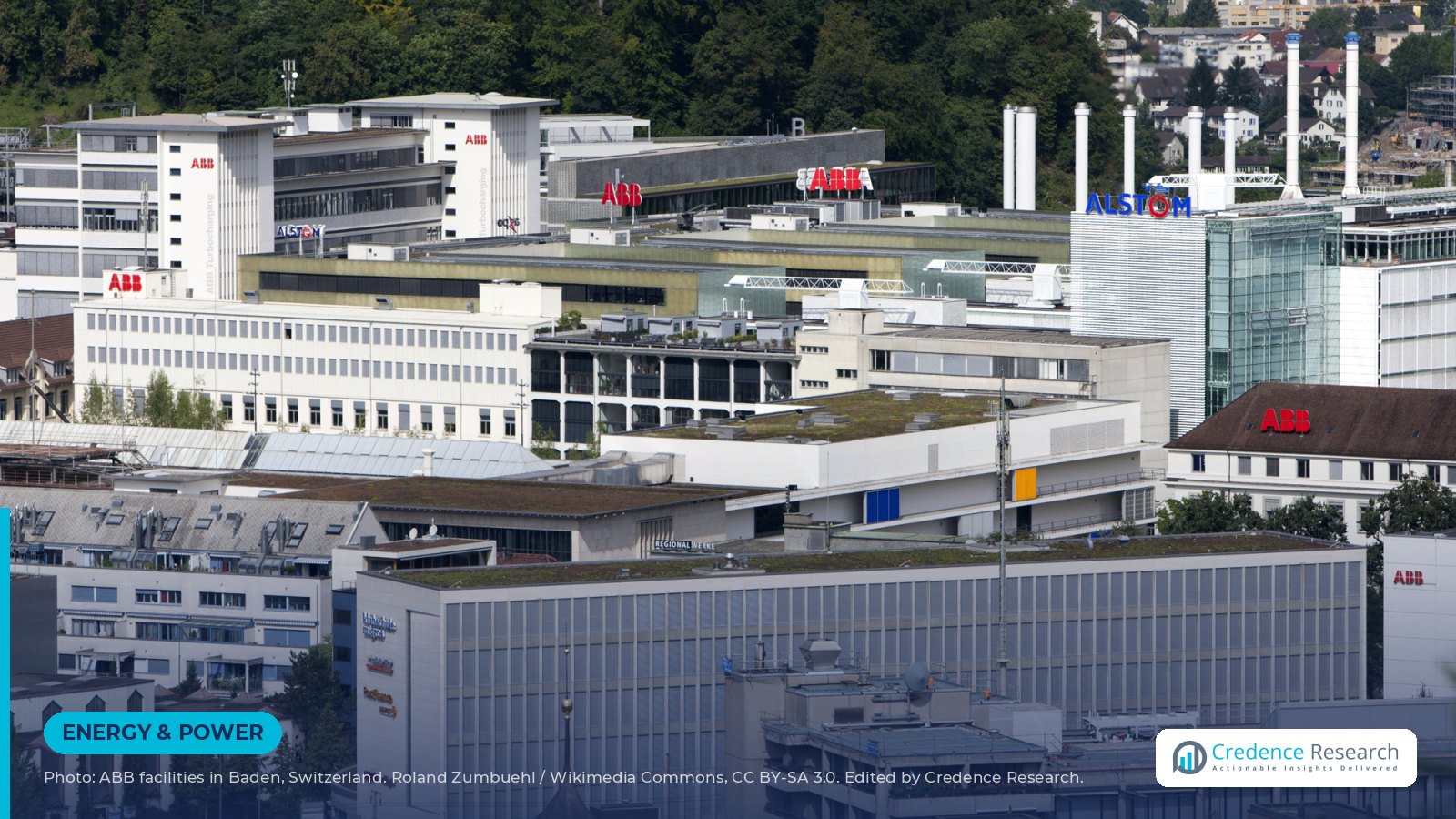
ABB Ltd agreed on Oct. 20, 2026, to take a controlling 51% stake in a joint venture built around Mitsubishi Electric's low-voltage power distribution products business, paying about JPY 79 billion, or roughly $495 million. The Zurich-based electrification and automation group announced the deal alongside its third-quarter results, saying the carve-out will give it manufacturing in Fukuyama, Japan, and Hanoi, Vietnam, and about 2,800 employees, with closing expected in the second half of 2027.
Key developments
- ABB will acquire 51% of a newly carved-out company holding Mitsubishi Electric's low-voltage power distribution product business, plus full ownership of the related sales operations outside Japan.
- Total consideration is about JPY 79 billion (about $495 million), and the agreement gives ABB an option to move to full ownership in the mid-term.
- The business makes low-voltage circuit breakers, switches, motor starters, contactors, control devices, energy measurement and monitoring equipment, and uninterruptible power supply (UPS) systems at plants in Fukuyama and Hanoi.
- The unit reported net sales of about JPY 102 billion (about $640 million) for the fiscal year ended March 2026, with roughly 15% of revenue generated outside Japan.
- Closing is expected in the second half of 2027, subject to regulatory approvals and customary conditions.
Industry background
Low-voltage power distribution equipment sits at the point where electricity leaves the utility network and enters a building, a factory line or a data hall. Circuit breakers, contactors and motor starters protect and switch loads, while metering and monitoring devices track how much power is used and where. UPS systems keep critical equipment running through short outages. Because these products stay in service for decades, installed-base relationships and local certification carry weight.
Japan has long been a difficult market for foreign electrical equipment suppliers. Domestic manufacturers built deep ties with contractors, panel builders and industrial users, and local standards shape product design. ABB itself described its current presence in Japan's electrification market as limited, and it framed the joint venture as a way to change that while expanding across the wider Asia-Pacific region. Mitsubishi Electric, founded in 1921, employs about 150,000 people and reported consolidated revenue of JPY 5,894.7 billion for the fiscal year ended March 31, 2026, so the unit being carved out is a small part of a much larger group.
ABB has used acquisitions to reshape its electrification business before. In its results release, the company pointed to its integration of GE Industrial Solutions, acquired in 2018, as a precedent for improving the profitability of an acquired electrical products business. The Mitsubishi Electric transaction follows ABB's July announcement of a deal for Rotork, the valve actuator maker.
Industry implications
The deal gives ABB something that is hard to build from scratch in Japan: an established product line, a customer base that already specifies those products, and factories staffed by people who know local requirements. Giampiero Frisio, president of ABB's Electrification business area, called Japan one of the world's most important electrification markets and said the combination would bring greater opportunities to customers and employees. ABB said it expects to introduce its own technologies to Mitsubishi Electric's customers, which suggests cross-selling into a base that has historically bought domestic brands.
For Mitsubishi Electric, the deal hands control of the business to a partner with global scale in low-voltage products. Takayuki Tsuzuki, senior executive officer and group president of Factory Automation Systems at Mitsubishi Electric, said the venture would help the company provide even higher value to customers.
The timing matters. ABB reported record third-quarter orders of $12.06 billion, up 40%, and revenue of $9.70 billion, up 14%, with orders from data centers rising by a triple-digit percentage. UPS systems and low-voltage distribution gear are core components of data center power chains, so the JV adds manufacturing capacity in a product area where demand is already strong.
Competitive and supply chain implications
The transaction adds two production sites to ABB's network in Asia: Fukuyama in western Japan and Hanoi in northern Vietnam. ABB said the move supports its local-for-local strategy, which aims to source and build products close to the customers who buy them. That approach has gained weight as electrical equipment buyers face long lead times and as tariffs and trade controls raise the cost of shipping finished goods across regions.
Local manufacturing in Japan also helps with certification and service. Low-voltage devices must meet national standards, and panel builders value suppliers who can deliver quickly and support installations. With control of a Japanese producer, ABB can compete for projects that previously favored domestic suppliers, while the Hanoi plant offers a base for Southeast Asian demand.
Competitors in the region, including other global electrical groups and Japanese domestic producers, will watch how quickly ABB integrates the business and whether it keeps the Mitsubishi Electric product lines or migrates customers to ABB platforms. Branding for the new company has not been disclosed.
Regional implications
Japan is the central market for the joint venture, and roughly 85% of the unit's revenue comes from domestic sales. Japanese industrial users, building owners and data center developers will gain a supplier backed by ABB's global portfolio while keeping access to a familiar product range. Employees at the Fukuyama and Hanoi plants will move into a venture controlled by ABB.
Vietnam gains a larger role in ABB's regional supply network through the Hanoi plant. Vietnam has attracted electronics and electrical manufacturing as companies diversify production across Asia, and the site could serve export demand beyond Japan. ABB's full ownership of the sales operations outside Japan gives it direct control over how these products reach other Asia-Pacific customers.
Credence Research analysis
The deal reflects a pattern visible across the electrical equipment industry: large suppliers are buying established local positions rather than trying to win customers one project at a time in markets dominated by domestic brands. A 51% stake with an option for full ownership lets ABB gain control and operating influence now while deferring the decision on the remaining interest until it has tested the integration.
The larger story is power demand. ABB's triple-digit growth in data center orders shows how AI computing and electrification are pulling forward spending on low-voltage distribution and backup power. Adding factories in Japan and Vietnam that already make breakers and UPS systems gives ABB more capacity close to fast-growing Asian demand. The key test will be whether ABB can introduce its technologies into the Mitsubishi Electric customer base without losing the loyalty that made the business valuable.
What comes next
- ABB and Mitsubishi Electric will seek regulatory approvals required for the carve-out and joint venture.
- Mitsubishi Electric will separate its low-voltage power distribution product business into a new company ahead of closing.
- Closing is targeted for the second half of 2027.
- Details on branding, product roadmaps and integration of the sales operations outside Japan are still to be disclosed.
- ABB holds an option to move to full ownership of the venture in the mid-term.
Sources
- ABB: ABB joint venture with Mitsubishi Electric to expand position in Asia-Pacific markets
- ABB: Q3 2026 results
- EQS regulatory announcement via Investegate
Image: ABB facilities in Baden, Switzerland, by Roland Zumbuehl via Wikimedia Commons, CC BY-SA 3.0. Cropped and edited by Credence Research.

About the Author

Senior News Editor at Credence Research Inc