
Neo Performance Materials Selected for Up to €126 Million EU Grant to Expand Estonia Magnet Chain
Neo Performance Materials said on Oct. 19 that its planned expansion of a rare earth magnet supply chain in Estonia has been selected for a grant of up to 126 million euros, about $141 million, under the European Union's Innovation Fund. The Toronto-based company said the project, called Green Assets from European Union Strategic Supply, or Project GAUSS, would link rare earth separation, metal production and sintered magnet manufacturing at its Estonian operations and lift the magnet plant's annual nameplate capacity from about 2,000 metric tons to about 5,000 metric tons.
Key developments
- The European Climate, Infrastructure and Environment Executive Agency (CINEA) invited Neo to prepare a grant agreement for Project GAUSS, with signature scheduled by March 23, 2027.
- The grant of up to 126 million euros would support a project Neo values at about 400 million euros. The company said it will update the capital cost estimate as engineering advances.
- Project GAUSS would add up to 3,000 metric tons a year of permanent magnet output, with one third allocated to offshore wind farms in the EU.
- The plan includes Silmet 2.0, which Neo said will triple its total light and heavy rare earth separation capacity, plus a new metallization step that converts separated oxides into metals.
- Neo expects completion in two to three years. The project still requires final investment decisions and a final grant agreement.
Industry background
Sintered neodymium-iron-boron magnets are the strongest permanent magnets in commercial use. They sit inside electric vehicle traction motors, direct-drive wind turbine generators, industrial servo motors and robotics. Making them requires a chain of steps that are difficult to build quickly: separating mixed rare earth concentrates into individual oxides, reducing those oxides into metals and alloys, and then pressing and sintering the alloy powder into finished magnet blocks. Most of that capacity today sits in China, which has used export licensing on rare earth materials and related technologies as a policy lever.
Neo has spent the past two years assembling the European pieces of that chain. On Sept. 14, the company said its Estonian magnet facility had entered commercial production with Phase 1A nameplate capacity of about 2,000 metric tons a year and had shipped its first commercial volumes to a Tier 1 electric vehicle traction motor maker. On Oct. 13, the European Commission named Silmet 2.0, the modernization of Neo's separation plant in Sillamäe, Estonia, a Strategic Project under the EU Critical Raw Materials Act. Neo said Silmet 2.0 was the only rare earth processing project among the 46 projects selected in that round.
Industry implications
The grant matters less for its size than for what it covers. Project GAUSS spans separation, metallization and magnet making in one country, which addresses a weakness in most Western magnet plans: a new magnet factory still depends on imported metals and alloys if no domestic metallization step exists. By adding that conversion stage between Silmet's oxides and the magnet line, Neo is trying to close the gap that has left European magnet makers exposed to supply decisions taken elsewhere.
The offshore wind allocation is also notable. About one third of the added magnet output is earmarked for EU offshore wind farms, where large permanent magnet generators are common in direct-drive turbine designs. Neo's first commercial customers have been automotive traction motor suppliers, so a dedicated wind channel would widen its customer base. The company also said the project will use digital twins and AI across separation, metallization and magnet production for quality prediction and process control.
Competitive and supply chain implications
For European motor and turbine makers, a second phase in Estonia would add a regional source of finished magnets that can be qualified under long-term programs. Neo has said automotive magnet awards typically run for the life of a vehicle platform, and it reported awards from three Tier 1 motor manufacturers in September. More capacity gives the company room to take on wind and industrial programs without diluting those automotive commitments.
Feedstock remains the binding constraint. Neo said in October that Silmet's current feedstock arrangement is ending and that light rare earth separation will see slowdowns and intermittent stoppages during the site's modernization. New supply is expected to come from previously announced offtake agreements with Carester and Rainbow Rare Earths. Heavy rare earths such as dysprosium and terbium, which help magnets keep their strength at high temperatures, are the hardest inputs to secure outside China. Neo said a small heavy rare earth separation line commissioned in 2026 has proved the chemistry for those two elements, and Silmet 2.0 is designed to add a commercial-scale heavy rare earth platform.
Regional implications
The project concentrates a growing share of Europe's rare earth processing in northeastern Estonia, an industrial region near the Russian border that has been moving away from oil shale. EU support through the Critical Raw Materials Act designation and now the Innovation Fund signals that Brussels sees the Estonian cluster as a core asset for its supply security goals, including the Act's 2030 benchmark for processing capacity equal to at least 40% of annual EU consumption of strategic raw materials.
Neo has said the Strategic Project status brings priority administrative treatment and faster permitting. Those benefits, combined with grant support, could shorten the timeline for an expansion that would otherwise compete for capital with lower-cost projects in Asia. For Estonia, the plan points to additional industrial investment and skilled jobs, although the company has not disclosed job figures for Project GAUSS.
Credence Research analysis
The selection reinforces a pattern visible across Western critical minerals policy in 2026: public money is moving from mines toward midstream processing, where the chokepoints are tighter. Neo's advantage is that it already operates both ends of the European chain, a working separation plant and a magnet factory in commercial production. The grant would help fund the step between them. That makes GAUSS more of an integration project than a greenfield bet, which typically lowers execution risk compared with stand-alone magnet ventures that still need to secure metals and alloys.
The open questions are cost, feedstock and timing. The roughly 400 million euro estimate is preliminary, the final investment decisions have not been taken, and Silmet's transition to new concentrate suppliers will test whether separation output can keep pace with a magnet plant that would grow 2.5 times. Wind customers also buy on long cycles tied to turbine orders and auction schedules. Watch whether Neo can pair the grant agreement with binding offtake from a turbine maker before the 2027 signing date, which would show the wind allocation has firm demand behind it.
What comes next
- Grant agreement preparation with CINEA, including legal, financial capacity, non-exclusion, ethics and security checks, ahead of signature by March 23, 2027.
- Final investment decisions on the Phase 1B magnet expansion, Silmet 2.0 and the metallization unit.
- An updated capital cost estimate as planning and engineering progress.
- Start of commercial production for additional automotive customer programs, which Neo expected before the end of 2026.
- Completion of Project GAUSS, which the company expects in two to three years.
Sources
- Neo Performance Materials: European integrated magnet project selected for 126 million euro grant under EU Innovation Fund (Oct. 19, 2026)
- Neo Performance Materials: European separation facility named a Strategic Project under EU Critical Raw Materials Act (Oct. 13, 2026)
- Neo Performance Materials: European magnet facility advances to commercial production (Sept. 14, 2026)
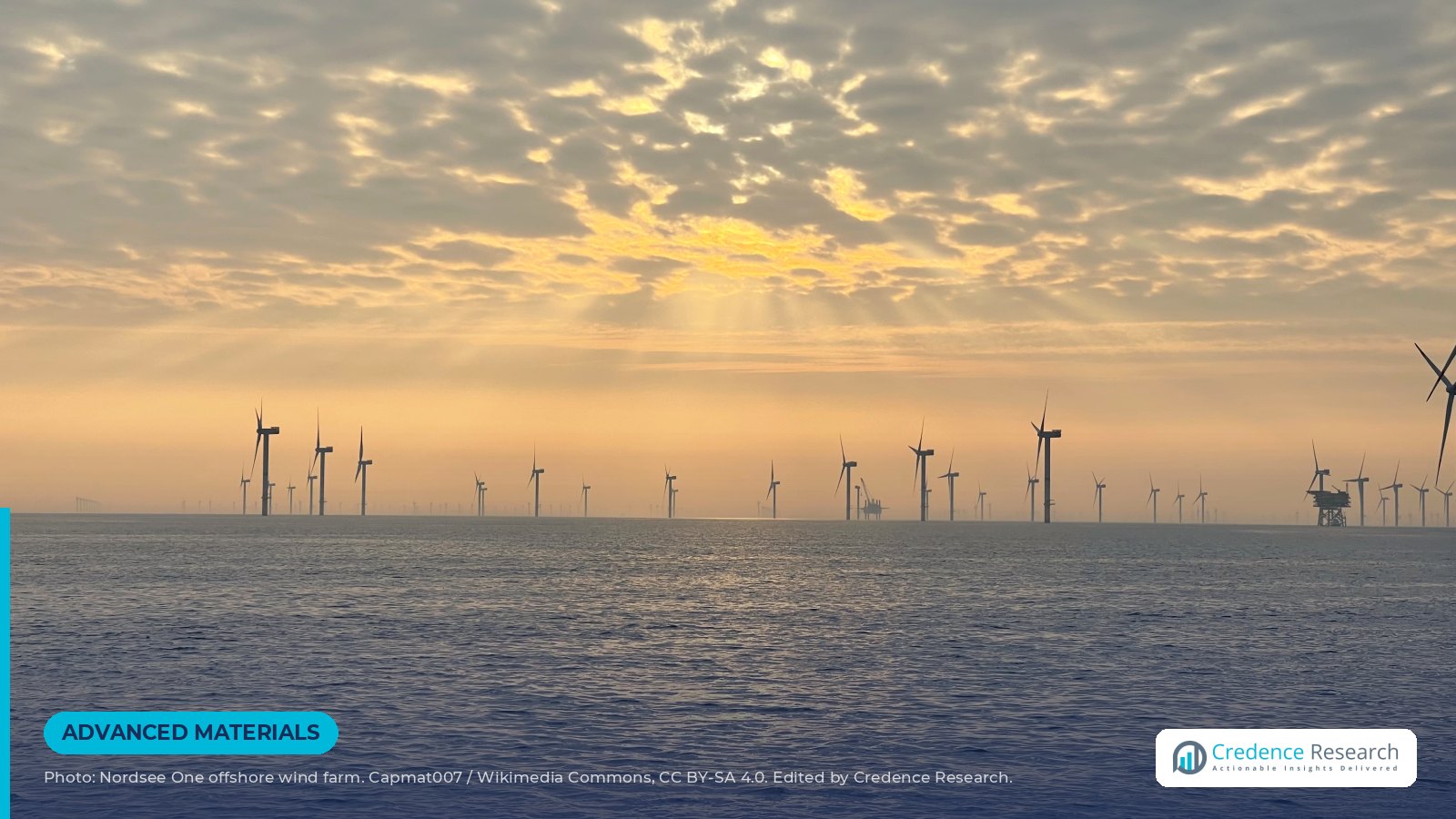
Image: Nordsee One offshore wind farm in the German North Sea, by Capmat007 via Wikimedia Commons, CC BY-SA 4.0. Cropped and edited by Credence Research.

About the Author

Senior News Editor at Credence Research Inc