
Amgen's Imdelltra Plus Imfinzi Cuts Risk of Death by 58% in First-Line Small Cell Lung Cancer
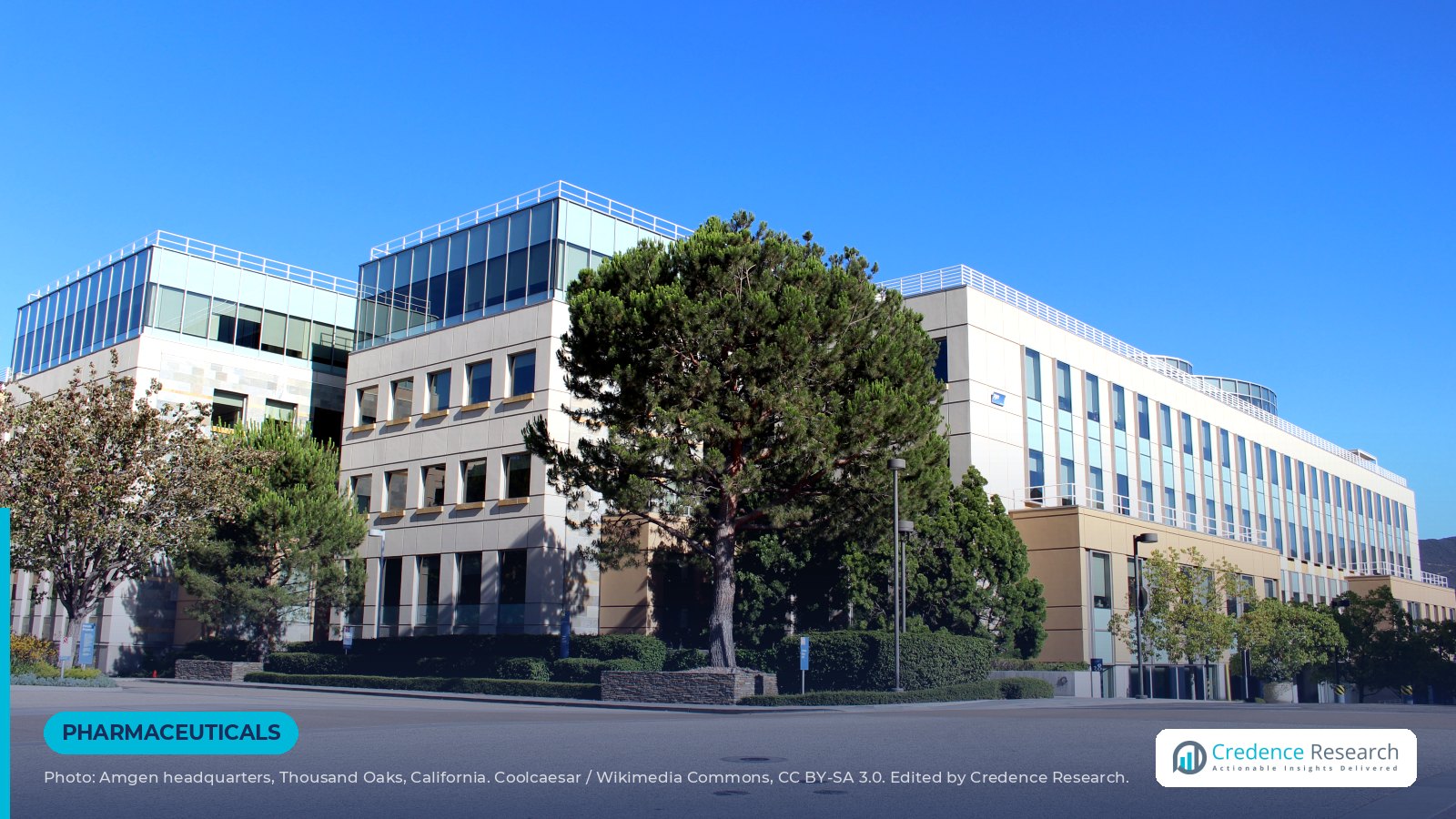
Amgen's Imdelltra, given with AstraZeneca's Imfinzi as first-line maintenance therapy, cut the risk of death by 58% compared with Imfinzi alone in patients with extensive-stage small cell lung cancer, according to Phase 3 DeLLphi-305 results presented Saturday, Oct. 24, at the European Society for Medical Oncology Congress 2026 in Madrid. Median overall survival reached 21.1 months with the combination, against 12.7 months for Imfinzi alone, in a disease where survival from the start of maintenance has long hovered around one year. The data were published the same day in The New England Journal of Medicine.
Key developments
- DeLLphi-305 randomized 563 patients 1:1 to Imdelltra (tarlatamab) plus Imfinzi (durvalumab) or Imfinzi alone after first-line Imfinzi, platinum and etoposide induction. Overall survival was the primary endpoint.
- At a median follow-up of about 16 months, the overall survival hazard ratio was 0.42 (95% CI 0.32-0.54; P<0.001). About 79% of combination patients were alive at 12 months, compared with 53% on Imfinzi alone.
- Median progression-free survival was 7.4 months versus 1.9 months (HR 0.34), and confirmed objective response rate was 26.4% versus 4.1%.
- Grade 3 or higher treatment-related adverse events occurred in 20.9% of the combination arm and 10.8% of the control arm. Cytokine release syndrome affected 49.6% of Imdelltra patients, almost all Grade 1 or 2, and ICANS occurred in 1.1%.
- Amgen said it is moving quickly to share the results with regulators worldwide. The combination is not yet approved in this setting.
Disease background
Small cell lung cancer accounts for roughly 13% to 15% of the more than 2.6 million lung cancer cases diagnosed worldwide each year, according to Amgen. AstraZeneca said about two-thirds of patients are diagnosed at the extensive stage, when the cancer has spread beyond one side of the chest, and estimated that about 195,000 people globally will be treated for extensive-stage disease in 2026. Only 3.6% of those patients are alive five years after diagnosis.
Standard first-line care combines chemotherapy with a PD-L1 inhibitor such as Imfinzi, followed by immunotherapy maintenance. Responses are often brief, and Amgen noted that only about 40% of patients go on to receive second-line treatment. That drop-off is why drugmakers have targeted the maintenance window.
Imdelltra is a bispecific T-cell engager. One arm binds DLL3, a protein found on the surface of tumor cells in roughly 85% to 96% of small cell lung cancer patients and rarely on healthy cells, while the other binds CD3 on T cells, pulling immune cells into contact with the tumor. The FDA first cleared Imdelltra in May 2024 for patients whose disease progressed on or after platinum-based chemotherapy. The U.S. label carries boxed warnings for cytokine release syndrome and neurologic toxicity.
Industry implications
A hazard ratio of 0.42 on overall survival, with consistent benefit in prespecified subgroups including patients with brain or liver metastases, gives Amgen a strong case to move Imdelltra from a later-line option into frontline care. Amgen Chief Medical Officer Paul Burton called the results a watershed moment for the disease, according to Fierce Pharma.
The result is also a test case for T-cell engagers in solid tumors. These drugs have been established in blood cancers, but their use in solid tumors has been held back by cytokine release syndrome and the monitoring it demands. In DeLLphi-305, patients were monitored for one to two hours after the first two infusions, or six to eight hours in certain regions including Europe. Fierce Pharma reported that the FDA recently shortened the original 22- to 24-hour monitoring recommendation in the second-line setting to six to eight hours.
Competitive and supply chain implications
The data put pressure on the lurbinectedin and atezolizumab combination from Jazz Pharmaceuticals and Roche, which the FDA approved for first-line maintenance in October 2025 based on the IMforte trial. Fierce Pharma reported that IMforte showed a 27% reduction in the risk of death, with median overall survival of 13.2 months versus 10.6 months. The trials differ in design and patient populations, so direct comparisons are limited, but oncologists will weigh the larger DeLLphi-305 effect against Imdelltra's monitoring needs.
DLL3 has become a crowded target. Fierce Pharma noted that AbbVie, Merck & Co., Novartis and Roche are developing DLL3-directed agents, and Zai Lab's antibody-drug conjugate zocilurtatug pelitecan has shown high early response rates in a small Phase 1 cohort. Amgen is testing Imdelltra with that drug in an early-stage study. B7-H3 antibody-drug conjugates and PD-1/VEGF bispecifics are also in development for the disease.
For AstraZeneca, the trial reinforces Imfinzi's position as the immunotherapy backbone in small cell lung cancer. AstraZeneca supplied Imfinzi and partly funded the Amgen-sponsored study. Leora Horn, senior vice president of late development oncology at AstraZeneca, said Imfinzi is the only immunotherapy to show a significant survival benefit across stages of the disease. AstraZeneca oncology R&D chief Susan Galbraith told Fierce Pharma that Imfinzi may help prevent the T-cell exhaustion that engagers can cause.
Regional implications
In the United States, the combination would require a supplemental filing before it can be marketed for first-line maintenance. Amgen has not disclosed submission timing or any FDA review designations. A label expansion would also raise demand for infusion-center capacity and trained staff to manage cytokine release syndrome, though the shorter monitoring windows reduce that burden.
In Europe, the longer six- to eight-hour monitoring used in the trial could shape how quickly hospitals adopt the regimen once regulators act. Neither company has given timelines for filings with the European Medicines Agency, Japan's regulator or China's National Medical Products Administration.
Credence Research analysis
DeLLphi-305 is the clearest evidence yet that a T-cell engager can change survival in a common solid tumor, not only in rare or late-line settings. An 8.4-month gain in median overall survival in a cancer where median survival from maintenance has been about a year is large enough to reset the standard of care, provided regulators accept an interim analysis and longer follow-up holds the benefit. Amgen's Phase 1b DeLLphi-303 study, which reported median overall survival of 37.9 months in a similar setting, suggests the curve may continue to separate.
The commercial question is less about efficacy than logistics. Imdelltra's cytokine release profile was mostly low grade, but monitoring after the first two doses remains a hurdle for community practices. The companies that can simplify administration, through shorter observation, outpatient protocols or subcutaneous versions that Amgen is already testing, are likely to define how quickly DLL3 therapy moves across the treatment pathway. Rival programs will now be measured against this benchmark.
What comes next
- Amgen regulatory submissions for first-line maintenance in the United States and other markets, with timing not yet disclosed.
- Longer follow-up from DeLLphi-305, since the overall survival analysis presented in Madrid was an interim analysis with a July 7, 2026, data cutoff.
- Results from DeLLphi-312, testing Imdelltra with Imfinzi and chemotherapy from first-line induction, and DeLLphi-306 in limited-stage disease after chemoradiotherapy.
- Updates on subcutaneous and combination studies of Imdelltra, including the early trial with Zai Lab's DLL3 antibody-drug conjugate.
- Clinical updates from competing DLL3, B7-H3 and PD-1/VEGF programs as developers respond to the new survival benchmark.
Sources
- Amgen: Imdelltra in combination with Imfinzi reduced risk of death by 58% in first-line ES-SCLC (Oct. 24, 2026)
- AstraZeneca: Imfinzi plus Imdelltra DeLLphi-305 Phase III results (Oct. 24, 2026)
- ClinicalTrials.gov: DeLLphi-305 (NCT06211036)
- Fierce Pharma: Amgen's Imdelltra drives survival benefit in small cell lung cancer
Image: Amgen headquarters in Thousand Oaks, California, by Coolcaesar via Wikimedia Commons, CC BY-SA 3.0. Cropped and edited by Credence Research.

About the Author

Senior News Editor at Credence Research Inc