
BMW Adds Samsung SDI and LG Energy Solution as Gen6 Battery Cell Suppliers for Europe and U.S.
BMW Group has added Samsung SDI and LG Energy Solution as battery cell suppliers for its sixth-generation high-voltage batteries, the German automaker said Monday, Nov. 9, 2026. Samsung SDI will deliver cells made in Europe and LG Energy Solution will supply cells made in the United States, with both companies shipping from existing regional plants starting in the late 2020s. The contracts widen a supplier base that until now rested on two Chinese cell makers and tie BMW's next wave of Neue Klasse electric vehicles more closely to production in the regions where those cars are built.
Key developments
- BMW contracted Samsung SDI in Europe and LG Energy Solution in the U.S. as additional cell suppliers for its Gen6 high-voltage batteries, which power its Neue Klasse electric models.
- Both suppliers will deliver from existing plants in their regions, with supply set to begin in the late 2020s. BMW did not disclose contract values, volumes, cell chemistries or the specific plants involved.
- For vehicles built in Europe, BMW will now source cells from CATL, EVE Energy and Samsung SDI. LG Energy Solution will supply BMW's U.S. operations.
- Gen6 battery assembly will take place at five new plants located near vehicle factories: Irlbach-Strasskirchen in Lower Bavaria, Debrecen in Hungary, Shenyang in China, Woodruff in South Carolina and San Luis Potosi in Mexico.
- Nicolai Martin, the BMW AG board member responsible for purchasing and supplier network, said diversifying procurement is an integral part of the group's purchasing strategy.
How the Gen6 cell strategy evolved
BMW set the foundation for its Gen6 battery in September 2022, when it confirmed a switch from prismatic cells to round cylindrical cells with a uniform 46-millimeter diameter in two heights. At the time, the company named CATL and EVE Energy as suppliers under contracts it described as worth a double-digit billion euro amount, and it outlined six cell factories with annual capacity of up to 20 gigawatt-hours each: two in China, two in Europe and two in the USMCA region. BMW said the new cells would raise energy density by more than 20% and improve charging speed and range by up to 30% compared with its previous generation.
The North American leg of that plan has been the most uncertain. BMW invested $700 million in a battery assembly plant in Woodruff, South Carolina, where it planned to assemble packs using cells from Envision AESC. In June 2025, AESC paused construction of its cell plant near Florence, South Carolina, citing policy and market uncertainty, according to the SC Daily Gazette. A BMW spokesman told the publication at the time that the Woodruff assembly plans remained on schedule. Monday's announcement names LG Energy Solution as BMW's U.S. cell supplier without addressing AESC's role.
BMW also highlighted its in-house cell work at three sites: a Battery Cell Competence Centre in Munich that researches new cell technologies, a Cell Manufacturing Competence Centre in Parsdorf that builds near-series cells, and a Cell Recycling Competence Center in Salching that recovers raw materials through a direct recycling process. Hendrik Lang, head of purchasing and quality for high-voltage batteries at BMW AG, said those centers allow BMW to shape technology development and work with partners on equal footing.
Industry implications
The move reflects a broader shift among European automakers from concentrated cell sourcing toward multi-supplier, region-specific networks. BMW said localizing cell production is complex and requires major investment, close collaboration with technology leaders and supportive local conditions and regulation over long industrialization periods. Adding a third European source and a dedicated U.S. source spreads that risk across more manufacturers and more countries.
The decision also tests the cylindrical format's portability. Large-format cylindrical cells have been produced at scale by a limited group of companies, and qualifying two more suppliers for BMW's specification suggests the format is moving from a niche design to a mainstream automotive standard. BMW did not specify which chemistries the new suppliers will provide; electrive reported that BMW's chief executive said on the third-quarter earnings call that Neue Klasse models will also use lithium iron phosphate cells alongside nickel-based chemistry, depending on vehicle segment.
Competitive and supply chain implications
For Samsung SDI and LG Energy Solution, the contracts add a premium German customer to existing regional capacity at a time when demand for electric vehicle cells in Europe and North America has been uneven. Trade publication electrive noted that Samsung SDI operates a plant in God, Hungary, and LG Energy Solution runs several U.S. cell factories, although BMW did not name the supplying sites.
For CATL and EVE Energy, the change dilutes what had been a two-supplier arrangement for BMW's next-generation cells. Both Chinese companies retain their positions in BMW's European supply, and CATL and EVE have built capacity in Hungary near BMW's Debrecen vehicle plant, according to electrive. In the U.S., sourcing from a Korean supplier with domestic production gives BMW a cell path that is less exposed to trade measures on Chinese battery content.
Regional implications
South Carolina stands to gain the most immediate clarity. BMW's Spartanburg-area operations, including the Woodruff battery assembly plant, now have a named domestic cell supplier for Gen6 batteries. Mexico's San Luis Potosi plant falls within the same USMCA supply region, although BMW did not say which cells will feed that site.
In Europe, Hungary remains the center of gravity. Debrecen hosts both a BMW vehicle plant and Gen6 battery assembly, and nearby cell capacity from Chinese and Korean suppliers creates a dense battery cluster. Germany's role is anchored by the Irlbach-Strasskirchen assembly plant in Lower Bavaria and BMW's three cell competence centers, which keep research, pilot production and recycling know-how in the home market.
Credence Research analysis
The announcement is less about new capacity than about bargaining power and resilience. BMW is converting a supplier base built around two Chinese cell makers into a regionally balanced network with Korean partners on both sides of the Atlantic. That gives the company leverage on pricing and allocation, and a fallback if trade rules, tariffs or local content requirements shift. The choice to source from existing plants rather than underwrite new factories also signals caution about committing capital ahead of demand.
The open questions are volumes, chemistry and timing. A late-2020s start means the first Neue Klasse ramp will lean on BMW's original suppliers, and the new contracts mainly shape the second phase of production. The status of BMW's earlier U.S. cell arrangement with AESC, which the release does not address, is another point to watch. If LG Energy Solution becomes BMW's primary U.S. source, it would mark a clear reshuffle of BMW's planned cell supply chain in the American Southeast.
What comes next
- Disclosure of cell chemistries, formats and supplying plants for the Samsung SDI and LG Energy Solution contracts.
- Production ramp at BMW's Gen6 battery assembly plants in Debrecen, Shenyang, Woodruff, San Luis Potosi and Irlbach-Strasskirchen.
- Any update from BMW or AESC on the status of the Florence, South Carolina, cell plant and its role in BMW supply.
- Start of cell deliveries from the new suppliers in the late 2020s, and rollout of lithium iron phosphate variants within the Neue Klasse lineup, as indicated on BMW's third-quarter call.
Sources
- BMW Group: BMW Group localizes supply chains and expands portfolio with Samsung SDI and LG Energy Solution (Nov. 9, 2026)
- electrive: BMW to source battery cells from LGES and Samsung SDI (Nov. 9, 2026)
- electrive: BMW confirms use of round battery cells for New Class (Sept. 9, 2022)
- SC Daily Gazette: Electric vehicle battery company halts construction of SC manufacturing plant (June 5, 2025)
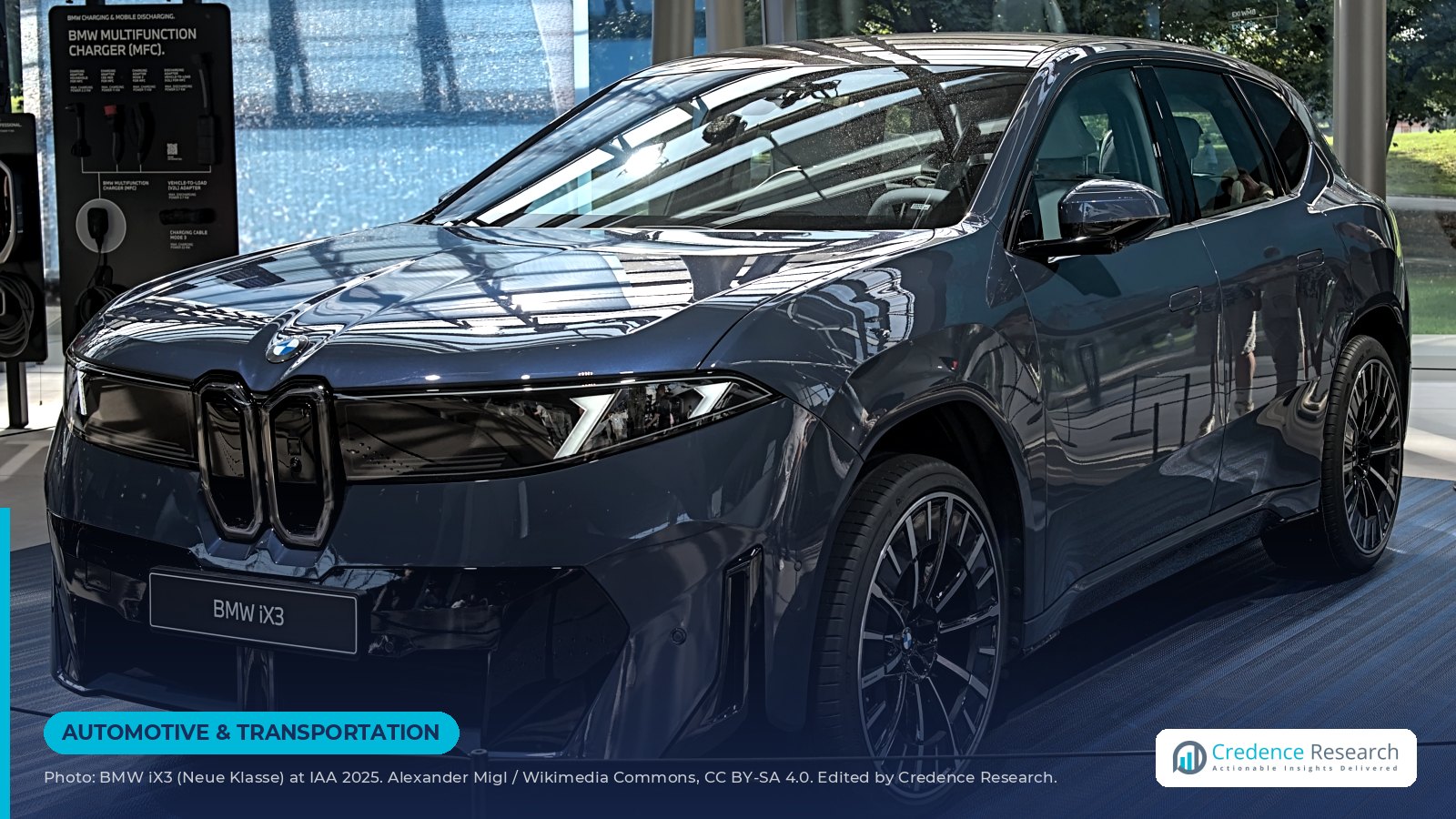
Image: BMW iX3 Neue Klasse at IAA Mobility 2025 in Munich, by Alexander Migl via Wikimedia Commons, CC BY-SA 4.0. Cropped and edited by Credence Research.

About the Author

Senior News Editor at Credence Research Inc