
Mitsui Chemicals to Buy Photoresist Maker JSR for 1.84 Trillion Yen With DBJ
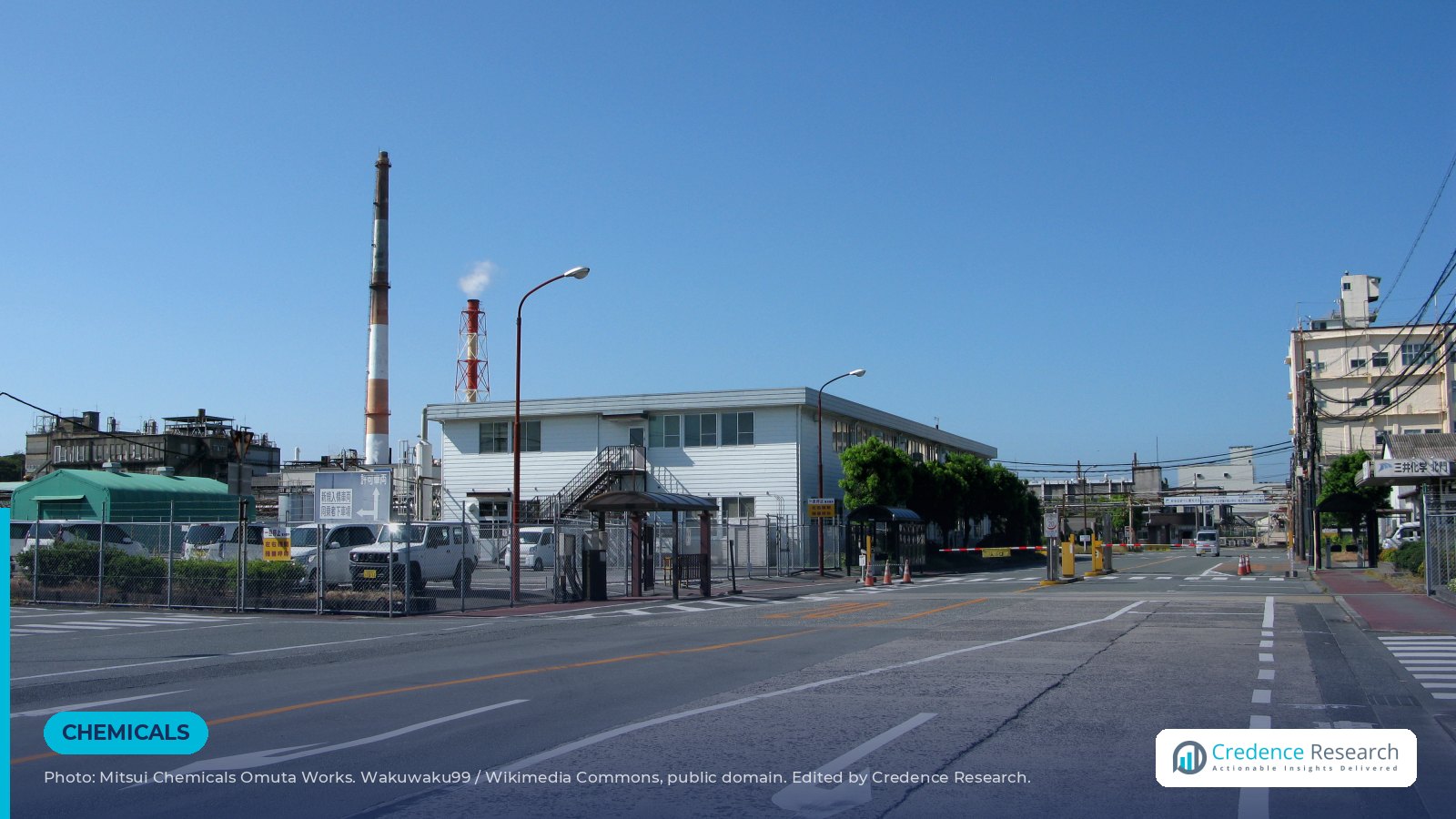
Mitsui Chemicals Inc. agreed on Monday, Nov. 9, 2026, to buy semiconductor materials maker JSR Corp. from funds managed by JIC Capital in a deal valued at about 1.84 trillion yen, or roughly $11.6 billion, with state-owned Development Bank of Japan joining as a co-investor. The Tokyo-based chemical group said its board approved the purchase and signed the share purchase agreement the same day, in what Jiji Press described as the chemical industry's largest acquisition, bringing one of the world's main photoresist producers under a listed owner for the first time since JSR left the stock market in 2024.
Key developments
- Mitsui Chemicals posted a timely disclosure on Nov. 9 titled "Notice Regarding Execution of a Share Purchase Agreement for Shares of JSR Corporation etc," alongside an investor presentation on the deal.
- According to the disclosure, as reported by TNGlobal and Media-IR, the 1.84 trillion yen price comprises 1,392.1 billion yen in equity value and 447.9 billion yen in interest-bearing debt and other items, subject to adjustment at closing.
- Development Bank of Japan will invest 200 billion yen; Mitsui Chemicals will hold all voting rights after completion, while DBJ is expected to end up holding non-voting preferred shares, TNGlobal reported.
- Mitsui plans to fund the purchase with a 1.64 trillion yen bridge loan from its main banks plus DBJ's contribution, and filed a shelf registration for up to 150 billion yen of common shares.
- Completion is targeted for the second half of the fiscal year ending March 2028, pending competition and foreign investment approvals in Japan and other jurisdictions.
How the deal came together
The agreement closes a week of public speculation. On Nov. 4, Mitsui Chemicals issued a statement saying media reports of a JSR acquisition had not come from the company and that, while it was studying a range of options to raise corporate value including that one, no decision had been made. Five days later, the board approved the transaction and the contract was signed.
JSR has been privately held since Japan Investment Corp., the government-backed fund, completed a take-private of the company in 2024. The sale to Mitsui Chemicals is the exit from that holding.
JSR supplies photoresists, the light-sensitive coatings used to pattern circuits on silicon wafers, along with other semiconductor and display materials. Its U.S. subsidiary Inpria, acquired in 2021, develops metal-oxide resists designed for extreme ultraviolet (EUV) lithography, the process used to print the smallest features on leading-edge logic and memory chips. For the fiscal year ended March 2026, JSR reported revenue of 440.7 billion yen and core operating profit of 62.3 billion yen, according to Media-IR's summary of the disclosure.
Industry implications
Photoresist supply sits at a narrow point in the semiconductor chain. A small group of Japanese producers, including JSR, Tokyo Ohka Kogyo, Shin-Etsu Chemical, Sumitomo Chemical and Fujifilm, are major resist suppliers to the world's leading foundries and memory makers. Qualifying a new resist at a fab can take years, which makes incumbent positions durable and acquisitions one of the few ways to gain scale quickly.
Mitsui Chemicals already sells pellicles, the thin protective membranes that shield photomasks during exposure, including products for EUV tools, as well as materials for back-end chip packaging. According to the disclosure, as reported by TNGlobal, Mitsui plans to combine JSR's advanced photoresists and thick-film resists with its own pellicle and packaging materials and to invest in research, people and production after closing. JSR will become the core of Mitsui's ICT solutions business. Media-IR reported that the company expects the combined operation to rank among Japan's largest semiconductor materials suppliers by sales.
The deal also reshapes Mitsui's own portfolio. Media-IR reported that the company is widening a planned spin-off review of its basic and green materials business, which includes petrochemicals, to cover its mobility solutions unit. JSR's life science business is treated as non-core, with options for it still under consideration, according to the same report.
Competitive and supply chain implications
For chipmakers, the immediate effect is limited: JSR's plants, product qualifications and customer contracts carry over, and closing is more than a year away. Over time, a single supplier offering resists, pellicles and packaging materials could simplify procurement for fabs and give Mitsui more leverage in co-development work on EUV and high-numerical-aperture EUV processes, where resist chemistry and mask protection must be tuned together.
Rival resist makers face a larger and better-capitalized competitor. Inpria's metal-oxide resist technology is one of several approaches being evaluated for next-generation EUV patterning, alongside chemically amplified resists and dry resist processes. Under Mitsui ownership, that program gains a parent with broader materials research capability, although Mitsui has not disclosed specific capital spending plans for it.
The financing is heavy. TNGlobal reported that Mitsui expects its net debt-to-earnings multiple to temporarily exceed four times after completion. Within about a year of closing, the company plans to refinance part of the bridge loan through up to 150 billion yen in new common shares and about 300 billion yen in mezzanine financing, according to Media-IR.
Regional implications
The transaction keeps a strategically important supplier in Japanese hands at a time when Tokyo is treating chip materials as an economic security asset. The participation of DBJ, a state-owned lender, alongside the exit by the government-backed JIC, signals continued official involvement in the sector's ownership. Regulators in Japan and other jurisdictions must still clear the deal on competition and foreign investment grounds.
Outside Japan, the main exposures are in the United States, where Inpria operates, and in the chip-producing centers of Taiwan, South Korea and the U.S. that depend on Japanese resist supply. Foreign investment reviews may examine Inpria's EUV technology given U.S. sensitivity around advanced lithography know-how.
Credence Research analysis
The deal is a bet that scale and breadth across lithography materials will matter more as chipmakers push into EUV and high-NA EUV, where defectivity and pattern fidelity depend on how resist, mask and pellicle interact. Mitsui already has a foothold in EUV pellicles; adding a top-tier resist portfolio and Inpria's metal-oxide platform gives it a rare combination of front-end lithography materials under one roof. The strategic logic is coherent, but delivering on it depends on retaining JSR's research teams and customer qualifications through a long regulatory process.
The financial structure is the clearest risk. A bridge loan of 1.64 trillion yen, planned equity issuance and mezzanine funding, combined with a review of spin-offs in commodity chemicals, indicate that Mitsui is accelerating its shift away from petrochemicals and toward specialty materials. Investors should watch whether the company can complete those portfolio moves and refinance on schedule while semiconductor demand cycles shift.
What comes next
- Competition and foreign investment filings in Japan and other jurisdictions, including any review of Inpria's U.S. operations.
- Refinancing of the bridge loan through bank loans, bonds, equity under the 150 billion yen shelf registration and mezzanine financing.
- Progress on Mitsui's spin-off review of its basic and green materials and mobility solutions businesses.
- Decisions on the future of JSR's non-core life science business.
- Closing, targeted for the second half of the fiscal year ending March 2028.
Sources
- Mitsui Chemicals: IR information, Nov. 9, 2026 disclosures
- Mitsui Chemicals: Statement regarding media reports, Nov. 4, 2026 (Japanese)
- TNGlobal: Mitsui Chemicals to acquire JSR for 1.84T yen
- Media-IR: Mitsui Chemicals signs JSR acquisition agreement (Japanese)
Image: Mitsui Chemicals' Omuta Works in Fukuoka Prefecture, Japan, by Wakuwaku99 via Wikimedia Commons, public domain. Cropped and edited by Credence Research.

About the Author

Senior News Editor at Credence Research Inc