
Strathcona Resources to Acquire Greenfire in C$2.9 Billion Oil Sands Consolidation Deal
Strathcona Resources Ltd. agreed on Nov. 8, 2026, to acquire Greenfire Resources Ltd. in a cash-and-share deal that the Calgary-based heavy oil producer valued at about C$2.7 billion to C$2.9 billion, including roughly C$550 million of Greenfire net debt. The transaction would fold Greenfire's Athabasca oil sands operations into Strathcona and bring two companies controlled by the same private equity investor, Waterous Energy Fund, under one roof.
Key developments
- Greenfire shareholders can elect either C$11.00 in cash per share, a 39% premium to the Nov. 6 closing price, or 0.25 of a Strathcona share, valued at C$9.09; neither option is prorated.
- Strathcona expects to issue about 43 million to 60 million shares and pay up to about C$740 million in cash, depending on elections by shareholders other than Waterous Energy Fund (WEF).
- WEF, which owns 72% of Greenfire and 57% of Strathcona, signed a support agreement to vote for the deal and take shares; it would own 60% to 64% of the combined company.
- Combined year-to-date 2026 production is about 153,000 barrels per day, with proved plus probable (2P) reserves of about 3.0 billion barrels.
- Special meetings are expected in January 2027, and Strathcona said in its third-quarter report that it expects closing in late January 2027.
Industry background
Both companies produce bitumen and heavy oil using thermal recovery, mainly steam-assisted gravity drainage (SAGD). In SAGD, operators inject steam through one horizontal well to heat the bitumen so it can flow to a second well below it. The method needs large upfront spending on central processing plants, steam generation and water treatment. Once a facility is built, output can stay steady for decades, which is why the companies describe their assets as long-life and low-decline.
Strathcona calls itself one of North America's fastest-growing pure-play heavy oil producers. It operates thermal and enhanced oil recovery assets in the Cold Lake and Lloydminster regions. Its third-quarter release reported output of 123,486 barrels of oil equivalent per day, 99.7% liquids, up about 6% from the second quarter. Greenfire operates the Hangingstone SAGD facilities south of Fort McMurray. In July 2026 it agreed to buy private producer Connacher Oil and Gas for about C$1.28 billion in cash, adding the neighboring Great Divide project. At the time, Greenfire put combined 2026 output at about 34,000 barrels per day.
Industry implications
The companies say the deal would make the combined business Canada's fourth-largest SAGD operator. They also say it would be the only one producing from all three major Alberta heavy oil deposits: Athabasca, Cold Lake and Lloydminster. Greenfire's assets would form a fourth semi-autonomous business unit, SCR Central Athabasca, led by Greenfire President Colin Germaniuk. Strathcona already runs its other three units this way.
Much of the financial case rests on scale rather than on new barrels. The companies expect about C$75 million a year in run-rate savings within the first year, from lower borrowing costs, procurement and the removal of duplicate public-company costs. Greenfire also brings about C$2.8 billion of tax pools, including C$2.0 billion that is immediately deductible. Strathcona estimates these would push its cash tax horizon from 2027 to 2031 and save about C$400 million over four years at US$75 oil. The combined company is targeting an investment-grade credit rating in the Canadian bond market within a year of closing. A rating at that level would lower the cost of funding long-cycle thermal projects.
Competitive and supply chain implications
Thermal oil sands production is run by a small group of large integrated and independent producers, and each new pad or plant expansion competes for the same specialized services. These include steam generators, water treatment, drilling rigs, well-pair completions and pipeline capacity for diluted bitumen. A larger, better-capitalized Strathcona would have more buying power with fabricators and service firms. It would also gain flexibility in how it sequences brownfield expansions across its regions.
The deal also ends a contested chapter for Greenfire's governance. WEF built its controlling stake after a public governance dispute with Greenfire's board, and its dual ownership shapes the approval process. Each company formed a special committee of directors independent of WEF and management. Jefferies gave Strathcona's committee a fairness opinion, and CIBC gave Greenfire's committee an opinion that the consideration is fair to non-WEF holders. Beyond a two-thirds vote, each company needs a majority of minority votes under Canadian securities rule MI 61-101, so the outcome depends on investors other than WEF.
Regional implications
For Alberta, the deal concentrates more Athabasca thermal production in a Calgary-based, Canadian-listed company. Greenfire is expected to be delisted from both the Toronto Stock Exchange and the New York Stock Exchange, and Strathcona has said it does not plan a U.S. listing. Greenfire would also stop being a reporting issuer in Canada and deregister with the U.S. Securities and Exchange Commission. U.S. investors would lose direct exposure to Greenfire.
Operationally, the companies said Greenfire's existing leadership would keep running the Hangingstone and former Connacher assets. That suggests field-level staffing in the Fort McMurray region may change less than at the corporate level. The deal still needs Competition Act clearance, Toronto Stock Exchange approval and approval from the Court of King's Bench of Alberta.
Credence Research analysis
This is a consolidation deal shaped by common ownership more than by a bidding contest. WEF already controls both companies, and its choice of the share option means most of Greenfire's equity would roll into Strathcona stock instead of being cashed out. The real tests are the minority votes and whether outside Greenfire holders prefer the C$11.00 cash option, which carries a higher stated premium. That election will decide how much cash Strathcona spends at a time when it is still paying down debt. Its third-quarter release put debt at about C$1.7 billion.
Strategically, the deal reflects a wider pattern in Canadian heavy oil: mid-sized producers are trading single-asset exposure for scale, a lower cost of capital and the ability to fund steady expansions at existing pads. Greenfire's own Connacher purchase in July followed the same logic at a smaller scale. A combined company holding about 3.0 billion barrels of 2P reserves and an investment-grade rating would be better placed to fund debottlenecking and new well pairs. For suppliers and service companies, the main signal is that Athabasca thermal spending decisions will be made by fewer, larger buyers.
What comes next
- Late November 2026: joint information circular mailed to shareholders of both companies, plus a Schedule 13E-3 filing with the SEC.
- January 2027: special shareholder meetings, each requiring two-thirds approval and a majority of minority votes.
- Before closing: Competition Act clearance, TSX approval and a final order from the Court of King's Bench of Alberta.
- Late January 2027: expected closing, followed by Greenfire's delisting and the launch of SCR Central Athabasca.
- After closing: Strathcona plans to issue pro forma 2027 guidance and an updated long-range plan.
Sources
- Strathcona Resources: Agreement to Acquire Greenfire Resources (PR Newswire, Nov. 8, 2026)
- Strathcona Resources: Third Quarter 2026 Results (PR Newswire, Nov. 8, 2026)
- Greenfire Resources: Connacher acquisition release (SEC filing, July 13, 2026)
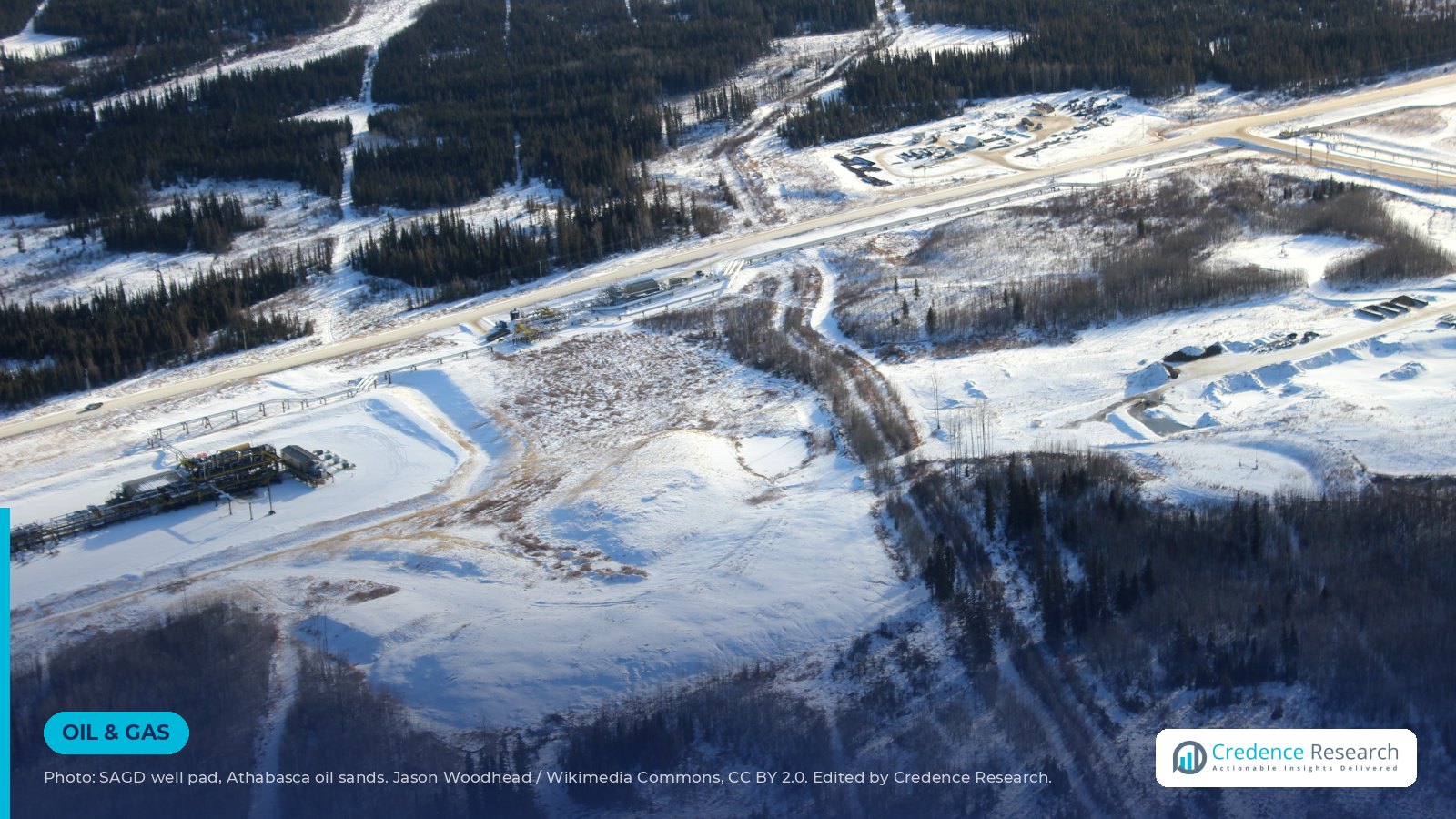
Image: Aerial view of a SAGD well pad and pipe racks in the Athabasca oil sands region of Alberta (illustrative; not a Strathcona or Greenfire facility), by Jason Woodhead via Wikimedia Commons, CC BY 2.0. Cropped and edited by Credence Research.

About the Author

Senior News Editor at Credence Research Inc