
CRH Completes $8.5 Billion Arcosa Acquisition, Adding 109 U.S. Quarries and Yards
CRH has closed its acquisition of Dallas-based Arcosa Inc., completing on Oct. 23, 2026, a deal with a total enterprise value of about $8.5 billion that puts more than 100 U.S. quarries and a major utility-structures business under the building materials group. The company announced the completion from New York, four months after first agreeing to the transaction on June 22 and well ahead of the first-quarter 2027 closing it had originally guided.
Key developments
- CRH completed its acquisition of Arcosa on Oct. 23, 2026, at a total enterprise value of approximately $8.5 billion, paying $150 in cash per Arcosa share under the June agreement.
- Arcosa's construction products unit brings 109 quarries and yards, nine asphalt plants and 19 terminals, and shipped about 35 million tons of aggregates in 2025.
- CRH said the combined company has more than 265 million tons of annualized aggregates production.
- Arcosa's engineered structures business, which CRH describes as a top-three U.S. maker of infrastructure products for energy transmission, also moves into the group.
- CRH will issue updated full-year 2026 guidance reflecting the deal with its third-quarter results on Oct. 29, 2026.
Industry background
Aggregates, the crushed stone, sand and gravel that go into concrete, asphalt and road bases, are among the most heavily consumed materials in construction. They are also costly to move relative to their value, so quarries tend to serve customers within a limited radius. That makes permitted reserves close to growing metro areas a durable asset, and it is the main reason large building materials groups pay up for quarry networks rather than build them from scratch.
Arcosa was spun off from Trinity Industries in 2018 and spent the following years shifting its portfolio toward aggregates and infrastructure products. According to the June deal announcement, its aggregates operations serve 13 of the 50 largest U.S. metropolitan areas across Texas, New Jersey, Arizona, Florida and Tennessee. CRH, which moved its primary listing to the New York Stock Exchange in 2023, has built its North American business around what it calls a connected portfolio, linking aggregates with downstream asphalt, ready-mixed concrete and paving work.
CRH funded the purchase with available cash and committed debt financing, with J.P. Morgan and Morgan Stanley providing bridge financing, according to the June release. Both companies' boards approved the deal unanimously at the time, and it required Arcosa stockholder and regulatory approvals before it could close.
Industry implications
CRH Chief Executive Jim Mintern called Arcosa an excellent strategic fit, pointing to its high-quality aggregates assets and its positions in the U.S. energy transmission market. He said the deal reinforces CRH's position as the No. 1 infrastructure player in North America. The completion release frames the purchase around demand from road, water, energy and data projects, the segments that have anchored recent U.S. construction activity.
For the wider industry, the deal confirms that scale in aggregates remains the main prize in U.S. building materials. Owning the quarry gives a producer control over the input that every downstream product needs, and the self-supply benefit is part of the $175 million in annual run-rate cost synergies CRH expects to reach by the third year. The company has also cited procurement and overhead savings as sources of those gains.
The engineered structures business adds a different kind of exposure. Utility poles, lattice towers and related steel structures are tied to grid expansion and reinforcement, a spending cycle driven by electrification, new generation and the power needs of large data center campuses. That gives CRH a direct line into utility capital programs alongside its core road and commercial construction work.
Competitive and supply chain implications
The combination widens the gap between CRH and many regional aggregates producers. Its larger reserve base and terminal network give it more options to move material by rail and water into high-growth corridors, an advantage in markets where new quarry permits are slow and contested. Rivals with smaller footprints may face more pressure to partner, sell or specialize in local niches.
On the supply side, contractors in Arcosa's markets will now deal with a larger, vertically integrated supplier. CRH's model of pairing quarries with its own asphalt and paving operations can tighten material availability for independent paving firms if internal demand takes priority. At the same time, scale can support steadier supply during peak construction seasons and large project ramp-ups.
In transmission structures, utilities have spent the past few years warning about long lead times for grid equipment. Placing a major structures maker inside a group with CRH's balance sheet could support capacity additions, although CRH has not announced any expansion plans for the unit.
Regional implications
Texas stands out. Arcosa is headquartered in Dallas and has a large share of its aggregates operations in the state, where population growth, highway programs and data center construction have kept demand for construction materials high. Arizona and Florida share similar fast-growth profiles, while New Jersey offers dense infrastructure renewal work in the Northeast corridor and Tennessee adds exposure to the Southeast's manufacturing build-out.
For local governments and state transportation departments, consolidation can mean fewer bidders for materials supply. For local workforces, CRH has said little so far beyond welcoming Arcosa employees. The release did not address site changes, staffing or any planned divestitures.
Credence Research analysis
The early close is the most telling detail. CRH guided to a first-quarter 2027 completion in June and finished roughly a quarter or more ahead of that, which indicates the required regulatory and stockholder approvals came through faster than the company planned. That frees CRH to start integration before the 2027 construction season and to show investors synergy progress sooner. The Oct. 29 guidance update will be the first real test of how quickly Arcosa's earnings flow into CRH's numbers.
The deal also shows where building materials groups see the next decade of demand. CRH is buying exposure to three overlapping spending streams: highways and water systems, grid transmission and the heavy civil work behind data centers and industrial plants. The risk is concentration in that cycle. If federal highway funding stalls in reauthorization or data center construction slows, a larger, more leveraged CRH would feel it. For now, the scarcity value of permitted reserves near growing cities gives the company a defensive base that is hard to replicate.
What comes next
- Oct. 29, 2026: CRH reports third-quarter results and updated full-year 2026 guidance that includes Arcosa.
- Integration of Arcosa's aggregates, asphalt and terminal assets into CRH's North American operations over the coming quarters.
- Progress toward the $175 million annual run-rate cost synergy target CRH set for year three.
- Any decisions on the long-term role of the engineered structures business within CRH's portfolio.
- Federal surface transportation reauthorization and utility transmission spending plans that will shape demand in Arcosa's core markets.
Sources
- CRH: CRH Completes $8.5B Acquisition of Arcosa (Oct. 23, 2026)
- CRH: CRH to Acquire Arcosa (June 22, 2026)
- U.S. SEC: CRH plc Form 8-K (Oct. 23, 2026)
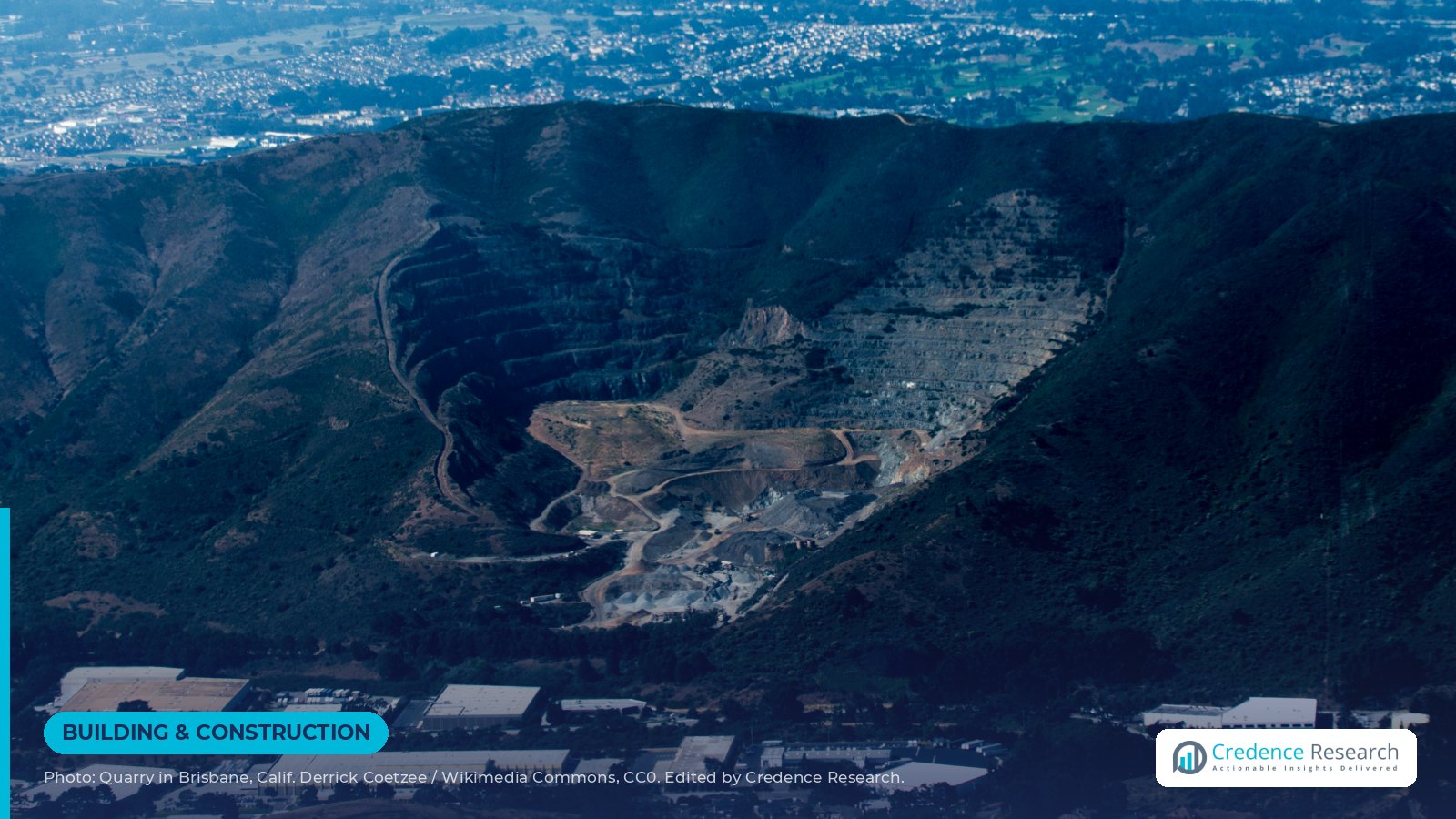
Image: Aerial view of a quarry in Brisbane, California, by Derrick Coetzee via Wikimedia Commons, CC0. Cropped and edited by Credence Research.

About the Author

Senior News Editor at Credence Research Inc