
Finland Grants Posiva First Operating License for a Spent Nuclear Fuel Repository
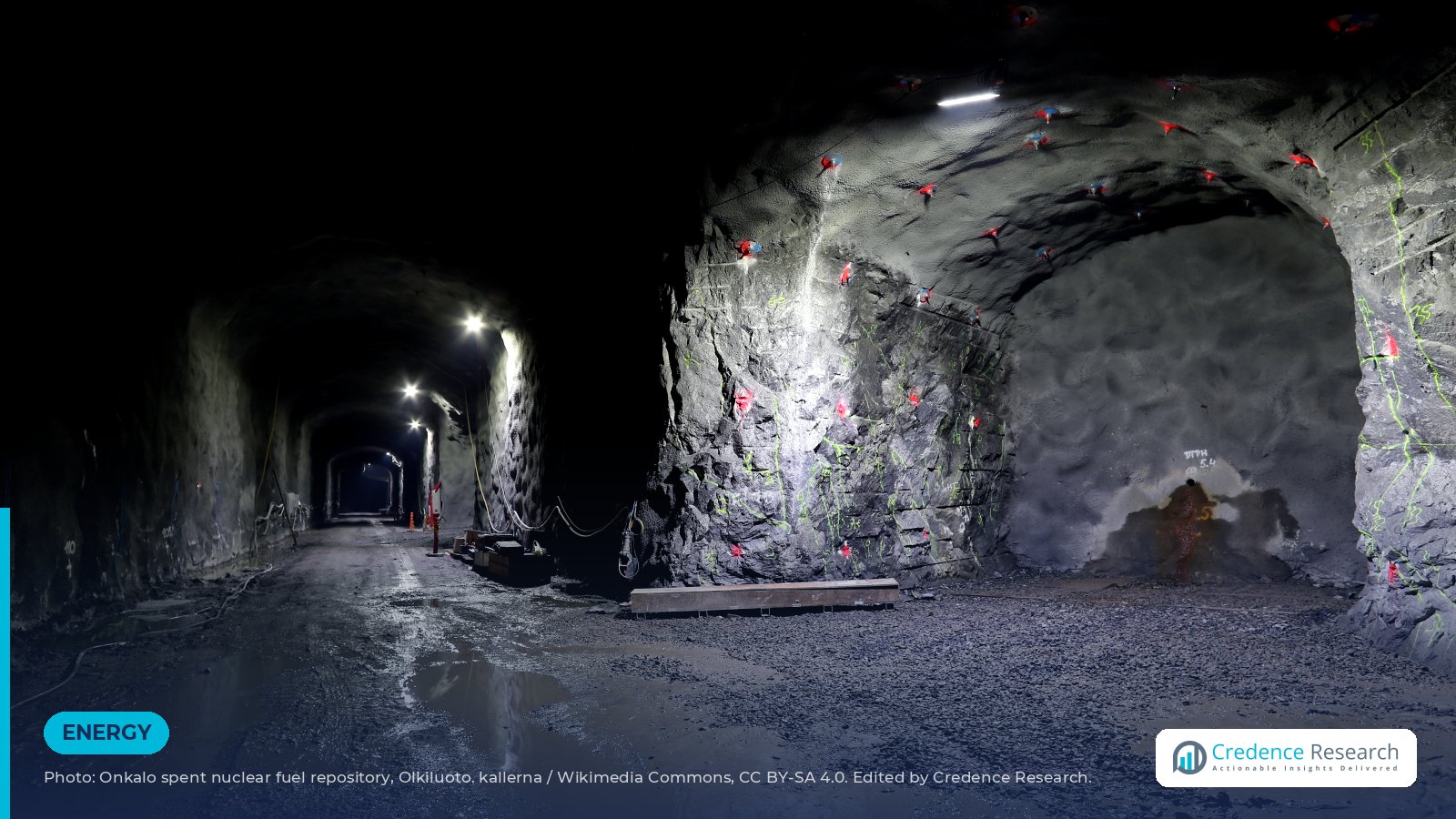
Finland's government on Oct. 22 granted Posiva Oy an operating license for its spent nuclear fuel encapsulation plant and deep geological disposal facility at Olkiluoto, in the municipality of Eurajoki on the country's west coast. Posiva, owned by Teollisuuden Voima Oyj (TVO) and Fortum, says it is the first license anywhere in the world to operate a final repository for spent nuclear fuel. The decision does not start disposal right away. Posiva must first finish commissioning tests and inspections, and the Radiation and Nuclear Safety Authority (STUK) must confirm in a separate decision that the facility is ready to begin operations.
Key developments
- The Finnish government granted Posiva an operating license on Oct. 22, 2026, for the encapsulation plant and the underground repository known as Onkalo at Olkiluoto.
- Posiva applied in December 2021 for a license running to the end of 2070. STUK issued a positive safety statement on Aug. 4, 2026, finding no radiation or nuclear safety obstacle to the license.
- According to World Nuclear News and NucNet, the license covers up to 6,500 metric tons of uranium in spent fuel from the Olkiluoto and Loviisa nuclear plants, in about 3,300 canisters, with a cap of 60 canisters a year.
- STUK's conditions require a first periodic safety assessment and an updated long-term safety case within 10 years of the license, and separate plans before Posiva builds a repository for low- and intermediate-level waste.
- Posiva has not published a start-up date. The company says production operation is expected to last more than 100 years.
How the repository works
Onkalo is built in 1.9-billion-year-old bedrock more than 400 meters below the surface. Spent fuel is sealed in copper canisters at the above-ground encapsulation plant, then lowered into vertical holes bored into the floor of disposal tunnels. Bentonite clay surrounds each canister, and the tunnels are later backfilled and plugged. Posiva calls this a multibarrier system, in which engineered barriers and the surrounding rock work together to isolate the waste for the very long periods needed for its radioactivity to decline.
The project has moved slowly and deliberately. Finland began a long-term disposal program in 1983, TVO and the predecessor of Fortum founded Posiva in 1995, the Olkiluoto site was chosen in 2000, and parliament approved the decision in principle in 2001. The construction license followed in November 2015, and work began in 2016. Excavation of the first five disposal tunnels, about 1,700 meters in total, was completed in July 2022. World Nuclear News reported that drilling of the first deposition hole started in late August 2026. Over its life the repository is planned to grow to about 100 tunnels, each up to 350 meters long.
Industry implications
Permanent disposal of spent fuel has long been the unresolved back end of nuclear power. Most of the world's spent fuel sits in pools or dry casks at reactor sites, in storage designed to be temporary. A licensed, operating repository changes that discussion from theory to practice. Utilities, regulators and investors weighing new reactors, including small modular designs, can now point to a regulator that has reviewed a full safety case for geological disposal and approved it for operation.
The decision also strengthens the case that waste costs can be planned and funded ahead of time. Finnish nuclear operators prefund waste management through the State Nuclear Waste Management Fund, TVO noted. For utilities elsewhere, the Finnish model offers a reference for how licensing, financing and long-term responsibility can be arranged, with ownership of the sealed repository passing to the state after closure.
Competitive and supply chain implications
Commissioning a repository at this scale will create steady demand for specialized goods and services: copper canister fabrication and welding, bentonite buffer and backfill materials, deposition-hole boring machines, remote handling systems and long-term monitoring. A cap of 60 canisters a year points to a measured production rhythm rather than a surge, which favors suppliers that can deliver consistent quality over many decades.
Posiva's expertise is itself becoming an export. Its subsidiary, Posiva Solutions Oy, has worked with organizations in 19 countries, the company said. As other national programs move toward licensing, demand is likely to grow for consulting on site characterization, safety cases and regulatory reviews, an area where Finnish experience now carries the weight of an approved operating license.
Regional implications
For Finland, the license closes the loop for a fleet that includes the three Olkiluoto units, which TVO says supply more than a quarter of the country's electricity, and the two units at Loviisa operated by Fortum. Climate and Environment Minister Sari Multala said Finland will open the world's first final disposal facility for spent fuel after more than 40 years of work, according to NucNet.
Elsewhere in Europe, Sweden's SKB is building a repository at Forsmark that uses a similar copper canister concept, and France is advancing its own deep geological project. The United Kingdom and the United States are also pursuing geological disposal, World Nuclear News reported, though neither has an operating site for spent fuel. Finland's licensing record will be closely watched by regulators and communities in those countries.
Credence Research analysis
The license matters less for what it changes inside Finland in the near term than for what it proves to the wider industry. Spent fuel disposal has often been cited by critics as the reason nuclear expansion should wait. A national government, acting on an independent regulator's detailed review, has now authorized a repository to operate. That gives policymakers in countries planning new reactors a concrete precedent and weakens the argument that the back end of the fuel cycle is unsolvable.
The practical test still lies ahead. Posiva has given no start-up date, and STUK must sign off on commissioning before the first canister is placed. The pace of the first years of operation, including canister welding quality, deposition-hole performance and the regulator's inspection findings, will shape how quickly other programs can borrow from the Finnish approach. A smooth start would likely shorten the learning curve for Sweden and others; any setbacks would be studied just as closely.
What comes next
- Posiva completes remaining commissioning tests and inspections at the encapsulation plant and repository.
- STUK issues a separate decision confirming the facility meets all requirements to begin operations.
- First canisters of spent fuel are placed in deposition holes, on a schedule Posiva has yet to announce.
- Posiva submits its first periodic safety assessment and updated long-term safety case within 10 years.
- Disposal continues into the 2120s, after which the repository is backfilled, closed and handed to the state.
Sources
- Posiva: Finnish Government grants operating licence to Posiva
- TVO: Yet another good reason to be proud of Olkiluoto
- STUK: Safety statement on Posiva's operating licence application
- World Nuclear News: Posiva given go-ahead to operate Finnish used fuel repository
Image: Onkalo spent nuclear fuel repository at Olkiluoto, Finland, by kallerna via Wikimedia Commons, CC BY-SA 4.0. Cropped and edited by Credence Research.

About the Author

Senior News Editor at Credence Research Inc