
JSW Steel and JFE Approve 5 Million-Ton Expansion at Sambalpur Joint Venture Plant in Odisha
JSW Steel and Japan's JFE Steel Corp. will more than double crude steel capacity at their jointly owned Sambalpur steelworks in Odisha, India, the partners said Oct. 23, 2026. The board of the 50:50 venture, JSW JFE Steel Ltd., approved a 5-million-metric-ton-per-year expansion that lifts the integrated plant from 4.5 million tons to 9.5 million tons, with start-up planned for 2030. The decision builds on JFE's December 2025 agreement to buy into the former Bhushan Power and Steel operations, and it arrived alongside a wider set of expansion approvals from JSW Steel's board.
Key developments
- JSW JFE Steel Ltd. (JJSL) approved a 5 million ton per year expansion at Sambalpur, raising crude steel capacity to 9.5 million tons, according to a JFE Steel news release dated Oct. 23, 2026.
- New equipment includes one blast furnace, two coke oven batteries, a pellet plant, two converters, two slab continuous casters, a hot strip mill and captive power generation, JFE said.
- The estimated equity requirement is 75 billion rupees (7,500 crore), split equally between JSW Steel and JFE, according to JSW Steel's exchange filing as reported by the Press Trust of India.
- JSW Steel said implementation is expected to begin in April 2027, subject to statutory and environmental approvals, with commissioning planned by fiscal 2031. JFE gives a calendar 2030 start-up.
- JFE said the expansion will proceed in stages and that the site's long-term goal is about 15 million tons of crude steel capacity.
Industry background
The Sambalpur works began as the integrated plant of Bhushan Power and Steel, a company JSW Steel acquired out of India's insolvency process. On Dec. 3, 2025, JSW Steel and JFE agreed to place the steel business in a 50:50 joint venture. Under that agreement, as reported by PTI, JFE committed 157.5 billion rupees (15,750 crore) for its half stake, and the steel business was valued at 530 billion rupees on an enterprise basis. The site includes captive iron ore mining and produces hot-rolled coil, sheet, bars and wire rods, selling mainly into eastern and northern India.
JFE's release describes JJSL as a 50:50 company that currently employs about 25,000 people, including roughly 5,000 direct employees, and runs the plant at 4.5 million tons of crude steel capacity. PTI reported that the plant is already operating close to its rated capacity and that the venture also holds downstream facilities in Chandigarh and Kolkata. The December agreement had already flagged a path to roughly 10 million tons by the end of the decade, so the Oct. 23 approval converts that plan into an engineering scope and a funding commitment.
The expansion follows the classic blast furnace and basic oxygen furnace route. Pellets and coke feed a new blast furnace, hot metal is refined in two converters, and steel is cast into slabs for a new hot strip mill. That configuration points to flat products for automotive, appliance, pipe and construction customers.
Industry implications
For JFE, the decision deepens its exposure to India as Japanese steelmakers look abroad for growth. JFE's release calls India a core part of its overseas strategy and says the venture will strengthen supply of higher-value products. For JSW Steel, the joint venture structure lets it add capacity while sharing the equity burden with JFE, its long-standing strategic alliance partner.
The approval also lands in a crowded investment cycle. JSW Steel's board approved several other projects at the same meeting, PTI reported, including a 161.5 billion rupee (16,150 crore) second phase at JSW Utkal Steel in Odisha that adds 5 million tons, a 1.8 million ton cold rolling mill and a 1.2 million ton metal coating line at Vasind in Maharashtra, and an 8 million ton pellet plant at Vijayanagar in Karnataka. Taken together, the approvals show how quickly Indian producers are committing to new blast furnace capacity, even as they weigh lower-emission routes for later phases.
Competitive and supply chain implications
A new blast furnace in Odisha increases demand for raw materials that India only partly controls. Iron ore is locally available in the state, but much of the coking coal used by Indian mills is imported. JSW Steel's board also approved expanding the MdR coking coal mine in Mozambique to 9 million tons of prime hard coking coal from calendar 2028, according to PTI, a step that would give the group more control over a key input as its furnace count rises.
For equipment makers, the project scope is broad. Coke ovens, a pellet plant, converters, slab casters and a hot strip mill are long-lead packages typically awarded to a small group of international and Indian engineering firms. Contract awards over the next 12 to 18 months would show who wins the work and how much is sourced locally.
Regional implications
Odisha is becoming the focal point of India's steel build-out. With the Sambalpur expansion and the JSW Utkal second phase, the two JSW-linked projects add 10 million tons of new crude steel capacity, before counting other producers. That concentration should lift demand for power, water, port handling and rail links to the coast. It also increases the importance of environmental clearances, which JSW Steel named as a condition for starting work in April 2027.
In Japan, the move is another sign that domestic steelmakers are allocating more capital to overseas production. JFE's release links the venture to its long-term goal of growing overseas earnings.
Credence Research analysis
The equity figure deserves attention. The 75 billion rupees disclosed is the equity requirement, not the full project cost, which suggests the venture will rely on debt for a significant share of funding. JSW Steel has said it intends to reduce leverage, and the joint venture model helps it grow capacity without carrying the full balance sheet load. The staging language in JFE's release and the 3.5-year build window reported by PTI indicate the partners are keeping some flexibility over phasing, which matters in a cyclical industry where steel prices and import competition can shift quickly.
The choice of a blast furnace for this phase is also telling. Indian producers face growing pressure from export customers, especially in Europe, to cut carbon intensity, yet new capacity is still being built on coal-based routes because they are proven and faster to scale. The long-term goal of about 15 million tons at Sambalpur leaves room for later phases to use different technology. How the partners describe emissions performance and product mix in their next updates will show whether the plant is positioned mainly for domestic infrastructure demand or for higher-grade automotive and export products.
What comes next
- Statutory and environmental approvals for the Sambalpur expansion, which JSW Steel named as a condition for starting work.
- Planned start of implementation in April 2027, according to JSW Steel's filing as reported by PTI.
- Award of major equipment packages, including the blast furnace, converters, casters and hot strip mill.
- Start-up of the expanded plant in calendar 2030, per JFE, or by fiscal 2031, per JSW Steel.
- Any further decision toward the long-term target of about 15 million tons at the site.
Sources
- JFE Steel: JSW JFE Steel Limited Approves Investment for Capacity Expansion (Oct. 23, 2026)
- ThePrint/PTI: JSW Steel and Japan's JFE to add 5 MT steel capacity at Odisha JV plant (Oct. 23, 2026)
- The Week/PTI: JFE to invest Rs 15,750 crore for 50% share in BPSL steel business (Dec. 3, 2025)
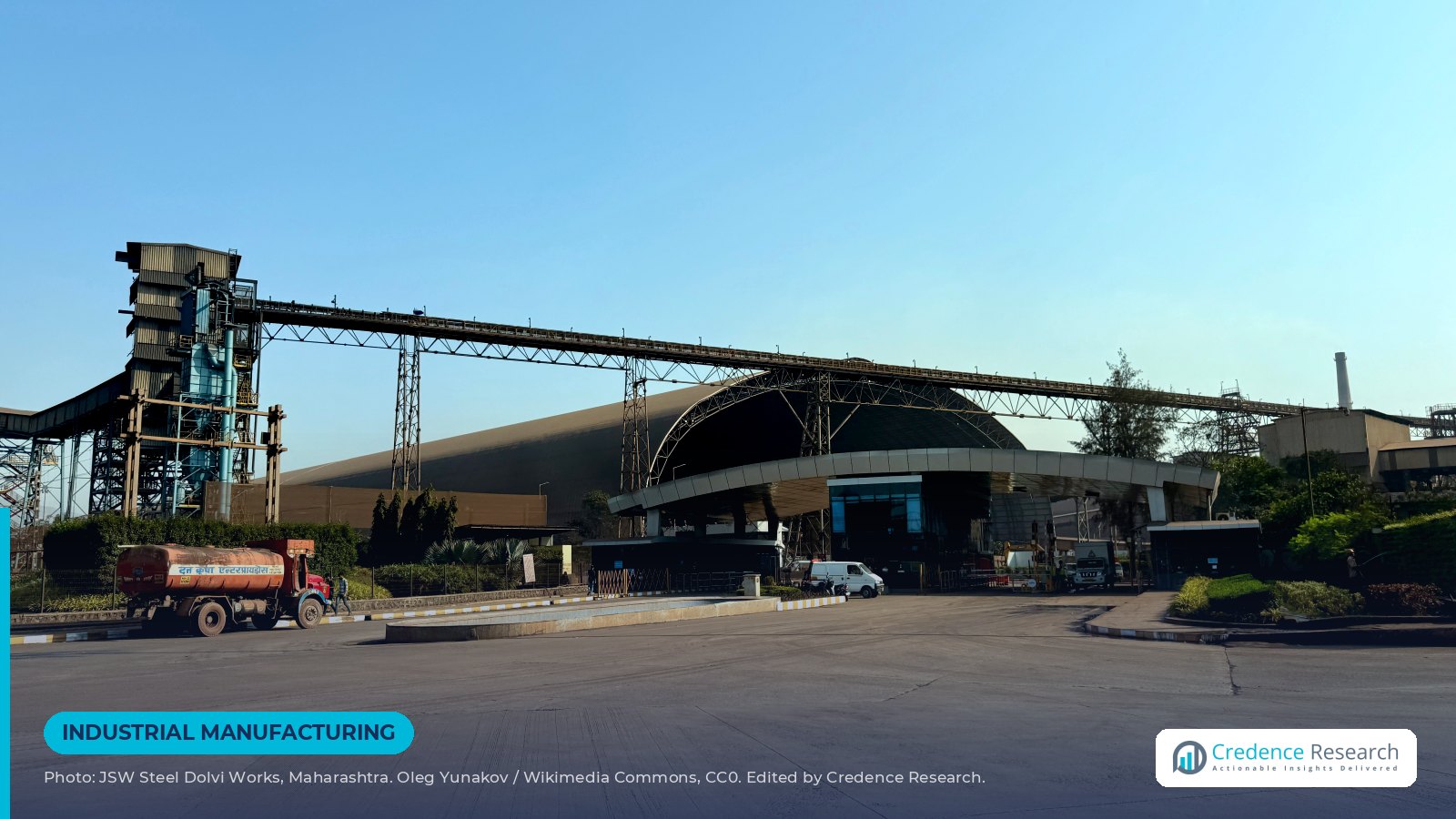
Image: JSW Steel's Dolvi Works in Maharashtra, by Oleg Yunakov via Wikimedia Commons, CC0. Cropped and edited by Credence Research.

About the Author

Senior News Editor at Credence Research Inc