
FDA Approves GSK's Hibsago, First Antisense Therapy for Chronic Hepatitis B
The U.S. Food and Drug Administration on Oct. 20, 2026, approved GSK plc's Hibsago (bepirovirsen), the first antisense oligonucleotide cleared in the United States for chronic hepatitis B. The injectable is approved for use alongside standard antiviral pills in certain adults without cirrhosis, and it gives physicians their first U.S. option aimed at a finite course of therapy that can leave some patients with the virus controlled after all treatment stops.
Key developments
- The FDA approved Hibsago for adults with chronic hepatitis B who have no cirrhosis, have taken HBV antiviral therapy for at least six months, have suppressed HBV DNA and have hepatitis B surface antigen (HBsAg) levels of 3,000 IU/mL or less on an FDA-authorized test.
- In two placebo-controlled Phase 3 trials, B-Well 1 and B-Well 2, 19% of Hibsago-treated patients still had the virus controlled with undetectable HBsAg 24 weeks after stopping all hepatitis B treatment. No placebo patient reached that result.
- The agency also authorized Roche's Elecsys HBsAg II quant II RxDx assay to select patients and monitor them during treatment.
- The label carries a boxed warning for serious liver reactions and low platelet counts that can raise the risk of life-threatening bleeding.
- The review ran under Fast Track, Breakthrough Therapy and Priority Review designations. Japan approved the drug in August 2026.
Disease and treatment background
Chronic hepatitis B affects more than 240 million people worldwide and is linked to about 1.1 million deaths a year, according to GSK. The infection can lead to cirrhosis and raises the risk of liver cancer. For decades, the backbone of care has been nucleos(t)ide analogue tablets such as entecavir and tenofovir. These drugs suppress viral replication well, but they rarely clear HBsAg, the viral protein clinicians use as the marker of a functional cure. GSK says standard care typically produces a functional cure in fewer than 1% of patients after a year, so most people stay on daily pills for life.
Bepirovirsen works differently. It is an antisense oligonucleotide, a short strand of synthetic genetic material designed to bind hepatitis B virus RNA. By blocking that RNA, the drug cuts production of viral proteins, including HBsAg, and GSK says it also stimulates the immune system. GSK licensed the molecule from Ionis Pharmaceuticals, the Carlsbad, California, company whose platform underpins several approved RNA-targeted medicines, and the two collaborated on development.
Under the FDA label, patients receive injections under the skin for up to 24 weeks while staying on their existing antiviral. They continue that antiviral for at least 24 weeks after the last injection, and some may then stop it if they meet clinical and laboratory criteria. In the trials, 24% of Hibsago recipients met the criteria to stop their existing medicine, compared with none on placebo.
Industry implications
The approval moves functional cure from a research goal to a labeled clinical endpoint in the U.S. market. That matters for every developer working on hepatitis B, because regulators have now accepted sustained HBsAg loss off treatment as the basis for approval. Companies testing small interfering RNA drugs, therapeutic vaccines, capsid inhibitors and immune modulators now have a reference point for trial design and for what a competitive result looks like.
The label also ties the drug to a specific diagnostic. Because eligibility depends on a quantitative HBsAg level of 3,000 IU/mL or less, hepatology clinics will need routine access to quantitative surface antigen testing, which many practices do not run today. That pulls diagnostics makers and reference laboratories into the launch and makes Roche's assay part of the treatment pathway from the first prescription.
Safety monitoring will shape uptake. The boxed warning requires liver tests and frequent platelet checks, and the drug is contraindicated in patients with cirrhosis. Those requirements favor specialist-led care in the early phase and may limit how quickly treatment spreads into primary care settings.
Competitive and supply chain implications
Hibsago gives GSK a first-mover position in a disease area where many programs have stalled in mid-stage trials. Rivals pursuing finite therapy, including several RNA interference programs, will be measured against a 24-week regimen with Phase 3 data from trials run in 29 countries. Combination strategies that pair an HBsAg-lowering agent with an immune therapy could become the next point of competition, as developers try to lift cure rates above those seen with bepirovirsen alone.
For Ionis, the approval adds another commercial product built on its antisense chemistry and strengthens the case for partnered RNA medicines in large infectious disease indications. On the manufacturing side, antisense drugs rely on oligonucleotide synthesis, a specialized capacity that has drawn heavy investment from contract manufacturers. A product aimed at a large patient population adds demand for phosphoramidite raw materials, large-scale synthesis and purification, and fill-finish for subcutaneous injectables. GSK has not disclosed manufacturing sites or supply arrangements for Hibsago.
Regional implications
The United States now joins Japan, where nearly 1 million people live with chronic hepatitis B, as one of the first two markets with an approved functional cure therapy. In the U.S., the burden falls heavily on immigrant communities from Asia and Africa, where the virus is most common, so community health centers and hepatology networks serving those groups will be central to adoption.
China is the next major decision point. Bepirovirsen holds Breakthrough Therapy and Priority Review designation there, and the country carries the world's largest hepatitis B population. GSK has said it expects key regulatory decisions in other markets in the coming months. Approval in China and across Asia-Pacific would shift the drug from a specialist product in two markets to a global treatment option, while also testing how health systems pay for a time-limited therapy that replaces lifelong pills for a subset of patients.
Credence Research analysis
The B-Well results show that a functional cure is achievable in roughly one in five eligible patients, which is a clear step up from standard care but still leaves most treated patients without a cure. The commercial story will therefore depend on patient selection. The 3,000 IU/mL threshold narrows the label to people with lower viral protein levels, and clinics will need to identify them through testing that is not yet routine. GSK's ability to build that diagnostic pathway with Roche and laboratory partners may matter as much as the drug's efficacy in the first years.
The approval also sets a regulatory template. By accepting off-treatment HBsAg loss as the basis for a label, the FDA has given the field a defined target, and that should speed late-stage decisions at companies with HBsAg-lowering assets. We expect a wave of combination trials that use bepirovirsen or similar agents as a backbone, as well as closer scrutiny of platelet and liver safety across the RNA-targeted drug class.
What comes next
- GSK's U.S. launch plans, pricing and commercial availability, which the company did not disclose in its announcement.
- Regulatory decisions in China and other markets that GSK says are expected in the coming months.
- Rollout of quantitative HBsAg testing using the Roche companion assay across U.S. hepatology and infectious disease clinics.
- Longer-term follow-up on durability of response and on liver and platelet safety in real-world use.
- Combination studies pairing HBsAg-lowering agents with immune-based therapies aimed at raising cure rates.
Sources
- U.S. FDA: FDA Approves First-of-Its-Kind Chronic Hepatitis B Treatment
- GSK: Hibsago (bepirovirsen) approved in the US for the treatment of chronic hepatitis B
- GSK: Hibsago (bepirovirsen) approved in Japan
- Ionis: Partner GSK announces Hibsago approval in Japan
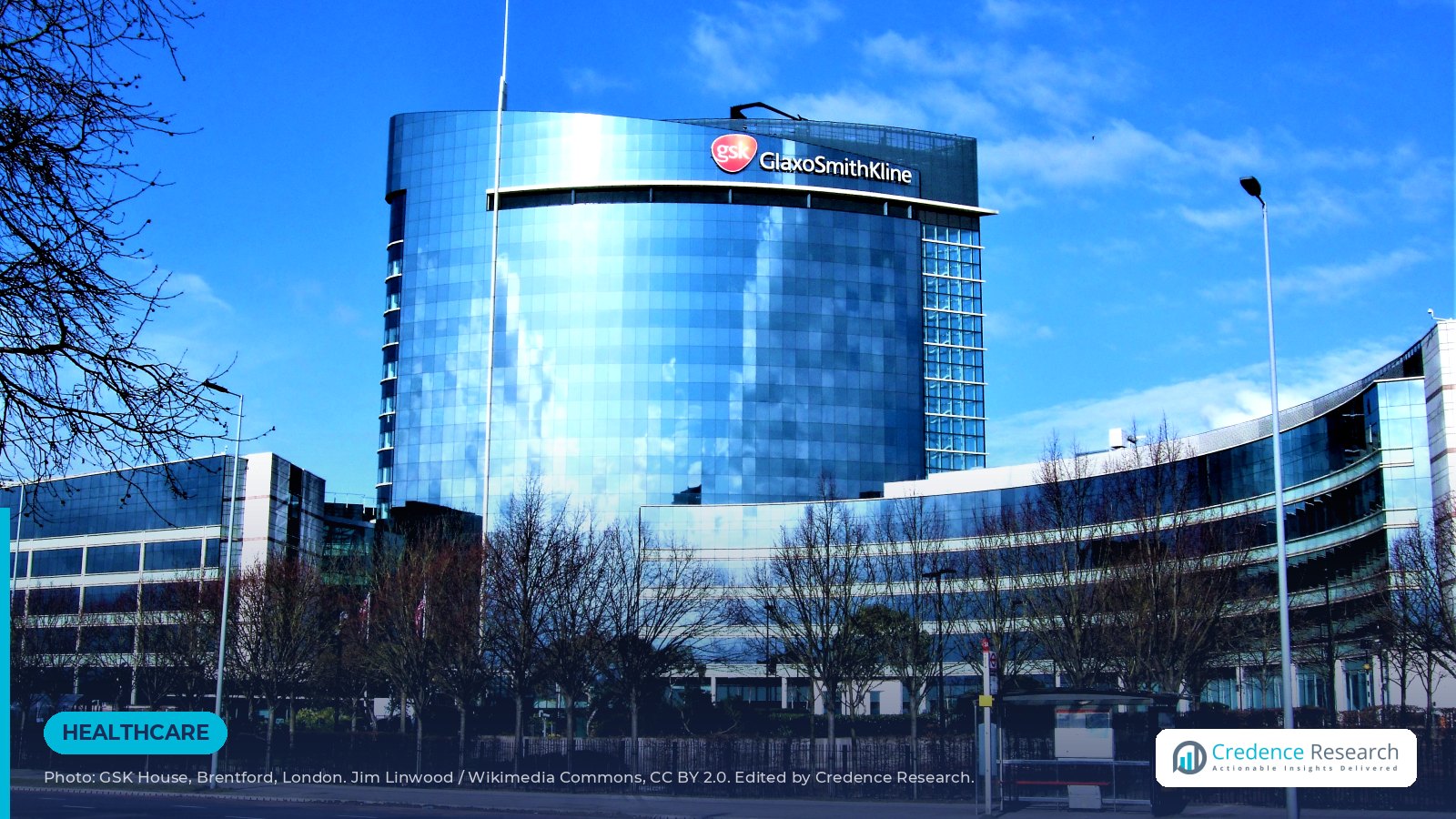
Image: The GlaxoSmithKline building in Brentford, London, by Jim Linwood via Wikimedia Commons, CC BY 2.0. Cropped and edited by Credence Research.

About the Author

Senior News Editor at Credence Research Inc