
FDA Grants Accelerated Approval to GSK's Nelkarmi for Previously Treated ALK-Positive Lung Cancer
The U.S. Food and Drug Administration on Nov. 17, 2026, granted accelerated approval to GSK's Nelkarmi (neladalkib), an oral ALK inhibitor for adults with advanced ALK-positive non-small cell lung cancer whose disease has progressed on earlier targeted therapy. The decision arrived 10 days ahead of the Nov. 27 target action date and gives the London-based drugmaker its second U.S. lung cancer approval in four months, both drawn from the Nuvalent portfolio it bought in July.
Key developments
- The FDA cleared Nelkarmi for unresectable locally advanced or metastatic ALK-positive NSCLC after either one prior ALK inhibitor (alectinib) or two or more prior ALK inhibitors plus platinum-based chemotherapy.
- In the single-arm ALKOVE-1 Phase 1/2 trial, the confirmed objective response rate was 49% in 67 patients previously treated only with alectinib and 32% in 155 more heavily pretreated patients, by blinded independent central review.
- Among patients with measurable brain metastases at baseline, the intracranial response rate was 55% (11 of 20) in the alectinib-only group and 26% (14 of 53) in the heavily pretreated group, according to GSK.
- The recommended dose is 150 milligrams taken orally once daily. The FDA review used priority review, and the drug carries Breakthrough Therapy and Orphan Drug designations.
- Because the approval rests on response rate and duration of response, continued approval may depend on confirmation of clinical benefit. GSK is running the Phase 3 ALKAZAR trial in patients who have not received an ALK inhibitor.
Disease and treatment background
Non-small cell lung cancer is the most common form of lung cancer, and a share of cases is driven by rearrangements in the anaplastic lymphoma kinase gene. ALK-positive patients tend to be younger than the broader lung cancer population and often stay on targeted therapy for years. The disease frequently spreads to the central nervous system, which makes brain penetration a central design goal for any new ALK drug.
Successive generations of ALK inhibitors, including crizotinib, alectinib, brigatinib and lorlatinib, have extended disease control, but tumors typically acquire resistance mutations over time. Neladalkib was designed by Nuvalent to remain active against a broad range of those mutations, cross the blood-brain barrier and spare the related TRK kinase family, whose inhibition is linked to neurological side effects. GSK's chief scientific officer, Tony Wood, said the drug was built around resistance coverage, brain penetration and target selectivity.
In ALKOVE-1, durability was a notable feature. Among responders in the alectinib-only cohort, 76% had responses lasting at least six months and 52% at least 12 months. In the heavily pretreated cohort, the corresponding figures were 69% and 51%.
Industry implications
The approval adds a new option in the post-alectinib setting, where clinicians have relied on later-generation drugs and chemotherapy once resistance emerges. A label that explicitly names alectinib as prior therapy reflects how first-line practice has evolved in the U.S., and it positions Nelkarmi as a sequencing choice rather than a last resort.
Safety will shape uptake. The label warns of hepatotoxicity, renal toxicity, ocular toxicity, creatine phosphokinase elevation and embryo-fetal toxicity. Across 700 patients in the pooled safety population, hepatotoxicity occurred in 56%, with Grade 3 events in 18% and Grade 4 in 7%, and liver tests are required every two weeks for the first two months. Permanent discontinuation due to adverse reactions was reported in 5% of patients, a figure GSK will likely emphasize given how long ALK patients remain on therapy. Dana-Farber Cancer Institute's Alice Shaw, an ALKOVE-1 investigator, pointed to the challenge of balancing disease control with long-term tolerability.
Competitive and supply chain implications
Nelkarmi enters a class dominated by large incumbents, including Roche's alectinib, Takeda's brigatinib and Pfizer's lorlatinib. Lorlatinib in particular has strong long-term first-line data, which raises the bar for any newcomer seeking to move earlier in treatment. The ALKAZAR trial is GSK's route to that larger front-line population, and its readout will determine whether Nelkarmi remains a later-line therapy or competes for initial treatment.
For GSK, the approval validates the logic of the Nuvalent deal. The company completed the tender offer on July 15, 2026, for an aggregate equity value of about $10.6 billion, or roughly $9.4 billion net of cash acquired. The acquisition also brought zidesamtinib, approved as Jideytro in July for previously treated ROS1-positive NSCLC, and NVL-330, a Phase 1 candidate for HER2-altered NSCLC. Two approvals within months of closing give GSK a precision lung oncology franchise built largely around small molecules, which carry simpler manufacturing and distribution requirements than the antibody-drug conjugates crowding much of the lung cancer pipeline.
Regional implications
The approval is U.S.-only for now. GSK's release did not provide launch timing or pricing, and it did not describe filings in Europe, Japan or China. The ALKOVE-1 data set and the Breakthrough and Orphan designations should support submissions elsewhere, but regulators outside the U.S. often weigh single-arm data more cautiously, particularly when a randomized trial such as ALKAZAR is already underway.
In the U.S., the drug strengthens Massachusetts' role as a source of late-stage oncology assets for global pharmaceutical groups. Nuvalent was based in Cambridge, and its compounds now sit inside a UK-headquartered company that has been rebuilding its oncology presence after years focused on vaccines and respiratory medicines.
Credence Research analysis
The early approval signals that FDA reviewers found the response and durability data persuasive in a population with limited options, and it de-risks the commercial case GSK made when it paid a premium for Nuvalent. Delivering both Nuvalent assets ahead of their target dates gives GSK credibility with oncologists at a point when it is working to establish a lung cancer sales infrastructure from a relatively small base.
The harder question is first-line positioning. Later-line ALK use is a narrower opportunity, and lorlatinib's long-term data set a demanding comparator. The hepatotoxicity profile will need careful management in community practice, where monitoring every two weeks can strain clinics. We expect GSK's near-term focus to be on brain metastasis outcomes and tolerability messaging, while ALKAZAR becomes the defining event for the franchise.
What comes next
- U.S. commercial launch, with timing and pricing yet to be disclosed by GSK.
- Full prescribing information posting on Drugs@FDA and inclusion in clinical practice guidelines.
- Progress and eventual readout of the Phase 3 ALKAZAR trial in ALK inhibitor-naive patients, which supports confirmation of benefit and potential first-line use.
- Possible regulatory submissions for neladalkib outside the U.S.
- Clinical advancement of NVL-330 in HER2-altered NSCLC and ongoing neladalkib studies in other solid tumors.
Sources
- GSK: Nelkarmi (neladalkib) approved in the US for previously treated advanced ALK-positive NSCLC
- FDA: FDA grants accelerated approval to neladalkib
- GSK: GSK completes acquisition of Nuvalent, Inc.
- GSK: Jideytro (zidesamtinib) approved in the US
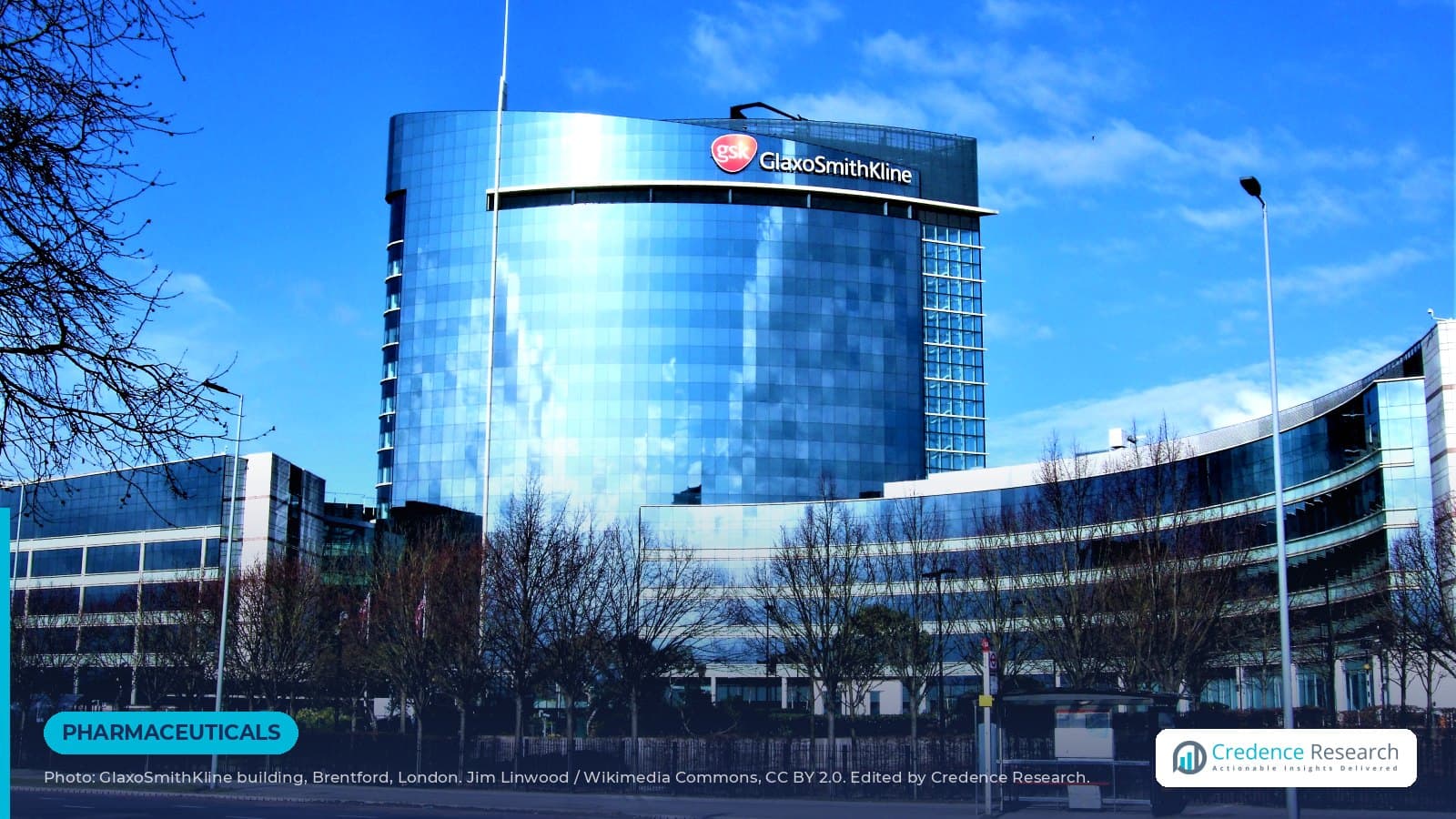
Image: The GlaxoSmithKline building in Brentford, London, by Jim Linwood via Wikimedia Commons, CC BY 2.0. Cropped and edited by Credence Research.

About the Author

Senior News Editor at Credence Research Inc