
Toyota to Invest Over $1.3 Billion in New Argentina Plant to Build Tacoma Hybrid From 2030
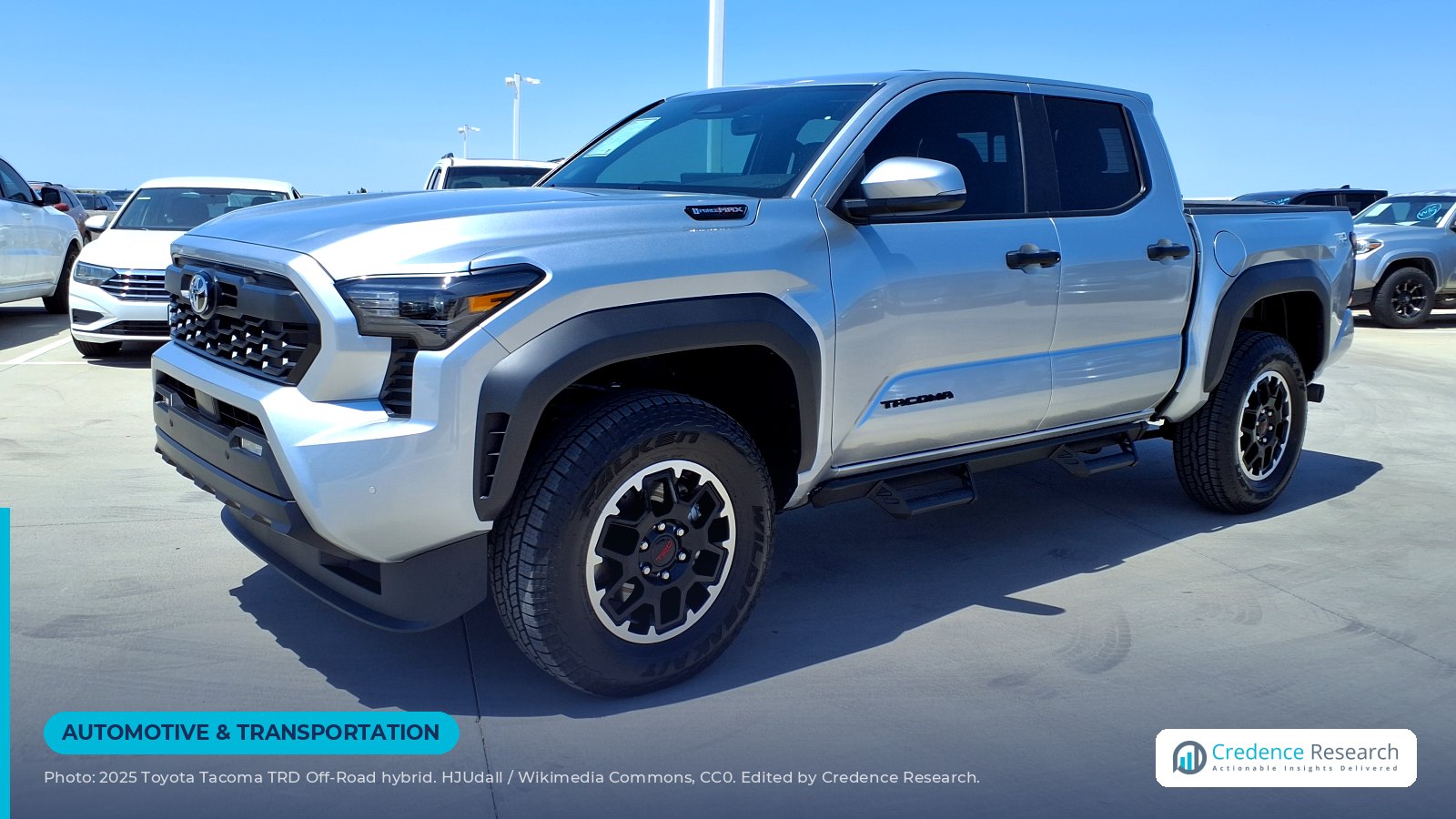
Toyota will build a second vehicle assembly plant in Zárate, Argentina, committing more than $1.3 billion to produce the hybrid Tacoma pickup from 2030. Toyota Motor Corp. Executive Vice President Yoichi Miyazaki presented the project to President Javier Milei at the Casa Rosada in Buenos Aires on Monday, Nov. 16, alongside regional and local Toyota executives. The plant is approved under the Large Investments Incentive Regime, known as RIGI, and the company describes it as the largest investment in the history of Argentina's auto industry.
Key developments
- Toyota presented a plan for a new plant in Zárate, Buenos Aires province, with an investment of more than $1.3 billion approved under RIGI, according to the Argentine government.
- The plant will produce electrified vehicles and is scheduled to start operations in 2030, beginning with the Tacoma hybrid pickup.
- The new facility will complement Toyota's existing Zárate complex, which builds the Hilux pickup, the SW4 SUV and the Hiace van.
- La Nación reported an initial capacity of 50,000 Tacoma units a year, with the building prepared for up to 100,000, and about 70% of output earmarked for export within Latin America and the Caribbean.
- The meeting included Rafael Chang, CEO of Toyota for Latin America and the Caribbean, Toyota Argentina President Gustavo Salinas, Economy Minister Luis Caputo and Secretary General of the Presidency Karina Milei.
Project and policy background
Toyota has built vehicles in Zárate, about 90 kilometers northwest of Buenos Aires, for nearly three decades. The site has become the company's pickup hub for the Southern Cone, with most Hilux and SW4 output shipped abroad. La Nación reported that exports account for about 80% of those two models' production and that Toyota builds more than 220 Hilux configurations to serve different markets.
The new plant will sit on National Route 12 near kilometer 81 and occupy nearly all of the roughly 90% of the existing property that remains undeveloped, La Nación reported. It will have its own welding, assembly, paint and quality control areas and share the stamping shop with the Hilux plant. Site preparation is substantial: a high-voltage line crossing the land must be rerouted along the perimeter, a job expected to take almost two years, and the ground must be leveled across elevation differences of nearly four meters.
RIGI was created in 2024 to attract large, long-term projects by offering tax, customs and foreign exchange stability. According to La Nación, the regime's technology category required Toyota to direct the entire investment to hybrid or electric vehicles. The approved schedule sets $19.5 million of spending in the first year and $147.75 million in the second, and RIGI requires at least 40% of the minimum investment within two years. Salinas told the newspaper that Toyota will fund the project entirely with its own capital and that RIGI's 30-year stability guarantee was essential after years of frequent rule changes in Argentina.
Industry implications
The project brings Tacoma production to South America. Infobae reported that the Tacoma is currently produced only in North America for customers there, so the Zárate plant would open a second production base and extend the model to Latin American markets. The Tacoma is slightly larger than the Hilux and will sit above it in Toyota's lineup.
The announcement also lands weeks before a separate electrification step at the existing plant. Infobae reported that the next-generation Hilux starts production in Zárate on Dec. 4, ahead of a Dec. 12 commercial launch, in mild-hybrid and fully electric versions. La Nación put the Hilux renewal at about $400 million, bringing Toyota's combined commitments in Zárate to roughly $1.8 billion. The company expects the Tacoma and Hilux together to exceed 200,000 units of annual production once the new plant runs.
For Argentina's auto sector, the plan is a test of whether RIGI can draw manufacturing, not only mining and energy, into long-term commitments. The government said the project should strengthen the country's role as a Toyota production and export base, a goal it has tied to the incentive regime.
Competitive and supply chain implications
Toyota is working with local suppliers to raise local and regional content on the Tacoma to levels similar to the Hilux, which La Nación said is needed for regional export access. Building hybrid trucks will require supply of batteries, power electronics and electric motor components that Argentina's supplier base does not yet produce at scale, so sourcing decisions over the next three years will shape how much of the value chain stays in the country.
Ford and Volkswagen also assemble mid-size pickups near Buenos Aires. A locally built hybrid pickup gives Toyota an electrified product in a category where diesel engines have long been the norm in the region. Salinas acknowledged some possible overlap with higher Hilux trims but said the Tacoma is designed to complement the Hilux rather than compete with it.
Construction is expected to create more than 3,600 jobs, with about 2,600 direct and indirect jobs once the plant operates, according to La Nación. Those figures will matter for contractors and component makers in the Zárate-Campana industrial corridor, which also hosts port terminals used for vehicle exports.
Regional implications
Chang said the project strengthens Toyota's regional strategy by combining the capabilities of Argentina and Brazil with its dealer network, according to Infobae. Toyota's Brazilian plants focus mainly on passenger cars, while Argentina specializes in pickups and utility vehicles, a division the Tacoma reinforces.
Planned export destinations span South America, Central America and the Caribbean. That gives Argentina a product that reaches beyond its traditional Mercosur partners and could lift industrial exports from Buenos Aires province. The government highlighted the plan as evidence that RIGI can secure manufacturing investment with a 2030 production horizon.
Credence Research analysis
Toyota's decision reflects a strategy of electrifying its most important regional product line through hybrids rather than a direct shift to battery electric trucks. Hybrids fit markets with limited charging infrastructure and long distances, and the RIGI condition that the money go to electrified vehicles pushed the project in that direction. Funding the plant entirely with internal capital and locking in 30 years of regulatory stability lowers the policy risk that has deterred long-horizon automotive investment in Argentina.
The front-loaded challenge is execution. Early spending under the approved schedule is modest relative to the total, power line relocation and site leveling will take close to two years, and the plant does not open until 2030. The key indicators to watch are how quickly Toyota awards supplier contracts for hybrid components, whether the building's 100,000-unit shell gets a second model, and whether other automakers follow Toyota into RIGI with their own electrified programs.
What comes next
- Dec. 4, 2026: Next-generation Hilux production begins at the current Zárate plant, per Infobae.
- Dec. 12, 2026: Commercial launch of the new Hilux, including mild-hybrid and electric versions.
- Next two years: Relocation of the high-voltage line, site leveling and construction of the new plant.
- Through 2028: Spending of at least 40% of the minimum RIGI investment within two years of approval.
- 2030: Start of Tacoma hybrid production, with a second electrified model, possibly an SUV, under study.
Sources
- Government of Argentina: Karina Milei joins the President's meeting with Toyota executives at the Casa Rosada
- La Nación: Toyota will build the Tacoma hybrid in Argentina and reveals its new plant
- Infobae: Toyota confirms the vehicle it will build at the new Zárate plant
Image: 2025 Toyota Tacoma TRD Off-Road hybrid, by HJUdall via Wikimedia Commons, CC0. Cropped and edited by Credence Research.

About the Author

Senior News Editor at Credence Research Inc