
Johnson & Johnson to Acquire Ollin Biosciences for Up to $3.3 Billion in Retinal Disease Push
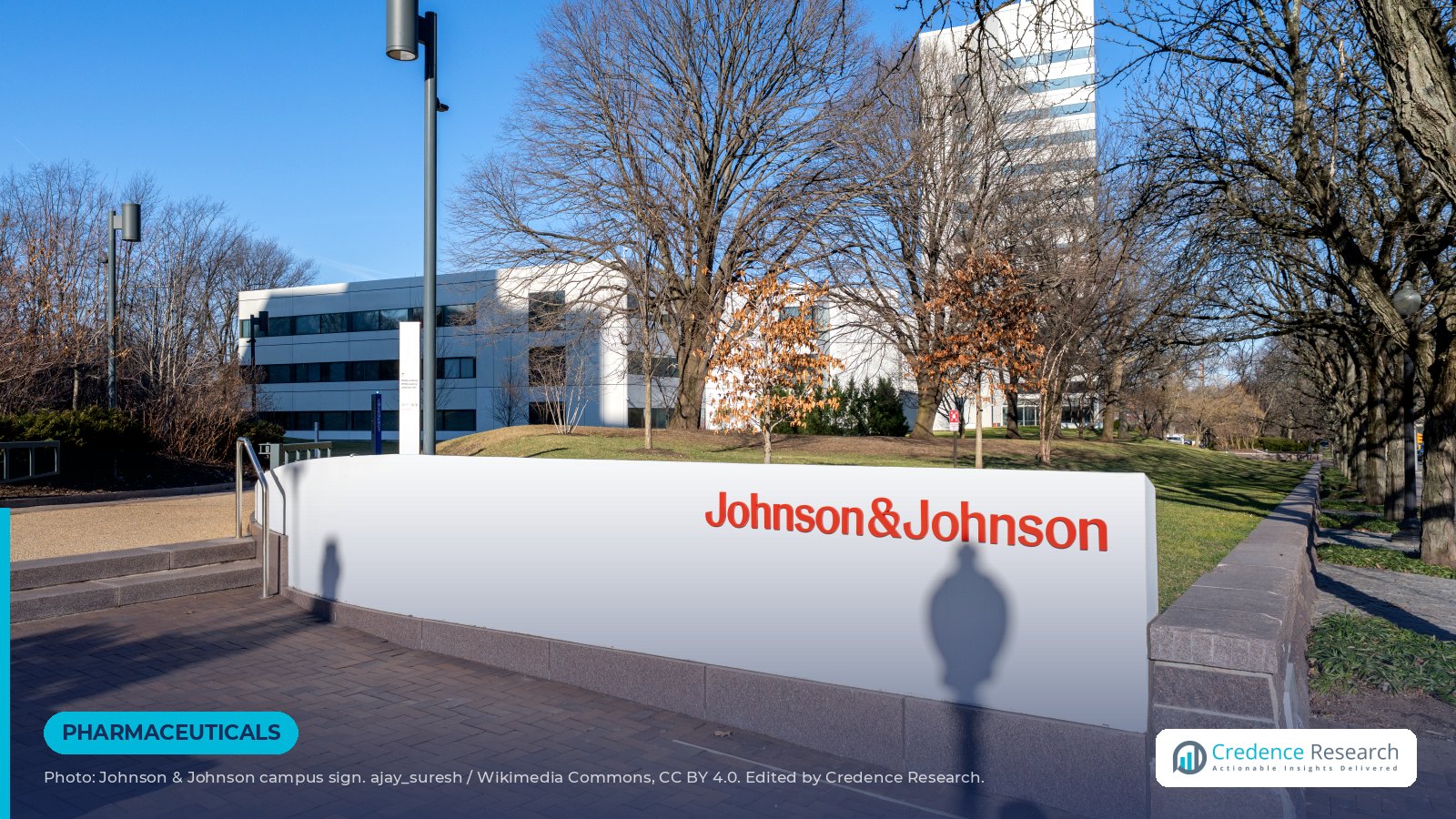
Johnson & Johnson has agreed to acquire Ollin Biosciences, a privately held, clinical-stage developer of medicines for serious eye diseases, for $2.2 billion upfront plus up to about $1.125 billion in regulatory and commercial milestone payments. The New Brunswick, New Jersey, company announced the definitive agreement on Nov. 16, 2026. The deal centers on OLN324, a bispecific antibody that targets two drivers of retinal disease and is headed into late-stage testing in wet age-related macular degeneration and diabetic macular edema.
Key developments
- J&J will pay $2.2 billion at closing, with additional milestone payments of up to approximately $1.125 billion tied to regulatory and commercial events.
- The lead asset, OLN324, is an investigational bispecific antibody in a compact "minibody" format that blocks both vascular endothelial growth factor (VEGF) and angiopoietin-2 (Ang2).
- Under a separate agreement that takes effect only if the acquisition closes, Blackstone Life Sciences will pay J&J a total of $750 million over several years to fully fund OLN324's Phase 3 program, in exchange for certain milestone payments and single-digit royalties.
- The companies expect the transaction to close before the end of 2026, subject to regulatory approvals and customary conditions. J&J said it will disclose the accounting treatment on or before closing.
Disease and technology background
Wet age-related macular degeneration and diabetic macular edema are leading causes of vision loss, and J&J said the two conditions together affect more than 40 million people worldwide. Both involve abnormal blood vessel growth or leakage in the retina. For two decades, the standard of care has been injections into the eye of drugs that block VEGF, the signaling protein that drives that leakage. Patients often need injections every one to two months, and the treatment burden is one of the main reasons people drop out of therapy.
Ang2 is a second protein that destabilizes blood vessels and amplifies the effects of VEGF. Roche's Vabysmo (faricimab), cleared by the U.S. Food and Drug Administration in 2022, was the first bispecific antibody to block both VEGF and Ang2 in the eye. OLN324 attacks the same two targets in a smaller molecular format, which J&J described as offering high Ang2 potency. Kip Connor, who leads J&J's ophthalmology disease area, said the drug selectively targets two important drivers of retinal disease and that its data point to a potentially transformative clinical profile, including more effective drying of retinal fluid and longer intervals between treatments.
The evidence so far comes from JADE, a randomized Phase 1b study in 164 U.S. patients that compared OLN324 directly with faricimab. Patients received three monthly doses and were then followed for 12 weeks without treatment unless they met retreatment criteria. In final 20-week data released in March 2026, Ollin reported greater retinal drying than faricimab in diabetic macular edema, with 93% of patients on the 4 mg dose finishing follow-up without retreatment versus 89% on faricimab. In wet AMD, drying was comparable, and the 4 mg dose showed a 2.2-letter visual acuity advantage at Week 20. Ollin reported no cases of intraocular inflammation with OLN324 versus one with faricimab. The full data have not yet been presented at a medical meeting.
Industry implications
The deal is a clear signal that J&J intends to compete in retinal pharmaceuticals, not only in the surgical and vision care products for which it is better known in ophthalmology. Buying a Phase 3-ready asset rather than an early program shortens the path to a filing and gives the company a candidate it can position directly against the current market leader in dual-pathway therapy.
The financing structure is equally notable. By letting Blackstone Life Sciences fund the full Phase 3 program in return for milestones and royalties, J&J converts a large, multiyear research cost into a shared-risk arrangement. Applying this kind of royalty-backed funding at the moment of acquisition, rather than years later, protects margins while adding a late-stage asset.
Competitive and supply chain implications
OLN324 enters a crowded field. Regeneron and Bayer market Eylea and its high-dose version, Roche sells Vabysmo, and several developers are pursuing gene therapies and sustained-release implants designed to cut injection frequency further. A head-to-head win against faricimab in Phase 3 would give J&J a differentiated message to retina specialists, who make prescribing decisions largely on durability, drying and safety. The absence of inflammation signals in JADE matters in this class, because safety concerns have slowed uptake of some recent retinal entrants.
The molecule's origins add a cross-border dimension. OLN324 is also known as IBI324 and was discovered by China's Innovent Biologics in collaboration with Ollin. Innovent is both a partner and an investor, and the companies have not publicly detailed how rights are divided. Ollin's investors include ARCH Venture Partners, Mubadala Capital, Monograph Capital and TCGX. The company emerged from stealth in September 2025 with $100 million and raised a $330 million Series B in June 2026. Biologics for intravitreal use require specialized fill-finish capacity, and J&J's global manufacturing network gives the program a ready route to commercial-scale supply.
Regional implications
The JADE study enrolled only U.S. patients, so the United States is the program's clinical base. Ollin said earlier this year that it had completed an End-of-Phase 2 meeting with the FDA and received scientific advice from the European Medicines Agency, which positions the Phase 3 trials to support filings in both regions.
The planned global studies are set to recruit in North America, South America, Europe and Japan, with China and South Korea also included. That footprint reflects the growing practice of building Chinese-discovered molecules into global registration programs from the start, rather than running separate regional trials later.
Credence Research analysis
J&J is paying for clinical evidence rather than for a concept. The JADE study is small, but it is one of the few randomized trials in which a newer retinal agent has been tested directly against faricimab, and the durability signals in diabetic macular edema are the most commercially relevant result. The structure caps J&J's upfront exposure at $2.2 billion, ties more than a third of the potential value to milestones and shifts Phase 3 costs to an outside funder. That is a disciplined way to enter a therapeutic area in which incumbents have deep relationships with retina practices.
The main risk is that Phase 1b advantages often narrow in larger trials. The wet AMD results were comparable to faricimab on drying, and the small visual acuity edge will need confirmation. Pricing and reimbursement pressure on intravitreal biologics, along with the expected arrival of biosimilars to older anti-VEGF drugs, will also shape how much room a new branded entrant has. Execution on Phase 3 enrollment speed and on trial design that clearly tests extended dosing intervals will determine whether this deal reshapes the retinal landscape.
What comes next
- Regulatory clearance, including U.S. antitrust review, and closing of the acquisition, targeted before the end of 2026.
- Activation of the Blackstone Life Sciences funding agreement at closing.
- J&J's disclosure of the deal's accounting treatment on or before closing.
- Launch and enrollment of global Phase 3 trials of OLN324 in diabetic macular edema and wet AMD.
- Presentation of full JADE data at a medical meeting and clarity on Innovent's rights and economics.
Sources
- Johnson & Johnson: Johnson & Johnson to acquire Ollin Biosciences (Business Wire release, Nov. 16, 2026)
- Ollin Biosciences: Final data from randomized head-to-head JADE study of OLN324 versus faricimab
- Innovent Biologics: Ollin Biosciences announces $330 million Series B financing
- Eyewire+: Ollin Biosciences launches with $100 million
Image: Johnson & Johnson campus sign, by ajay_suresh via Wikimedia Commons, CC BY 4.0. Cropped and edited by Credence Research.

About the Author

Senior News Editor at Credence Research Inc