
General Flash Raises $128 Million to Scale U.S. Critical Metals Refining With New Process
General Flash, a Cambridge, Massachusetts, startup led by serial materials entrepreneur Ric Fulop, said Tuesday, Nov. 17, 2026, that it has raised $128 million in equity across its seed and Series A rounds to build U.S. production of high-purity critical metals. The company plans to scale a refining method it calls Solid-State Flash Electrolysis from a pilot line near the Massachusetts Institute of Technology to a commercial plant designed for 1,000 metric tons a year, with commercial-scale output targeted for summer 2027.
Key developments
- General Flash raised $128 million in equity across its seed and Series A rounds. Investors include Lux Capital, Construct Capital, Overmatch Ventures, GreatPoint Ventures, Pillar VC, Lowercarbon Capital, Ensemble VC and Ravelin, along with angel investors.
- The company says its Solid-State Flash Electrolysis process converts metal oxides directly into high-purity, semiconductor-grade metal without emissions.
- A pilot facility near MIT has a capacity of 20 metric tons a year. The planned commercial plant targets 1,000 metric tons a year, with commercial-scale production targeted for summer 2027.
- Target materials include tungsten, titanium, zirconium, tantalum, hafnium and rare earth elements. The company says the process can also apply to germanium, yttrium, niobium and molybdenum.
- The company tied its timeline to Department of War rules that, beginning Jan. 1, 2027, bar Chinese supply of many critical materials from U.S. defense supply chains.
How the technology works
Most refractory and reactive metals are produced through energy-intensive, multistep routes. Titanium and zirconium are commonly made by converting oxide feedstock to a chloride and then reducing it with magnesium or sodium in batch reactors. Rare earth metals are often produced by molten salt electrolysis, a method widely used in China. These routes require corrosive reagents, high temperatures and long cycle times, and they can add impurities that must be removed later.
General Flash says its approach skips several of those steps. According to the company, the process turns metal oxide powder directly into metal. Heatmap News, which reported on the company's launch, described the method as heating oxide powders while applying intense electric fields. That pushes the material into a metastable state in which oxygen leaves the powder much faster than usual, leaving pure metal behind. Heatmap reported that the technique grew out of Fulop's work on flash sintering, an oxide densification method, at MIT's Center for Bits and Atoms.
Fulop told Heatmap that the process runs continuously, offers better throughput and requires lower capital spending than molten salt routes. The company has not published energy consumption, operating cost or purity data, so those claims cannot yet be independently assessed.
Industry implications
Tungsten, tantalum, titanium, zirconium, hafnium and rare earths sit inside products ranging from jet engines and armor-piercing munitions to capacitors, nuclear fuel cladding, sputtering targets and permanent magnets. Semiconductor fabs consume high-purity tungsten, tantalum and hafnium for interconnects, barrier layers and gate dielectrics. That gives a domestic, high-purity source relevance well beyond defense.
The company's release says China controls the large majority of refining capacity for many of these metals. Beijing added tungsten and several other minor metals to its export control list in February 2025 and introduced licensing requirements for several medium and heavy rare earths in April 2025. Those measures exposed how thin Western processing capacity had become, even where ore is available.
A process that starts from oxide and ends at metal could shorten the path between existing mining and oxide production and finished metal. A 1,000-metric-ton plant is small next to established supply chains. For specialty metals sold by the kilogram into aerospace and semiconductor applications, though, that volume can matter to individual buyers that need qualified, non-Chinese supply.
Competitive and supply chain implications
General Flash enters a field that has drawn new federal and private capital since 2023, as producers of rare earth magnets, tungsten and titanium sponge try to rebuild domestic capacity. Most of those efforts scale up conventional chemistry. General Flash is betting that a new process can lower capital intensity enough to compete with incumbent producers on cost, not only on origin.
Heatmap noted an important limit. The company addresses one link in the chain. Rare earths and tungsten are still mainly mined and processed into oxides in China, and many end products, including rare earth magnets, are made there as well. General Flash will need reliable non-Chinese oxide feedstock to deliver supply that satisfies defense sourcing rules, and that depends on mining and chemical processing projects outside its control.
Customer qualification is another hurdle. Aerospace, defense and semiconductor buyers typically require lengthy material certification before switching suppliers. Heatmap reported that the company will first target customers that pay a premium for domestically refined material. Fulop declined to discuss specific military contracts or customers.
The founder's record will draw attention. Fulop co-founded battery maker A123 Systems and metal 3D printing company Desktop Metal. Heatmap noted that both reached valuations above $1 billion before filing for bankruptcy. Investors are backing his ability to commercialize hard technology while weighing the execution risk that history implies.
Regional implications
For Massachusetts, the project adds a materials manufacturing operation to a regional economy better known for software and life sciences. Heatmap reported that construction of the 1,000-ton plant in Massachusetts has begun. The company has not disclosed the site, the capital cost or the number of jobs.
Nationally, the timing lines up with the Jan. 1, 2027, sourcing restrictions cited in the release. Defense contractors and their suppliers will need documented non-Chinese sources for affected materials. Domestic producers that can show traceable supply chains should hold an advantage in those procurements. Allied producers in Canada, Australia, Japan and Europe that are expanding capacity for the same reasons will also compete for that business.
Credence Research analysis
The funding round matters less for its size than for what it signals about where investors see the bottleneck. Supply security efforts have concentrated on mining and on finished products such as magnets. The oxide-to-metal step has received less attention, even though it is where purity, cost and process know-how are concentrated. A continuous, electrically driven process that avoids chlorination and molten salt baths would change the cost structure of that step if it works at scale. It would also suit regions with clean power and strict environmental permitting.
The open questions are practical. The company has not released yield, energy use, purity data or unit costs, and the jump from 20 to 1,000 metric tons a year is a 50-fold scale-up in roughly eight months, if the summer 2027 target holds. Feedstock origin will determine whether the output qualifies under defense sourcing rules. Market buyers will watch for qualification announcements, offtake agreements and independent assay data as the better indicators of commercial traction.
What comes next
- Jan. 1, 2027: Department of War restrictions on Chinese-origin critical materials in defense supply chains take effect, according to the company.
- Through 2027: Construction and commissioning of the 1,000-metric-ton-per-year commercial plant in Massachusetts.
- Summer 2027: Targeted start of commercial-scale production.
- Disclosure of customers, offtake agreements and feedstock sources, which the company has not yet announced.
- Independent qualification of General Flash metal by aerospace, defense and semiconductor buyers.
Sources
- General Flash: General Flash Announces $128 Million in Funding to Scale U.S. Production of Critical Metals (PR Newswire, Nov. 17, 2026)
- Heatmap News: General Flash Emerges From Stealth With $128 Million for Domestic Refining
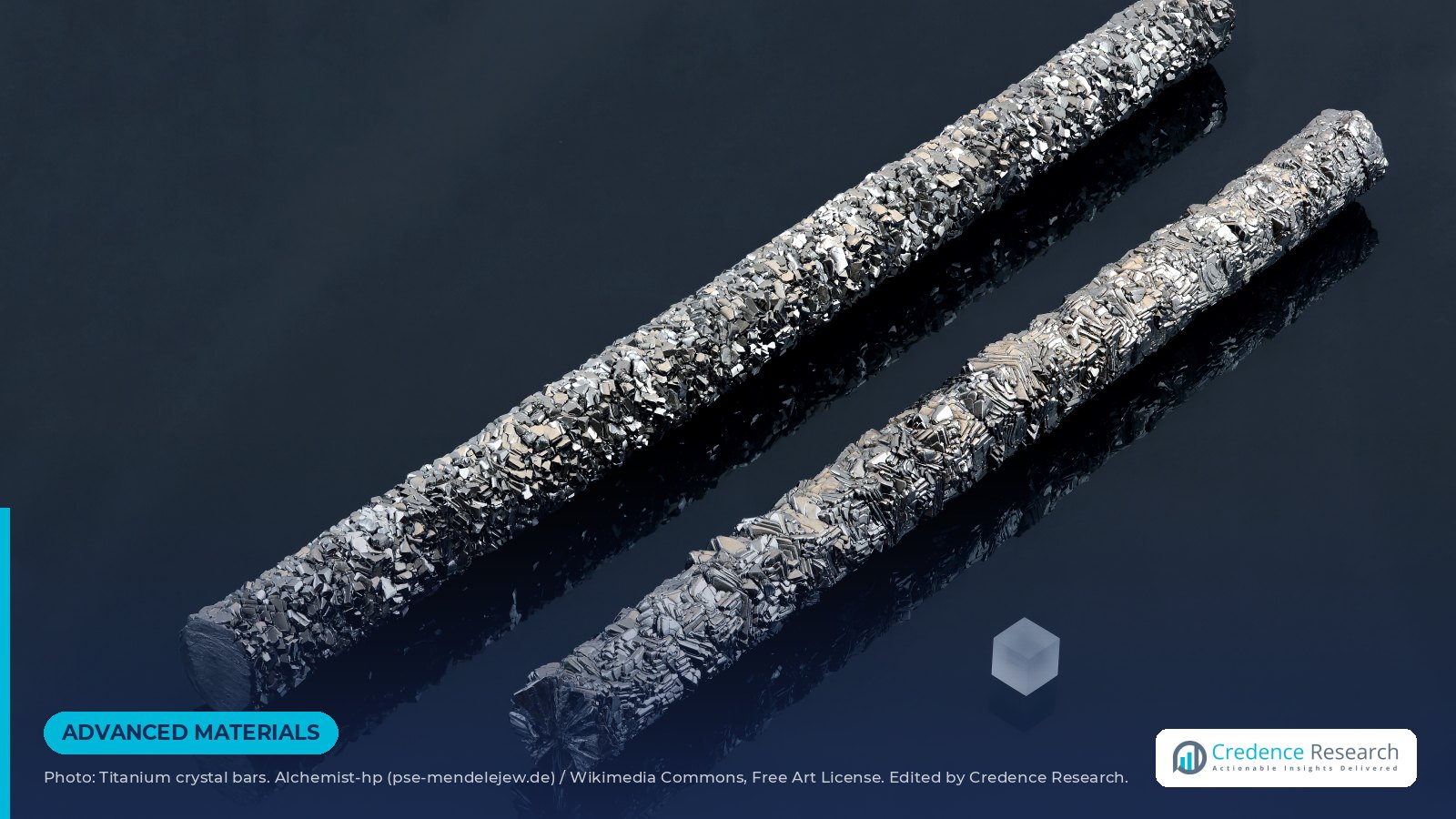
Image: Titanium crystal bars, by Alchemist-hp (pse-mendelejew.de) via Wikimedia Commons, Free Art License. Cropped and edited by Credence Research.

About the Author

Senior News Editor at Credence Research Inc