
Ford Ships First LFP Battery Cells From Michigan Plant for Fathom Electric Pickup
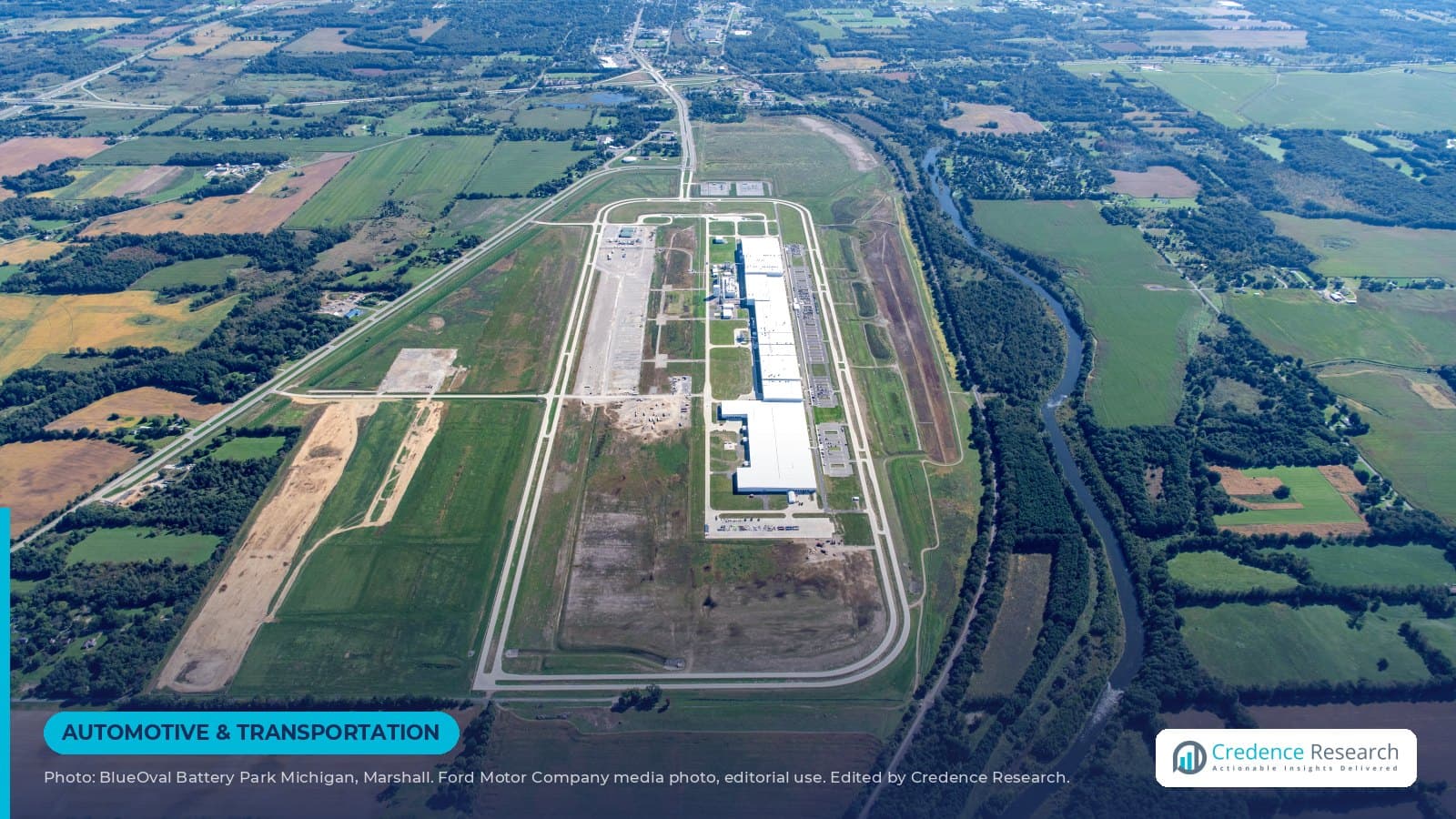
Ford Motor Co. has started shipping its first lithium iron phosphate battery cells from BlueOval Battery Park Michigan in Marshall, the automaker said Nov. 18, moving the wholly owned plant out of pre-production and into supplying cells for prototypes of the Ford Fathom, the low-cost electric pickup it plans to build in Louisville, Kentucky. The prismatic cells use chemistry and manufacturing know-how from China's CATL, and Ford said the shipments make it the first company to deliver LFP batteries in the United States for mainstream consumer vehicles.
Key developments
- The first LFP prismatic cells are coming off the line in Marshall and are headed to Ford's Louisville Assembly Plant to power Fathom prototypes, according to Ford.
- Ford said the Marshall lines can deliver 40 cells per minute, which it described as among the fastest LFP prismatic assembly lines outside China, and that the plant has room for more output.
- The company plans to have a battery pack plant running in Marshall in 2027, ahead of the Fathom launch.
- Ford Energy president Dave Carroll said on Nov. 19 that the plant is officially up and running and that shipments are on time, marking Ford's entry into battery manufacturing at a plant it owns and operates.
- Lessons from Marshall will feed Ford Energy Systems, a battery energy storage plant in Glendale, Kentucky, that Ford expects to launch in 2027.
How the technology works
Lithium iron phosphate cells use no nickel or cobalt, two of the most expensive and supply-constrained materials in conventional EV batteries. The chemistry stores less energy by weight than nickel-rich cells, but it is cheaper, longer-lived and more thermally stable. Ford chose a prismatic, or rectangular, format so cells fit directly into the chassis, letting the pack act as a structural component and cutting structural cost.
Charles Poon, Ford's vice president of hardware engineering, wrote that the company combined electrical and sensing connections in a single flexible circuit board and integrated compact power electronics into the pack. He said the approach supports the Universal EV Production System that Ford will use for the Fathom, summing up the design philosophy as "efficiency over excess." Ford said Alan Clarke, vice president of advanced development projects, set the original challenge to find an efficient LFP prismatic cell, and that the company picked CATL after talks with battery makers worldwide.
Quality targets are also being set high. Ford said it aims to track defective cells per billion rather than per million, and Carroll said inspection relies on AI image recognition, machine learning and predictive analytics.
Industry implications
The shipments give a Detroit automaker in-house LFP cell supply on U.S. soil, a capability that until now has sat mostly with Chinese and Korean battery makers. LFP has become the default chemistry for entry-level EVs and stationary storage in China, and cheaper cells are central to Ford's plan for a pickup that Farley has said will start under $30,000. Electrek reported that Fathom preorders open in early 2027 with a starting price of $28,350 for the standard-range model, and that CEO Jim Farley said on the third-quarter earnings call the truck remains on track for a fourth-quarter 2027 launch.
The milestone also tests a licensing model rather than a joint venture. Electrek described Ford's arrangement as using CATL's licensed technology and manufacturing expertise, while Ford owns and runs the plant. If Marshall reaches volume on schedule, rival automakers weighing similar technology licenses with Asian cell makers will have a working U.S. reference case.
Competitive and supply chain implications
Building cells in Michigan shortens Ford's supply chain for its lowest-cost EV and reduces exposure to tariffs on imported cells and packs. Because LFP avoids nickel and cobalt, the plant's main material needs shift toward lithium, iron phosphate cathode material, graphite and electrolyte, inputs where North American supply is still thin. That leaves upstream sourcing as the next pressure point for Ford and other U.S. LFP producers.
The same cell capability underpins Ford's push into energy storage. Carroll described the Glendale site as a mile-long gigafactory that will assemble battery energy storage systems aligned with investment tax credit and domestic content requirements. That puts Ford in competition with established storage suppliers for utility and commercial projects, a segment drawing new demand from grid operators and large power users. Sharing cell know-how across vehicles and storage can help Ford spread fixed costs across two businesses.
The plant's history shows the political sensitivity of the CATL link. CnEVPost reported that Ford announced the Marshall project in February 2023 as a $3.5 billion, 35 GWh plant, paused it later that year amid U.S. political scrutiny of the CATL tie-up, and resumed it at a reduced scale of 20 GWh. Electrive reported that Ford dissolved its BlueOval SK joint venture with SK On in December 2025.
Regional implications
For south-central Michigan, production means steady manufacturing employment. Ford said in June that the Marshall plant had welcomed more than 500 employees, planned to reach 800 by year-end and had a goal of 1,700 jobs. It received more than 11,500 applications, and more than 70% of team members came from Marshall, Albion and Battle Creek. Michigan Gov. Gretchen Whitmer said at the time that hundreds more jobs were on the way.
Kentucky gains on two fronts. Louisville Assembly Plant will receive Marshall's cells for Fathom prototypes and later production, while the Glendale storage plant will draw on the same manufacturing experience. Together the sites anchor a Michigan-to-Kentucky battery corridor inside Ford's own network.
Credence Research analysis
The significance of the Marshall shipments lies less in volume than in control. Ford is now producing cells it designed into a structural pack, at a plant it owns, using licensed chemistry it does not have to share with a joint venture partner. That combination gives Ford more direct leverage over one of the largest costs in an EV, which is why the company is pairing the cell plant with an integrated pack plant and a simplified vehicle architecture. The stated 40-cells-per-minute line rate and per-billion defect target signal that Ford is benchmarking against Chinese cell makers rather than against other Western automakers.
Risks remain. The plant has shipped cells for prototypes, not production vehicles, and the pack plant and Fathom launch both sit in 2027. Upstream LFP material supply in North America is still developing, and the CATL license remains a political variable in Washington. Ford's bet is that a cheaper chemistry, a structural pack and a dual vehicle-and-storage customer base will let Marshall reach scale even if EV demand stays uneven. Execution over the next 12 months will show whether that model can deliver a profitable sub-$30,000 truck.
What comes next
- Fathom prototype builds and validation at Louisville Assembly Plant using Marshall cells.
- Startup of the Marshall battery pack plant in 2027, ahead of the Fathom launch.
- Fathom preorders in early 2027 and launch targeted for the fourth quarter of 2027, as reported by Electrek.
- Launch of Ford Energy Systems battery storage assembly in Glendale, Kentucky, in 2027.
- Continued hiring in Marshall toward Ford's goal of 1,700 jobs.
Sources
- Ford: Ford Ships First Battery Cells from Michigan Plant for Fathom Electric Truck (Nov. 18, 2026)
- Ford: Ford is in the Battery Business Now, by Dave Carroll (Nov. 19, 2026)
- Ford: BlueOval Battery Park Michigan Hits Hiring and LFP Production Milestones (June 2026)
- Electrek: Ford's first LFP batteries are en route (Nov. 18, 2026)
Image: Aerial view of BlueOval Battery Park Michigan in Marshall, Michigan, by Ford Motor Company via Ford From the Road, provided for editorial use. Cropped and edited by Credence Research.
About the Author

Senior News Editor at Credence Research Inc