
| REPORT ATTRIBUTE | DETAILS |
|---|---|
| Historical Period | 2019-2022 |
| Base Year | 2023 |
| Forecast Period | 2024-2032 |
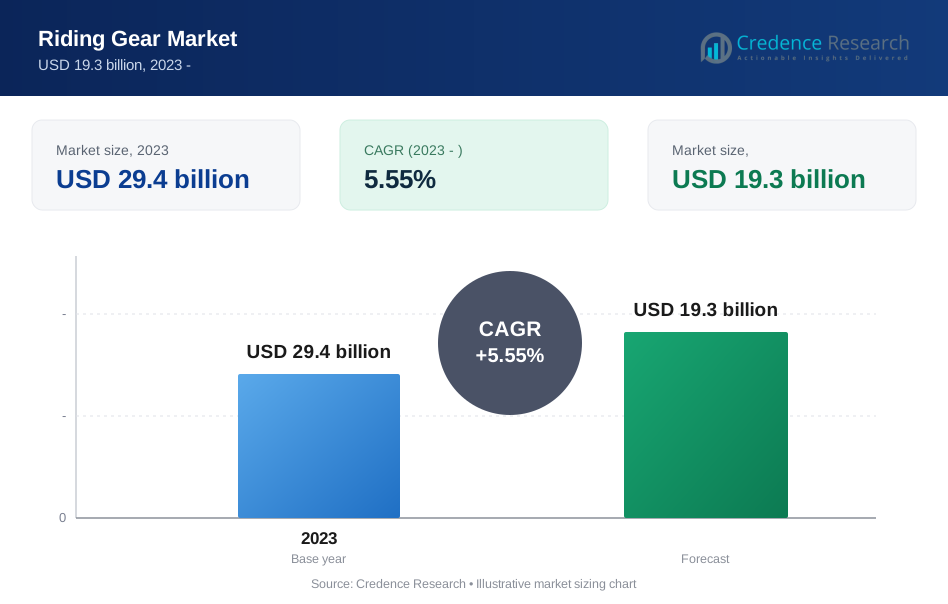
| Riding Gear Market Size 2023 | USD 29.4 billion |
| Riding Gear Market, CAGR | 5.55% |
| Riding Gear Market Size 2032 | USD 19.3 billion |
Market Overview:
The riding gear market is on a steady ascent, poised to reach a projected value of USD 29.4 billion by 2032, a significant increase from USD 19.3 billion in 2023, reflecting a compound annual growth rate (CAGR) of 5.55%.
The riding gear market faces challenges stemming from market saturation in developed regions like North America and Europe, where high motorcycle ownership rates have led to a slowdown in gear demand. Additionally, shifting consumer preferences towards premium, high-performance gear and potential economic downturns may further impact market growth, particularly in discretionary spending on non-essential items like riding gear. However, despite these challenges, the market holds promise for future expansion driven by emerging markets such as Southeast Asia and India. The surge in motorcycle ownership in these regions creates new demand for riding gear, presenting growth opportunities for manufacturers and retailers.
Furthermore, the riding gear market's growth potential is bolstered by a growing focus on safety, technological advancements, and geographical diversity. With increasing awareness of safety regulations and the rising risk of motorcycle accidents, riders are prioritizing protective equipment, driving demand for innovative gear with enhanced features like lightweight materials and integrated technology. Moreover, while North America and Europe remain dominant players, the market is experiencing growth in Asia Pacific and Latin America due to rising disposable incomes and the growing adoption of motorcycles. Key players in the industry, including established brands like Alpinestars, Dainese, and Shoei, must adapt to changing consumer preferences, prioritize innovation and safety, and capitalize on growth opportunities in emerging regions to ensure future success.
Market Drivers:
Safety Concerns and Popularity of Motorcycles:
The expansion of the riding gear market is driven by heightened safety concerns among riders, coupled with the increasing global popularity of motorcycles. For instance, in 2023, global two-wheeler sales (motorcycles, scooters, and registered mopeds) reached 62.6 million units. Awareness of road accidents and the potential severity of motorcycle injuries has prompted a surge in demand for high-quality protective gear. For example, motorcycle riders are 28 times more likely to die and four times more likely to be injured in an accident than car occupants. Simultaneously, factors such as affordability, fuel efficiency, and the sense of freedom associated with motorcycles have contributed to their rising popularity. As more individuals opt for motorcycle riding, there is a growing need for riding gear to ensure rider safety on the roads.
Technological Advancements and Comfort Enhancements:
Technological innovations and comfort enhancements are shaping the evolution of riding gear, with manufacturers continuously striving to develop gear that offers superior protection without compromising comfort. For instance, advancements in materials, such as abrasion-resistant fabrics and impact-absorbing padding, alongside the integration of communication systems and climate control elements into helmets and jackets, are gaining traction in the market. Riders increasingly seek gear that enhances their overall riding experience, driving the adoption of innovative features and functionalities.
Diversity and Segmentation in Riding Gear:
The riding gear market is witnessing an expansion in diversity and segmentation to cater to a broader range of rider preferences and needs. For example, gear tailored for different riding styles and demographics, including adventure touring and off-road riding, is becoming increasingly prevalent. Additionally, there is a growing emphasis on women-specific gear designed for optimal fit and comfort, reflecting the rise of female ridership. Moreover, manufacturers are focusing on sustainability by adopting eco-friendly materials and sustainable practices, aligning with consumer preferences for environmentally conscious products. For instance, the motorcycle apparel industry is segmented by type (jackets, helmets, gloves, knee guards, shoes, and other types), material type (mesh, leather, plastic, carbon fiber, and other material types), distribution channel (offline and online), and geography (North America, Europe, Asia-Pacific, and Rest of the World).
Rising Disposable Incomes and Leisure Spending:
Rising disposable incomes, particularly in developing economies, are fueling increased spending on recreational activities like motorcycle riding. This trend contributes to the growing demand for riding gear as riders seek high-quality equipment for their leisure pursuits. With the popularity of motorcycle touring and adventure riding on the rise, there is a heightened need for gear that offers safety, comfort, functionality, and weather protection for extended journeys. Consequently, the riding gear market is well-positioned to capitalize on these trends and opportunities for continued growth and innovation.
Market Trends:
Surge in Comfort and Convenience:
Riders are increasingly prioritizing comfort and convenience in their gear choices. For instance, a survey conducted by the Motorcycle Industry Council found that 70% of riders cited comfort as a key factor influencing their gear choices. They seek features like improved ventilation systems, lightweight yet protective materials, and ergonomic designs that minimize fatigue during long rides. A case in point is the introduction of D3O technology, a lightweight, flexible material that hardens upon impact, offering superior protection without compromising comfort.
Tech Integration and Safety Focus:
Technology is playing a pivotal role in the evolution of riding gear, particularly in enhancing safety and rider experience. For instance, the adoption of airbag vests, which inflate in the event of a crash to protect the rider’s chest and abdomen, has seen a significant increase in recent years. Moreover, advancements in reflective materials and impact-absorbing technologies are raising safety standards, providing riders with greater peace of mind on the road. An example of this is the use of High Visibility (Hi-Viz) gear, which significantly increases a rider’s visibility to other road users, thereby reducing the risk of accidents.
Market Challenges Analysis:
High Cost of High-Quality Gear:
Premium riding gear, renowned for its superior protection and performance, often comes with a substantial price tag. This poses a notable barrier to entry for new riders or those with budget constraints. While more affordable options are available, they may not offer the same level of safety and functionality as their high-end counterparts. The significant price disparity between different gear tiers can impede market growth, particularly in regions where the average disposable income is lower.
Safety Concerns and Awareness:
Despite the undeniable safety benefits of riding gear, there remains a lack of awareness or underestimation of risk among some motorcyclists. This can lead to riders neglecting proper gear selection or use, compromising their safety on the road. Furthermore, varying safety regulations across regions and evolving motorcycle technology can create confusion among consumers regarding the appropriate protective equipment required for safe riding.
Segmentation Analysis:
By Product Type:
Riding gear encompasses a range of essential components designed to ensure rider safety and comfort on the road. Helmets, offering protection for the most critical body part, represent a significant segment of the market, providing vital head protection. Jackets, available in leather or textile materials, offer varying degrees of protection and weatherproofing to shield riders from the elements. Complementing jackets, leather and textile pants provide abrasion resistance and additional protection for the lower body. Gloves are essential for protecting hands from injury and adverse weather conditions, while motorcycle boots, designed for ankle and foot protection, come in various styles tailored to different riding needs. Body armor, whether standalone or integrated into jackets, offers additional impact protection for vital areas. Additionally, the market includes other riding gear such as goggles, airbag vests, knee/shin guards, and neck braces, catering to specific safety and comfort needs of riders.
By End-User:
The riding gear market can be divided into two primary segments: road motorcycle gear and off-road motorcycle gear. Road motorcycle gear is tailored for use on paved roads and caters to commuters, touring riders, and sportbike enthusiasts. This gear typically includes full-face helmets, riding jackets, pants, gloves, and boots optimized for comfort, protection, and aerodynamics. Enhanced weatherproofing, ventilation systems, and abrasion-resistant materials are common features, ensuring rider safety and comfort during long-distance rides or varying weather conditions. On the other hand, off-road motorcycle gear is designed for riders engaging in activities like motocross, trail riding, or adventure touring in rugged terrains. This segment comprises specialized protective equipment such as off-road helmets, dirt bike jerseys and pants, motocross boots, knee and elbow guards, and chest protectors. Off-road gear prioritizes durability, flexibility, and impact protection to withstand the challenges of uneven terrain, jumps, and obstacles encountered off-road.
Segments:
Based on Product Type:
- Jacket
- Pants
- Gloves
- Protector
- Helmets
- Shoes
- Others
Based on End-User/Applications:
- Road Motorcycle Gear
- Off-road Motorcycle Gear
Based on Region :
- North America
- The U.S.
- Canada
- Mexico
- Europe
- Germany
- France
- The U.K.
- Italy
- Spain
- Rest of Europe
- Asia Pacific
- China
- Japan
- India
- South Korea
- South-east Asia
- Rest of Asia Pacific
- Latin America
- Brazil
- Argentina
- Rest of Latin America
- Middle East & Africa
- GCC Countries
- South Africa
- Rest of Middle East and Africa
Regional Analysis:
North America:
North America holds the largest share of the global Riding Gear market, estimated to be around 35%. The United States represents the dominant market within this region, driven by a strong motorcycle culture, high disposable incomes, and the presence of major riding gear manufacturers.
Europe:
Europe accounts for a significant share of approximately 30% in the global Riding Gear market. Countries like Germany, France, Italy, and the United Kingdom are major contributors to this region's market growth, driven by a rich motorcycling heritage and the adoption of stringent safety regulations.
Key player:
- Eicher Motors Limited - Royal Enfield
- Steelbird Hi-Tech Global Ltd.
- Vega Auto Accessories Pvt. Ltd.
- S- Mart Kumar Impex Pvt. Ltd. (SMK Helmets)
- Rynox Gears Pvt. Ltd.
- Dirtsack
- Studds Accessories Ltd.
- LS2 Helmets Global
- Spartan ProGear Co.
- Aerostich
- Mototech Industries
- Resurgence Gear
Competitive Analysis:
Alpinestars, headquartered in Italy, stands out as a multinational renowned for its cutting-edge protective gear tailored for motorcycle riders. Renowned for its technological innovations and premium offerings, the brand has solidified its position as a leader in the industry. Another Italian powerhouse, Dainese, boasts a rich legacy in motorcycle safety apparel, offering a comprehensive range of gear catering to diverse riding styles. Meanwhile, REV'IT!, based in the Netherlands, distinguishes itself through innovative designs that prioritize both comfort and safety, making its gear particularly popular among touring and adventure riders. Fox Racing, a US-based brand, commands a strong presence in the off-road motorcycle segment, delivering specialized gear designed specifically for motocross, enduro, and other dirt bike disciplines. Lastly, AGV Helmets, hailing from Italy, has built a reputation for producing high-quality helmets tailored for various riding styles, with a steadfast commitment to safety and performance.
Recent Developments:
In October 2022, Steelbird Hi-tech India Limited, Asia's leading helmet manufacturer, accomplished the launch of 117 RiderZ Shoppe retail stores in India, Bangladesh, and Cambodia. Currently, the company is focused on expanding its footprint further, aiming to establish 1,000 more Steelbird RiderZ Shoppe outlets within the next two years.
In May 2022, Royal Enfield collaborated with Italian riding gear brand Alpinestars to create a riding apparel collection with high protection and performance.
In January 2022, Alpinestars launched next-generation tech-air airbag systems by the name Tech-Air 3, Tech-Air 10, and Tech-Air Off-Road V2 autonomous Airbag Systems. Tech-Air 3 airbag system is an over-jacket airbag system intended for road riders and commuters and is suitable for use in all weather conditions. Tech-Air 10 airbag system offers body protection to road riders, track day riders, and racers by covering the rider's full back, chest, shoulders, and hips. Tech-Air Off-road V2 protects racers on the muddier side of the tracks.
Market Concentration & Characteristics:
The Riding Gear market exhibits a relatively concentrated landscape, with a few major players dominating the market share. These established brands often cater to diverse customer segments within the riding community, offering a range of products at various price points. However, smaller, niche players are also present, specializing in specific gear categories or catering to unique customer preferences.
Report Coverage:
The research report offers an in-depth analysis based on Product, Application, and Region. It details leading market players, providing an overview of their business, product offerings, investments, revenue streams, and key applications. Additionally, the report includes insights into the competitive environment, SWOT analysis, current market trends, as well as the primary drivers and constraints. Furthermore, it discusses various factors that have driven market expansion in recent years. The report also explores market dynamics, regulatory scenarios, and technological advancements that are shaping the industry. It assesses the impact of external factors and global economic changes on market growth. Lastly, it provides strategic recommendations for new entrants and established companies to navigate the complexities of the market.
Future Outlook:
- Increasing public awareness of motorcycle safety will continue to drive demand for protective gear, particularly in developing economies.
- Advancements in materials and manufacturing will lead to the development of lighter, more breathable, and more comfortable riding gear while maintaining optimal protection.
- Manufacturers will prioritize features that enhance rider comfort, such as improved ventilation and weatherproofing, catering to a wider range of riding conditions.
- The growing popularity of motorcycling among women and younger demographics will influence the design and functionality of riding gear, with a focus on style and inclusivity.
- The increasing adoption of electric motorcycles is expected to create a niche market for specialized riding gear tailored to the unique needs of electric motorcycle riders.
- The burgeoning e-commerce sector will play a crucial role in expanding market reach and offering consumers greater convenience and access to a wider variety of riding gear options.
- Manufacturers will likely incorporate eco-friendly materials and sustainable production practices into their operations, catering to environmentally conscious consumers.
- Advancements in data analytics could pave the way for personalized riding gear recommendations and custom-fit options based on individual rider measurements and preferences.
- Integration of smart technologies into riding gear, such as connectivity with navigation systems and safety features, could become more prevalent.
- The riding gear market is expected to see significant growth in emerging economies like India, Southeast Asia, and Latin America, fueled by rising disposable income and increasing motorcycle ownership.
Request a Free Sample
Fill in your details and we'll send you a free sample report.
- Sample data tables & charts
- Research methodology
Need a Custom Version of This Report?
Tailor the scope, geography, or segments to your exact requirements.
- Custom geography or segment scope
- Direct access to our analyst team
Frequently Asked Questions
What is the current size of the Riding Gear market?
What factors are driving the growth of the Riding Gear market?
What are the key segments within the Riding Gear market?
What are some challenges faced by the Riding Gear market?
Who are the major players in the Riding Gear market?
Which segment is leading the market share?
Table of Content
Chapter 1. Report Introduction
- 1.1 Report Description & Purpose
- 1.1.1 Report Title & Market Definition
- 1.1.2 Unique Selling Propositions (USP) & Key Differentiators
- 1.1.3 Value Proposition for Stakeholders
- 1.2 Research Objectives
- 1.2.1 Market Sizing Objectives (Volume & Revenue) (Volume Where Applicable)
- 1.2.2 Segmentation Objectives
- 1.2.3 Competitive Intelligence Objectives
- 1.2.4 Forecast & Scenario Objectives
- 1.3 Report Scope
- 1.3.1 Riding Gear Scope – Segments & Subsegments Covered
- 1.3.2 Geographic Scope – Regions & Countries Covered
- 1.3.3 Historical Period, Base Year & Forecast Period (2023; forecast to the forecast period)
- 1.3.4 Inclusions & Exclusions
- 1.4 Industry Classification & Applicable Codes
- 1.5 Currency, Measurement Units & Valuation Basis
- 1.6 Target Stakeholders
- 1.7 Limitations & Assumptions
Chapter 2. Executive Summary
- 2.1 Global Riding Gear Market Snapshot
- 2.1.1 Market Size – Historical (2023) & Forecast (the forecast period) (2023: USD 29.4 billion → forecast year: USD 19.3 billion)
- 2.1.2 Volume & Revenue – Global Totals (Volume Where Applicable)
- 2.1.3 Key Market Highlights – Top Five Facts
- 2.2 Riding Gear Market Segmentation Snapshot
- 2.2.1 Market Split by Region – 2023 vs.
- 2.3 Competitive Snapshot
- 2.3.1 Top 10 Players by Revenue Share – 2023
- 2.3.2 Top 10 Players by Volume Share – 2023 (Volume Where Applicable)
- 2.3.3 Recent Strategic Developments (18-Month Summary)
- 2.4 Key Investment Highlights & Strategic Conclusions
Chapter 3. Riding Gear Market Dynamics & Industry Analysis
- 3.1 Market Overview & Context
- 3.1.1 Riding Gear Market Position in the Broader Industry Value Chain
- 3.1.2 Demand Structure & Purchasing Dynamics
- 3.1.3 Market Maturity & Development Stage by Region
- 3.2 Riding Gear Market Drivers
- 3.3 Riding Gear Market Restraints & Challenges
- 3.4 Riding Gear Market Opportunities
- 3.5 Porter's Five Forces Analysis
- 3.5.1 Threat of New Entrants
- 3.5.2 Bargaining Power of Suppliers
- 3.5.3 Bargaining Power of Buyers
- 3.5.4 Threat of Substitutes
- 3.5.5 Competitive Rivalry – Intensity Assessment
- 3.6 Riding Gear Value Chain Analysis
- 3.6.1 Upstream – Key Inputs, Resources & Suppliers
- 3.6.1.1 Key Input/Resource 1
- 3.6.1.2 Key Input/Resource 2
- 3.6.1.3 Key Input/Resource 3
- 3.6.2 Midstream – Core Operations & Value Creation
- 3.6.2.1 Operating Model & Process Overview
- 3.6.2.2 Key Operating Locations & Capabilities by Company
- 3.6.3 Downstream – Market Channels & End Users
- 3.6.3.1 Direct Sales & Customer Engagement Channels
- 3.6.3.2 Indirect Sales, Intermediaries & Partner Channels
- 3.6.4 Value Chain Profitability Analysis
- 3.6.1 Upstream – Key Inputs, Resources & Suppliers
- 3.7 PESTEL Analysis
- 3.7.1 Political Factors
- 3.7.2 Economic Factors
- 3.7.3 Social Factors
- 3.7.4 Technological Factors
- 3.7.5 Environmental Factors
- 3.7.6 Legal Factors
- 3.8 Riding Gear Supply Chain Analysis
- 3.8.1 Critical Input & Resource Availability Risk Assessment
- 3.8.2 Supplier & Operational Concentration Risk (Geographic Exposure)
- 3.8.3 Supply & Service Disruption Impact Analysis
- 3.9 Regulatory & Policy Landscape
Note: The regulatory and policy landscape section covers regulations based on their applicability to the market, Riding Gear category, geography, and scope of the study. Only regulatory frameworks with a material impact on operations, compliance, trade, sustainability, or market access are analyzed in detail.
Chapter 4. Key Investment Pockets & Opportunity Analysis
- 4.1 Riding Gear Market Attractiveness Analysis
- 4.1.1 By Region – Investment Attractiveness Matrix (Market Size × CAGR)
- 4.2 Absolute Revenue Growth Opportunity
- 4.2.1 By Region – Absolute Revenue Growth Through the forecast period
- 4.3 Incremental Demand Opportunity
- 4.3.1 By Region – Incremental Demand Through the forecast period
- 4.3.2 Segment – Incremental Demand
- 4.4 Emerging Submarket Opportunity Deep Dive (Subject to Applicability)
- 4.5 Priority Market Opportunity Scorecards
- 4.5.1 United States
- 4.5.2 Europe
- 4.5.3 Asia
- 4.5.4 Middle East & Africa
Note: Priority market opportunity scorecards reflect the geographic scope and strategic relevance of the study. Listed markets are indicative and may be adapted to the industry.
Chapter 5. Riding Gear Cross-Border Trade & Market Access Analysis
- 5.1 International Trade & Cross-Border Activity Overview
- 5.1.1 Global Export Value by Country (2023)
- 5.1.2 Global Export Volume by Country (2023) (Volume Where Applicable)
- 5.1.3 Global Import Value by Country (2023)
- 5.1.4 Global Import Volume by Country (2023) (Volume Where Applicable)
- 5.1.5 Net Trade Balance by Country (2023)
- 5.2 Export Analysis – Segment
- 5.2.1 Category 1 (Applicable Classification Code)
- 5.2.2 Category 2 (Applicable Classification Code)
- 5.2.3 Category 3 (Applicable Classification Code)
- 5.2.4 Category 4 (Applicable Classification Code)
- 5.2.5 Category 5 (Applicable Classification Code)
- 5.3 Import Analysis – Segment
- 5.3.1 Category 1 (Applicable Classification Code)
- 5.3.2 Category 2 (Applicable Classification Code)
- 5.3.3 Category 3 (Applicable Classification Code)
- 5.3.4 Category 4 (Applicable Classification Code)
- 5.3.5 Category 5 (Applicable Classification Code)
- 5.4 Cross-Border Pricing & Transaction Benchmarks
- 5.4.1 Export Pricing – Segment & Country
- 5.4.2 Import Pricing – Segment & Source Country
- 5.4.3 Price Trends (2023)
- 5.5 Key Cross-Border Trade & Delivery Routes
- 5.5.1 Cross-Border Trade/Delivery Route 1
- 5.5.2 Cross-Border Trade/Delivery Route 2
- 5.5.3 Cross-Border Trade/Delivery Route 3
- 5.5.4 Cross-Border Trade/Delivery Route 4
- 5.5.5 Cross-Border Trade/Delivery Route 5
- 5.6 Trade Policy & Market Access Impact Assessment
- 5.6.1 Tariff & Non-Tariff Barriers
- 5.6.2 Regional Trade & Economic Integration Frameworks
- 5.6.3 Bilateral & Multilateral Trade Agreements
- 5.6.4 Cross-Border Operating, Licensing & Localization Requirements
Note: This chapter applies where cross-border trade or delivery is relevant to Riding Gear. Goods, services, and digital offerings are assessed using applicable classifications and transaction measures. Import-export volumes, trade balances, and route analyses are included only where meaningful to the market.
Chapter 6. Competitive Landscape & Company Benchmarking
- 6.1 Riding Gear Market Concentration & Structure
- 6.1.1 Herfindahl-Hirschman Index (HHI) – vs. 2023
- 6.1.2 Leading, Mid-Sized & Emerging Player Structure
- 6.1.3 Global, Regional & Local Player Dynamics
- 6.2 Riding Gear Market Share Analysis – 2023
- 6.2.1 Global Revenue Share by Company
- 6.2.2 Global Volume Share by Company (Volume Where Applicable)
- 6.2.3 Regional Revenue Share
- 6.2.4 Market Share Evolution ( vs. 2023)
- 6.2.5 Company Market Share by Key Segment
- 6.2.6 Company Market Share by Customer Group
- 6.3 Operating Scale, Capacity & Infrastructure Analysis
- 6.3.1 Global Operating Scale & Supply Capacity
- 6.3.2 Resource Utilization & Operating Efficiency
- 6.3.3 Output, Service Delivery & Activity Metrics
- 6.3.4 Operating Footprint & Infrastructure Map
- 6.3.5 Planned Operational & Capacity Expansion
- 6.4 Riding Gear Competitive Benchmarking Matrix
- 6.4.1 Revenue, Growth, Profitability & Operating Metric Comparison
- 6.4.2 Channel Revenue Mix
- 6.4.3 Geographic Revenue Exposure
- 6.4.4 R&D Intensity
- 6.4.5 Sustainability Maturity
- 6.5 Strategic Developments in Riding Gear (Last 24 Months)
- 6.5.1 Mergers, Acquisitions & Divestments
- 6.5.2 New Products, Services & Solutions in Riding Gear
- 6.5.3 Operational & Infrastructure Expansions
- 6.5.4 Strategic Alliances, Joint Ventures & Partnerships
- 6.5.5 Distribution Expansion & Market Entry
- 6.5.6 Sustainability & ESG Initiatives
- 6.6 Competitive Strategy Mapping
- 6.6.1 Leader, Challenger, Follower & Niche Classification
- 6.6.2 Pricing Strategy Comparison
- 6.6.3 Channel Strategy Matrix
Note: Strategic developments are included based on their materiality and the availability of reliable information.
Chapter 7. Global Riding Gear Market – By Sales & Delivery Channel
- 7.1 Segment Overview
- 7.1.1 Volume & Revenue Split by Channel (2023 & ) (Volume Where Applicable)
- 7.1.2 Channel Mix Evolution (the forecast period)
Chapter 8. Regional Market Analysis – Global Overview
- 8.1 Global Regional Overview
- 8.1.1 Regional Volume Share (Volume Where Applicable)
- 8.1.2 Regional Revenue Share
- 8.1.3 Regional Volume by Region (Volume Where Applicable)
- 8.1.4 Regional Revenue by Region
- 8.1.5 Regional Forecast Through the forecast period
- 8.2 Cross-Regional Segment Analysis
- 8.2.1 By Sales & Delivery Channel
- 8.2.2 By Competitive Positioning & Price Tier
Chapter 9. North America Riding Gear Market
- 9.1 United States
- 9.2 Canada
- 9.3 Mexico
Chapter 10. Europe Riding Gear Market
- 10.1 Germany
- 10.2 France
- 10.3 Italy
- 10.4 United Kingdom
- 10.5 Spain
- 10.6 Poland
- 10.7 Russia
- 10.8 Netherlands
- 10.9 Belgium
- 10.10 Sweden
- 10.11 Denmark
- 10.12 Norway
- 10.13 Rest of Europe
Chapter 11. Asia Pacific Riding Gear Market
- 11.1 China
- 11.2 India
- 11.3 Japan
- 11.4 South Korea
- 11.5 Thailand
- 11.6 Indonesia
- 11.7 Vietnam
- 11.8 Malaysia
- 11.9 Australia
- 11.10 Rest of Asia Pacific
Chapter 12. Latin America Riding Gear Market
- 12.1 Brazil
- 12.2 Argentina
- 12.3 Colombia
- 12.4 Chile
- 12.5 Rest of Latin America
Chapter 13. Middle East Riding Gear Market
- 13.1 Saudi Arabia
- 13.2 United Arab Emirates
- 13.3 Turkey
- 13.4 Israel
- 13.5 Iran
- 13.6 Rest of the Middle East
Chapter 14. Africa Riding Gear Market
- 14.1 South Africa
- 14.2 Egypt
- 14.3 Nigeria
- 14.4 Morocco
- 14.5 Rest of Africa
Chapter 15. Riding Gear Company Profiles
- 15.1 [Company 01]
- 15.1.1 Company Overview
- 15.1.2 Key Management Personnel
- 15.1.3 Products & Services Portfolio
- 15.1.4 Financial Performance
- 15.1.5 Key Market Focus & Geographic Presence
- 15.1.6 Recent Developments & Strategic Initiatives
Note: The company profile list is preliminary and may change based on research findings, market developments, data availability, and client requirements.
Chapter 16. Appendices
- Appendix A – List of Abbreviations & Acronyms
- Appendix B – Industry Classification Code Reference – Full Series
- Appendix C – Supply, Output & Operating Capacity Data Tables
- Appendix D – End-Use & Demand Base Tables
- Appendix E – Demand, Adoption & Usage Assumptions
- Appendix F – Pricing & Revenue Metric Reference Tables
- Appendix G – Company Operations & Infrastructure Database
- Appendix H – Cross-Border Trade & Activity Data Tables (Where Applicable)
- Appendix I – Regulatory Summary Tables
- Appendix J – Primary Research Participant List (Anonymized)
- Appendix K – Primary Research Questionnaire Framework
- Appendix L – Data Sources & Bibliography
- Appendix M – Market Size Divergence & Source Comparison
Chapter 17. Research Methodology
- 17.1 Research Framework & Philosophy
- 17.2 Secondary Research – Sources, Hierarchy & Data Extraction
- 17.3 Data Modeling – Bottom-Up & Top-Down Market Sizing
- 17.4 Primary Research – Stakeholder Framework, LOI & Sample Sizes
- 17.5 Forecast Methodology – Regression, Scenario & Sensitivity Analysis
- 17.6 Quality Control – Four-Layer Validation Framework
- 17.7 Limitations & Standard Assumptions
- 17.8 Disclaimer
