
Hydro-Québec Agrees to Buy Former Northvolt Battery Plant Site South of Montreal
Hydro-Québec has agreed to buy the 172-hectare property on Montreal's South Shore that was meant to host Northvolt's failed battery gigafactory, the provincial utility and the City of Saint-Basile-le-Grand said on Friday, Nov. 6, 2026. The deal, reached through a court-supervised creditor protection process, would turn the most visible symbol of Quebec's battery ambitions into grid infrastructure, with the utility weighing a new electrical substation and a possible logistics center on the land.
Key developments
- Hydro-Québec said it reached an agreement to acquire the roughly 18-million-square-foot parcel straddling Saint-Basile-le-Grand and McMasterville, Quebec. The City of Saint-Basile-le-Grand put the site at 172 hectares, about 82% in its territory and about 18% in McMasterville.
- The court-appointed controller, Raymond Chabot Grant Thornton, identified Hydro-Québec as the buyer in a sale process run under the Companies' Creditors Arrangement Act and supervised by the Quebec Superior Court.
- The sale still needs court approval. The city said closing is expected by the end of 2026, and CBC News reported it is scheduled no later than Dec. 22.
- Hydro-Québec did not disclose a price and said several elements of the transaction must stay confidential until closing. CBC News reported that C$52 million from the sale will go to Investissement Québec to repay part of its 2023 secured claim.
- The utility said it is considering a new substation to serve the region and that the site could also house a logistics center. It plans to discuss next steps with the local community once the deal closes.
Project background
Northvolt chose the site in September 2023 for what was then billed as one of the largest private investments in Quebec's history. The roughly C$7 billion plan called for an integrated plant producing cathode materials, lithium-ion cells and recycled battery materials, with about 3,000 jobs and capacity of up to 60 gigawatt-hours a year at full build-out, starting with a 30 gigawatt-hour first phase. The federal government committed C$1.34 billion in capital support and Quebec C$1.37 billion, alongside production incentives modeled on the U.S. Inflation Reduction Act.
The project unraveled after the Swedish parent company's financial collapse and bankruptcy in 2025. Work on the Quebec site never moved beyond preparatory stages, and The Canadian Press reported that the provincial government lost C$270 million on the venture. CBC News reported that Northvolt paid C$240 million for the land in 2023 using a loan from the Quebec government, a parcel that developer Luc Poirier had bought for C$20 million in 2015.
According to Radio-Canada's review of court documents, as reported by CBC News, Hydro-Québec would also take ownership of construction materials left on the site. The local mayors reacted cautiously. McMasterville Mayor Magalie Taillon described the deal as the end of a chapter and a new opportunity for her town's development, while Saint-Basile-le-Grand Mayor Kim Méthot said the city would wait to learn the nature of the project before commenting further.
Industry implications
For the battery sector, the sale closes the door on reviving a cell plant at this location. A utility buyer with long-term grid plans makes it unlikely that another battery maker will build on the same footprint, which ends a lingering question for Quebec's battery strategy. Remaining projects in the province's supply chain, from mining and refining to cathode materials, now have to stand without the anchor customer that Northvolt was expected to become.
For the power sector, the move fits a broader pattern: industrial land near load centers is becoming a strategic asset for utilities. Hydro-Québec's Action Plan 2035 calls for adding 11,000 megawatts of generating capacity, about 5,000 kilometers of new transmission lines and C$45 billion to C$50 billion in spending on grid reliability and long-term operability by 2035. Every new line and generating station needs substations and support facilities near the communities they serve, and large, already-assembled parcels on the South Shore are scarce.
Competitive and supply chain implications
The Northvolt site was designed around heavy electricity demand, and the area's grid planning reflected that assumption. Repurposing the land for a substation keeps that electrical investment in the region and could support other industrial customers, data centers or electrified transport loads on the South Shore without tying the grid to a single large user.
For automakers and battery suppliers sourcing in North America, the outcome underlines how concentrated cell manufacturing remains in projects backed by established producers and automakers. The collapse of a heavily subsidized start-up shows the execution risk that buyers carry when they rely on new entrants for cell supply, and it may push governments to tie future support more closely to proven operators and secured offtake.
Regional implications
Locally, the deal settles who will control one of the largest undeveloped parcels in the Richelieu Valley, located between Route 116 and Route 223. Both municipalities said they will meet Hydro-Québec in the coming weeks to learn about the project and present community expectations, a step that matters because the original plant drew public debate over land use and environmental impacts.
For Quebec taxpayers, the C$52 million repayment reported by CBC News covers only part of the province's exposure to the project. The transaction gives the province a way to recover some value from the land while keeping it in public hands through a Crown corporation, rather than selling it to a private developer.
Credence Research analysis
The purchase converts a stranded industrial asset into regulated infrastructure, which is a pragmatic outcome for a site whose original business case has disappeared. The evidence points to a shift in Quebec's priorities from attracting single, headline-scale battery plants toward building the grid capacity that many smaller industrial and electrification projects will need. A substation on land already zoned and prepared for heavy industry can be developed faster than a greenfield site elsewhere on the South Shore.
The deal also highlights a lesson for industrial policy across North America: subsidies and land deals tied to one developer leave public partners exposed when that developer fails. With prices and most terms still confidential, the full recovery for Quebec cannot yet be assessed. Investors and policymakers should watch the court filings and Hydro-Québec's eventual project description to judge how much of the original public spending the province ultimately recovers.
What comes next
- Quebec Superior Court review and approval of the sale under the Companies' Creditors Arrangement Act.
- Closing of the transaction, expected by the end of 2026 and reported to be scheduled no later than Dec. 22.
- Meetings between Hydro-Québec, Saint-Basile-le-Grand and McMasterville in the coming weeks on the utility's plans.
- Disclosure of the purchase price and remaining deal terms once the transaction closes.
- A formal Hydro-Québec project announcement for the substation or logistics center, including timelines and regulatory approvals.
Sources
- City of Saint-Basile-le-Grand: Buyer of the former Northvolt industrial site announced (Nov. 6, 2026)
- CBC News: Hydro-Québec to buy land intended for failed Northvolt battery plant (Nov. 6, 2026)
- Hydro-Québec: Action Plan 2035
- Electric Autonomy Canada: Northvolt reaches deal with Quebec and Ottawa (Sept. 28, 2023)
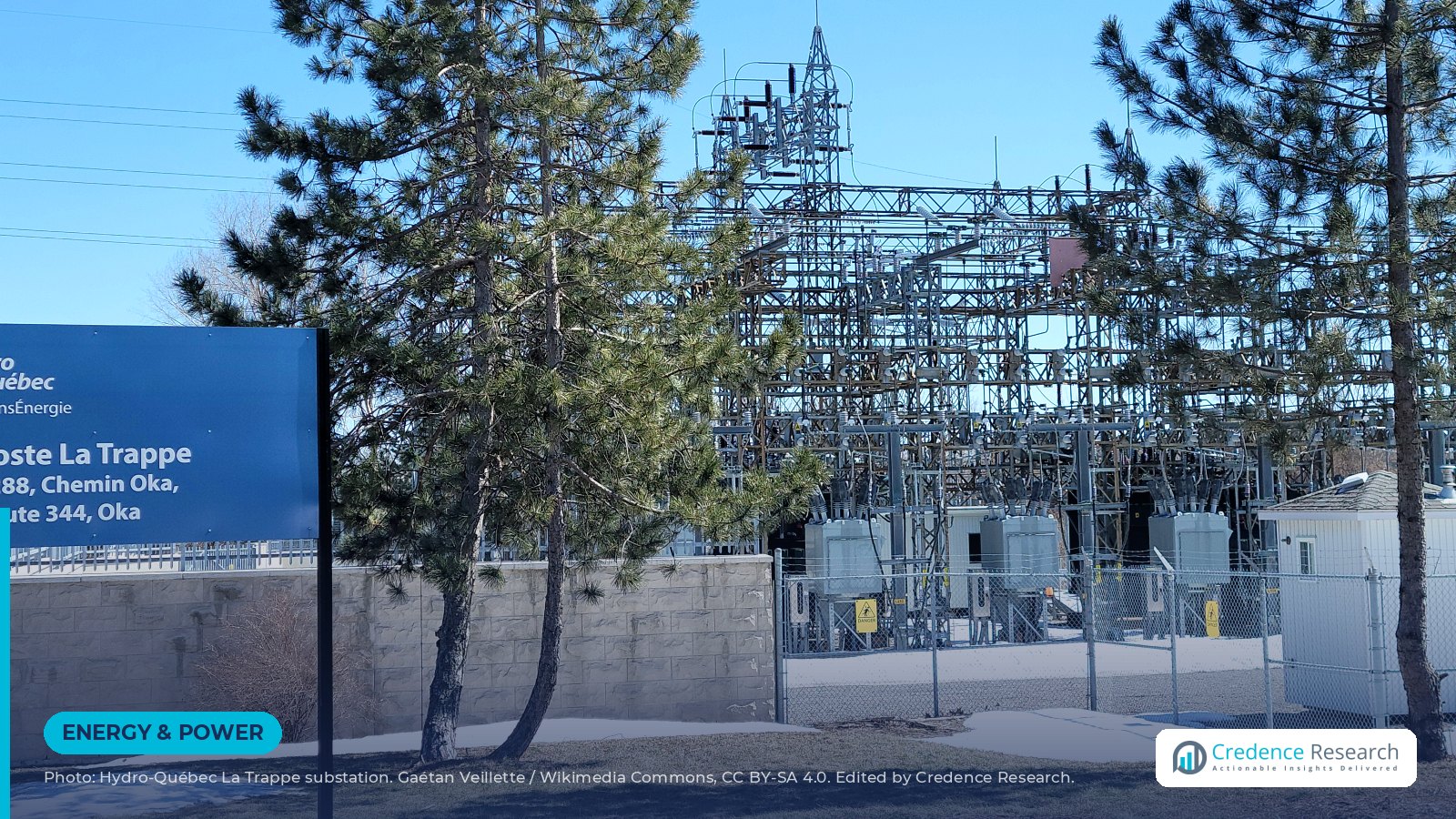
Image: Hydro-Québec La Trappe substation in Deux-Montagnes, Quebec (illustrative), by Gaétan Veillette via Wikimedia Commons, CC BY-SA 4.0. Cropped and edited by Credence Research.

About the Author

Senior News Editor at Credence Research Inc