
Shield AI to Acquire Radar Maker Echodyne in $5.3 Billion Counter-Drone Deal
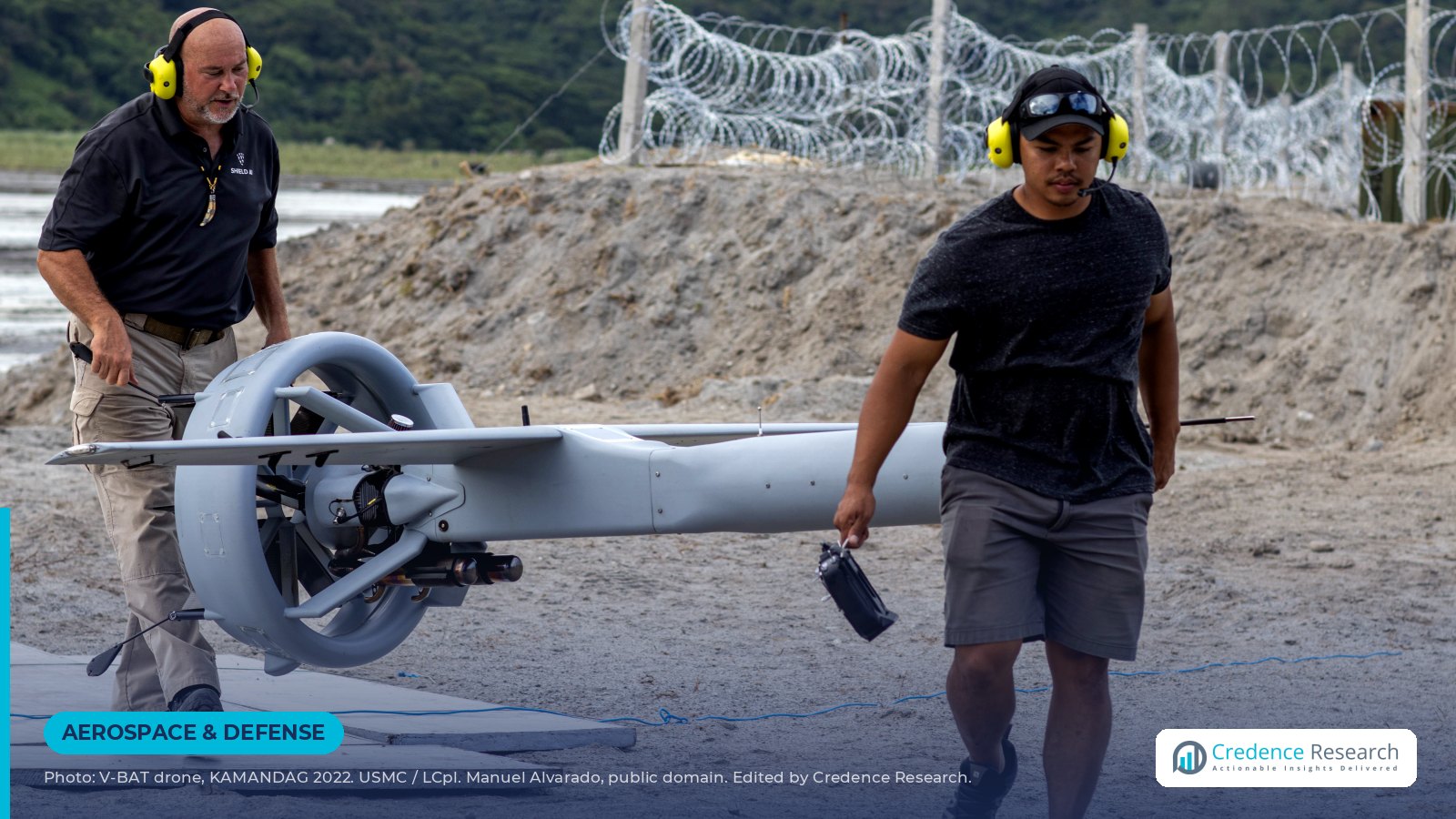
Defense autonomy developer Shield AI has agreed to buy Echodyne, the Kirkland, Washington, maker of compact solid-state radars, in a transaction the companies valued at $5.3 billion. The deal, announced Nov. 5 from San Diego and Kirkland, pairs Shield's autonomy software and unmanned aircraft with a radar supplier whose sensors already sit inside hundreds of counter-drone and security systems. Shield AI, which refers to itself as Shield in the announcement, said it will fund the purchase through a $2.5 billion financing package and expects the acquisition to close in early 2027.
Key developments
- Shield will pay $4.8 billion at closing, with up to $500 million more contingent on Echodyne meeting agreed performance targets.
- The $2.5 billion financing combines a $1 billion Series H round co-led by Disruptive and Innovation X Capital, $1 billion of structured equity from funds managed by Blackstone and $500 million of debt led by JPMorgan Chase Bank as sole arranger.
- Echodyne recently opened an 86,350-square-foot manufacturing facility in Kirkland, a $40 million investment able to produce about 30,000 radars a year.
- In September, Echodyne received a $250 million ceiling contract from Joint Interagency Task Force 401 to supply counter-drone radar to U.S. and allied forces.
- Closing requires regulatory approvals and other customary conditions.
How the technology works
Echodyne builds radars around its patented Metamaterials Electronically Scanned Array, or MESA, architecture. Conventional electronically scanned arrays steer a beam with large numbers of phase-shifting components, which adds cost, weight and power draw. MESA uses an engineered metamaterial surface to steer the beam, which lets Echodyne package a scanning radar small enough for vehicles, towers, fixed sites and aircraft. The company sells counter-drone radars and airborne drone radars, and its products are fielded in more than 40 countries through integrators and direct government customers.
Radar has become the anchor sensor in most counter-drone systems because it can detect small aircraft at range in darkness and poor weather, then cue cameras and interceptors. Echodyne's EchoShield is the primary radar across three variants of the U.S. Air Force's Small-Unmanned Air Defense System, built on a Trust Automation platform under a $490 million indefinite-delivery contract, as reported by Defence Online. That program and the newer task force award give Echodyne a direct line into some of the most active procurement in the Pentagon's portfolio.
Shield, founded in 2015, is best known for Hivemind, autonomy software that can fly aircraft without GPS or communications links, and for the V-BAT vertical takeoff drone. It is also developing X-BAT, an AI-piloted strike aircraft, and owns Aechelon simulation and synthetic reality technology.
Industry implications
The acquisition marks a shift in how new defense technology companies are building scale. Rather than staying a software supplier or a single-platform drone maker, Shield is assembling a portfolio. Chief Executive Gary Steele said the combined company will run three business units covering autonomy software, autonomous systems and mission systems, and that the deal dramatically accelerates its ability to serve multi-mission demand. Echodyne will sit inside the mission systems unit and extend it into counter-drone radar.
Sensing is the practical constraint on autonomy. Echodyne Chief Executive Eben Frankenberg made that point directly, saying the two companies share the view that autonomous systems can only act on what they can sense. Owning a radar line gives Shield control over a key input for its own aircraft and for the counter-drone systems that defend against them.
The size of the transaction also signals how much capital private defense companies can now raise. A financing that mixes venture equity, structured equity from a large alternative asset manager and bank debt is closer to a leveraged corporate acquisition than a typical startup round.
Competitive and supply chain implications
Echodyne's radars are sold to integrators that compete with one another, and some of those integrators also compete with Shield. Shield said Echodyne will keep its existing strategy of supplying radars to integrators and end customers, that MESA radars will remain available as standalone products and that the Echodyne team will stay in place. Frankenberg will report to Steele and keep responsibility for products, manufacturing, and partner and customer relationships. How customers respond to that commitment will be an early test of the deal.
On the supply side, the Kirkland plant adds domestic radar capacity at a time when U.S. buyers are trying to field counter-drone systems quickly and in volume. A 30,000-unit annual capability is meaningful for a product class that until recently was built in small batches. The combination also brings radar engineering in-house for an autonomy company whose aircraft depend on onboard sensors.
Traditional defense primes and other venture-backed counter-drone suppliers now face a rival that can offer sensors, autonomy software and aircraft from one source. That integration could appeal to buyers seeking faster deployment, while some may prefer to keep sensors and platforms with separate vendors.
Regional implications
The deal deepens Shield's footprint in Washington state. In September, Shield named Washington as the production home for X-BAT, and the company said Echodyne's existing presence there supports those plans. According to Airforce Technology, the X-BAT production site is in Des Moines, Washington, with flight testing and sustainment in Newton, Kansas, and prototyping in Frisco, Texas. The Puget Sound region, long anchored by commercial aerospace, gains another defense manufacturing employer with radar and aircraft work in the same corridor.
Internationally, Echodyne's sales in more than 40 countries give Shield wider access to allied buyers. Shield already has offices in Europe, the Middle East and the Asia-Pacific region, and recent agreements in Greece, Qatar, Australia and Taiwan show how it uses local partners to enter those markets.
Credence Research analysis
The transaction reflects a structural change in defense demand. Low-cost drones have made air defense a mass problem rather than a niche one, and the bottleneck is often the sensor that finds and classifies small targets before an effector can act. By buying a radar maker with a new high-volume plant and active U.S. contracts, Shield is betting that control of detection hardware will matter as much as autonomy software in winning large programs. The earn-out of up to $500 million ties part of the price to Echodyne's results, which limits Shield's exposure if procurement slows.
The main risks are customer neutrality and execution. Echodyne's value rests partly on its role as a supplier to many integrators, and that position could weaken if competitors see it as part of a rival. Shield is also integrating Aechelon, preparing X-BAT production and expanding internationally at the same time, which puts pressure on management bandwidth and manufacturing ramp. Regulatory review of a radar supplier to U.S. and allied forces should also be watched as the deal moves toward closing.
What comes next
- Regulatory filings and approvals required to complete the acquisition.
- Expected closing in early 2027, after which Echodyne joins Shield's mission systems unit.
- Deliveries under Echodyne's $250 million Joint Interagency Task Force 401 contract.
- Production ramp at the Kirkland radar plant toward its stated capacity of about 30,000 units a year.
- Progress on X-BAT flight testing and Washington production plans.
Sources
- Shield: Shield to acquire Echodyne (Nov. 5, 2026)
- Defence Online: Echodyne radar selected for $490M U.S. Air Force counter-UAS contract
- Airforce Technology: Shield AI names U.S. sites for X-BAT
Image: V-BAT unmanned aircraft moved during exercise KAMANDAG 2022, by U.S. Marine Corps Lance Cpl. Manuel Alvarado via Wikimedia Commons, public domain (U.S. government work). Cropped and edited by Credence Research.

About the Author

Senior News Editor at Credence Research Inc