
Oklo Reserves Reactor Component Capacity at U.S. Forged Rings' Planned North Carolina Campus
Advanced nuclear developer Oklo Inc. has reserved future manufacturing capacity for the largest components of its Aurora powerhouses at a heavy-forging campus that U.S. Forged Rings, Inc. plans to build in Hertford County, North Carolina. The strategic manufacturing agreement, announced on Nov. 6, 2026, from Oklo's Santa Clara, California, headquarters, targets first finished deliveries in 2030 and is intended to cover capacity through 2035, with options to expand. The deal moves one of the least visible constraints on new nuclear construction, the supply of very large steel parts, to the front of Oklo's deployment planning.
Key developments
- Oklo will reserve capacity at the planned U.S. Forged Rings (USFR) industrial campus in Hertford County for large reactor components used in future Aurora powerhouses.
- Initial finished deliveries are scheduled to begin in 2030, and the arrangement is intended to secure capacity through 2035, with options to expand.
- The components covered include large stainless-steel parts such as reactor vessels, lids and supporting structures.
- The USFR campus is designed to combine casting, forging, ring rolling, heat treatment, machining, fabrication and inspection at one site, with access to domestic steelmaking, rail and an on-site port for barge shipments.
- The agreement is separate from the procurement, manufacturing and construction already underway for Oklo's first Aurora powerhouse at Idaho National Laboratory.
Why heavy components are a bottleneck
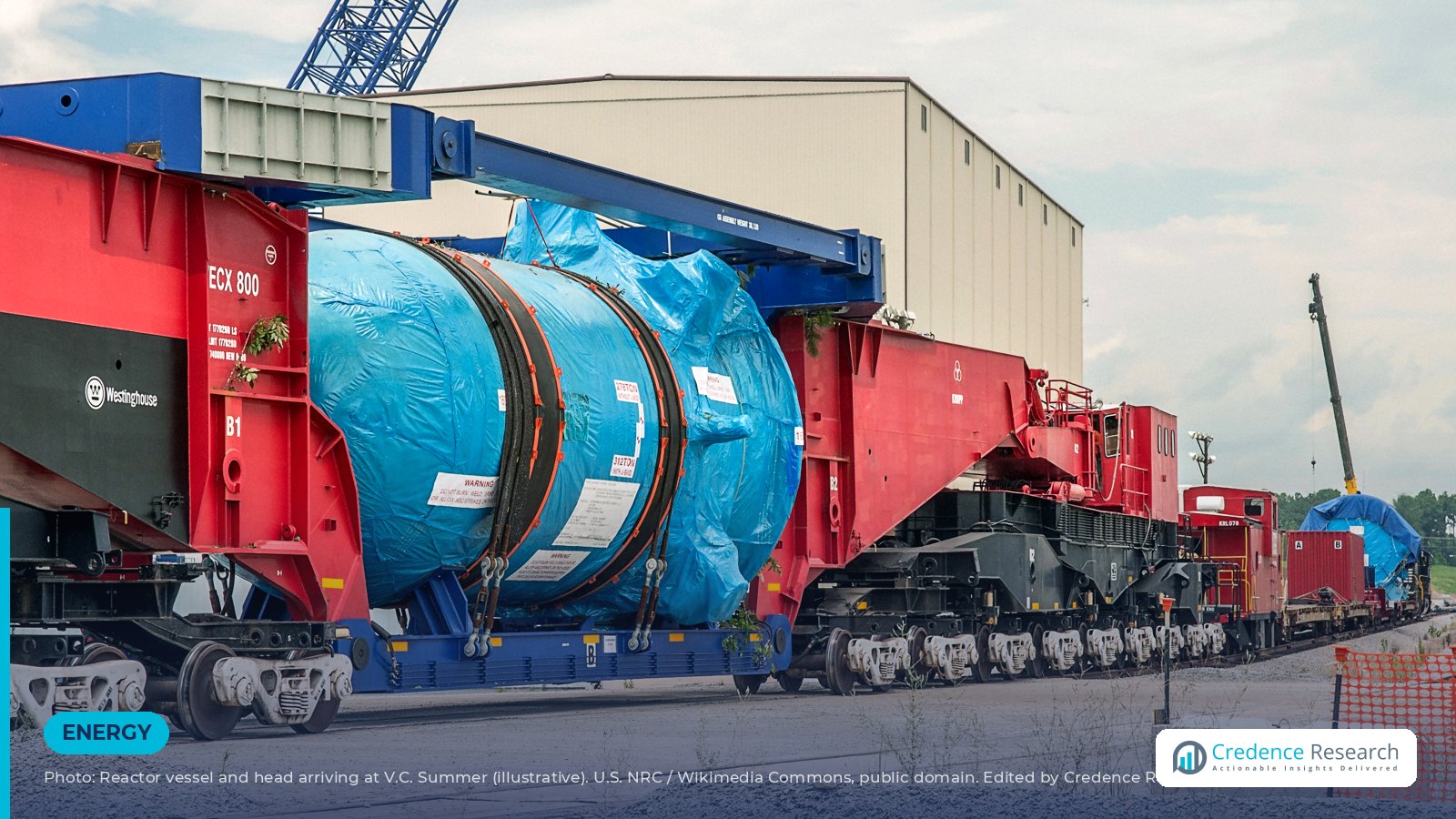
Reactor vessels and their heads are among the largest and most demanding parts of any nuclear plant. Oklo said such stainless-steel components can require multiple fabrication steps, transport between separate suppliers, and additional welding, machining and inspection before they are ready for installation. Each handoff adds schedule risk, and parts of this size cannot easily move by road, which ties production to waterways and rail.
U.S. capacity for ultra-heavy forgings has been thin for decades, and builders of large reactors have long relied on a small group of overseas forge masters. Oklo framed its reservation as a response to that gap, describing the agreement as a way to address a possible manufacturing bottleneck before it constrains repeat deployments. Chief Executive Jacob DeWitte said reserving the capacity now prepares the company "for the demands of repeated deployments."
USFR announced the North Carolina project on Feb. 26, 2026. According to the Economic Development Partnership of North Carolina, the company plans to invest up to $875 million across three phases and create up to 625 jobs in the first two phases, at an average annual wage of $80,000. The site sits next to Nucor's steel processing operations along the Chowan River, and the partnership described it as the largest project in Hertford County's economic development history since its records began in 2014.
Industry implications
The agreement signals that advanced reactor developers are starting to treat manufacturing slots as a strategic asset rather than a routine purchasing step. Small and advanced reactor business models depend on building many similar units, and that only works if long-lead components arrive on a predictable cadence. By locking in capacity four years before first delivery, Oklo is betting that competition for heavy forgings will tighten as utilities, data center operators and governments pursue new nuclear generation.
The deal also shows how first-of-a-kind and fleet procurement are being separated. Oklo kept its Idaho project on its existing supply chain and placed the USFR capacity against later units. That approach limits the risk that a new factory's ramp-up delays a flagship plant while still giving the company a path to scale once its design is proven.
Competitive and supply chain implications
For USFR, an anchor customer from the advanced nuclear sector strengthens the commercial case for a campus that is still in the planning stage. The company has said the site will serve nuclear, liquefied natural gas, natural gas, power generation, defense and shipbuilding customers. Those markets all compete for the same heavy presses, heat-treatment furnaces and skilled labor, so early reservations from one sector may shape how quickly others can secure slots.
The integrated layout matters as much as the capacity. USFR Chief Executive and President Giacomo Sozzi said the planned campus is meant to bring the capability back to the United States, "from liquid steel to finished, inspected components." Combining melting, forging, machining and inspection at one location reduces the number of shipments between vendors, a source of delay and quality risk that Oklo identified in its announcement. If the model works, other reactor vendors and suppliers of large pressure equipment may seek similar arrangements, either with USFR or with competing domestic forges.
The agreement does not remove execution risk. The campus has not yet been built, and the release did not disclose the financial terms, the volume of components reserved or the conditions attached to the reservation.
Regional implications
For northeastern North Carolina, the Oklo agreement gives the USFR project a named customer in one of its core target markets. Hertford County is a rural area, and state officials have said the project could raise the county's job count by nearly 8% at full capacity, with wages well above the local average. River access to the Albemarle Sound and the Atlantic coast is central to the site plan because finished parts may be too large for highways.
For Idaho and other states where Oklo plans deployments, the arrangement points to a supply chain that could rely more on U.S. plants for the heaviest parts. It also adds to a broader pattern of heavy industrial investment along the Southeast coast tied to energy and defense demand.
Credence Research analysis
The announcement is less about a single contract than about where advanced nuclear risk now sits. Licensing and fuel supply have dominated discussion of new reactors, but the ability to produce vessels and heavy internals on schedule will decide whether developers can move from one plant to a fleet. Oklo's move to reserve capacity years before it is needed suggests the company expects heavy-component supply, not demand, to be a limiting factor in the early 2030s.
The value of the reservation depends on two things that remain open: USFR delivering a working campus on time, and Oklo converting its first Idaho unit into repeat orders. Investors and buyers should watch for construction milestones at the Hertford County site, any disclosure of reserved volumes, and whether other reactor developers or LNG and naval suppliers sign comparable agreements. A crowded order book would validate the bottleneck thesis, while slow uptake would leave Oklo holding capacity ahead of its own deployment pace.
What comes next
- Construction progress and phase timing at the USFR campus in Hertford County.
- Continued construction of Oklo's first Aurora powerhouse at Idaho National Laboratory, which uses a separate supply chain.
- Regulatory progress on Oklo's license application with the U.S. Nuclear Regulatory Commission.
- Additional customer agreements for the USFR campus from nuclear, LNG, power generation, defense or shipbuilding buyers.
- First finished component deliveries to Oklo, targeted for 2030.
Sources
- Oklo: Oklo, U.S. Forged Rings Partner to Advance Domestic Manufacturing for Future Aurora Powerhouse Deployments (Nov. 6, 2026)
- Economic Development Partnership of North Carolina: US Forged Rings Announces New Steel Facility in Hertford County (Feb. 26, 2026)
Image: Reactor vessel and vessel head arriving at the V.C. Summer nuclear station in 2013, used for illustration, by the U.S. Nuclear Regulatory Commission via Wikimedia Commons, public domain. Cropped and edited by Credence Research.

About the Author

Senior News Editor at Credence Research Inc