
Audi to Build First U.S. Plant in Georgia With $4 Billion Investment and 4,500 Jobs
Audi will build its first U.S. vehicle assembly plant at the Middle Georgia Mega Site in Peach County, Georgia, committing about $4 billion and roughly 4,500 jobs to a factory designed to produce up to 200,000 premium SUVs a year. Gov. Brian Kemp and Audi CEO Gernot Döllner announced the project on Saturday, Oct. 24, after President Donald Trump disclosed it at a campaign rally in nearby Perry, ending years of on-and-off deliberation by the Volkswagen Group brand over local production in the United States.
Key developments
- Audi plans to invest about $4 billion and create approximately 4,500 jobs at the Middle Georgia Mega Site, according to the company and the Georgia governor's office.
- The plant is designed for annual output of up to 200,000 vehicles and will build premium SUVs tailored to North American customers.
- Audi says construction is scheduled to begin in 2027 with production in the early 2030s; the state's release lists grading in 2027, construction in 2028 and full production in 2031.
- Georgia Quick Start will create customized training programs and a dedicated training facility, working with Technical College System of Georgia campuses to begin instruction before the plant is complete.
Why Audi chose to build in America
Audi is the only one of the three German premium brands without an assembly plant in the United States. BMW has built vehicles in South Carolina for decades and Mercedes-Benz operates in Alabama, while Audi has supplied American dealers with vehicles imported from Europe and from its plant in San José Chiapa, Mexico. Bloomberg reported that this footprint left Audi heavily exposed to U.S. auto tariffs, with its top-selling Q5 SUV, built in Mexico, hit hardest because it does not meet USMCA content rules.
The company framed the decision as part of a long-term strategy for profitable growth that reduces exposure to trade and currency risks. Audi said North America would become a third major production pillar alongside Europe and China, while Germany and Europe remain the industrial backbone. Döllner said the company has "much greater ambitions for Audi in America," and described the project as building a stronger business rather than simply adding a factory. Supervisory board chairman Manfred Döss called it a commitment to shaping the company for decades.
Bloomberg reported that Audi has weighed a U.S. plant intermittently since 2018 and that Volkswagen Group CEO Oliver Blume had said the group could not afford to pay high tariffs and heavily invest in new capacity at the same time. According to the outlet, Audi presented the Georgia proposal to Commerce Secretary Howard Lutnick in the weeks before the announcement, and talks on a tariff credit tied to new U.S. production are continuing.
Industry implications
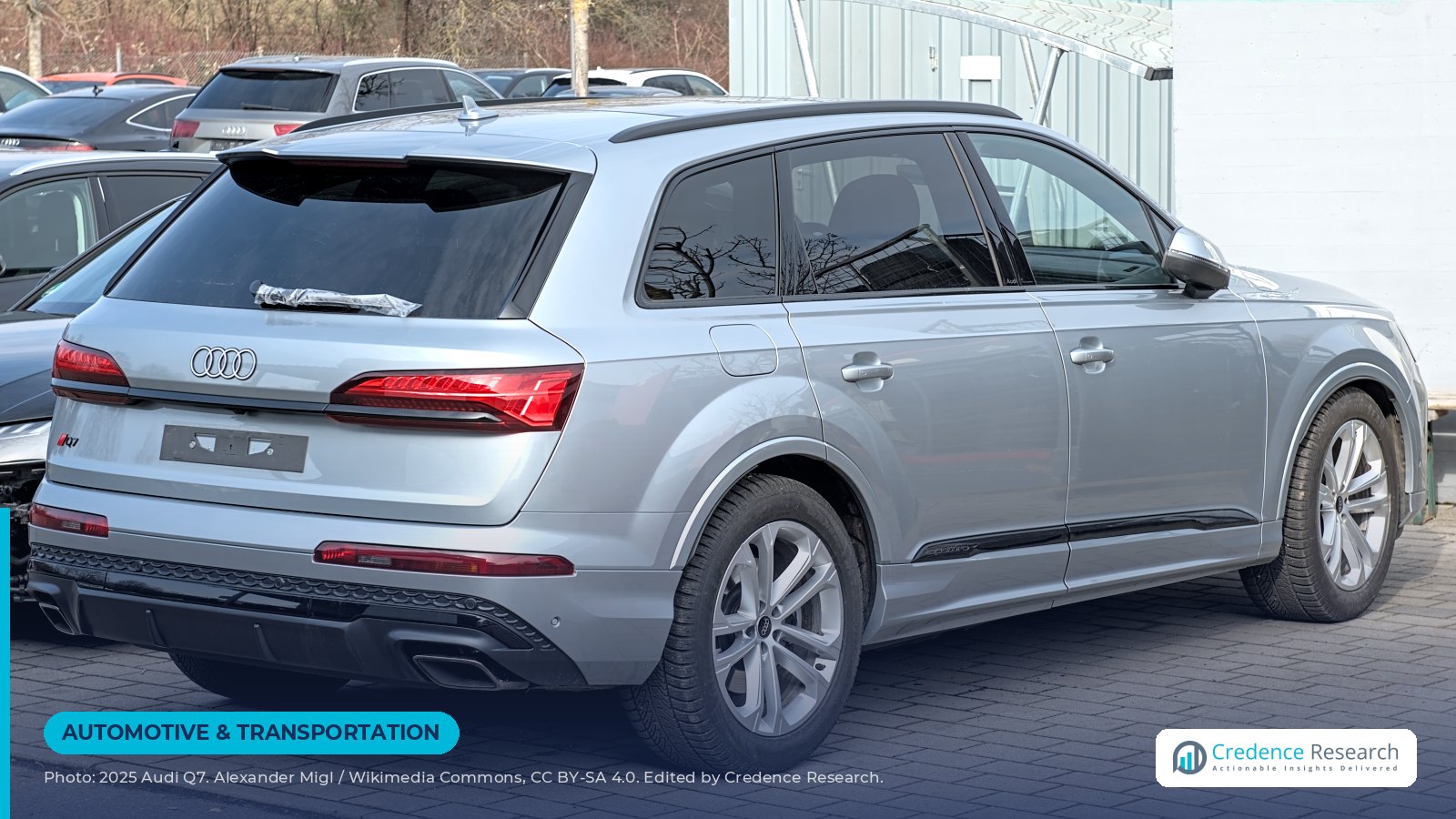
The announcement adds a third Volkswagen Group manufacturing presence in the U.S., alongside the Volkswagen plant in Chattanooga, Tennessee, and the Scout Motors factory under construction in Blythewood, South Carolina. Audi has not said whether the Georgia plant will build combustion, hybrid or battery-electric vehicles. Bloomberg reported that the plant is planned for the Q7, Q8 and Q9, the brand's largest SUVs, which aligns with Döllner's description at the rally of "our biggest and most premium SUVs."
Gerd Walker, the Audi board member for production and logistics, said building a plant from the ground up allows Audi to "rethink manufacturing from day one," citing efficient processes, advanced technology and the development of local suppliers. A greenfield site gives Audi room to design flexible lines that can handle several drive types, an important hedge given shifting U.S. emissions and tax credit policy.
The long lead time is significant. With full output targeted for 2031, the plant will not relieve tariff pressure on Audi's current lineup for several model cycles, which is why the outcome of the tariff credit negotiations matters for the brand's near-term pricing and dealer supply.
Competitive and supply chain implications
Audi cited proximity to an established automotive supply chain as a deciding factor. Georgia already hosts the Hyundai Motor Group Metaplant America in Bryan County, Kia's West Point assembly plant and a wide base of battery, seating, stamping and electronics suppliers, giving Audi a regional pool of Tier 1 and Tier 2 vendors to draw on. Walker's emphasis on local supplier development suggests Audi will seek to localize major modules to qualify for trade preferences and reduce logistics costs.
For competitors, the move narrows a structural cost gap. BMW and Mercedes-Benz have used their U.S. SUV plants to export worldwide and blunt import duties, and a U.S.-built Audi range would compete for the same buyers on more equal footing.
Logistics are another advantage cited by the state. The site is served by Norfolk Southern Class I rail, with rail access to the ports of Savannah and Brunswick in less than five hours, and lies about 90 minutes from Hartsfield-Jackson Atlanta International Airport.
Regional implications
The plant will sit in Peach County, between Macon and Perry, in a largely rural part of Middle Georgia. Kemp called the investment "truly historic" for the region, while economic development commissioner Pat Wilson framed it as a boost for rural communities. The project was developed with the Development Authority of Peach County and the Mid-Georgia Gateway Joint Development Authority, which covers Peach, Houston and Macon-Bibb counties, along with Georgia Power, the Georgia Ports Authority and the state Department of Transportation.
State officials said industrial utilities are adjacent to the site and due diligence reports are complete, which should shorten permitting. Lt. Gov. Burt Jones and House Speaker Jon Burns pointed to workforce programs and planning for rural communities.
Mexico faces the other side of the decision. Audi has not announced any change to San José Chiapa, but the shift in long-term SUV investment toward the U.S. raises questions about the future product mix in Puebla state.
Credence Research analysis
Audi's decision shows how trade policy is now shaping capital allocation as much as demand is. Premium SUVs carry high per-unit margins, and producing them inside the U.S. converts a recurring tariff cost into a one-time capital outlay. The timing, announced on stage at a presidential campaign rally and before any disclosed incentive package, also suggests that the plant is part of a broader negotiation over tariff relief for the Volkswagen Group rather than a stand-alone site decision.
The open questions are execution and product. A plant reaching full output in 2031 must be designed today for powertrain demand that remains uncertain, so line flexibility will be the critical technical choice. The scale of 200,000 units suggests Audi intends to serve U.S. demand for its largest SUVs from Georgia and potentially export from it, mirroring the BMW and Mercedes-Benz playbooks. How quickly Audi localizes suppliers will determine whether the factory delivers the trade and currency protection the company is seeking.
What comes next
- Disclosure of state and local incentive terms by Georgia and the Peach County development authorities.
- Any outcome of Volkswagen Group's tariff credit talks with the U.S. administration.
- Site grading in 2027, followed by construction, according to the state timeline.
- Confirmation of models and powertrains for the plant, and supplier selection for localized components.
- Start of production in the early 2030s, with full production targeted for 2031.
Sources
- Audi: Audi to establish first U.S. production site in Georgia
- Office of the Governor of Georgia: Audi AG selects Georgia
- Bloomberg via Yahoo Finance: Volkswagen plans new Audi plant in Georgia
- Associated Press via KSAT: Trump announces Audi factory at Georgia rally
Image: 2025 Audi Q7, by Alexander Migl via Wikimedia Commons, CC BY-SA 4.0. Cropped and edited by Credence Research.

About the Author

Senior News Editor at Credence Research Inc