
Meta launches $35 billion stock offerings, plans $60 billion ATM to fund AI infrastructure
Meta Platforms on Monday, Oct. 26, launched about $35 billion in concurrent public stock offerings from Menlo Park, California, and said it plans a separate at-the-market program of up to $60 billion in a new class of nonvoting shares, adding equity to the funding mix behind its artificial intelligence infrastructure buildout. The company expects 2026 capital expenditures of $135 billion to $145 billion.
Key developments
- Meta is offering 250 million depositary shares, each representing a 1/20th interest in newly issued Series A Mandatory Convertible Preferred Stock with a $1,000 liquidation preference, for roughly $12.5 billion, plus $22.5 billion of Class A common stock sold in connection with forward sale agreements.
- NVIDIA, AMD and Broadcom have indicated nonbinding interest in buying up to $5 billion of the Class A shares on the same terms as other investors.
- Meta plans an at-the-market program of up to $60 billion in Class C common stock, which carries no voting rights. No agreement has been signed, and sales are not expected to begin before the first quarter of 2027.
- Morgan Stanley and Goldman Sachs are lead joint bookrunning managers. Meta does not expect initial proceeds from the common stock sale and expects to settle the forward agreements on or before Nov. 19, 2027.
- The preferred stock is scheduled to convert automatically on or about Aug. 15, 2029. Dividend and conversion terms will be set at pricing, and Meta plans to list the depositary shares on Nasdaq under the symbol METAM.
Why Meta is turning to equity
Large technology companies have funded most data center expansion from operating cash flow, bonds and leases. Meta's announcement marks a shift. The company said it will fund its investments through a balanced mix of operating cash flow, investment-grade debt, strategic partnerships and equity capital, and described the new offerings as a complementary source of capital that will further diversify its funding sources.
The balance sheet behind the move remains strong. Meta said it generated $97 billion of operating cash flow in the first three quarters of 2026 and held about $82 billion in cash, cash equivalents and marketable securities at the end of the third quarter. Its third-quarter results showed capital expenditures, including principal payments on finance leases, of about $34.9 billion in the quarter and slightly negative free cash flow, after a legal charge of about $9.9 billion.
The offerings rest on a new share structure. Meta's board approved a nonvoting Class C common stock on Oct. 19, holders of a majority of voting power approved it by written consent the next day, and the amended certificate of incorporation is set to take effect Jan. 19, 2027. Meta plans to issue one Class C share for each Class A and Class B share as a dividend. Once Class C shares are issued and certain conditions are met, the preferred stock and the forward sale agreements can convert into or settle with Class C shares.
Industry implications
The size of the program signals how far AI infrastructure spending has moved beyond what even the most profitable platform companies prefer to fund from internal cash alone. Meta said it owns data centers in 23 U.S. states, is building four superclusters with more than one gigawatt of capacity each and is on track to nearly double its total infrastructure capacity in 2026 compared with 2025. It tied the buildout to personal superintelligence, AI agents, enterprise products and AI glasses.
For data center developers, utilities and equipment makers, the offering adds a funding layer behind one of the largest buyers of compute capacity. Meta also signaled a focus on spending discipline, saying investments in custom silicon and other optimization initiatives are aimed at reducing the cost of compute, and that it expects better use of off-peak capacity, more efficient models and inference optimization to improve cost efficiency.
Competitive and supply chain implications
The participation of NVIDIA, AMD and Broadcom as potential cornerstone investors links Meta's capital raising directly to its chip supply base. NVIDIA and AMD supply accelerators for AI training and inference, while Broadcom works with hyperscalers on custom silicon and networking. The indications of interest are not binding, and the companies could buy more, less or none of the stock, but the arrangement shows suppliers recycling capital into one of their largest customers.
The deal follows other new financing structures in the sector. SpaceX disclosed on the same day a binding commitment for an approximately $40 billion finance lease with an Apollo-managed entity covering NVIDIA GPUs and related equipment. Taken together, the transactions show buyers of AI infrastructure drawing on equity, private credit and leasing in addition to traditional corporate bonds. That diversification may ease pressure on any single funding channel but ties chip and construction supply chains more closely to capital market conditions.
Regional implications
Most of the near-term effect falls on the United States, where Meta's owned data center footprint spans 23 states. Meta has previously identified its Prometheus campus in New Albany, Ohio, and its Hyperion campus in Richland Parish, Louisiana, as multi-gigawatt AI projects, and gigawatt-scale campuses of that kind place heavy demands on regional transmission, generation and water planning. Added capital supports continued construction and demand for electrical equipment, cooling systems and skilled trades near these sites.
Outside the United States, the offering matters mainly through supply chains. Accelerators, memory and advanced packaging for Meta's clusters are largely produced in Taiwan, South Korea and other parts of Asia, and higher funded demand from a single buyer of this size can affect allocation decisions across those suppliers.
Credence Research analysis
Meta's decision to sell equity while holding about $82 billion in cash and Aa3/AA- credit ratings suggests the company is planning for capital needs that extend well past 2026 and wants to avoid relying too heavily on debt. The forward sale structure lets Meta lock in an equity raise now while choosing when to receive cash through late 2027, and the mandatory convertible preferred adds a security aimed at a different investor base. The nonvoting Class C stock allows large future issuance without diluting the voting control held through Class B shares.
The key questions for the wider industry are execution and returns. Meta has tied its spending to measurable gains in advertising and engagement and to newer products such as business agents and an enterprise inference platform. If those revenue lines scale, the equity program will look like a bridge that kept the buildout on schedule. If they lag, investors will focus more closely on dilution and on the pace of capital expenditures in 2027, for which Meta has not yet given guidance.
What comes next
- Pricing of both offerings, which will set the preferred dividend rate, conversion terms and the common stock price.
- Possible exercise of the underwriters' 30-day options for up to 37.5 million additional depositary shares and up to $3.375 billion of additional common stock.
- Jan. 19, 2027: expected effective date of the amended charter creating Class C common stock, followed by the stock dividend and Nasdaq listing.
- First quarter of 2027 at the earliest: start of the planned Class C at-the-market program, subject to a signed agreement.
- Meta's 2027 capital expenditure outlook, which the company said it is still building.
Sources
- Meta Platforms: Launch of offering of depositary shares and Class A common stock (Oct. 26, 2026)
- Meta Platforms: Free writing prospectus, SEC (Oct. 26, 2026)
- Meta Platforms: Preliminary prospectus supplement, SEC (Oct. 26, 2026)
- Meta Platforms: Third quarter 2026 results, SEC exhibit 99.1
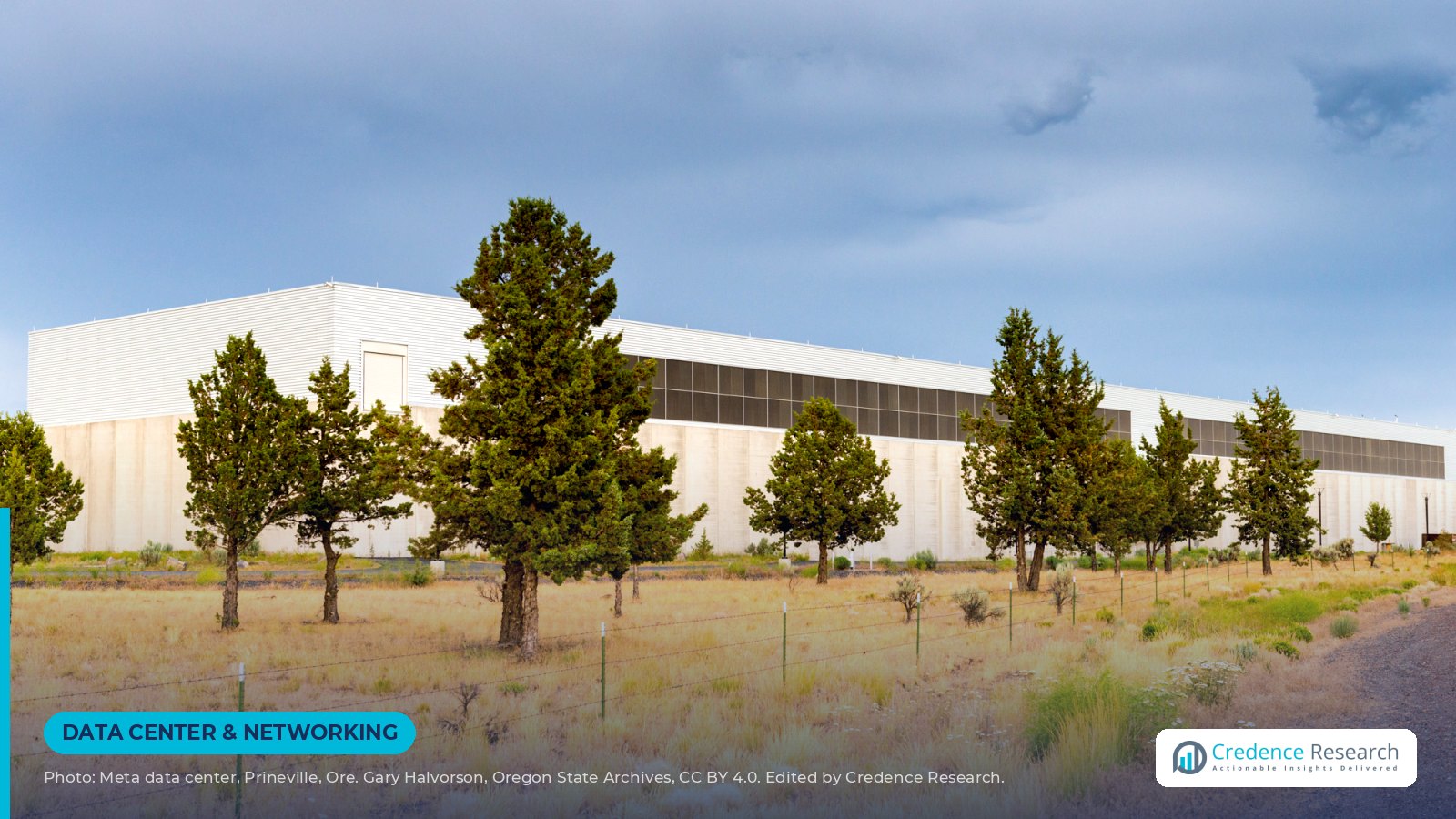
Image: Meta (formerly Facebook) data center along Highway 126 in Prineville, Oregon, by Gary Halvorson, Oregon State Archives, via Wikimedia Commons, CC BY 4.0. Cropped and edited by Credence Research.

About the Author

Senior News Editor at Credence Research Inc