
SpaceX Signs $40 Billion GPU Lease With Apollo to Finance NVIDIA Vera Rubin Chips
SpaceX said Monday, Oct. 26, 2026, that it has signed a binding commitment to enter an approximately $40 billion master finance lease with an entity managed by Apollo Global Management, which will buy NVIDIA's next-generation Vera Rubin graphics processing units and related equipment and lease them to the company for its artificial intelligence compute buildout. Apollo described the transaction as the largest GPU financing ever, and the lease schedules are expected to start when the chips are delivered in the first half of 2027.
Key developments
- SpaceX reached a binding commitment for an approximately $40 billion master finance lease covering GPUs and related equipment, with an Apollo-managed entity acting as lessor, according to Apollo's Oct. 26 release.
- The equipment will be NVIDIA Vera Rubin chips for SpaceX's terrestrial compute buildout, which supports its Super Intelligence (SI) segment.
- Apollo and Goldman Sachs led the financing, with Goldman Sachs as sole structuring agent. Funds and accounts of BlackRock and Goldman Sachs Asset Management, plus capital accounts advised by KKR, made anchor commitments.
- Closing is expected before the end of 2026, subject to specified conditions. Each lease schedule runs about five to 5.25 years, according to the regulatory filing as summarized by Reuters and Investing.com.
- Chief Financial Officer Bret Johnsen said SpaceX is seeing payback periods of less than one year on its SI infrastructure investments and that the lease diversifies its funding sources.
How the lease is structured
The financing is built as a sale-and-lease arrangement rather than a conventional loan. The Apollo-managed entity will acquire GPU pods and related data center equipment and lease them to SpaceX at data centers SpaceX selects. Equipment will arrive in tranches, and each tranche will sit under its own lease schedule, according to summaries of the company's filing.
Rent is due quarterly in advance. Each payment generally covers one-twentieth of the financed cost of that tranche, plus a fixed annual rate on the outstanding balance and certain ongoing costs. The fixed rate will be set at pricing, before the master lease is signed, and has not been disclosed. Aggregate principal payments across all schedules are expected to total about $40 billion.
Chief Executive Elon Musk wrote on X on Sunday that the company had closed the debt financing for GPUs. He said the money mainly targets chips arriving in the first and second quarters and would not be a major factor in the current quarter, Reuters reported.
Industry implications
The deal shows how fast AI infrastructure finance is moving from corporate balance sheets into structured, asset-backed markets. Leasing lets SpaceX match payments to the delivery of each chip tranche, rather than paying for hardware up front, while lenders hold title to equipment that has a resale market. The roughly five-year lease term also signals how lenders now view the useful economic life of top-tier accelerators.
The scale of the commitment matters for the wider data center supply chain. SpaceX reported capital expenditures of $19.6 billion in the third quarter, of which $16.4 billion went to its SI segment, according to its Oct. 20 results release. Nine-month capex reached $48.1 billion, with about $40.0 billion going to SI. Reuters reported that Johnsen still expects fourth-quarter capex of $35 billion to $40 billion.
The company said in its third-quarter release that nameplate compute capacity reached 1.7 gigawatts as of Sept. 30, up from 1.4 gigawatts at the end of June and 0.6 gigawatts a year earlier, tied to the buildout of its Colossus II cluster. SI revenue rose 195% from the second quarter to $7.56 billion, driven by cloud services deals, the Cursor acquisition and higher Grok usage.
Competitive and supply chain implications
For NVIDIA, a financed order of this size adds visibility for Vera Rubin shipments in 2027. It also ties a large block of next-generation supply to a single AI developer at a time when hyperscalers, model labs and independent cloud providers are competing for the same allocation, along with high-bandwidth memory, advanced packaging and power equipment.
For private credit, the transaction marks a step up in ticket size. Apollo, BlackRock, Goldman Sachs Asset Management and KKR-advised accounts are taking direct exposure to GPU collateral and to SpaceX credit. Musk said financing is getting harder for so-called neoclouds without large revenue from other businesses, and pointed to SpaceX's investment-grade rating and its Starlink and launch revenue as factors behind the deal, according to a Stocktwits report. That points to a widening gap in funding costs between diversified AI builders and pure-play GPU cloud operators.
Regional implications
Most of the compute is expected to land in the United States, where SpaceX's AI unit, renamed SpaceXAI after SpaceX acquired xAI in February 2026, operates its Colossus facilities in the Memphis, Tennessee, area. The filing says the equipment will go to data centers SpaceX selects, and no new site was named.
The Memphis buildout has drawn scrutiny over air permits and power use from local groups. Additional GPU deployments will add to grid interconnection and generation needs in whichever region receives them, keeping utilities, state regulators and turbine and transformer suppliers close to the center of the AI buildout.
Credence Research analysis
The Apollo lease shows that the binding constraint on frontier AI capacity is shifting from chip supply toward the cost and structure of capital. By financing hardware at the tranche level, SpaceX turns a lumpy multibillion-dollar purchase into a stream of quarterly payments that line up with revenue from compute it can rent or use in-house. The one-twentieth quarterly principal schedule implies near-full amortization over five years, so lenders are not relying on a large residual value for chips that may be superseded within two product cycles.
The bigger question is concentration. Investors are underwriting a payback claim of less than one year that rests on continued demand for SI services and on SpaceX's ability to keep chips fully utilized. Companies that can borrow against diversified cash flows will likely keep gaining access to the newest accelerators first, while smaller GPU cloud providers face higher costs or more restrictive terms. Watch whether similar structures appear for other model developers in the coming quarters, and whether the fixed rate set at pricing narrows the gap with investment-grade corporate debt.
What comes next
- Pricing of the fixed annual lease rate, which will be set before the master finance lease is executed.
- Closing of the master finance lease, expected before the end of 2026, subject to specified conditions.
- First Vera Rubin GPU deliveries and lease commencements, expected in the first half of 2027.
- SpaceX's fourth-quarter results, which will show whether capex lands in the $35 billion to $40 billion range Johnsen cited.
- Further disclosure on which data centers will host the leased equipment, and any related power and permitting filings.
Sources
- Apollo Global Management: SpaceX Secures $40 Billion in the Largest GPU Financing Ever (Oct. 26, 2026)
- SpaceX third-quarter 2026 results release, SEC filing (Oct. 20, 2026)
- Reuters via Investing.com: SpaceX enters $40 billion deal with Apollo for AI chip financing
- Investing.com: SpaceX signs $40 billion GPU equipment lease agreement with Apollo (filing summary)
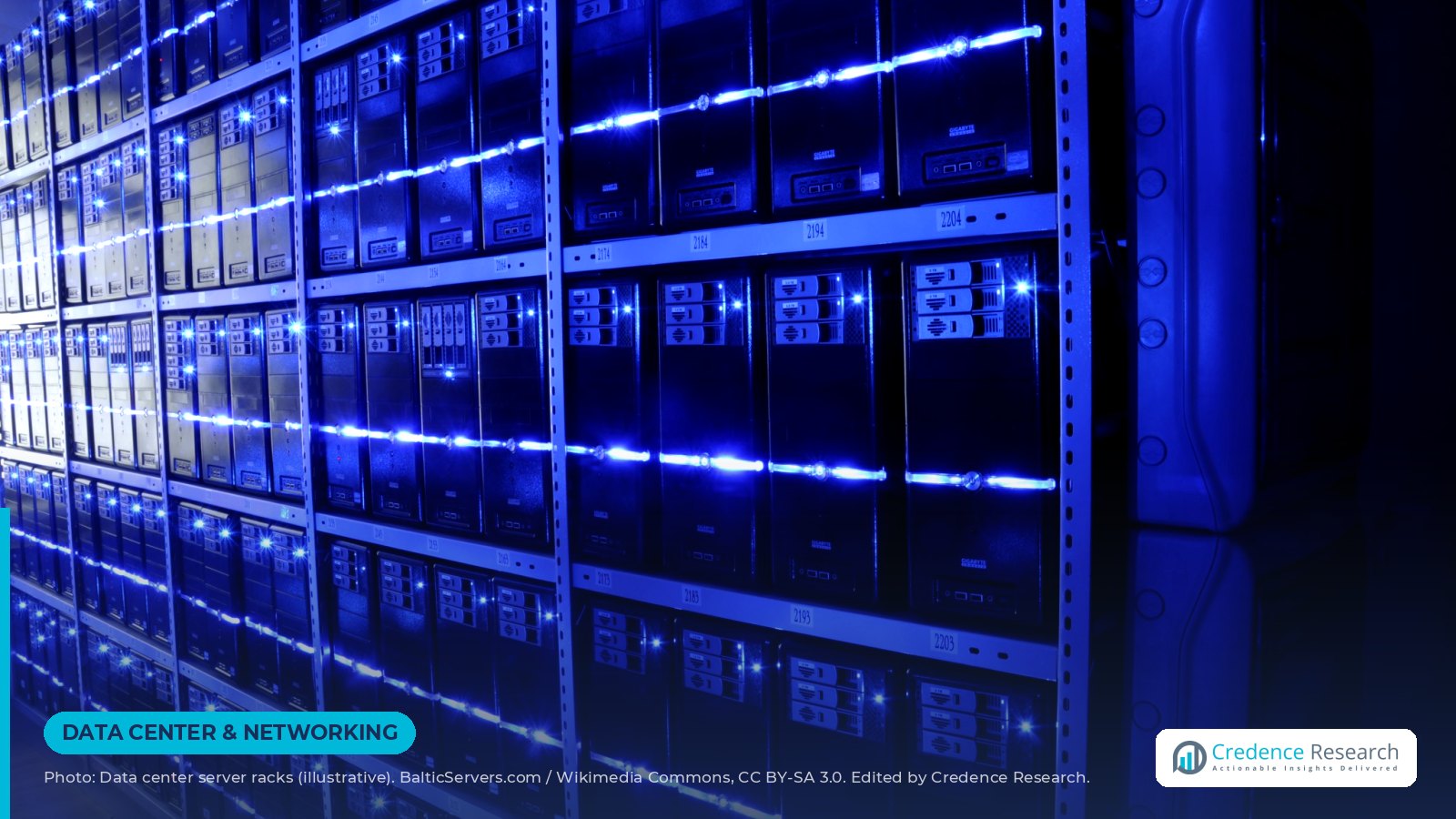
Image: Data center server racks (illustrative), by BalticServers.com via Wikimedia Commons, CC BY-SA 3.0. Cropped and edited by Credence Research.

About the Author

Senior News Editor at Credence Research Inc