
Volkswagen Group Picks NXP S32K5 Chips for Zonal Software-Defined Vehicle Architecture
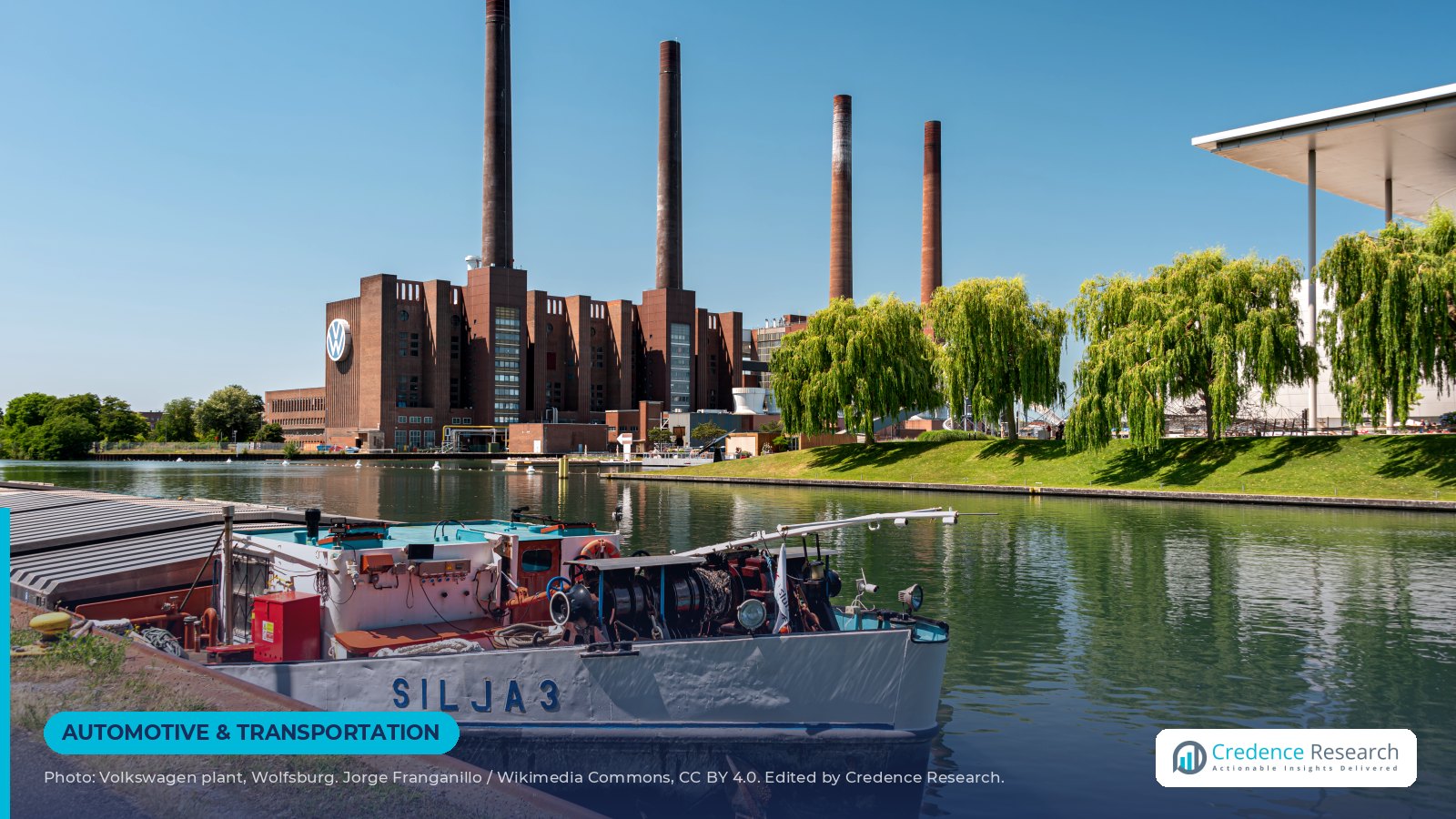
Volkswagen Group has selected NXP Semiconductors as a strategic technology partner and will use NXP's S32K5 family of microcontrollers as a common building block for the zonal electronics of its future software-defined vehicles, the two companies said in Wolfsburg, Germany, on Oct. 26, 2026. The agreement, announced ahead of Volkswagen's International Suppliers Fair (IZB) in Wolfsburg, covers zonal control across all of the group's brands and vehicle segments, with the first vehicle using the new architecture planned for 2027.
Key developments
- Volkswagen Group named NXP a strategic technology partner and expanded the companies' cooperation in automotive semiconductor technology.
- NXP's S32K5 microcontrollers (MCUs) will serve as the core processors in the zonal controllers of the group's future software-defined vehicle (SDV) architecture, across all brands and segments.
- The zonal architecture is being developed by Rivian and Volkswagen Group Technologies (RV Tech), the 50-50 joint venture of Volkswagen Group and Rivian, and is intended for both companies' vehicles.
- The first vehicle built on the new architecture is planned for 2027.
- Neither company disclosed contract value, chip volumes or pricing.
How the technology works
Conventional vehicles distribute their functions across dozens of separate electronic control units (ECUs), each with its own chip, software and wiring. Volkswagen said in its release that this model adds development and parts complexity and limits scalability as the number of digital features grows. A zonal architecture reorganizes the vehicle by physical area. Powerful microcontrollers in a handful of zonal controllers connect the sensors and actuators in their part of the car, while high-performance central processors handle compute-heavy, AI-enabled tasks such as automated driving and advanced infotainment.
In the Volkswagen design, the S32K5 chips will run the zonal controllers and manage lighting, body, comfort, chassis and safety systems. Functions that previously needed separate chips and ECUs can be consolidated inside these controllers. NXP introduced the S32K5 family at Embedded World in Nuremberg in March 2025, describing it as the automotive industry's first 16-nanometer FinFET microcontroller with embedded magnetic RAM (MRAM). NXP said at the time that the MRAM writes more than 15 times faster than embedded flash, that the chips use Arm Cortex cores running at up to 800 MHz, and that the family includes an integrated Ethernet switch, a neural processing unit for edge machine learning and a security accelerator with post-quantum cryptography capability.
Industry background
Volkswagen and Rivian launched RV Tech in November 2024. Volkswagen said then that it planned to invest up to $5.8 billion in Rivian and the joint venture by 2027, with part of that amount tied to milestones, and that the venture would support Rivian's R2 and the first Volkswagen Group models as early as 2027. In March 2026, Volkswagen reported that RV Tech had completed winter testing of reference vehicles from the Volkswagen ID.EVERY1, Audi and Scout brands fitted with what it called a production-intent zonal architecture.
Chip sourcing has become a board-level issue for the group. At its fourth Semiconductor Summit during the IAA Mobility show in Munich in September 2025, Volkswagen said it and Rivian would jointly source chips through RV Tech across more than 50 semiconductor categories, including microcontrollers and power transistors, with direct negotiations and bundled volumes. Earlier in 2026, the group signed a letter of intent with Qualcomm Technologies for Snapdragon infotainment and connectivity chips, naming Qualcomm as the primary technology provider for the launch of the RV Tech architecture. The NXP agreement fills a different layer of that stack: the real-time zonal controllers rather than the central cockpit computer.
Industry implications
The deal shows how large automakers are moving from buying finished control units from Tier 1 suppliers toward specifying the silicon themselves. Karsten Schnake, the Volkswagen brand board member responsible for procurement, said in the release that the group is taking a more active role by defining its technology needs early, using its scale across brands and giving both sides longer-term planning certainty. Werner Tietz, who leads group research and development, said harmonizing key technologies reduces complexity, leverages scale and lets the group deliver digital updates faster over a vehicle's life.
For software-defined vehicles, the zonal layer matters because it determines how easily new functions can be added through over-the-air updates. NXP chief technology officer Lars Reger said the S32K5 is built for safe real-time compute, secure over-the-air updates and the consolidation of functions into a vehicle that can be continuously updated. A single MCU family across the group's brands would also simplify validation, software reuse and spare parts.
Competitive and supply chain implications
A group-wide design win of this kind locks in a microcontroller supplier for the life of a vehicle architecture, which typically spans several model generations. Microcontroller suppliers that compete for zonal and body sockets, including Infineon, Renesas, STMicroelectronics and Texas Instruments, face a narrower opening at one of the world's largest automakers for this platform. For Tier 1 suppliers, the shift means building zonal controllers around a chip chosen by the carmaker rather than by the supplier.
The announcement also fits Volkswagen's stated aim of strengthening supply resilience through direct, long-term partnerships with leading chipmakers. The group's 2025 summit release referred to past supply challenges, and the industry has faced repeated disruptions in mature-node chips since 2021. Direct relationships give better visibility into capacity, though they concentrate exposure on fewer vendors. The companies did not say where the S32K5 chips will be manufactured.
Regional implications
The partnership links European engineering with a U.S.-based joint venture. NXP is headquartered in Eindhoven, the Netherlands, and Volkswagen in Wolfsburg, while RV Tech's teams began in Palo Alto, California, with additional sites in North America and Europe. The architecture is intended for both Volkswagen Group and Rivian vehicles, so the S32K5 will feed vehicle programs in Europe and North America. Volkswagen said the semiconductor strategy supports its Group Target Picture 2030 and aims to leverage synergies across brands and regions.
Credence Research analysis
The NXP selection is less about a single chip contract than about who controls the vehicle's electronic architecture. By standardizing on one zonal MCU family through RV Tech, Volkswagen is adopting the approach associated with Rivian and Tesla: fewer, more capable controllers, with software defining features. The combination of Qualcomm for central compute and NXP for zonal control gives the group a clear two-tier silicon map, which should make cross-brand software development and procurement more predictable.
The main risks are execution and timing. Volkswagen's earlier in-house software efforts faced delays, and the 2027 target leaves limited room for slippage in chip qualification, software integration and supplier readiness. The lack of disclosed volumes or contract terms also means the commercial scale will become clear only as specific models are confirmed. Still, a group-wide design win at this stage gives NXP a long-running position inside one of the auto industry's most closely watched SDV programs.
What comes next
- Supplier discussions at the International Suppliers Fair in Wolfsburg following the announcement.
- Further confirmation of which Volkswagen Group and Rivian models will carry the RV Tech zonal architecture first.
- Possible conversion of the Qualcomm letter of intent into a final supply agreement covering central compute.
- Launch of the first vehicle on the new architecture, planned for 2027.
- Remaining milestone-based Volkswagen investments in the Rivian joint venture through 2027.
Sources
- Volkswagen Group: Volkswagen Group strengthens its strategic semiconductor ecosystem through partnership with NXP
- NXP Semiconductors investor relations release
- NXP: New S32K5 microcontroller family advances zonal SDV architectures
- Volkswagen Group: Rivian and Volkswagen Group announce the launch of their joint venture
Image: Volkswagen plant in Wolfsburg, Germany, by Jorge Franganillo via Wikimedia Commons, CC BY 4.0. Cropped and edited by Credence Research.

About the Author

Senior News Editor at Credence Research Inc