
Novartis Halts Pelacarsen Heart Program as Full Lp(a)HORIZON Data Show No Cardiovascular Benefit
Novartis' experimental lipoprotein(a) drug pelacarsen cut levels of the inherited cholesterol particle by about 78% but did not reduce heart attacks, strokes or cardiovascular deaths, according to full results of the Phase III Lp(a)HORIZON trial presented Saturday, Nov. 7, at the American Heart Association's Scientific Sessions 2026 in Chicago. The findings, published simultaneously in The New England Journal of Medicine, confirm the topline miss Novartis disclosed in September, and the company has since moved to halt development of the drug for atherosclerotic cardiovascular disease, according to TCTMD and Bloomberg.
Key developments
- Lp(a)HORIZON enrolled 8,323 adults with established cardiovascular disease and Lp(a) of at least 70 mg/dL at 797 sites in 42 countries, with a median follow-up of about 4.7 years, according to the AHA.
- Monthly 80 mg subcutaneous pelacarsen lowered Lp(a) by 78% at one year, but the primary composite of cardiovascular death, nonfatal heart attack, nonfatal stroke and urgent coronary revascularization occurred in 503 patients on the drug and 511 on placebo, about 12% in each arm, the American College of Cardiology reported.
- Results were neutral in the subgroup with Lp(a) of 90 mg/dL or higher, and in every individual endpoint, including all-cause death.
- The AHA said 19 pelacarsen patients had anaphylaxis versus none on placebo, and about 21% of patients on the drug stopped treatment because of side effects compared with just over 7% on placebo.
- TCTMD reported that Novartis is discontinuing the pelacarsen ASCVD program, including ongoing ASCVD studies and its managed access program, while Investing.com reported that a mid-stage study in calcific aortic valve stenosis will continue.
Disease background
Lipoprotein(a) is an LDL-like particle whose blood level is set largely by genetics and stays stable over a lifetime. Diet, exercise and statins have little effect on it, and the AHA estimates that about 1 in 5 people worldwide, or roughly 1.4 billion, carry elevated levels. Observational and genetic studies have linked high Lp(a) to heart attack, stroke and aortic valve disease, which made the particle one of the most closely watched targets in cardiology. No therapy that lowers Lp(a) has been approved by the U.S. Food and Drug Administration.
Pelacarsen is an antisense oligonucleotide that enters liver cells and blocks production of apolipoprotein(a), the protein component unique to Lp(a). Novartis holds global rights to develop and commercialize the drug under a license and collaboration agreement with Ionis Pharmaceuticals. Patients injected it at home once a month.
The trial was designed to test the drug in a population already receiving strong preventive care. About 78% of participants were on high-intensity statins, median LDL cholesterol was about 65 mg/dL and mean systolic blood pressure was 125 mm Hg, TCTMD reported. Senior author Steven Nissen of Cleveland Clinic said the results were completely neutral across multiple analyses and called the outcome disappointing, while adding that measuring Lp(a) remains worthwhile.
Industry implications
Lp(a)HORIZON was the first completed cardiovascular outcomes trial of a drug designed specifically to lower Lp(a), and it was widely viewed as the test of whether cutting the particle translates into fewer events. A clear neutral result, rather than a narrow miss, weakens the assumption that biomarker lowering alone will deliver clinical benefit in secondary prevention. That raises the evidentiary bar for every program in the class and is likely to shape how payers, guideline committees and investors read the next readouts.
The outcome does not close the field. Nissen noted that the trial enrolled only patients with prior cardiovascular events, so it cannot answer questions about primary prevention, and that the findings apply to pelacarsen rather than to Lp(a) lowering as a strategy. Discussants at the meeting raised several possible explanations, including late enrollment in the disease course, residual Lp(a) after treatment, follow-up length and possible drug-related effects. Cardiologist Donald Lloyd-Jones said at the meeting the guideline recommendation to measure Lp(a) at least once in adulthood is unchanged, which keeps diagnostic testing demand intact even as therapeutic expectations reset.
Competitive and supply chain implications
Attention now shifts to the remaining outcomes programs. Discussant Karol Watson listed Amgen's olpasiran in OCEAN(a)-Outcomes and OCEAN(a)-PreEvent, Eli Lilly's small interfering RNA lepodisiran in ACCLAIM-Lp(a) and the oral agent muvalaplin in MOVE-Lp(a). Silence Therapeutics is also developing zerlasiran. Several of these agents use siRNA chemistry, which Nissen said may produce deeper Lp(a) reduction and better tolerability than antisense, and sponsors are likely to emphasize those differences when communicating with investigators and investors.
The safety profile is a second competitive lever. Pelacarsen's higher rates of flu-like reactions, injection-site reactions and hypersensitivity, together with a discontinuation rate roughly three times that of placebo, give rivals a concrete benchmark. For Ionis, the loss of a late-stage partnered asset removes a potential royalty stream, while contract research and manufacturing partners tied to the ASCVD studies face program wind-downs.
Regional implications
The trial's global footprint means the wind-down will affect investigators and patients across 42 countries, including those in the managed access program. Novartis, based in Basel, Switzerland, had positioned cardiovascular medicine as a core therapeutic area, and the result removes one of its most prominent late-stage cardiovascular candidates in both the U.S. and European markets.
The AHA also flagged representation gaps that carry regional weight. About 78% of participants self-identified as white and fewer than 4% were of African ancestry, a group whose average Lp(a) is about twice that of white individuals. Future trials in Africa, the Caribbean and among Black patients in North America and Europe may be needed to answer questions this study could not.
Credence Research analysis
The full data matter more than September's topline because they remove room for interpretation. The neutral hazard ratio, the flat result in the higher-Lp(a) subgroup and consistent extended analyses suggest the problem is not a narrow statistical miss. For developers, the practical lesson is that outcome trials in the class will be judged on depth and durability of Lp(a) reduction, patient selection and tolerability, not on percentage lowering alone. Programs that can show lower residual Lp(a), better adherence or a primary prevention signal now carry a clearer story than they did a week ago.
The decision to keep the aortic stenosis study running, as reported, shows Novartis is preserving optionality in an indication where Lp(a) has a distinct genetic link. Commercially, the strongest near-term winners may be diagnostics and lipid clinics, because guidance to test Lp(a) stands, while the therapeutic opportunity waits on siRNA readouts. Investors and health systems should treat the next outcomes trial as the real test of the hypothesis rather than assume either success or failure for the class.
What comes next
- Novartis is expected to wind down ongoing ASCVD studies and the managed access program for pelacarsen.
- The reported mid-stage study of pelacarsen in calcific aortic valve stenosis continues.
- Amgen's OCEAN(a)-Outcomes and OCEAN(a)-PreEvent trials of olpasiran remain the next major tests for the class.
- Lilly's ACCLAIM-Lp(a) trial of lepodisiran and the MOVE-Lp(a) trial of muvalaplin are also under way.
- Guideline groups have said recommendations to measure Lp(a) at least once in adulthood are unchanged.
Sources
- American Heart Association: Lp(a) HORIZON trial results
- Novartis: Lp(a)HORIZON Phase III topline results (Sept. 4, 2026)
- American College of Cardiology: Lp(a) HORIZON summary
- TCTMD: Full Lp(a)HORIZON results
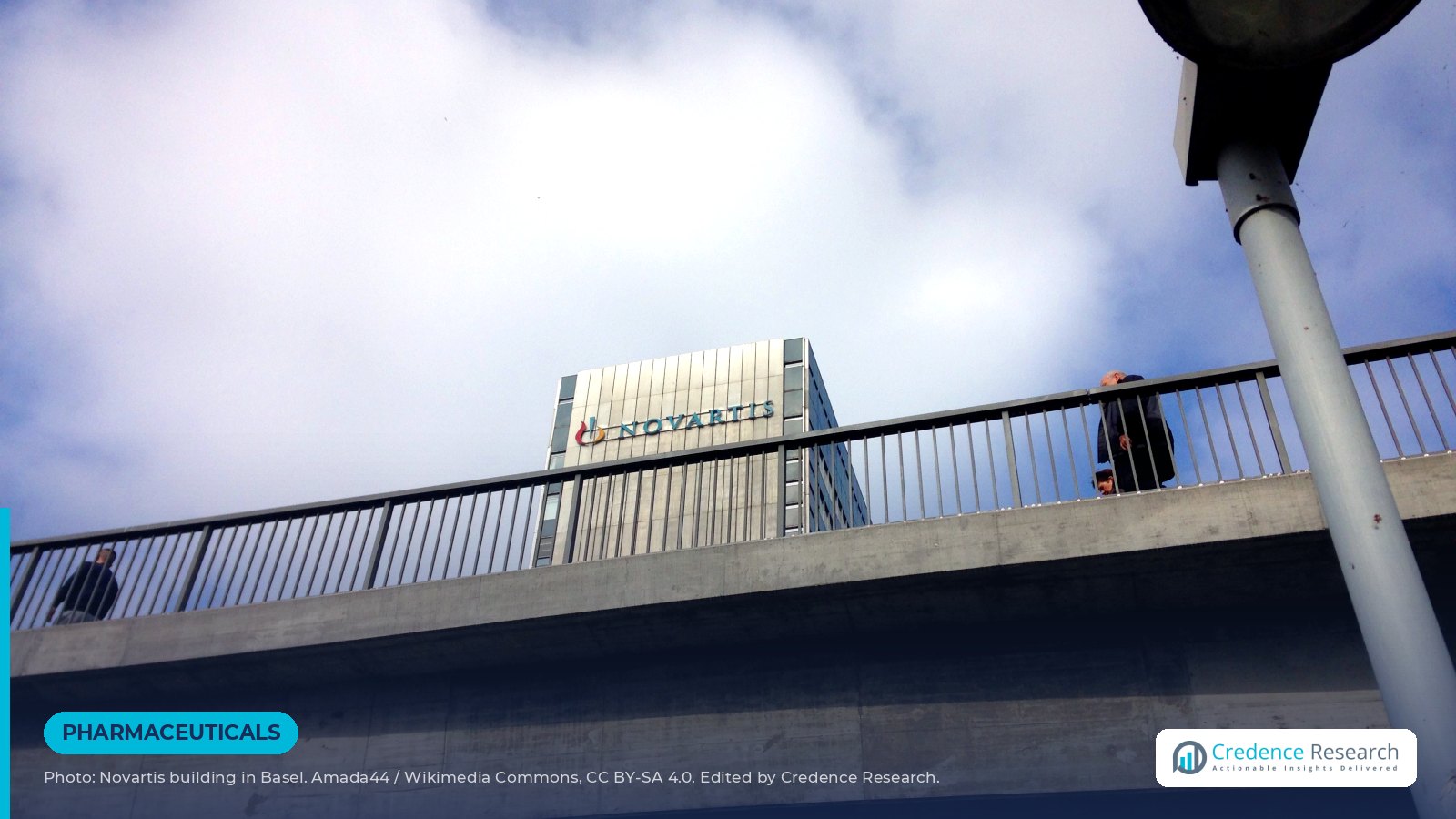
Image: Novartis building in Basel, Switzerland, by Amada44 via Wikimedia Commons, CC BY-SA 4.0. Cropped and edited by Credence Research.

About the Author

Senior News Editor at Credence Research Inc