
Onsemi Scraps Up to $2 Billion Silicon Carbide Expansion at Czech Rožnov Site
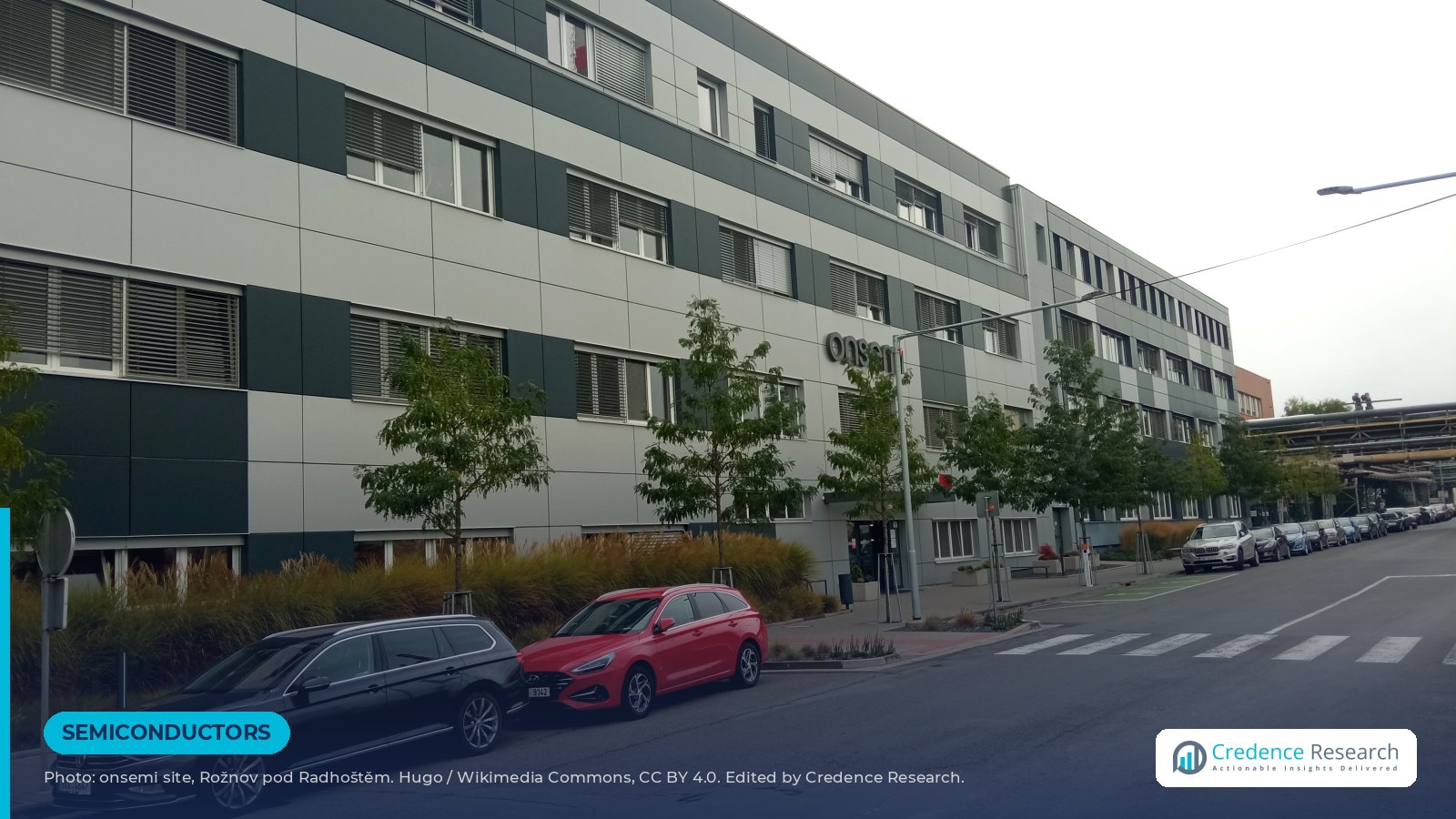
U.S. power chipmaker onsemi and the Czech Ministry of Industry and Trade agreed on Nov. 6 to end a planned expansion of silicon carbide production at the company's site in Rožnov pod Radhoštěm, in the country's Zlín region. The project, first announced in June 2024 as a brownfield investment of up to $2 billion, would have created end-to-end silicon carbide manufacturing at the site. The two sides said the decision reflects changes in the global silicon carbide market, not the Czech investment climate. Existing silicon and silicon carbide production in Rožnov will continue.
Key developments
- Onsemi and the Czech Ministry of Industry and Trade agreed on Nov. 6, 2026, not to proceed with the planned silicon carbide expansion in Rožnov pod Radhoštěm.
- The project was announced in June 2024 as a multi-year brownfield investment of up to $2 billion, or about 44 billion Czech koruna, to build a vertically integrated silicon carbide operation.
- The European Commission approved 450 million euros in Czech state aid for the project in November 2025, against expected company spending of 1.64 billion euros, according to CzechInvest.
- Current silicon and silicon carbide manufacturing in Rožnov continues as part of onsemi's global network, and the company expects further investment and hiring at Rožnov and Brno.
- The announcement did not disclose any write-down, charge or arrangement related to the approved state aid.
Industry background
Silicon carbide is a wide-bandgap semiconductor material used in power devices that handle high voltages and temperatures more efficiently than conventional silicon. Its largest commercial use has been in electric vehicle traction inverters and onboard chargers, with growing use in solar inverters, industrial drives and power supplies for AI data centers. Production is capital intensive. It requires crystal growth, wafer slicing and polishing, epitaxial layers, device fabrication and packaging, and few companies run all of those steps in house.
Onsemi built that vertically integrated model through its 2021 acquisition of GT Advanced Technologies, a U.S. silicon carbide crystal grower. The Czech plan was meant to extend the model in Europe. In its June 2024 release, onsemi said its existing Czech operations covered silicon crystal growth, silicon and silicon carbide wafer manufacturing, including polished and epitaxial wafers, and a silicon wafer fab, producing more than 3 million wafers a year, including more than 1 billion power devices. Chief Executive Hassane El-Khoury said then that the investment would "establish a Central European supply chain." The company also estimated the completed operation would add more than $270 million a year to Czech gross domestic product.
The project cleared a key regulatory step in November 2025, when the European Commission approved 450 million euros in Czech state aid. CzechInvest said at the time that the plant would be the first of its kind in the European Union, serving electric vehicles, renewable energy and AI data centers, and would be required to fulfill priority orders in a supply crisis under the EU Chips Act. The aid still needed approval from the Czech government.
Industry implications
The cancellation is one of the clearest signals yet that the silicon carbide buildout planned during the 2021 to 2023 electric vehicle boom has run ahead of demand. Neither party gave detailed reasons beyond changing global market dynamics. 24/7 Wall St. reported that Czech press accounts in June 2026 tied earlier job cuts at the site to onsemi's view that producing its own wafers no longer paid off as lower-cost Chinese silicon carbide wafers reached the market. Onsemi did not comment on those reports, and the Nov. 6 release does not address them.
The decision also shows how onsemi is reweighting its portfolio. Its release pointed to demand from automotive, industrial and AI data center customers, and the company has recently agreed to acquire Ferric, a developer of integrated voltage regulators for AI processors.
Competitive and supply chain implications
For automakers and Tier 1 suppliers, the decision removes a planned source of European silicon carbide capacity that would have covered the full chain from crystal to finished device. European buyers will remain dependent on a smaller group of integrated producers and on wafer imports, including from Chinese suppliers that have expanded output quickly. Rivals have taken different paths. Wolfspeed restructured its balance sheet through a court-supervised process in 2025, and Infineon has signed 200-millimeter wafer supply arrangements with outside producers rather than relying only on internal substrate capacity.
The shift toward buying wafers rather than growing them in house, if it spreads, could change cost structures across the industry. It would lower capital intensity for device makers but raise exposure to substrate pricing and to trade policy. It also tests the EU Chips Act model, which pairs state aid with supply-security commitments. Onsemi's Rožnov plan was one of the few approved projects aimed at power semiconductors rather than logic or memory.
Regional implications
For the Czech Republic, the project had been described by onsemi as one of the largest private-sector investments in the country's history. First Deputy Prime Minister and Minister of Industry and Trade Karel Havlíček said the outcome reflects the current state of the global semiconductor market and stressed that existing production in Rožnov will continue unchanged. He welcomed onsemi's research and development work in the country and its plans for further investment in Rožnov and Brno.
The Zlín region keeps an established semiconductor base, as the Rožnov site traces its roots to the former Tesla Rožnov electronics plant. The question for the region is whether follow-on investments in existing silicon and silicon carbide lines, along with design and development work in Brno, can offset the loss of the larger project and earlier workforce reductions reported by Czech media.
Credence Research analysis
The Rožnov decision suggests that vertically integrated silicon carbide strategies are being reassessed where substrate supply has become plentiful and cheaper. When onsemi announced the project in 2024, owning crystal growth was seen as a competitive moat and a hedge against shortages. Two years later, the economics appear to favor flexibility. Companies that can source wafers externally and concentrate capital on device design, packaging and qualification with automotive and data center customers may face less balance sheet risk than those carrying large fixed substrate assets.
The policy implications may prove as important as the commercial ones. Europe approved large subsidies to secure power semiconductor supply for electric vehicles and the grid, but a commission-approved project has now been dropped before construction at scale. That is likely to sharpen scrutiny of how state aid conditions are written and enforced, and of whether supply security goals can be met when the most cost-efficient wafer source sits outside the EU.
What comes next
- Any disclosure by onsemi of accounting charges or changes to capital spending plans tied to the decision.
- Clarification from the Czech government on the status of the approved 450 million euros in state aid.
- Details of the further investment and hiring onsemi has signaled for Rožnov and Brno.
- Whether other European silicon carbide projects are delayed, resized or shifted toward external wafer sourcing.
- Electric vehicle and data center power demand trends, which will shape silicon carbide device orders in 2027.
Sources
- onsemi: onsemi and Czech Ministry of Industry and Trade agree to conclude SiC expansion project (Nov. 6, 2026)
- onsemi: onsemi selects the Czech Republic to establish end-to-end silicon carbide production (June 19, 2024)
- CzechInvest: European Commission approves Czech state aid for onsemi expansion (Nov. 24, 2025)
- 24/7 Wall St.: Onsemi is walking away from a $2 billion chip bet it made in 2024 (Nov. 7, 2026)
Image: onsemi site on 1. máje street in Rožnov pod Radhoštěm, by Hugo via Wikimedia Commons, CC BY 4.0. Cropped and edited by Credence Research.

About the Author

Senior News Editor at Credence Research Inc