
Samsung SDI Signs 1 GWh U.S.-Made Energy Storage Deal With Alpha Omega Power
Samsung SDI said Oct. 26 that its U.S. subsidiary, Samsung SDI America, has signed an agreement to supply 1 gigawatt-hour of prismatic battery energy storage systems to Alpha Omega Power, a Houston-based developer and independent power producer focused on utility-scale storage. The deal is the second between the two companies and lifts their combined contracted volume to 1.5 GWh. The cells and modules will be built at the StarPlus Energy plant in Kokomo, Indiana, and Samsung SDI expects to complete deliveries by the end of 2026.
Key developments
- Samsung SDI America will supply 1 GWh of energy storage systems to Alpha Omega Power (AOP), following an initial agreement of about 0.5 GWh signed in late 2025, for a cumulative 1.5 GWh.
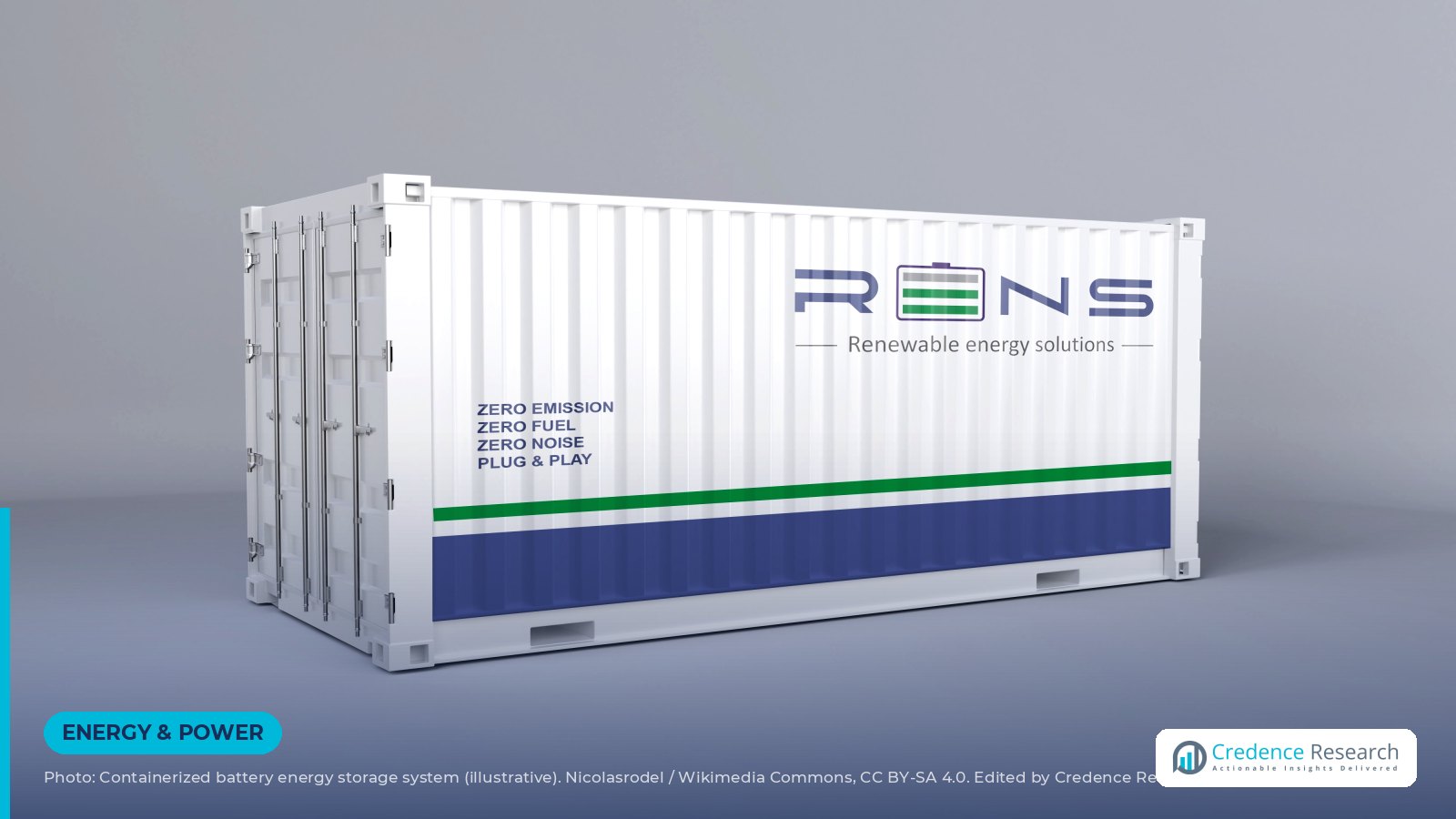
- The order covers the Samsung Battery Box (SBB) 1.7, an all-in-one containerized unit using high-nickel nickel-cobalt-aluminum (NCA) prismatic cells, with 17% more energy density than the SBB 1.5 in the same 20-foot footprint.
- All cells and modules will be produced at StarPlus Energy in Kokomo, Indiana, Samsung SDI's joint venture with Stellantis, with deliveries targeted for completion by year-end 2026.
- AOP plans to deploy the systems in large-scale projects in the Electric Reliability Council of Texas (ERCOT) and Western Electricity Coordinating Council (WECC) regions, with construction starting in 2027.
- Neither company disclosed the financial value of the agreement.
Industry background
Grid-scale battery storage has become a core tool for U.S. power systems that must absorb fast-growing renewable output, meet rising peak demand and manage price volatility. Developers such as AOP typically build stand-alone battery plants that charge when power is cheap or abundant and discharge into the grid during evening peaks or emergencies.
AOP, led by founder and CEO Paul Choi, describes itself as focused on developing and operating stand-alone battery storage projects. With Canadian investor Fengate Asset Management, it brought the 100-megawatt, 400-megawatt-hour Caballero project in Nipomo, California, into full commercial operation in June 2025. In September 2025, the partners closed tax equity and debt financing for the 200 MW, 400 MWh Vertus Energy Storage project in Galveston County, Texas. At that time, Fengate said AOP had a pipeline of 5,200 MWh of storage projects across Texas, California and the Southwestern U.S.
The SBB 1.7 is Samsung SDI's latest containerized storage product. According to the company's announcement, as reported by Korean media, it uses AI-based algorithms for early anomaly detection and battery life prediction, is designed for 25 years of continuous operation, meets NFPA 855 and UL 9540 safety standards and uses an Enhanced Direct Injection system meant to limit the spread of fire inside the module.
Industry implications
The agreement shows how Korean battery makers are turning U.S. factories built for electric vehicles toward stationary storage. Korean media reported that some EV battery lines at the Indiana plant were converted to storage production in late 2025. In December 2025, Samsung SDI America also signed a contract worth more than 2 trillion won, about $1.36 billion, to supply lithium iron phosphate (LFP) prismatic storage batteries to an unnamed U.S. energy infrastructure company over three years starting in 2027, according to Reuters.
The AOP order is notable for its chemistry. Most grid storage projects today use LFP cells, which cost less and are seen as having a wide thermal safety margin. By offering an NCA-based product, Samsung SDI is betting that higher energy density per container can lower land, installation and balance-of-plant costs on space-constrained sites. Its parallel LFP contract suggests the company wants to offer both options to U.S. developers rather than compete on a single chemistry.
For developers, short delivery windows matter as much as chemistry. Samsung SDI plans to complete shipments by the end of 2026, well before AOP's projects break ground in 2027. That lets the developer secure equipment early and reduces exposure to future changes in trade policy or supply availability.
Competitive and supply chain implications
U.S.-made storage batteries have become more valuable as federal clean energy tax rules restrict Chinese-linked content and import tariffs raise the cost of foreign cells. Choi framed the second agreement as a way to strengthen AOP's domestic supply chain for new energy infrastructure. For a project owner that relies on tax equity financing, as AOP has done with its Fengate projects, a domestic, non-Chinese supplier can simplify compliance reviews.
The deal puts Samsung SDI in more direct competition with LG Energy Solution and SK On, both of which have announced plans to make storage batteries in North America, as well as with integrators that still rely on imported Chinese LFP cells. Samsung SDI's advantage is an operating U.S. plant that can shift output between automotive and storage products as demand changes.
For Stellantis, Samsung SDI's partner in StarPlus Energy, storage orders provide a way to keep Kokomo capacity in use while EV adoption in the U.S. moves more slowly than automakers planned several years ago.
Regional implications
In Texas, ERCOT operates an energy-only market in which storage earns revenue mainly through price arbitrage and ancillary services, and battery capacity on the grid has grown quickly in recent years. Additional projects from AOP would add to the fleet of flexible resources the grid operator uses during summer peaks and winter cold snaps. In the WECC footprint, which covers California and much of the West, storage is increasingly used to shift midday solar output into the evening.
In Indiana, the agreement supports production at Kokomo at a time when Midwest battery plants face uncertain EV demand. In South Korea, the order adds to Samsung SDI's push to diversify revenue beyond automotive cells, which has also included batteries for AI data center backup power that it showed at DCWA 2026 in September.
Credence Research analysis
The order is modest in size, but it points to a clear strategic direction. Samsung SDI is using its U.S. footprint to sell storage on the strength of domestic content, fire safety certification and delivery certainty rather than on the lowest price per kilowatt-hour. Pairing an NCA product for space-limited sites with an LFP product for large, cost-driven projects gives it two ways into a buyer base that values both energy density and supply chain compliance.
The bigger question is durability. A repeat order from a mid-sized independent developer is a useful signal, but sustained use of converted EV lines will depend on winning larger multi-year contracts and showing field reliability for high-nickel chemistry over years of daily grid cycling. AOP's 2027 construction start and the performance of its operating fleet will offer early evidence on whether NCA-based containers can hold a lasting place alongside LFP in U.S. grid storage.
What comes next
- Samsung SDI expects to complete deliveries of the 1 GWh order from Kokomo by the end of 2026.
- AOP plans to begin construction on the related ERCOT and WECC projects in 2027.
- Deliveries under Samsung SDI America's separate LFP storage contract are scheduled to begin in 2027 and run for three years.
- Investors will watch Samsung SDI's upcoming quarterly results for more detail on storage orders and U.S. line conversions.
- Further site and capacity details for AOP's 2027 projects have not yet been disclosed.
Sources
- Samsung SDI newsroom: Samsung SDI and Alpha Omega Power Sign 1 GWh Supply Agreement for U.S.-Made Prismatic Energy Storage System (Oct. 26, 2026)
- The Korea Times: Samsung SDI, Alpha Omega Power sign 1-GWh ESS supply deal
- Fengate: Fengate and Alpha Omega Power achieve tax equity financial close on 400MWh battery storage project in Texas
- Alpha Omega Power
Image: Battery energy storage system (illustrative), by Nicolasrodel via Wikimedia Commons, CC BY-SA 4.0. Cropped and edited by Credence Research.

About the Author

Senior News Editor at Credence Research Inc